Kennedy Krieger Institute
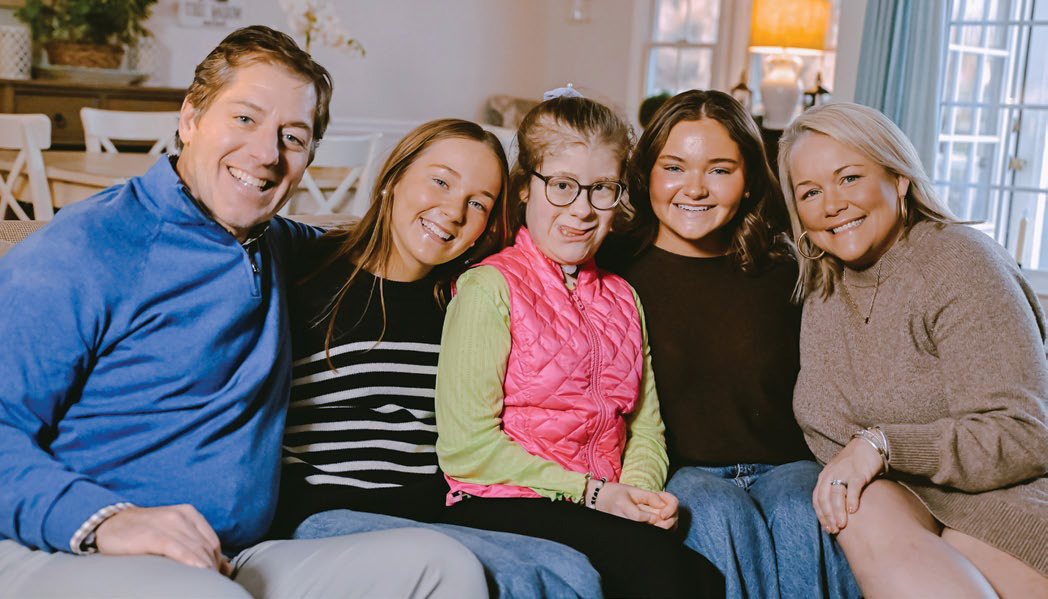
For five and a half years, Ashley and Derek had no name for what their daughter, Emmy, was facing. No diagnosis. No roadmap. No community to turn to. So, they gave it one of their own: “Emmy Syndrome.”
It was a way to talk about something no one could explain. Because when your child doesn’t match what doctors expect, it can feel like you are on your own.
Emmy’s early years were filled with medical complications, hospital stays, and unanswered questions. As Ashley says, “It was a long 5.5 years, not knowing what we were dealing with.” Without a diagnosis, there was no clear path forward and no easy way to find families who understood.
At one of Emmy’s first appointments at Kennedy Krieger, Ashley arrived overwhelmed—managing Emmy’s complex needs while caring for Emmy’s older sister, Mackie, too. Before she even had to ask, the staff stepped in. They offered to take Mackie to Child Life so Ashley could focus on Emmy. It was a simple act, but Ashley felt relieved. Like walking into a place that understood the whole family needed care.
That support continued. Emmy received therapy for feeding, movement, and strength. Her family worked with genetics specialists who kept searching for answers. Ashley remembers Kennedy Krieger as the place that “would not take no for an answer.”
After five and a half years, “Emmy Syndrome” finally had a name: Coffin-Siris syndrome. The diagnosis gave Ashley and Derek language, clarity, and connection.
Today, Emmy loves music and dancing—especially ABBA. She loves school, her sisters, and vanilla ice cream with M&Ms. As Derek says, “When you see the strength in her, it makes everybody stronger.”
What Ashley and Derek found at Kennedy Krieger was a partner—one that supported their whole family while they searched for answers.
• Kennedy Krieger offers more than 80 interdisciplinary programs, inpatient and day hospitals, community programs, and more.
• In 2025, Kennedy Krieger helped nearly 30,000 patients and students benefit from its interdisciplinary care and schools.
• Approximately 500 students from 15 regional school systems attend Kennedy Krieger’s five special education schools.
• Kennedy Krieger’s researchers are developing new treatments and therapies for a range of diagnoses, from common disorders to rare genetic diseases.
• The Institute is home to the Bennett Blazers, an adaptive sports program that serves kids with different abilities from Maryland, Virginia, Pennsylvania, and Washington, D.C.