Partner Content
“Digital and AI-assisted approaches [to dental care] improve placement accuracy, reduce surgical invasiveness, enhance safety, and lead to more predictable functional and esthetic outcomes.”
Dr. David George, a respected leader and faculty dentist at the University of Maryland School of Dentistry, speaks to Baltimore about how digital dentistry and AI-driven models are impacting and improving the field, and ensuring better long-term outcomes, particularly that of dental implant placement.
As an expert in clinical care, dental education, and practice operations, Dr. George is also uniquely equipped to offer his best advice when choosing an oral health provider for you and your loved ones.
 What are the most common dental concerns you treat in your practice?
Other than preventive care, the most common conditions include tooth decay, periodontal (gum) disease, tooth loss, cracked or worn teeth, and infections requiring endodontic (root canal) or surgical management. Explain what a dental implant is and how it was traditionally placed. A dental implant is a titanium fixture surgically placed into bone to replace a missing tooth root and supports a crown, bridge, or denture. Traditionally, placement relied on 2D imaging, stone models, and freehand surgical techniques guided by clinician experience rather than digital technology.
Why would a patient need a dental implant?
Patients may need a dental implant to replace missing teeth, restore chewing function, preserve bone, maintain facial structure, and improve esthetics and overall oral health. Dental implants are used in a range of circumstances from replacing a single tooth to an entire mouth. The causes of need also vary—from disease or infection to trauma and cancer treatment.
What are the challenges of traditional implant placement?
Some challenges include limited visualization of anatomy, variability in placement accuracy, longer surgical times, higher risk of complications, and less predictable restorative outcomes.
How are you using digital dentistry and AI for robot-assisted/guided placement of dental implants?
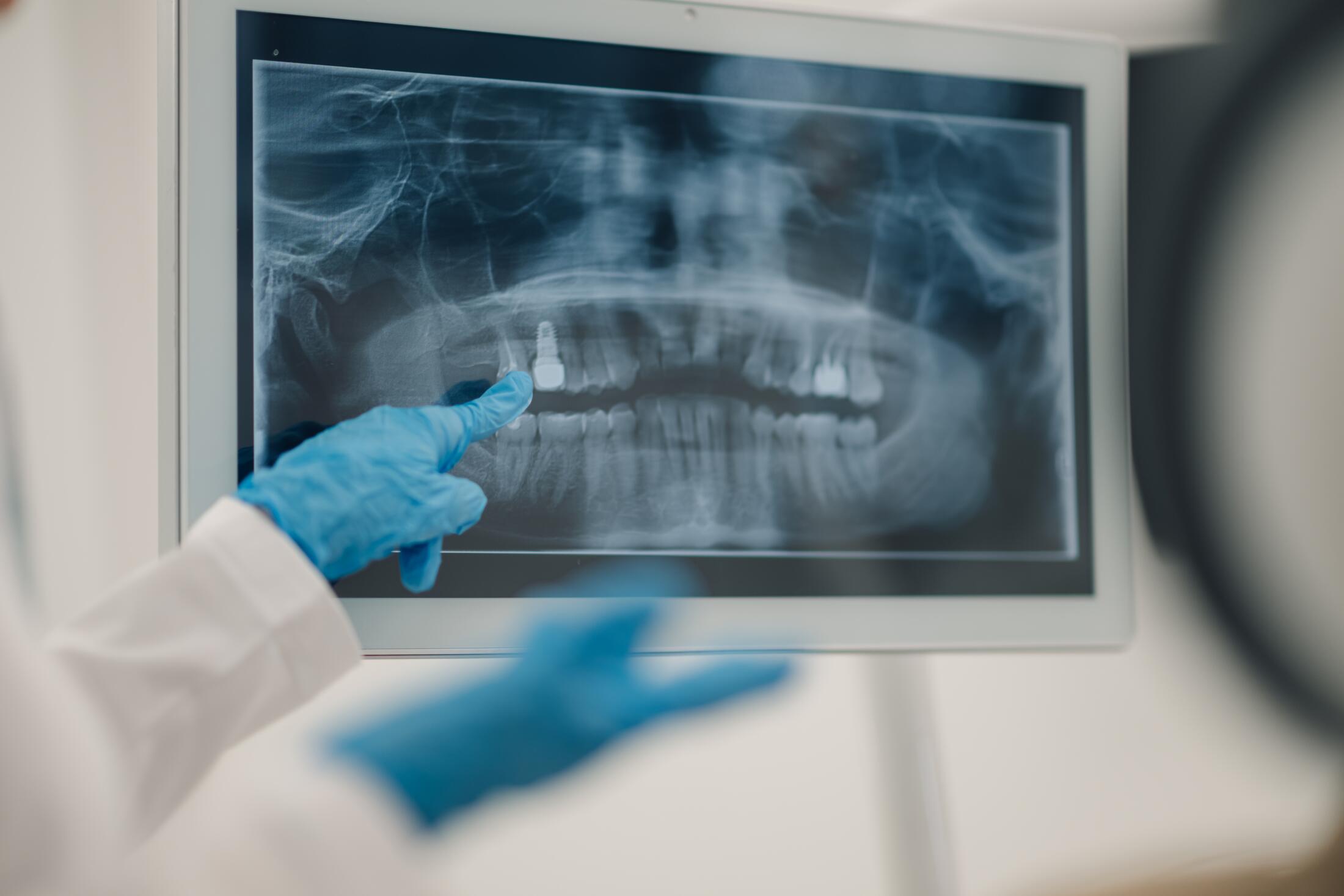
We use advanced 3D imaging techniques such as CBCT digital imaging and intraoral scanning, along with AI-driven planning software to create precise treatment plans. These are integrated with guided surgical systems and robotic-assisted platforms to enhance accuracy and optimize implant positioning.
What impact does this new technology have on patient outcomes and care?
Digital and AI-assisted approaches improve placement accuracy, reduce surgical invasiveness, enhance safety, and lead to more predictable functional and esthetic outcomes. How are digital dentistry and AI transforming the future of dentistry? They are enabling personalized, data-driven care while improving diagnostic precision, streamlining workflows, supporting minimally invasive techniques, and expanding access to high-quality treatment.
What’s your best advice for patients when selecting a dental provider?
Patients should seek a provider with strong credentials, a commitment to evidence-based care, experience with advanced technologies, clear communication, and a patient-centered approach to treatment planning that considers individual needs and goals.
What makes the team at University of Maryland School of Dentistry unique?
The faculty at the University of Maryland School of Dentistry provides a broad spectrum of clinical expertise from general dentistry to specialty and surgical care. The team combines patient care excellence, cutting edge research, and a strong academic mission—integrating education, innovation, community outreach, and interdisciplinary collaboration to advance oral health and improve lives in Baltimore City and beyond.

 THOUGHT LEADER OF THE MONTH
DAVID L. GEORGE, DDS, MBA, MS, FAGD
Senior Associate Dean for Faculty Affairs and Strategic Initiatives
University of Maryland School of Dentistry
Chief Operating Officer, Faculty Dental Services
650 W. Baltimore Street, Baltimore, MD 21201
410-706-7961
dental.umaryland.edu/patients