

Cinephiles in Baltimore have some reason to complain—we often get first-run indie films weeks after they premiere in New York or L.A.—but then again, we have the New/Next Film Festival and they don’t.
First with his tenure at the Maryland Film Festival and now with New/Next, festival programmer Eric Hatch has a remarkable record of finding rising talent just before they’re about to break into the mainstream.
Catch as many films as possible from October 1-4 (or better still, get an all-access pass) at The Charles in Station North so you can be on the leading edge of what’s happening in the world of cinema—both locally and beyond.
Here are some reviews to get you started.
ETERNITY ONE
Baltimore-based documentarian Marnie Ellen Hertzler immersed herself on the small Chesapeake Bay island of Tangier, getting to know its people, its rhythms, its way of life. Mostly, she focused on a girl named Ella—11 when we first meet her and about 14 by the film’s end. Ella lives with her good-hearted mother, Brandi, and, later, with her stepfather and new baby brother.
She’s a precocious kid, a worrier, a self-critic, and a budding artist. In the beginning, with her oversized glasses and earnest face, she resembles the little girl from Little Miss Sunshine, which adds to her charm.
Right away, she tells us about her biggest concern: “I live on an island that is slowly eroding away,” she says. That is not an exaggeration. Thanks to climate change, Tangier is literally receding and this ever-present threat hangs over the town like a dark cloud. Or like an asteroid, a recurring motif.
There’s a second part to this film, where Hertzler spends time with people who are transhumanists—they are seeking singularity between man and AI, so that a human can live forever as some sort of man/machine hybrid. (Or at least stay alive long enough for medical technology to make the human body more efficient.)
I confess the parts with the transhumanists felt a bit shoe-horned, although I suppose Hertzler is contrasting the simplicity of island life with the kinds of solipsistic concerns the islanders would scoff at. They want to fish, they want to eat what they catch, they want to spend time together, often in a church rec room that looks like it was frozen in the 1970s.
But both the transhumanists and the folks of Tangier are staring into an unknown future, albeit from very different perspectives.
There is also a robot named Grace, who serves as both a kind of uncanny valley and comic relief. Her creator, boasting about Grace’s human facial expressions, asks Grace to show angry, then sad, then surprised. All three faces are the same—a kind of contorted gawp. We’re not there yet (although the film was finished a couple of years ago…we’re much closer now).
Eternity One is best when it stays in Tangier, and especially with Ella. The passage of time gives the film a kind of poignancy, a la Richard Linklater’s Boyhood. And the dreamy score, by local indie darlings Beach House, adds to the elegiac mood. Ella’s art gets better. She starts to care enough about boys to at least call them “weird.” For now, the existential threat is at bay. But for how much longer?
Eternity One is Opening Night feature of the New/Next Festival on Oct. 1. It has an encore screening on Oct. 4. Director Marnie Ellen Hertzler is expected to attend both screenings.
HERE I’M ALIVE
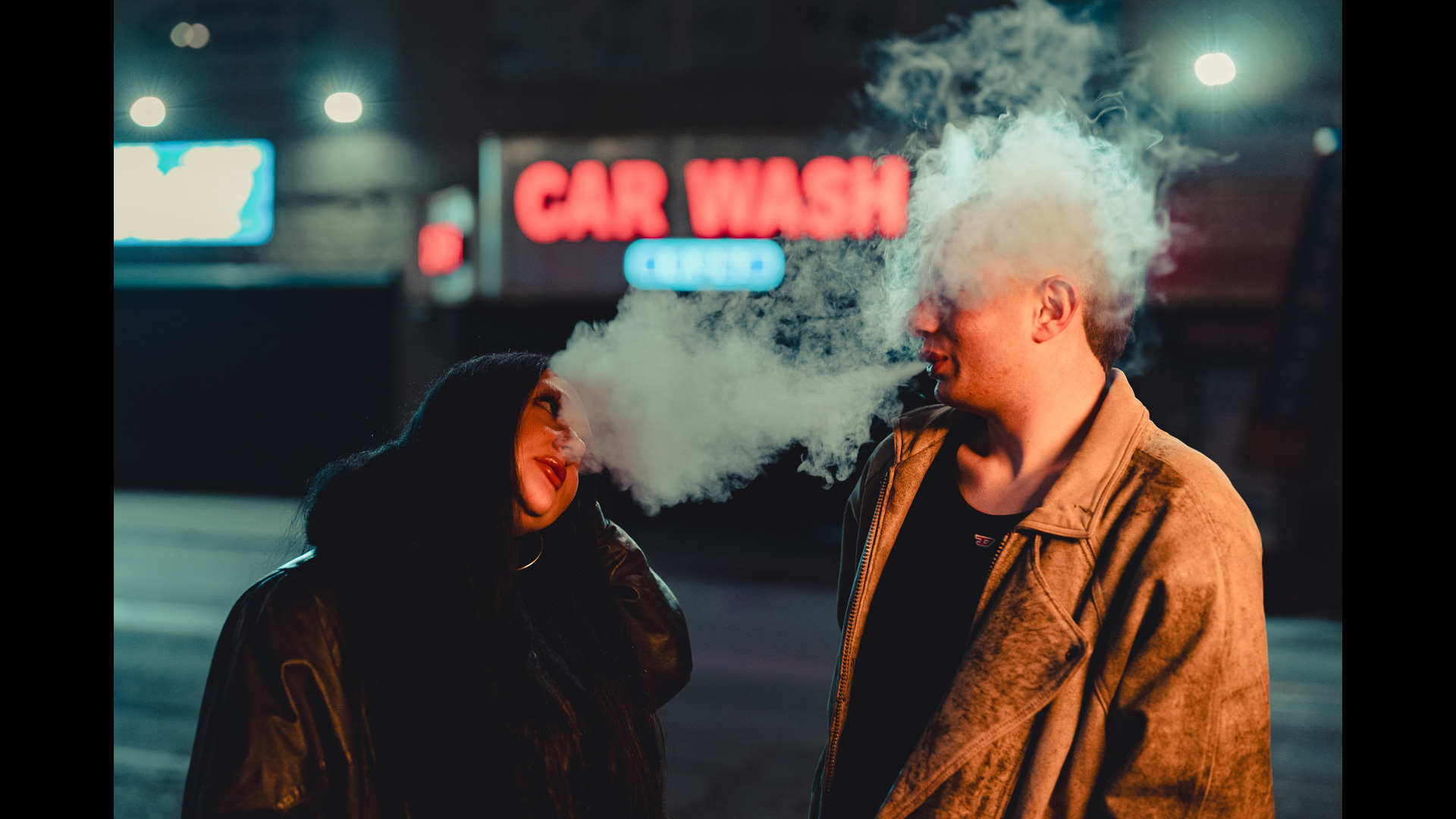
New York remains the city that never sleeps, but it probably looks a lot different from the image of dance clubs, strip bars, and all-night diners that you have in mind. Instead, much of New York’s nightlife is carried out online, or at least driven by online activity.
In his neorealist “urban epic,” director Joshua Z. Weinstein follows a series of characters living on the edges of New York City. Their stories are told in snapshots—we glimpse at their lives periodically over the course of one night.
There’s a Door Dasher Eddie (Eddie Torrenegra), getting yelled at by customers (“You forgot my Diet Coke!”) and trying to save enough to bring his kids over from an unspecified Latin country. There’s Felix (Caleb Zuzga), who uses Chat GPT to compose the perfect message to a would-be Sugar Daddy on an online dating site. (Later, he uses a photo app to give himself smoother skin and more pronounced cheekbones.)
We meet Krystaly (Krystaly Figeuroa), who lives in a shelter and tries to create a reality dating show, casting herself as the star. (Inevitably, the filming devolves into dirty talk and chaos.) And, most touchingly, there’s Majora (Cheyenne Gallagher), an agoraphobic who plays video games, watches interviews with tech titans, and chats with strangers on a message board.
One of those strangers is a young man, Luffy9 (Alex Fox) threatening to kill himself. Over a video call, Majora actually gives him good advice. Find things worth living for—even if it’s just things you like to do online. And most people who try and fail at suicide are glad they lived. Hang on, he suggests. But Luffy9 wants Majora to come over, which is a nearly impossible ask.
Filled with a cast of mostly non-actors playing fictionalized version of themselves, Here I’m Alive, is funny and sad in equal measure. The characters have dreams shaped by social media: Felix wants that perfect sugar daddy who will give him everything he wants and ask for nothing in return. Eddie posts someone else’s fancy sports car, claiming it’s his. Krystaly wants to be a reality TV star.
Social media has shown that people can get rich quick, just by posting online. But when will their time come?
Here I’m Alive screens Friday, Oct 2.
THE LORRAINE
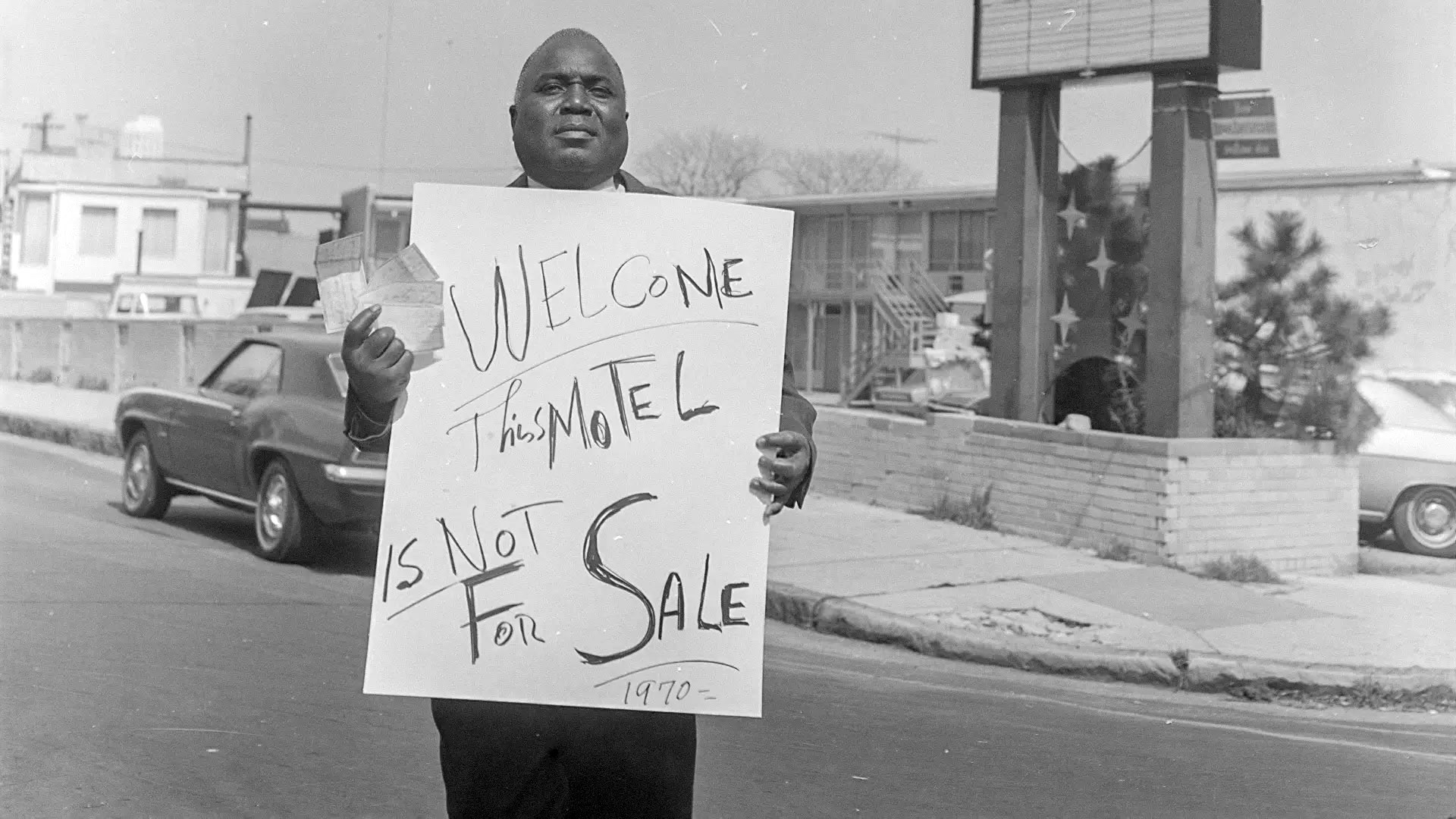
The Lorraine Motel in Memphis will forever be marked by a grim event: It is the site where Dr. Martin Luther King Jr. was assassinated in 1968. But The Lorraine had a full life, if you will, both before and after that ill-fated day. And acclaimed local documentarian Sam Pollard (Max Roach: The Drum Also Waltzes) lovingly tells its story in his new film, The Lorraine.
The motel/hotel was opened by Walter and Loree Bailey during the Great Migration. Memphis was, as the film tells us, a gateway for African Americans traveling from the south to the north—and both passengers and train staff alike would stay at the lodge. The motel, which had one of those iconic mid-century signs that you could see from the highway, was eventually put in the famous Green Book for Black travelers—and became the de rigueur stop for Black musicians, athletes, and civil rights activists who passed through town.
Muddy Waters stayed The Lorraine. So did Marvin Gaye, Curtis Mayfield, and members of the Negro League and the Harlem Globetrotters. Aretha Franklin apparently liked their catfish. And Isaac Hayes would winkingly tell motel staff that he “wasn’t here” when he came to the pool surrounded by beautiful women—his wife nowhere in sight.
Pollard has a knack for sharing history in a lively and vivid way. He uses archival footage, spirited period music, as well as extensive interviews to bring history to life. Here, he talks to the daughter and granddaughter of the Baileys, as well as historians, civil rights activists, politicians, musicians, and many others.
Poignantly, he talks to a woman who worked at The Lorraine for essentially her entire life. As a young woman, she got off the train in Memphis, saw The Lorraine, applied for a job as a maid, and never left. She was there the night MLK Jr. was killed. She tears up, recounting that night. “It was a sad day,” she says, sniffling. “I’m sorry.”
After King’s death there was some uncertainly about what to do with the motel. People came to pay respects but didn’t want to stay there. At the same time, other hotels in Memphis were now integrated and the neighborhood around The Lorraine fell into disrepair.
There’s a surprising second act to The Lorraine that you’ll have watch the film to discover (or perhaps you already know). And now there is this film, a fitting tribute to a place that spread a lot of joy, that defied injustice, offered a safe haven, and was much more than just the site of tragedy.
The Lorraine screens on Saturday, Oct 3.
MACKENZIE
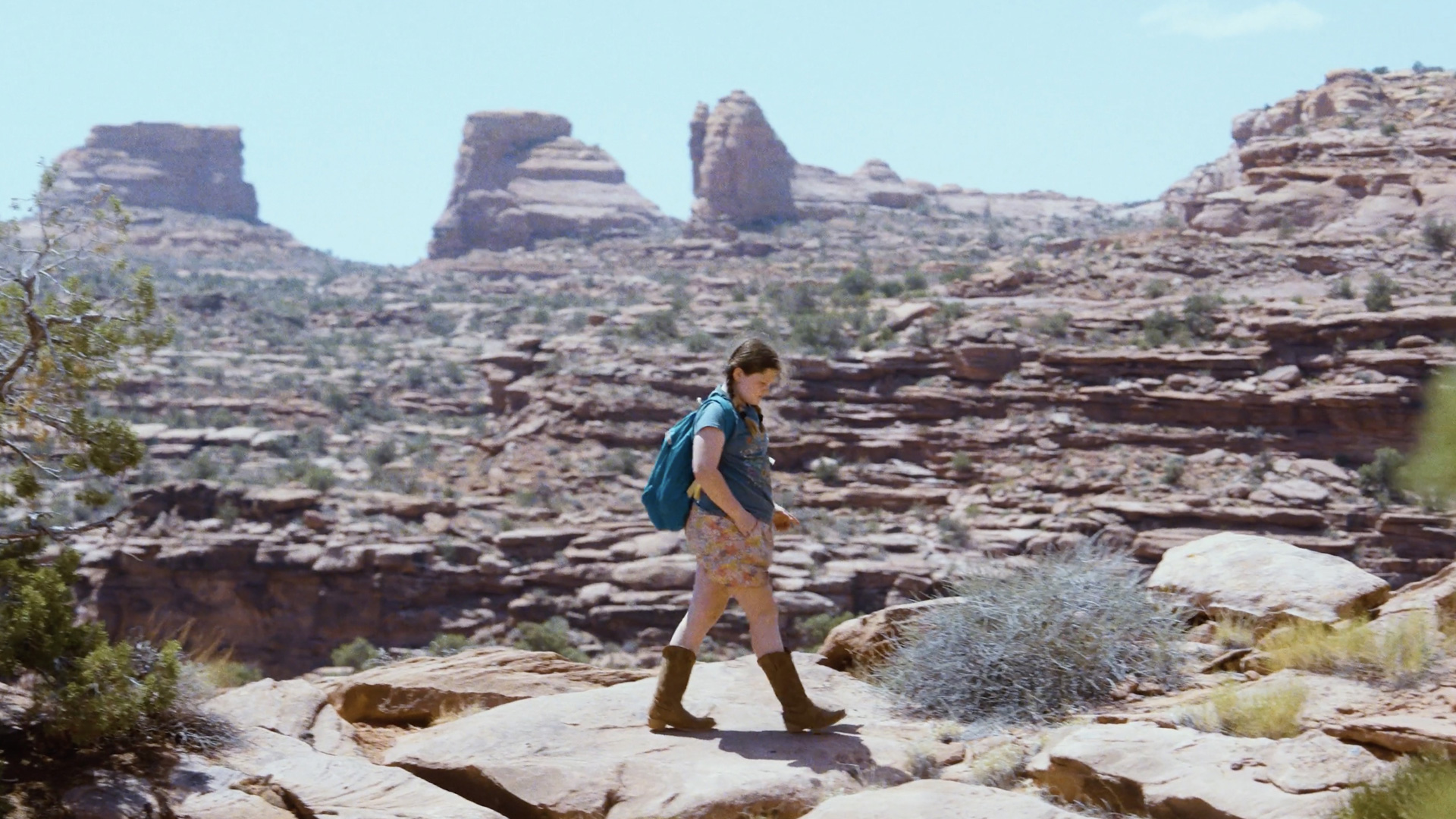
Juniper (Lucya Yusimov), the 11-year-old protagonist of Mylissa Fitzsimmons’ Mackenzie, is bored. Her single mother works multiple jobs and when she’s home, she’s usually sound asleep. The house they live in is small and squat—so squat in fact that when Juniper is lying on her back in her bed, her feet can touch the ceiling (she props a book between her toes and reads it in that L position).
She also has a crush on a TV actor—as many 11-year-olds do. In this case, it’s Mackenzie Astin from The Facts of Life. (Fun fact: Astin has spent a fair amount of time in Baltimore as his father, the actor John Astin, taught theater at Johns Hopkins.)
When her mother is awake, she reminds Juniper to pack—they are moving from Utah to Idaho. Juniper doesn’t want to go. She loves Utah—and what’s more, she has a plan to meet Mackenzie in L.A., which is a bus ride from Salt Lake City. So she packs a knapsack—money she’s stolen from her mother’s nightstand, a Teen Beat magazine with Mackenzie’s picture, some candy, a map, a tape recorder—and heads out to Salt Lake City on her bike. She doesn’t tell her mother. She doesn’t say goodbye.
Most of Mackenize is simply following Juniper on her trek through the Utah desert. She climbs rocks, she swims, she bikes. Watching her, with her floral shorts and pigtails, we sense how vulnerable she is. But she seems completely unbothered. She uses her tape deck to record messages to Mackenzie and sometimes, documentarian-style, to capture the sounds of being outside—a flag whipping in the wind, an electric pole that is hissing. She talks to herself too—a kind of ongoing narration of her day—she’s clearly a kid who is used to being alone.
I confess, I had to interrogate my own reaction to Juniper’s isolation. I was scared for her, but then I wondered if I would be equally scared if a fearless 11-year-old boy were on his own? Yes, but not quite as scared.
There are very few people in this film other than Juniper, but those who see her assume she’s just fine. And why wouldn’t they—she seems fine.
Mackenzie is not a film for people who demand plot or dialogue in their films. It’s mostly just Juniper, on her journey—shot beautifully, often poetically in the Utah desert.
Her certainty that Mackenzie Astin will be waiting for her with open arms reminded me a bit of Alexander Payne’s Nebraska, with Bruce Dern’s Woody setting out to claim a sweepstakes prize that he’s sure he’s won. But just as Woody secretly wanted to spend time with his adult son, we wonder if Juniper really thinks Mackenzie Astin will be waiting for her. Or is she just looking to have an adventure, to take in the desert terrain she loves one last time, and most importantly, to find out if she will be missed.
Mackenzie screens on Saturday, Oct. 3.

HUMAN THEORIES
I laughed during the opening credits of Jess Zeidman’s Human Theories, as dozens upon dozens of cast member names spooled across the screen as though I was about to watch Ben-Hur. And I laughed even harder when the final two cast members were revealed: “Martini: The Dog” and “Chanel: The Bodega Cat.”
But all was about to come clear. Human Theories is a story of young New Yorkers as told through a series of fleeting vignettes. One person will be a minor or even background character in one scene and they will step forward in the next. But each scene is a snap shot, a microfiction account of life as a twenty-something in the city.
There are some thematic elements that recur: Cringy hookups, mansplainers, complicated dreams, idiosyncratic philosophies—but the sense I got is that Zeidman has been collecting her friends’ stories, maybe on the Notes app, and she’s sharing them with us here. Turns out there are lots of funny, awkward, poignant stories to be told.
So we see a girl at an outdoor café bump into an old acquaintance from her hometown and her boyfriend. Then the girl’s own boyfriend shows up—and she neglects to introduce him. The camera stays trained on his anticipatory and ultimately annoyed/hurt face. When the couple walks away, he confronts his girlfriend about the snub. They’re still arguing when we move to the next scene where the other couple shows up a dim sum place for dinner with friends.
“I’m freezing,” one skinny friend says, shivering in his scarf. “Is anyone else freezing?” No one else is. He stands up, saying he’s going to alert the manager. A joke follows, but I won’t ruin it here.
Every vignette feels true to life—two guys arguing over whether Wally Shawn says “inconsolable” or “inconceivable” in The Princess Bride; a guy who says “yum” when he’s hooking up, much to the disgust of his date; a bad roommate who doesn’t realize she’s the bad roommate; a girl who won’t stop sneezing at the bookstore; a guy who lives in a shithole but insists you “remove your shoes” when you come in.
It’s all funny and relatable—like the way an extremely good standup set can be. Men definitely get the worst of it. But hey, such is life in one’s 20s. The film zips by at a brisk 70 minutes. I could’ve easily watched 70 minutes more.
Human Theories screens Sunday, Oct 4.