Arts & Culture
Benny B. Peterson’s New Novel Explores the Often-Painful Work of Becoming One’s Authentic Self
In 'The Maidenheads,' Peterson handles the knotty stuff of identity and maturity gracefully—even if the book's protagonist Jamie does not.
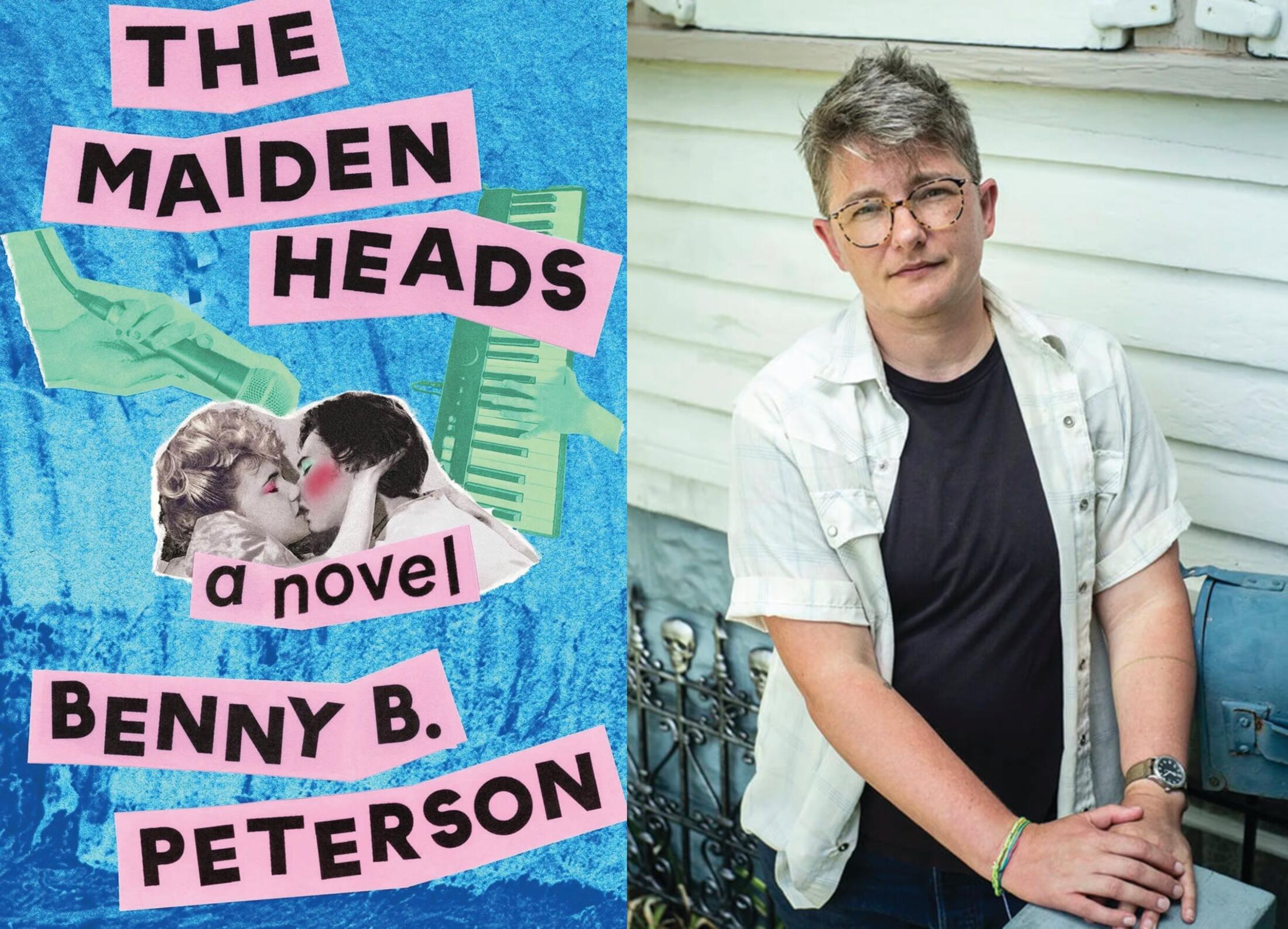
In their well-rendered, heartfelt debut novel Benny B. Peterson has set their unsettled protagonist, Jamie, in multiple worlds. There is Baltimore, where the late-20-something journalist works for the alt-weekly Baltimore Bugle, and there is Washington, D.C., where she grew up and once formed a two-girl punk band called The Maidenheads.
More complicated than living in those two worlds, Jamie is simultaneously navigating her queer identity and a heterosexual relationship. And the surreal experience known as the quarter-life crisis when some people are still changing jobs, apartments, and relationships every six months—while former classmates are getting married, buying houses, and having children.
In The Maidenheads, Peterson—an editor at the worker-led D.C. nonprofit news outlet, The 51st, and a sought-after freelance writer focusing on culture, politics, and gender—handles the knotty stuff of identity and maturity gracefully, even if Jamie does not. Tender, yearning, and unflinching, Maidenheads never shies away from the often-painful work of becoming one’s authentic self.
We recently chatted with Peterson about Jamie’s trajectory, romantic versus creative partnerships, and how their own identity influenced the story.
What compelled you to write about this period in someone’s life—10 years after high school?
The late 20s can be an incredibly chaotic phase. It’s a period when some people seem like they’re speeding up. That was me, actually. I got married and started having kids. Other people feel lost, and I think that’s especially true in periods of economic turmoil. The present day of the book is set in 2012, which was not a great time to be looking for jobs, and that divide can feel very steep…it is a prime time for an existential crisis and I think Jamie does have an existential crisis.
On top of that, for queer people, especially when we haven’t totally figured ourselves out—it can be hard to move forward and very easy to get stuck. It’s also a time when friend groups tend to be built around people with similar interests and investments in music, literature, art, and politics. [Those things] become a form of identity, connection, and community. Music is one place where Jamie does feel confident. When she’s struggling, it may feel natural to start playing music again and be around someone who gives her life some kind of meaning when she can’t really supply it for herself.
Her ongoing artistic collaboration with the young woman who is also the first love of her life is so interesting, and vexing. It’s also something we’ve seen in real life, right?
The classic is Jefferson Airplane. And yes, Fleetwood Mac. With Sleater-Kinney, Carrie Brownstein and Corin Tucker were dating when the band started, and then they broke up. They went through a period of turmoil and then they built this artistic life partnership.
I was inspired by that, in terms of how you can find a creative partner and that partnership can outlast a romantic or sexual partnership. For me, that’s a powerful concept. We think of sexual and romantic partnerships as life partners, those are the ones that we marry, right? But oftentimes, the more enduring bond is with our friends and our collaborators. I love that and I wanted to explore that a bit.
What is your favorite real band mentioned in the book?
I do love Björk I love Sleater-Kinney, obviously. I love Fugazi. It’s hard to say. Many of the bands in the novel are touchstones for me. I do really love Bruce Springsteen, and in the novel, they go to a Flock of Dimes’ show in Baltimore and Flock of Dimes [the solo project of Jenn Wasner] was a sonic inspiration for me—what Jamie’s voice might sound like—so that’s someone else I really love.
I wanted to ask about your gender journey while writing this book, and how it influenced Jamie’s arc.
When I started this book, I was identifying as a cis woman. I transitioned over the course of writing the book, a 10 year period in my life where my own sense of my own gender was changing rapidly. I didn’t base Jamie’s character on me. She’s very different, but over those 10 years, and especially thinking about Jamie, I started to realize that I had written a trans character. It is subtle; I’ve had people read the book and not understand that Jamie’s trans, but every trans person I’ve talked to who’s read it is immediately like, “Oh, this is a trans person.”
For me, I was writing a trans character who doesn’t know yet that she’s trans and is kind of figuring it out towards the end but has not yet come out in any meaningful way to herself or the people around her. It is a product of that period in my life and it’s interesting to look back on it now.