Amy Sherald is a tough act to follow. Throughout a 22-week run at the Baltimore Museum of Art earlier this year, 80,000 people stood before the canvases of Sherald’s exhibition, American Sublime, marking the institution’s highest attendance this century.
But this fall’s lineup proves that landmark success was more than just luck—that the BMA is generating its own momentum, and that it might just be at the top of its game.
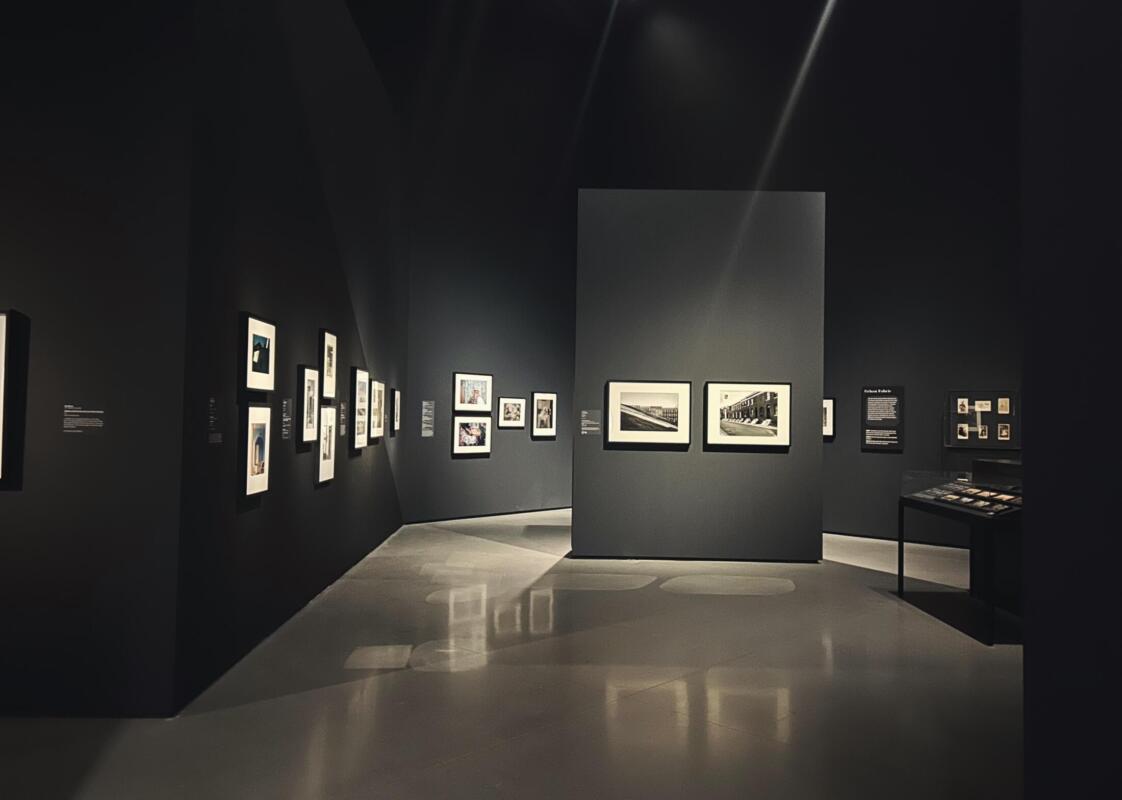
Open since Oct. 4, Flashback: Two Centuries of Baltimore Photography is the first major exhibition to document the city’s role in the history of this art form. The collection features more than 90 photographers and 200 images, ranging from rare daguerreotypes and tintypes to powerful photojournalism and contemporary street photography, all taken here.
Across multiple themed galleries—industry, community, protest, ranging from ordinary scenes to iconic subjects—it traces the evolution of both medium and metropolis.
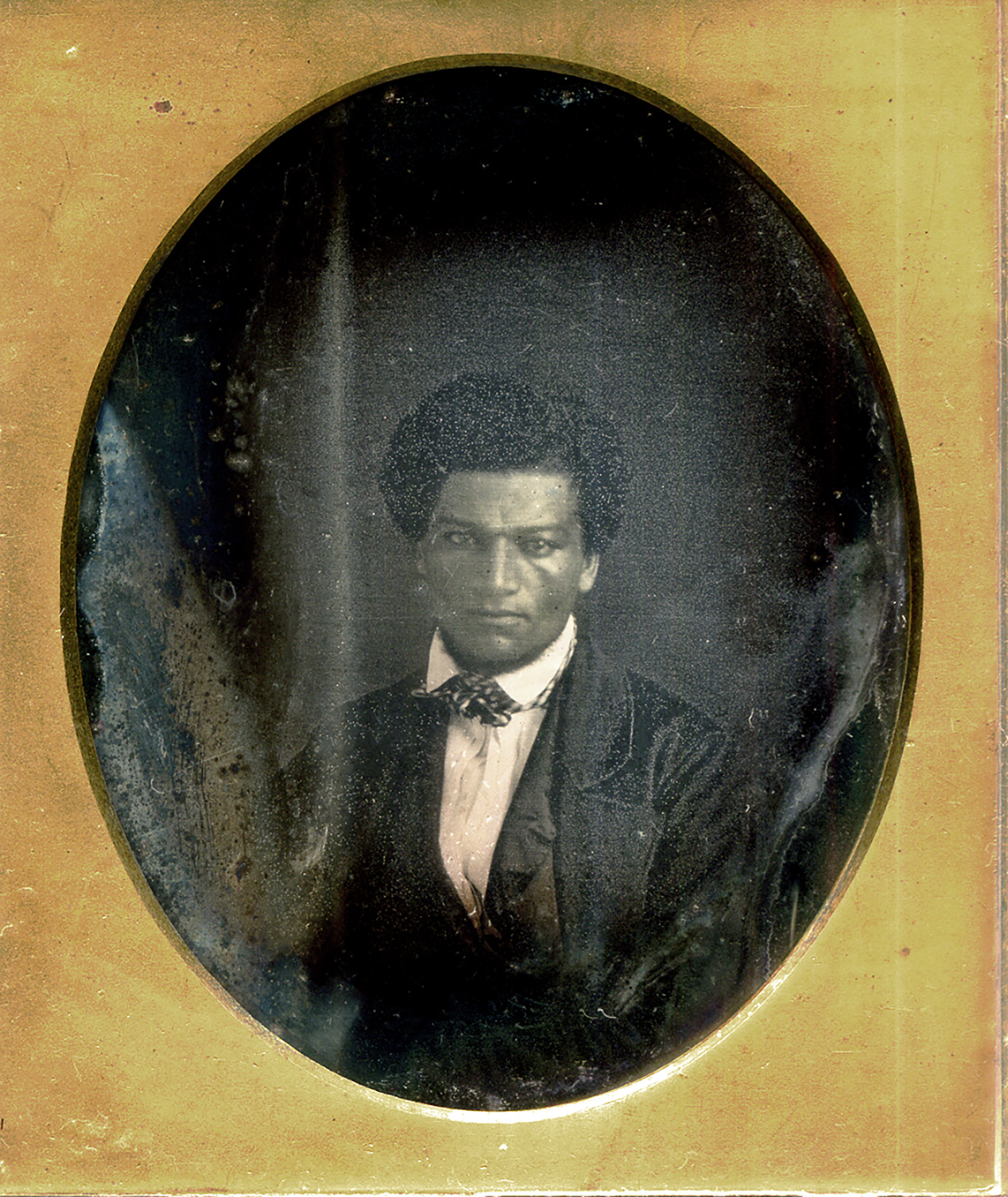
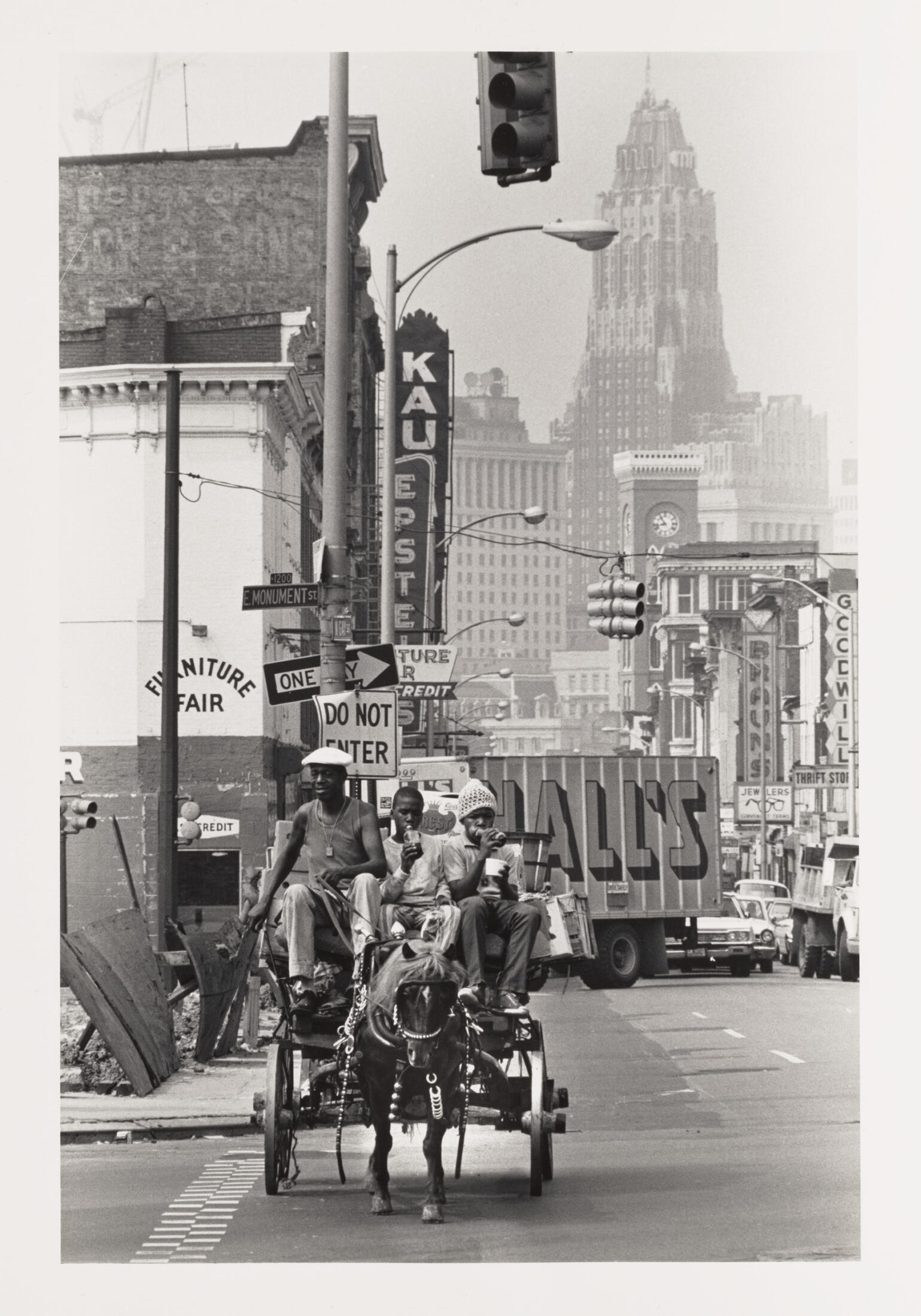
There is the first known photograph of Baltimore. And the first known portrait of the one-time Baltimorean, Frederick Douglass, who became the most photographed American of the 19th century. There are both marble steps and the blazing Great Fire by famed Baltimore Sun photographer A. Aubrey Bodine. There are arabbers and rowhomes by revered Smithsonian documentarian Roland Freeman. And, of course, that Time cover by Devin Allen.
Most behind the camera are Baltimoreans—both lesser known and legendary. Others were just passing through. Yet still found a muse in this city.
Other highlights: the reading room, featuring a house-made newsprint in an old City Paper box; a city-inspired soundtrack by Baltimore Club producer Ultra Naté; and a library curated with help from community members like Baltimore Photo Space, Press Press, and Ben Egerman of A Gay Little History of Maryland.
There’s also the What Goes Down When You Love Somebody video installation by the power trio of Nia June, Kirby Griffin Jr., and APoetNamedNate; plus encased photobooks we wish we could physically peruse, like Shae McCoy’s West Baltimore Ruins; and a World War II-era file drawer featuring 46 mugshots of shoplifters.
In the end, Flashback is a rich portrait of this town, considering the ways in which photography not only records history but shapes it. Co-curated by the BMA’s curator of prints, drawings and photographs Leslie Cozzi and assistant curator of contemporary art Antoinette Roberts—with an assist from an advisory panel that includes heavyweight cultural historians like True Laurels’ Lawrence Burney, Afro Charities Deyane Moses, and Angela N. Carroll—it is a vital archive that adds new weight to its already historic creative legacy.
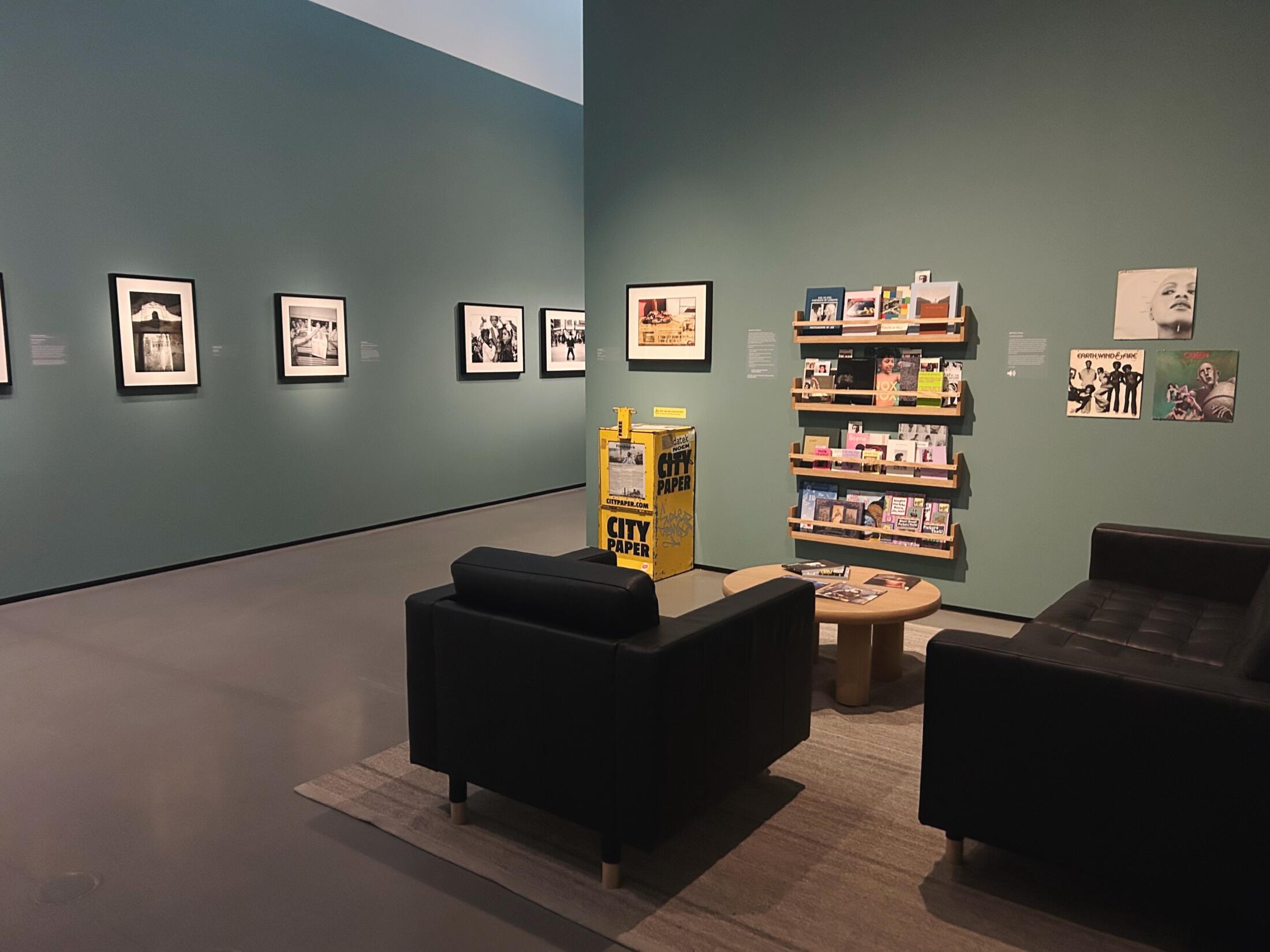
On view through February 2027, this is a ticketed exhibition, with discounted admission on Thursdays after 5 p.m., and free entry on Nov. 22 and Jan. 17. Prepare to learn a lot (did you know that the first photo studio here was opened by the inventor of the commercial camera?) and leave with a profound new layer of perspective on Baltimore.
And while every work is worth a pause—including the entrance’s family portrait by Phylicia Ghee, some surrealist limbs by Connie Imboden, an 81-part photogram by Kei Ito—below are a dozen not to miss.
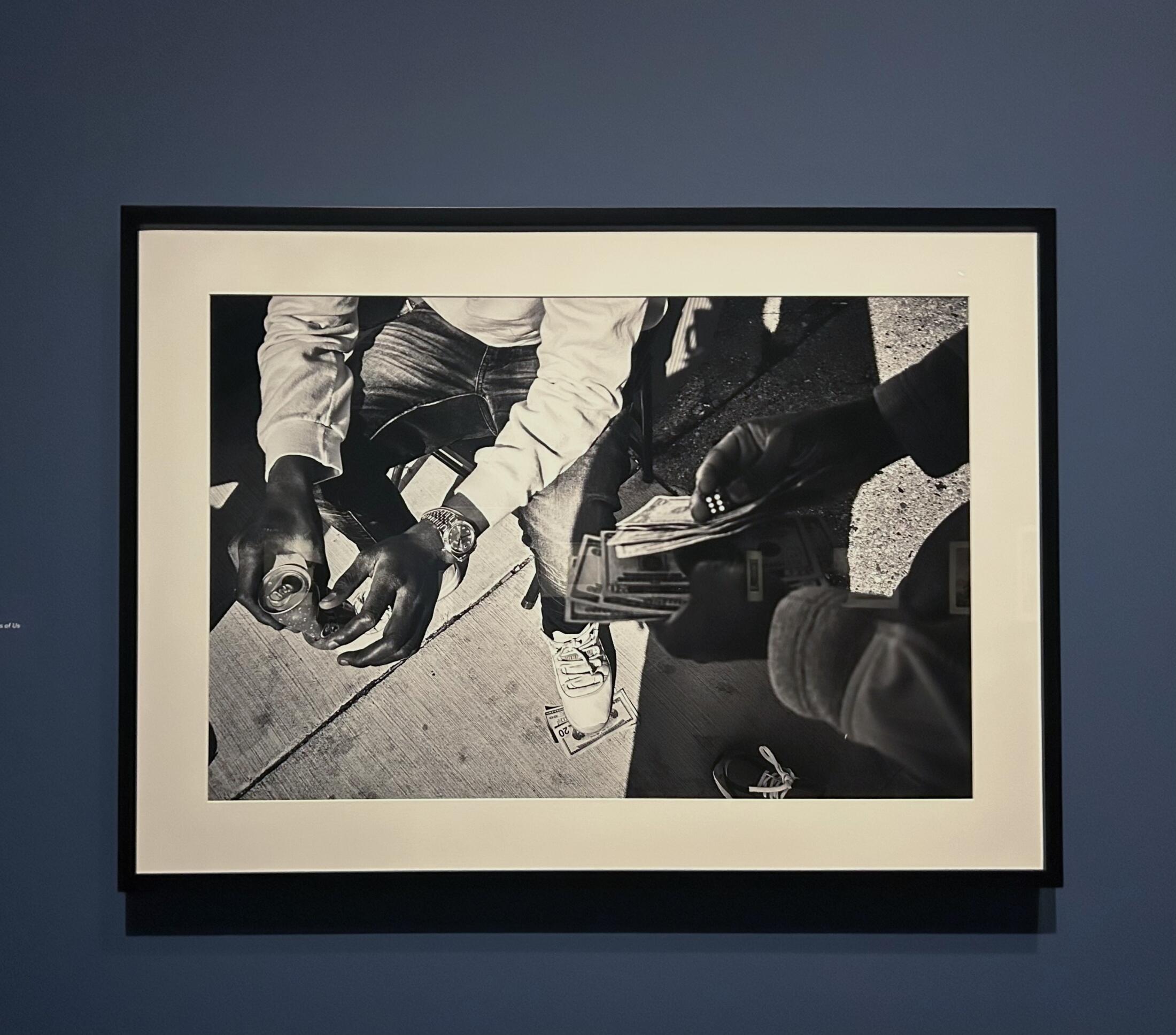
“7-11 7-11 Seven” by Devin Allen
When you think of street photography in Baltimore, Devin Allen is likely now the first artist who comes to mind. His 2015 photographs of the Baltimore Uprising following the death of Freddie Gray launched him on to the cover of Time magazine. That led to his first book, A Beautiful Ghetto, in which he defies stereotypes about and captures the courageous spirit of his hometown. See many of these seminal works throughout the exhibition.
But this 2022 photograph was new to us. Shot from above as if a player himself, Allen’s image magically stops the motion of a sidewalk craps game. The bright sunlight, the cast shadows, the hands moving and feet at the ready—you can feel the pulse of Baltimore.
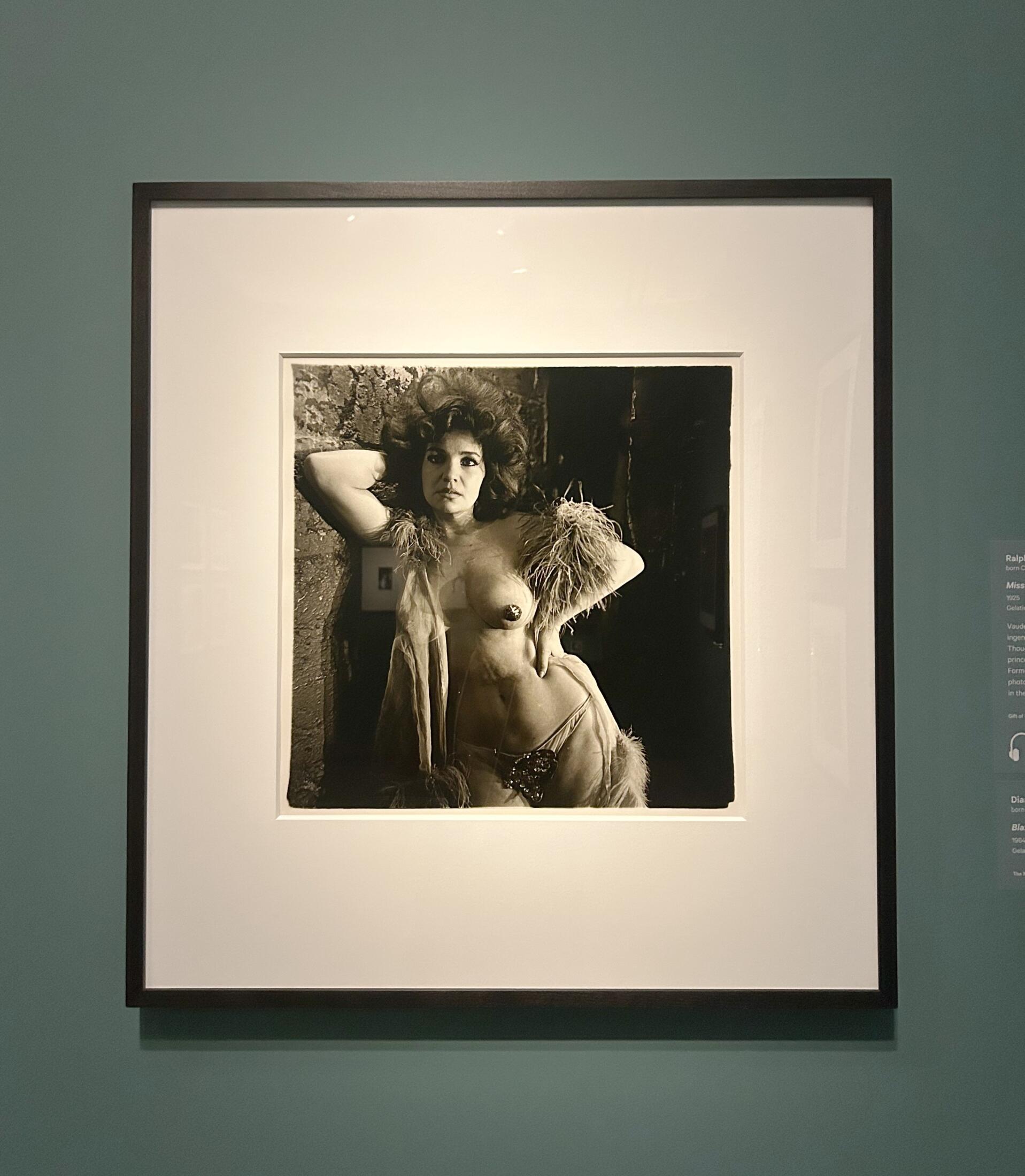
“Blaze Starr Backstage” by Diane Arbus
In 1964, Esquire magazine ran a profile on the nation’s most famous burlesque star—Baltimore’s own Blaze Starr. To photograph the piece, they sent then-New York City up-and-comer Diane Arbus, who shot the Two O’Clock Club owner both at her home and on The Block. In a barely-there get-up of feathers, tassels, and jewels, the legendary stripper stands with the same sex appeal and attitude that has made her the stuff of legend.
This black-and-white portrait was likely taken on Arbus’ classic medium-format Rolleiflex, and there’s something about the raw edges that feel so right for the matriarch. (Nearby, spot another Baltimore icon: a photo-booth-style series of drag queen Divine, shot by partner-in-crime John Waters.)
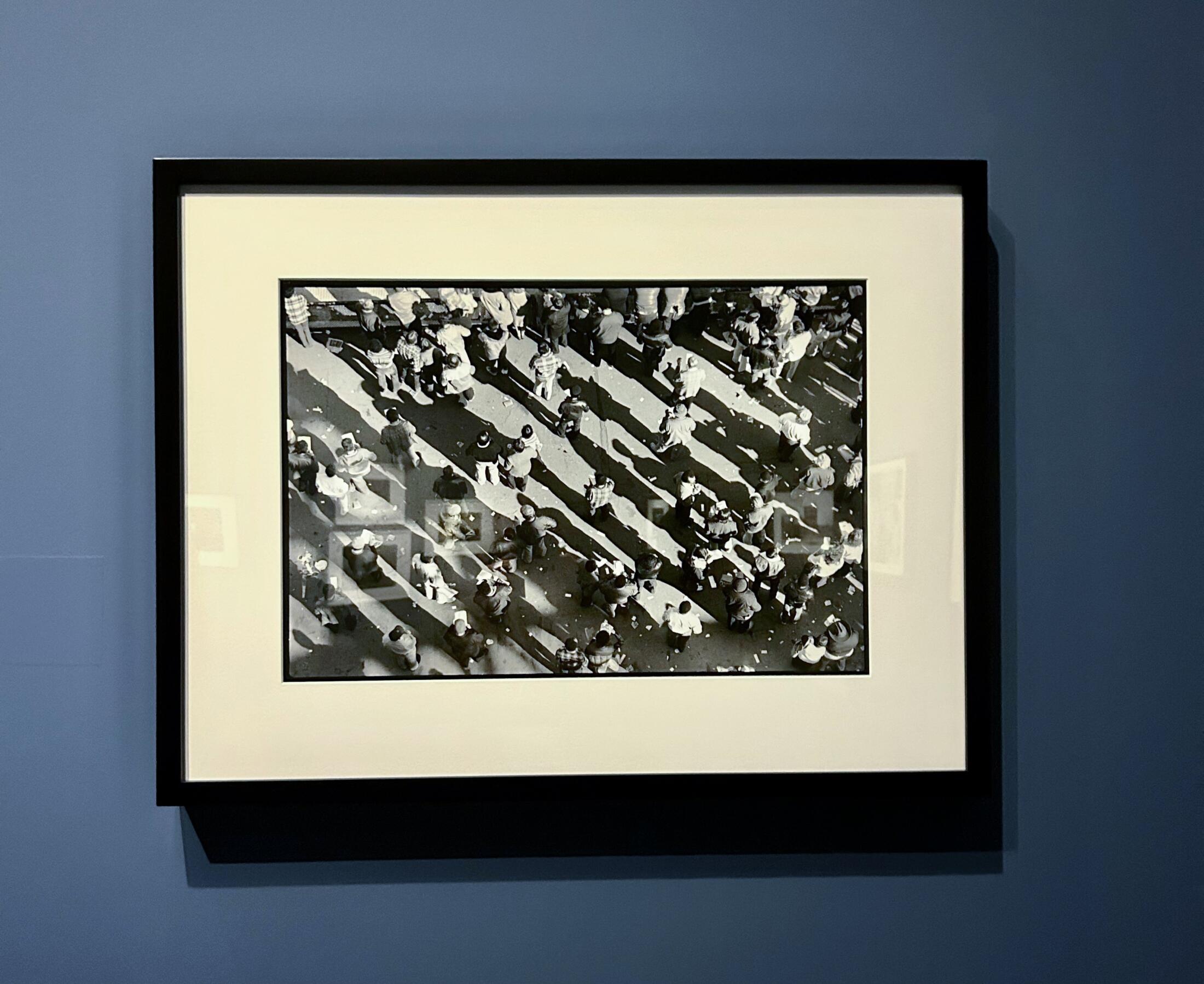
“Pimlico Racetrack” by Jim Burger
In the late ’70s, this Rust Belt Pennsylvania kid came to Baltimore to study art at MICA. A love for photography landed Jim Burger as a longtime staffer at City Paper and The Baltimore Sun, with some shots in the old pages of this magazine to boot. Whether it’s a portrait of postal workers, firefighters, barflies, racetrack bookies, Camden Yards ushers, or the Natty Boh nude (a copy of which fittingly hangs in the bathroom at Peter’s Inn—if you know, you know), his images epitomize the everyman and at times eccentric spirit of this town.
As if pulled out of time, many of the spots are long since gone and the street corners are now unrecognizable. This 1980 horserace scene captures the commotion—an expectant crowd tangled in shadows and trash.
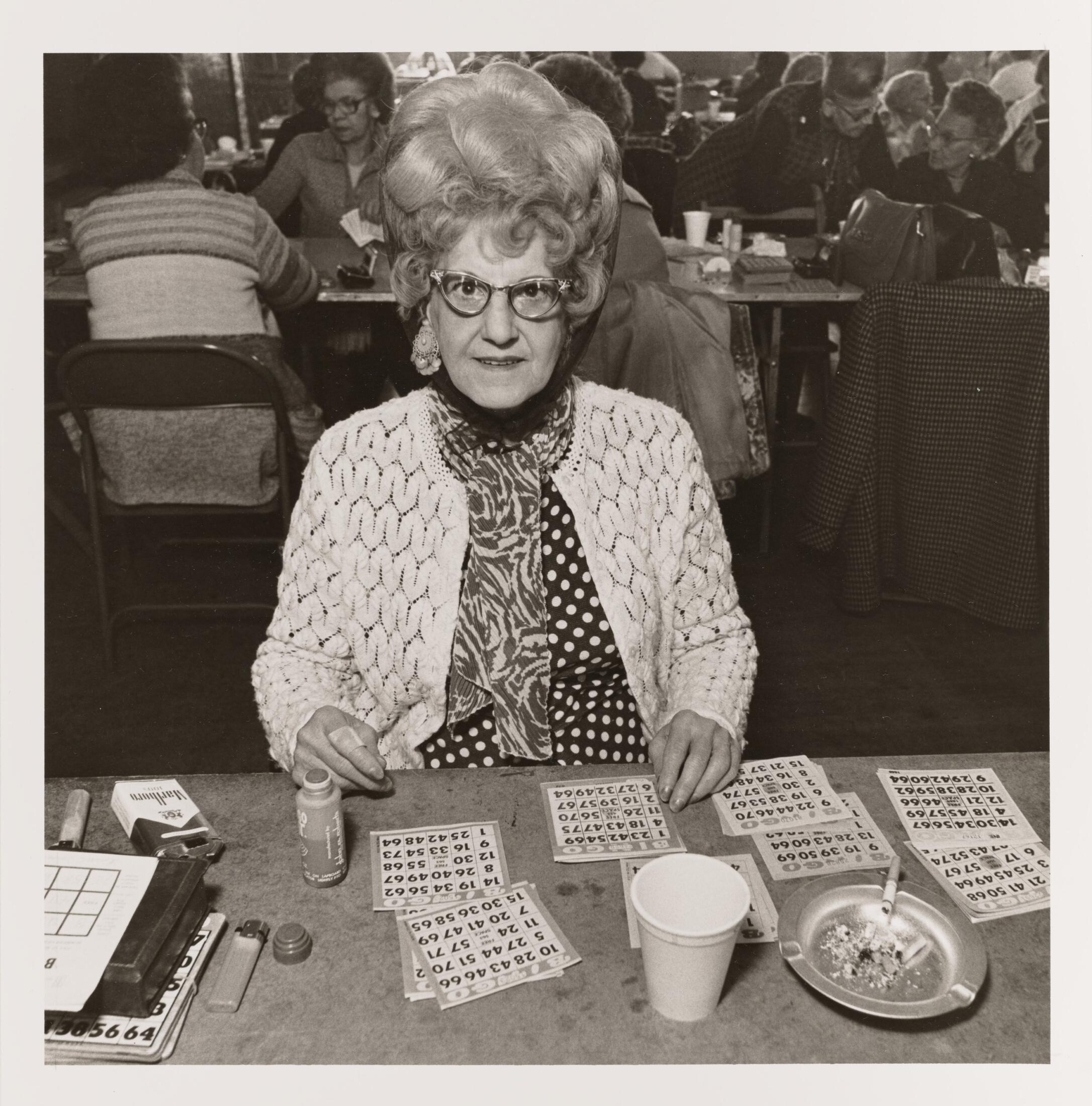
“Saturday Evening Bingo at St. Casimir’s in Canton” by Elinor Cahn
Elinor Cahn was a late bloomer. The Baltimore native came to art in her 40s, earning a degree from the Maryland Institute College of Art, where she met fellow student Joan Netherwood and professor Linda Rich. In the 1970s, the three women came together to photograph the changes and challenges faced by those living in East Baltimore, documenting the diverse multitudes of these communities.
The result was a survey of more than 200 photographs, now held in the Smithsonian. Several are on display in the exhibition, but our eyes immediately went to this portrait. With a pack of cigarettes, pair of cat-eye glasses, perfectly coiffed beehive, and stare straight into the camera, it begs of Cahn’s bingo playing subject: Who is she? And brings to mind the many past lives of Baltimore.
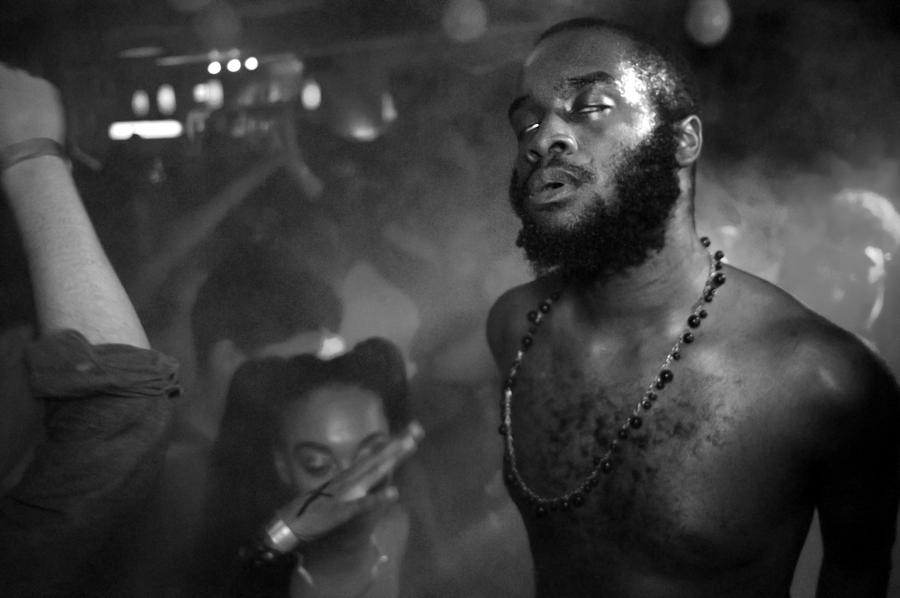
“Abdu Ali at The Crown” by Audrey Gatewood
It’s easy to feel a sense of nostalgia for periods of past Baltimore. For some, standing in front of this circa-2016 photograph taken at The Crown in Station North will certainly evoke that sensation. This was a potent time for the local arts scene, with a new class of movers and shakers infusing a newly electric, experimental, and open-armed energy into the DIY community.
Back then, Audrey Gatewood‘s black-and-white images bottled the magic of that moment, as seen here in this euphoric moment with musician Abdu Mongo Ali, whose Kahlon parties transformed The Crown from a dingy dive on North Charles into a vital third space for underground art. You can smell the sweat in the air, feel the bass in your ribcage, remember that feeling of collective transcendence. (Across the way, also see Josh Sinn’s Untitled, catching a moment in time at The Sidebar, another late, yet legendary venue.)
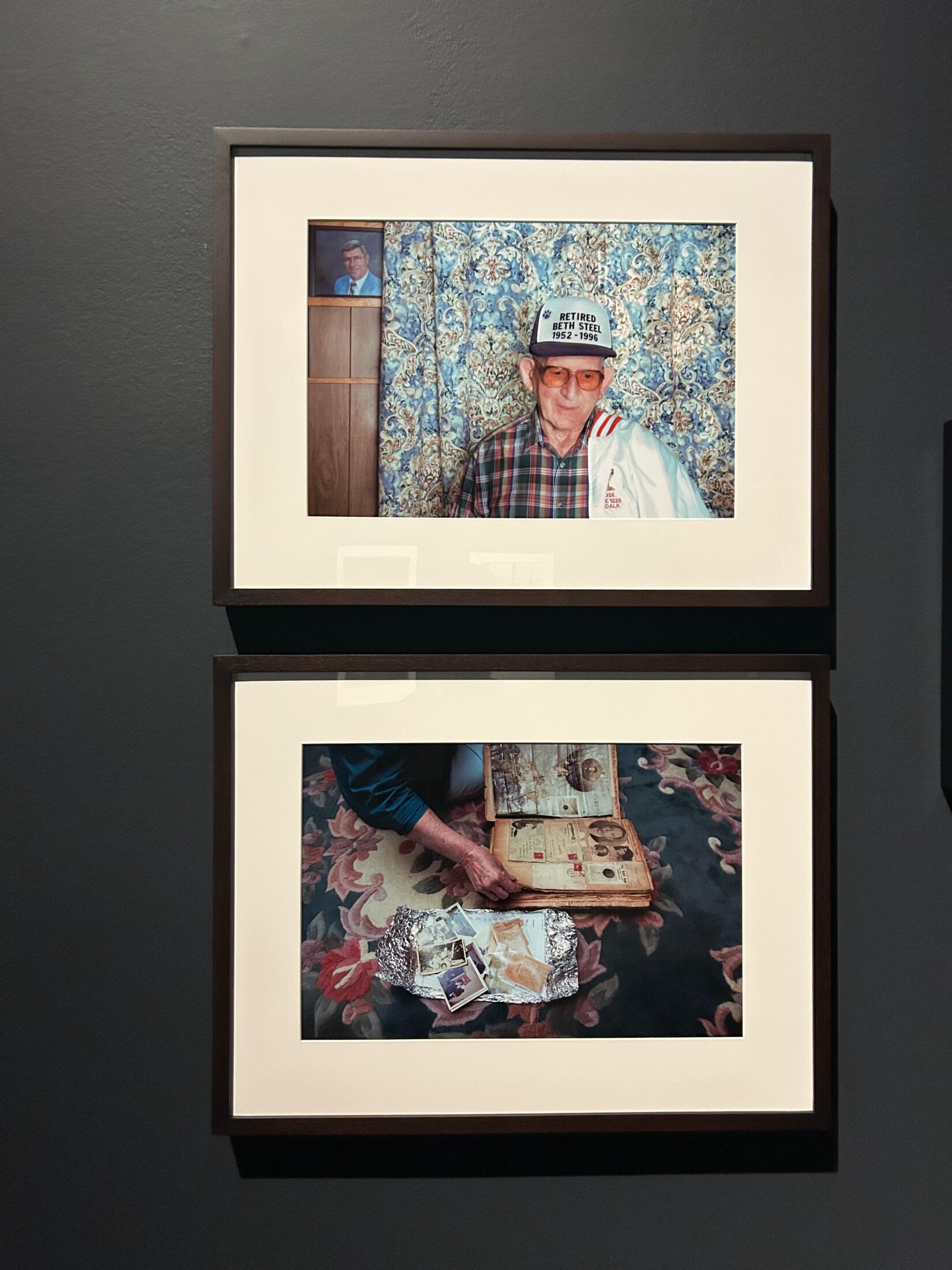
“Pete” by Joseph M. Giordano
Many Baltimoreans know Joe Giordano from his days as a photojournalist for City Paper (and now regular contributor to this very magazine). But what can come as a surprise is that he’s a steelworker’s grandson who grew up in Dundalk. He paid homage to this East Baltimore history in the Baltimore Museum of Industry’s recent Shuttered exhibition, which featured images that documented the decline and demise of the Bethlehem Steel mill at nearby Sparrows Point, taken over more than 15 years.
In this poignant color portrait, one of the tens of thousands who were employed by this industrial behemoth still wears his tenure with pride. Later in the exhibition, pause with a sampling of his protest photography.
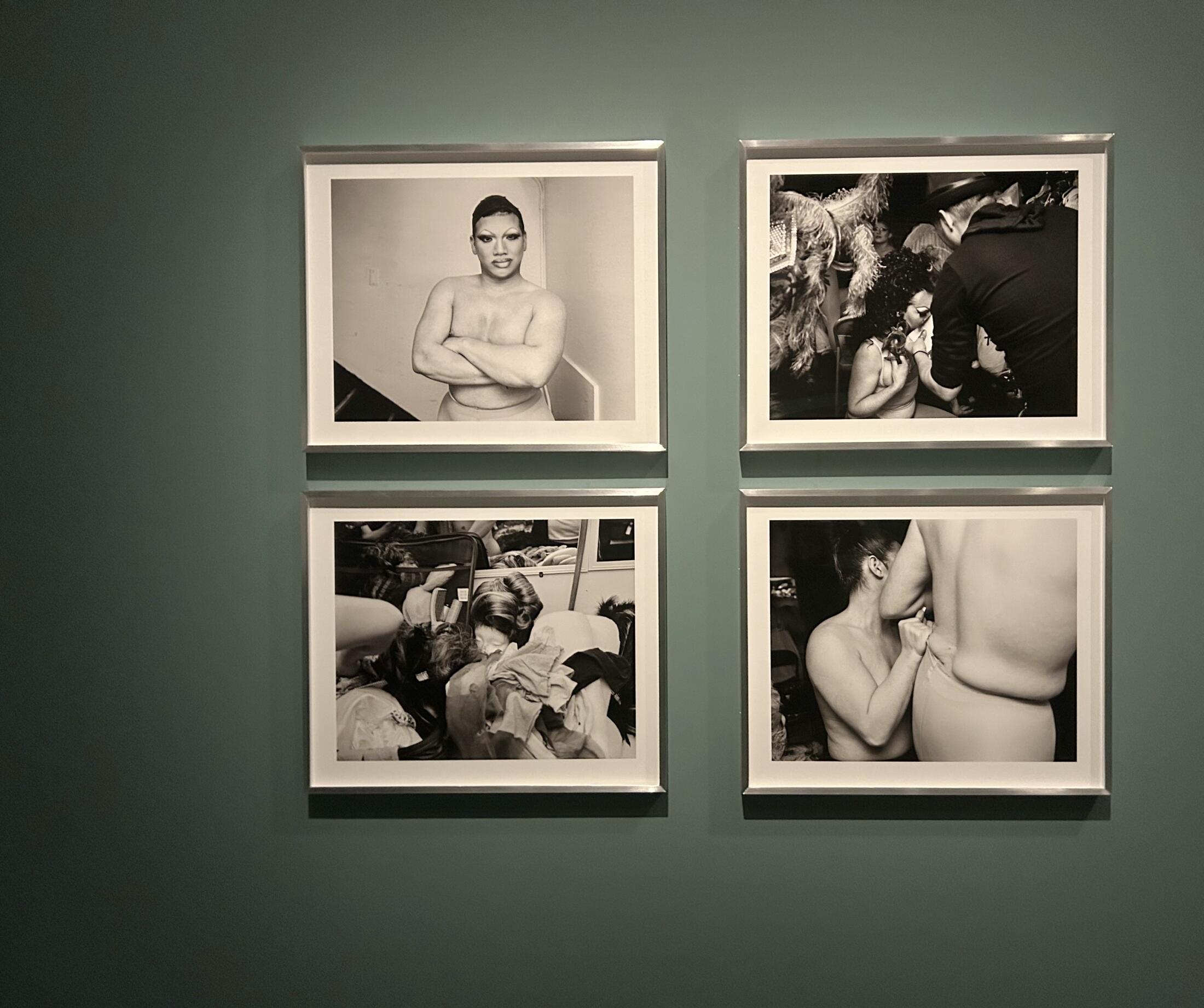
“Sophia Campbell” by Elle Pérez
It’s hard to pick a favorite out of the four featured photographs from Bronx native and MICA grad Elle Pérez. They’re a behind-the-scenes glimpse into the Euforia Latina night at Club Hippo, taken during the artist’s shift at the beloved LGBTQ venue in 2014, a year before it closed after four decades, in a major loss to the community.
On this night, performers prepare for the drag competition, inspired by Tejano singer Selena Quintanilla. Mid-dress, Sophia Campbell stares down the camera with a bold swagger. Piles of wigs wait to be adorned. Makeup is touched up. Pantyhose are adjusted with a friend’s tug. Backstage, there is hustle, tenderness, transformation.
(In the opposite corner, take in the two annotated portraits by Amos Bardertscher for a snapshot of queer culture from two decades earlier.)
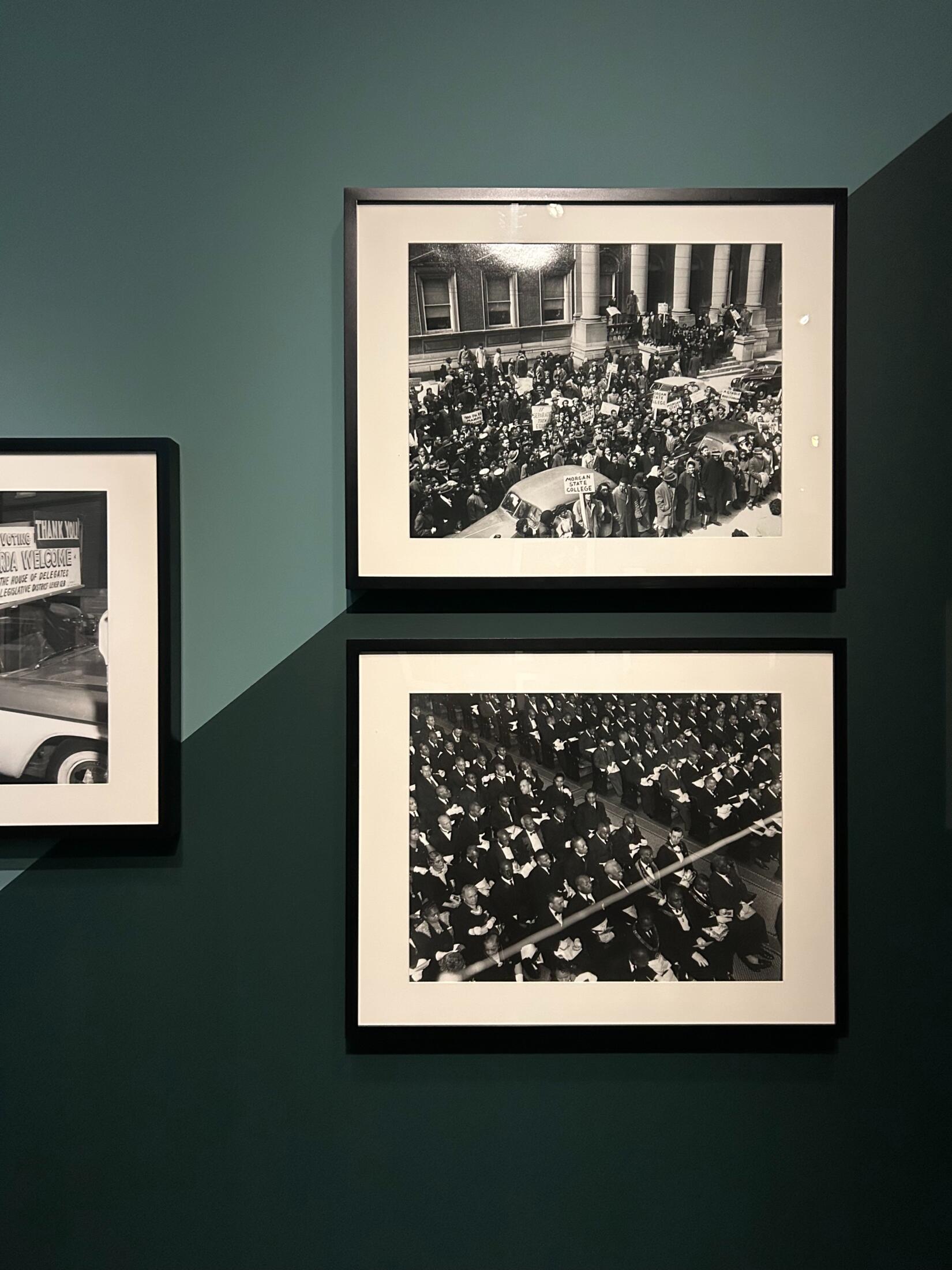
“Separate but Equal” by Irving Henry Phillips Sr.
Irving Henry Phillips Sr. is one of the all-time great photographers of Baltimore, where he was born and raised. Working for the Afro-American newspaper and NAACP from the mid to late 20th century, he chronicled everyday life in the city’s Black communities, from swimming lessons to working the waterfront, as well as some of the nation’s most historic moments, like Martin Luther King Jr.’s funeral, leaving behind a vital archive.
In this powerful image, he documents a civil rights protest at what was then Morgan State College in the 1950s. From a bird’s-eye vantage point, overlooking a crowd of hundreds, he captures the immensity of this moment and this city’s place within it. See the image in its full glory here, and be sure to follow the work of Webster Phillips, who is illuminating his grandfather’s legacy through the I. Henry Photo Project.
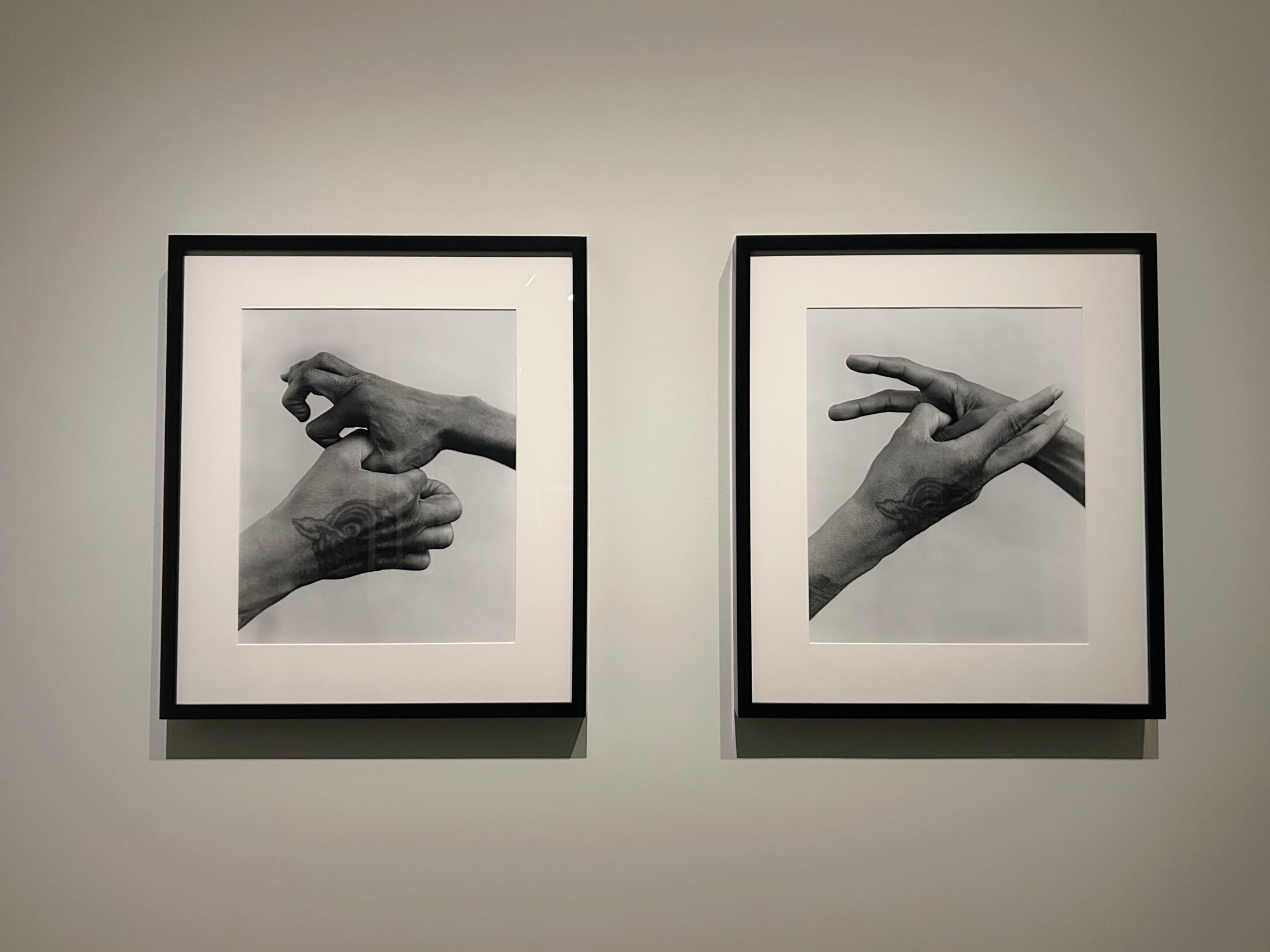
“Handshake #12” and “Handshake #9” by Gioncarlo Valentine
Gioncarlo Valentine is a powerhouse talent and photographer to the stars. Perhaps you’ve seen his portraits. He’s shot actor Michael B. Jordan, singer John Legend, comedian Maya Rudolph, activist Ava DuVernay, and poet Ocean Vuong, to name a few. For the likes of Rolling Stone, The New York Times, The New Yorker, Variety, even that great Gap ad a few years back on the streets of Baltimore, Valentine’s hometown.
And it’s no surprise—his works are up close, crisp and powerful, often black-and-white against a luminous backdrop, garnering him an American Masters nod from PBS. Find many throughout the exhibition, but stop for a while with this pair in the final gallery.
The photographer’s work upends stereotypes and elevates Blackness. Here, young men’s hands twist in gang signs. Suddenly, the potential of violence is transformed into a poignant display of intimacy.
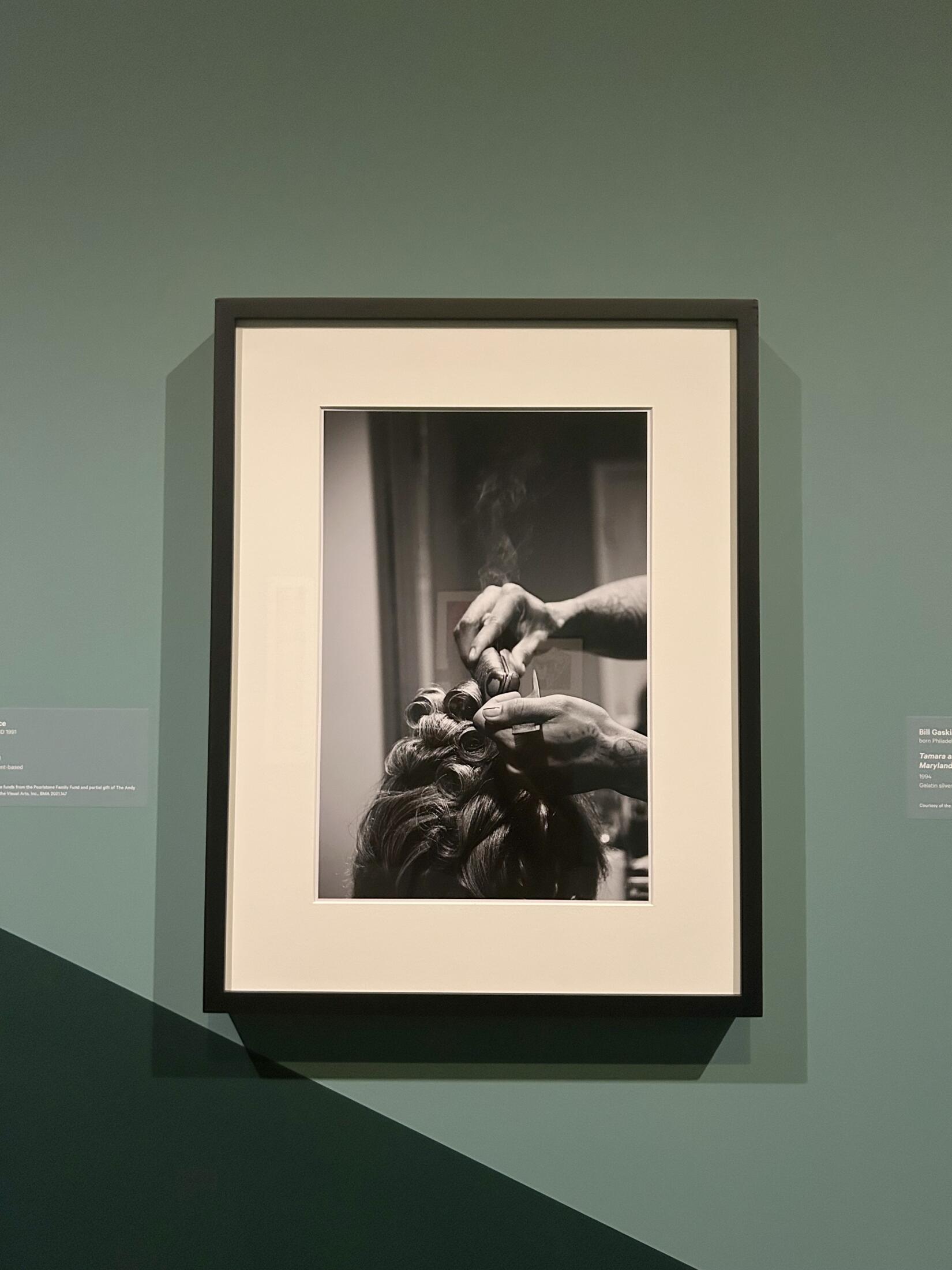
“Salon Infiniti” by SHAN Wallace
We’ve long loved the work of SHAN Wallace. Her early street photography. Her True Laurels portraits. Her documentation of the last days of Lexington Market, also featured in the exhibition. Her recent collage work. But strolling through the galleries, this circa-2018 image became a new hidden-gem discovery. Tucked into a trio of images that show off Baltimore’s long love affair with big hair, it’s a quiet study of ritual and care, born out of her Sisters with Stories project about Black woman-and-girlhood.
A bright light shines down from above onto the work at hand. Steady fingers reach grip hot tendrils that send steam into the air. The subjects remain just out of view, focusing your gaze on the exchange. Though shot at its namesake beauty parlor in Old Goucher, the combination of title and composition evokes the sort of timelessness that can happen in these spaces. Where the struggles of the day can wash away. Where you emerge feeling embodied and beautiful.
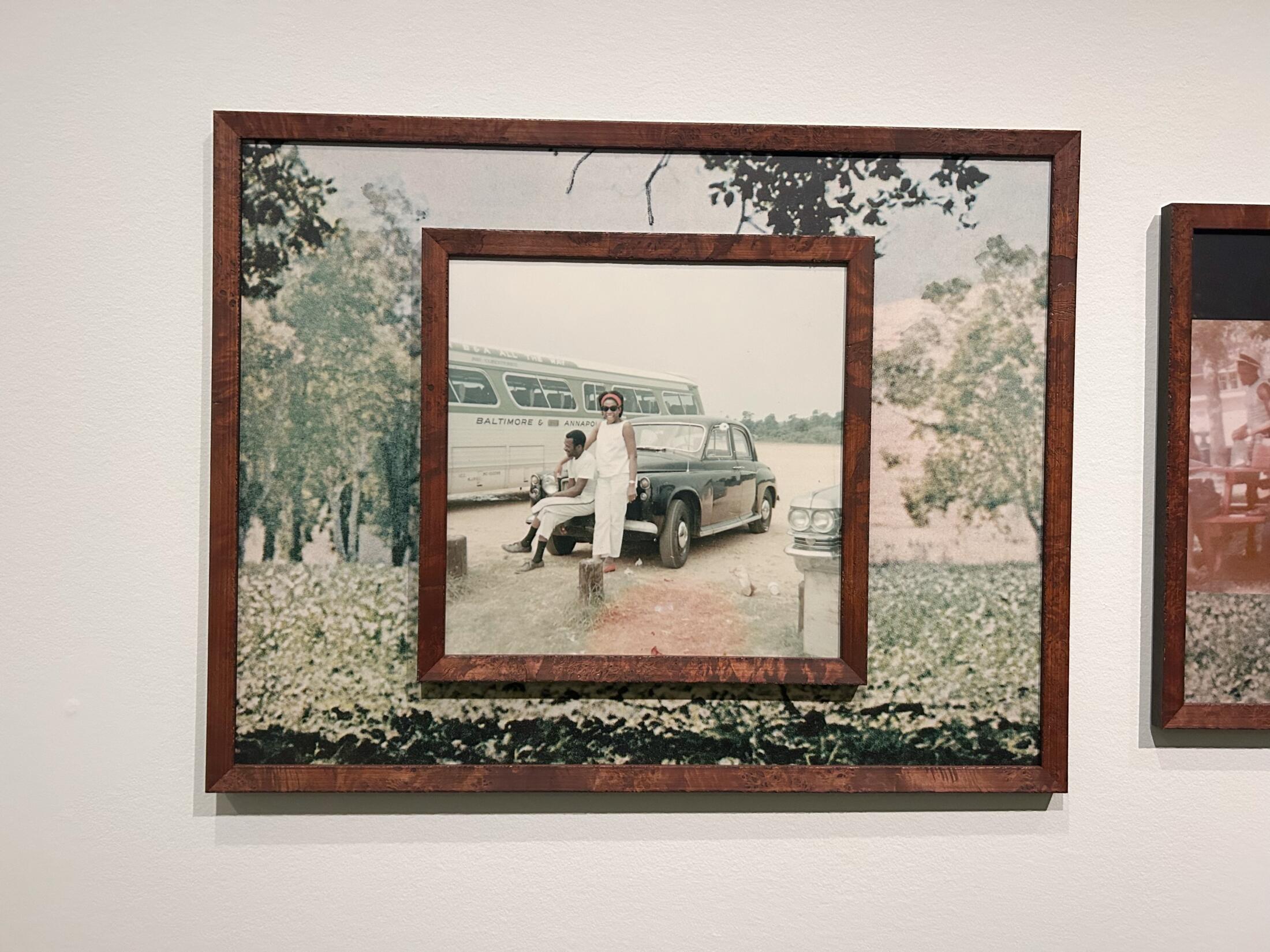
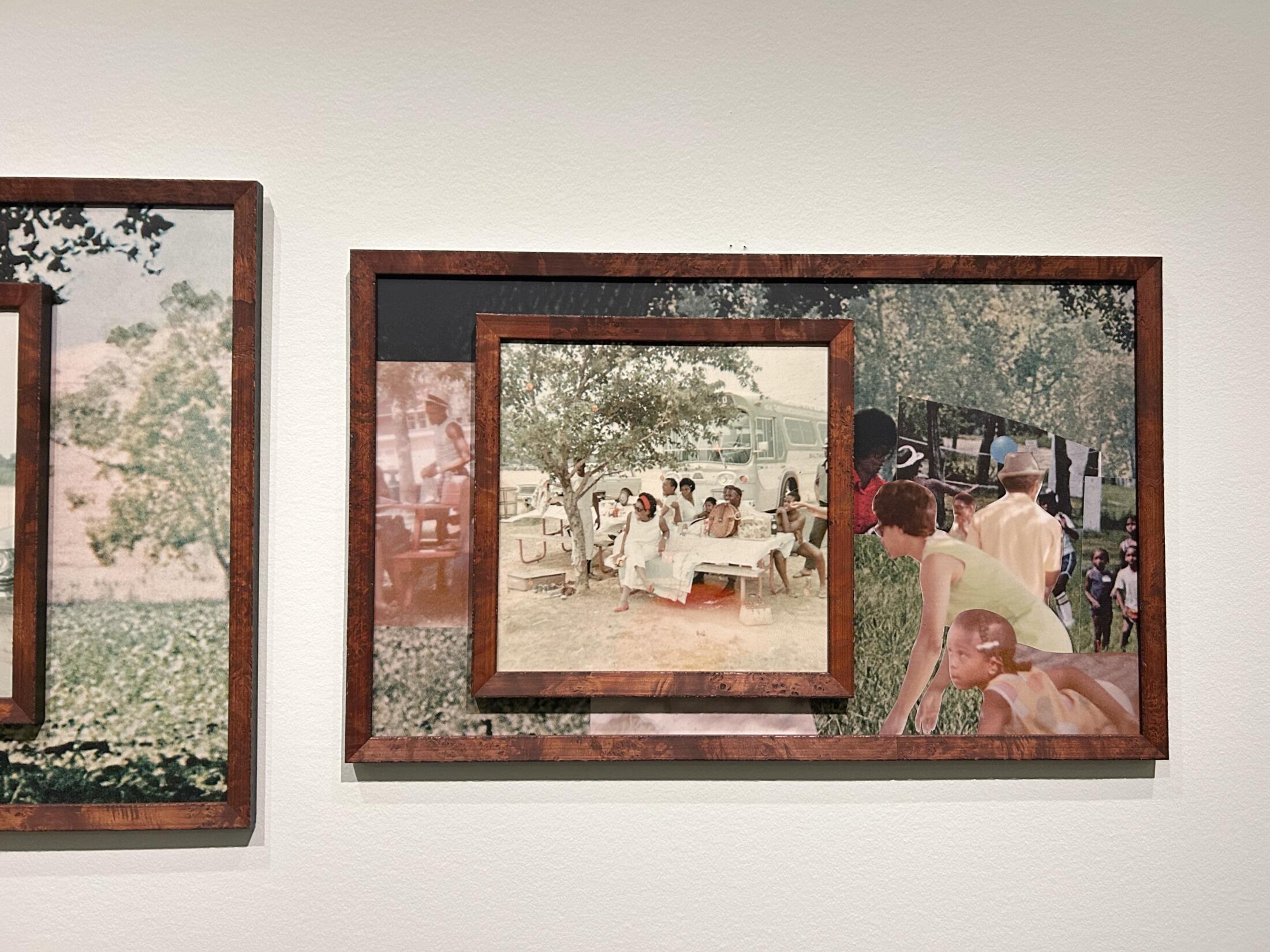
“The Get Together” by Bria Sterling Wilson
“Saudade” is the Portuguese word to describe a deep longing for something that might have been or once was. That’s the feeling at the heart of this diptych of photographic collages by Bria Sterling Wilson, our 2024 “Artist to Watch.”
Combining family photographs taken before her time and found imagery from vintage magazines, the Baltimore native creates a tender tribute that tethers the past and present—a way to connect with her ancestors, to build her own memories. But even for strangers, the window into this faded yet familiar world brings up the deeply human joys of community and summertime. It’s one of three works by local artists recently acquired by D.C.’s prestigious Phillips Collection, where it was on view this summer.
For more on Flashback’s inspiration and historical significance, read our interview with BMA curators Leslie Cozzi and Antionette Roberts, here.