Arts & Culture
BMA’s New ‘Flashback’ Exhibit Explores Baltimore’s Role in the Evolution of Photography
Curators discuss the first-of-its-kind showcase, which amplifies work from more than 90 artists spanning two centuries.
At one point during their research for Flashback: Two Centuries of Baltimore Photography, a first-of-its-kind exhibition that opened Oct. 4 at the Baltimore Museum of Art, curators Leslie Cozzi and Antoinette Roberts decided they should try to find the first photo ever taken of the city. Remarkably, they did. It’s an 1840s daguerreotype by Henry Fritz Jr. of a fish market that is now the site of the Port Discovery Children’s Museum. Equally remarkable, the photo somehow still evokes Baltimore, which is one of the themes of the show. There is an entire section in the massive exhibition devoted to rowhomes and the show traces an unmistakable continuity across the past 185 years.
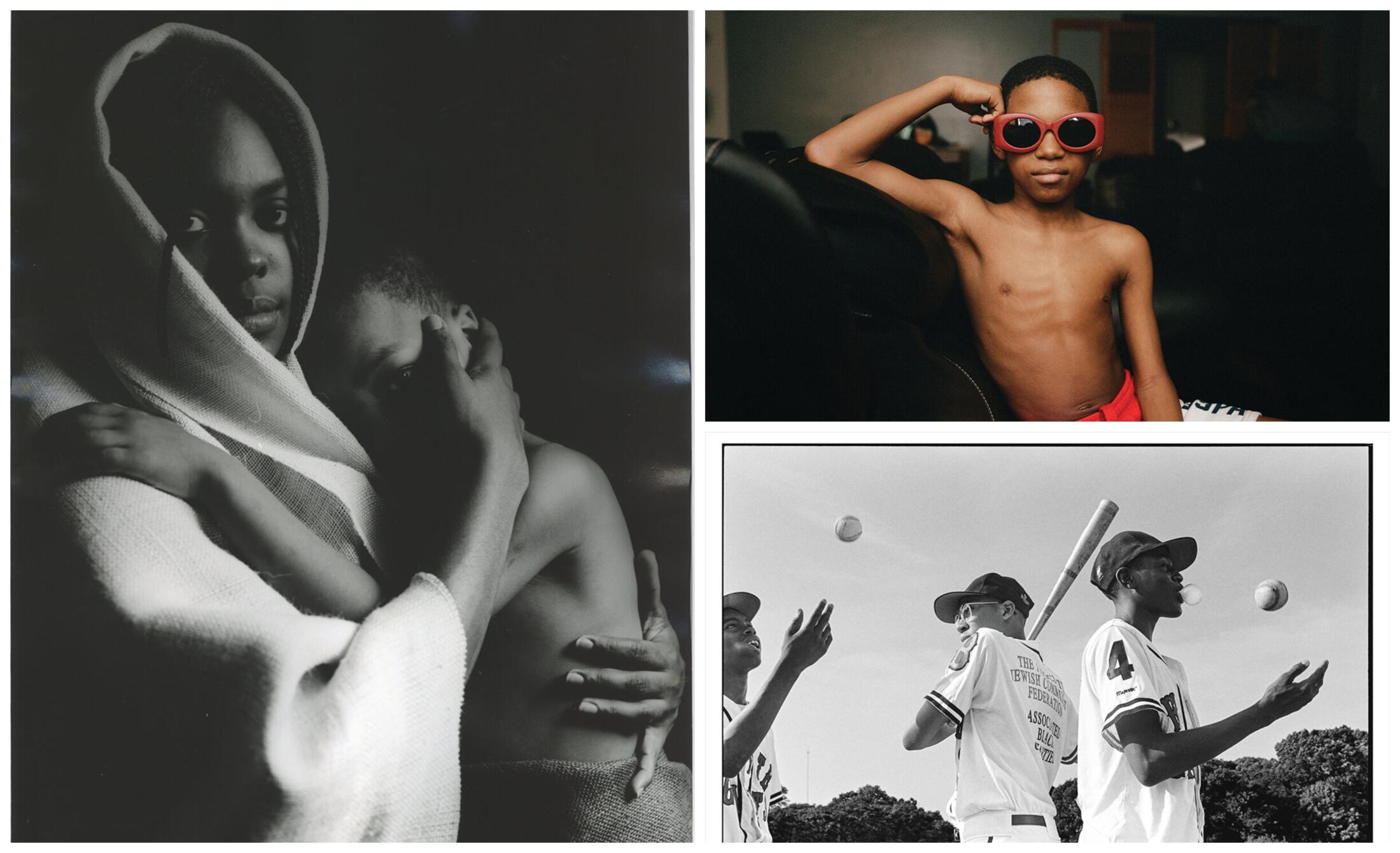
Baltimore, however, isn’t just the subject of the exhibition. Flashback also highlights Baltimore’s role as a driving force in the history and evolution of photography. Among the featured artists who have documented the city’s people, neighborhoods, and defining moments are legendary photographers like A. Aubrey Bodine and I. Henry Phillips Sr.—as well as current acclaimed artists, including Devin Allen and SHAN Wallace. The exhibition features more than 200 works from 90 artists, many of whom BMA visitors no doubt will be discovering for the first time.
Here, we discuss the exhibit with the museum’s head of prints, drawings, and photographs Leslie Cozzi and assistant curator of contemporary arts Antionette Roberts.
The exhibition’s earliest works are extraordinary—and unexpected.
Cozzi: One year after the invention of photography, Henry Fritz Jr. opened the third photo studio in the country in Baltimore in 1840. It’s amazing.
There are more images of Baltimore from the Civil War period than most people probably realize.
Roberts: This idea that Baltimore feels like Baltimore is represented in so many throughlines and cyclical themes. I think where that is most true is in the Civil War material. The idea of Baltimore as the northernmost southern city and the southernmost northern city comes into play. There were popular Baltimore photo studios during the Civil War and some were Confederate sympathizers and circulated images of Confederate soldiers and Confederate generals, including Robert E. Lee. Others leaned heavily on the Union side and circulated photographs when Union soldiers passed through Baltimore, starting in 1860 with the Pratt Street Riot, which is the first bloodshed during the Civil War.
It’s the documentation of deep, long-running fault lines.
Roberts: Yes. That connects later on, for example, with the Civil Rights material. Martin Luther King driving through Baltimore after being nominated for a Nobel Peace Prize and reaching out [from the backseat of a convertible], and this remarkable image where he’s holding like 12 people’s hands…to the Baltimore Uprising, photographed by folks like Devin Allen and Joe Giordano who are capturing the way Baltimore advocates for itself, how it spills out onto the streets, and also the way that photographers participated in that. We were dedicated to picturing their community in a way that did not flatten them, that showed a holistic view of the community as citizen reporters, as community activists, but also as people who take care of one another.
I feel like a number of photographers, Black photographers, in particular, have gone terribly under-recognized, even in Baltimore, including Roland Freeman and Carl Clark.
Cozzi: God, I’d agree with that. I’d add Linda Day Clark, who was married to Carl; Kenneth Royster; John Clark Mayden. One thing this show does is draw out this important history of Black photojournalism. There are two names the mainstream world knows, Roy DeCarava and Gordon Parks, but there was a whole history before they appear, and The Afro is an important part of that history. I. Henry Phillips [who shot for The Afro] is an important part of that story. I think there’s 14 works by I. Henry Phillips Sr. in the show, which is the largest single artist representation.
We should note there are fun images here, too, and from artists outside of journalism.
Cozzi: Yeah, and well, we both have a girl crush on Paula Gillen, who was a student at MICA in the 1970s when color photography was being introduced into the academy. You’ll see her experimenting with color, picturing her friends doing wacky performance art and in costumes and creating really fun, beautiful images when color is first entering the scene. It was also feminist commentary in an interesting way. There’s one called “Bad Girls” and it’s two women and they have their pigtails clipped to the clotheslines.
This is a terrible ask. Do you have a favorite personal image?
Roberts: It’s a suite of images. Cary Beth Cryor began photographing herself when she was pregnant with her daughter Jasmine. She brought the camera into her delivery room, and then she photographed Jasmine at the end as a toddler. They’re beautiful, spectacular images of his rite of passage. You see her technical prowess. But she had to fight the doctor to bring the camera into the delivery room. She takes a picture of her daughter crowning as she gives birth in the convex mirror. There’s so much you can read within this image.
Watch this space for a preview of more Flashback works not to miss from our arts editors.