At the Baltimore Museum of Art, a homecoming is underway. For many years, Amy Sherald studied, lived, and worked in this city—first as a master’s student at the Maryland Institute College of Art, under famed painter Grace Hartigan, then as a working artist, with studios near Lexington Market, at the Creative Alliance, and in Station North’s Motor House.
But now based in New York, the Georgia native returns to her one-time hometown this month as one of the most influential figurative painters of the 21st century. On view in the BMA’s Contemporary Wing from November 2 through April 5, 2026, American Sublime is the most comprehensive exhibition of Sherald’s work to date, with the mid-career retrospective featuring nearly 40 paintings that trace the arc of her illustrious career—from foundational pieces of the early 2000s to her most iconic masterworks of the past decade, such as the official portrait of First Lady Michelle Obama and a memorial portrait of Breonna Taylor.
Over the past two decades, Sherald’s canvases have expanded the canon of American realism. Drawing on her own imagination and memories, giving her works a grand and otherworldly quality, each features a life-like subject in her distinctive gray-scale skin tones, encouraging viewers to look beyond outward appearances into the beauty, joy, and humanity of Black people in their everyday lives. Not just for the eye of the beholder, either, her subjects claim their space on the canvas, thus affirming their existence, experience, and truest selves.
More than half of the exhibition’s works were painted in Baltimore, during the artist’s formative years here—when she also received a Baker Artist Award and exhibited at the likes of the Reginald F. Lewis Museum and Galerie Myrtis—with a QR-code guide listing those with Charm City roots.
“Baltimore has always been part of my DNA as an artist,” said Sherald at the time of the exhibition’s initial announcement. “Every brushstroke carries a little of its history, its energy, its people, and my time there. To bring this exhibition here is to return that love.”
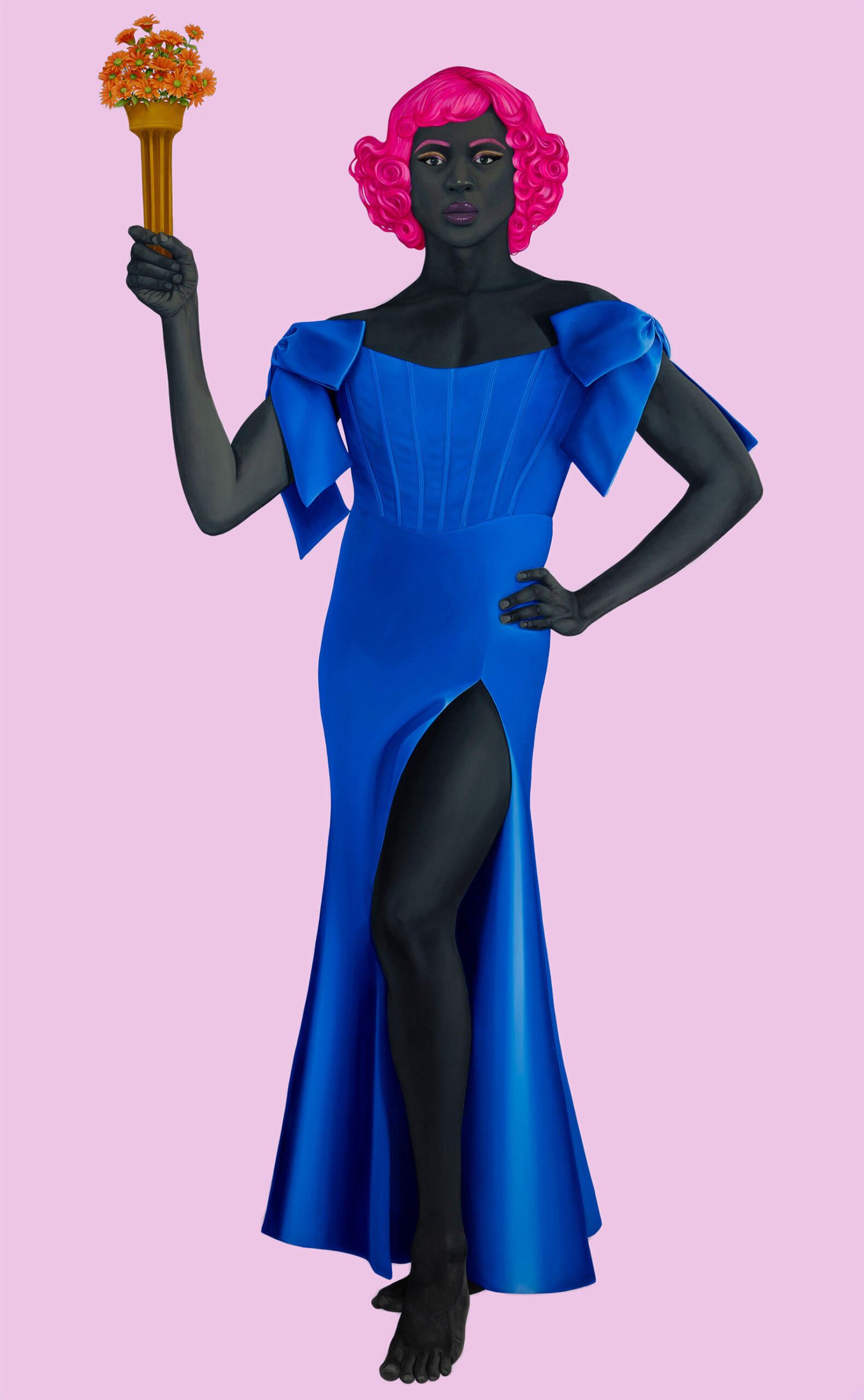
And it all happened quickly. From the San Francisco Museum of Modern Art in California to The Whitney in New York, this landmark showcase was slated to wrap its three-location run this fall at the National Portrait Gallery in Washington, D.C. But in July, Sherald canceled that last stop, after learning that the Smithsonian-led institution was considering the removal of one of her recent works—Trans Forming Liberty, depicting a transgender Statue of Liberty—“to avoid provoking President Trump,” per The New York Times, after the administration began launching attacks on their curators, claiming that they were sowing division through an emphasis on diversity, equity, and inclusion.
Shortly after the announcement, BMA director Asma Naeem texted the artist, asking if she might come to Baltimore instead. Sherald responded immediately. In less than two months, they pulled together the exhibition with contemporary art curator Cecilia Wichmann, assistant contemporary art curator Antoinette Roberts, among others. And the rest is now history.
“Can you feel the electricity of this moment, the specialness of this moment?” said Naeem during an exhibition preview on Wednesday. As was previously planned (but now feels especially serendipitous), the museum will also honor Sherald during its annual BMA Ball on November 22.
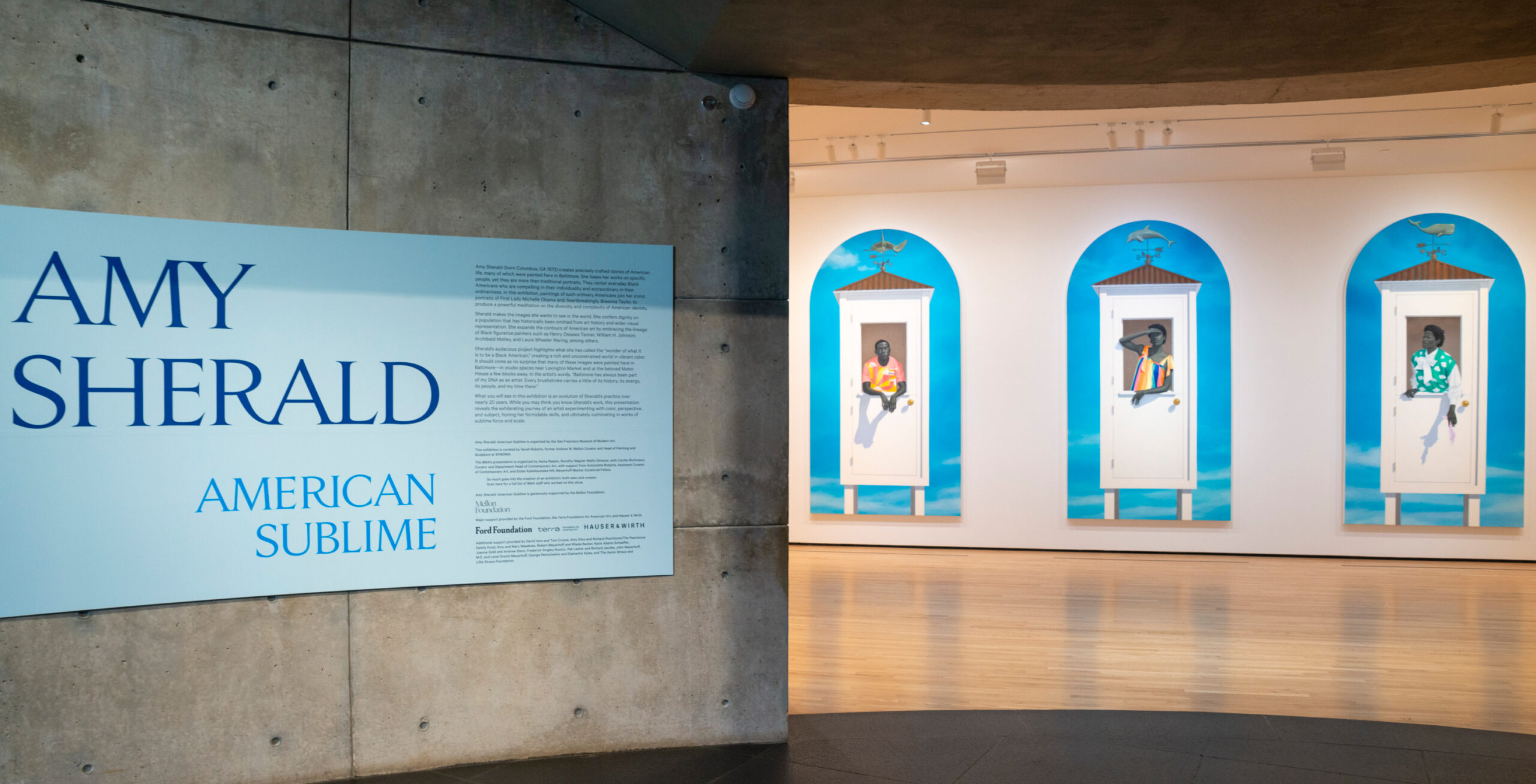
For a chronological experience, viewers are recommended to enter the exhibition from the right and follow the galleries counterclockwise. Along the way, Sherald’s evolution as an artist comes into relief—from her process and technique to her perspective and scale—culminating in her biggest and boldest work yet. Altogether, it’s a powerful and poignant collection that offers viewers an intimate moment of connection and reflection. Not to mention a sense of civic pride for Baltcimore.
Tickets are now available online, with free admission offered on November 2, January 15, and February 19. The artist will join Naeem for a sold-out, in-person conversation on November 2, though it will be streamed live on YouTube for all to see.
And while every work is worth a pause—including the soaring If You Surrendered to the Air, You Could Ride It and the Ecclesia triptych at the exhibition’s entrance—below are six Baltimore-centric pieces certainly not to miss.
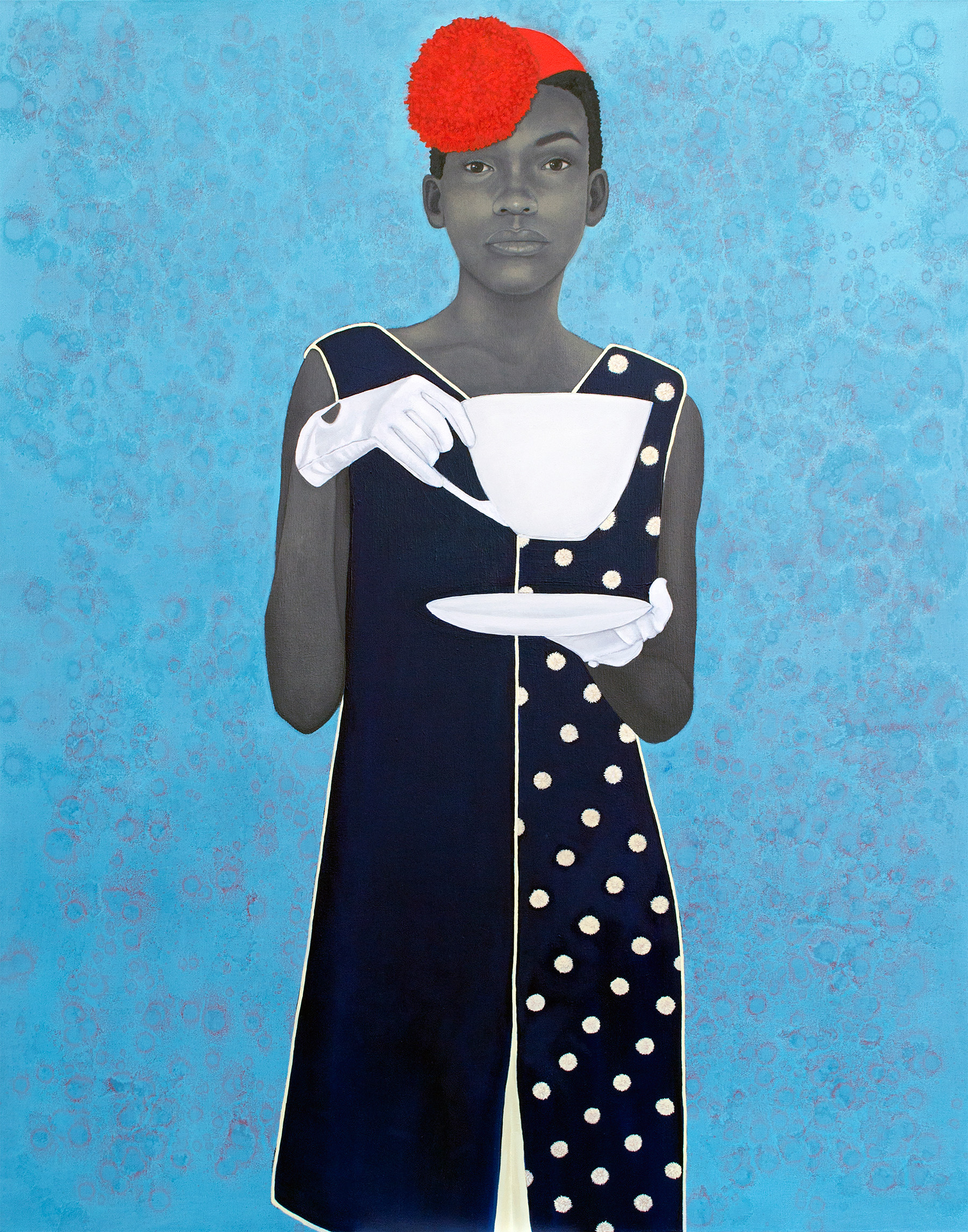
Miss Everything (Unsuppressed Deliverance)
This might be the painting that launched Amy Sherald’s career. In 2016, it won the prized Outwin Boochever Portrait Competition from the Smithsonian’s National Portrait Gallery in D.C., with Sherald becoming the first woman and first African American to receive this recognition. (Coincidentally, Naeem was a curator there at the time, then focusing on prints, drawings, and media.)
Two years earlier, this nearly life-size work had been painted in Baltimore and modeled by local artist-baker Krystal Mack. Like most of Sherald’s works—which often blur the lines between fantasy and reality—the subject stares directly at the viewer, in this instance nearly at eye level, as if she might walk right out of the canvas. But with its dreamy, water-color-esque background, there is a touch of Alice In Wonderland-like whimsy, reminding you it’s make-believe. Notice the young woman’s pop of a red hat and oversized teacup, which also give the impression that she’s playing dress-up, in turn revealing that deeply human feeling of desire.
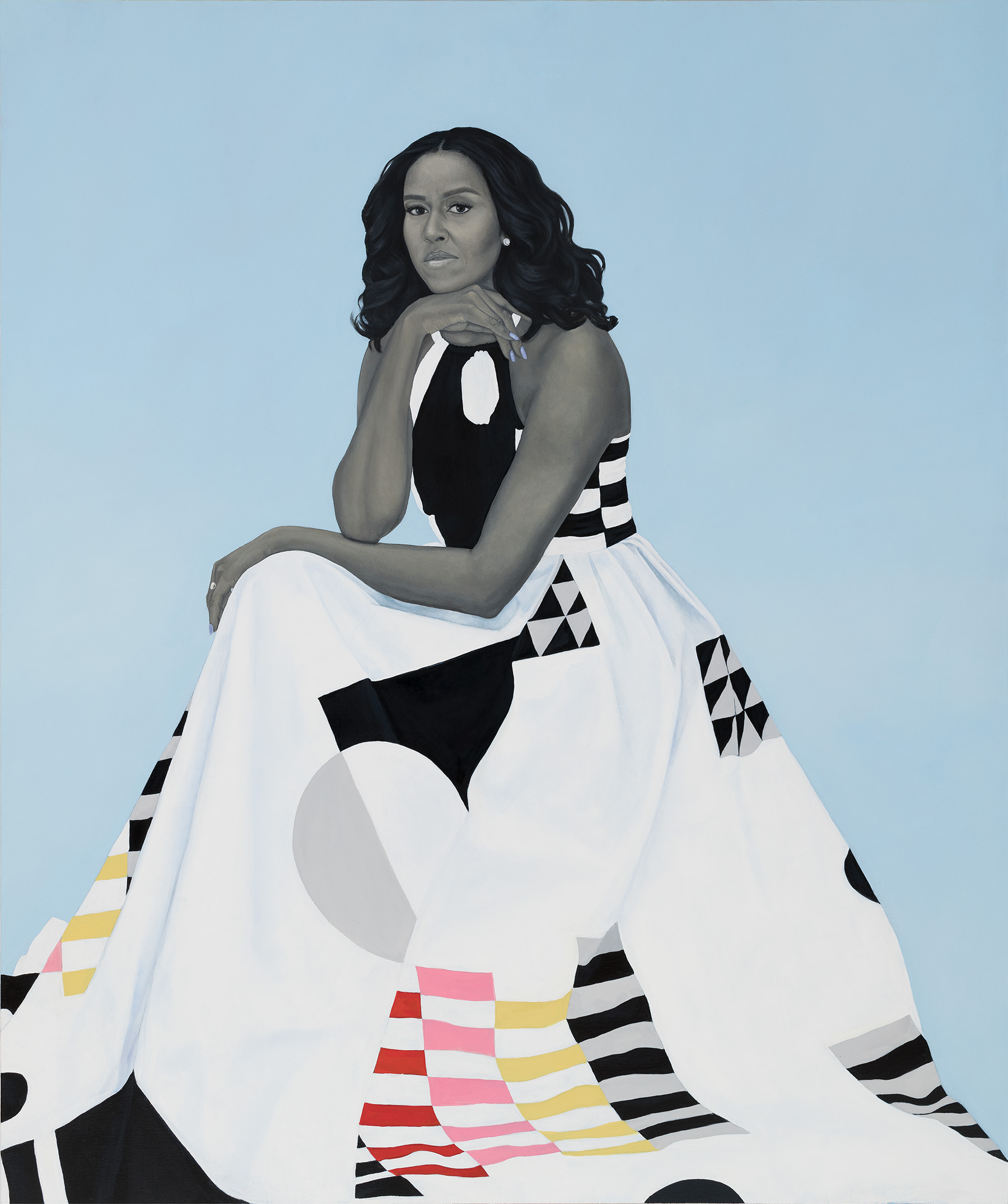
Michelle LaVaughn Robinson Obama
By now, most of us have seen the image of this official portrait of Michelle Obama, painted in Baltimore by Sherald in 2018. But there’s nothing quite like standing before it in real life. The subject is depicted not in a storied room at the White House, as one might expect, but against a bright blue sky, with the First Lady’s overflowing gown alluding to her modern style while also paying homage to the quilt-making heritage of Black communities in Sherald’s own American South.
With a confident stare and gentle hand rested beneath her chin, she embodies both elegance and enigma, all the while exuding her signature warmth and approachability. “I am a little overwhelmed, to say the least,” said Obama during the piece’s unveiling at the National Portrait Gallery in 2022. “I’m also thinking about all the young people, particularly girls and girls of color, who in years ahead will come to this place, and they will look up, and they will see an image of someone who looks like them, hanging on the wall of this great American institution.”
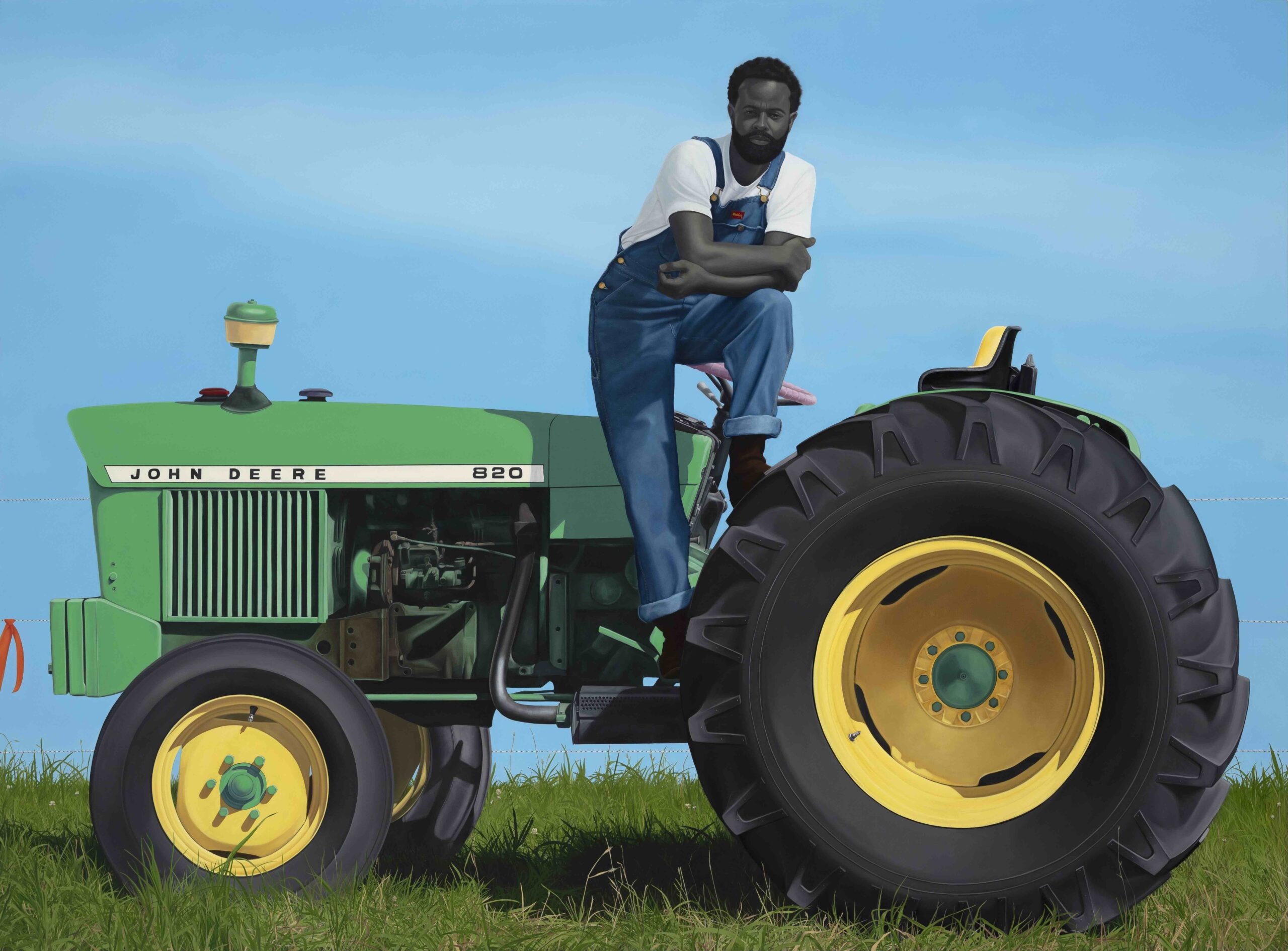
A God Blessed Land (Empire of Dirt)
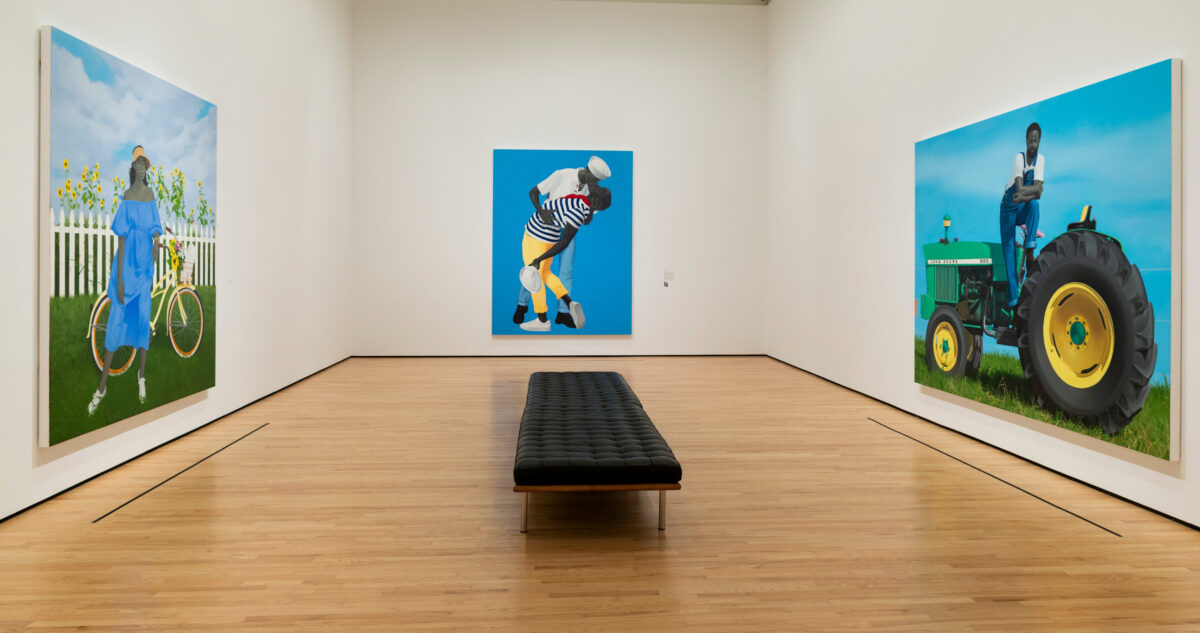
For many a Baltimorean, the subject of this stunning portrait might be as iconic as Obama’s. Painted in 2022, a large horizontal canvas captures the likeness of Denzel Mitchell, Jr., a Baltimore farmer, the executive director of the Farm Alliance of Baltimore, and an all-around leader in the local food movement. Like the First Lady, he poses against a blue sky, set in an imaginary field atop of a bright green John Deere tractor with a pink steering wheel, with an electric fence almost easy to miss along the horizon in the background.
With the sun upon his face, Mitchell wears a white T-shirt and blue-jean overalls, the latter being a nod to the uniform of the Student Nonviolent Coordinating Committee during the Civil Rights movement. In this country, the legacies of land, food, and freedom are inextricably linked, and Mitchell’s scene serves as a reminder of the significant contributions of Black farmers and laborers to this nation’s agricultural history. Sit and stay awhile with this compelling work, then be sure to hear him tell his own perspective in the accompanying audio guide.
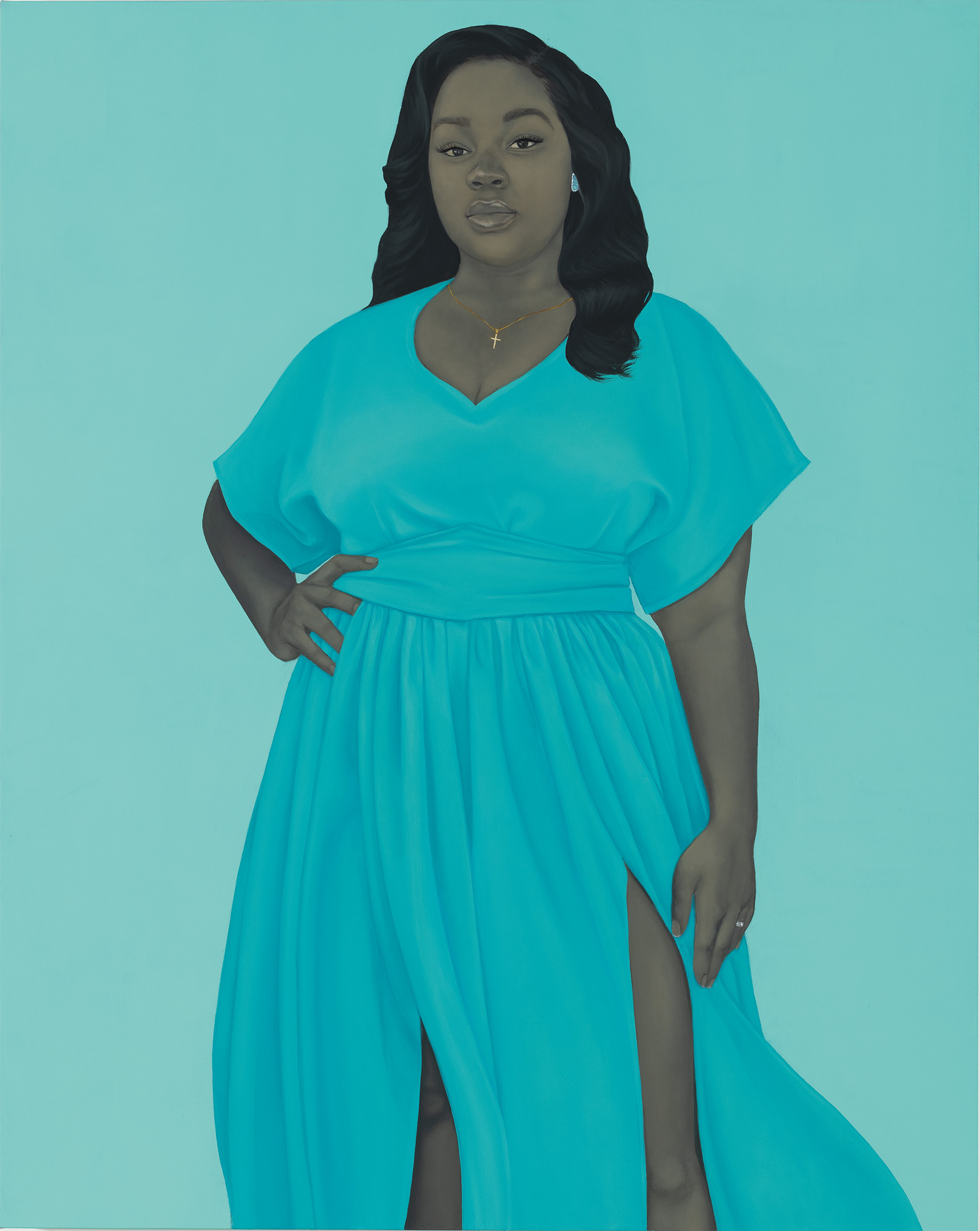
Breonna Taylor
In the fall of 2020, Baltimore native Ta-Nehisi Coates was commissioned to guest-edit Vanity Fair. For the September issue, he would be writing about Breonna Taylor, a 26-year-old EMT, who, that March, was shot and killed during a botched police raid in her own home. In the days that followed, her death ignited a wave of protests across the United States, inspiring the “say her name” rallying cry and cementing Taylor as a symbol of America’s long history of racism, gun violence, and police brutality to this day.
To accompany his story, Coates enlisted Sherald for the magazine’s cover. Working with and using photographs from the family, she painted this namesake portrait that summer, during the historic protests following the murder of another Black American, George Floyd. It is now co-owned by the National Museum of African American History & Culture in D.C. and the Speed Museum in Louisville, Kentucky, Taylor’s hometown.
In true likeness, it is a deeply moving tribute to not just Taylor’s legacy, but her abbreviated yet full and loving life. The artist uses the gentle positioning of her hands, the flow of her turquoise dress, and subtle details like her gold cross and engagement ring to capture her dignity, grace, and most of all, humanity.
Though they were yet to be engaged, Taylor’s partner, Kenneth Walker, who was with her when she was killed, had plans to propose. Still, Sherald incorporated the ring, invoking the potential of a brighter future—a touching gesture that showcases the transcendent power of art.
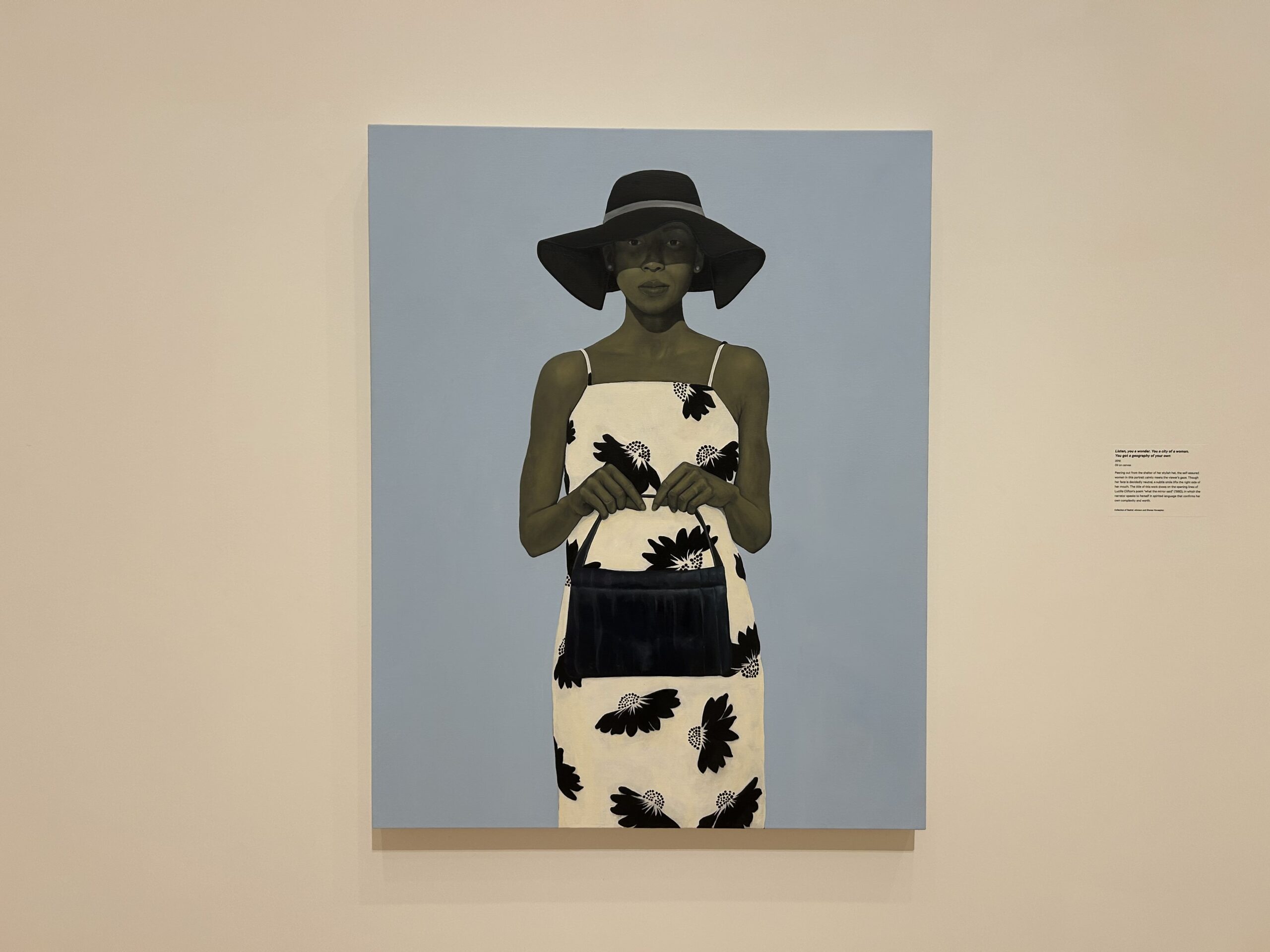
Listen, you a wonder. You a city of a woman. You got a geography of your own.
The title of this painting comes from the opening lines of “what the mirror said,” a 1980 poem by late Baltimore poet—and former poet laureate of Maryland— Lucille Clifton. It’s one of many works that takes inspiration from Sherald’s encyclopedic knowledge of the arts, including film, literature, and poetry, with this having a special local resonance, as Clifton grew up in Windsor Hills, where her former home is now becoming a vital cultural space.
Painted here in 2016, Sherald’s subject stands with a powerful posture, calm confidence, and subtle smile. Beneath a big hat partially shading the young woman’s face, she presents an air of mystery, which, much like Clifton’s poems, evokes the multitudes of Black womanhood. Like Miss Everything, but with a slightly older and wiser attitude, it, too, is an affirmation.
It also speaks to the artist’s process. Sherald often begins by choosing a model, followed by careful composition with clothing and props, before ultimately photographing them, with the final image serving as a study for her painting. Through all of her works, look for the tiny revealing details. Like, in this instance, the sun tan on her ring finger, showing the jewelry that’s no longer there.
Trans Forming Liberty
If it weren’t for this painting, American Sublime might not have made its way to Baltimore. But after the National Portrait Gallery pondered pulling the portrait, Sherald pivoted to bring the retrospective here. “Portraiture has always been my way of asserting presence—of creating visibility where there has too often been erasure,” wrote the artist in a letter to the secretary of the Smithsonian, announcing her decision.
Now, this monumental masterwork stands in the south corner for all to marvel. Over 10 feet tall, with a hand on her hip and a bouquet of orange flowers replacing that iconic flame in hand, Sherald’s Lady Liberty is “a radical move—in color, in shading, and in sheer imagination,” said BMA director Asma Naeem during the preview, also calling it a “colossus” in a hat-tip to the 1883 Emma Lazarus poem etched on the side of the original sculpture. For Arewà Basit, the trans performing artist who served as the model, the final result is empowering, embodying a feeling of “full pride,” as she says in the audio guide, as well as the nation’s potential.
In this final room, these four larger-than-life portraits summarize the retrospective’s title. In addition to the aforementioned A God Blessed Land, this beauty queen joins a sailor kissing his lover (a riff on that famous photograph from World War II) and a leisurely bicyclist standing beside a white picket fence—challenging deeply engrained symbols of the so-called American Dream. Standing at their crossroads at the end of the exhibition, as the title alludes, the audience is left with an immense sense of awe.