Arts & Culture
Documentary Photographer Martha Cooper Hasn’t Forgotten Her Roots
Twenty years ago, seeking inspiration for a new project, Cooper came home to Baltimore and found Sowebo.
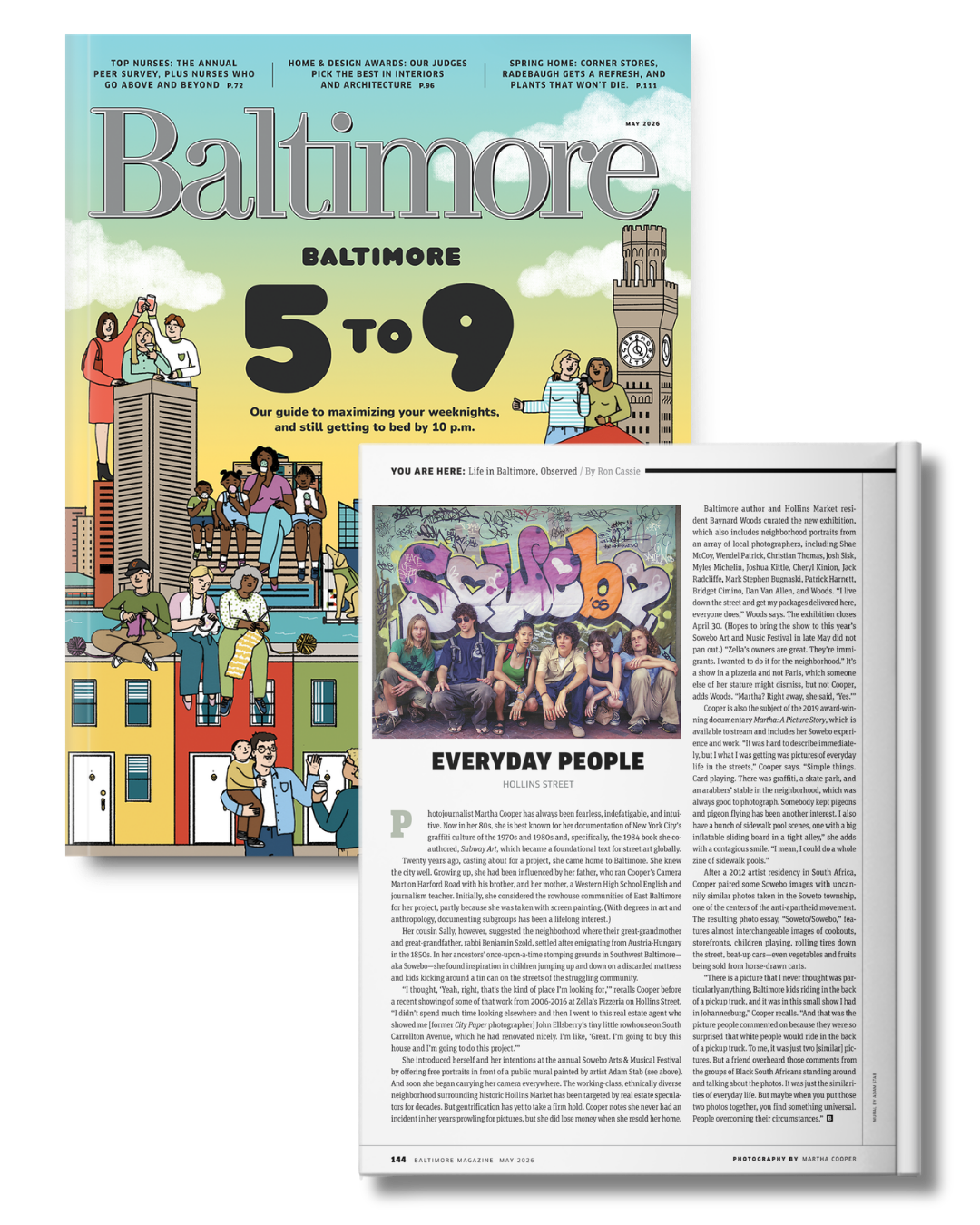
Photojournalist Martha Cooper has always been fearless, indefatigable, and intuitive. Now in her 80s, she is best known for her documentation of New York City’s graffiti culture of the 1970s and 1980s and, specifically, the 1984 book she co-authored, Subway Art, which became a foundational text for street art globally.
Twenty years ago, casting about for a project, she came home to Baltimore. She knew the city well. Growing up, she had been influenced by her father, who ran Cooper’s Camera Mart on Harford Road with his brother, and her mother, a Western High School English and journalism teacher. Initially, she considered the rowhouse communities of East Baltimore for her project, partly because she was taken with screen painting. (With degrees in art and anthropology, documenting subgroups has been a lifelong interest.)
Her cousin Sally, however, suggested the neighborhood where their great-grandmother and great-grandfather, rabbi Benjamin Szold, settled after emigrating from Austria-Hungary in the 1850s. In her ancestors’ once-upon-a-time stomping grounds in Southwest Baltimore—aka Sowebo—she found inspiration in children jumping up and down on a discarded mattress and kids kicking around a tin can on the streets of the struggling community.
“I thought, ‘Yeah, right, that’s the kind of place I’m looking for,’” recalls Cooper before a recent showing of some of that work from 2006-2016 at Zella’s Pizzeria on Hollins Street. “I didn’t spend much time looking elsewhere and then I went to this real estate agent who showed me [former City Paper photographer] John Ellsberry’s tiny little rowhouse on South Carrollton Avenue, which he had renovated nicely. I’m like, ‘Great. I’m going to buy this house and I’m going to do this project.’”
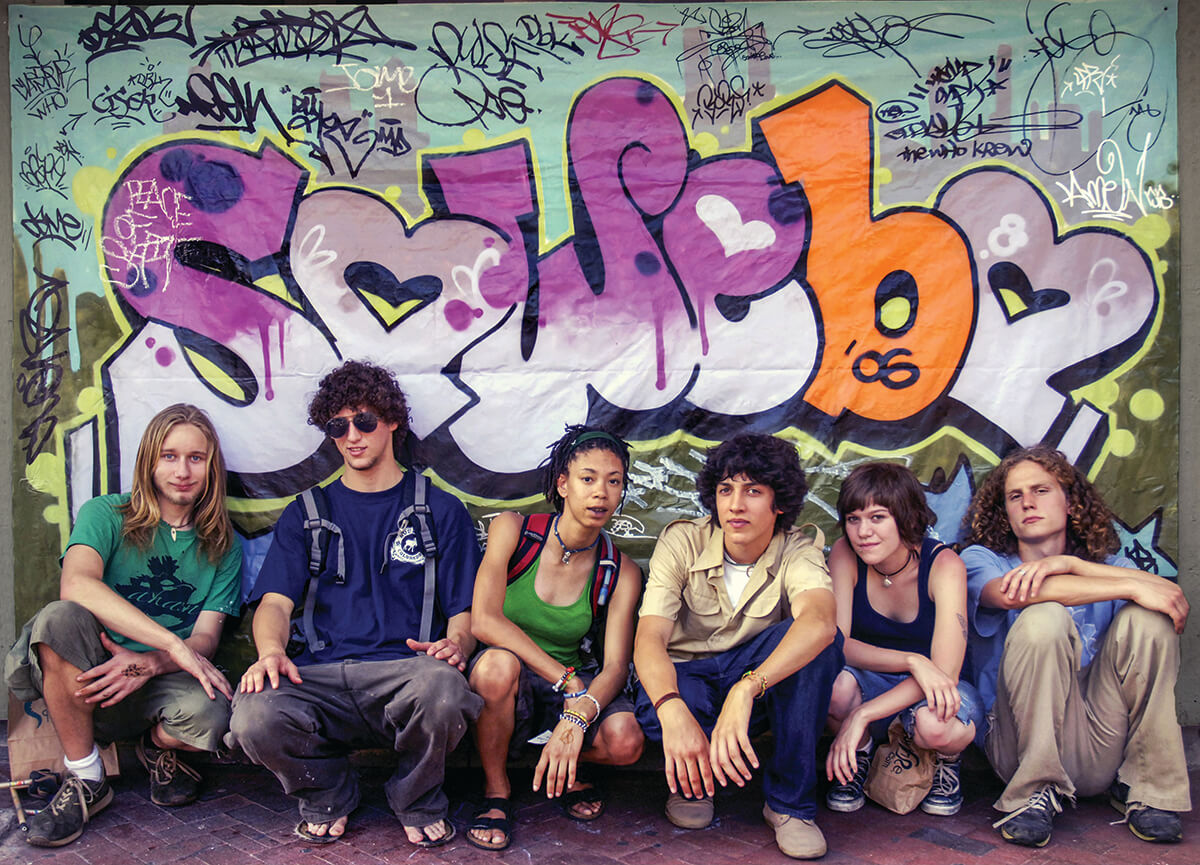
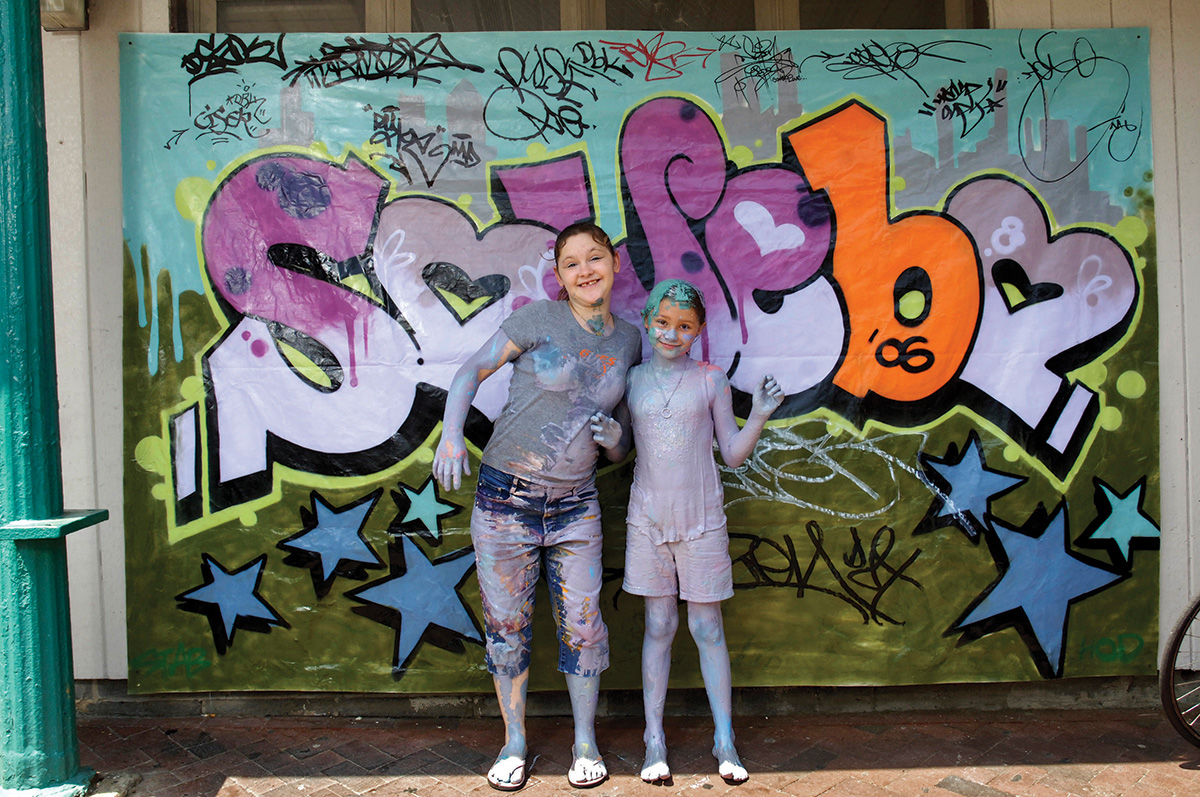
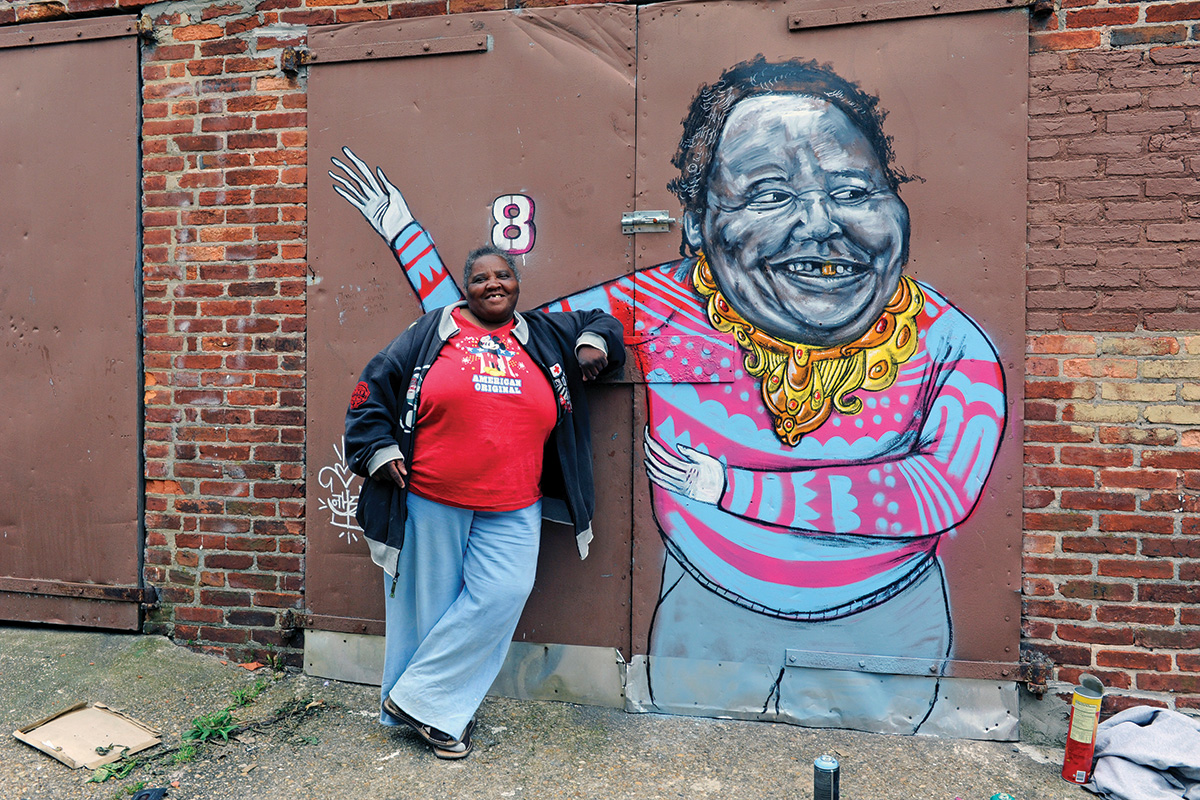
She introduced herself and her intentions at the annual Sowebo Arts & Musical Festival by offering free portraits in front of a public mural painted by artist Adam Stab (see above). And soon she began carrying her camera everywhere.
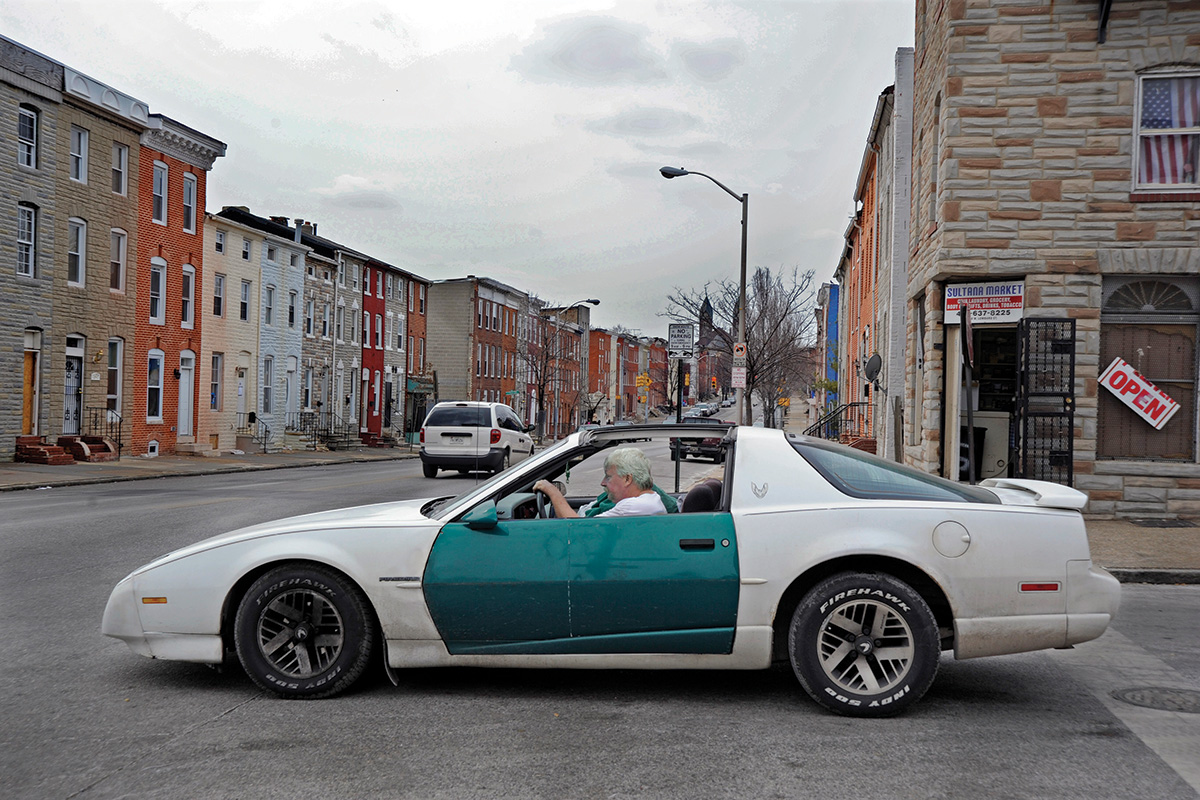
The working-class, ethnically diverse neighborhood surrounding historic Hollins Market has been targeted by real estate speculators for decades. But gentrification has yet to take a firm hold. Cooper notes she never had an incident in her years prowling for pictures, but she did lose money when she resold her home.
Baltimore author and Hollins Market resident Baynard Woods curated the new exhibition at Zella’s, titled “Sowebo Streets,” which also includes neighborhood portraits from an array of local photographers like Shae McCoy, Wendel Patrick, Christian Thomas, Josh Sisk, Myles Michelin, Joshua Kittle, Cheryl Kinion, Jack Radcliffe, Mark Stephen Bugnaski, Patrick Harnett, Bridget Cimino, Dan Van Allen, and Woods.
“I live down the street and get my packages delivered here, everyone does,” Woods says. The exhibition closes April 30. (Hopes to bring the show to this year’s Sowebo Art and Music Festival in late May did not pan out.) “Zella’s owners are great. They’re immigrants. I wanted to do it for the neighborhood.”
It’s a show in a pizzeria and not Paris, which someone else of her stature might dismiss, but not Cooper, adds Woods. “Martha? Right away, she said, ‘Yes.’”
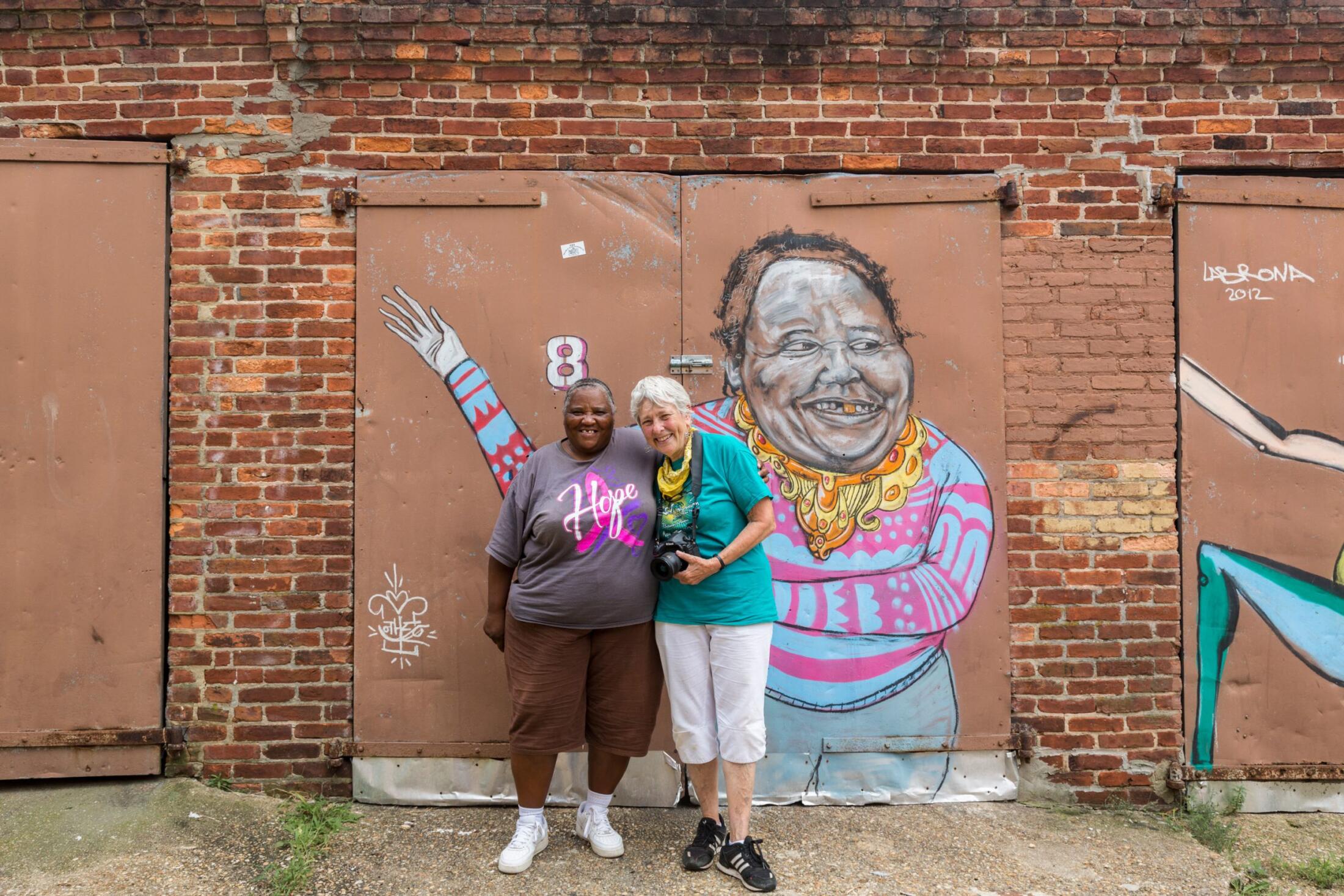
Cooper is also the subject of the 2019 award-winning documentary Martha: A Picture Story, which is available to stream and includes her Sowebo experience and work.
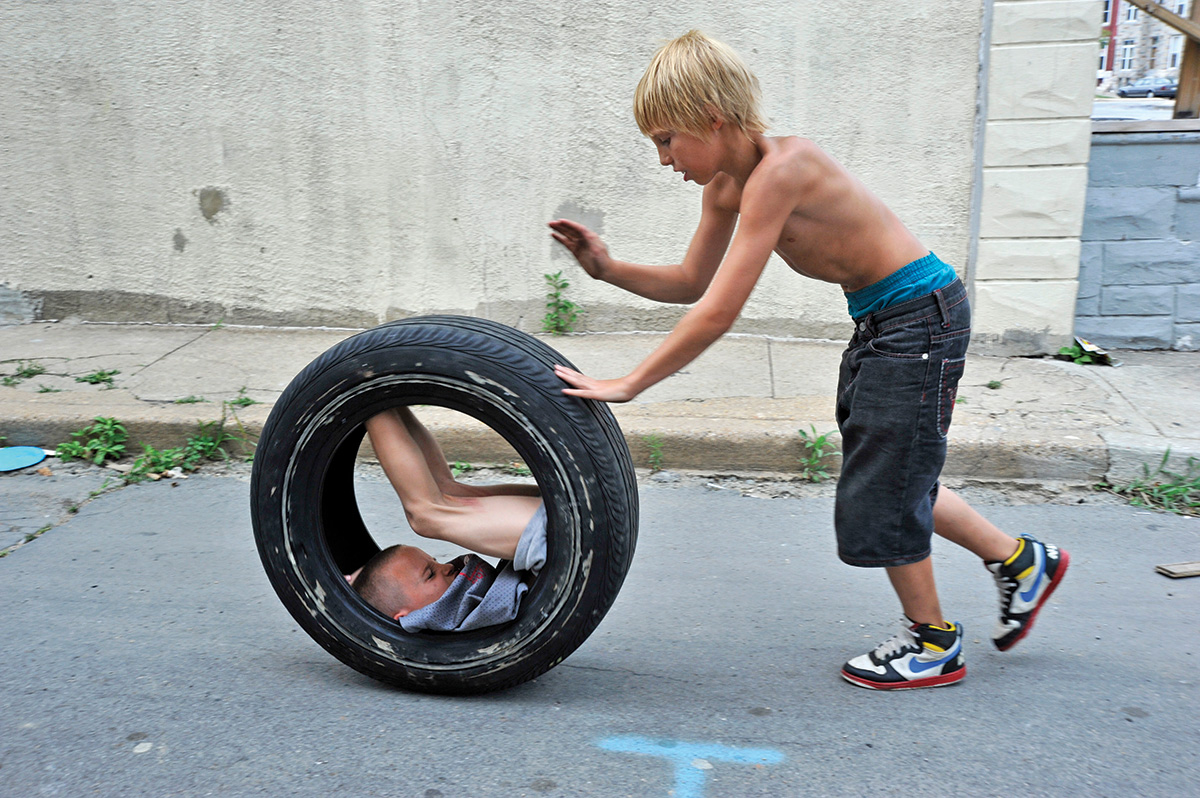
“It was hard to describe immediately, but I what I was getting was pictures of everyday life in the streets,” Cooper says. “Simple things. Card playing. There was graffiti, a skate park, and an arabbers’ stable in the neighborhood, which was always good to photograph. Somebody kept pigeons and pigeon flying has been another interest.
“I also have a bunch of sidewalk pool scenes, one with a big inflatable sliding board in a tight alley,” she adds with a contagious smile. “I mean, I could do a whole zine of sidewalk pools.”
After a 2012 artist residency in South Africa, Cooper paired some Sowebo images with uncannily similar photos taken in the Soweto township, one of the centers of the anti-apartheid movement. The resulting photo essay, “Soweto/Sowebo,” features almost interchangeable images of cookouts, storefronts, children playing, rolling tires down the street, beat-up cars—even vegetables and fruits being sold from horse-drawn carts.
“There is a picture that I never thought was particularly anything, Baltimore kids riding in the back of a pickup truck, and it was in this small show I had in Johannesburg,” Cooper recalls. “And that was the picture people commented on because they were so surprised that white people would ride in the back of a pickup truck.
“To me, it was just two [similar] pictures. But a friend overheard those comments from the groups of Black South Africans standing around and talking about the photos. It was just the similarities of everyday life. But maybe when you put those two photos together, you find something universal. People overcoming their circumstances.”