Food & Drink
Ping Wu Runs a Small Sichuan Restaurant Empire, But Her Impact Goes Beyond the Food
The owner of Red Pepper and three other area Chinese restaurants—a ballroom dancer from south of Beijing—has long been a force in the local community.
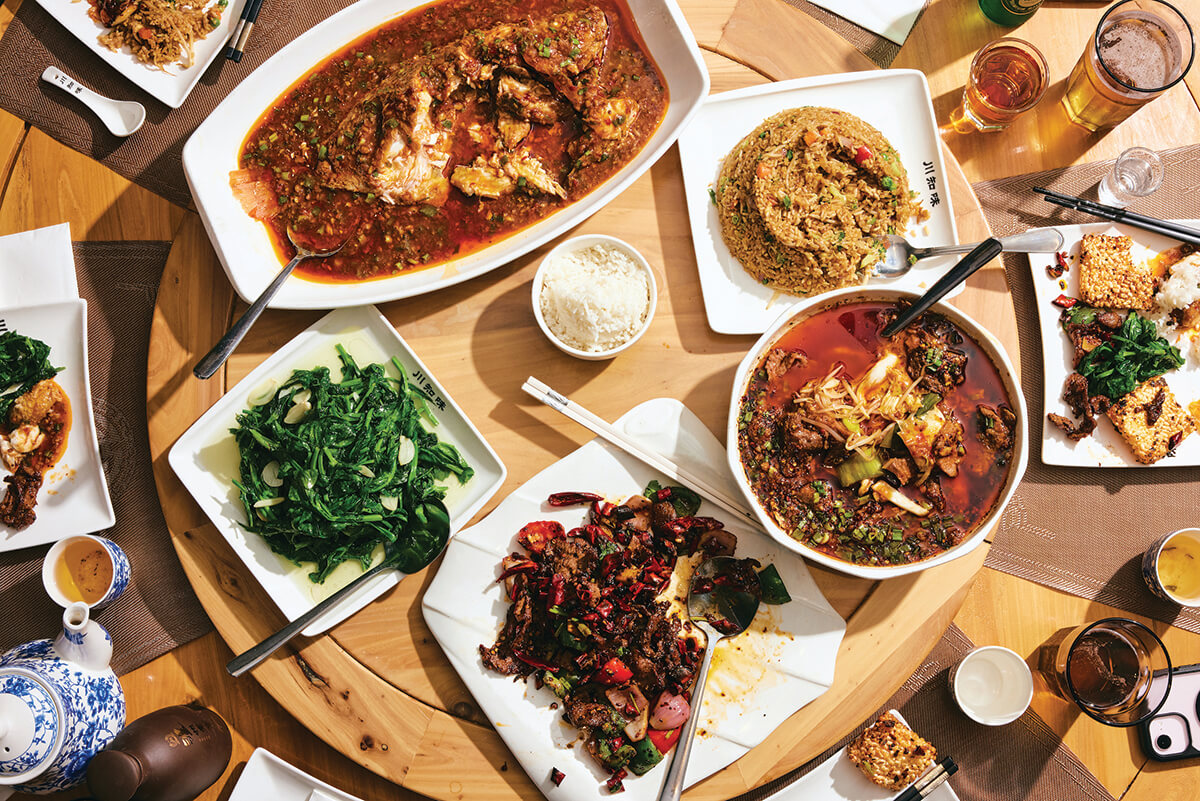
It’s early evening in late summer and restaurateur Ping Wu sits at a banquet table in front of a lazy Susan the size of a car tire that’s revolving with platters and bowls filled with pigs’ feet, duck heads, and Sichuan-peppercorn-laced fish stew.
This is family meal at Red Pepper Sichuan Bistro in Towson, one of Wu’s four Chinese restaurants. Wu’s executive chef, ZheXin Zheng, sits across from her, along with most of the staff, plus a few hungry friends who’ve been invited along for one of the hallmarks of restaurant life. Family meal is both intimate and pragmatic, a meal cooked by one or more of the chefs for the staff to eat before, or in some cases during, service—usually made up of dishes not on the menu that represent what the chefs eat at home or grew up with.
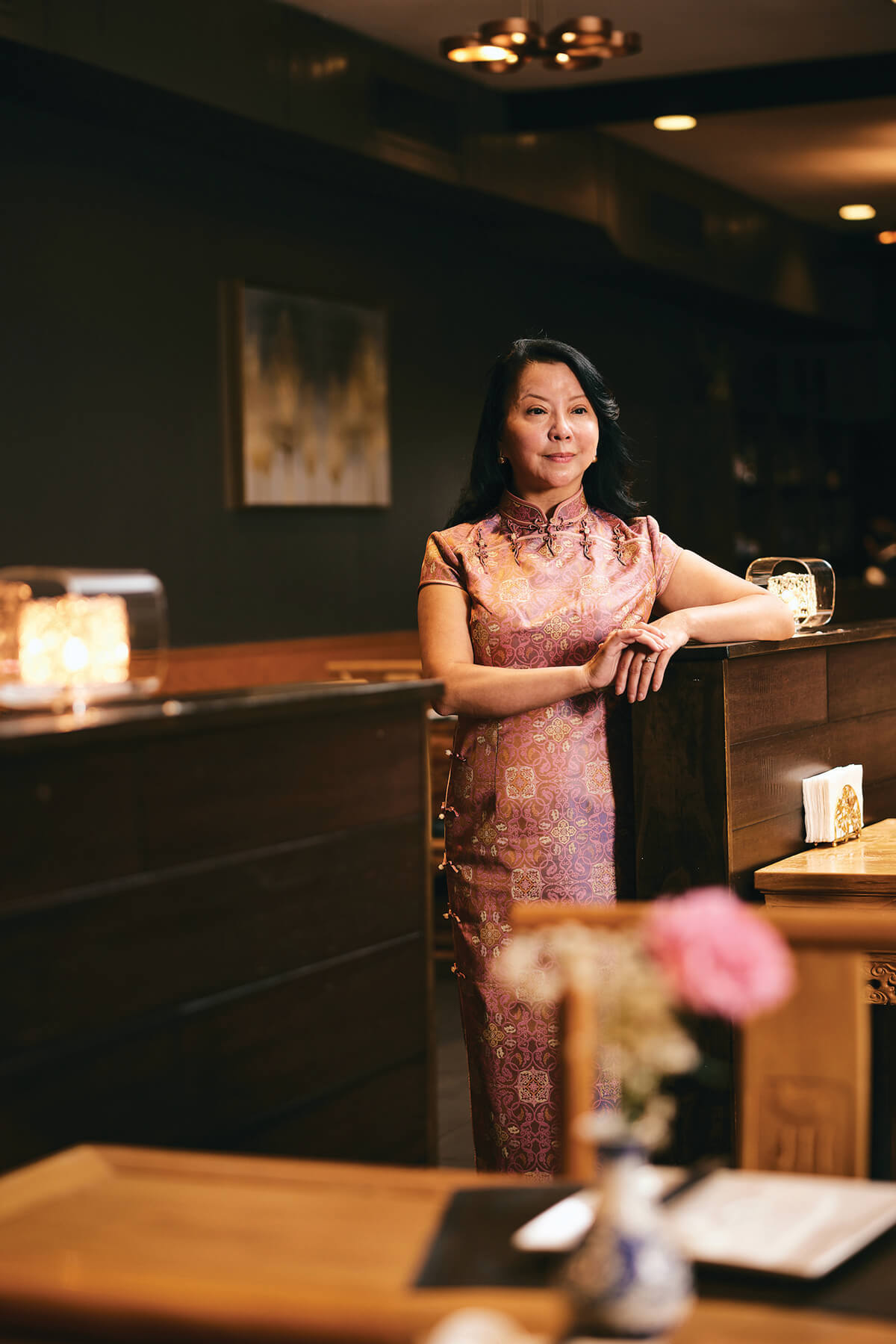
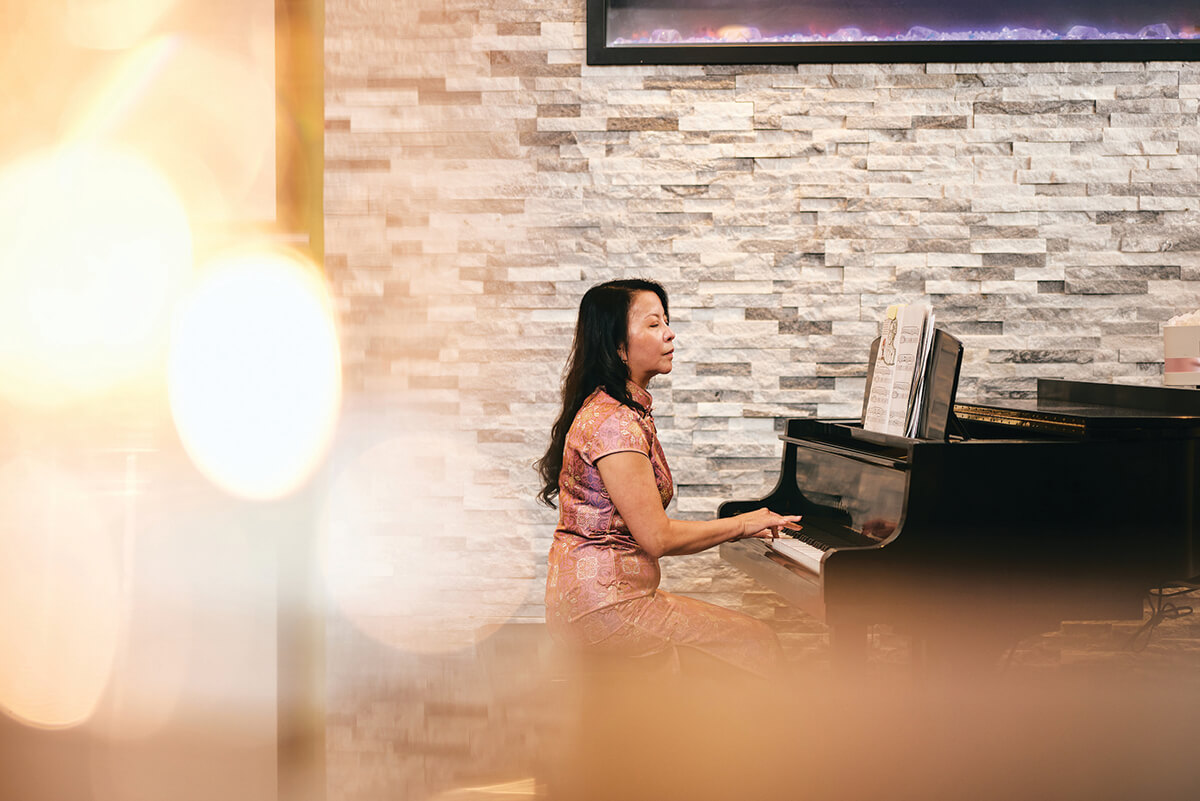
Wu, an elegant, impeccably dressed woman with long jet-black hair, ladles out the fiery fish soup, one of her favorites, as she chats with her staff and friends. If she looks younger and somehow more athletic than you’d expect from a woman who spends much of her days at her Sichuan restaurants—Red Pepper, Orient Express in Charles Village, Tea Horse Sichuan Bistro in Ellicott City, and Silver Spring Sichuan Bistro—that’s because she’s also a performing ballroom dancer, and that energetic grace shows as she gets up to move around her restaurant and greet more guests.
Known as “Sister Ping” to friends and colleagues, Wu has long been a force in the local community, among both Chinese and non-Chinese residents alike. A quarter century ago, she opened Orient Express, her first restaurant, blocks away from Johns Hopkins. Back then, the menu was decidedly Chinese-American, serving the popular dishes of the day (orange chicken, chow mein, etc.).
For decades it has been a neighborhood stalwart, feeding students and locals. Then in 2019, Wu opened Red Pepper, a restaurant with loftier ambitions, not only in its service and decor, but on its menu. The impetus behind this was both her interest in bringing more traditional Sichuan food to Baltimore and her realization that Baltimoreans were not only ready for the cuisine but wanted and needed it. She has since expanded the menu at Orient Express to serve more authentic Sichuan food.
Wu was born in Shandong, a coastal province south of Beijing, and grew up traveling with her family. Her father was a businessman with interests in mining and construction; her mother was a schoolteacher. Wu’s interest in food began at an early age.
“My mother had a good family friend who was an accomplished cook,” she says. “I loved the way she prepared and presented food, and how the cuisine became the centerpiece of the evening.”
Wu immigrated to the U.S. in 2002, hoping to bring the food she grew up with to her adopted country. She began looking for a place that had many Chinese residents, but was somewhat underserved when it came to Chinese restaurants. The Charles Village location, blocks from a university with a large population of Asian students, was a logical fit, and one that has sustained the restaurant for 25 years. Towson was a natural next step, with another vibrant academic community and a growing Asian population, but this time Wu wanted something more: more upscale, more authentic.
Chinese restaurants in this country are hardly new—the oldest continuously operating Chinese restaurant in the U.S. is Pekin Noodle Parlor, in Butte, Montana, of all places. But until relatively recently, they mostly served Chinese-American food rather than any of the many regional cuisines of China. Things have changed in the last decade, as Chinese chefs have come over and brought traditional dishes to diners who increasingly appreciate Sichuan food in particular, with its signature chiles and the numbing heat of Sichuan peppercorns (called mala).
Sichuan cuisine has come to dominate major cities like Los Angeles and New York and, increasingly, smaller ones like Washington, D.C., and Baltimore. And thus she found Zheng, a gifted, boundlessly energetic chef from Chengdu, the capital city of Sichuan province, with a long restaurant résumé both in China and the U.S.
“We were introduced at a family event,” Wu says. “We started talking Sichuan [food] and really found we had a shared business vision.”
That vision now encompasses a wealth of Sichuan dishes such as Little Sister Rabbit, a famous Chengdu street food dish; deep-fried bullfrog; and pork trotter soup; as well as classics like Peking duck, dan dan noodles, soup dumplings, and scallion pancakes.
Chinese restaurants in this country are hardly new. But until relatively recently, they mostly served Chinese-American food rather than any of the many regional cuisines of China.
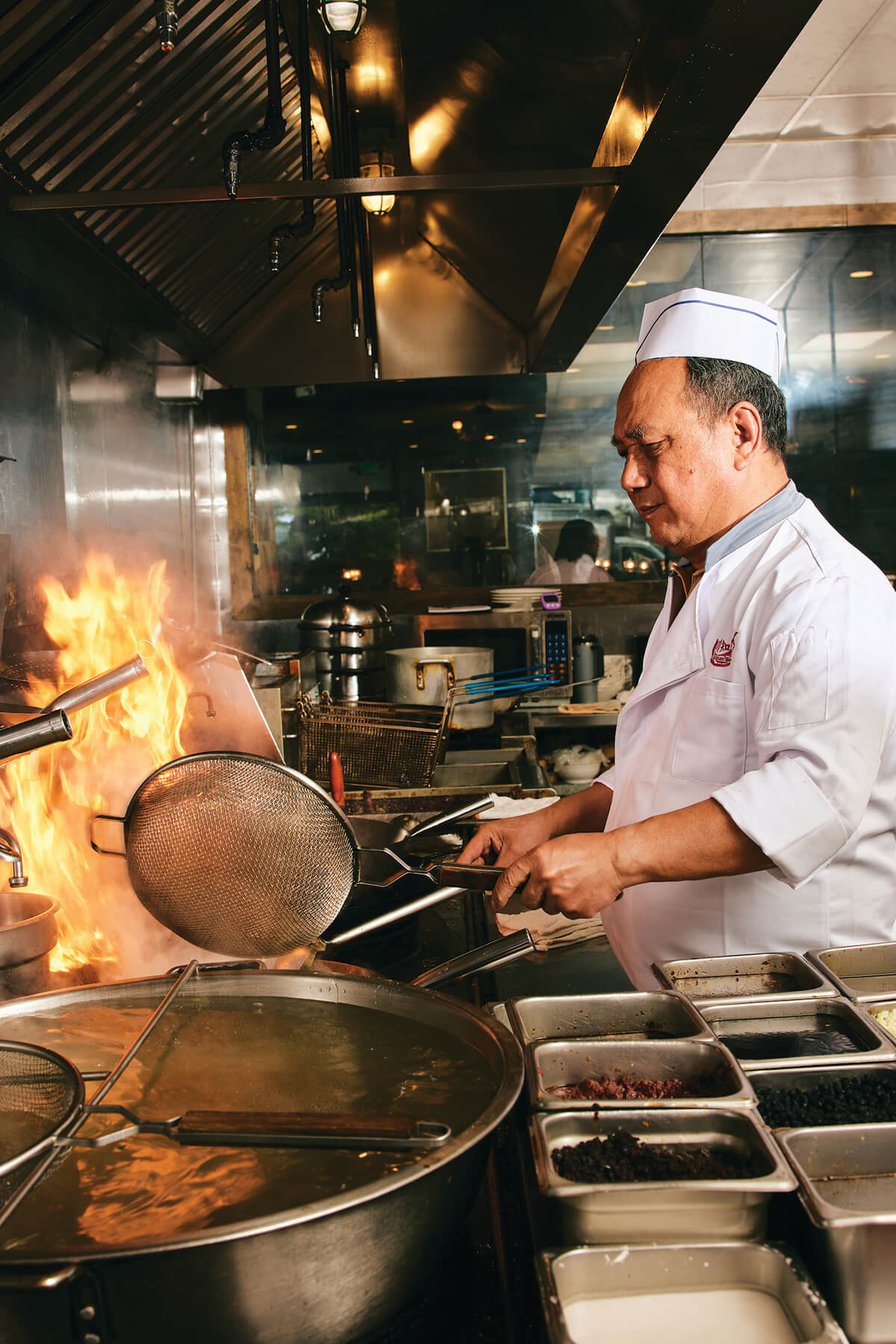
Red Pepper’s dining room is as enticing and as addictive as its food. The roomy restaurant has gorgeous, intricately carved blond-wood tables and chairs, red lanterns hanging from the ceiling, an open kitchen, a baby grand piano, a menu as thick and glossy as a Condé Nast fashion magazine, and a crew of white-jacketed and toqued chefs working in the huge open kitchen in the rear of the dining room. The dishes arrive beautifully plated, often in enormous family-style dishes (hence the pragmatic fun of the lazy Susans).
Zheng, who immigrated to the U.S. in 2006 after a long career in Chinese kitchens, and who was a chef in Philadelphia restaurants before coming to work with Wu in 2017, creates the menu at all four of her restaurants, where he’s the executive chef.
“American food has good dishes, but Chinese stomachs want Chinese food,” he says through a translator, though he’s quick to point out that Sichuan cuisine is a lot more than just spicy food. It’s a complex cuisine, and more than half of its traditional dishes aren’t chile-spiked but rather come from a long history of intersecting regional styles.
When she partnered with Zheng, Wu got a lot more than just the chef and his marvelous food—he came with a crew.
“Chef Zheng brought many people with him who grew up in the same neighborhoods. It’s a unique situation,” says Wu. “He can say, ‘Remember Mr. So and So’s place? Let’s create that shrimp dish everyone loved.’ And someone will know exactly what he’s talking about.”
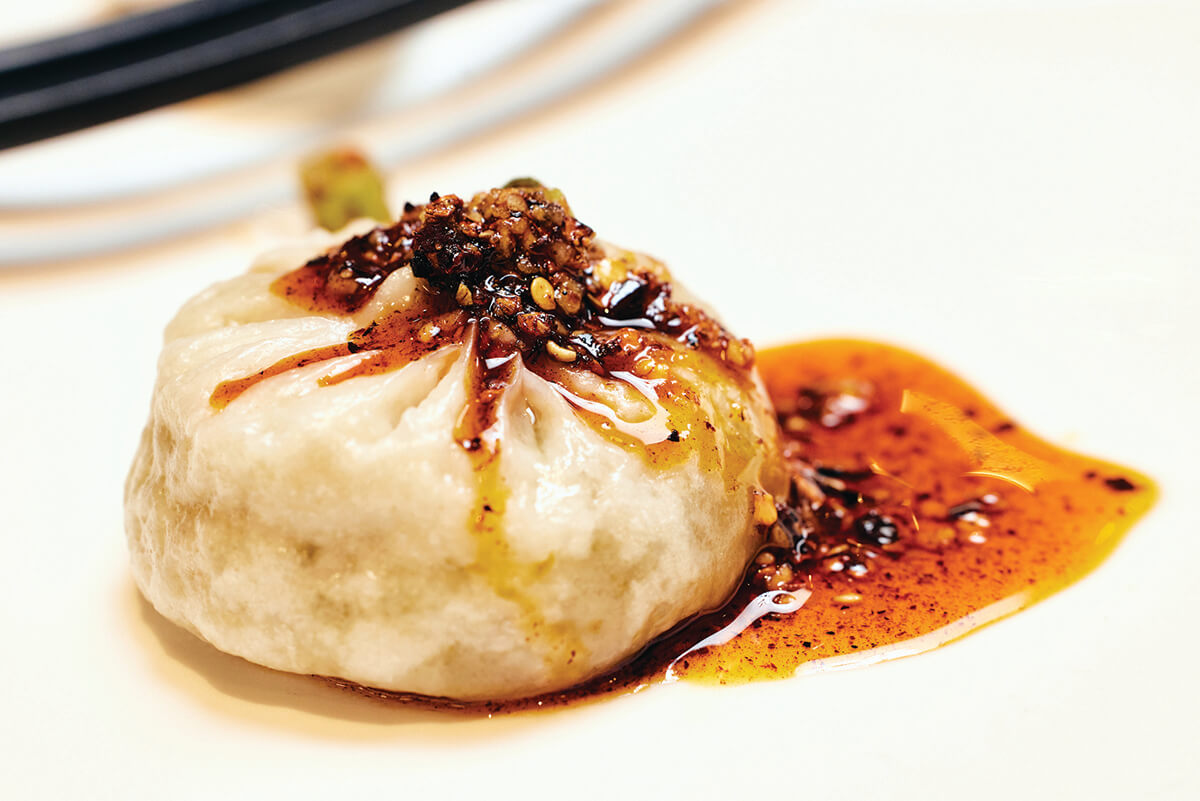
So as the lazy Susan spins around during family meal, it can seem more like an actual family dinner, the crew bantering in Mandarin as someone passes a bottle of Jack Daniel’s around the table. The formula has worked. On any given night, Red Pepper is packed with diners, both Chinese and non-Chinese, and its host stand is filled with to-go bags.
Which brings us to Tea Horse Sichuan Bistro, Wu’s third restaurant, which opened in Ellicott City on a stretch of Baltimore National Pike, in 2023. (Her fourth restaurant debuted in Silver Spring in 2025.) A 6,000-square-foot space, Ellicott City’s Tea Horse has the same blond-wood furniture as Wu’s other restaurants, but it also has private dining rooms, an astonishing cocktail program featuring the Chinese spirit baijiu, and a massive mural depicting the Silk Road route that gave Wu’s most recent two restaurants their names.
The Tea Horse Road connected the merchants of Sichuan, Yunnan, and Tibet to the rest of China and beyond, trading tea and war horses, as well as other necessary items.
Diners can consider the route, painted with all the pretty horses, plus mountains and Chinese characters, while enjoying plates of spicy pork ribs, smoked tea duck, lamb with cumin, salted egg-yolk tofu, or the dome of steamed pork belly over preserved vegetables, a party dish from Guangdong that’s unusual to find outside of Southern China.
“American food has good dishes, but Chinese stomachs want Chinese food.”
Wu has put down serious roots in Baltimore. Her son recently graduated from Johns Hopkins and is now at the University of Maryland’s medical school. Her daughter, an accomplished vocalist, is a senior at Towson High.
“When I walk into my restaurants, I see more than diners and cuisine,” she says. “I see countless stories taking place…birthdays, first dates, anniversaries, and promotions.”
And then there is Wu’s ballroom dancing career. Growing up in China, she danced in both school and local performance companies, though it was mainly traditional Chinese dance. A few years ago, she started taking ballroom dance lessons; she recently started learning Korean drum and fan dancing as well.
The dancing, she says, keeps her centered and adds balance to the demands of running her restaurants. It also gives her more opportunities to be involved in the community, where she sponsors concerts to benefit post-partum depression, provides food to police precincts and hospital staff, and sponsors holiday concerts at the Baltimore Symphony Orchestra.
Her commitment to both her neighborhoods and her own traditions prompted her to take a break this summer and return to China, where she spent three weeks visiting Sichuan and Yunnan provinces with friends—and touring restaurants, particularly those making dry pot, a favorite chile-spiked stir fry dish that she wants to feature more on her menus. Wu has other plans, too, including immersive dining events incorporating traditional Chinese dress.
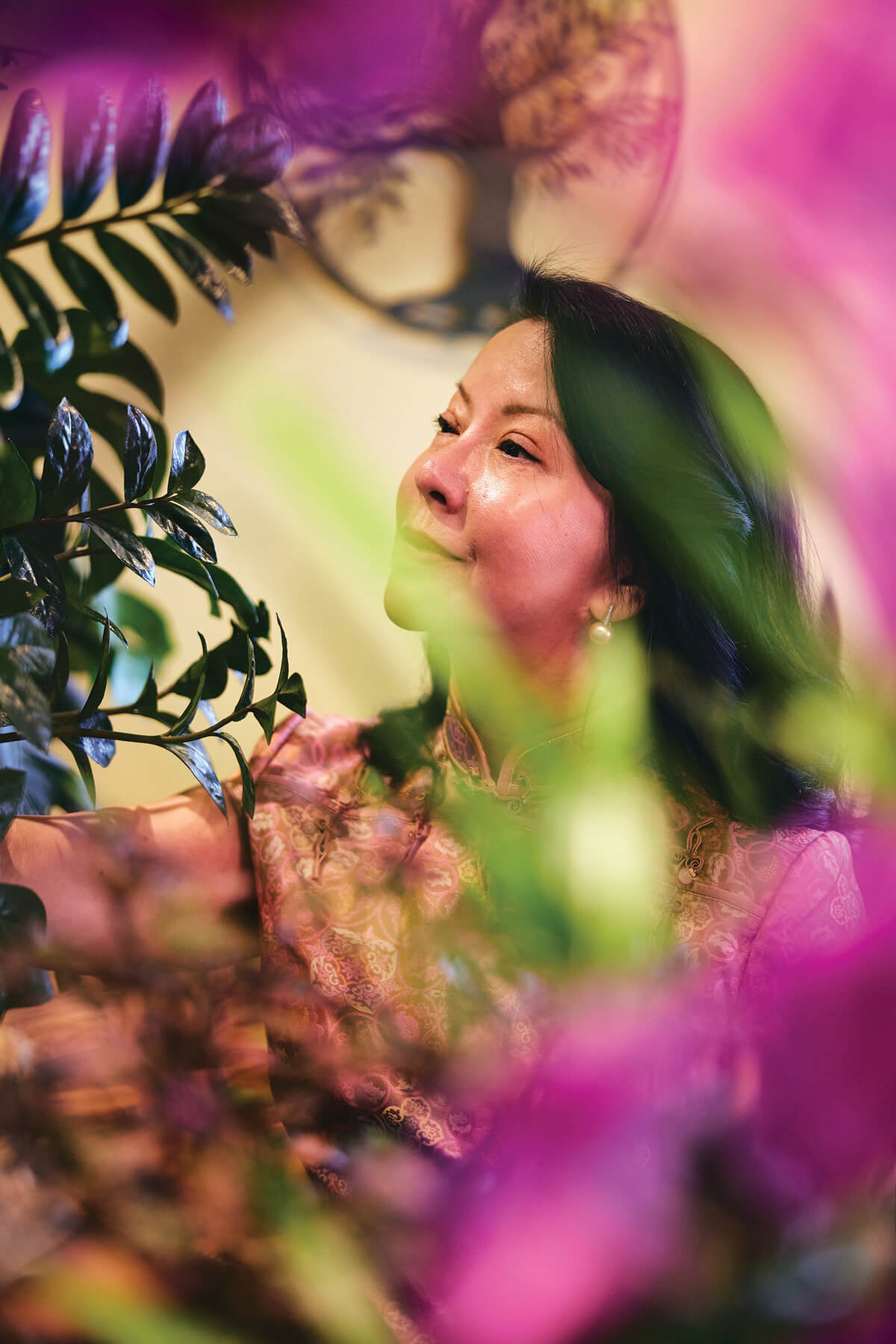
State Senator Clarence Lam first met Wu at an event at her Ellicott City restaurant and was impressed not only by her food but her commitment to the neighborhood.
“You don’t see quite as many Asian-American restaurateurs get involved in their local community, supporting these types of initiatives or events,” he says. It’s difficult for anyone in these difficult economic times to look beyond their businesses, he acknowledges, but especially for those in the service industry.
“It’s not easy being the owner of a restaurant, not to mention four, just to be able to keep her businesses afloat and expanding,” says Lam. “I give her a lot of credit for recognizing that there’s a broader constituency to be served than the clientele that’s just coming through her doors.”
Nancy Hafford, executive director of the Towson Chamber of Commerce, echoes Lam’s sentiments. “Whenever we were celebrating someone in the community for their good works, or supporting our police department,” she says, “she was always one of the first people there to bring good food and show support.”
This was particularly true during the pandemic, which happened months after Red Pepper opened. “Whatever we needed, she would help in any way she could.”
Back at Red Pepper, Wu chats with her staff as she spins the lazy Susan around for more fish soup. “Dance keeps me centered. And family meal keeps my team centered,” she says. “At family meal, no one is an owner, a master chef, a cook. We are family. Because restaurant hours are long, we eat breakfast, lunch, dinner together. Many of our family dishes are not on the menu: They’re comfort food that’s a taste of home.”
The dishes make their way around the table. The conversation, in Mandarin, rises and falls. Wu spins for fish soup one more time.