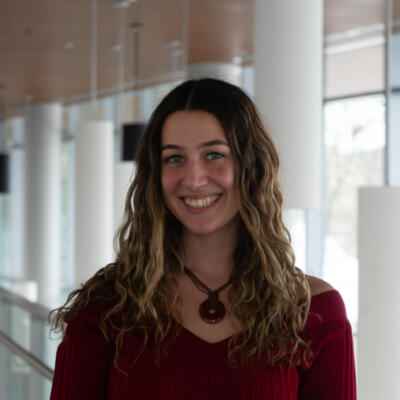
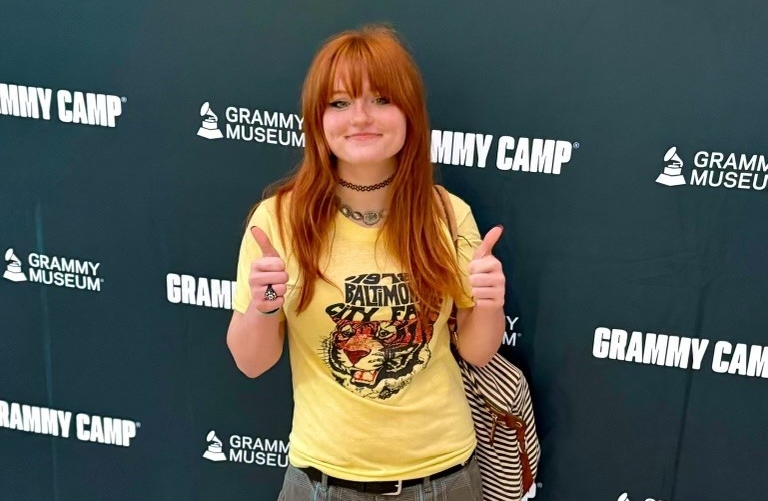
September often brings a classic icebreaker to offices and classrooms everywhere: what did you do this summer? For 17-year-old Maisie Rehkemper, the highlight is pretty clear. She was one of approximately 40 students across the country to be accepted into GRAMMY Camp (yes, of those Grammys) in New York City this past August.
Maisie is a senior studying music production at George Washington Carver Center for Arts and Technology in Towson, and the only student in the Baltimore area to be accepted into the program. Presented by the nonprofit GRAMMY Museum in Los Angeles—which works to preserve music culture and nurture up-and-coming artists—the week-long intensives in Nashville, Miami, Los Angeles, and New York train high school students interested in pursuing a career in music, offering tracks on everything from songwriting and jazz to music business and production.
As she settles back into the school year, we caught up with Rehkemper to reflect on what she learned from the pros.
What is it about music production and sound engineering that interests you most?
I’ve been playing instruments and performing in bands since I was 6 years old. I played ukulele for a couple years, then I went to guitar, then I went to drums, and then I went to bass, which I stuck with. Growing up, performing on stage with these little kid bands, I was having so much fun, and as I got older, I was just more curious as to how it all worked. Once I started interning at local music schools, it was way cooler getting to know and hear the differences in music that I really couldn’t hear before.
Where did you first hear about GRAMMY Camp, and what interested you in applying?
Last summer, I was at a bunch of different music camps, like a pre-college program at Stevens Institute of Technology [in Hoboken, New Jersey]—which is one of my top college choices—and a program at the Blackbird Academy in Nashville, Tennessee, a legit recording studio. I wanted to do more this summer because they were so fun and I learned so much. My brother is at Berklee in Boston, and some of his friends have previously gone to GRAMMY Camp. They got me to actually take the steps to apply.
What was the application process like?
For production, we had to submit two pieces. One I wrote with my band, Saltbox, because we were recording an EP at the time, so I got the files and I did a mix on them. And the other one I recorded all myself. It was a cover of “Comfort of a Laugh Track” by Roar. I got to do piano and guitar and sing and try to type in drums. Making the cover all by myself was the first real project I’ve actually done outside of school. Once I finally put them all together, I wrote a little paragraph about each song and what I did with it, and I had to do a video essay.
Describe the feeling when you found out you were accepted.
I honestly couldn’t believe that I got picked, because it’s such a small group of people. It was so cool, and I had to be kind of secretive about it because we weren’t allowed to tell anyone until May, and I found out in April. But I was super, super excited. It was so surreal.
What was the first day like?
It was actually really overwhelming. Once we went into our smaller groups, it was super fast-paced. Our teacher, Jason Goldman—his producer name is Spicy G—had us make a drum track, loop it in five minutes, and then add something on. But it was really cool because I didn’t think I could do that. While it was fun and exciting, it was also stressful because I realized I was the only girl in the program. It was a little awkward, but it wasn’t unexpected because that’s usually how it is in every music production [program] I’ve been to.
Speaking of those experiences, you founded the Women in Sound Engineering club at your school. Tell us more about that.
During my program last year at Stevens Institute of Technology, I started realizing that it’s a very male-dominated field, and I wanted to bring some sort of light to women in audio tech. Stevens is partnered with this program called We Are Moving the Needle, and they’re all about women in male-dominated fields, especially in music and music production.
So I started this club at my school inspired by We Are Moving the Needle. I think I had 15 people sign up, but I’m pretty much just showing them how I work Ableton [software] and going over industry stuff. This year I really want to get the club more involved in venues and performances, something to do with our music concerts at our school, rather than just me teaching and rambling about all this sound design stuff.
What were some highlights of your week at camp?
Well, first of all, it was kind of like a mini music industry all in one building. So we were encouraged to work with songwriters and vocalists, or musical theater [students], or a jazz band. I got to record these two songwriters, and I’d never recorded someone else before by myself. I had so much fun working with them, and then also editing and adding guitar, drums, bass, and other harmonies and synths. The song really came to life.
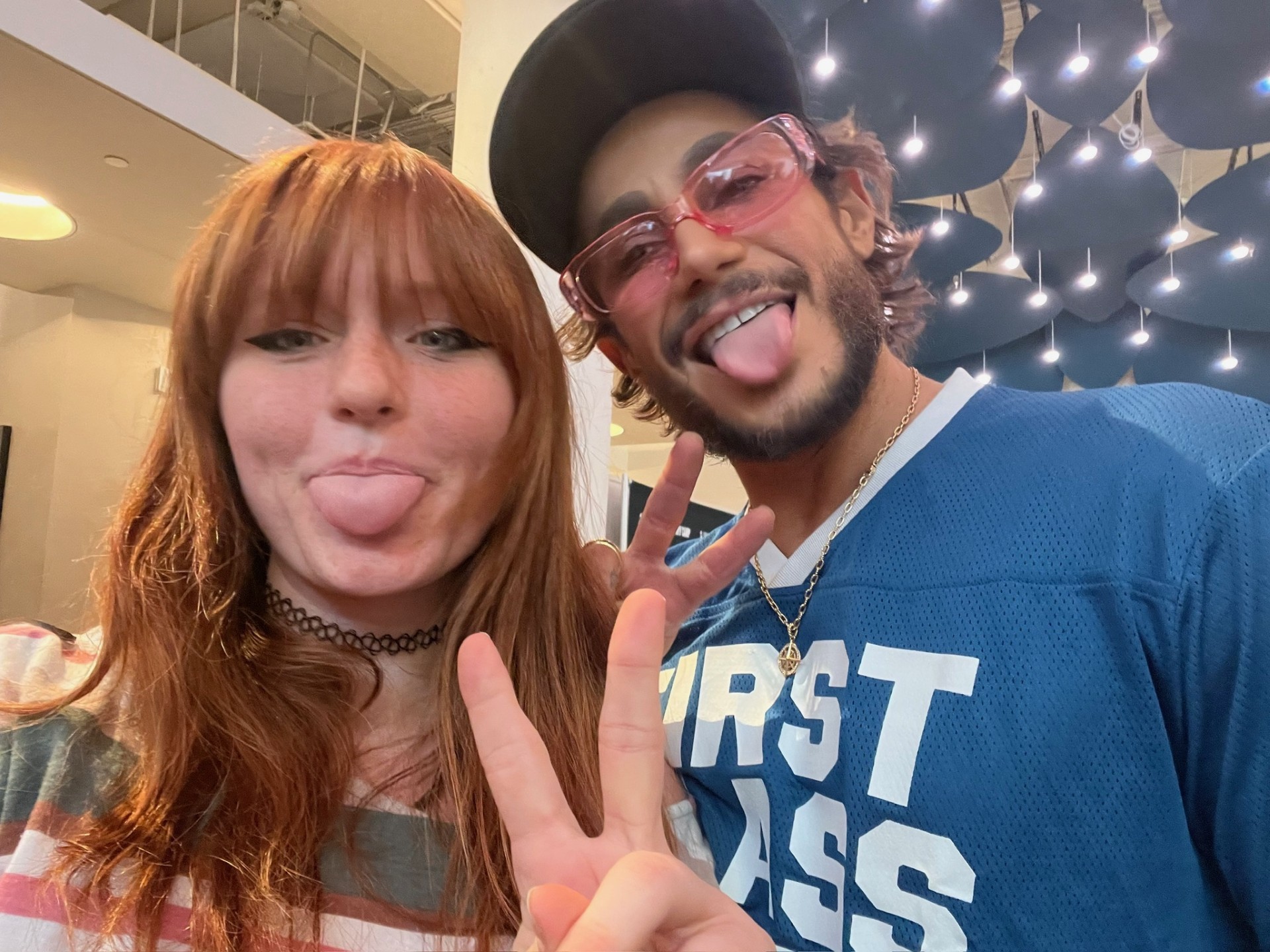
The main highlight was probably meeting [actor, singer, and Broadway star] Frankie Grande [Ariana Grande’s brother] and [jazz singer] Samara Joy. The guest artists are often previous Grammy winners. We got to do a Q&A with them, and Samara Joy actually played for us. She brought her whole band, and they were up on the panel with her, so we got to ask them questions, too.
What are the biggest takeaways from camp that will stick with you, especially as you head back into the school year?
I feel like I walked away with real industry experience, especially getting to work with someone who was very blunt and had no cushion when he would tell us how he felt about our work. He kept saying that we had to love a song that we were working on—we couldn’t just like it. So every time I would ask him to listen to my piece, he would be like, “Do you love it yet?” And I was like, “Well, maybe.” And he was like, “Don’t show it to me until you love it.” So, I learned a lot about that work ethic. It was like a launching pad.
Anything else we should know about your projects?
My band, Saltbox, just put out an EP earlier this summer. We recorded an album last year, and I think that’s what really flipped the switch in my brain where I became interested in everything that goes into the production. We were in our drummer’s family friend’s home studio, and getting to see him clicking all around and twisting all these knobs, I was just so interested. I wanted to do that. So that was pretty much the turning point. Since then I just fully jumped into it.