
If you love sampling the distinctive dishes and intense flavors of Ethiopian food, you probably spend a lot of time in and around Silver Spring and Washington, D.C., as Baltimore only has a few restaurants within city limits. There’s Dukem, Tabor, and Addis around Mt. Vernon, as well as the terrific vegan stall Korarima at the 32nd Street Farmers Market.
And if you head southeast, you’ll now find Abat Ethiopian Coffee in a tiny shopping center—next to a Michoacan ice cream shop and a pizzeria—across from a park in Dundalk.
Opened a year and a half ago by husband-and-wife team Samuel Gebre and Zenash Belayney, the small restaurant, market, and coffee shop is cozy and welcoming. You’ll notice a few tables, a pastry case filled with marble cake and almond cookies, a flatscreen (showing World Cup matches for the next month), and shelves of items imported from the couple’s home country—all centered around traditional Ethiopian coffee service.
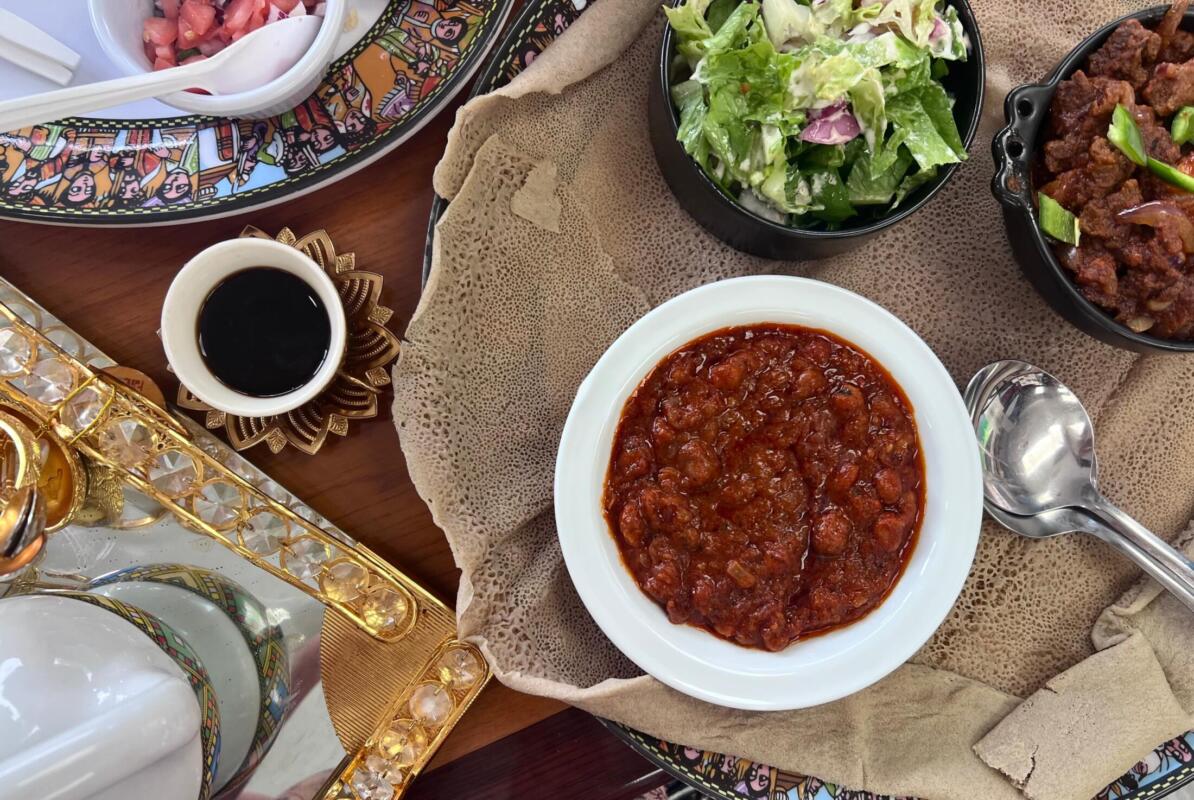
Ethiopia is widely recognized as the birthplace of coffee. Not only is coffee grown there, but an elaborate ceremony involving roasting, brewing, and drinking the blends in gorgeous vessels is an integral part of the culture. At Abat, you can order traditional Ethiopian coffee that arrives in a pot on a gilded tray, which Gebre will likely pour from a great height. The beverage menu also extends beyond Ethiopian coffee service to lattes, cappuccinos, and other espresso drinks.
Gebre comes from a family of restaurateurs who own two coffee shops in Addis Ababa—also called Abat—as well as a guest house and import-export business. Although the couple met in Ethiopia, Belayney had relocated to Maryland years ago, so Gebre followed.
While Gebre helms the coffee counter, Belayney is busy in the kitchen preparing not only Ethiopian dishes—ful, tibs, kitfo—but sandwiches, subs, samosas, and breakfasts. And if you give Belayney a call a few days in advance, she will make a batch of her remarkable doro wot, the classic dish of berbere-spiked, long-cooked chicken with egg, which will arrive—as with the other Ethiopian dishes—on a giant platter covered with injera. Their injera, the traditional sourdough flatbread made with lavender-hued teff flour, comes directly from Ethiopia, thanks to the twice-daily flights into Dulles from Addis Ababa.
Besides dinner—bring friends, as the food here is best enjoyed communally—you can pick up a bag of imported coffee, spices, a bag of frankincense and cone of charcoal (a terrific version of incense that I first encountered in Jerusalem and was overjoyed to find on the shelves here), and pots and cups from the small shop to take home.
On the way out, check out the Ethiopian Orthodox Tewahedo Debre Berhan Holy Trinity Church across the street. It’s a beautiful building that the local Ethiopian community bought three-and-a-half years ago at auction. With an interior built to resemble a wooden ship and art and textiles imported from Ethiopia, it’s a community hub (Gebre says it’s one of five Ethiopian churches in Baltimore) with as many as 300 members.
After a long meal of doro wot and ful—the classic side dishes of spiced lentils of various kinds can also be ordered ahead—and a hit of that amazing coffee, Gebre might even give you a tour.