Home & Living
At Annapolis Maritime Antiques, Nearly Every Object Bears Evidence of a Previous Life at Sea
Chesapeake history, craftsmanship, and one man’s vision converge on a quiet corner of Eastport.
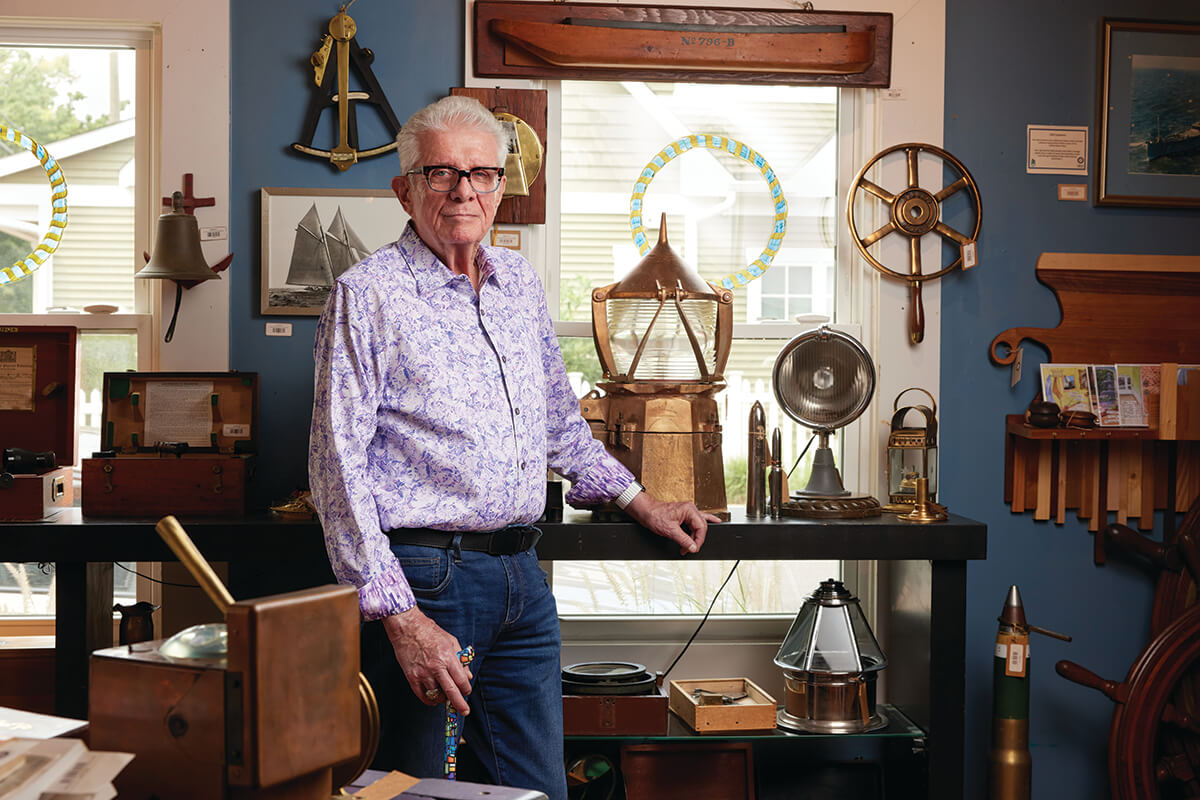
There are stores you happen upon and stores you seek out. Annapolis Maritime Antiques, tucked into Eastport just beyond the tourist path of downtown Annapolis, is definitely one you seek out.
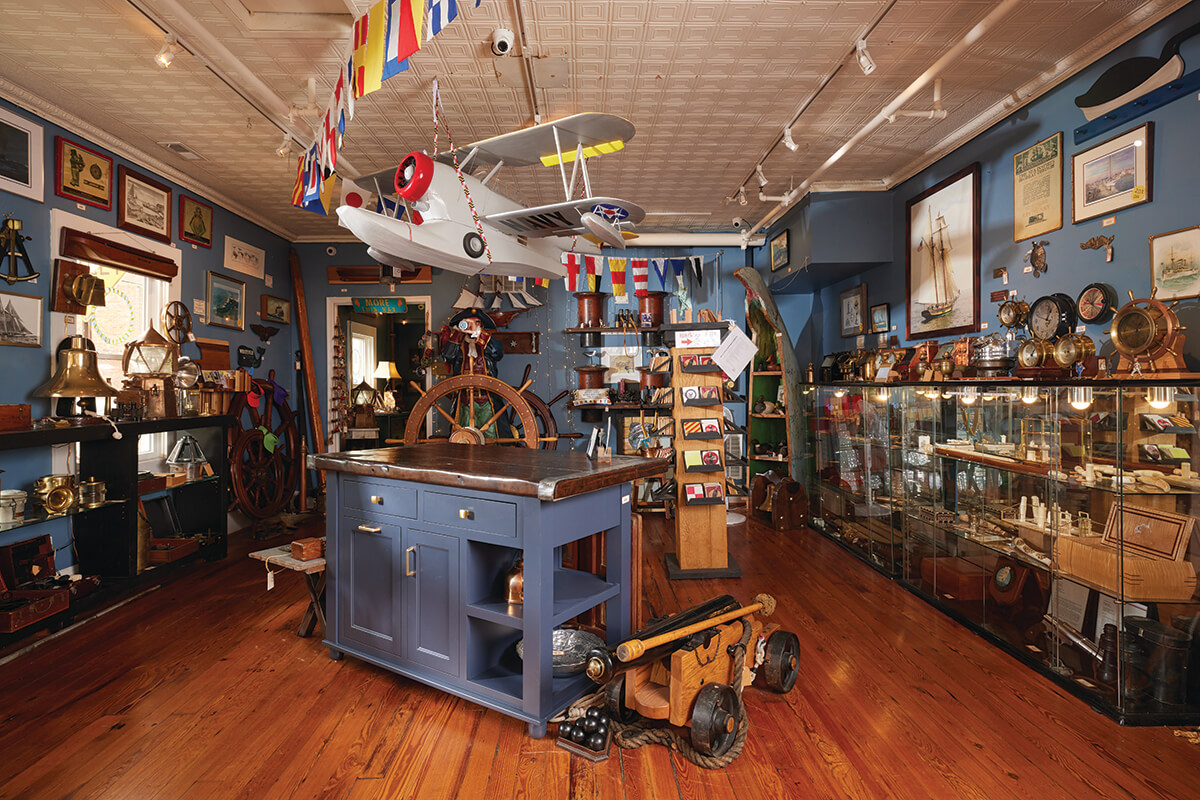
Inside the 800-square-foot shop, a ship’s wheel rests near antique navigation instruments while a six-foot model of a 1933 Duck amphibious plane hangs from the tin ceiling. Vintage lanterns cast a soft glow over furniture crafted from salvaged maritime materials. Ship hardware, books, and nautical curiosities share the space with handcrafted pieces of furniture fashioned from reclaimed wood. Nearly every object bears evidence of a previous life at sea.
The effect is neither gimmicky nor kitschy. It feels curated and connected to place, less like retail and more like stepping into a living archive of Chesapeake maritime culture. In an age when coastal decor can be reduced to mass-produced anchors and carefully distressed finishes, Annapolis Maritime Antiques offers something increasingly rare: authenticity.
“This isn’t about making something look old,” says owner Tony Kime, a retired Coast Guard commander whose wit and tenacity are as strong as ever despite the white hair and measured gait that reflect the passage of time. “The history is already there.”
In an age when coastal decor can be reduced to mass-produced anchors and carefully distressed finishes, Annapolis Maritime Antiques offers something increasingly rare: authenticity.
The shop’s origins didn’t grow from a business plan but out of boredom. “I was 67 and retired,” Kime says. “Five or six weeks later, I was really bored.”
Looking for a project, Kime decided to take on building a table from a World War II Liberty Ship hatch cover—a massive, five-foot, 120-pound wooden panel used aboard a wartime cargo ship meant to protect it from fire, flooding, or explosive shock. But there was one problem: He didn’t have a hatch cover.
Kime tracked down a craftsman who made hatch-cover furniture and asked if he could buy a single cover to try his hand at furniture making. The man, who had a heart condition and was looking to get out of the business, instead offered him two and a half cargo containers filled with them.
“Somewhere around 1,800 to 2,000. I had to buy a pickup truck just to move them,” Kime recalls. Then another problem presented itself. “I’m not a carpenter,” he says with a laugh. He had never built anything. Kime rented a waterman’s shed in Shady Side, 20 miles outside Annapolis at the point where West River opens into the Chesapeake Bay.
One cold November day, he hired two high school students to handle the heavy lifting, sanding, and other chores while he learned to build furniture. He relied on his own sketches and online tutorials to build his first table. A restaurant owner ordered two more. Word spread, and a business took shape. As the business grew, Kime expanded beyond furniture making, collecting nautical antiques through online auctions, dealers, and word of mouth.
“I knew sitting around idle wasn’t for me,” he says. “I wasn’t built for that.”
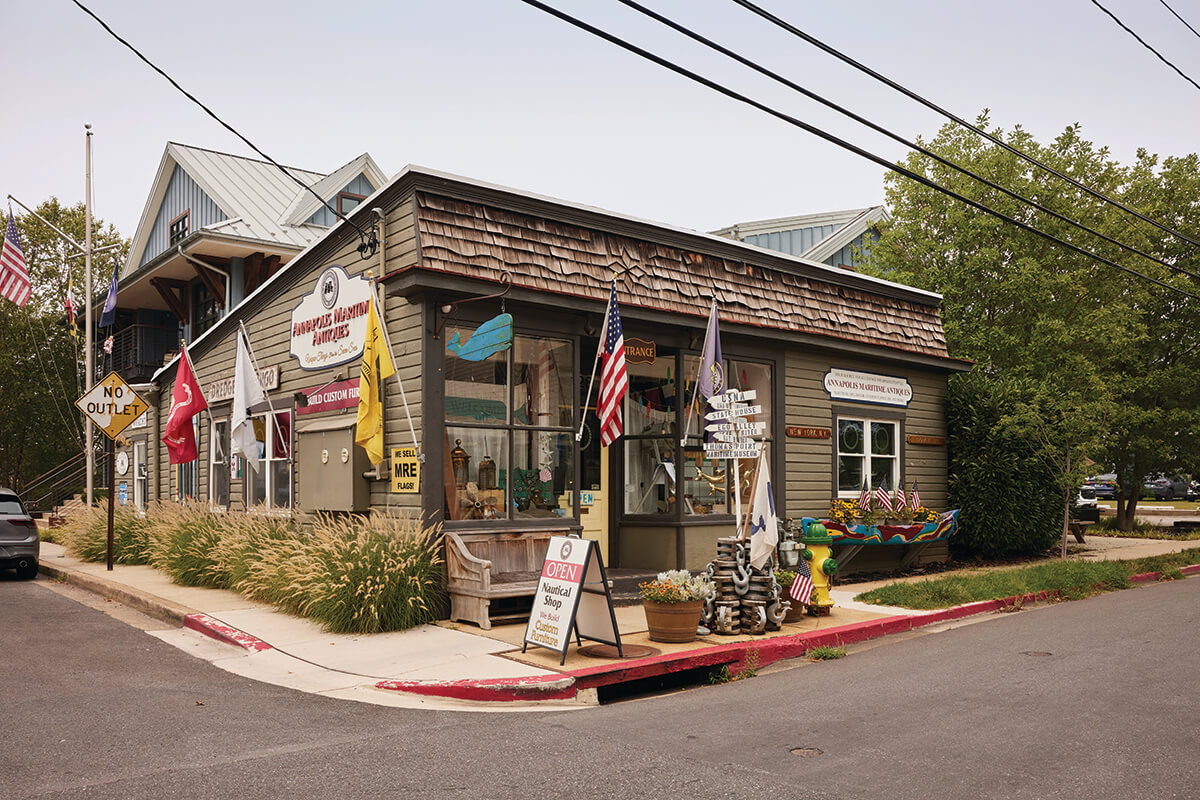
After several years selling his goods online, Kime felt it was time to expand and opened the Eastport store in 2014. The building itself has a story. The former Raven Maritime Studio on Severn Avenue was in disrepair when Kime first saw it. The owner wanted to tear it down, but city preservation rules prevented demolition.
“[The owner] said, ‘If you come up and be the project manager for renovations, you can open a retail store and sell your antiques,’” Kime recalls. It was an offer he couldn’t refuse.
Rather than erase the building’s past, Kime preserved its maritime character. Wood and aged brass create a backdrop that feels both historic and warm, a fitting home for a business devoted to preserving pieces of nautical history.
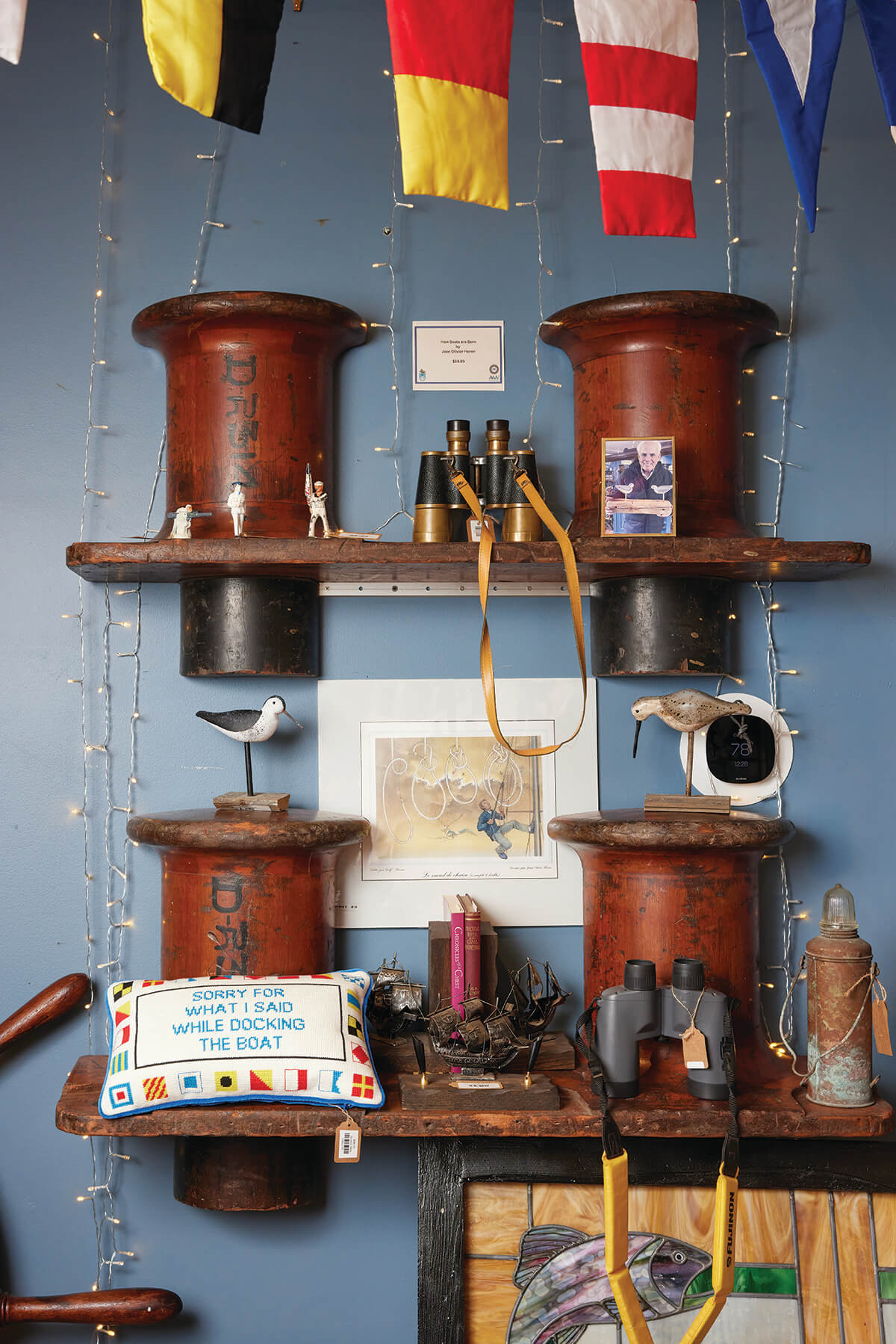
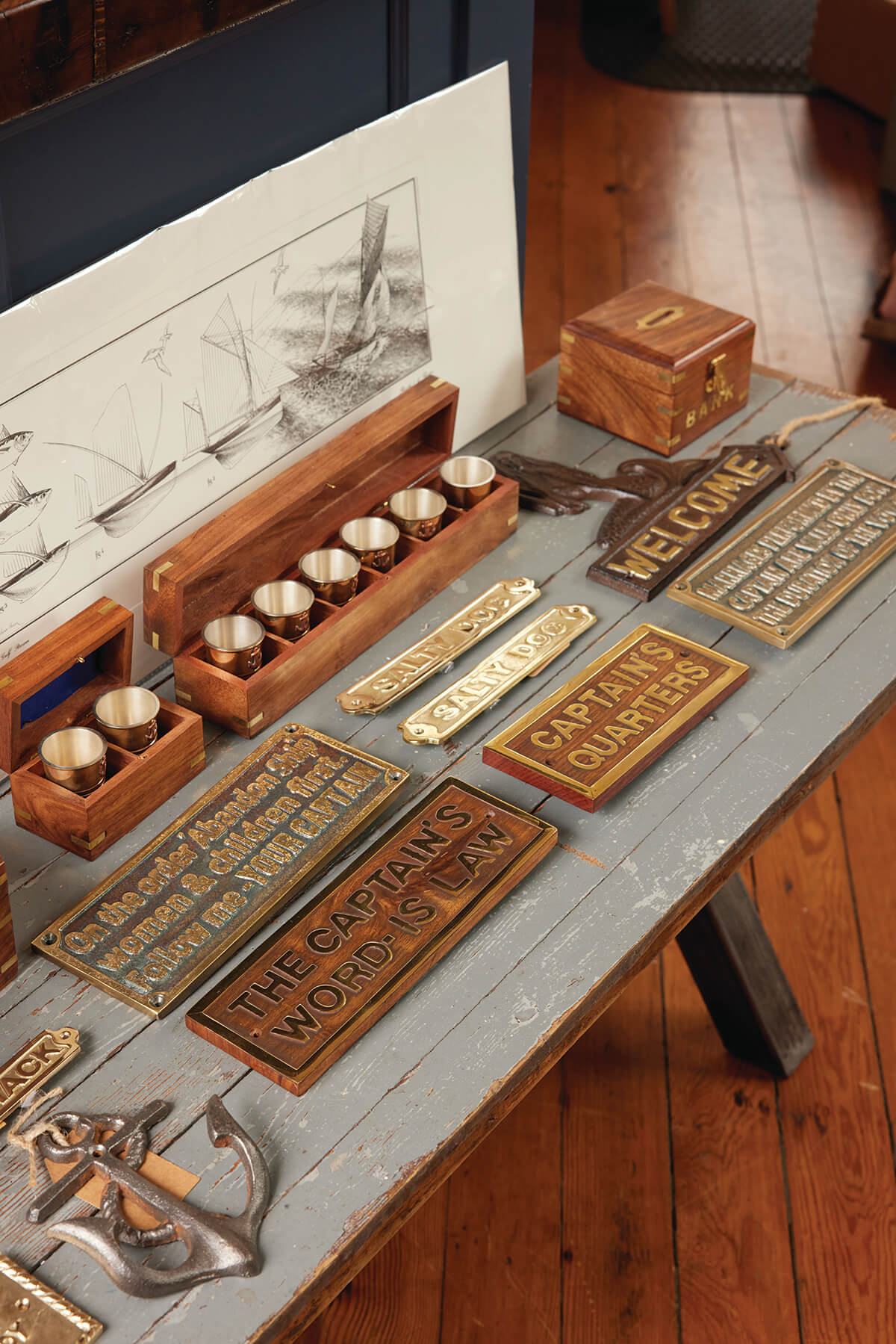
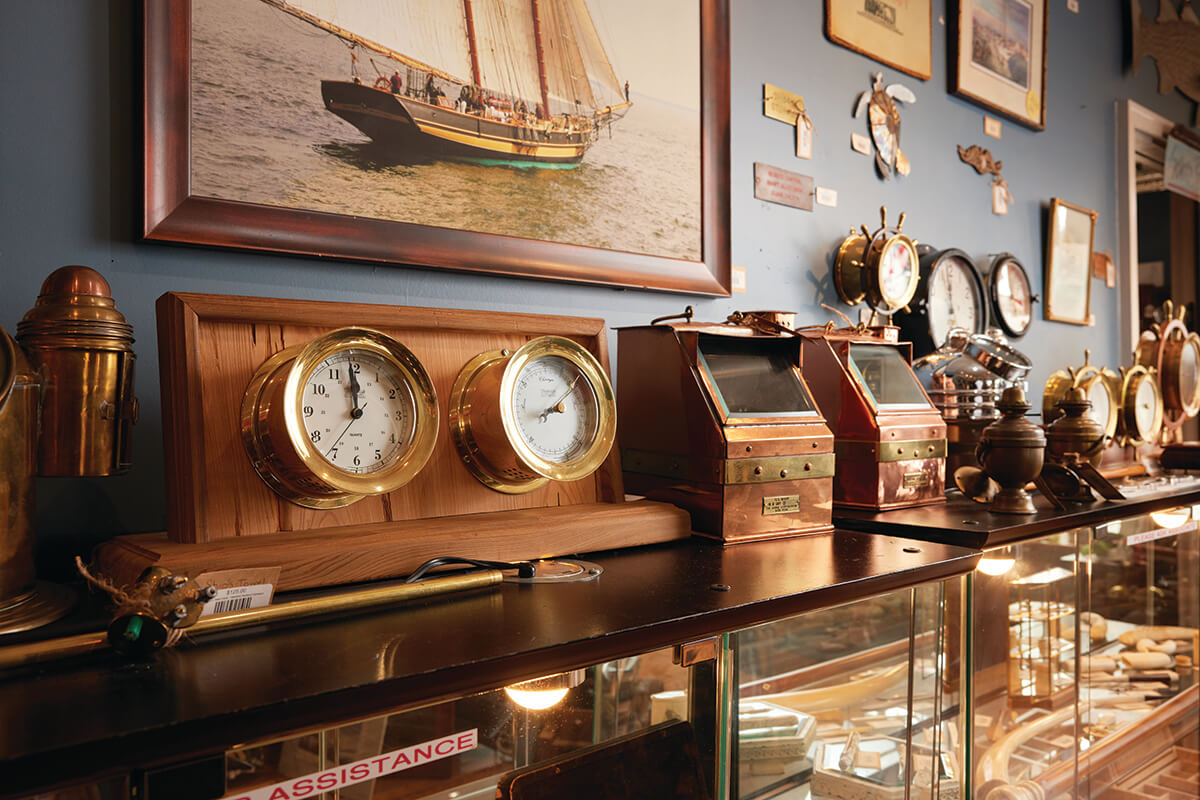
Prices range from a few dollars for vintage postcards to $28,000, the amount a Wyoming physician recently paid for a complete World War II dive suit and helmet with matching serial numbers.
Behind many of those one-of-a-kind pieces is a second location most visitors never see. Nearly all of the store’s custom work is created at AMA Woodworks in Tracy’s Landing, where antique maritime materials are transformed into dining tables, desks, bars, and commissioned pieces for homeowners, yacht clubs, and restaurants. Among the most distinctive creations are pieces crafted from the same Liberty Ship hatch covers Kime once stacked in a shed, now reborn as functional heirlooms.
“We don’t just plop things on a shelf,” he says. “The majority of pieces, we work on.” Some items are restored to a shine while others retain their original patina. “Sometimes the history is in the wear,” he says.
Now that he’s mostly retired, Kime insists the store would not exist without his staff. “We would have sunk years ago without these folks,” he jokes, pun intended. They are the interpreters of the space, helping visitors understand the history behind the objects.
Shelby Herrera, who moved to Annapolis three years ago and is now the store’s manager, delights in explaining a boatswain’s whistle by way of The Sound of Music or recounting the day a child jammed a replica cannonball into a cannon, prompting one visitor to suggest firing it down the street.
“I told him, ‘Sir, this is Annapolis. We are not shooting a cannon down the street,’” Herrera says.
Visiting the shop feels less like shopping and more like stepping into the maritime culture that helped shape the city itself.
For collectors, decorators, and Chesapeake Bay enthusiasts, the inventory extends far beyond decorative accents. Historic ship photographs, maritime lighting, and nautical instruments attract everyone from first-time visitors searching for a unique gift to yacht clubs and homeowners looking for a statement piece. Some customers call from overseas.
“We’ve shipped to Australia, Hong Kong, and London,” says business manager Meredith Farrington. “Sometimes it’s Americans living abroad. Sometimes it’s just collectors.”
The store’s location only deepens the experience. Eastport remains Annapolis’ working waterfront, where commercial fishing, boatbuilding, and sailing traditions are still woven into daily life. Visiting the shop feels less like shopping and more like stepping into the maritime culture that helped shape the city itself.
Kime is 84 now, and his once-commanding stride has slowed. Recently diagnosed with a medical condition he believes is connected to his service in Vietnam, he speaks matter-of-factly about the future.
“This can’t go on forever,” he says. He knows the business will eventually belong to someone else. His hope is that its mission won’t change. “I hope whoever takes over finds the same beauty in these one-of-a-kind maritime artifacts as I have,” he says. “This is history worth preserving and cherishing today and long after I’m gone.”