Travel & Outdoors
Point Park Celebrates the Inner Harbor’s Natural, and Human-Made, History
The 4.5-acre greenspace sits on the former site of Baltimore Chrome Works, which was built in 1845 and left quite the scar on the city’s waterfront.
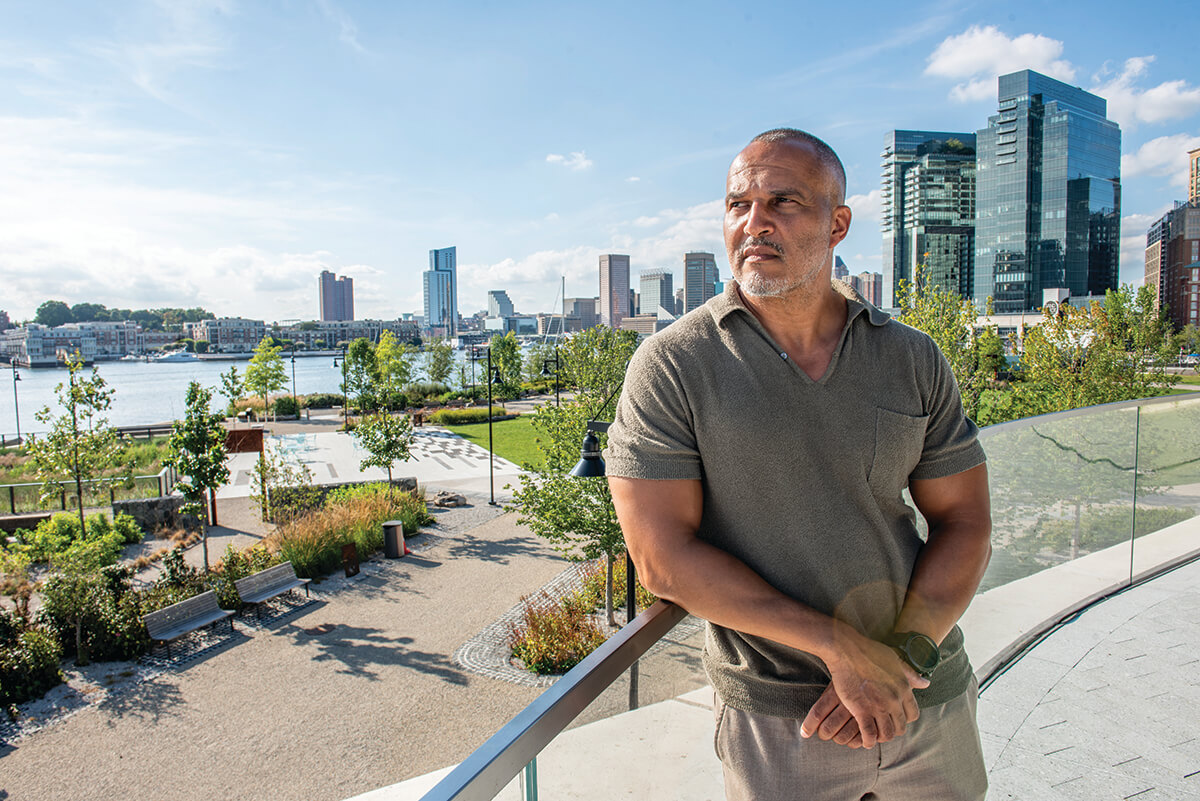
The Inner Harbor had been a commercial and manufacturing hub since the 18th century, with all the attendant soot, pollution, and discharge, but nothing quite left a scar on the waterfront like Baltimore Chrome Works.
Built in 1845 on the site of today’s Harbor Point mixed-use development, its factory workers once demonstrated their fortitude by passing a handkerchief through one nostril and out the other, their nasal septum eaten away by exposure to chromic acid. That carcinogenic operation eventually merged into Allied Chemical and Dye in 1954. After the plant was finally demolished in the 1980s, the leftover contamination became the focus of a 10-year environmental cleanup.
Boosted by $107 million in tax-increment financing, the repurposed 27-acre peninsula—jutting between Harbor East and Fells Point— now includes the headquarters of T. Rowe Price and Exelon, restaurants, high-rise residences, and retail. It’s also the home of the blossoming 4.5-acre Point Park, the first expansive greenspace addition along the 7.5-mile harbor promenade in decades—and the only natural interface with the water.
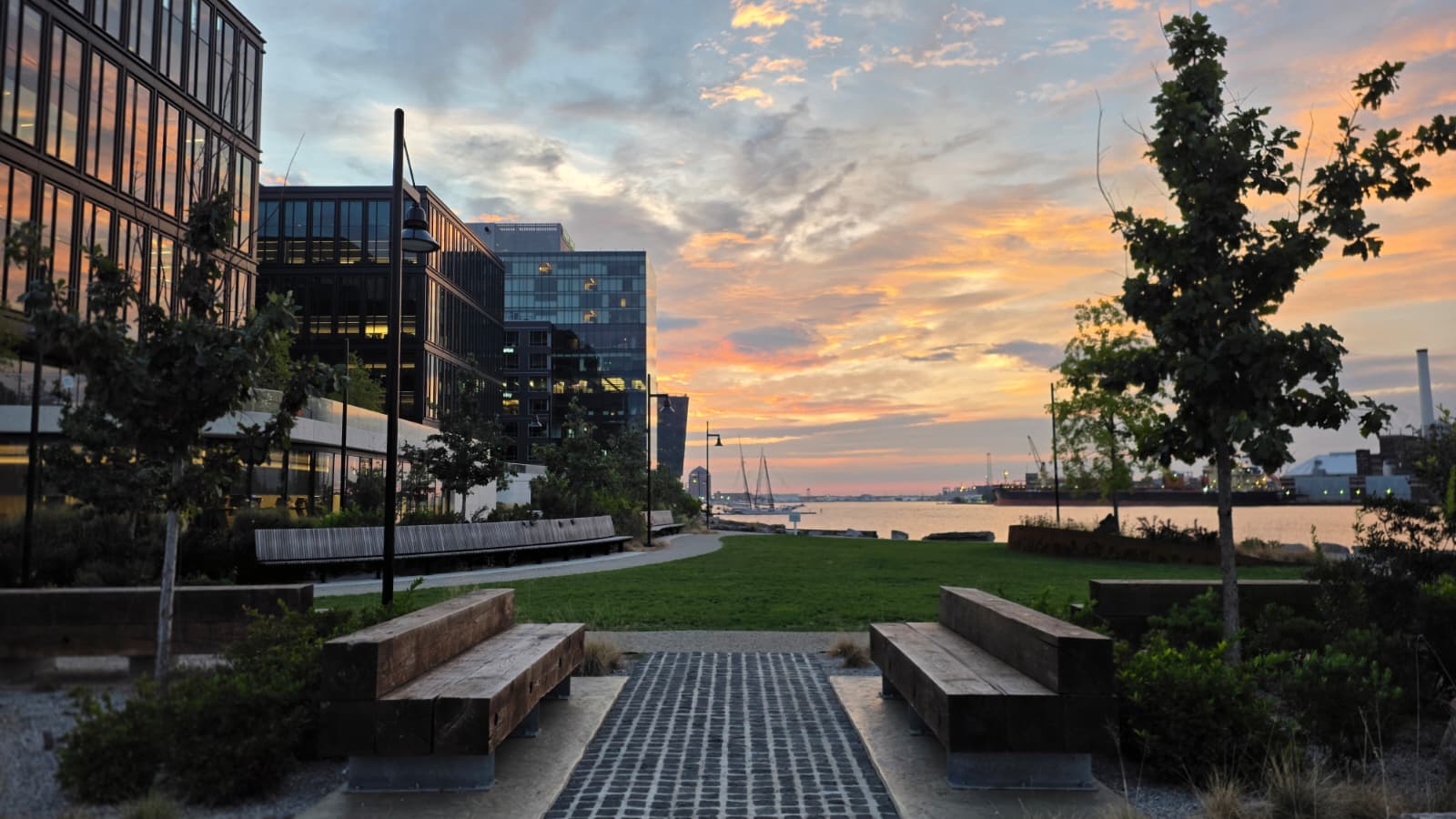
“Baltimore was a working waterfront and its edges were hard, historically steel, concrete, or wood, and the transition between the human being and the water has long been very abrupt, unnatural,” says Richard Jones, the Baltimore landscape architect and iO Studio founder who designed Point Park. “But the landscape that predated the harbor was this beautiful, riparian estuary. You can only see a glimpse of it anymore if you walk around to the restored wetland on the north shore of Fort McHenry. That was the landscape that was around the Patapsco River basin.”
As a Black landscape architect in a predominantly African-American city, it is not lost on Jones that few public spaces in Baltimore have been designed by people of color. Black representation in his field hovers around 2 percent.
“To me, it’s a full-circle story when you’re talking about the Black workers employed at Chrome Works and the Inner Harbor,” says the former president of Mahan Rykiel Associates, whose company has offices in Florida and Germany, where he was born to an American serviceman and German mother, as well as Baltimore. (Jones also led the landscape concept for the Inner Habor’s redesigned Rash Field while at Mahan Rykiel.)
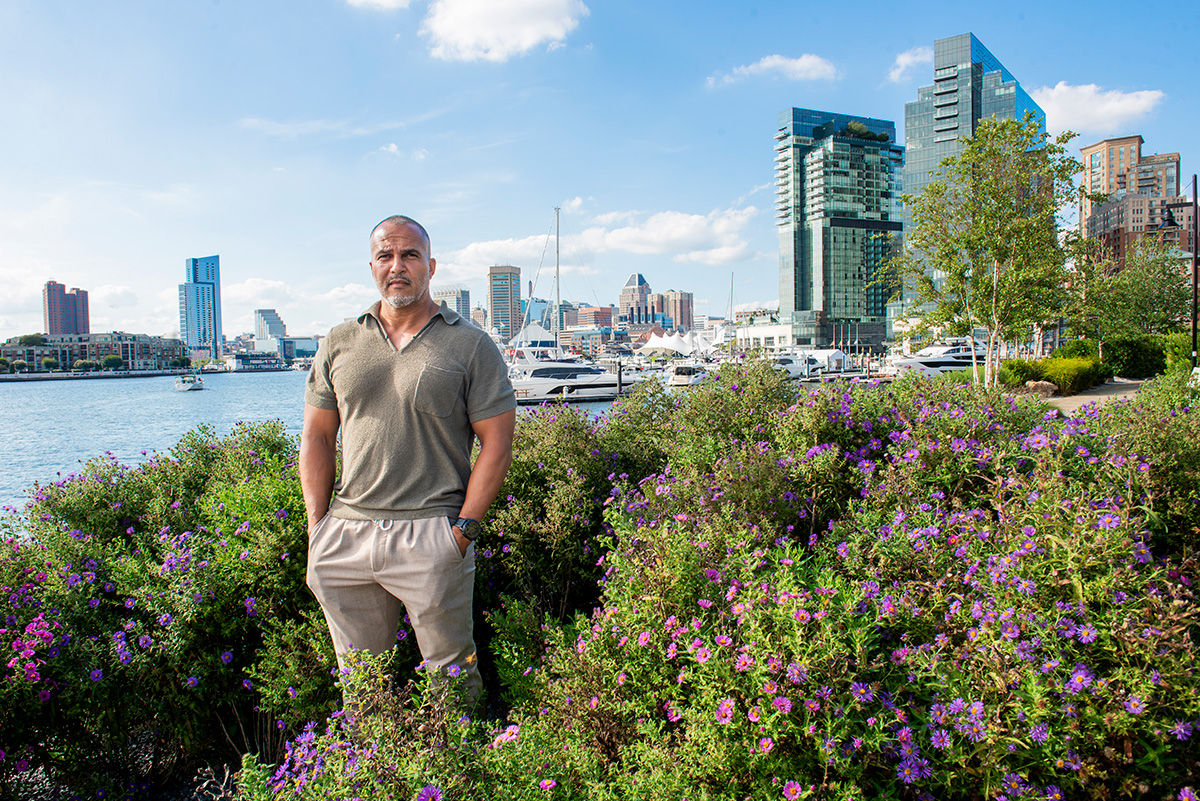
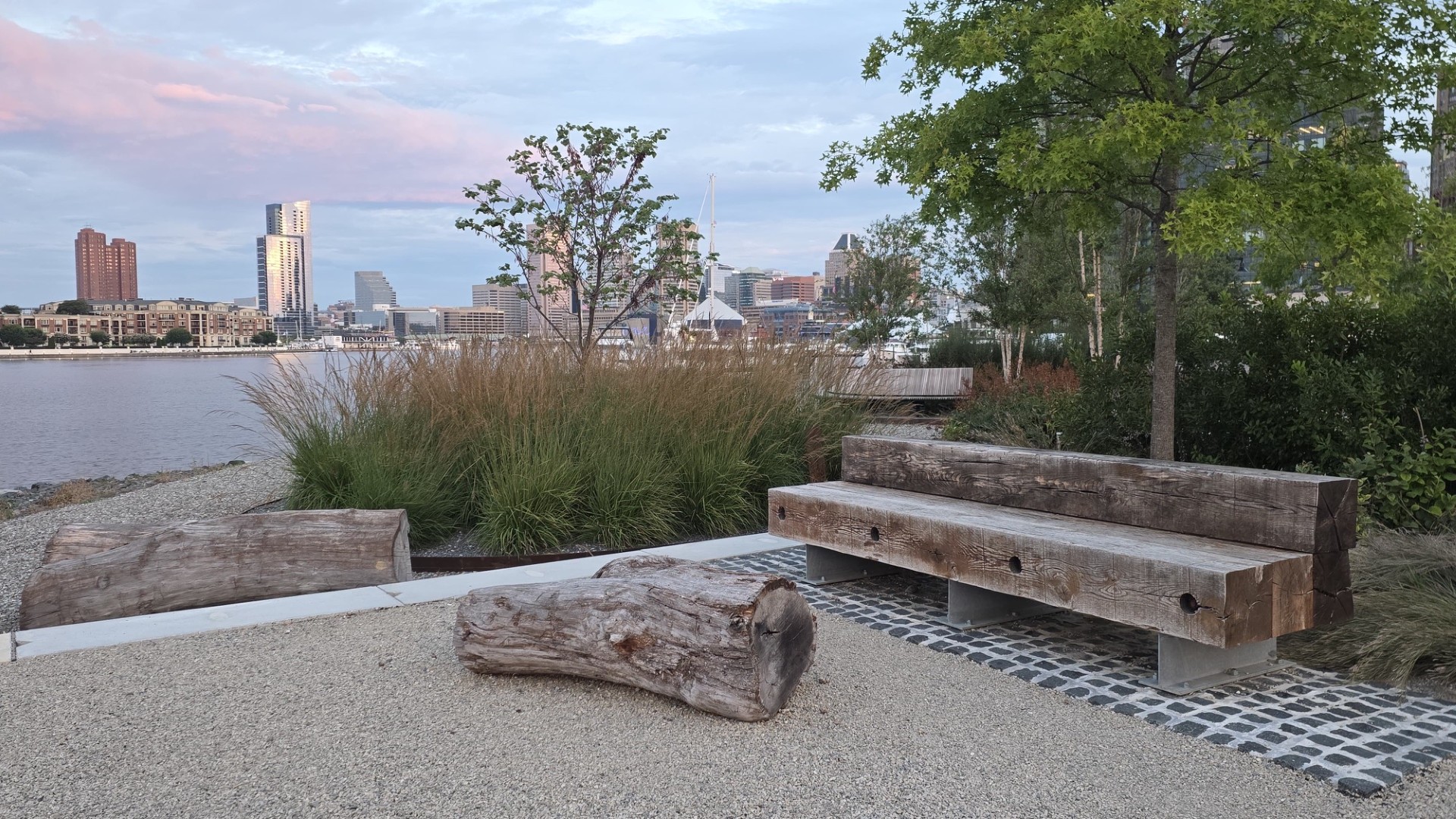
Inside Point Park, he placed steel gates near the actual entrances to Chrome Works’ main building and collaborated with Indigenous leaders on the park’s design, incorporating inscriptions, symbols, and artistic elements to honor the Piscataway and Susquehannock peoples who hunted and fished the peninsula.
At the park’s opening, Piscataway, Lumbee, Mohawk, Lakota, and Shinnecock tribal members performed traditional songs and dances connoting the four cardinal directions of Turtle Island, an Indigenous name for North America. However, reintroducing soils that would support widespread reestablishment of native plants wasn’t possible because the soil mixture on the peninsula’s protective cap mostly functions to hold down contaminants. Instead, Mexican feathergrass and Juncuslike plants were substituted for the native grass and rushes that would have lined the preindustrial river.
The pebbles and naturalistic elements of the park, Jones says, are less a literal re-creation of the past and more of an aspirational reclamation—amid the hardscaping of Baltimore’s waterfront.
“Speaking of people inhabiting the park and doing their thing, eating lunch together, reading a book, I saw this guy visiting recently in a group from China,” he says. “They had cameras and talked about the buildings in Chinese, gesturing around. I watched him go down to the water. He has his hands on his hips and he’s looking left and right. He gets closer and closer to the water. Then he crouches down and I’m thinking to myself, ‘Oh no. Don’t do it.’ And he dips and cups his hands in the water, gets a handful of water and drinks it.”
Jones recalls thinking that such a moment could’ve been a beautiful experience in an urban setting, but while there are some safe days for swimming at the Inner Harbor, we are still a long way from water considered safe for ingestion.
“He didn’t know the reality of the harbor, but it was flattering that he felt he was in a space, in nature, where he could walk down to the river on the rocks and take a drink,” Jones says. “That juxtaposition against Baltimoreans’ typical attitude around the harbor was really stark. As much as I kind of laughed and was also dismayed and feared for his health, I also thought, ‘This is what it’s all about.’
“It was a pretty powerful moment, personally. To put that feeling in someone who comes to Baltimore, to the waterfront, and they can walk down to the river and want to take a drink.”