Travel & Outdoors
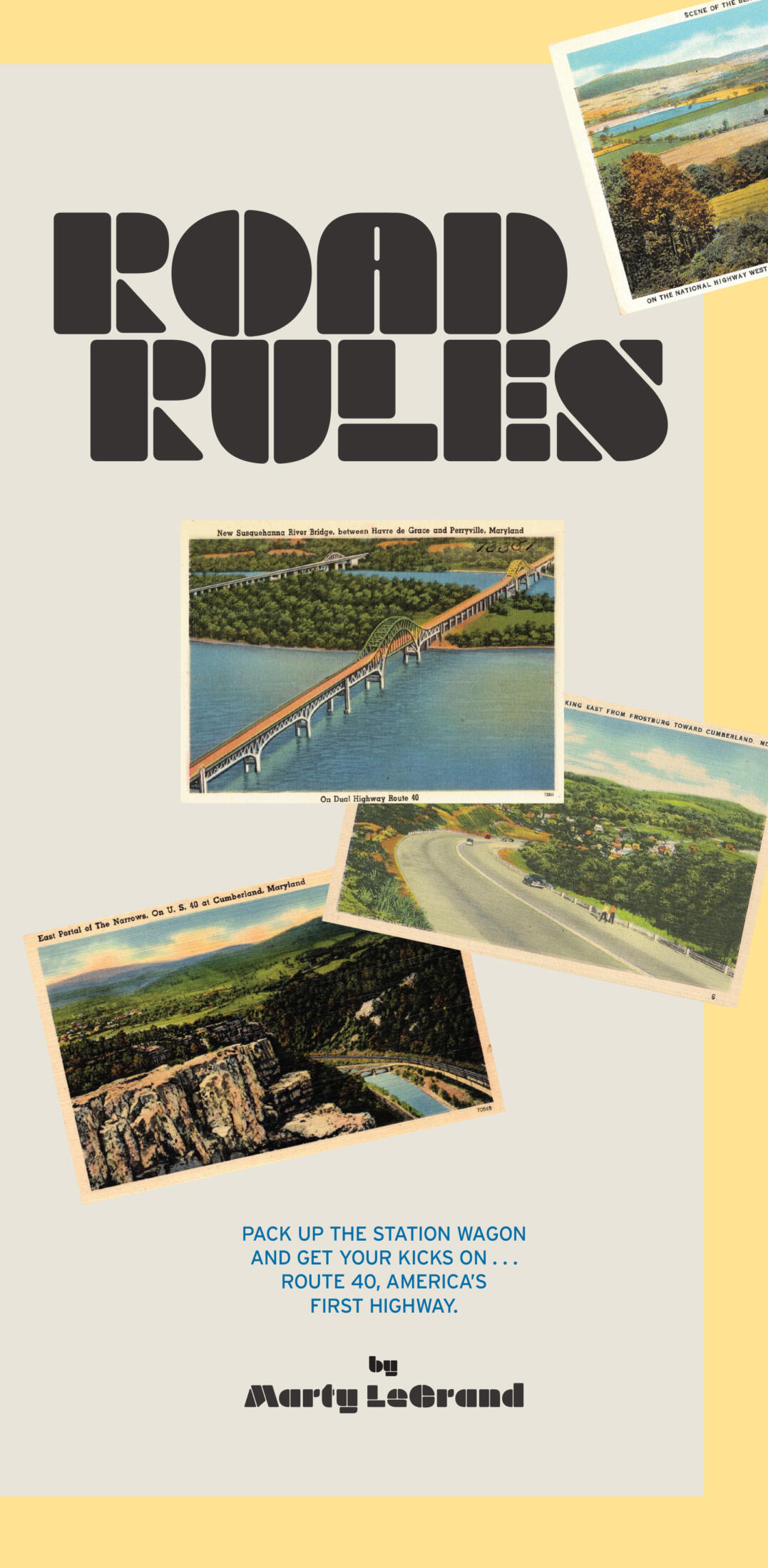

OW THAT THE COUNTRY’S 250TH BIRTHDAY fireworks have dispersed, it’s time to celebrate another all-American milestone. In November, the federal highway system—blueprint for countless family vacations and epic coming-of-age adventures—officially turns 100.
If that sounds inconsequential, consider what it replaced: a mishmash of privately created “auto trails” like the Lincoln Highway, identified by colors painted on telephone poles—or whatever else was handy. But then, in 1926, about two decades after the Model T rolled out of the Ford factory doors, the U.S. Numbered Highway System was created, imposing roadway uniformity by assigning route numbers (odd for north-south, even for east-west) to those previous paths. Thus, the National Pike, for example, became U.S. Route 40 and the Lincoln Highway, U.S. 30. The Baltimore Sun declared that city motorists bound for California could now, using new numbered maps, follow the former’s standardized signs clear across the country. “Stick to No. 40,” the newspaper proclaimed, “and you can’t miss the Golden Gate.”
Marylanders have special reason to toast the centennial. Sorry Route 66, but no other national highway is as consequential as U.S. 40, known as “Main Street of America.” In 1811, in Cumberland, Maryland, construction began on the country’s first federally funded highway, “The National Road.” In seven years’ time, it reached the Ohio River, effectively connecting the new nation’s frontier to Eastern cities like Baltimore via existing roads to Cumberland.
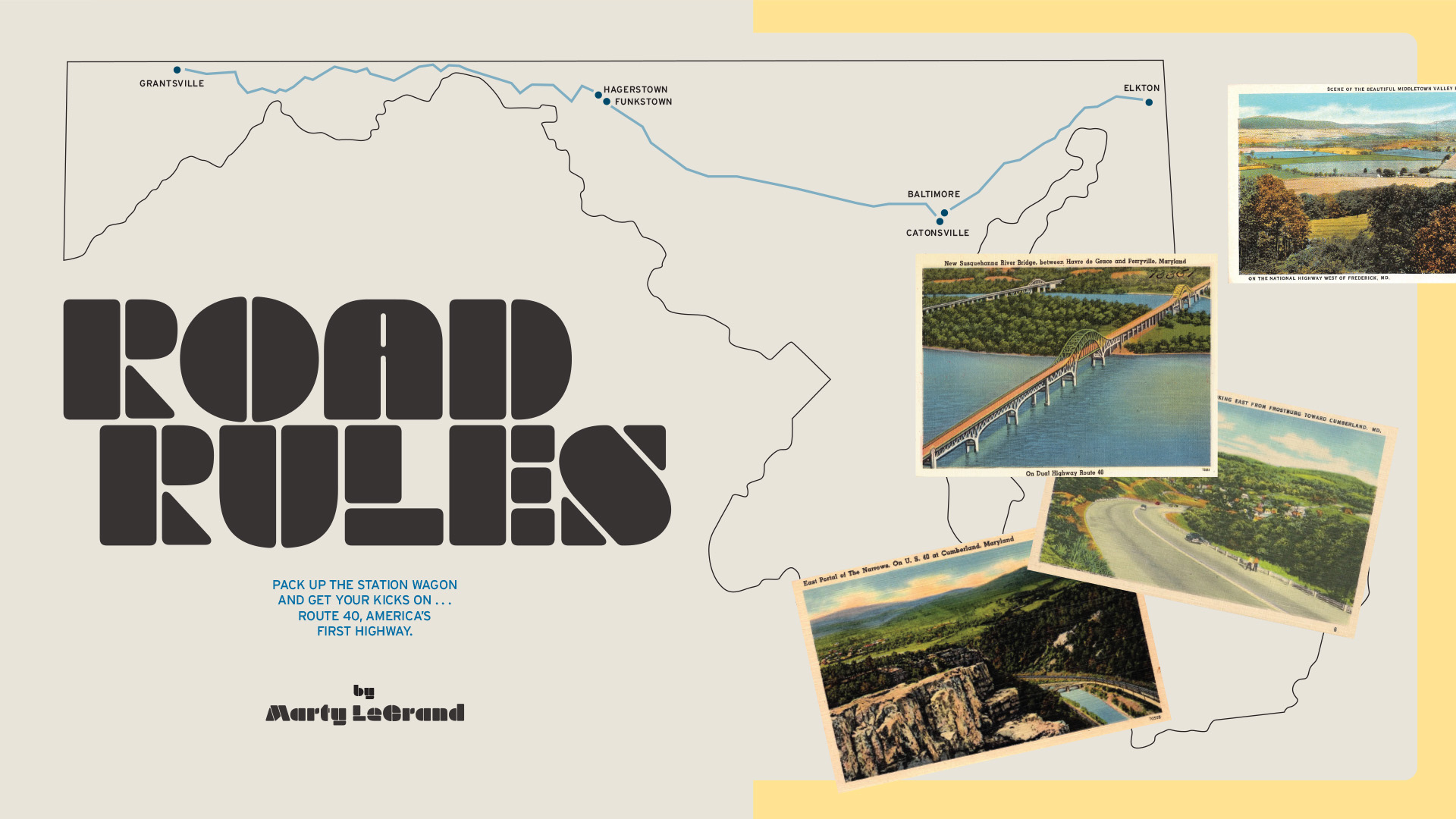
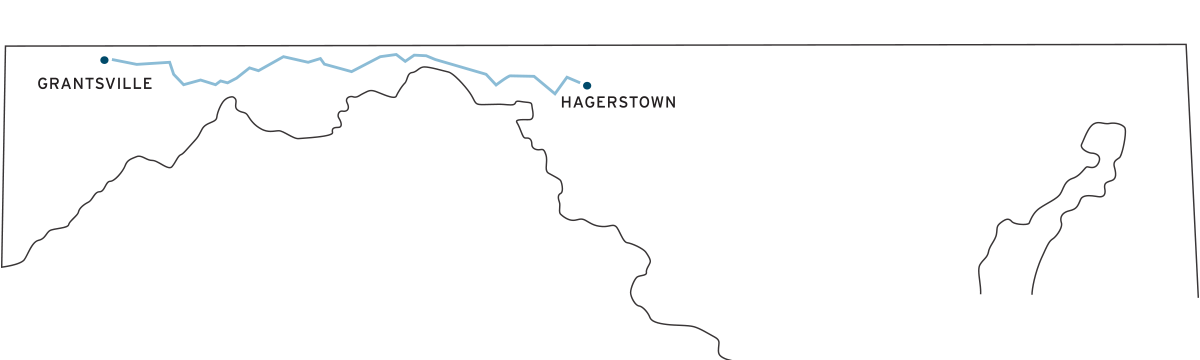
Today, U.S. 40 unfurls 2,286 miles from the beaches of Atlantic City, New Jersey, through the Old Line State, to the outskirts of Park City, Utah—no longer reaching the Pacific Ocean. Now about one tenth of it slices through Maryland’s midsection: nine counties and four major cities worth of roadside distractions, rich history, delightful quirks, and local legends—with sublime scenery to boot.
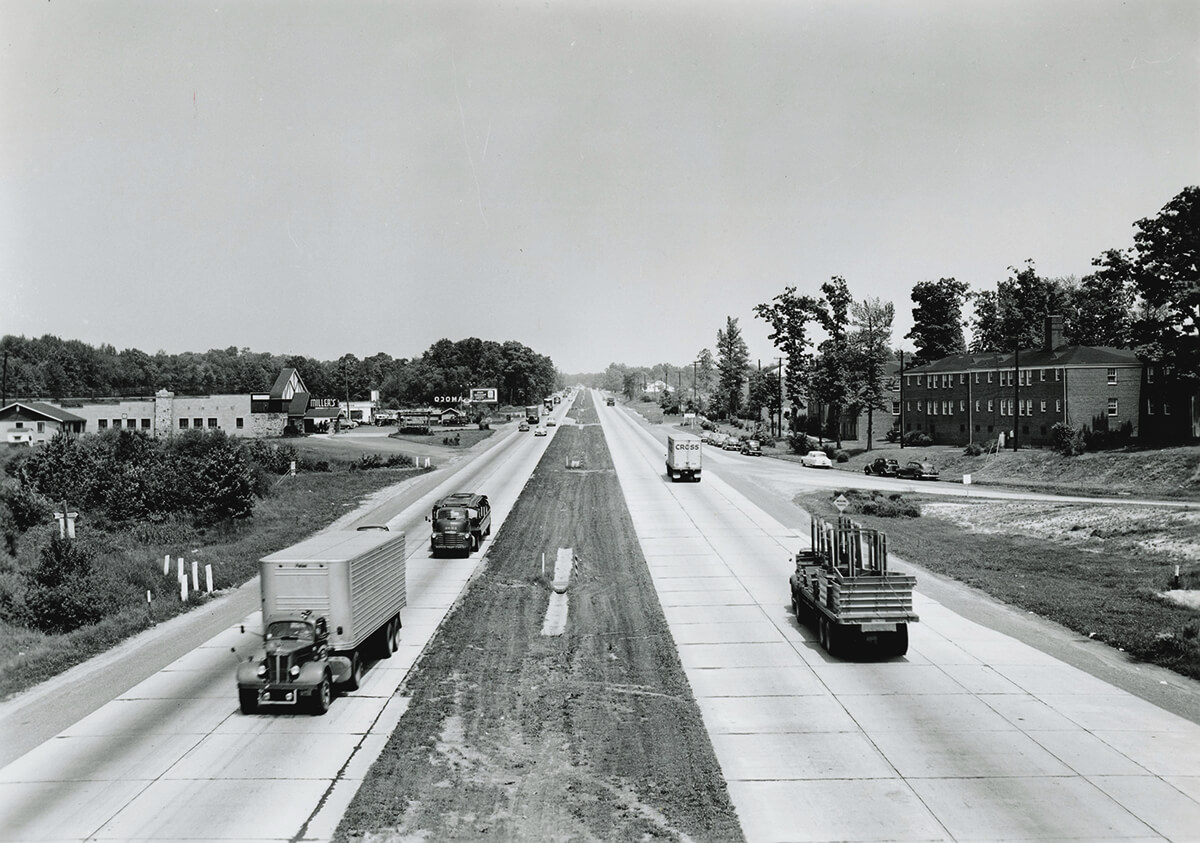
U.S. 40
from the Martin
Boulevard overpass
in Essex, May 1953. —WIKIMEDIA COMMONS NATIONAL ARCHIVES AND RECORDS ADMINISTRATION; OPENING SPREAD: COURTESY OF THE BRADDOCK ROAD PRESERVATIO SOCIETY: WIKIMEDIA COMMONS/BOSTON PUBLIC LIBRARY TICHNOR BROTHERS COLLECTION; WIKIMEDIA COMMONS (2);
In the 1953 book, US 40: Cross Section of the United States of America, University of California, Berkeley professor George R. Stewart waxed poetic about the highway he believed spoke volumes about this nation and the self-perceptions of Americans. The road, he wrote, “loops ribbon-like among the hills,” “springs out into space across a bridge,” and, in cities, gets “pestered by stoplights, like a stream impeded by rocks and dams.”
Maryland’s highways of old have realigned over time. Nearly half of U.S. 40 now joins, or closely parallels, Interstates 70 and 68. But you can still find the route’s historic paths. To the east, that means Pulaski Highway, named for the Polish cavalry officer turned Revolutionary War hero. In central and western Maryland, it follows Baltimore National Pike, Old National Pike, and National Pike (variously, Maryland 144, Alternate U.S. 40, and Scenic U.S. 40), whose weathered roadside stones count turnpike miles that stagecoaches used to travel.
Now, of course, it also cuts right through the heart of the city: past the motels, strip clubs, and pit-beef barbecues of Pulaski Highway, through midtown below residential neighborhoods like Poppleton and Harlem Park down the “Highway to Nowhere,” out along Edmondson Avenue past the edges of Gwynns Falls/Leakin Park.
In honor of the road’s 100th birthday, go ahead and explore our portion of the national highway for yourself. Maybe spend a day trip in the east, a weekend in central or western Maryland, or a multi-day vacation traveling the entire route. See the sights of 100 years of American road travel.
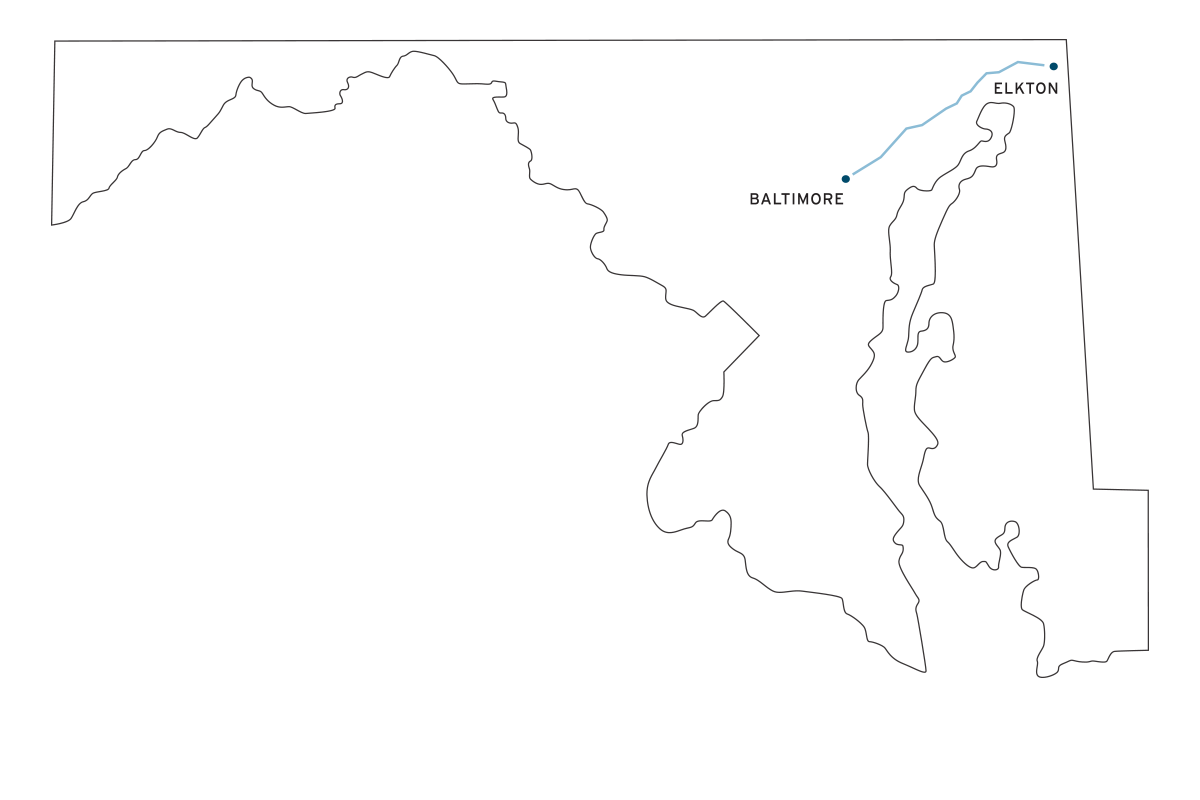
ELKTON TO BALTIMORE: Approx. 70 miles
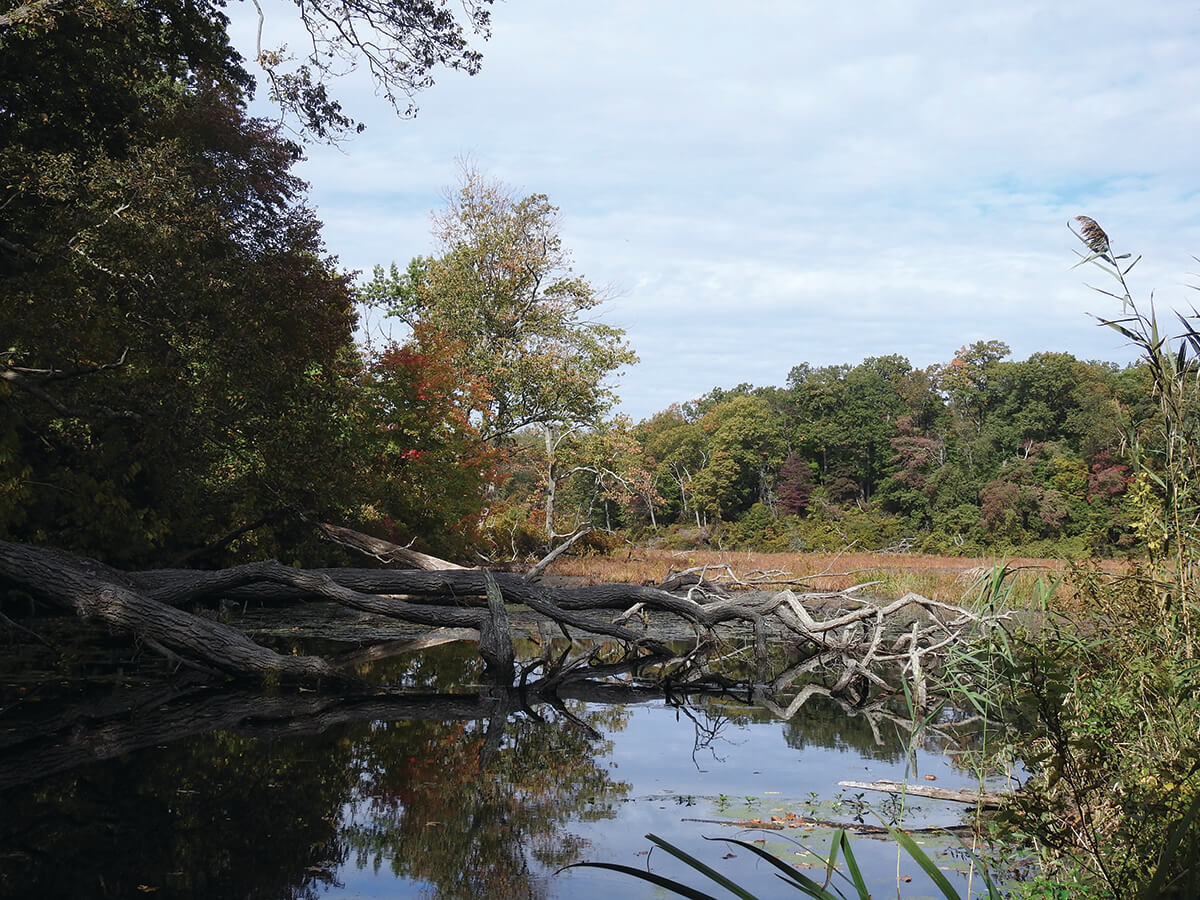
A view in Elk Neck
State Forest. —SHUTTERSTOCK

lysses S. Grant was president and Philadelphia hosted the first official World’s Fair in the U.S. when basket makers Edward and Samuel Day set up shop in Cecil County in 1876. The Day Basket Factory near Elkton still hand weaves white oak baskets for varied uses—laundry, pies, berry-picking, picnics—as well as traditional hikers’ packs and fishermen’s eel pots. For the time being, snag a limited-edition basket commemorating the company’s 150th anniversary. Shop hours are limited, so call ahead.
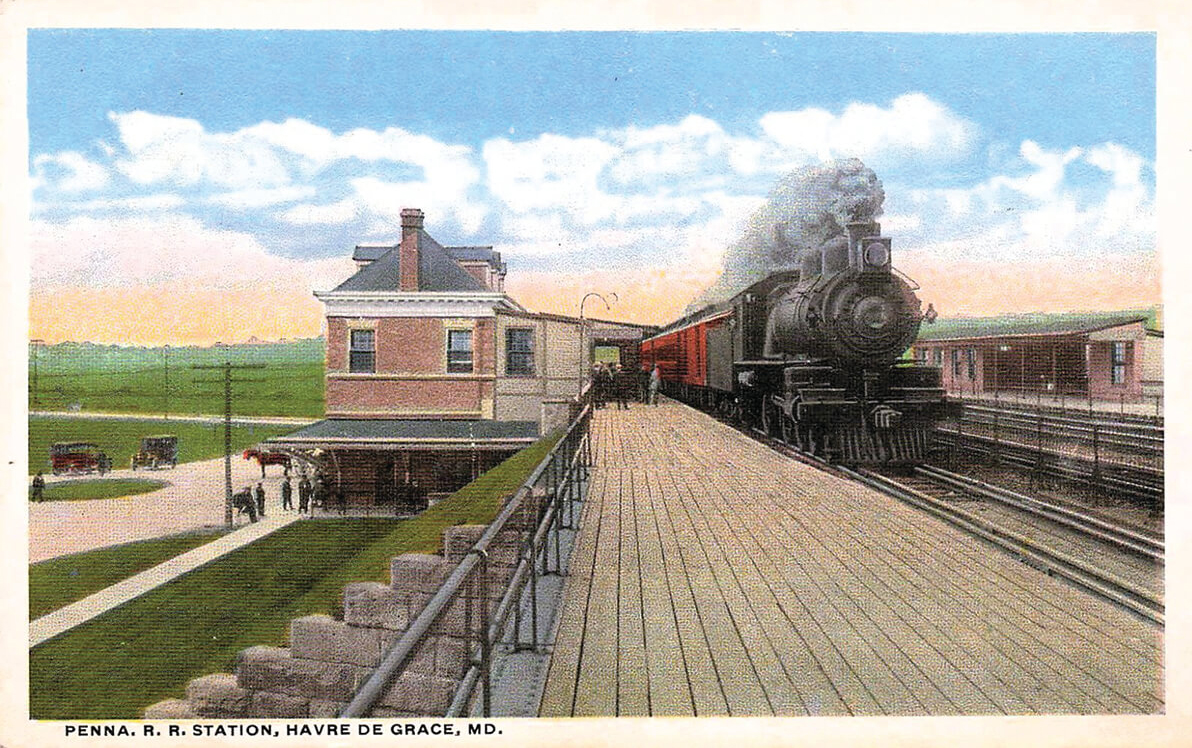
A vintage Havre De
Grace postcard. —Wikimedia Commons
Minutes away, explore nearly 100 species of native Maryland shrubs and trees in the Elk Neck State Forest Arboretum. The first state project of its kind, the outdoor arboretum’s half-mile loop trail showcases a spectrum of indigenous flora, from the Eastern Shore’s highbush blueberry and leggy loblolly pine to Western Maryland’s mountain laurel and vibrant sugar maple.
These days, Interstate 95 has travel plazas. But in the late 1700s, the Philadelphia-to-Baltimore road had taverns where weary travelers ate, drank, and slept. The Rodgers family ran two on either shore of the Susquehanna River—in Perryville and Havre de Grace—waypoints for the busy ferry they operated. Perryville’s 1772 Rodgers Tavern survives as a museum where you’ll learn how Gen. George Washington, a frequent guest, led American and French forces to Yorktown along the route in 1781. The 1788 Rodgers House in Havre de Grace also still stands, now a private residence.
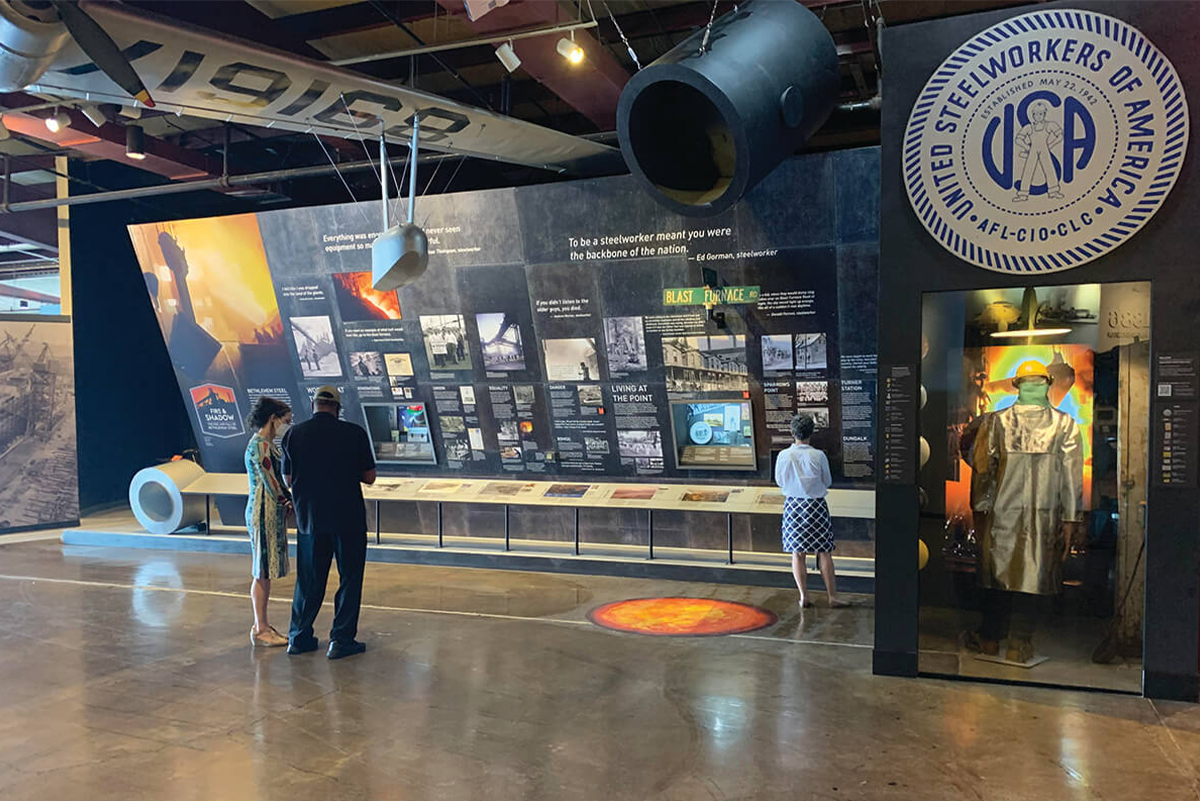
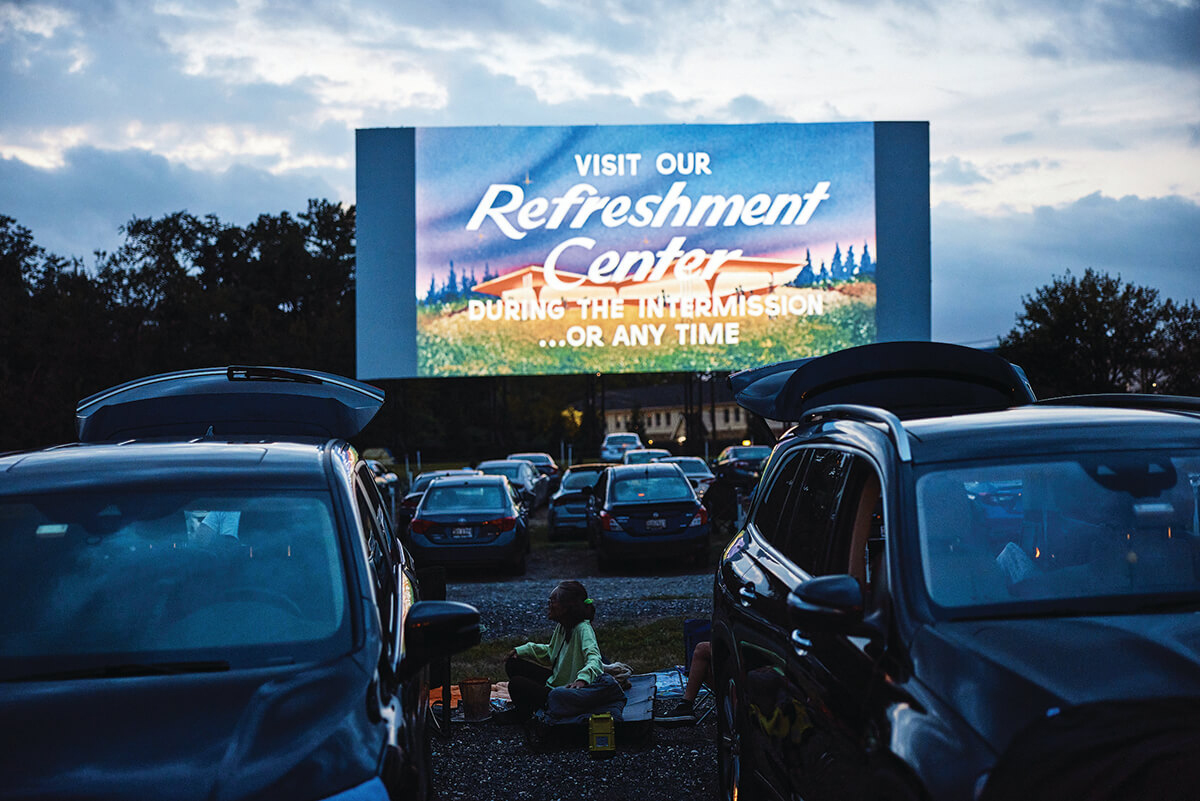
The
Baltimore Museum
of Industry; The
Bengies Drive-In
movie screen.—Courtesy of The Baltimore Museum of Industry/Photography by Justin Tsucalas
After joining the Continental Army during the American Revolution, Gen. Marquis de Lafayette thought Susquehanna Lower Ferry (today’s Havre de Grace in Harford County) to be so like lovely Le Havre, France, that the name stuck. The town’s self-guided Lafayette Trail includes must-see historical sites like the Decoy Museum, Concord Point Lighthouse, and Havre de Grace Maritime Museum. Also don’t miss Graw Alley Art Park. From 1912 to 1950, Havre de Grace Racetrack (“The Graw”) was a thoroughbred racing mecca. The track is now gone. Its old ticket booth, however, graces the park along with murals honoring Man O’ War, Seabiscuit, War Admiral, Citation, and other equine champions who raced there. Next door, work will soon begin on Harmer’s Town Art Center, a 26,400-square-foot facility housing galleries, exhibits, and a local history museum.
In Aberdeen, the IronBirds will have fledged Ripken Stadium by fall—don’t worry, just for the off-season—but there’s still much to see in this home of baseball’s Ripken family history and the U.S. Army’s Aberdeen Proving Ground ordinance facility. Admire the partially restored 1886 B&O Railroad Station. Pay your respects in Festival Park at a 9/11 memorial featuring steel salvaged from the World Trade Center. Salute baseball, beer, and ironmen of all stripes with a pint at Aberdeen’s first craft brewery, Watchtower Brewing Company.
What’s as tall as a four-story building, as broad as the Domino Sugars sign, and an abiding date-night attraction in Baltimore County since Elvis was king? The movie screen at Bengies Drive-In Theatre in Middle River, of course. The largest outdoor movie screen in these United States and Maryland’s last surviving drive-in, Bengies opened in June 1956. Think of all the classic Cadillacs back then. Its last local competitor, Churchville’s Bel-Air Drive-In, closed in 2005.
WONDERFULLY WEIRD:
Amidst shelves crammed with novels, mysteries, sci-fi books, comics, and first editions at Havre de Grace’s Washington Street Books & Music you'll find...a dress Katniss wore in The Hunger Games movies? It’s among the shop’s dazzling collection of Hollywood costumes and memorabilia.
Imagine yourself at an early Bengies flick or riding shotgun in one of those midcentury vehicles at the Baltimore Museum of Industry’s engaging exhibit on American motoring, “Fueling the Automobile Age.” Visitors can slide behind the wheel of a shark-finned 1953 Packard Clipper Deluxe, “pump” petrol from 1950s and ’60s era gas-station equipment, and learn about the contributions of the city’s very own Crown Central Petroleum Corporation.
The fastest way to get from Baltimore to Frederick follows U.S. 40 onto I-70. At 65 miles per hour, you’ll be there in less than an hour. When the federal highway system debuted in 1926, however, it rolled through the scenic Maryland countryside via a former stagecoach path, Frederick Road or Old National Pike (MD 144). It’s still an ideal sightseeing route.

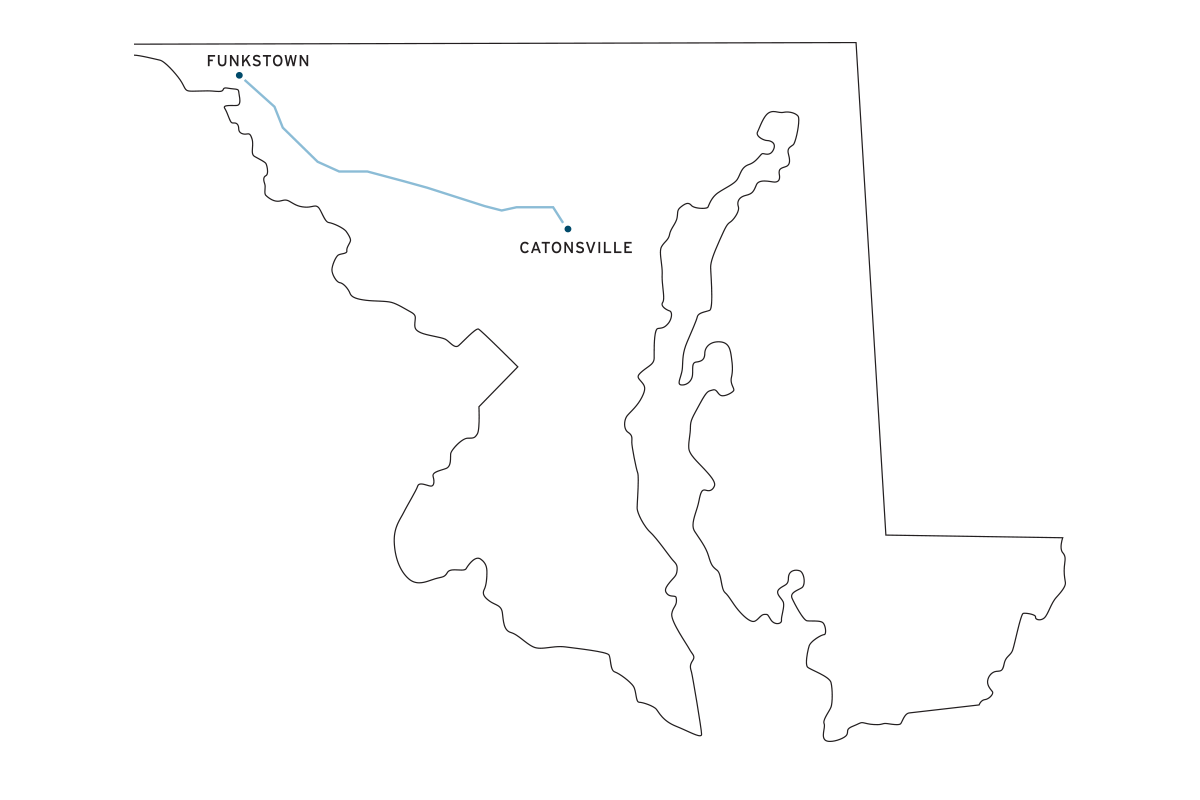
CATONSVILLE TO FUNKSTOWN: Approx. 65-70 miles
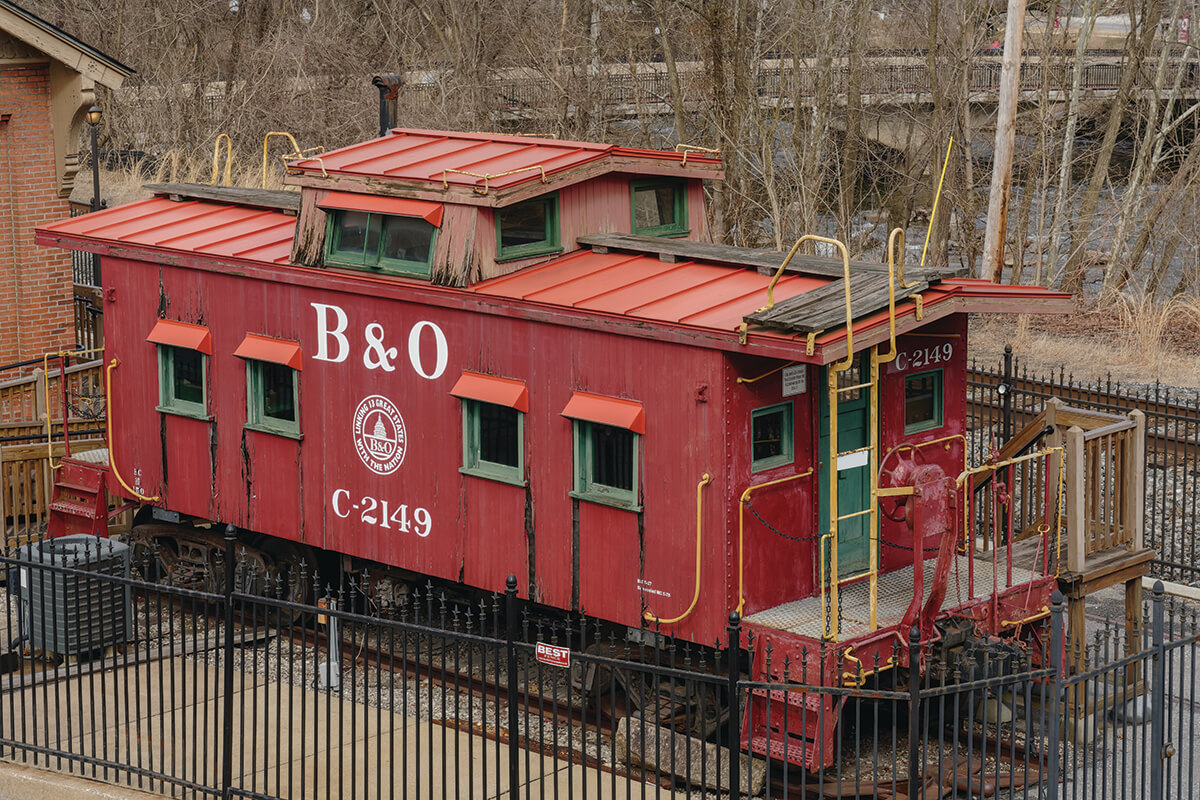
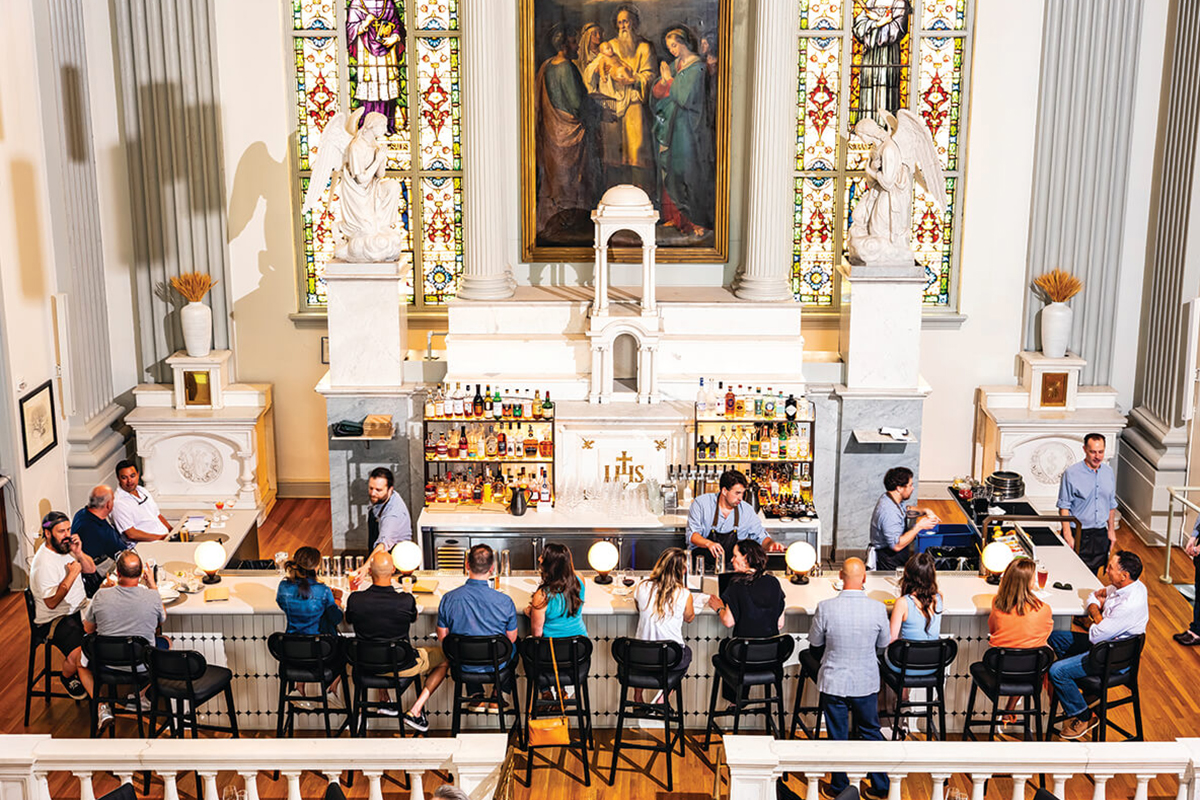
B&O Ellicott City Station
Museum; Wye Oak Tavern’s
stained glass cathedral
interior in Frederick. —Shutterstock/Photography by Scott Suchman

or stunning fall scenery, take Rte. 40 (Baltimore National Pike) to Patapsco Valley State Park’s Hollofield Area west of Catonsville in Howard County. Valley Overlook, atop a forested bluff, offers photo-worthy views of the Patapsco River Valley and a landmark arched bridge carrying the road across the river.
Alternatively, leave Baltimore on Frederick Road (MD 144) for Oella, home of late African-American intellectual Benjamin Banneker. The 142-acre Benjamin Banneker Historical Park and Museum tells the story of this self-taught mathematician who once challenged Thomas Jefferson to square the founding father’s views on slavery with his earlier drafting of the Declaration of Independence.
With narrow streets that descend to the river responsible for its founding, Ellicott City has carefully preserved or repurposed historic buildings. The nation’s oldest surviving railroad station, built in 1831, lives on as the B&O Ellicott City Station Museum. Rebuilt following a flash flood, the Thomas Isaac Log Cabin was a National Road stop and fixture of both the Quaker and Black communities. The 1774 flour mill erected by the town founders is gone, but the 1916 high-rise mill that replaced it is being rehabilitated as the multi-use Ellicott Mill.
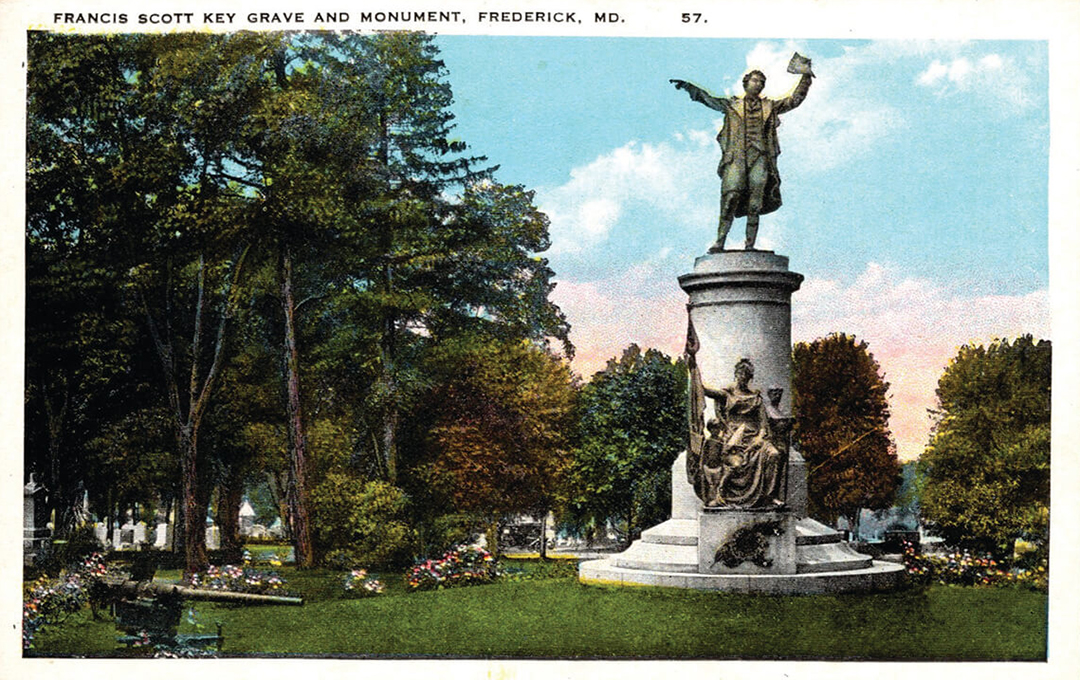
Postcard
of Francis Scott Key’s
final resting place at Mt.
Olivet Cemetery.—Wikimedia Commons
Locals who loved Rte. 40’s analog amusement park, The Enchanted Forest, rejoiced when its fairytale inhabitants emigrated after the park’s demise in 1989. Lovingly refurbished, Mother Goose, Humpty Dumpty, the Old Woman’s Shoe, and others now reside four miles away at Clark’s Elioak Farm, a working farm and petting zoo on Clarksville Pike.
The Howard County Fair outgrew Ellicott City and, for the last seven decades, has been an eightday August tradition at its current location tucked between I-70 and MD 144 in West Friendship. Visit the fairgrounds this fall to see the National Capital Kennel Club’s allbreed dog show in October.
The rich, rolling hills of nearby Carroll and Frederick counties are dotted with vineyards ripe for a visit at harvest time. Maryland’s first wine trail features eight official stops through Frederick County. (Unofficially there are about twice as many as that.) Hidden Hills Farm and Vineyard combines vines with another local fixture: equestrian farms. The hilltop winery sits on a scenic 100-acre horse farm between Mount Airy and New Market.
Vestiges of stagecoach days remain. New Market’s cozy 5 West Cafe has a stone mounting block where coach passengers disembarked for a stay at its former incarnation, the Old National Hotel. While waiting for your latte, admire its fading sign hanging inside.
WONDERFULLY WEIRD:
For centuries, mountain settlers west of Frederick warned of a dragon-like beast, the Snallygaster, that attacked unsuspecting victims. In 1909, a Middletown Valley newspaper sensationalized the story, claiming that Smithsonian Institution scientists and even President Theodore Roosevelt were on the case. The yellow journalism subsided but the legend endures. Snallygaster DC, held every October, is billed as the East Coast’s “biggest and beastliest beer festival.”
In “Barbara Frietchie,” his semi-fictional ode to an elderly Civil War heroine, poet John Greenleaf Whittier described “the clustered spires of Frederick . . . greenwalled by the hills of Maryland.” The Barbara Fritchie House clarifies the story of the actual woman—notice the updated surname spelling—who supposedly shamed Stonewall Jackson into sparing the Union flag. She’s buried in nearby Mt. Olivet Cemetery, along with notables like National Anthem poet Francis Scott Key.
For more Civil War lore, visit the National Museum of Civil War Medicine and the Visitation Hotel, the latter a former monastery and Catholic girls’ academy used as a field hospital after the Battle of Antietam. The hotel’s buzzed-about restaurant, Bryan and Michael Voltaggio’s Wye Oak Tavern, specializes in Maryland classics rendered with panache, served in the deconsecrated chapel.
Leave Frederick on Alt. 40 and head up Catoctin and South mountains. Be sure to visit the National Road Museum in Boonsboro. Director Reuben Moss will happily guide you through its growing collection of memorabilia, including original mile markers and toll rate signs (four cents for horseback riders; 12 for four-wheeled coaches). Next door, there’s a fascinating trolley museum, and a block away, author Nora Roberts’ romantic Inn BoonsBoro once hosted stagecoach passengers.
Continuing west toward Funkstown, admire beautiful bank barns that lean into the lush hillsides of Washington County.
HAGERSTOWN TO GRANTSVILLE: Approx. 100 miles
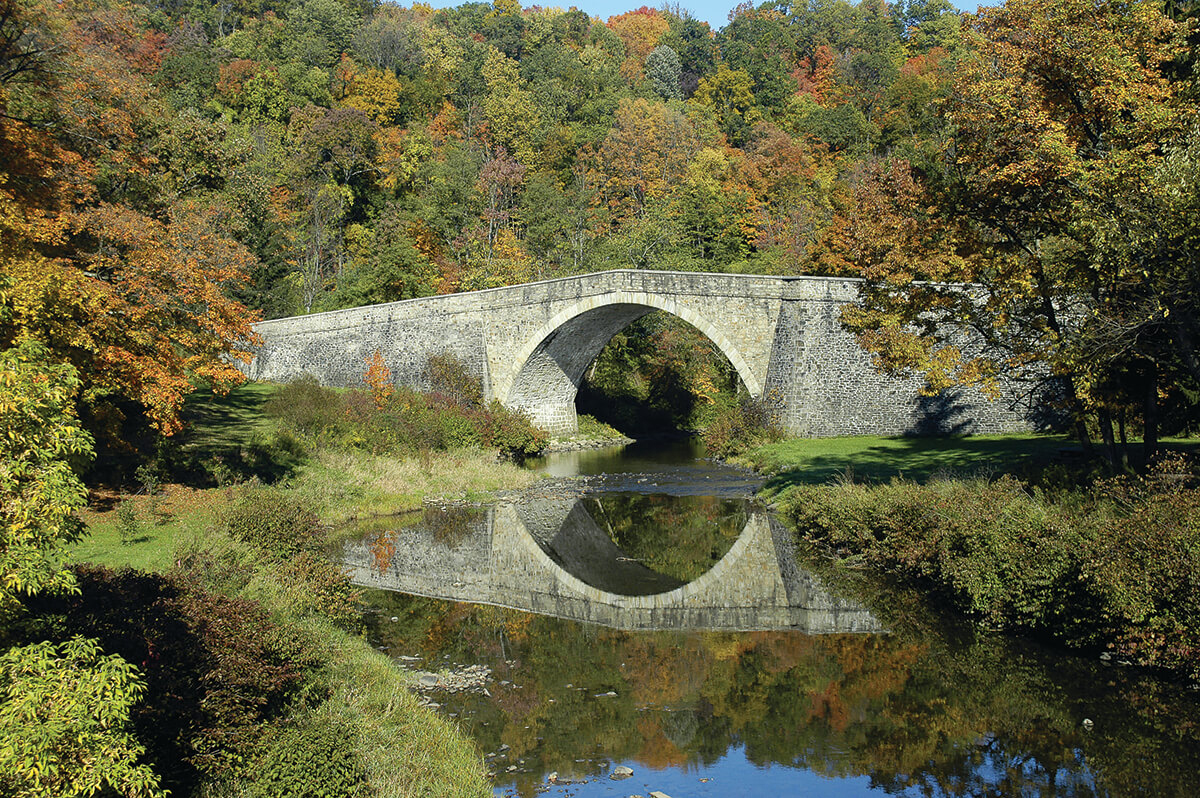
Casselman
River Bridge
in Grantsville. —Shutterstock
rom Alt. 40, take Memorial Boulevard in Hagerstown to the city’s crown jewel, the 50-acre City Park. A classically landscaped collection of swangraced lakes, recreation facilities, and historic sites, it defines “Hub City,” where three vital railroads converged. The park’s 1739 Jonathan Hager House is now a museum devoted to the city’s German immigrant founder. At the Train Hub, behold Steam Engine 202, a behemoth that pulled trains packed with passengers and freight. Donated by a city native and her landscape-painter husband, the Washington County Museum of Fine Arts remains (no hyperbole) one of the nation’s finest small museums. Just down the street, find the best-kept-secret Krumpe’s Do-Nut Shop for daily-made sweets.
Leaving Hagerstown on U.S. 40, make a pit stop near Hagerstown Speedway where a small waterfront park overlooks historic Wilson Bridge, a five-arch stone span built over the Conococheague River in 1819. Nearby, Wilson’s Old Country Store sells country ham, specialty cheeses, and its own Black Bear Brews coffee.
Where Maryland squeezes between West Virginia and Pennsylvania, escape 40 via MD 144 into Hancock, aka “Maryland’s Trail Town.” Stretch your legs on the C&O Canal Towpath, then treat yourself and even the pooch to a meal at BuddyLou’s, a colorful food and antiques emporium popular with towpath travelers.
At Town Hill near Little Orleans on National Pike, view three states from an overlook surrounded by Green Ridge State Forest in Allegany County. Town Hill B&B on National Pike began life as, supposedly, “the first tourist hotel built in Maryland to accommodate the automobile traveler.” It caters to numerous cyclists today.
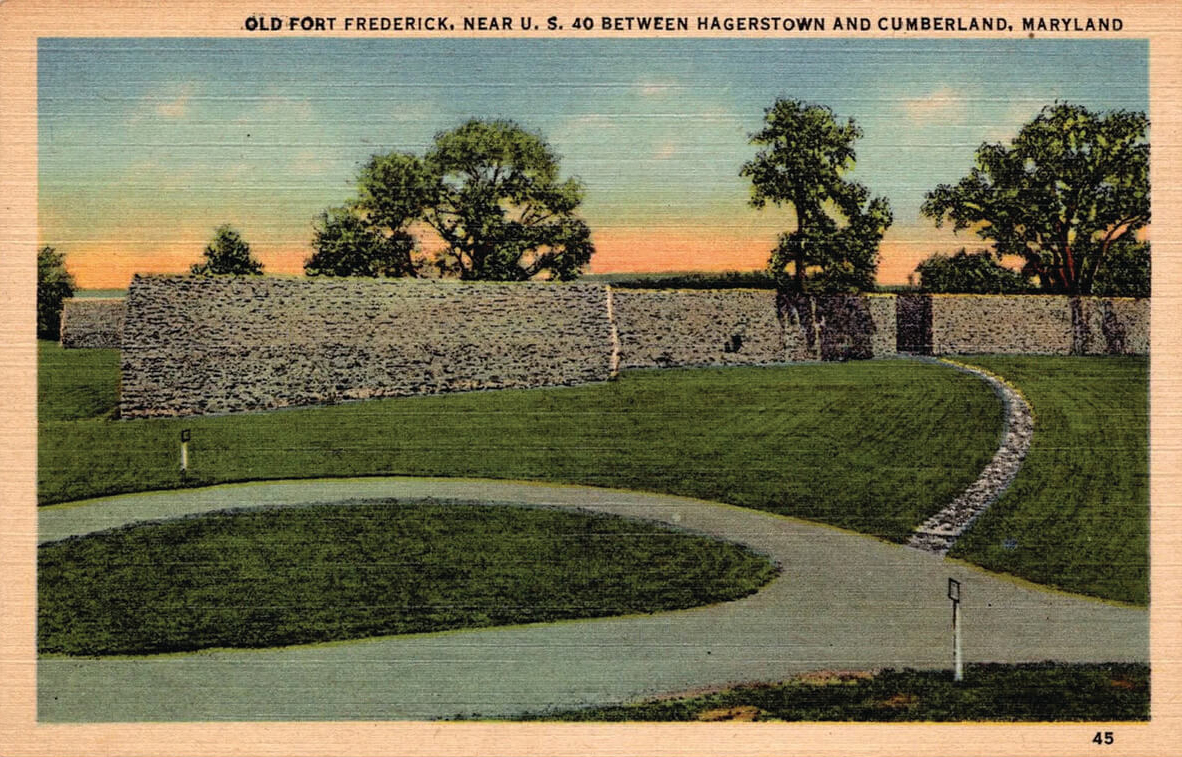
A vintage Route
40 postcard. —WIKIMEDIA COMMONS/FARRAGUTFUL
Twenty-first century travelers can survey the same rugged beauty their 1920s counterparts did: boundless mountain ridges and deep forests. Near Flintstone, however, a little Vegas crept in, in the form of Rocky Gap Casino Resort, which opened in 2013 on Lake Habeeb. The fourdiamond hotel, in Rocky Gap State Park of all places, offers travelers top-rate dining, entertainment, golf courses, spa services, and, yes, gobsmacking scenery.
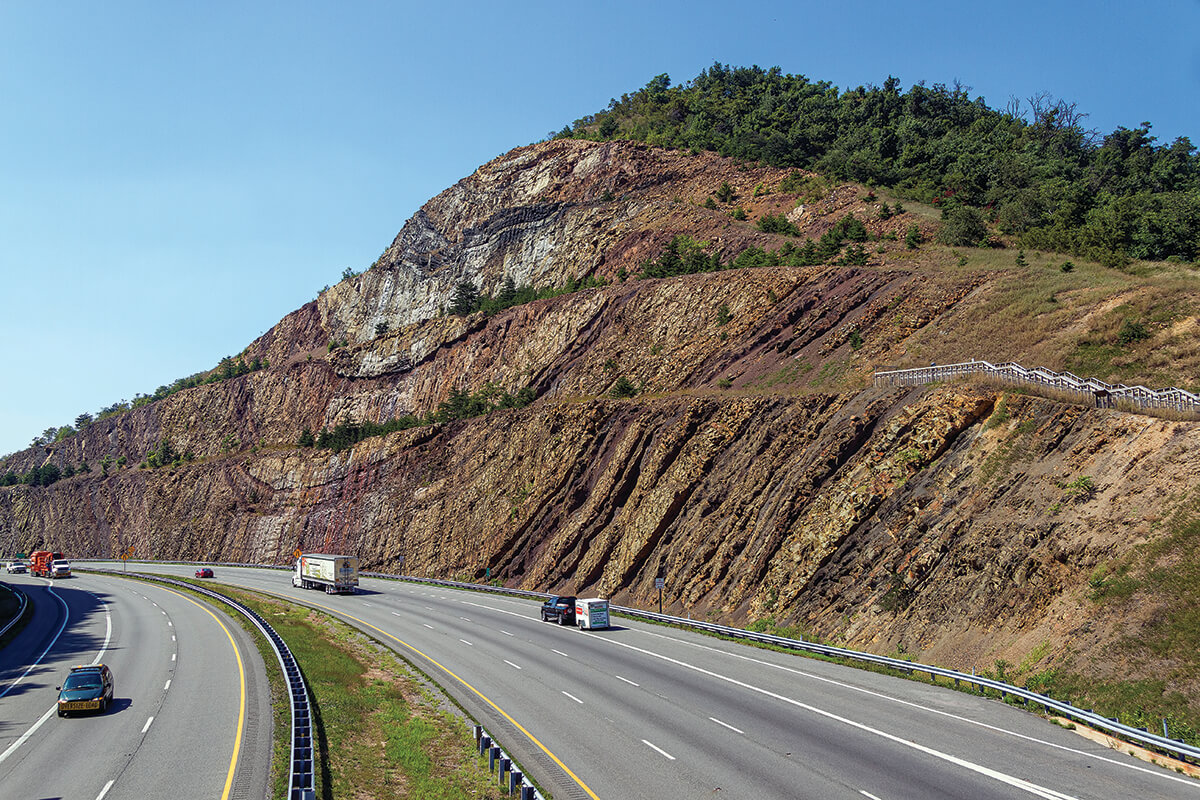
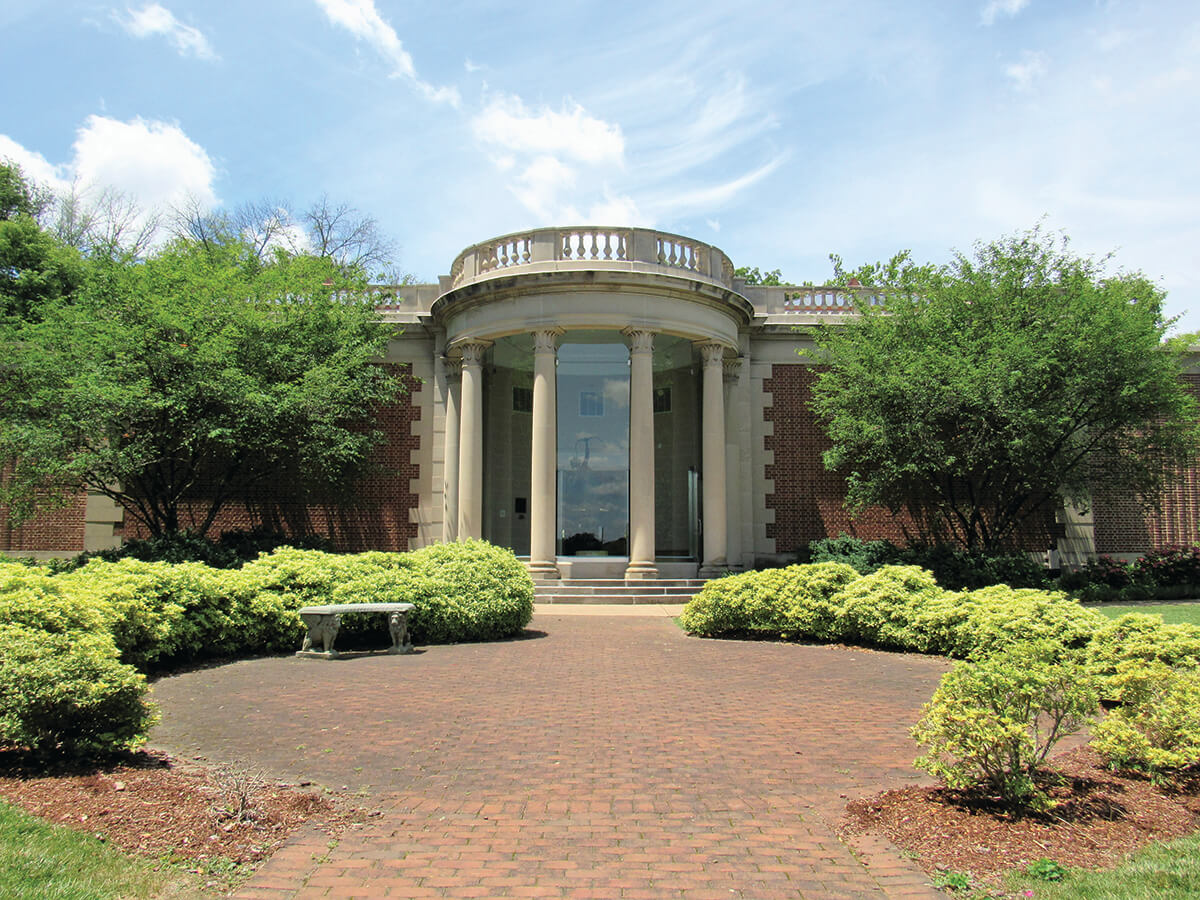
Sideling Hill; Washington
County Museum of Fine Arts. —WIKIMEDIA COMMONS-ACROTERION/SHUTTERSTOCK
Follow Alt. 40 into Cumberland, where centuries of transportation history converge at Canal Place Historical Park. Here, the C&O Canal ends its 184.5-mile journey from Washington, D.C. The Mile Zero Marker of the National Road honors the Native American footpath-turned-colonial trail that birthed the nation’s first federal highway. Learn more at the Allegany Museum, Cumberland Visitor Center, and 1913 station of the Western Maryland Scenic Railroad, where fall foliage train rides are a must. Two popular hiking-biking trails also meet here: the canal towpath and the 150-mile Great Allegheny Passage to Pittsburgh. Whatever your mode of travel, rest at The Wills Hotel, boutique lodgings that opened downtown this summer.
WONDERFULLY WEIRD:
On U.S. 40/I-68, ogle one of Maryland’s wildest geological formations that was formed when a sheer cut enabling the highway to pass through Sideling Hill exposed over 800 feet of curiously drooping, prehistoric sedimentary rock. In the pre-interstate stagecoach era, conveyances carefully “sidled” over the 1,600-foot-high ridge.
Depart via Alt. 40 and pass through Cumberland Narrows, a spectacular natural mountain pass. Driving westward, you’ll glimpse traces of “old” National Pike. Built in 1835, LaVale Toll Gate House is Maryland’s last remaining National Road toll house. The unusual seven-sided structure opens for guided tours on September 12-13 and October 3-4.
Alt. 40 becomes Main Street in Frostburg. The Braddock Stone may be America’s oldest road marker. Now ensconced in a pavilion outside the Frostburg Museum, it honors British Gen. Edward Braddock, whose ill-fated expedition passed here during the French and Indian War. In its heyday, historic Hotel Gunter welcomed politicians, prisoners, Prohibition defiers, and cockfight fanciers. Today, the hotel offers 11 homey rooms, a speakeasy bar, and a preserved basement jail cell.
Before Alt. 40 swings northwest into Pennsylvania, explore Grantsville, where the brick-and-timber The Casselman Inn, the 1813 Casselman River Bridge, and former stagecoach stop Spruce Forest Artisan Village evoke genteel 19th-century travel. Sweeten the journey home at a beloved roadside destination, Candyland at Hill Top Fruit Market, which proffers everything from pumpkins to taffy.