Special Section
Gearing Up
A look at what trends are driving today’s auto industry and how to get the most out of your vehicle.
By Hannah Chenoweth — April 2026
You don’t need to be a gearhead to know that the automotive industry has undergone some serious turbulence in the past few years. Likely, you’ve felt it with your wallet.
Take, for instance, the fact that a seven-year car loan is becoming the new norm. Or that the average new car price in the U.S. topped $50,000 for the first time ever last year, according to the Kelley Blue Book. Even if you’re not in the market to buy, you may have felt the squeeze of rising insurance, maintenance, and registration costs. The latter has doubled for Marylanders in just two years, alongside higher speeding ticket fines, which (hopefully) haven’t hit your account.

The Current Landscape
Wondering how car ownership got so painfully expensive? To make sense of today’s market, we need to first revisit the perfect storm of 2020. During the pandemic, widespread manufacturing disruptions and a shortage of automotive chips collided with a surge in demand. As a result, prices for both new and used cars shot up dramatically, and many buyers found themselves paying way over sticker just to get a car.
Six years later, we’re still feeling the ripple effects. Andy Bauer, vice president and regional executive for the Baltimore branch of the Federal Reserve Bank of Richmond, notes that while new car inventory is in a better place, people are holding onto their used cars longer, leaving fewer options on the market. “Dealers are seeing more people come into their service shop and spring for repairs on older, higher mileage vehicles, cars they might have replaced in the past,” he says.
The pandemic also shaped the kinds of cars available today. When chips became scarce, manufacturers focused on building higher-end vehicles that brought in more revenue, “a shift that came at the expense of more basic, affordable models,” says Bauer.
Between rising costs, supply chain disruptions, vanishing electric vehicle incentives, and shifting tariffs, you might assume new car sales have dropped. Surprisingly, that’s not the case: U.S. sales actually rose about two percent in 2025, driven by gas-powered trucks, SUVs, and hybrids.
That modest growth, however, likely reflects the behavior of wealthier buyers rather than the broader market, says Dr. Michael McMillan, associate clinical professor of accounting and information assurance at University of Maryland.
“In a K-shaped economy, the two arms of the K tell the story: The downward arm shows people who are struggling, while the upward arm shows the ones who benefit,” he explains. “It’s a clear sign that the gap between the wealthy and everyone else keeps getting bigger.”

Navigating the Car-Buying Process
While higher-income buyers can usually handle the bigger price tags on new vehicles, lower-income households are more likely to struggle in today’s market. With a credit score under 700, lenders and dealers have the upper hand, McMillan notes. Even if new cars occasionally offer slightly lower interest rates, opting for a used car is often the wiser choice for these households.
The good news? Cars are depreciating assets, and a little research can make a used car a sound investment. Plus, we’re past the “no negotiation” era of a few years ago, says Bauer, explaining that as supplies have increased the opportunity to haggle has returned.
“Manufacturers are still offering incentives to move certain cars off the lot, whether through rebates or programs that lower interest rates,” says Bauer. “So while the list price is one thing, the real cost can be much lower once incentives are factored in.”
That’s why Bauer emphasizes doing your homework before stepping onto the dealership lot. Part of his work involves watching consumer behavior, and he adds that another way people are adjusting to rising costs is by shopping around for insurance and switching policies more frequently.
If you know a car purchase is on the horizon, McMillan recommends saving up for a strong down payment and avoiding a long-term loan, if possible. “A lower monthly payment is tempting, but it increases the total cost and keeps you upside down longer—owing more than the car is worth,” he explains.
While he advises against loans longer than five years, McMillan suggests keeping your vehicle for at least that long to get the most value. When it comes to choosing a car, remember that flashier models come with higher repair and insurance costs. His advice echoes a familiar refrain from dads everywhere: Focus on reliable transportation that gets you from point A to point B, not the bells and whistles.
Preventative Maintenance 101
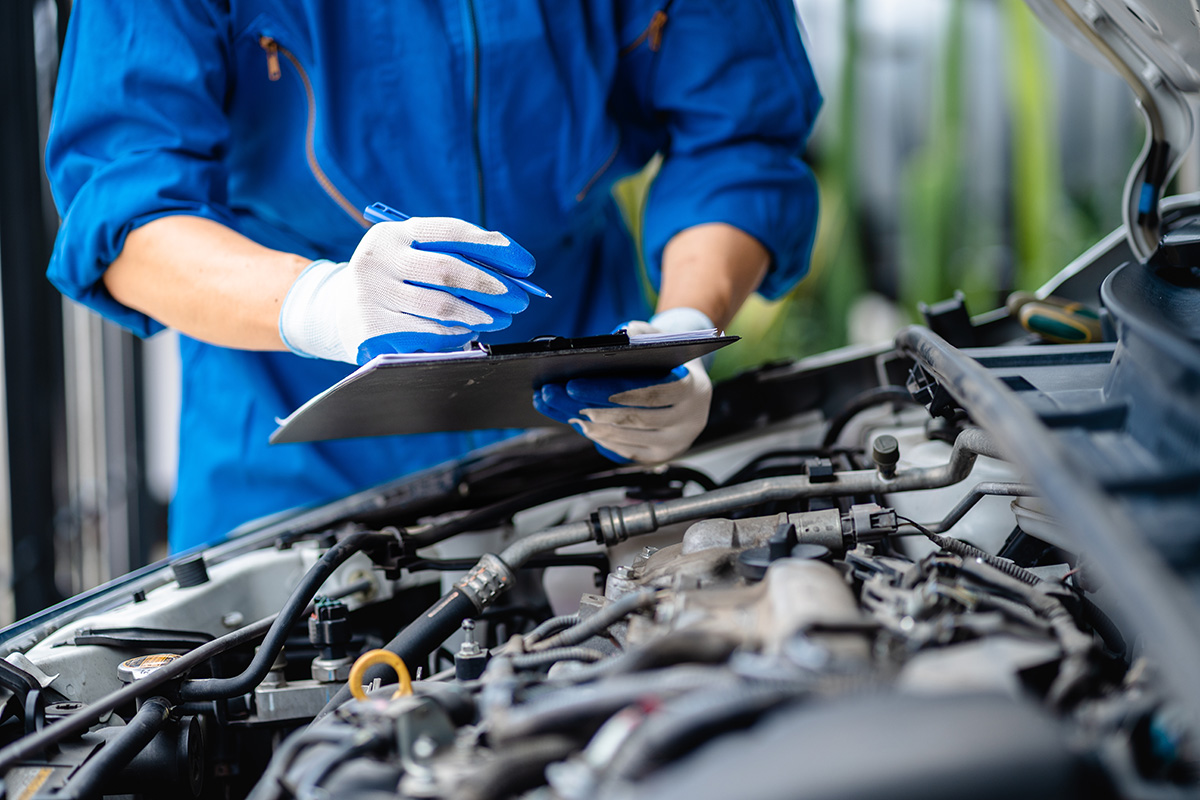
Whether your car is brand-new or well past its warranty, preventative maintenance still matters—a lot. Yet it’s becoming somewhat of a lost art, says Tim Hollenshade Jr., the fourth-generation owner of Hollenshade’s Auto Service in Towson. His advice is simple: Find a mechanic you trust and keep up with the manufacturer’s recommended service schedule.
“Those guidelines aren’t arbitrary; they’re the bare minimum for keeping your car running smoothly and lowering long-term costs,” says Hollenshade. “Treat the service schedule like it’s your car’s roadmap to longevity.”
If trust issues with auto shops have been holding you back, it may help to know that many shops are turning to technology to boost transparency. Digital vehicle inspections (DVIs) are becoming more common, allowing technicians to send photos and videos straight to your phone or email, so you can see exactly what they’re seeing, instead of being surprised by recommended repairs.
Hollenshade emphasizes that a good mechanic provides long-term value, not just a quick fix—and that kind of relationship takes effort on both sides.
“You can’t bring in a 15-year-old car with 150,000 miles and expect one repair to fix everything,” says Hollenshade. “It’s like going to the doctor for the first time at 80 and getting upset that they can’t cure every ailment. Plus, regular check-ups cost much less than emergency surgery.”
Another reason to be proactive with maintenance: Today’s engines aren’t what they used to be. Modern cars come with new needs that aren’t always obvious to the average car owner. One example is the rise of direct fuel injection, which sprays fuel straight into the engine cylinder instead of over the intake valves. It improves efficiency and gas mileage—but there’s a trade-off.
“Because fuel no longer flows over the valves, they don’t get ‘washed’ clean like they used to and grime can build up,” explains Hollenshade. “That’s why intake cleanings are more important now, even though they’re often overlooked. The key is catching issues early, before it turns into a much bigger problem.”
Even with all the high-tech features in modern cars, the basics still matter. Things like regular oil changes, keeping your tires in shape, and checking your brakes and fluids aren’t going out of style any time soon. Engines and standards may evolve, but staying on top of maintenance and catching small issues early is the best way to protect your car—and your wallet—in a market that never stops changing.