Special Section
Keep on Smiling
Uncomfortable sharing your smile with the world? The latest technology in cosmetic dentistry can help you do just that with confidence.
By Michele Wojciechowski — September 2024
When you look in the mirror, do you like the smile you see?
If not, Dr. Martin Schwartzberg, DDS, completely understands. For more than 20 years, at his eponymously named dental practice in Pikesville, he’s been hearing the same from countless patients.
“Patients come in and say, ‘I hate my smile,’ or ‘I really want to improve the appearance of my smile,’ and I go through what I call a whole process of smile design,” he explains. “We may use scans or models, and we’re mocking things up. We’re showing them what they can look like.”
 MORE THAN TEETH WHITENING
While Schwartzberg does provide teeth whitening as one of his treatments, he’s also a prosthodontist, which is a specialist who not only places implants, dentures, as well as crowns and bridges, but also performs complex reconstruction due to cancer, accidents, or neglect.
“We’re changing the bite and the function,” he says. “In some instances, if someone’s entire mouth is broken down, I have, in fact, put crowns on all 32 teeth.”
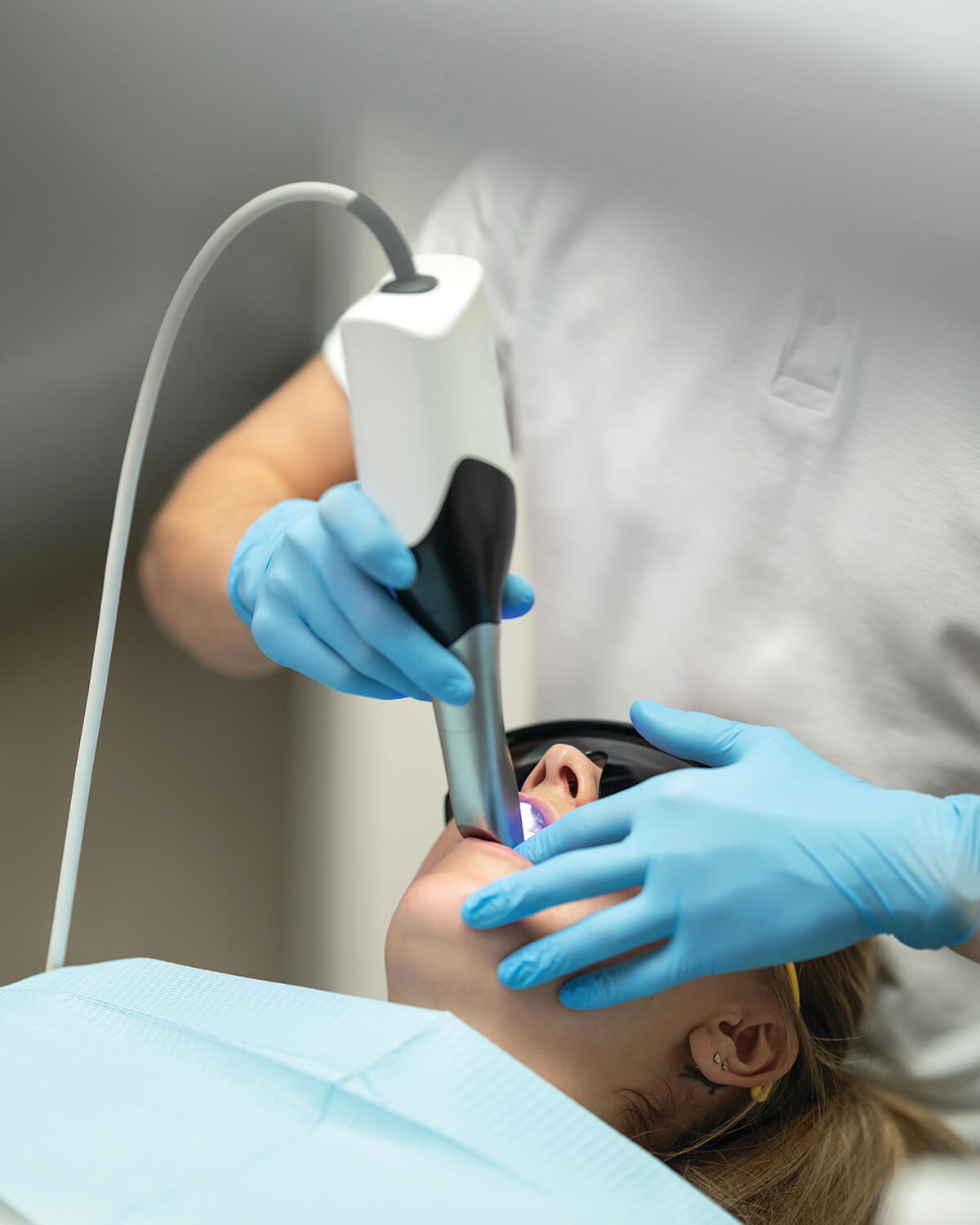
Recreating an entire smile has become easier thanks to digital scanning technology as well as CAD/CAM, which is computer-aided design/ computer-aided manufacturing software.
“Instead of doing old-style impressions— with the goo, as many people refer to it—we can essentially wave a wand over and around the teeth for as little as 45-90 seconds, and it puts together thousands of photos and videos into an image that can then be 3D printed or milled in a lab. With the computer-generated photos, we can also do diagnoses and other pre-procedure planning,” Schwartzberg says.
These images are used to create implants, crowns, dentures—whatever is needed to make the patients’ smiles beautiful.
Although he can show them via the computer what their smiles will look like, Schwartzberg says that he produces temporaries for patients.
“This way, I can give patients a clinical preview or test run with the temporaries, especially since I’m changing their bite and changing their appearance,” he explains. “We want to make sure they’re comfortable. We can also make changes and improvements so that they’re completely satisfied before we even make the final restorations. This technology allows us to do it all more efficiently, more effectively, and more rapidly.”
CROWN IN A DAY
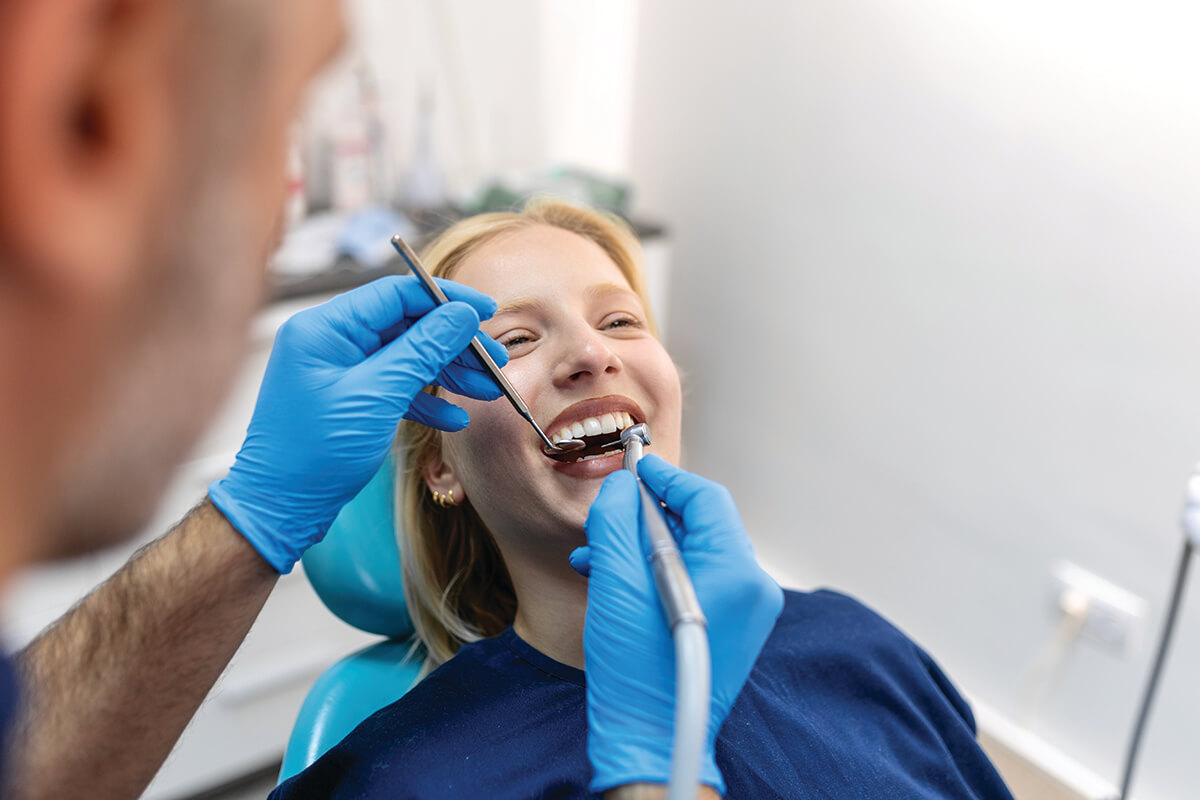
Digital scanning also enables some cosmetic dentists to completely replace a patient’s crown in one day.
Dr. Melissa Wood, DDS, an associate at the Cosmetic Dental Center of Baltimore, says that she has access not only to digital scanners at the practice, but also to two mill machines. The CEREC (which stands for Chairside Economical Restoration of Esthetic Ceramics) is able to take the images she has previously scanned and make a crown.
“We design crowns on the computer, and then a block is inserted into the mill, and it chisels the crown out,” says Wood.
After her assistant polishes the crown, Wood will fire it, which will keep the shape and color in place. Then she bonds it onto the appropriate tooth in the patient’s mouth. Wood says that they use eMax or zirconia to make the crowns, because the materials tend to look more like actual teeth than crowns have in the past.
“Patients love the new technology. They love everything faster,” she says. “They come in one day, and it’s done.”
Making the actual crown takes about 35 minutes. Wood says that the practice has televisions in every exam room, so that patients can watch TV or use their phones while they wait.
“I like using the scanner because you can see a mistake in real time and then redo it. Whereas with the old type of impressions, you would have to wait for it to set. If you found a mistake, you’d have to redo it all over again,” she says. “I also like the new technology because it makes everything more accurate.”
A CLOSER LOOK
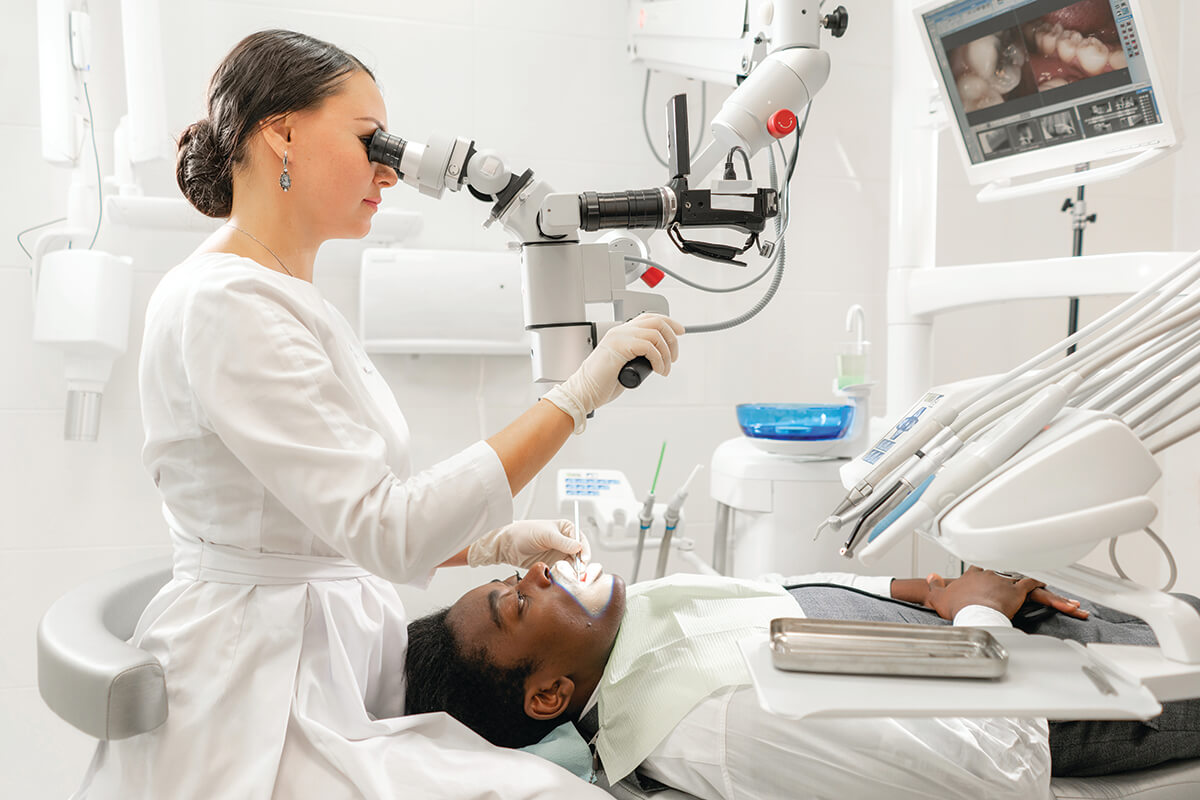
Although scanners have improved procedures for dentists, there is another new technology that Schwartzberg began using earlier— a microscope. No, this isn’t like your high school or college science class microscope.
This one is attached to the ceiling of the exam room, and is at the end of an arm that the dentist can manipulate. It replaces magnifying loupes on glasses that you may have seen dentists use.
Here’s how it works: The dentist leans the patient back and centers the microscope’s viewfinder over the place in their mouths that they want to see in more detail. The microscope not only magnifies the area, but illuminates it as well.
“The benefit is the increased ability to see and treat the tooth. It really changed my ability to do a lot of cosmetic procedures,” he says. “I have increased control and clarity. I can make things smoother and more accurate, and I can make the shape of my restoration more precise.
“Cosmetic dentistry is not as simple as snapping your fingers and getting great results,” he continues. “It takes a lot of planning, preparation, and thought. When we do get to the final result, hopefully, we’re both pleased.”