Special Section
Cannabis 101
Whether you’re new to the world of weed or not, we’ve got all the info you need to walk into a dispensary with confidence.
By Michele Wojciechowski — December 2024
Suppose you’ve decided you’d like to try cannabis. After all, whether you want to use it for medical or recreational purposes, it’s now legal in the state of Maryland.
Then you visited a dispensary, got overwhelmed with the number of products, didn’t know what to do, and left.
Fear not, as we’ve compiled the essential information you need to not only go back into that dispensary with confidence, but also with an idea of what to do when you get there.
THE BASICS
Before you head out to a dispensary—or return if you freaked out and fled—do some research online first.
“I think it’s worth coming to a website like ours, where you can go in and read product pages and understand the descriptions and what’s in things, just to give yourself a bit of grounding,” says Wendy Bronfein, chief brand officer and co-founder of Curio Wellness, a locally owned, operated, and family-founded company that is a leading provider of cannabis products in Maryland and also operates two dispensaries. “By the way the dispensary presents themselves and the menu, you’ll be able to get a sense of if it’s for you—like if it’s more consultative and focused on what the consumer’s looking for, and that’s the kind of engagement you want. If you don’t feel like you’re getting that from the website, go look at another one because you want to optimize the experience, particularly if it’s all new to you.”
She adds, “It still could be overwhelming because there are a lot of products, but at least you’ll know the lay of the land.”
Bronfein gives an example: Suppose a friend invited you to a restaurant that served global cuisine you weren’t familiar with. Chances are, you’d check the menu first to see what you might like before you head out.
Even though cannabis is legal in Maryland, you must still be 21 or older to purchase and use it. When you head to the dispensary, there are two important things to remember: The first is to have your ID. If you don’t have it, you can’t buy. Second, bring cash, a debit card, or both, as this is the only way you can pay for your products.
OTHER IMPORTANT INFORMATION:
Take It Low and Slow: “Start with a low THC amount until you know what you’re getting at a dispensary because THC amounts can vary pretty widely, especially with edibles. Sometimes, someone will take one edible, and a half hour or 45 minutes later not feel anything and take another one. We know that the effects of edibles can be really delayed, and you might not feel it for two or three hours,” says Berkowitz. “So, people can really be much more impaired than they think they’re going to be.”
Lock It Up: “Parents or caregivers who have little kids in the home should always keep cannabis away and out of sight, preferably somewhere locked—in a locked bag or box. We work with the Maryland Poison Center, and we know that accidental exposure to cannabis among kids has been on the rise,” explains Berkowitz. “Edibles can look like food products—like a chew or a brownie. Kids and pets don’t react to cannabis like adults.”
You Can’t Take It with You: “Even though it’s legal in Maryland, you can’t take it over state lines because it’s not legal at the federal level. So, getting on a plane, mailing it, or even if you’re going to another state that has legal adult-use, you can’t do it because you can’t take it over state lines,” says Berkowitz. “Remember, the mail is federal.”
For more information about cannabis and its use in Maryland, check out the Be Cannabis Smart campaign at cannabis.maryland.gov/Pages/BeCannabisSmart.aspx.
THE DIFFERENCE BETWEEN MEDICAL AND ADULT-USE (RECREATIONAL) CANNABIS
Maryland has two programs for cannabis, a medical program and an adult-use (also known as recreational) program, says Bronfein.
“The medical and adult-use now live together, as both are legal. But there are distinctions between the two programs,” she explains. “An adult-use consumer has to be 21 and older. They show their ID to validate that. They purchase cannabis without any sort of tracking of them as an individual, and they pay a 9-percent tax on what they buy. You can have 10 milligrams max per serving of THC, and you can have 100 milligrams max in an individual package that you purchase. You also, by law, have limits on the possession amount that you may have in your home.”
The medical program has a number of differences.
“If you’re a medical patient, you can be underage and have a caregiver. You can also be an adult and have a caregiver—if there’s a reason you need one. But you don’t have to be 21 and older,” says Bronfein. “The amount that you’re allowed to have possession of is larger, and when you’re shopping, you do not pay tax. You have access to the entire menu at a dispensary. There are no products that you’re restricted from, and you are meant to receive priority service at the dispensary.”
She adds, “That said, at a dispensary, there are people buying for adult-use for the same reasons medical patients are buying. They’re just not in the medical program—they haven’t taken the steps to register, get a patient ID, go to a certifying physician, and be eligible to receive the perks of the medical patient. These perks are ordering from the whole menu, not paying tax, having priority service, and getting higher possession amounts.”
No matter whether you’re using cannabis for medical or adult-use, Bronfein has one reminder: “If you’ve had cannabis before in your life—but you haven’t in a long time—what you’ll find in the dispensary today is going to be a lot more potent than what you might have known from yesteryear.”
CANNABIS TERMINOLOGY—WORDS TO KNOW
Budtender: “Technically, it’s the sales associate at the dispensary,” says Bronfein. “So, it’s the person who you engage one-on-one with to purchase a product and who you’re trusting has the expertise to understand the nature of what’s in each product, the producers of the product, and why they would recommend A versus B for you.”
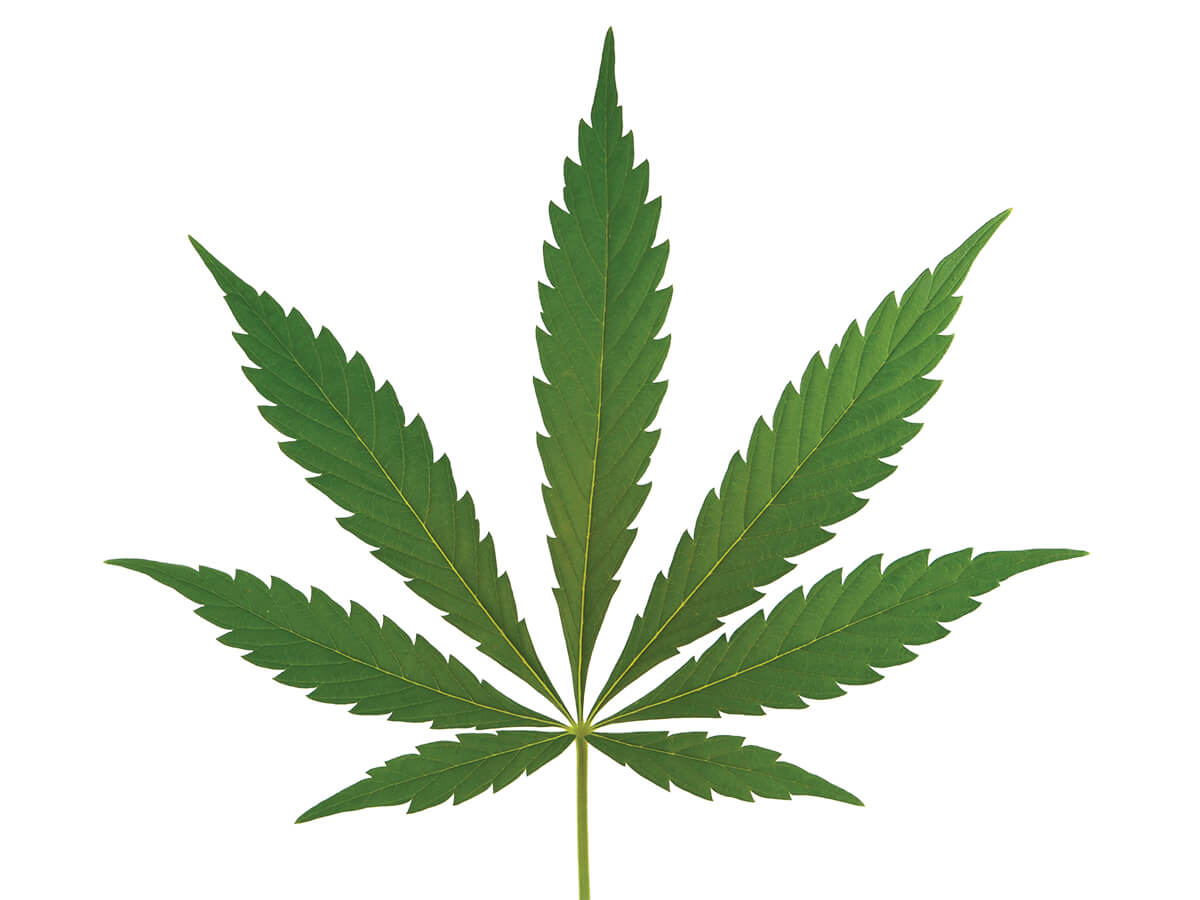
Cannabis: The Maryland Cannabis Administration website states, “Cannabis is a plant with many names—marijuana, weed, pot, cannabis, hash—that can have psychoactive characteristics and is consumed for medical and non-medical (recreational) purposes. The cannabis plant has hundreds of chemical compounds, including cannabinoids and terpenes.”
Cannabinoids: “The compounds in the cannabis plant that people may know by name as THC. There are also CBD, CBG, CBN, CBC, THCV. There are more than 100 cannabinoids that we’re aware of,” says Bronfein. “THC is the psychoactive element, but the other ones I mentioned are not psychoactive; they’re offering different therapeutic effects.”
Devices/Ways to smoke: “You buy a container of flower and put it in a device used to smoke or vaporize it. You can buy pre-rolls, which many people would think of as the term ‘joint.’ They’re already rolled up for you and very convenient. You can buy vapes, which is the oil from the plant that you’re vaporizing. Those are all forms of inhalation,” says Bronfein.
Dosage/dosing: “This is the individualized amount of cannabinoids within products,” according to the Natural Environmental Health Association (NEHA) Cannabis 101: Glossary of Related Terms. “Dosing depends on titration, which is the process of increasing medication amounts until the desired effect is achieved.”
Edibles: “You can think about edibles as being anything that is like candy or in food form that you would be using: gummy, chocolate, baked goods, candy in any form. But the menu system that the industry has to use will lump everything that can go into your mouth under the word ‘edible.’ Even if you want to buy a tablet, it will be under edibles,” Bronfein explains. “We make chews—gummies, if you want to call them that—but they are not considered edibles because we are Good Manufacturing Practices (GMP)-certified under CFR 111. This is the manufacturing standard that dietary supplements have under the Federal Food, Drug and Cosmetic Act. So, it’s above and beyond what the state requires. A chew or gummy-type product is also recognized as a medicinal-type dosage form, not just a piece of candy.”
THC: The Maryland Cannabis Administration states: “Tetrahydrocannabinol, known as ‘THC,’ and cannabidiol, known as ‘CBD,’ are the most common [cannabinoids]. THC is known for its psychoactive effects (a feeling of being high). There are different forms of THC, including delta-9-THC, traditionally found in most cannabis products. However, other forms of THC, such as delta-8-THC and delta- 10-THC can also be found in cannabis plants and will be included in the regulated market as part of this legislation.”
Tablet Form: Another way of using cannabis. “These are akin to a traditional pharma product. There are tablet forms that break down in your mouth or ones that you swallow,” says Bronfein.
Terpene: “Fragrant oils secreted from the resin glands of flowers that provide aromatic diversity,” states NEHA. “They are not just found in the cannabis plant, but other plants as well. Terpenes bind to different receptors in the brain to give different effects.”
“For example, linalool, which shows up in cannabis, is also in lavender, and it has sedating properties,” says Bronfein.
Tincture: “A liquid form of cannabis that is made from glycerin or alcohol,” states NEHA. Tinctures are usually distributed in an eyedropper under the tongue to provide fast absorption to the body, leading to quicker effects than edibles and inhalation.”
Topical: “Cannabis products such as lotions, balms, and oils that are used for pain relief,” according to NEHA.
RULES AND REGULATIONS FOR CONSUMPTION
Although cannabis is legal for both recreational (adult-use) and medical use, there are still rules you have to follow.
“It doesn’t mean it’s legal for anyone to use it anywhere at any time,” says Dawn Berkowitz, managing director for Public Health and Communications for the Maryland Cannabis Administration.
We asked Berkowitz about the Do’s and Don’ts of cannabis use.
Where can/can’t you smoke it? “Cannabis can be smoked in private homes and on private property, but it is prohibited in all indoor and outdoor public spaces. This includes streets and sidewalks, parks and playgrounds, bars and restaurants, concert venues, driving on the road, and on public transportation,” says Berkowitz. “For rental properties—just like smoking tobacco or allowing pets—there are restrictions permitted. The decision is up to the landlord or the management company.”
Can you smoke and then drive? No. “Cannabis affects the area of the brain that controls balance, coordination, memory, and judgment. So, on the road, it can translate to things like slowing reaction time, decreasing your ability to concentrate and make decisions, and possibly reducing awareness of time and distance. All these things are critical for safe and alert driving,” says Berkowitz. “Research suggests and recommends waiting six hours after using cannabis to drive. But, like with alcohol, it affects everyone differently.”
She adds, “Driving even a little high is never as safe as driving sober.”
Can you get a DUI? “Yes. You can get a DUI—smoking cannabis while driving or before you’re driving. You could certainly get a citation for driving under the influence of cannabis,” Berkowitz says.