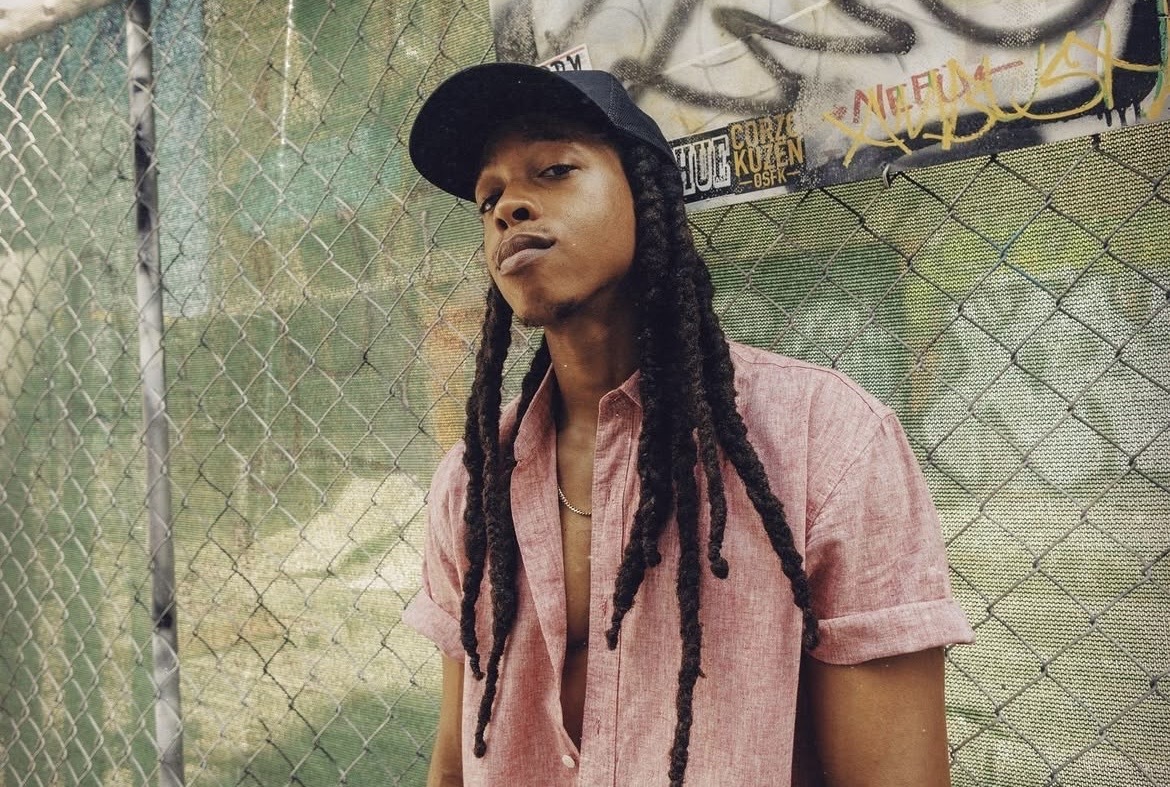
“SoundCloud producers, we up,” 33-year-old Baltimore native Donovan Knight—the DJ and producer more fondly known as D.K. The Punisher, who has worked with the likes of Jill Scott, Justin Bieber, and SiR—shared on Instagram earlier this week after a Grammy win for co-producing Kehlani’s hit single, “Folded.”
The song won Best R&B Song and Best R&B Performance at the 68th annual ceremony on Feb. 1 in Los Angeles, where Knight has been based since 2017.
Back home, Baltimore’s close-knit DIY scene—including DJs, songwriters, party-goers, and other producers—lit up with joy, resharing the news and posting their own throwback photos celebrating Knight’s career, which began in the city’s many clubs and creative spaces.
Knight grew up in the Hillen community near Morgan State University, musically surrounded by church choirs and his father singing at weddings. As an adult, he became a regular DJ on hallowed dance floors like The Crown in Station North. He was also a key part of iconic local parties like Kahlon, Blush & Brews, and Big Vibe.
In the wake of all of the Grammy buzz, we caught up with Knight—just before he headed into a studio session—about the excitement of the win and the creative community that shaped him.
Set the scene at the Grammys for us a bit. What was your reaction when they announced “Folded” won Best R&B Song?
The experience was pretty surreal. There’s so much movement happening that it’s kind of hard to even have a moment to take in the fact that you’re at the Grammys. It was also my first time being in the room with all the other writers and producers on the song. Once we were seated, about 10 minutes passed before the Best R&B Performance win was announced. That was amazing and I was extremely grateful, but only the performing artist gets a trophy for performance categories, and I wanted the trophy.
I was pretty nervous after the fist win, because I was thinking we might only win one of the two categories. When we won Best R&B Song, I couldn’t believe it. Even walking to the stage, I was thinking “Wait, am I really walking up to accept a Grammy right now?” It was like all of the work I’d been putting in for the last 20 years was validated in that moment.
How do you first connect with the artists you end up working with? Is it getting a phone call, being in the right place at the right time, or something else?
For me, it was more like monkey-branching from artists who I had relationships with. I met [Grammy-nominated R&B performer] SiR through these rappers I was working with. It started from them sending him my tracks and him sending them back to me with feedback. Just building that relationship, that trust, first between us as creatives. Then eventually being in person, going in the studio, and starting things from scratch—where I’m literally sitting at the keyboard and he’s writing words based on whatever emotion goes with what I’m playing.
We saw that SiR gave you a really personal Instagram shout out right after your Grammy win. How do moments like that feel?
It feels amazing, honestly, having been by his side through his whole ascent as an artist. I was working with him when he was just trying to write songs for other people and didn’t want to be in the spotlight at all. I remember back in the day when I was bubbling a little bit on SoundCloud. I’m telling him, “You gotta get to SoundCloud, you gotta post more.” And seeing him do that, and then just [having it] go crazy, it’s been amazing to watch. It’s beautiful that we’ve stuck together through all of this.
When you met Kehlani at a point where you’d both been in the industry for a while, what did that collaboration look like? How did the track come together?
When I first made that track last January, I liked it, but I didn’t really see who it could be for. I wasn’t really sending it to anybody. I may have played it for like one person, and then I played it for my mentor Andre Harris. He was supposed to get in the studio with Wale, and I think the Wale session ended up falling through. Maybe like three weeks later I get a text from him, like, “Yo, we got one with Kehlani.” I’m like, oh, this is crazy. And then later that day, she dropped the teaser for it.
Growing up, when me and my brothers were on punishment and couldn’t watch TV, we would make up songs. We would make up a song to sing to our parents to see if they would let us off punishment early.
Has R&B always been your thing? Or is it something in a tool belt of different genres for you as a producer?
My beginnings are hip-hop. I’ve always been around my parents who sang. I’d be in church choirs growing up and stuff. So I was always around vocalists. Hip-hop and R&B are two sides of the same coin in a lot of ways. So there’s always been that overlap. The first studio I was working at in Baltimore, I was working with this artist CR Da Show, and he kind of took me under his wing. He was an R&B artist, and that’s just the opportunity that presented itself. R&B just kind of embraced my work. It’s just been a really natural place to land.
Tell us more about your early music influences as a youngin’ in Baltimore.
Music is something that’s always been around. Growing up, when me and my brothers were on punishment and couldn’t watch TV, we would make up songs. We were trying to make up a song to sing to our parents and see if they would let us off punishment early. We were always just doing creative stuff, not even thinking about it as trying to be creatives. Growing up, you’d hang out with your friends and we might start freestyling. The first time I wrote a rap, I was like, okay, I think I like this. I think I like this self-expression thing. Let me take this seriously.
What did taking it seriously look like for you?
I didn’t have any money to buy beats, and I think my older brother told me that you can make beats on a computer. Around that time, my mom had finally upgraded our house computer so we had internet and we could download some software. So it was perfect timing.
We helped each other, we booked each other on shows. We were all trying to elevate the scene and really create dope experiences for the people that came out. It didn’t feel like crabs in a bucket. It really felt like we were all in it for the same thing.
Fast-forward to your twenties, you were moving through Baltimore’s DIY and creative spaces like The Crown, which functioned as incubators for artists. How did being part of that moment shape your artistic development?
Oh man, it was beautiful actually. And it’s not even a hindsight thing. I knew it was amazing while we were living it, you know what I mean? I really appreciate, first of all, the camaraderie I saw. The artists coming together. I feel like that’s not the example we grew up with in Baltimore.
It was just amazing to see that amongst rappers pushing each other and making songs together, and being friends and not in competition with each other. We were a real community. We helped each other, we booked each other on shows. We were all trying to elevate the scene and really create dope experiences for the people that came out. It didn’t feel like crabs in a bucket. It really felt like we were all in it for the same thing.
Building on that moment in time, Baltimore musician, stylist, and curator Al Rogers Jr.—who has also since moved out to the West Coast—was prevalent in those same spaces. I saw that he styled you for The Grammys. Can you talk about why you chose him?
I’ve always admired Al as a creator. From rapping to his music videos, which were always dope, to his style. He’s always been that guy and he’s always been pushing the envelope as an artist. And over the last few years he’s been killing it in the styling game. Everything I’ve seen him do has been amazing. So I was waiting for an opportunity to use him for something. This was perfect.
I don’t know if you can kill that [creative energy] in Baltimore to be honest. Like, we’re always gonna find a way.
Any upcoming work, shows or collaborations you want to highlight?
SiR’s [next] album is coming. I’m so excited about it. The music is really, really, good. I don’t want to speak too much on it, because I don’t want to hype people’s expectations too crazy. And I’ve been working with an artist named Gabriel Jacoby, who’s from Tampa.
What are your thoughts on the Baltimore music scene right now?
I’m gonna avoid the temptation of passing any type of judgment, because I’m not there to see it with my own eyes. I think I kind of romanticize the period that we came up in. You always kind of had to be there in Baltimore to actually witness and see things coming. So, I have high hopes. I feel like it is still a good incubator for creatives. I’m hoping that the loss of places like The Crown and The Bell Foundry doesn’t kill that [energy]. I don’t know if you can kill that in Baltimore to be honest. Like, we’re always gonna find a way.