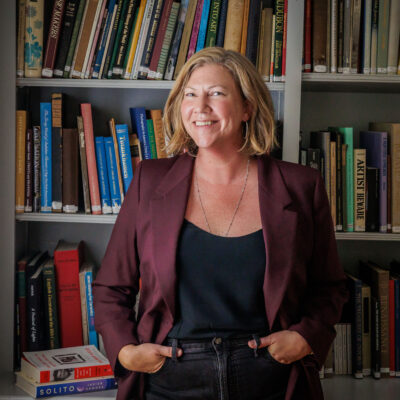
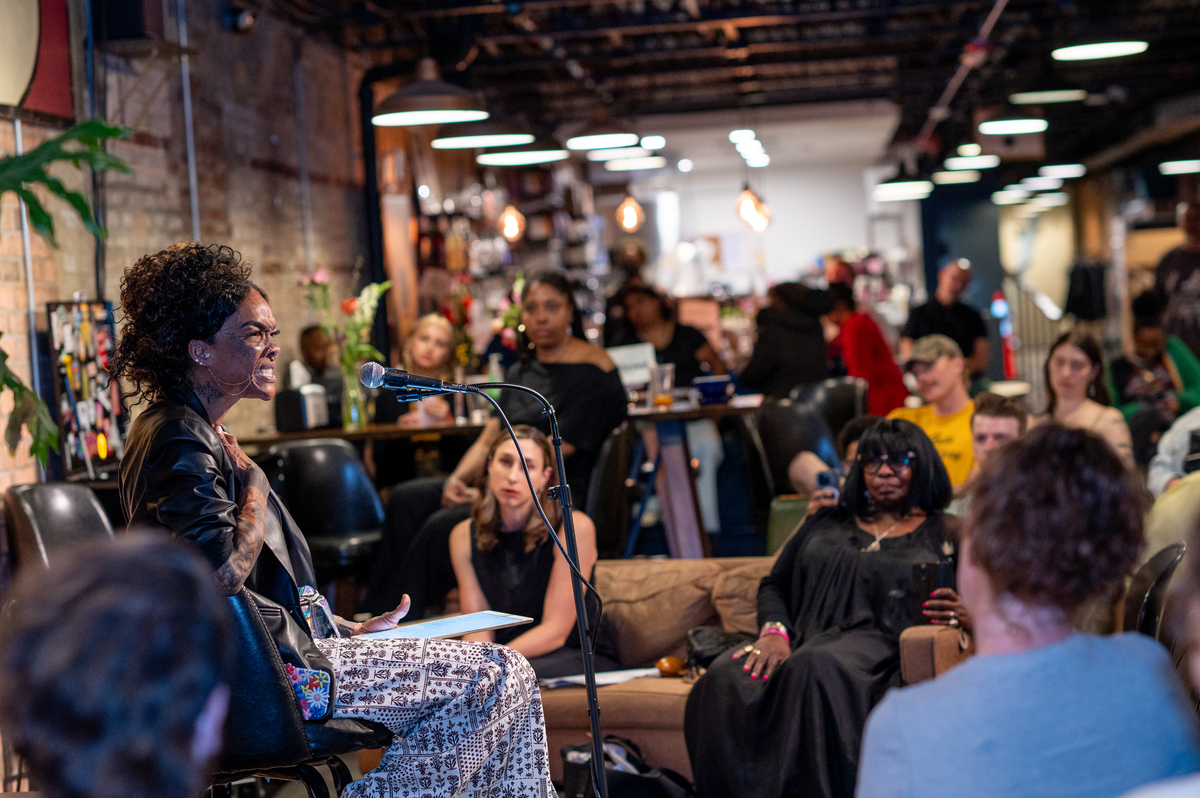
Book bans, AI, reduced funding. Carla Du Pree understands better than most the myriad challenges facing writers these days. Which is why the longtime executive director of the nonprofit CityLit Project decided to double down on this year’s CityLit Festival, a daylong celebration of readers and writers. The 23rd annual event returns this Saturday, April 11 at its new home, the Maryland Center for History and Culture in Mt. Vernon.
Du Pree says this year’s schedule is bigger than in recent years—“like, pre-pandemic big.” The many highlights will include One Maryland One Book author Lawrence Burney (No Sense in Wishing) in conversation with culture writer Shamira Ibrahim about mining memory in literary writing; fashion media veteran Michaela Angela Davis and Baltimore-based culture writer Bry Reed discussing Black identity in the world of glamour; and a conversation about migration and immigration with authors Reyna Grande (The Distance Between Us) and Lauren Francis-Sharma (‘Til the Well Runs Dry).
The fest will also feature a flash fiction workshop for middle and high school students and a literary marketplace for browsing the work of more than 60 small presses, self-published authors, literary journals, and organizations dedicated to supporting writers and readers.
Centered on the theme “bearing witness,” Du Pree says this year’s festival is intentionally designed to give literature enthusiasts the tools necessary to navigate the forces currently working against them.
Recently, we spoke to her about what that looks like.
How did the theme of “bearing witness” come about?
We’re talking about preservation of memory. How do we capture our stories? How do we archive our stories so they stay ours and they’re not erased? We have record-level book banning in this country, from libraries, from schools, and we’re not having it. We need to pull in generations and get them to understand the importance of memory, the importance of writing your own narratives and telling your own truths. That, more than anything, is woven throughout this year’s festival sessions.
Fighting erasure also requires writers to get their work seen. How does this year’s festival focus on the aspects of writing that can help writers publish and promote their work?
We always have “craft intensive” sessions, but this year it’s not just about process. It’s also about getting writers to understand the resources that are available to them to help get their work out into the world. There is Baltimore representation at these really major institutions that support writers, including Bread Loaf Writers Conference, Center of Fiction, The Blacklist, Baker Artist Awards, and many others. Representatives from those places will be at the festival leading workshops and panels. These are like master classes designed to help writers to know what’s possible and what’s available to them.
AI is a divisive topic for writers, with some believing it’s an essential tool for helping to manage the administrative elements of the job, and some believing it’s erasing writers’ essential work. How is the conference addressing this controversial technology?
We have two AI sessions, and I know some people say, “If there’s AI in a festival, I’m not going.” I’m thinking, “Guess what? You need to go.” What we are trying to do is openly talk about AI so writers are fully informed, so they understand the threat of it. We want to give them tools.
This year’s festival comes just a month after the massive 2026 AWP Conference. In your opinion, what impact did AWP have on Baltimore’s literary community?
It energized the city. More than 10,000 writers were in town, and everybody wanted to do something. We worked with [local youth literary magazine] CHARM to help create a literary map of the city, both because we wanted conference attendees to realize there were so many literary spaces that could be occupied, but, also because we wanted to make sure people understood that Baltimore artists were holding offsite events.
I was told there were 180 in four days. CityLit had a big party called “Hard Times Required Furious Dancing.” We know people are going through it, and we thought, wouldn’t it be nice just to go to one place where you just let it go? Baltimore showed up and showed out.
What is the result of all that recent energy around literature? Coming out of AWP, what do you think Baltimore writers need most right now?
I want us to start thinking outside the box about how we serve creatives. I don’t think people understand how important it is for writers to have space to actually write. What would happen if there were residencies? I’ve wondered if places in Baltimore can fill that need—hotels, a frigging office at the top of one of those business buildings, any space writers can make their own.
The other thing is funding. If only we could get health organizations to understand that writing and reading actually calms you. Why do you think poetry went so crazy during the pandemic? Because in a short span of time, you could feel your nerves calm. Pay writers. Fund them. Provide support for them to work in a space, and then invite them into different spaces to share their craft.
The 2026 CityLit Festival will be held Saturday, April 11, with an ancillary celebration of youth writing scheduled for Friday, April 24. View the full schedule of events, here.