
The region’s OG film festival is back for its 27th year, from April 8-12 at the Parkway Theatre and other venues in Station North. As ever, the fest includes both original and revival features, shorts, and docs, with an emphasis on local and marginalized voices. Here are three reviews to whet your appetite.
HONEYJOON
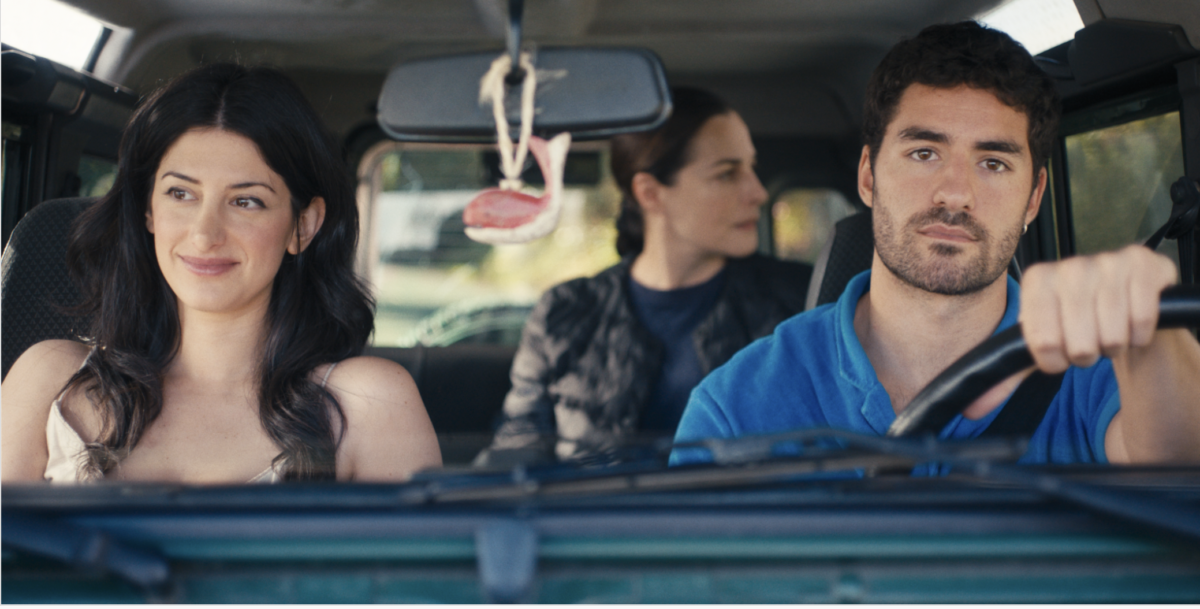
This bittersweet comedy by Lilian T. Mehrel resists the urge to lapse into sentimentality at every turn. June (Ayden Mayeri) has traveled to a resort on the romantic Azorean Island with her mother, Lela (Amira Casar), a Persian expat living in England, to honor the one-year anniversary of her father’s death. When he was a young man, her father had traveled to the island and loved it. They have a picture of him on the shore looking pensive and handsome that they carry with them on the trip.
Lela is still grieving more explicitly—she had envisioned the trip as a time to cry and hug—whereas June wants the tenor to be more celebratory. The dynamic between the two is established quickly. Lela complains that June hasn’t unpacked yet, then urges her to cover up, her dress is too skimpy—a recurring theme.
One of the seemingly interchangeable handsome young resort workers that June flirts with takes their picture and remarks that they look like sisters. Lela smiles for the first time in a while; June’s face drops. June thinks Lela, who is obsessively following Iran’s “Women. Life. Freedom” movement and wants to tell everyone about her late husband, is a buzzkill. On a cliff, they encounter a couple on their honeymoon and take their picture. Then Lela begins unloading about her dead husband. “Don’t ruin their honeymoon!” June scolds.
June is right about this and a few other things—you can’t celebrate the brave women of the Persian uprising while simultaneously telling your (hot) daughter to cover up. Bodily autonomy is much of what they’re fighting for. But Lela is right too. The trip can’t just be fun—grieving is baked into the mix—and June can run from her grief but she can’t truly escape it.
A classic example of the film’s sly way of avoiding mawkishness: Lying in bed together—they are awkwardly stuck in one of the resort’s many honeymoon suites—Lela asks June to spoon her.
“I’m not dad,” June grumbles, but then, looking at her mother, so vulnerable, she yields. She hugs her mother from behind. As the camera pulls back, Lela farts.
The film is filled with bits of silliness like this—most work, a few feel a little cutesy (Lela has a habit of of mangling English idioms: “You were the Adam’s apple of [your father’s] eye” or “like apple, like tree.”)
The second half of the film is dominated by João (José Condessa), a chill and sneakily wise surfer dude who takes them on a tour of the island. June, of course, falls for him (and he for her). But the film is generous about acknowledging Lela’s sexuality, too. She misses her husband—she misses sex with her husband. And when one of the resort workers explicitly flirts with her, you can see she’s flattered, if not slightly tempted.
Honeyjoon is a smart, closely observed film about mothers and daughters and grief. It’s funny and sad in equal measures—just like life.
HONEYJOON screens on April 8 at 9 p.m. and April 9 at 5 p.m. at the Parkway Theatre. Director Lilian Mehrel will be in attendance for post-screening conversations.
BARBARA FOREVER
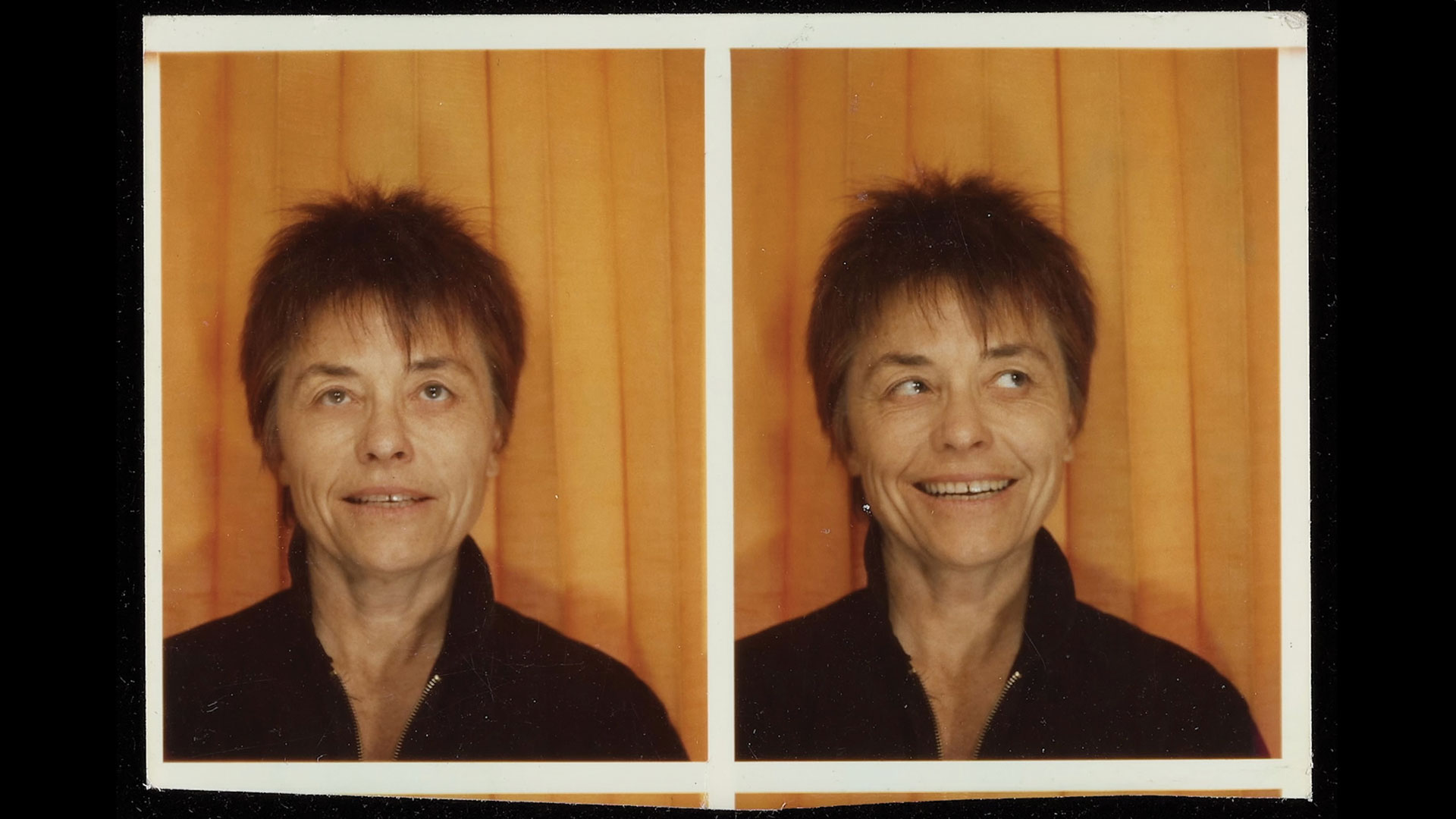
Before Instagram and TikTok recorded our every waking move, there was the lesbian artist Barbara Hammer. Her films and art pieces were radical acts of self-exploration and transparency. To watch her films is to know every nook and cranny of her body and mind—literally. She was experimental in many ways—as both an avant garde artist and a queer artist whose work spanned decades.
As a young woman, she married a man and, already showing signs of her rebellious spirit, joined him on a cross country motorcycle trip. They landed in an artist’s community on the west coast, where she found herself “serving coffee” to her husband’s friends. She left him.
At that point, she was already carrying around a Super 8 camera and playing with different exposures and perspectives. Later, she met a lesbian couple—she claims she had never even heard the word “lesbian” before—and realized, hey, that’s me.
From there, her work became inextricably tied to her sexual identity. She filmed the bodies of naked women, often her own, and interviewed her many lovers, even those who were reluctant to be on camera.
Barbara Forever, directed by Brydie O’Connor, is a loving, even reverential, portrait of this remarkable artist, who wanted to leave a literal legacy of herself and those she loved, as captured on film.
The film opens with Barbara, probably in her mid-50s, fit and strong, flexing naked in front of the camera. Then we cut to a different Barbara—still naked, but bald from chemo, looking frail. And soon we see Florrie R. Burke, Hammer’s longtime partner, watching clips of her lover on film, a wistful look on her face.
Then we’re back to Hammer, now vital and young and fearless. With her spiky hair and round glasses, she resembles the artist Laurie Anderson (or perhaps vice versa). She takes another motorcycle trip around the world. She goes on the NY subway and interviews strangers. She roller skates. She disrobes, again and again—talking about what it is to be an artist, a sexual being, a human.
At nearly two hours, I found Barbara Forever a bit on the indulgent side. Then again, there were thousands of hours of source material to choose from—I’m sure whittling it down was a herculean challenge. And, much like her contemporary, Andy Warhol—an obvious corollary, though he is never mentioned in the film—Hammer was not afraid to bore her audience. She wanted her work to be poetic, hypnotic, transcendent. So perhaps this slightly too-long work makes sense. It’s immersive—just as Hammer would want it to be.
At the film’s end, we see Florrie Burke standing in front of a giant installation of and by her partner, who we understand has left this mortal coil. Hammer is naked, bald, seemingly walking through a kaleidoscopic pool of water, like an aquarium. It gives off the uncanny feeling that she’s being reborn—or has somehow transcended her human form. She’s not here anymore. And yet she will always be here. Barbara Forever.
BARBARA FOREVER screens April 11 at 5 p.m. MICA’s Fred Lazarus IV Auditorium and April 12 at 3 p.m. at the Parkway Theatre. Director Brydie O’Connor, producer Claire Edelman, and editor Matt Hixon will be in attendance for post-screening conversations.
MISPER
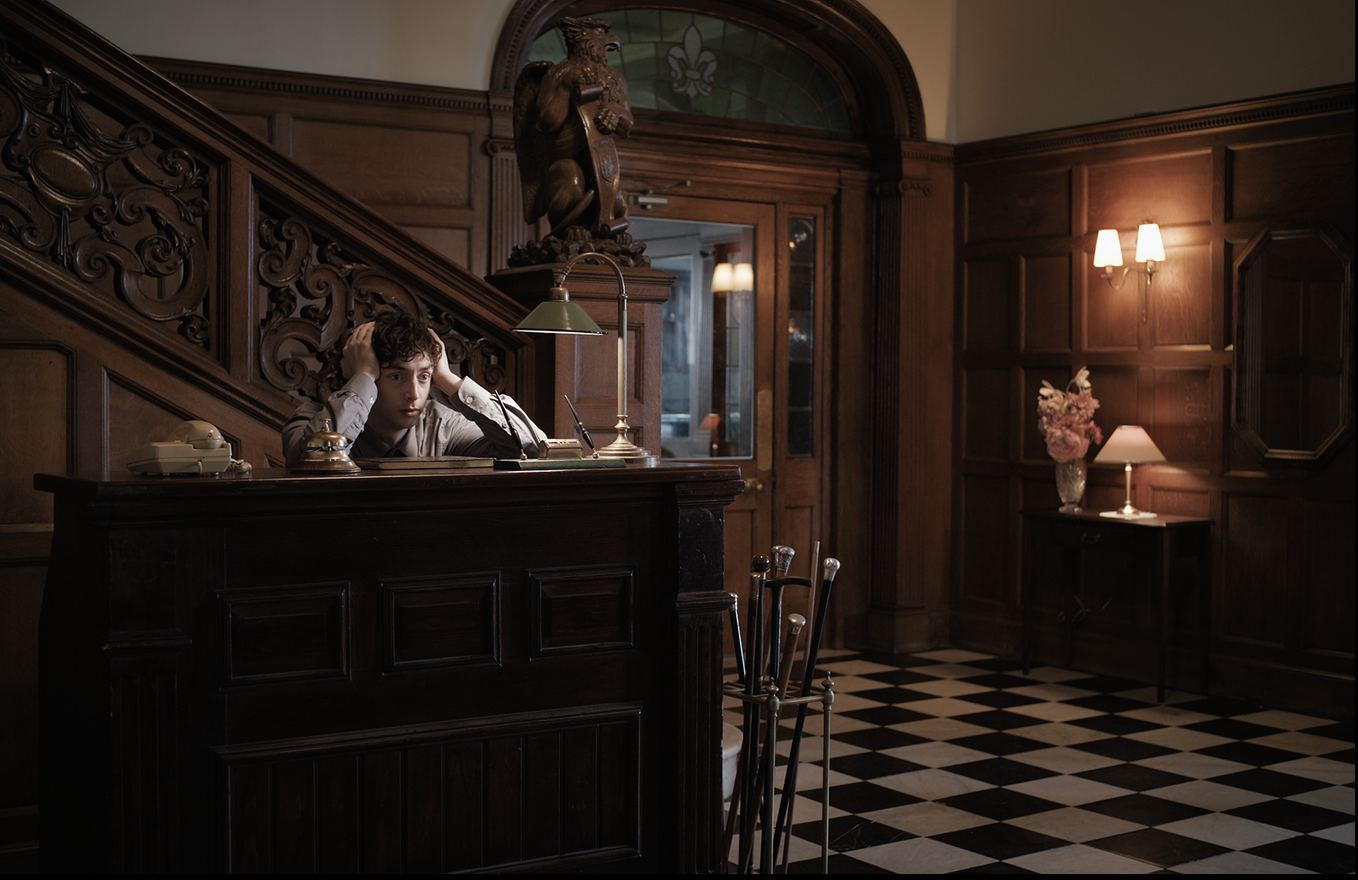
In the poker-faced Misper, our sad sack hero, Leonard (Samuel Blenkin), a clerk at a desiccated seaside hotel in the English countryside, does his daily rounds at a snail’s pace, methodically walking the halls as the camera patiently follows him. The hotel, called The Grand, is clearly on its last legs.
One guest compares it to The Shining. Another guest notes that the walls smell of bacon—but not, they clarify, in a good way. A new employee cheerfully calls it “a waiting room to the afterlife.” But there is, as director Harry Sherriff makes clear, a certain grandeur to its decaying beauty.
Leonard is an enervated character somewhat in the vein of Harold from Harold and Maude. On top of wandering morosely around the hotel, he sits morosely at the front desk and then spends time morosely in his spartan room. Indeed, the most avid thing he does is pine after a fellow Grand employee, Elle (Emily Carey). But even that is done somewhat tepidly.
“There’s that worried face again,” Elle says to him.
“That’s…just my face,” Leonard replies.
The film dabbles in David Lynch style surrealism—out of nowhere, Leonard stumbles upon the hotel manager, Gary (Daniel Ryan) singing karaoke to a tiny delighted audience—their smiles too wide, bordering on grotesque. (The hotel’s few guests are senior citizens, many of whom get a perverse satisfaction in complaining about its decline.)
Another member of the tiny staff seems to refuse to do work. She starts her day with a 45-minute cigarette break and sleeps in an empty room, snapping at Leonard not to bother her.
One night, Leonard gets up the nerve to ask Elle what she’s doing after work.
“Nothing,” she says expectantly. “What are you doing?”
“Nothing,” he replies.
But that’s the extent of his nerve. They stare at each other for a painfully long minute and then she leaves. The next day, Elle has disappeared. The film is about how Leonard, and the rest of the Grand staff, deal with her mysterious absence.
Leonard becomes depressed. In a scene that incapsulates the film’s dark humor, he calls a mental health hotline. “If you need help, press the star key,” a voice intones. He looks at the phone in dismay: There is no star key.
The jokes are funny, but few and far between, and we are treated to many wide shots of people sitting around in awkward silence. The film flirts with all sorts of great ideas: how inaction can lead to crippling regret and how horrible the Missing Girl Industrial Complex can be—while all of England is luridly asking, “What Happened to Elle?” real people are hurt and suffering.
I wish the film had developed those ideas even more. That said, there’s certainly enough here for to me recommend, especially if you’re a fan of the deadpan and the exceedingly droll. But I confess I wanted to give Leonard, and indeed the entire film, a shot of adrenalin.
MISPER is set for closing night, April 12, at 7:30 p.m. at the Parkway Theatre. Director Harry Sherriff and writer/producer Laurence Tratalos will be in attendance for a post-screening conversation.