Food & Drink
With Her Shortform Video Series, Atara Bernstein Puts Her Own Spin on Shabbat Dinner
The Baltimore native entrepreneur's “Shabbat Dinner Chronicles" share outside-of-the-box recipes to welcome the weekly time of rest and spiritual rejuvenation.
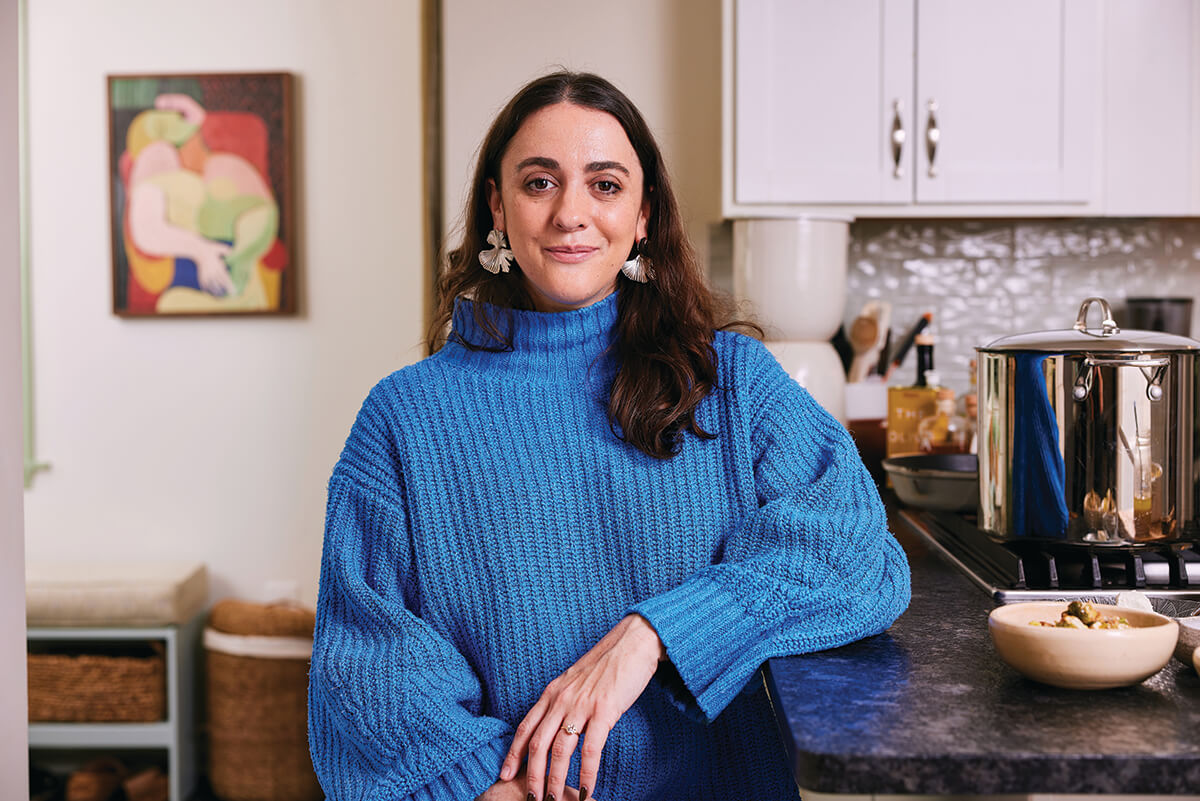
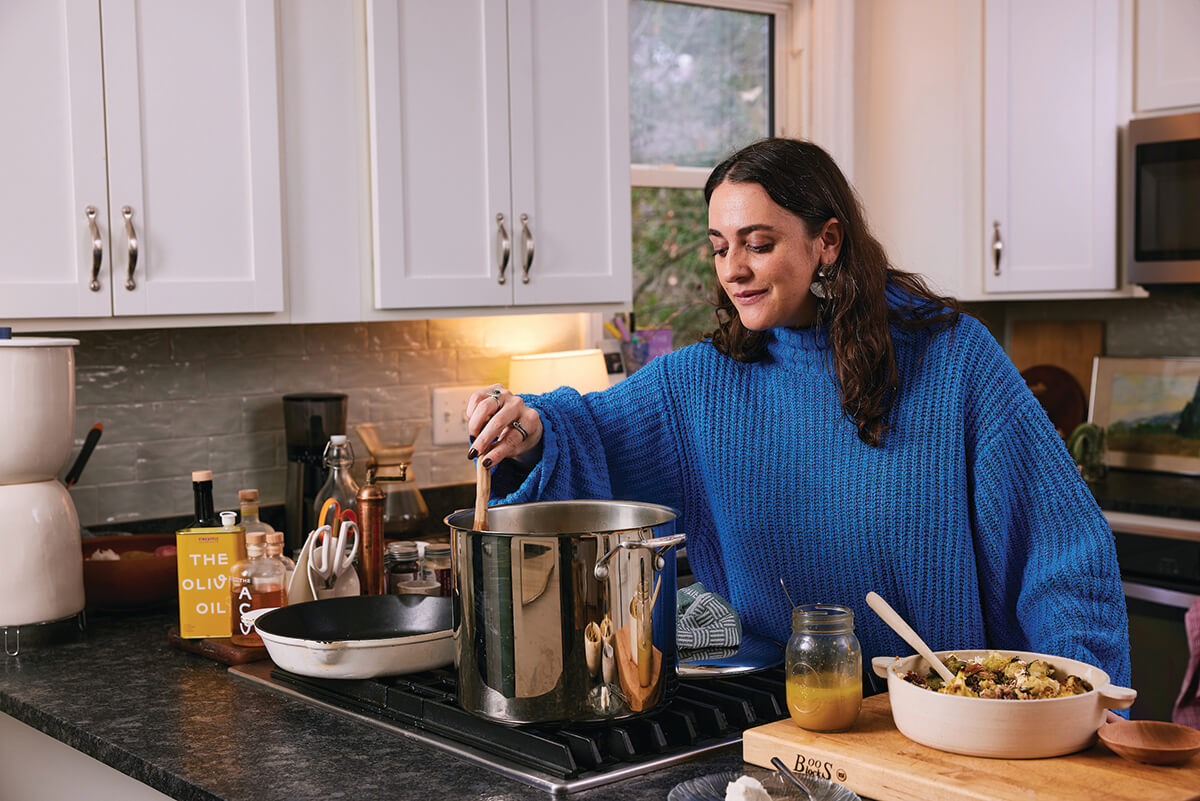
As soon as Atara Bernstein opens the front door to her Mt. Washington home, you can smell something aromatic coming from her kitchen. Turns out it’s chicken soup—there’s a whole chicken inside the stock pot—simmering on the stove.
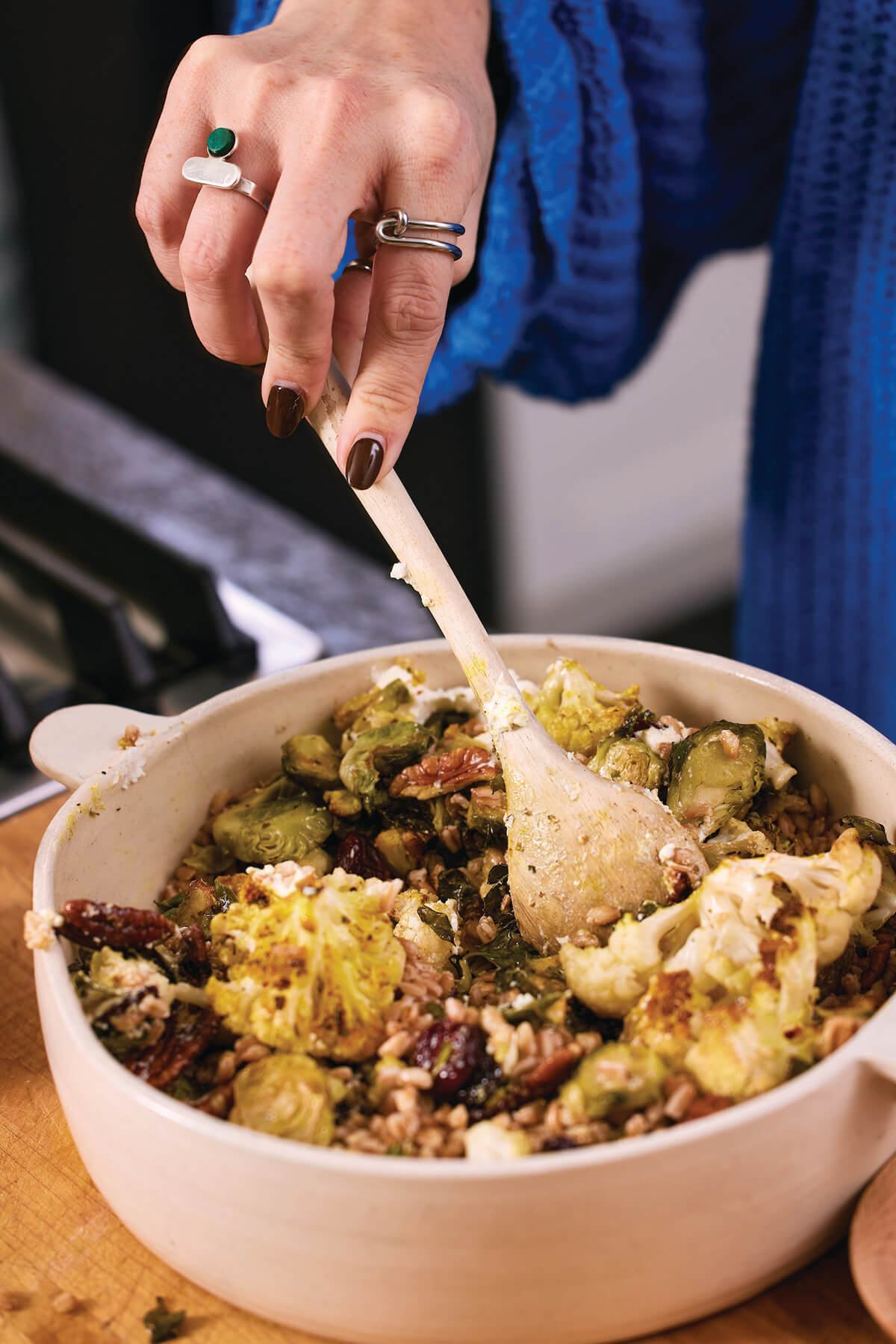
Bernstein—beautiful with her brown locks and cool-but-nice-girl energy—is also making roasted vegetables with Brussels sprouts and cauliflower she picked up from the local farmers market. They’ll roast in the oven with a Golden Milk spice blend (including saffron and cinnamon) and later she’ll add farro, pecans, and goat cheese to create a warm winter salad.
Food has been a throughline in Bernstein’s life. Some of her earliest memories include being in the kitchen with her mom, Dina, in a home that’s less than a mile away from the Colonial she now shares with her husband, Benny Herskovitz, and their three-year-old son, Tal. In 2017, she co-founded the Pineapple Collaborative, a community for women who love food, and was an early angel investor in the tinned fish company Fishwife in 2021.
Her current project, and what feels most like a return to her roots, is the “Shabbat Dinner Chronicles,’’ in which she films herself cooking decadent outside-the-box Shabbat meals to post on her @atarabernstein Instagram and TikTok accounts.
This simple act of demystifying the Shabbat meal sits firmly at the intersection of Bernstein’s childhood and her adult life. For most Jews, the traditional Shabbat dinner—eaten on a Friday night to welcome the weekly time of rest and spiritual rejuvenation—are usually homey, humble affairs, not gourmet, but comforting and familiar. Until now.
Instead of the usual baked chicken and potato kugel commonly found on Friday night tables in Baltimore, her complex, flavorful, one might say “cheffy” dishes include roasted cabbage with anchovies, miso soup with wild mushrooms, chicken confit with tomato and garlic and mint salsa verde, spring panzanella with challah croutons, strawberry vinegar pickled red onions, Japanese sweet potatoes with chili crisp, furikake hummus, and salted olive oil mandel bread.
In her soothing lilt, Bernstein talks through her menu and process with her followers (some 6,000), including the reason she picked up an item or a secret ingredient like fennel seeds in a tomato-braised brisket. Her chronicles kicked off in January 2025 and so far, she’s done 15 episodes with more on the way.
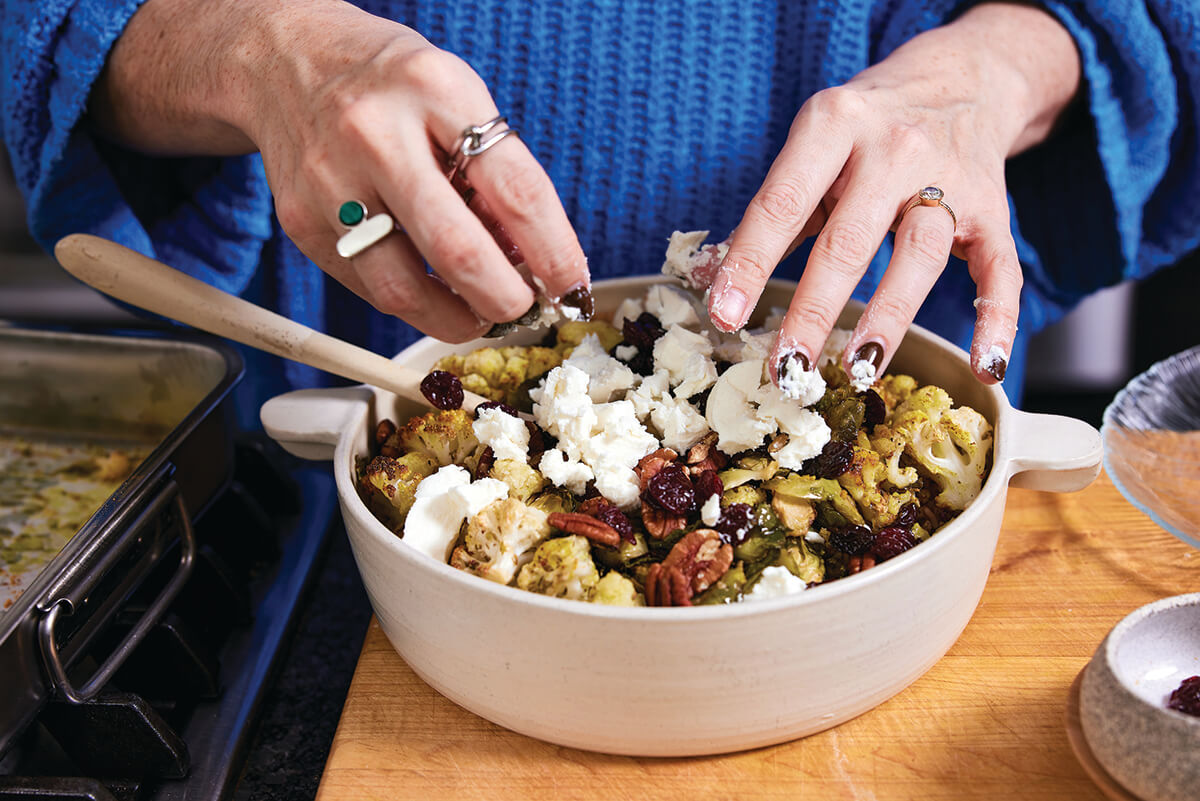
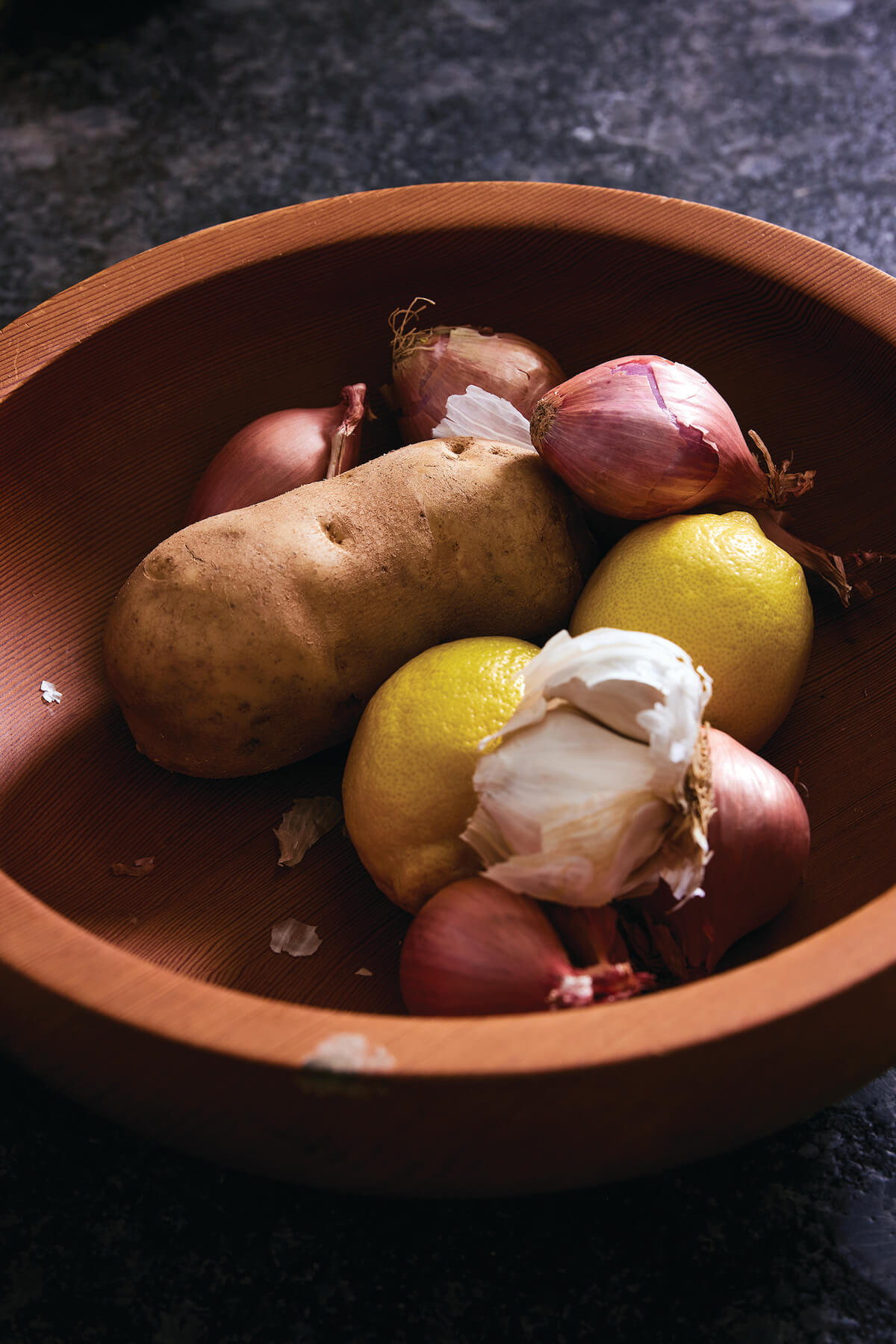
She likes to keep her ingredients mostly fresh and simple but isn’t above using a boxed brownie mix she zhuzhed up with espresso powder and olive oil. Her videos aren’t over-produced or full of cooking techniques. They’re simply a peek into this beautiful, ritualistic 4,000-year-old tradition.
“I was enmeshed from a very young age in Judaism,” says Bernstein, 35, who grew up in a modern Orthodox home. Her parents both worked in the secular world—her mom an accountant, her dad a lawyer—but “our entire weeks really revolved around Shabbat,” she says. “I would say that was sort of the most formative and important experience of my childhood.”
Bernstein attended Yeshivat Rambam Maimonides Academy, an elite Orthodox Jewish dual-curriculum day school in Park Heights. “I knew everyone in my neighborhood, I knew everyone in my school.” And she recognized early on how different and special the Baltimore Jewish community felt.
“It’s a humble, down-to-earth community, which I really appreciated, and I still appreciate now,” she says. “Growing up around a lot of very strong women who were in the workforce and trying to juggle not only raising kids and working, but then also celebrating all the Jewish holidays and embracing that—I mean, it’s a lot of work.”
But Bernstein’s mom, Dina, reveled in the practice. “A lot of people ask me, ‘How did you learn how to cook? Who taught you how to cook?’ I learned through osmosis of just being around my mom,” she says. Every Friday after school, Bernstein and her brothers did chores to get ready for Shabbat. “So, we would be vacuuming or cleaning, but I would always be the sous chef in the kitchen. And I would watch her rolling the meatballs, making chicken soup, cutting vegetables, simple things like that that I picked up because I was around her.”
That consistent weekly act was cemented into her psyche. Many of the Shabbat recipes that her mom used were handed down by her mother, Frances, whom Bernstein never met. “But she is so much a part of the family lore,” she says. “She was such a character. She was a very savvy baker, and she was known in her community for all her special, ritualistic foods around Jewish tradition.”
“I WAS ENMESHED FROM A VERY YOUNG AGE IN JUDAISM. OUR ENTIRE WEEKS REALLY REVOLVED AROUND SHABBAT.”
Frances was a first-generation American whose family came from Poland around 1920. Funnily enough, one of her recipes that has lived on is an Italian meatball which is not a traditional Shabbat food like, say, challah, roast chicken, kugel, or cholent (baked meat and vegetables). “Her meatballs were very famous,” says Bernstein, who still makes them almost weekly for her picky toddler. Dina would serve Frances’ meatballs every Shabbat on a little glass plate under a ton of red sauce with challah for what she called forshpayz, a Yiddish term for appetizers.
Frances was also well-known for her “epic cheesecake”—eaten to commemorate the holiday of Shavuot (which observes the giving of the Torah at Mount Sinai and is celebrated by eating dairy foods). “I’m pretty sure if you actually had this, like, Jewish Ashkenazi stomach, you would not be able to tolerate it,” she laughs. It’s made with sour cream, cream cheese, and cream. She says, “I kind of saw cooking as a connection to my Jewish identity, but also my family history in a real kind of unique way.”
But Bernstein was also like a lot of teenagers, especially those who had grown up in an insular community. By high school she was leaning into her rebellion and vowed to leave Baltimore and never come back. (Except to visit her parents, natch—she was a nice Jewish girl, after all.) After graduation in 2009, she headed to the Fashion Institute of Technology in New York City, where she earned a degree in photography and design, and then to the University of Maryland for a second degree in environmental studies.
“I was a little jaded after art school, just really wanting kind of more depth and wanting to make more of an impact than just being in the art world, which is why I was interested in environmental studies.”
It was there she became fascinated with food systems and the social impact around food. (And met her husband.) That led to a job in Washington, D.C., with national salad chain Sweetgreen where she managed the “Sweetgreen in Schools” program, delivering nutritional education to more than 6,000 students across the DMV, Philadelphia, Boston, Los Angeles, and New York. After Sweetgreen, she began a ticketed dinner series in her apartment called “The Wandering,” where she cooked for 12 to 20 people at a time.
A few months later, she and fellow foodie Ariel Pasternak—they had met through a mutual frien—started the Pineapple Collaborative, a women-focused community which eventually grew to more than 100,000 members and focused on creating connections through a shared passion for food. That included meaningful conversations with industry talent like Alison Roman, Christina Tosi, Julia Sherman, and Jeni Britton Bauer, who would attend events and appear on their podcast outlet, Pineapple Radio.
“It was a privilege to be able to do this,” she says. “Having access to really interesting women inspired me—it was really the stuff of dreams.”
By 2018, Pineapple Collaborative expanded through a partnership with delivery app Caviar to offer a curated list of women-owned restaurants in 16 cities. In November 2019, they debuted their own line of pantry staples, including olive oil, salt, and apple cider vinegar, that soon swelled to 10 items. Everything was female-led down to the olive oil miller. Two years later, they were looking to add a tinned anchovy to their line when Becca Millstein, the founder of Fishwife, pitched her ethically sourced canned fish company. They immediately invested.
“It was a similar thesis to our product line,” says Bernstein. “They really wanted to be sort of the midpoint between, like, a Bumble Bee tuna and a really expensive tinned fish that you get in Portugal or Spain.”
The company, known for its colorful illustrated packaging and smoked rainbow trout, is now earning over $6 million in annual revenue.
“We always used to say I think we were best at trend spotting, trend setting,” says Bernstein.
That includes Roman, now a well-known food personality with multiple cookbooks. “We knew she was going to be a star,” says Bernstein. At the time, “she didn’t have a large following. But we liked her voice and her perspective, and we were able to book her very early, before she blew up. It gave us a lot of cachet.”
Pineapple Collaborative was also among the first of the “trendy olive oil companies”—the kind of olive oil bottle you leave on your kitchen counter instead of tucking away in a cupboard. “We really predicted this New Age pantry revolution,” Bernstein says. “I think it was back in 2016. Our whole thesis was that for so many women, food is how they express themselves, more so than their closets or their beauty cabinets. And we wanted to create a brand that really accessed that. And it was very early. I don’t think anyone else was doing that.”
Her entrepreneurial talents did not go unnoticed—in 2020, she and Pasternak were named to Forbes’ 30 Under 30 list in the Food & Drink category for “building a successful community around shared food values and ethical pantry products.”
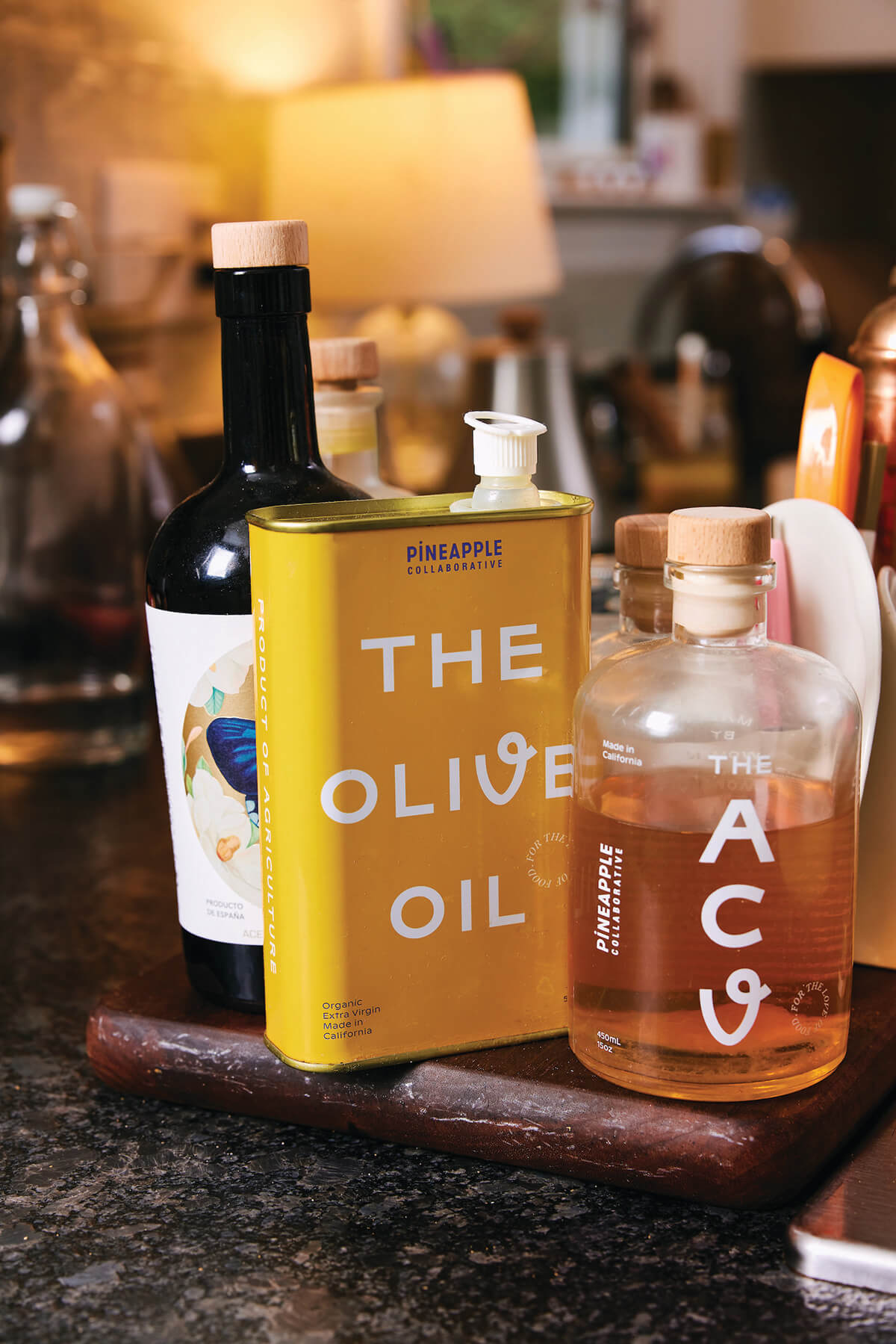
The company lasted six years, though the products live on, including a half-moon-lid salt pot that was produced in partnership with the women-run co-op Comunidad Salinera de Maras. (The pink salt is harvested by hand from ponds in the Peruvian Andes.) “It was a very interesting journey,” says Bernstein, reaching into the ceramic vessel to sprinkle salt on her vegetables. “It was painful at times, just growing a small business.”
Eventually they made the decision to sell to another food company. By the time the papers went through, it was early 2023. Bernstein worked for the company that acquired Pineapple Collaborative for a few years, and she and Herskovitz made the move to New York’s Hudson Valley. “I had this romantic vision of living in the woods,” says Bernstein. “It was very remote, it was very quiet, it was creatively inspiring, but I was really missing community.” That point was driven home once she was pregnant with Tal. “I was really craving that community support. And you know how isolating motherhood can be, too.”
She and Herskovitz, who grew up in a similar modern Orthodox family in New Jersey, also realized they were seeking a more spiritual con- nection. No one was more surprised than Bernstein when it dawned on her that she wanted to move back to Baltimore.
“I really admire the diversity in Jewish practice here. And you know, you don’t have to be any one way. You can really just show up as you are.”
While she and Herskovitz were house shopping in the summer of 2023, they moved into her parents’ house for six months with their 8-month-old baby. That meant she was immersed again in the “weekly rhythm of Shabbat that I was so missing all these years.”
The quietness of Shabbat, which dictates no TV or electronic devices, soothed her soul. “I was going through a lot at the time with work and identity stuff, being a new mom, and it felt really like what I needed every single week to really unwind and be present with the people around me,” she says. “Just the idea of going 25 hours without a screen is radical, but also so nourishing.”
It felt like a recalibration of sorts and by the time she was in her own home, she decided to see what her creativity looked like in a new space. She created Atara Cooks, a cooking newsletter on Substack, and started a blog called Spiral Eyes, in which she interviews new moms about motherhood, spirituality, wellness, and the challenges of continuing to produce creative work.
She enjoys all her new roles but perhaps finds the “Shabbat Dinner Chronicles” the most meaningful. The simple task of cooking dinner to welcome in the Shabbat, as generations before her have done, has taken on a heavier significance at a time when being Jewish is complicated. It’s a sort of resistance, one brisket at a time.
“Post October 7th, there’s been more of a desire—like an innate need—to be more open about your Judaism,” she says. “The way I see it is that wherever you are in the political spectrum, there’s so many nuances of what to think about what is happening. It’s an uncomfortable time to be Jewish here in America.”
In a way, that discomfort inspired her return to the ritual of cooking Shabbat dinner and “just wanting some positivity around being Jewish.” While she says she has not experienced antisemitism in Baltimore, social media comments (especially TikTok) have been another story. “That’s been jarring, but it just motivates me to be even more open to celebrating this important time every week.”
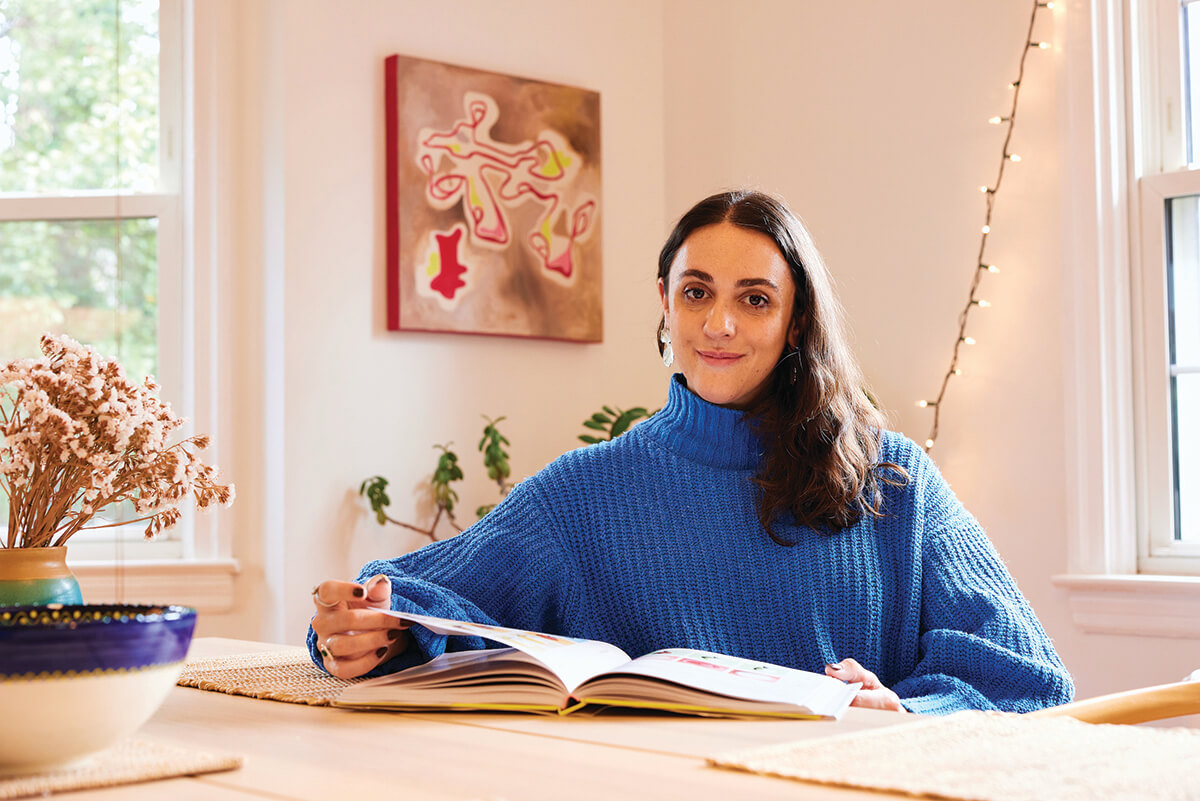
Bernstein, who also sits on the board of the newly renovated Jewish Museum of Maryland, says she has spent a lot of time thinking about the “recipes that my mother made, that her mother made, that her mother made, where they originate from, how Jews have been spread out across the world, and how that’s influenced Jewish food.”
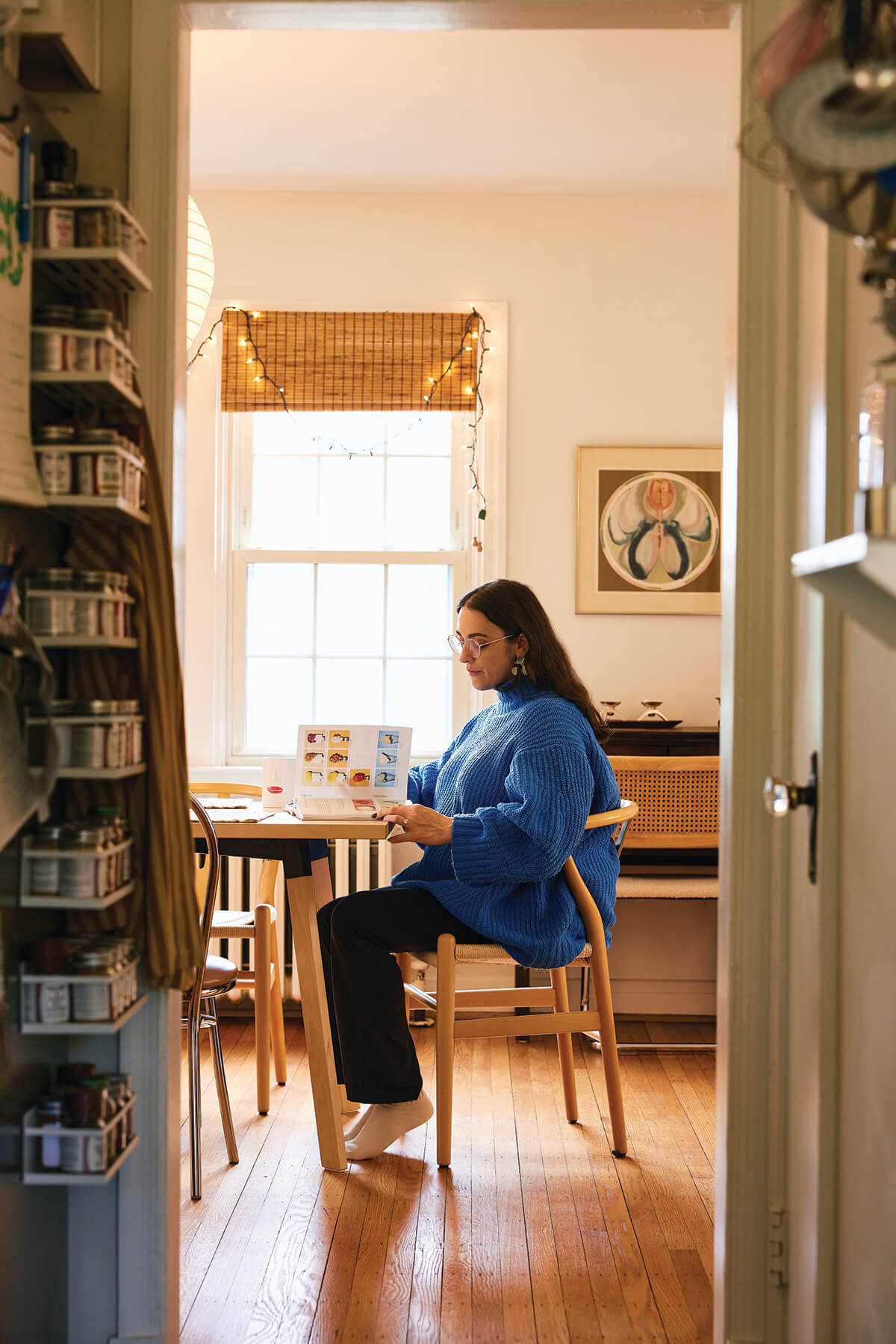
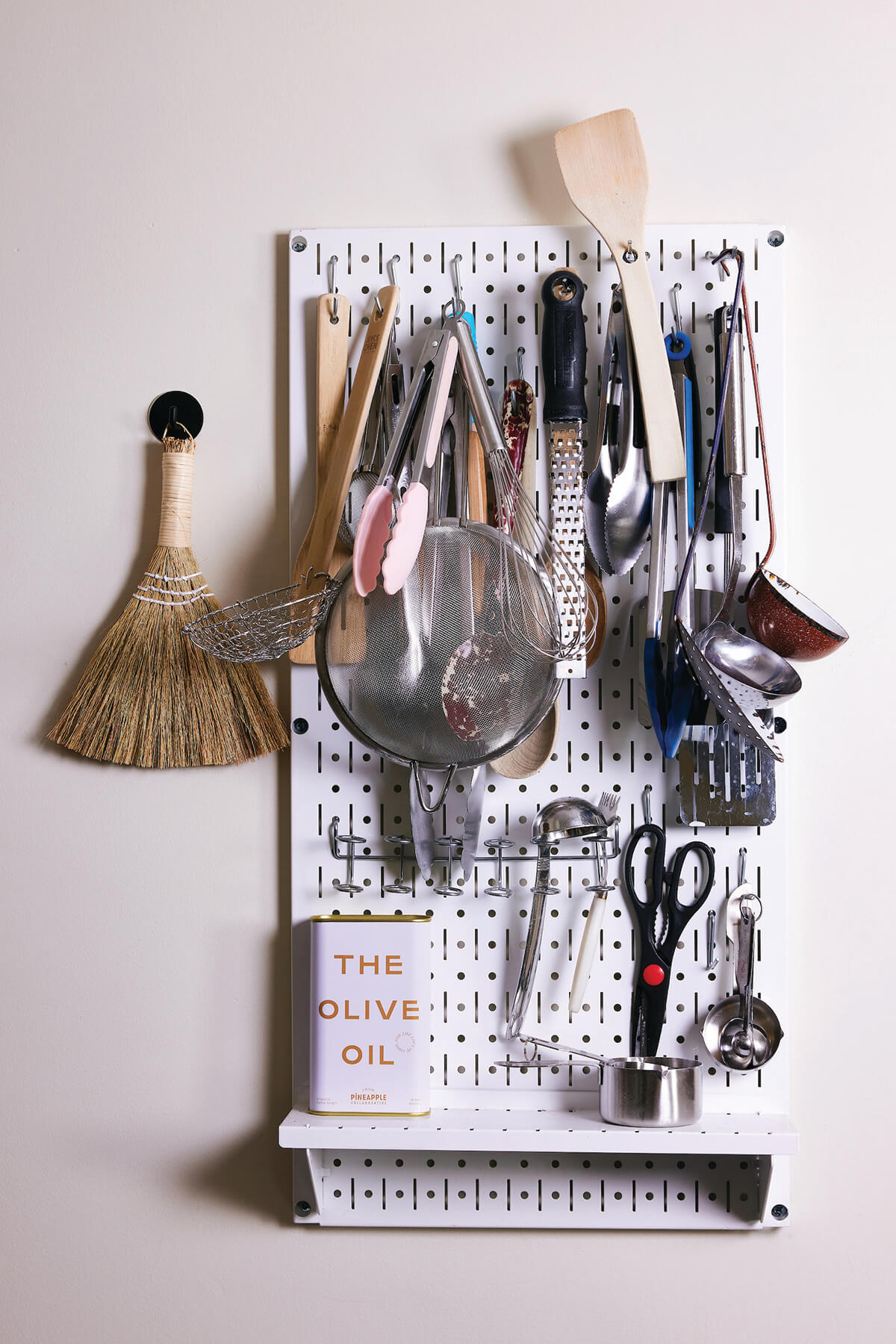
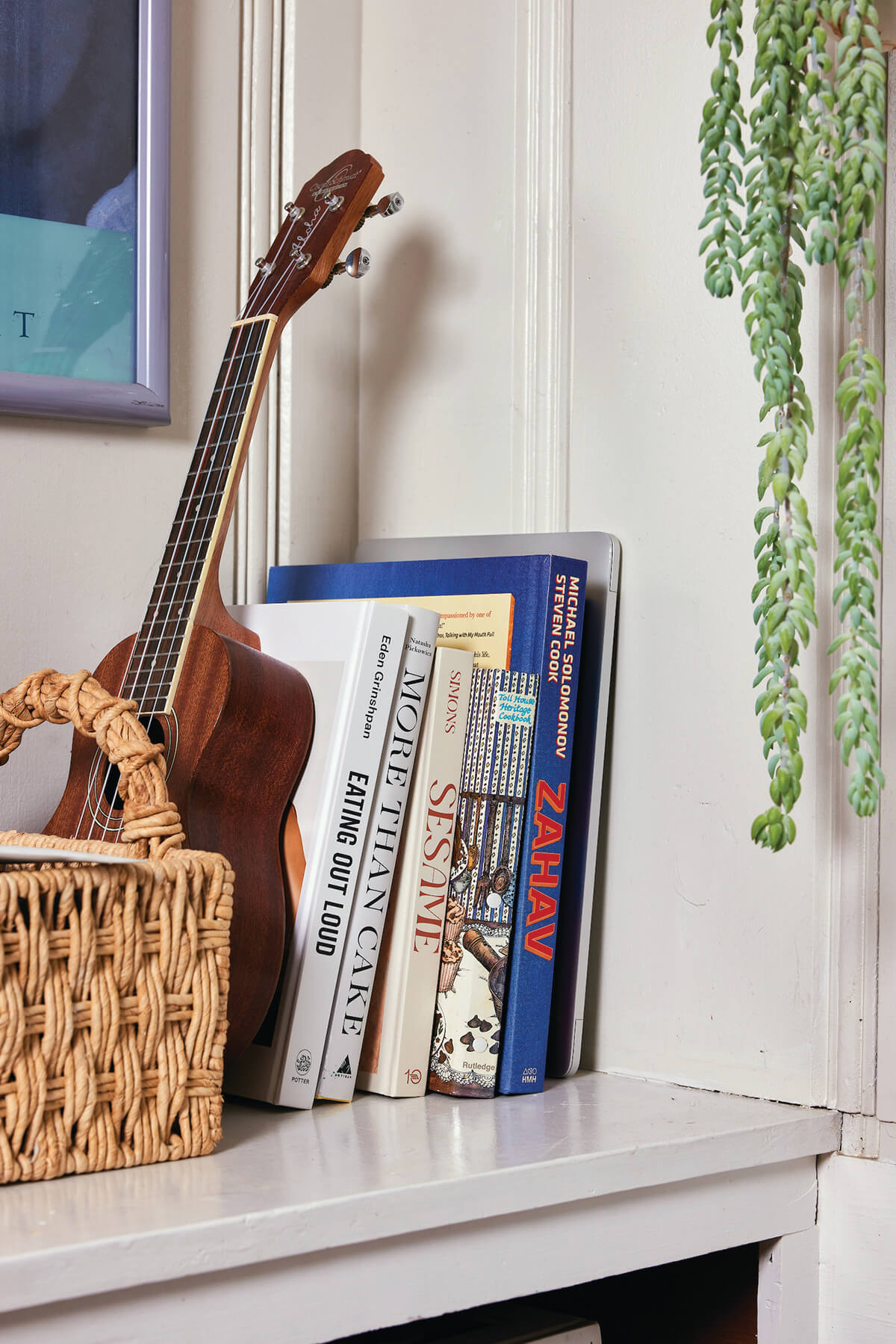
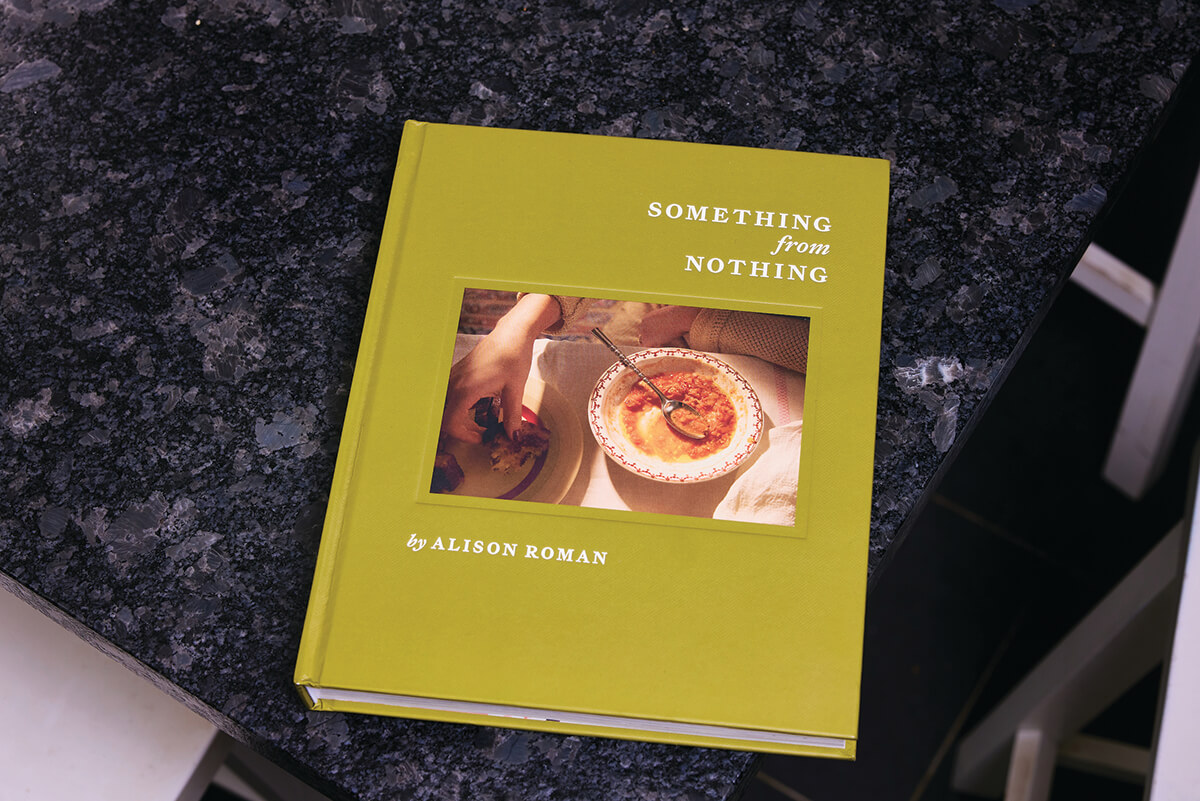
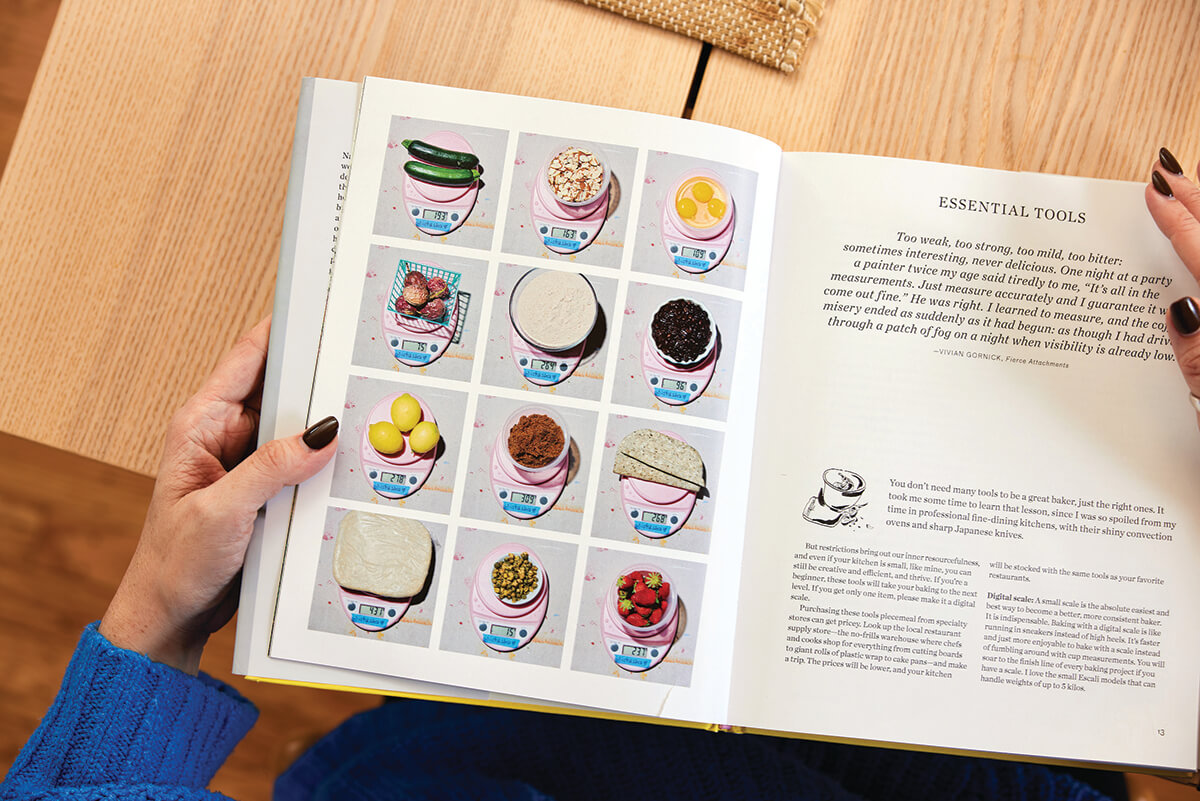
And Bernstein, now pregnant with her second boy, due this spring, moves around the kitchen with ease. The light-filled room is perfect for her—everything within arms’ reach. Cookbooks, including Najmieh Batmanglij’s Joon: Persian Cooking Made Simple and, of course, Roman’s new book Something from Nothing, are scattered on bookshelves, the TV console, the coffee table. A small Julia Child-style peg board holds her most essential cooking tools (wooden spoon, Joyce Chen scissors, microplane).
The kitchen is designed with a clear view of Tal in his playroom, which also means he can clearly see what she’s doing, too. “He likes to cut vegetables and really likes to be involved with whatever I’m doing,” Bernstein says. “I’m trying to get him to be more adventurous about what he’s eating, especially vegetables.”
And boy does Bernstein love a “veg.” Most of her Shabbat menus are inspired by whatever is in season at her local farmers market. That can include hearty greens like kale or Swiss chard and root vegetables like carrots, beets, and parsnips. She loves cooking with leeks and garlic, too. She’ll also have certain ingredients that she fixates on—recently it’s been hojicha, a versatile, low-caffeine Japanese roasted green tea with a distinct nutty, earthy, and slightly smoky flavor. She’ll challenge herself to use that flavor profile in one of her dishes while still trying to please her most discerning critic—her toddler.
Right now, her plate is full of all her creative pursuits and the upcoming baby, but a girl can dream. She often thinks of opening a bagel shop (like Los Angeles’ Courage, with its Montreal-style bagels), a modern deli, or a fish smokery with good pickled vegetables.
But at this exact moment she’s in her kitchen putting together lunch and stirring her soup, tasting, seasoning, and perfecting. She knows exactly how much more of a pinch of salt the soup needs or that sour cherries will take her salad from great to exceptional. She smiles as she spoons the salad into speckled pottery bowls. It’s time to eat.