Food & Drink
When You Sip This Maryland-Made Coffee, You’re Also Supporting Wildlife Conservation
How Crofton-based Chesapeake Coffee Roasters uses its blends to protect migratory and regional birds and other wildlife.
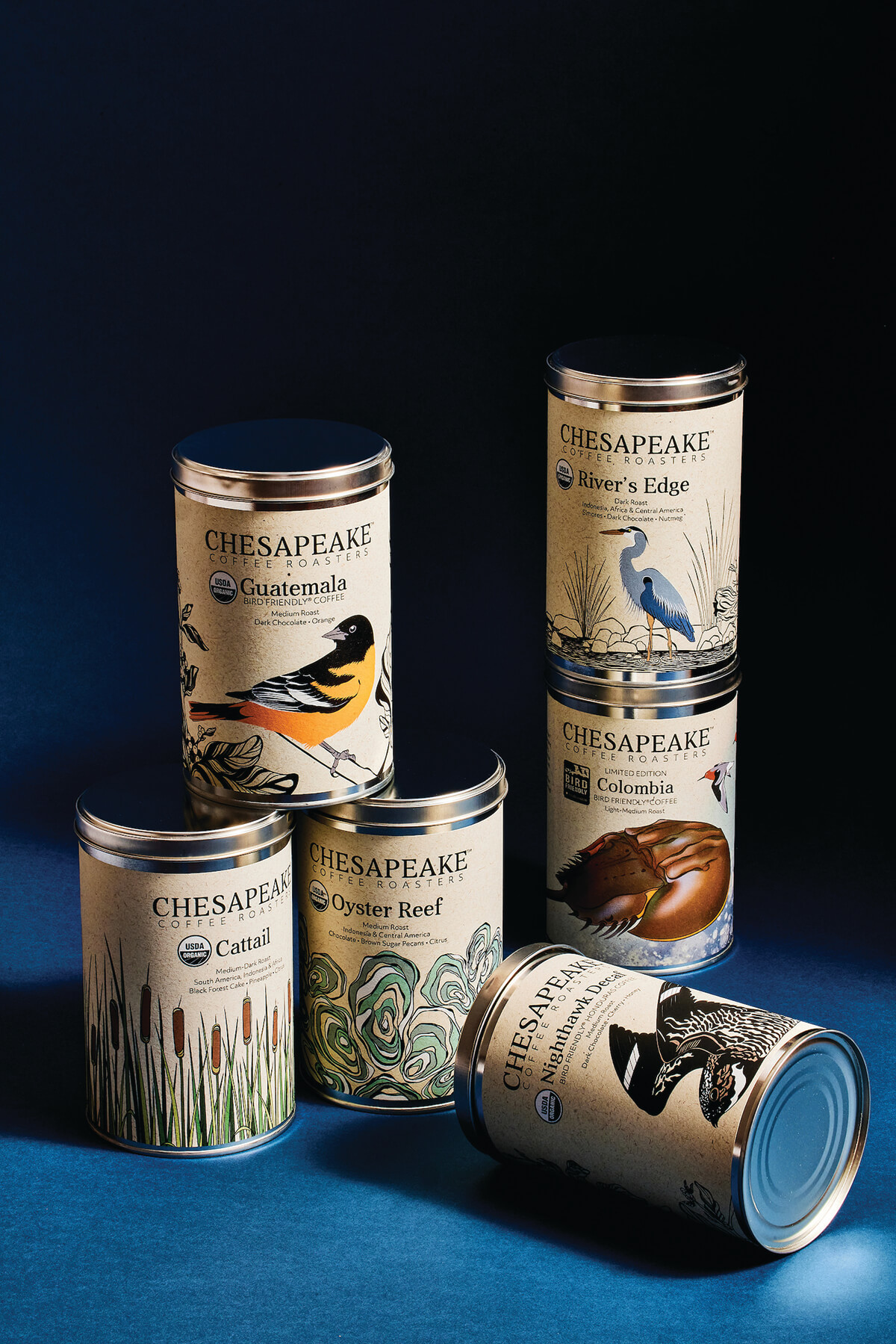
While you can’t judge a book by its cover, you can judge a coffee can by its label. Case in point: the Crofton-based Chesapeake Coffee Roasters, which features a glorious array of animals on their eco-friendly, made-in-Maryland, recyclable cans.
From the Oyster Reef blend to the Diamondback to the Hellbender (an ancient salamander that lives in the Chesapeake), each label shares a different conservation story. For the Oyster Reef, a percentage of coffee sales is donated back to the Oyster Recovery Project; and for the Hellbender, a percentage of proceeds supports salamander conservation efforts at The Maryland Zoo. There’s even a bird-friendly line (including one from Guatemala that features a Baltimore Oriole) that helps safeguard habitats and higher prices for farmers.
In other words, when consumers buy a can, or a cup, of Chesapeake Bay coffee, they’re getting way more than high-quality, certified organic, fair trade coffee—they’re helping to protect migratory and regional birds and other wildlife.
“Seven years ago, we started getting involved in taking organic to the next level, which is the bird-friendly programs we work with in support of research,” says Kevin Kehus, general manager of Chesapeake Coffee Roasters. “Those programs have been certified by the Smithsonian Migratory Bird Center, ensuring that the coffee is grown under specific shade conditions that assist migratory bird habits.”
Chesapeake Roasters actually encourages farmers to grow coffee that is friendly to migratory bird species.
“That’s the real tie-in to the local,” says Kehus. “A lot of the bird species where our coffees are grown actually spend their summers here in the Chesapeake Bay region.”
The company (formerly known as Chesapeake Bay Roasting Company) was founded by Maryland native Rick Eber and his brother, Tom, back in 2002.
“We both lived in the Annapolis area,” says Eber, a restaurateur who sold commercial Italian espresso makers before segueing into the bean business. “I love the water—it’s where I find peace and tranquility. Living there, we realized that there were things that we could do to make an impact in the community and the environment and for the health of the Chesapeake Bay.”