Food & Drink
SPAM Takes the Spotlight at Baltimore Restaurants
The canned meat that’s long been a part of Pacific Island culture finds life on local menus.
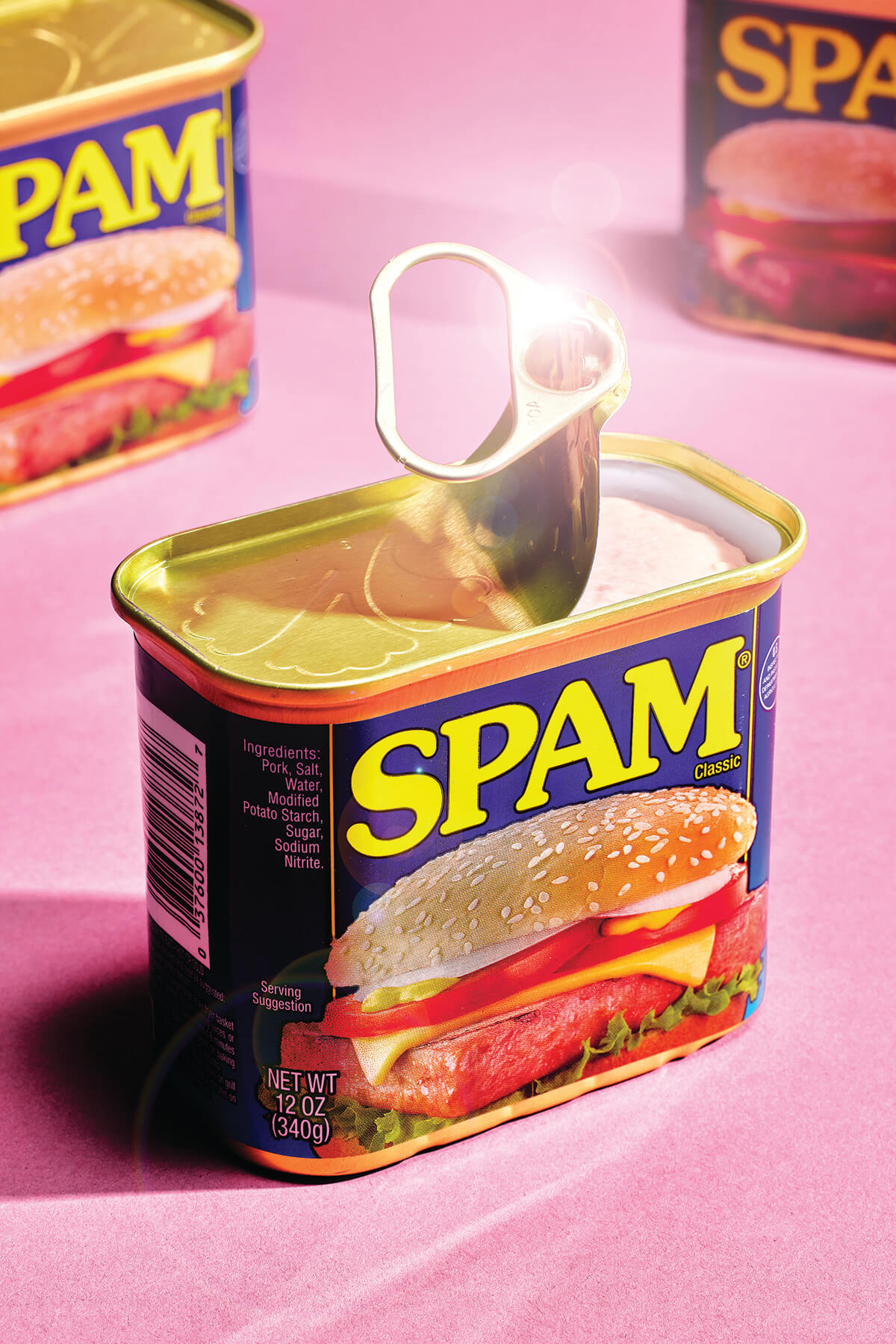
SPAM, the iconic canned meat that’s long been a part of Pacific Island culture, is having a moment in Charm City. From SPAM musubi at Charm City Poke & Sushi in Harbor Point to grilled SPAM tossed with saiman noodles at Halo Hawaiian BBQ & Poke Bar in Arbutus, the product prized for its price and long shelf life has found its way onto many a local menu.
One original take comes from Pink Flamingo in Remington, where discs of SPAM—shaved razor thin on a mandolin—are deep-fried, then transformed into chips as a vessel for a bowl of house-made French onion dip.
“I was talking to [co-owner] Brendan Dorr and he said he wanted pub food but with these island-esque vibes,” says executive chef Blaine Welsh of the inspiration. “Brendan was set on having SPAM in some way, shape, or form on the menu and I wanted to try something different.”
As part of the lineup, Welsh also wanted to include an onion dip, so he married the two ideas. “There’s a saltiness to the SPAM and once you fry it, add the sweetness from caramelized onions, and creaminess of the sour cream,” says Welsh. “I just thought it would work together.”
Clearly, it’s working well. Welsh sells an estimated 120 orders of chips and dip a month. “People just buy it, which shocked me,” he says. “I am proud of the dish but I thought we’d have to push it a lot harder than we do.”
Island vibes were also the inspiration for the SPAM musubi at The Duchess. “SPAM is getting a little comeback,” says Kiko Fejarang, executive chef-partner of The Duchess. “It was a childhood favorite of mine growing up in Guam. I wanted it on the menu for nostalgia and a little bit of feeling like being on vacation. Anytime I’d visit Hawaii, I’d grab a musubi.”
Pink Flamingo’s Dorr has his theories about why SPAM—a portmanteau of “spiced ham” introduced by Hormel Foods in 1937, two years before the start of WW II, and popularized when American troops brought the food to Hawaii—is back in fashion.
“We are seeing other cultures being able to sell their foods now,” says Dorr. “It’s a staple in Guam. It’s a staple in Hawaii. You’re seeing more chefs who aren’t just white males being able to put out the foods they ate while they were growing up. You’re seeing more voices, which is a good thing.”