Health & Wellness
Four Baltimore Nurses Who Exemplify What It Means to Go Beyond the Call of Duty
These nurses routinely work well outside of their job descriptions to provide the best care possible.
There’s no one way to be a nurse. There is, of course, the familiar registered nurse, working at the bedside, facilitating care plans, and managing diagnostic tests and medications. But the field has broadened to include nurse educators and executives, surgical nurses, pediatric and natal specialists, informaticists, PhD-level nurses doing research, and advance practice nurses who independently treat patients.
What has not changed is the driving force behind becoming a nurse. Linda Cook, PhD, an assistant professor at the University of Maryland School of Nursing and a Baltimore Excellence in Nursing advisor (see our list of this year’s honorees, here), explains that most nurses have a personal connection with the field—a relative who was a nurse, or a health experience that brought them in close proximity to nursing.
“Others have chosen nursing as a second career wanting to have more contact with people and make a difference in their life,” she says, adding that she has students who shifted to nursing when their original degree didn’t provide the opportunity and fulfillment they’d hoped for. “They saw what nurses were able to achieve and wanted to be able to do the same.”
So what are the ideal traits for a nurse? Creativity, flexibility, patience, analytical prowess, and compassion, says Cook, as well as a deep commitment to care that often manifests in nurses routinely going above and beyond the bounds of their job.
Here, we meet four nurses who share—in their words—stories of how they have gone the extra mile to bring care and comfort to their patients.
DOING WHAT NEEDS TO BE DONE
Jacqui Wienecke, System Director Utilization Management-Maryland Region, MedStar Health
There are so many ways to help outside of just the bedside. That is core to being a nurse, but there are all these other pieces that affect a patient’s ability to be successful when they’re finished in their hospital course. That’s case management.
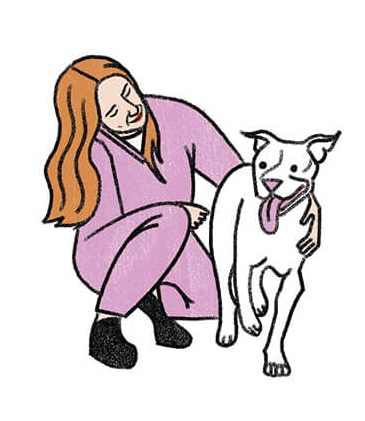
We had a case where one of my team members reached out and said their patient wanted to leave [against medical advice] because they had been here for four days, and their dog was home, and they didn’t have anyone to care for it. We tried to find emergency fosters, but we didn’t have any luck. The dog was a pit bull mix, which unfortunately made it harder. I went to talk to the patient, and he was like, “I have to get home to my dog. She’s not going to have any food. There’s not going to be any water left.” So, I said, “Would you stay if we could find care for your dog?” And he said that he would.
He assured us that the dog, T-bone, had no history of aggression, so we decided that we were going to go to his house, which wasn’t far from Franklin Square, to let his dog out and feed it. Our chief nursing officer, another member of case management, and I stopped at PetSmart, got food, got treats, got all the stuff. We went to the gentleman’s house. We called him on FaceTime with his permission, so he could talk to the dog, and the dog could hear his voice.
The dog was perfectly sweet. We filled the food and water bowl, and she went outside and did her business. We considered the next steps and decided that I would come back again later that day, and then our CNO would come the next day, and we’d continue to care for this dog while the patient was in the hospital. Fortunately, he was cleared to leave later that evening.
It was so simple, yet so far out of the norm of what I think people consider part of hospital care. But his support system was that dog—he didn’t have anybody else. The importance of that dog to him was a barrier to his getting the care he needed, and we needed to look at how could we fix that.
We had another patient who’d been with us for six months and at Christmastime was asked what he wanted and all he wanted was a haircut. We got a volunteer stylist and created a salon and surprised him with his Christmas wish. He literally cried. He couldn’t believe that we cared enough to make that happen for him.
Nurses are just like that, we see a problem and we figure it out. We just do what needs to be done.
CREATING LASTING MEMORIES
Alexandra Page, Neonatal Nurse, Mt. Washington Pediatric Hospital
Working with babies is super special for me. They’re so resilient. I look at it like I’m caring for one of my own babies. Their parents are going through so much that it’s hard for them to even take a break for a minute, so you’re providing care and comfort to them, as well. You’re not just caring for the baby; you’re caring for the whole family.
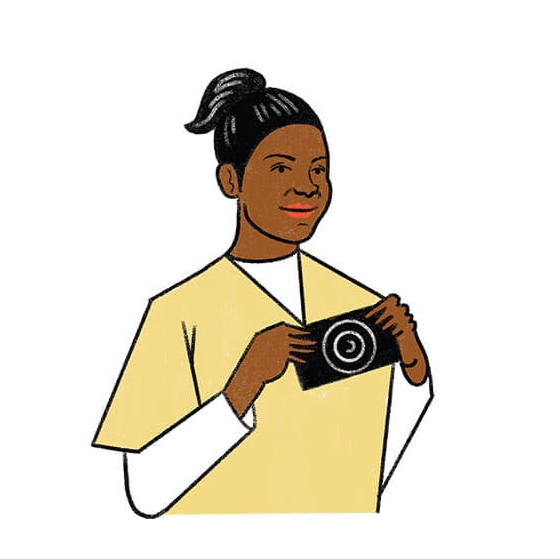
I have always loved crafting and doing anything to make a memory. These parents are just fighting for their babies. They forget or shouldn’t even have to think about documenting anything. As nurses, we can create a memory for them. I always loved photos, and I just thought if I see a special moment happening, I’d try to capture that for them. That’s what really started me wanting to offer photography for parents.
When I experienced my first loss [on the job], we took pictures for the family. That started the passion toward bereavement photography—trying to offer these parents something that they can take with them and hold onto when they can’t take their babies home.
But I also wanted to give them a sense of fun and normalcy. I’ve heard parents say, “I never got newborn pictures because we spent the first six months in the hospital.” So I want to give them that time to just have fun and to capture the little positive milestones if the babies are in the hospital and they’re in the process of getting better.
With bereavement pictures, I meet with [parents] and talk to them about their baby, and then I usually take pictures of the baby with them in the room, or I take the baby and take pictures privately. If they feel comfortable, I bring the baby in and do family pictures with them, as well. I did a session where I had taken pictures of the baby when she was born and she was doing really well, and gave the parents those pictures, and then she had a really bad day and was going to be taken off life support. The parents called me to come in, and I photographed that process—them saying goodbye. That was a really sad experience, but it gave them a concrete memory they could hold on to.
There was a baby I spent four hours with—just me and her family. Four nurses came in and helped me move her to a private room. We took a ton of pictures, and we spent time with her older brother. Her parents got to hold her and just be with her, and that was really special. She ended up passing a few days later, and her family had two big photo albums of every picture I took printed out at her service.
Nurses go through a lot of stressful, hard days, and even if it’s more work for me, I still feel like it’s also a healing process for me, giving these parents this gift. They email me afterwards and say, “I look at these pictures every day.”
In nursing, that’s all we want to do is comfort our patients and make sure they are feeling better. If these pictures make them feel better, it makes me feel better, as well.
CARING FOR THE OVERLOOKED
Shannon Tieman, Psychiatric and Primary Care Nurse Practitioner, BrightWell Health
I wanted to be a nurse my entire life. My father died of esophageal cancer when I was about two years old, and that introduced me to medicine. What drew me to addiction and mental health was seeing the need, the devastation, and the lack of treatment for these patients.
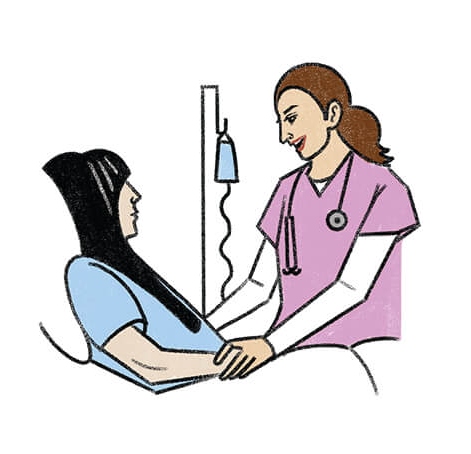
I worked in primary care for a number of years as a nurse practitioner, and I saw mental health and addiction in the clinic all day long. I’m drawn to patients who have a greater degree of illness. It is something that motivates me as they need the most help.
On any given day I see between 12 to 28 patients. It’s [what’s called] a low-barrier to care clinic, so we really don’t refuse anyone. Most of these patients have complex needs. It’s a vulnerable patient population, so they don’t have phones, there’s a lot of abuse, domestic violence, a lot of poor self-sufficiency skills. A lot of them are unemployed. A lot of them don’t have anybody but us to support them.
When I first started working here, we had a ton of patients who were on high-dose chronic benzodiazepines [a controlled substance medication often used to treat anxiety and seizures] from prescribers who no longer filled those prescriptions. And they can’t stop these medications, because benzodiazepines cause withdrawal and people can die from them. It’s really an epidemic; 68 million people are on chronic benzodiazepines, and most prescribers don’t know how to get them off. If you say you won’t fill the prescription, they go to the streets, and then they die with fentanyl use.
Some of these patients have been ruined by these medications. They’ve been on them since they were 25 years old, and are now 58. I really had no choice but to figure out what we could do to support them.
So I took them on as patients, and I worked to figure out an approach that could work while keeping them safe. BEST STEPS—Benzodiazepine Engagement and Safer Transition, Staged Tapering, Empower Patients, Success—is a protocol to wean people off. We’ve weaned about 70 percent of our patients. Patients who have felt helpless are starting to feel like they have control of their life back.
I’m happy to share this protocol. We’ve been talking about it at conferences, at events. I want people to know that they have options, that we don’t need to just dissolve from this benzo crisis.
What drives me is the patients. When I think about them and their struggles, that’s the thing that makes me work harder, that makes me want to help more. I absolutely love what I do, and it doesn’t burn me out. The patients are the reason why I’m here. They’re the reason why I’ve done all I’ve done. On my worst days, they bring me up.
COMPASSIONATE LISTENING
Brooke Harmon, Emergency Department, LifeBridge Health Sinai
My twin sister and I were the patients when we were younger, and all I can remember from those not-so-great times of our lives is the nursing staff who helped us. They would bend over backward to make sure we were getting the best care that we needed, and from a young age I realized that’s the career that I wanted. I strive to help other people, and that’s why I went into nursing.
When you work in the emergency department, you are usually seeing people on their worst day. They’re nervous, they’re scared, they don’t know what’s going on, or you have a chronic patient who is consistently in the ER due to health concerns.
What I try to do as a nurse is to make those individuals as comfortable as possible. Being able to care for patients who have positive outcomes makes me feel great as a nurse, to be a part of a care team to help make that person’s day and their hospital stay better.
But when you work in the emergency department, there are not always positive outcomes. We had a patient come in rather unexpectedly and the individual was not much older than me—it was not a positive outcome. When it came to the postmortem care and the wife came back to view her husband, all I could think of was that I could be in her shoes. I’m a mother. I have two very young kids. She has four very young kids who now have lost their father, and this is going to be a very big navigation change. So, in my head, I know for myself, I would need extra support in this time, in this transition, because it’s going to be a very long road ahead.
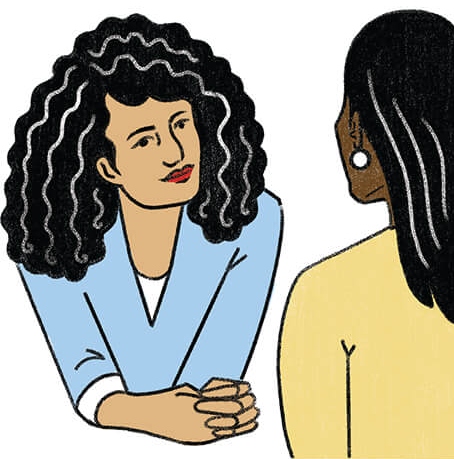
I wanted to make sure I was that person for her. She was obviously distraught, which comes with the territory of trauma nursing care. But when I saw her, I saw that I needed to be a support. And all she wanted to do was talk. So, we shared life stories about the patient. Sometimes listening is what these patients need, taking the time to just have that conversation goes a long way. And I was just sitting there actively listening. She was extremely grateful for that.
I would say probably 95 percent of individuals get into nursing because they want to be that person for other people. They want to help people in the times of their lives when they really need help the most.
* Interviews were edited for length and clarity.