Home & Living
What Actually Happens to Your Recycling When You Put It Out on the Curb?
We consulted Baltimore County's Solid Waste Management bureau to find out—and to learn more about how to be a better recycler.
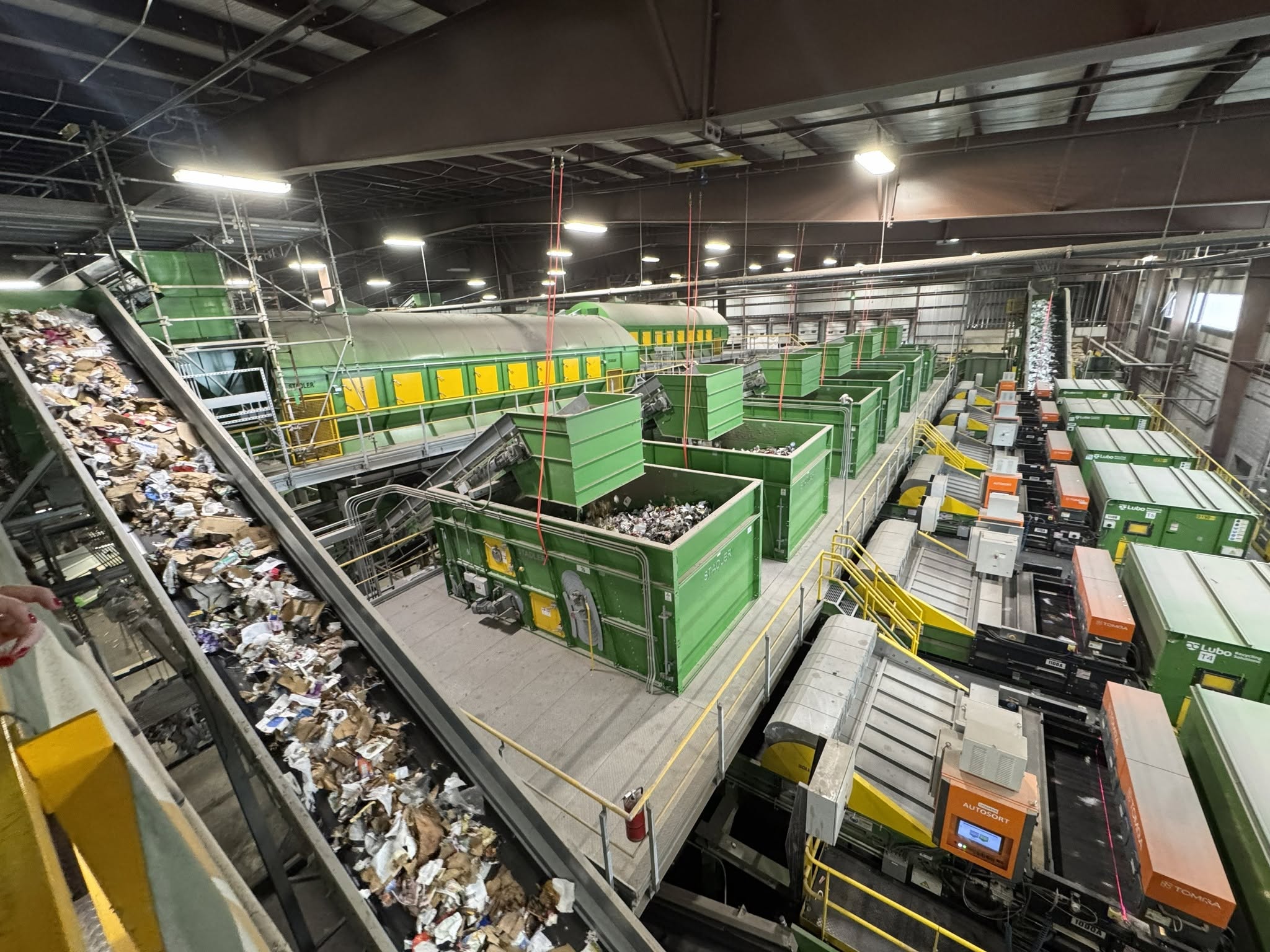
Recycling matters. In a 2020 report, The Recycling Partnership, a nonprofit organization dedicated to rebuilding and modernizing the residential recycling system, noted that if the estimated 37.4-million tons of recyclable materials generated by single families in the U.S. were recycled instead of thrown away, the reduction in greenhouse gas emissions would be equivalent to taking more than 20 million cars off U.S. highways. But what actually happens to the bins you put out on the curb?
You’ve got questions—and now we’ve got answers, thanks to the information we received from Bill Olfson, public information specialist at Solid Waste Management Recycling under the Department of Public Works and Transportation for Baltimore County.
Does recycling just go in the landfill?
In a word: no. Last year, Baltimore County received 65,000 tons of recyclable matter; 64 percent was recycled. Keep in mind that workers don’t have time to open and investigate recyclables that arrive in plastic trash bags—so they get trashed. Put recyclables directly in the bin.
How does the single stream work?
In the county, single-stream recyclables end up in the Materials Recovery Facility (MRF, pronounced “murf”) in Cockeysville, where product is sorted into what Olfson calls “the core four:” cardboard/paper, plastic, glass, aluminum/tin. Sixty-five percent of sorting is done by hand (picture a conveyor belt filled with recyclables whizzing by, like the I Love Lucy candy factory scene) and the rest by technology. Core four are baled and sold on the open market. Baltimore City recycling goes to Waste Management in Howard County.
Where do the bales go?
Bales are sold to brokers in a blind bid process. Aluminum/tin and glass are infinitely recyclable, never losing quality or durability. A tin can becomes a new tin can. Paper products often become paper towels. Plastics can be sold to brokers who make fabric, carpet—even patio furniture and playground equipment.
Does plastic really get recycled?
Olfson calls this “the elephant in the room.” There are seven numbered types of plastic; only numbers one and two are recycled. These are your milk cartons, water bottles, and rigid plastics, like laundry detergent bottles. Plastic clamshells (those containers that hold berries at the grocery, for example), plastic bags, plastic wrap, chip bags, or other “film” plastic are not only not recyclable at the Murf, but they also tangle its machinery and cause costly shutdowns.
What shouldn’t I recycle?
Some non-recyclables are parsed out by sorters working at the Murf. Olfson says they get a lot of frying pans, for example, which get moved to scrap metal. But, he says, “When in doubt, throw it out.” Items like Christmas lights and garden hoses may have the ability to be recycled, but not through the single stream (and they tangle equipment). Broken drinking glasses and dishes can’t be recycled; they have a different composition to that of food and drink bottles. Plus, the shards can hurt workers.
How can I be a better recycler?
Olfson has a few tips: break down cardboard (don’t worry about tape; it gets filtered out), rinse recyclables to keep the stream clean, and don’t bag recycling. His main advice? “Don’t overthink it, just do it. Don’t be scared. Make it a part of your lifestyle.”
♻️ Did you know Baltimore County does educational outreach on recycling for schools, HOAs, and other groups as well as public Murf tours? Learn more, here. ♻️