.jpg)
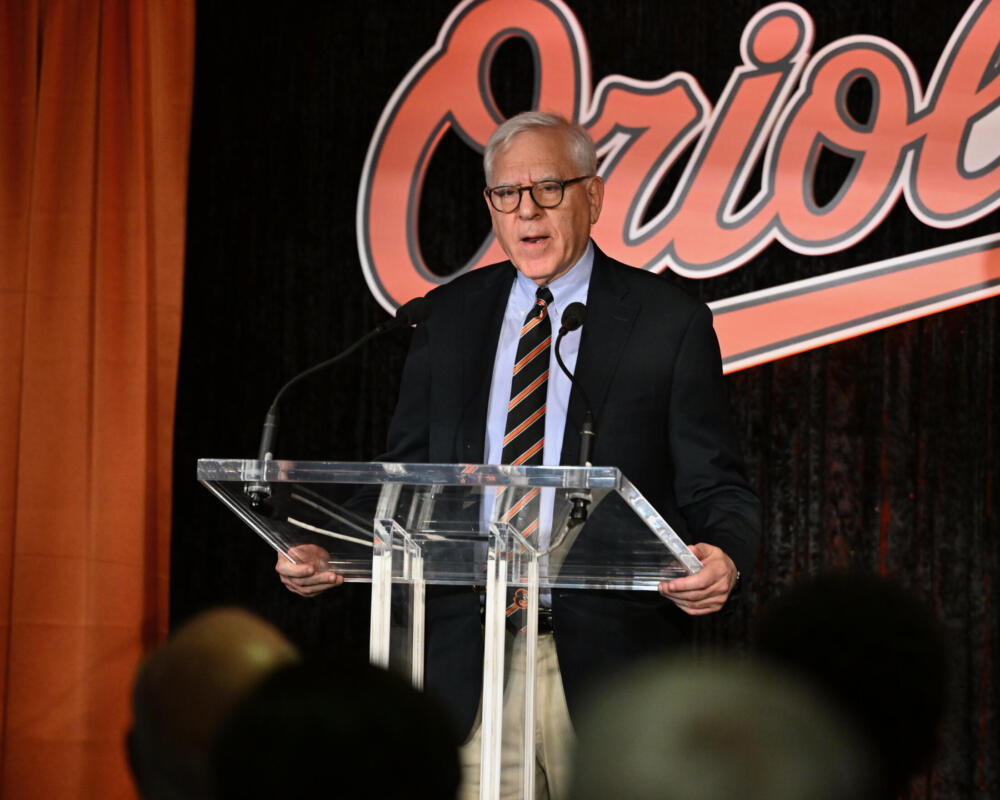
In the summer of 2023, Carlyle Group co-founder and Baltimore native David Rubenstein was in Boston giving speeches at Harvard when one of his lawyers called with news: John Angelos, amid his father Peter’s declining health, was open to selling Rubenstein full control of the Orioles. The two had met in New York a few weeks earlier.
The asking price, relayed through lawyers, was around $1.7 billion—much more than Rubenstein expected to invest, and more than he’d ever personally put into a single company. He decided to walk around Boston to think it over.
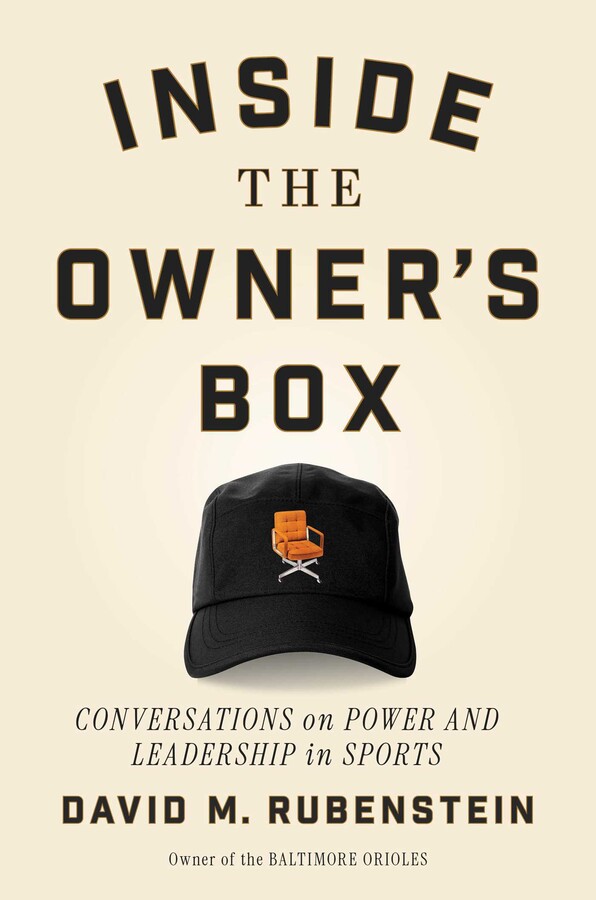
“I realized that an opportunity to buy one’s hometown baseball team does not come along frequently,” Rubenstein writes in Inside the Owner’s Box: Conversations on Power and Leadership in Sports, one of two books he’s releasing this fall. He notes that his biggest financial regrets were investments he passed on, like an early chance to buy into Facebook, and selling a stake in Amazon too soon. “I thought that I should try to make the purchase happen. I would not likely get this chance again.”
After months of negotiations that nearly fell through, Rubenstein and a group of investors agreed to buy the team in January 2024. They formally took control on the eve of Opening Day, four days after Peter Angelos died at 94.
As the transition approached, Rubenstein did what he does before every interview for his television shows on Bloomberg, PBS, and C-SPAN: He looked for a book on the person or subject, in this case sports ownership. He didn’t find anything useful.
So, in the two years since, he wrote his own, interviewing 14 other pro sports owners—including the New England Patriots’ Robert Kraft, the Philadelphia Eagles’ Jeffrey Lurie, the Washington Wizards and Capitals’ Ted Leonsis, and the Chicago Cubs’ Tom Ricketts—about why they got into the game and how they run their teams. Released Sept. 22, Inside the Owner’s Box is a breezy read that explores Rubenstein’s own account of buying the Orioles, his vision for the team, and how owning it fits into the 77-year-old’s varied life.
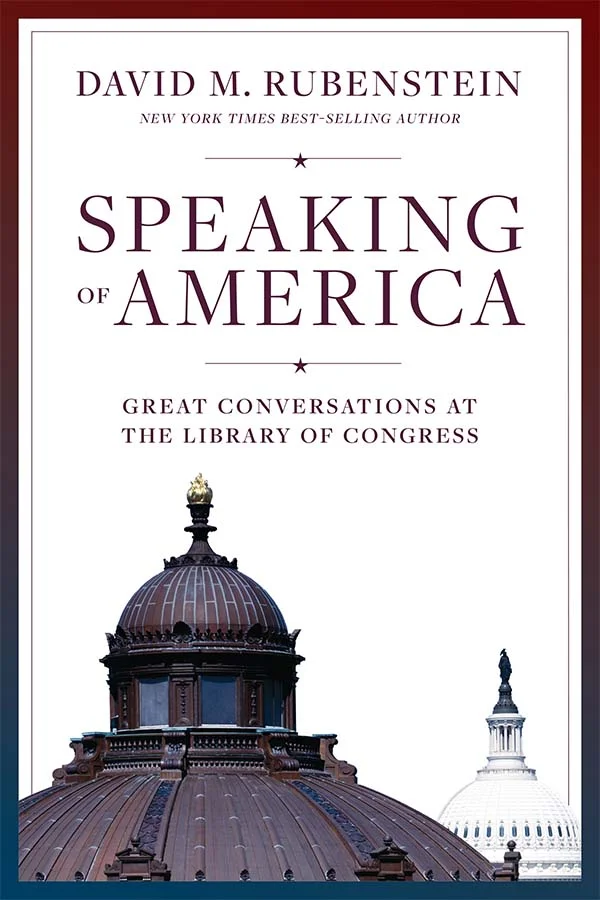
To that end, on Oct. 6, he releases a second book, Speaking of America: Great Conversations at the Library of Congress. This one is a collection of interviews from the Congressional Dialogues—a decade-old series of closed-door dinners hosted by Rubenstein, where members of Congress from all parties listen in as he interviews historians, authors, and business leaders.
Last week, we spoke with Rubenstein from his Carlyle office in Washington, D.C. —before news broke about fresh layoffs at the Warehouse, including to the person who plays the role of Mr. Splash and sometimes the Oriole Bird. He discussed both books, why he keeps writing and interviewing, and his Orioles tenure three seasons in—the last two without a playoff appearance, prompting a restless fanbase.
Why did you decide to publish books on these two vastly different subjects—sports ownership and the Congressional Dialogues series?
When I was looking to learn more about the sports ownership business, I didn’t find that many books. You’d see them about athletes, but not about the owners as much. I wanted to write a book about what it was like to be an owner and how I came to be an owner, and then interview other owners about their process.
On the second book, I started this program about 10 or 11 years ago to interview prominent Americans in front of members of Congress, as a way to give them more background on American history. The dinners have been very popular because they’re convenient for them. They’re in the Library of Congress, which you can walk to underground from the congressional offices. I decided I would try to take the best of the interviews, edit them down, and put them in book form.
At this point in your life, why do you feel compelled to publish books? You donate the revenue, but what do you get out of it personally?
I think when you get older—I’m in my 70s now—you want to always be doing something that keeps your brain active. You’re told to learn a musical instrument, learn a foreign language, or do crossword puzzles, but I’m not good at any of those. So my device is to conduct interviews. Preparing for the interview, sparring with the person when you’re doing the interview, and then editing it down. It’s kind of an anti-aging process, I suppose.
With Inside the Owner’s Box, was there any reluctance to write a book about sports ownership, given that it’s more public than your other businesses?
It is amazing. At Carlyle [Global Investment Management Firm], we’ve bought hundreds of companies over the years. In 40 years or so, virtually nobody has asked me about any of them. And the companies are big—they’re multibillion-dollar companies in some cases. Sports is where I think everybody’s got an opinion, everybody’s interested, and you get much more criticism.
When you’re writing a book that more people are going to read, you realize—unless you’ve won the World Series every year—people are going to criticize you. You realize you’re probably not going to get perfect reviews. So, yes, there was a reluctance. There was also a reluctance to comment on certain subjects that probably are not in my area of expertise. So I didn’t comment on everything I could have about baseball or sports.
What are a couple of things you gleaned from other owners that might inform your work with the Orioles now? As I was reading, I noticed you asked a lot about how hands-on other owners were with the team, if they visited the clubhouse, that sort of thing.
I’ve taken away that really good owners care about winning more than they care about making money, though they also don’t want to lose money. Really good owners have an obsession with the sport and their team. They really follow it. They pay a lot of attention to it. Really good owners are a little nervous about getting too close to players, because they might have to trade them or negotiate. There are good relationships between some players and owners, but every owner doesn’t think it’s their job to be the best friend of an athlete.
I’ve also learned that people pay a lot of attention to the sports world, as I mentioned earlier, and it’s hard to please everybody. You’re going to get the emails telling you your stadium’s knishes are not good enough, or the hot dogs don’t have the good relish, or whatever it might be. And you’re in the business of trying to make people happy, so you’ve got to take into account what people say and try to listen to them. It’s an interesting phenomenon. It gets you much more attention than maybe anything else.
“Really good owners care about winning more than they care about making money.”
You’re three seasons into owning the Orioles and the team has missed the playoffs the last two years. Do you feel like the honeymoon period is over?
I’m not being booed when I walk into the stadium, but I have to be honest, as I pointed out in the book, the team that I bought was in first place in the American League East the year before we bought them. The next year, the first year of our control, they finished second place in the American League East and got in the playoffs, but lost both games in the Wild Card series.
The last two years, we’ve not been that successful. [The Orioles went 75-87 in 2025, a season in which they fired manager Brandon Hyde in May. This season, under first-year manager Craig Albernaz, they finished 79-82 and were eliminated from playoff contention Sept. 24.]
It’s frustrating. It’s very difficult to feel you put a lot of energy into something, and you’ve hired a lot of good people, and you’ve increased salaries, you’ve done a whole bunch of things to make the stadium better, but you still haven’t done what everybody wants, which is to do well on the field. We’ve got some things we’ve got to do to get better.
You’ve said you want to win now. What’s on your agenda to get there?
In the offseason we are doing further improvements to the stadium. In terms of team performance, Mike Elias has already announced that he’s probably going to be hiring some additional people to help him.
[At his season-ending press conference Sept. 28, Elias—the Orioles president of baseball operations and general manager—said the team’s baseball operations department is among the smallest in baseball and that he wants to add “different voices,” potentially including a general manager who would report to him. The team also parted ways with former vice president of player and staff development Matt Blood and reassigned assistant GM Sig Mejdal from heading the analytics department to focus on emerging technologies.]
We’ll try to do what we can to make fans realize that the team should do better next year, and we hope that people will continue to support. My job is to be the face of that effort.
Given everything else you have going on, are you spending more or less time on the Orioles than you thought you would? Two years ago, you told me you were doing Zoom calls every week with Mike Elias. Are you now more hands-on?
That’s a complicated question, because if I say yes, then I get more blame…But the serious answer is that my partner Mike Arougheti and I have a call at least once a week with Mike Elias, and then at least once a week with Catie Griggs, who’s in charge of the business side. Then probably every few weeks or so we’ll have an in-person meeting. We’re up to speed on what’s going on and give our input.
I try to go to about 35 games a year. Mike [Arougheti] lives in New York, but he comes to Baltimore a fair bit. He’s been very involved in baseball analytics for a long time, and he was a baseball player in high school, unlike me. I peaked at Little League.
“When you get older, you want to keep your brain active. You’re told to learn a musical instrument, foreign language, or do crossword puzzles, but I’m not good at any of those. So I conduct interviews.”
Moving on to Speaking of America, what’s one interview that stands out from over the years? Your interview with former Google CEO Eric Schmidt on AI got my attention, for example.
I had to sift through probably a hundred different interviews. One of the best I did not include, because I’d put it in a previous book, was when I interviewed the Chief Justice of the United States [John Roberts]. I asked him, “Did you always want to be Chief Justice of the United States when you were young?” He said, “No. I wanted to be an American history professor. That’s all I cared about. And my father said, ‘John, you’ll starve to death. There’s no money in it.’” But he went ahead, he went to Harvard, and he majored in American history.
After spring break one year, going back to Harvard from the airport at Logan, he said to the cab driver, “Would you please take me to Cambridge?” The cab driver said, “Sure. Are you a student at Harvard?” “Yes, I am.” “What are you majoring in?” “Majoring in American history.” The cab driver said, “Well, that’s interesting. When I went to Harvard, I majored in American history also.” So John realized maybe he shouldn’t be an American history major.
In Eric’s Schmidt’s case, I’ve known him a long time. He wrote a book on artificial intelligence with somebody who at the time was about 98 years old, [former Secretary of State] Henry Kissinger. So that was interesting that they were able to work together, and that Kissinger at that age was still interested in learning.
How do you prepare for these interviews?
I take a look at other interviews the person has done already. Then I prepare the questions in my mind, and always listen to what the person’s saying so I can pivot if I hear something I didn’t expect. Interviewing somebody in front of members of Congress is a little tricky, because members of Congress are not used to sitting silent while somebody else is doing the talking. So we always allocate time for them to ask questions, and they often ask pretty good ones.
Do you sense that members of Congress behave differently in that sort of setting?
Well, yes, because no press is there, so they don’t have to worry that somebody’s going to see them fraternizing or talking to somebody from the opposite party, which in Washington these days is not a way to advance one’s career. I’d say we have a lot of younger members now attending, probably 85 percent are from the House and maybe 15 percent from the Senate. We get members of leadership show up. Nancy Pelosi used to come a lot. Chuck Schumer comes a fair bit.
There were a couple of people from the Maryland delegation who, when they were members of Congress, came to every one. Senator [Ben] Cardin and his wife came to almost every one of the dinners. Congressman [Dutch] Ruppersberger from Baltimore County came to every single one. John Sarbanes. Most of those people, after the dinner, would have to drive back to Baltimore or someplace in Maryland, but they were still willing to do it.
This interview has been edited for length and clarity.