Travel & Outdoors
TRAVELERS FANTASIZE ABOUT VISITING the Seven Natural Wonders of the World, an uber-ambitious bucket list beyond the reach of most mere mortals. (Who can endure, let alone afford, a trek up Mount Everest?) Even visiting Mother Nature’s U.S. marvels would have you pinballing between Alaska and Florida, Maine and California, and many points in-between.
Focus instead on the Mid-Atlantic. You’ll find a gorge nearly as grandiose as the Grand Canyon. You’ll discover deep, dark, old-growth forests that rival the West Coast’s towering redwoods. Not to mention a unique body of water—the Chesapeake Bay—that beats all the Great Lakes put together (although we may be a teensy bit biased).
These trips require no more than a long fall weekend. We’ve even included a day jaunt for the time-constrained and suggested local noshes for the road. So go ahead—indulge your natural wonderlust.
Above: Beach scene at the mouth of the Chesapeake Bay.

DESPITE THE WATERWAY’S DIMINUTIVE DESIGNATION, Pine “Creek” was perfectly capable of carving a deep, 47-mile-long chasm through north-central Pennsylvania forestland some 10,000 years ago. Today, Pine Creek Gorge—aka the Grand Canyon of Pennsylvania—is a marvel, whether you’re peering from picturesque parks on either rim or following a famous trail through the gorge itself.
On the canyon’s east rim, Leonard Harrison State Park has a newly enhanced visitor center with improved overlook access. Guided walks explore the watershed, astronomy, and the gorge’s spectacular fall colors. Hike the short Overlook Trail or the rigorous-but-beautiful Turkey Path Trail one mile to the gorge below (and back). The park has roadside overlooks, as well as viewfinders for colorblind visitors to appreciate fall foliage, too.
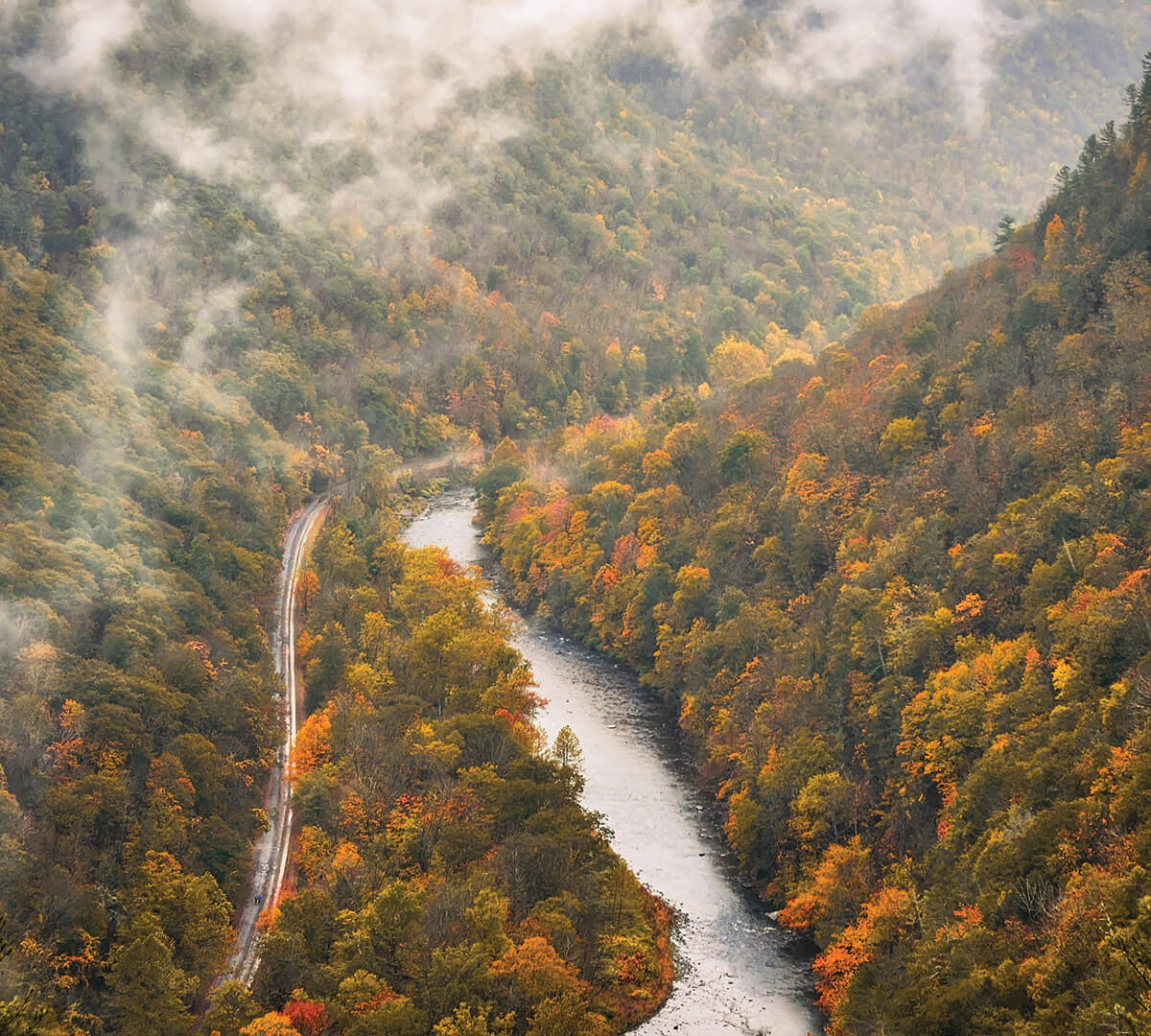
Misty mountaintop
view of Pine
Creek and the Pine
Creek Rail Trail.
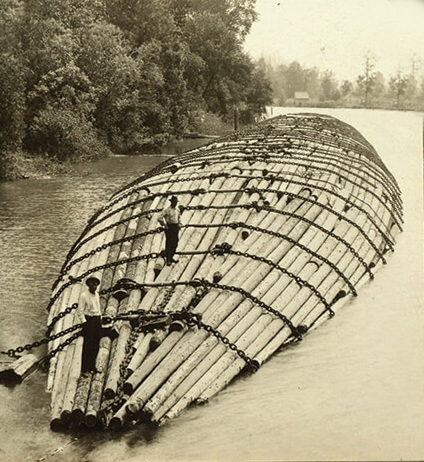
1800s
log rafts.—Wikimedia Commons/The New York Public Library
On the west rim, rustic Colton Point State Parkwas built in the 1930s by the Civilian Conservation Corps, whose handiwork survives. With scant roadside parking, vistas here are best accessed on foot via four miles of trails like the Rim Trail or Colton Point’s Turkey Path Trail, another gorge descent. This one passes a 70-foot, cascading waterfall.
A Native American footpath-turned-timber- toting-railway-turned-recreational mecca, the 62-mile Pine Creek Rail Trail welcomes hikers, cyclists, and horseback riders. At peak color (through mid-October), admire the gorge’s forested flanks on a two-hour wagon ride with Western-garbed guides. You’ll learn about local history, and native flora and fauna. Watch for bald eagles.
In the 1800s, rafts laden with logs floated down Pine Creek to awaiting sawmills. Bob in history’s wake on a guided whitewater rafting trip along this official Pennsylvania Scenic River over Class II and III rapids. Feeling less adventurous? Tour the placid Upper Pine by kayak.
PINE CREEK GORGE, PENNSYLVANIA
Here to There: 4 HRS

ROAD SNACK
Sugar Mama’s Sap Sucker maple lollipops.

SAVOR
The Roost, a Wellsboro pub with a rustic-chic vibe, offers eclectic fare from steaks and cedar-planked salmon to tikka masala. Fry Brothers’ Turkey Ranch began serving turkey dinners in 1939 atop Steam Valley Mountain. Its Thanksgiving-style dinners still come with dressing, gravy, and cranberry sauce, plus rainbow sherbet.

STAY
Bear Lodges, a trio of Wellsboro inns, present a Goldilocks-worthy choice of lodgings: an in-town location near shopping and dining; the Meadows Lodge with its panoramic canyon vistas; and the Mountain Lodge, which rail-trail cyclists deem “just right.”

COVERING MORE THAN four million acres and 15 counties, the Lumber Heritage Region honors northern Pennsylvania’s hardwood industry. Yet in this sea of harvestable timber, sacred spaces also exist—awe-inspiring virgin forests. Of the East’s original forests, fewer than one percent remain, according to Maryland ecologist Joan Maloof, founder of the Old-Growth Forest Network. And they’re well worth seeking out.
A National Natural Landmark, Cook Forest State Park's Forest Cathedral became the first forest enrolled in Maloof’s Old-Growth Network. Its stands of eastern hemlock and white pine—150 to 400 years old—are without rival in the Northeast, some soaring to nearly 200 feet. Take the Longfellow Trail (one of eight Cathedral paths) to explore this solemn, time-honored grove. One of the forest’s oldest trees, now fallen, is a 439-yearold cucumber magnolia. The park leaves them in the woods to decay naturally so visitors can still appreciate them—and even count their rings.
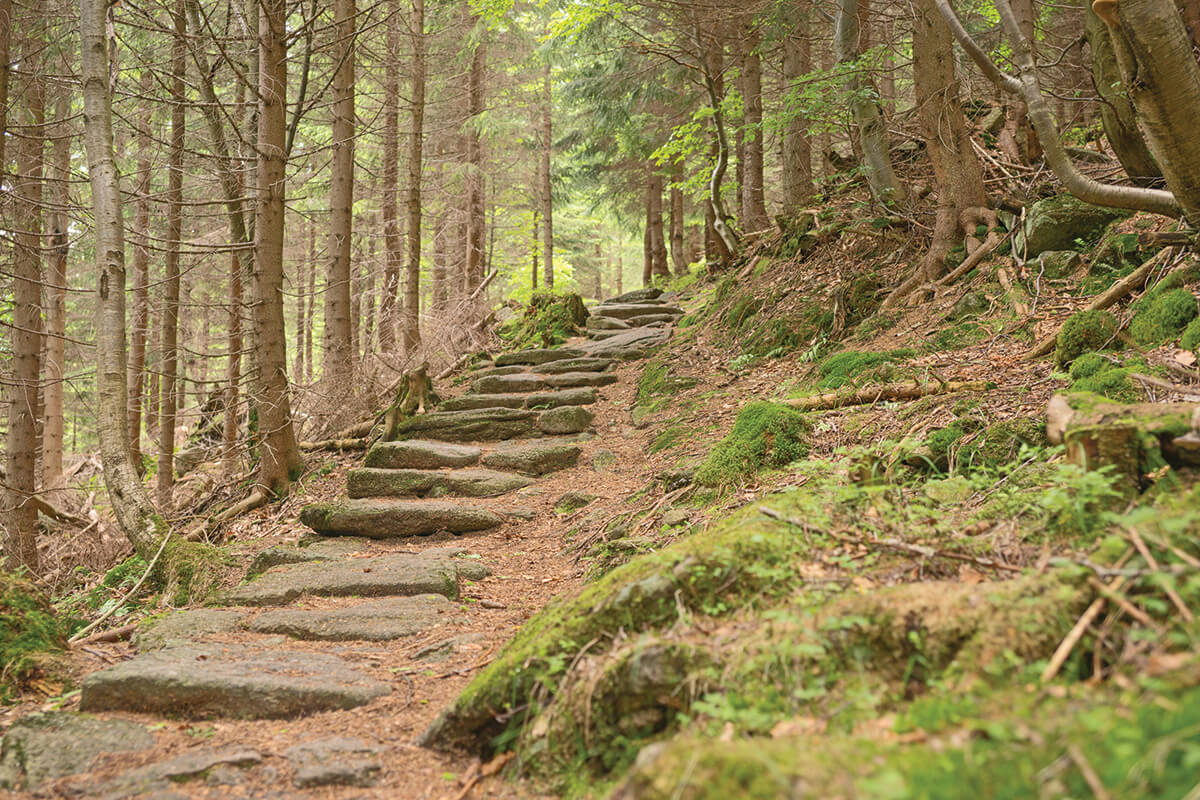
Cathedral path
at Cook Forest
State Park.
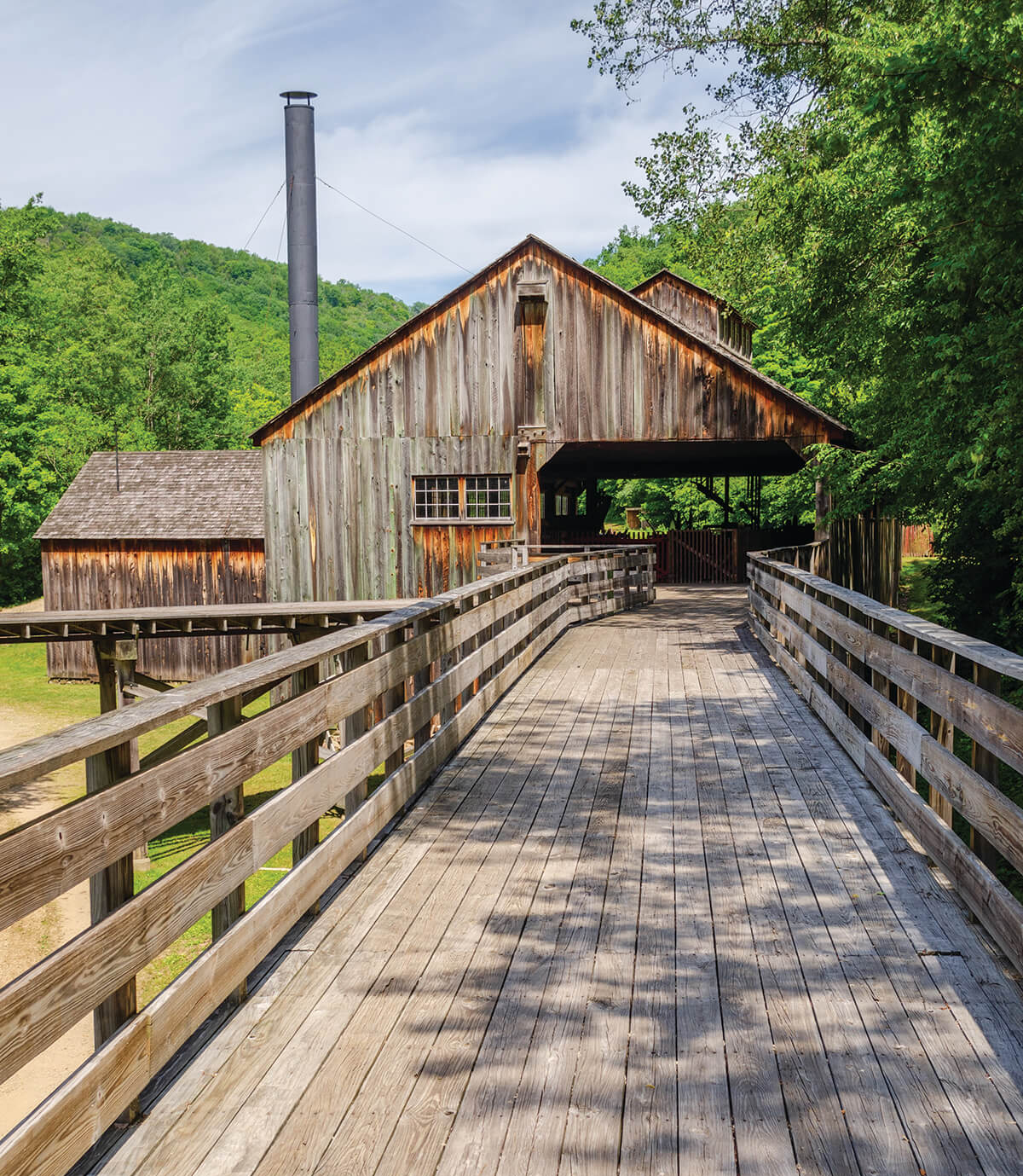
The Pennsylvania
Lumber
Museum.
Forty miles north of Cook Forest State Park,Hearts Content National Scenic Area in Allegheny National Forest has 120 acres of old-growth forest, including a 20-acre stand of white pine and eastern hemlock 300 to 400 years old. Spared by a lumber company in the 1800s, the area is a National Natural Landmark. A one-mile interpretive trail better acquaints visitors with these towering “ancients.”
The past, present, and future of Pennsylvania forests come to life at the not-to- be-missed Pennsylvania Lumber Museum in Ulysses. The visitor center’s main exhibit explores lumbering history, the devastation and revival of Pennsylvania forests, and current forestry management practices. The museum’s campus includes a re-created lumber camp, an operating sawmill, and an original Civilian Conservation Corps-built cabin. Ask about the self-guided lumber history tours for hikers.
LUMBER HERITAGE REGION, PENNSYLVANIA
Here to There: 4.5 HRS

ROAD SNACK
Clarks (“Proudly Misshapen”) Donuts.

SAVOR
Begin a day of tree-peeping with cups of joe from Canyon Coffee Co., a friendly cafe in the college town of Clarion. Tucked among the trees near Cook Forest, The Forest Nook is a local favorite for rib-sticking dinners. Weekend reservations are a must.

STAY
Let the forest be with you at night, too. Gateway Lodge, a venerable nature-inspired retreat, offers luxury rooms and deluxe cabins in the middle of Cook Forest. Enjoy rainfall showers, fireplaces, jetted hot tubs, a restaurant, and roomdelivered breakfasts, among other amenities.

HIGH IN THE ALLEGHENY MOUNTAINS, just west of the Eastern Continental Divide, lie two of the region’s most picturesque waterfalls. Each is the tallest of its kind in its state. Both boast a trio of falls. Better yet, Maryland’s Muddy Creek Falls and West Virginia’s Blackwater Falls are virtually engulfed by colorful forests in the fall.
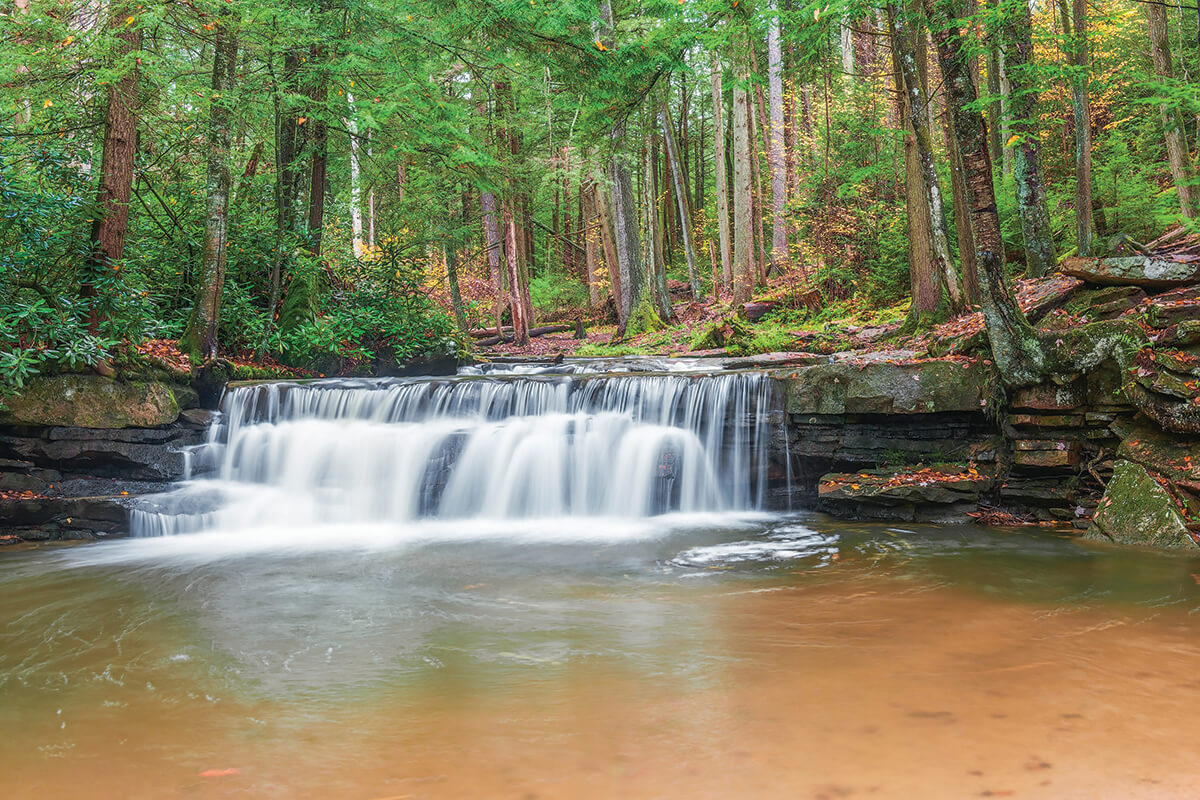
The Youghiogheny River courses through Swallow Falls State Park in Oakland, powering its distinctive falls: Muddy Creek, Maryland’s highest free-falling waterfall at 54 feet; Swallow, a two-tier, 16-foot cascade; and wee Tolliver, whose inviting pool and beach are worth visiting. A 1-mile-plus falls loop trail leads past the site where Henry Ford, Thomas Edison, and Harvey Firestone camped more than a century ago. Don’t miss Youghiogheny Grove, a stand of virgin hemlock and white pine.
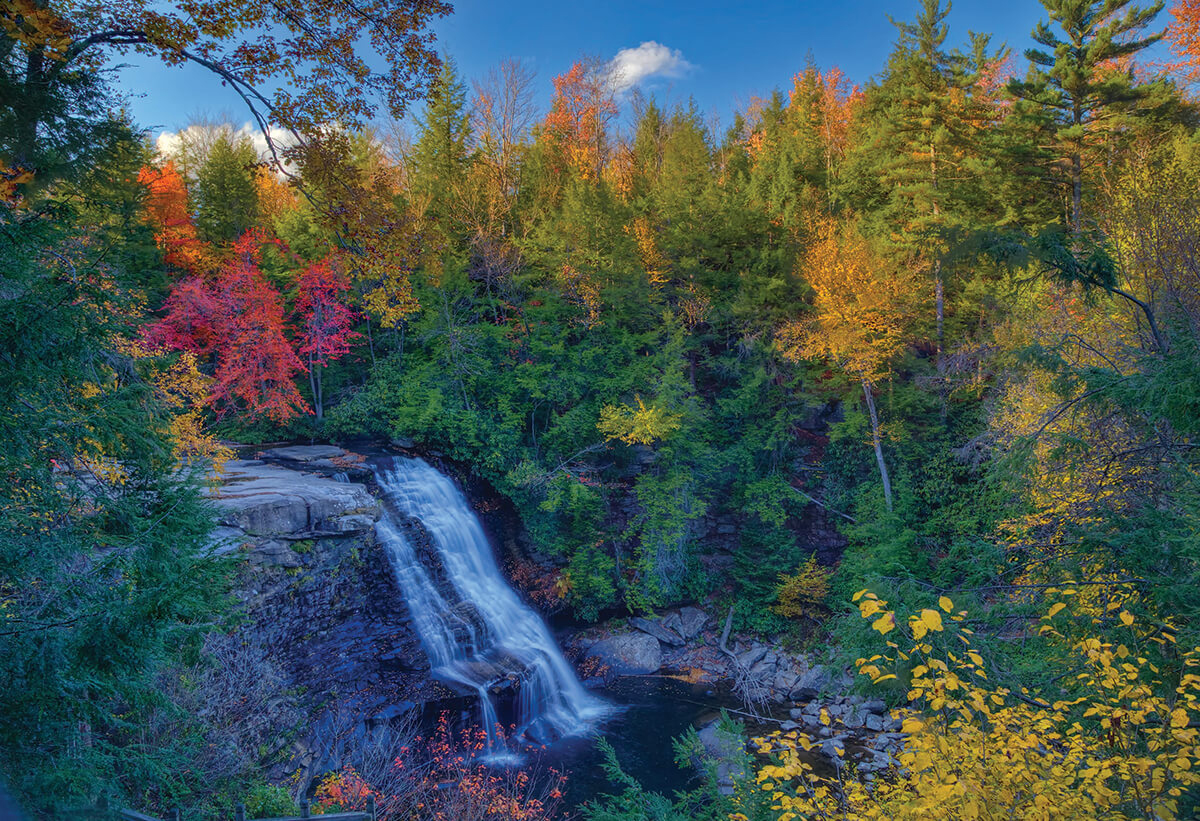
Blackwater Falls State Park
waterfall.
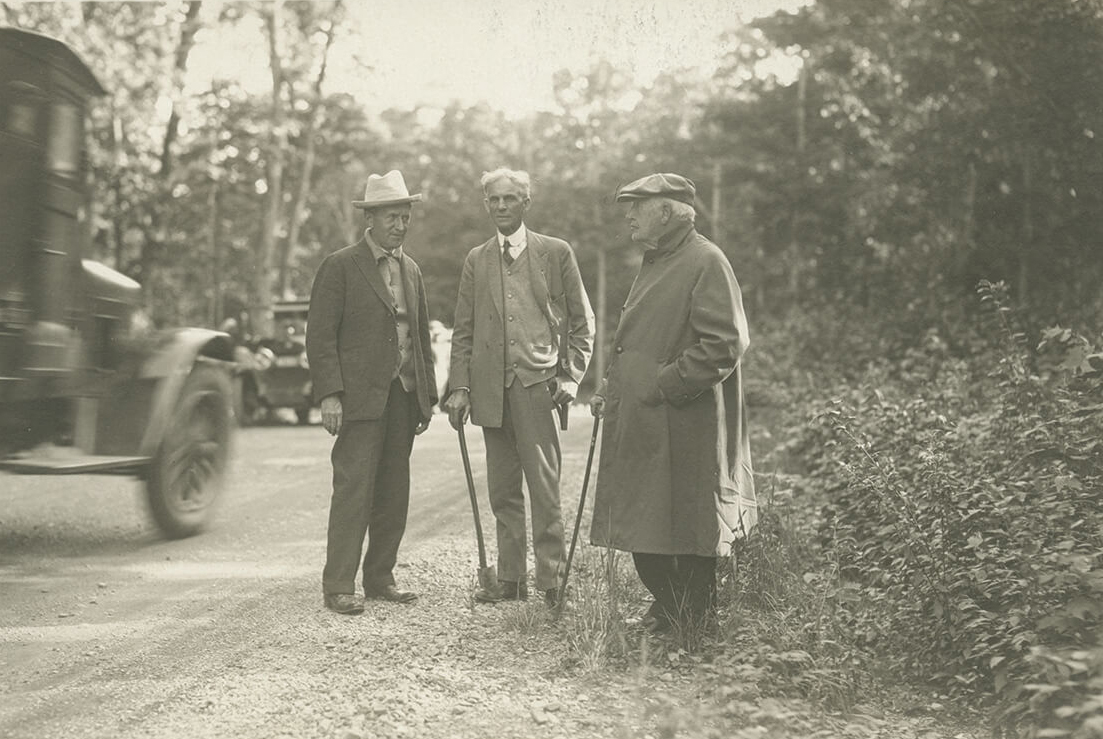
Thomas Edison,
Henry Ford, and Harvey Firestone
on an area camping trip. —COURTESY OF THE HENRY
FORD MUSEUM
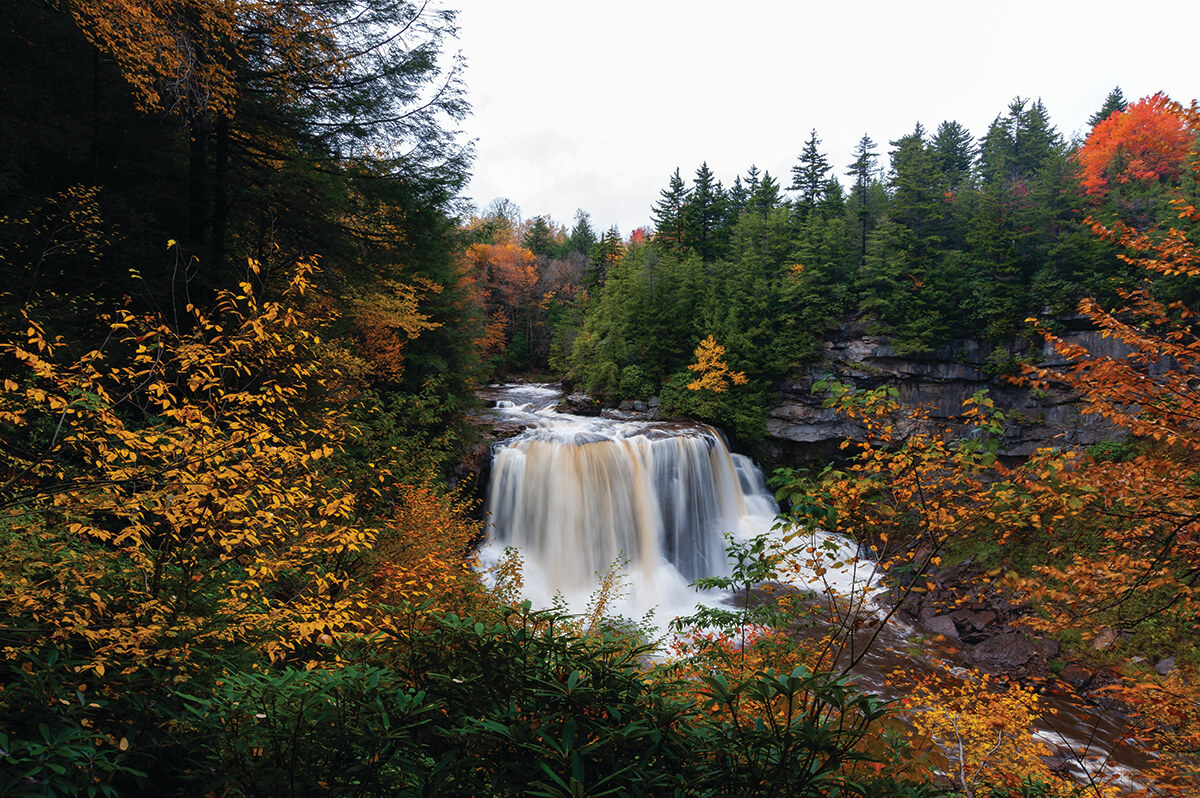
Tinted with hemlock and red spruce needles, the Blackwater River provides the highlight at Blackwater Falls State Park across state lines in West Virginia: its eponymous 57-foot cascade. While it’s one of the Mountain State’s most photographed spots, it’s not the only gem here. Elakala and Pendleton falls and the 3,000-foothigh Lindy Point overlooking Blackwater Canyon are Instagram-worthy, too. View Blackwater Falls from an overlook, descend 200 stairs to splash level, or hike 20 miles of trails. Don’t miss the Almost Heaven Swing, an oversized perch for scenic selfies.
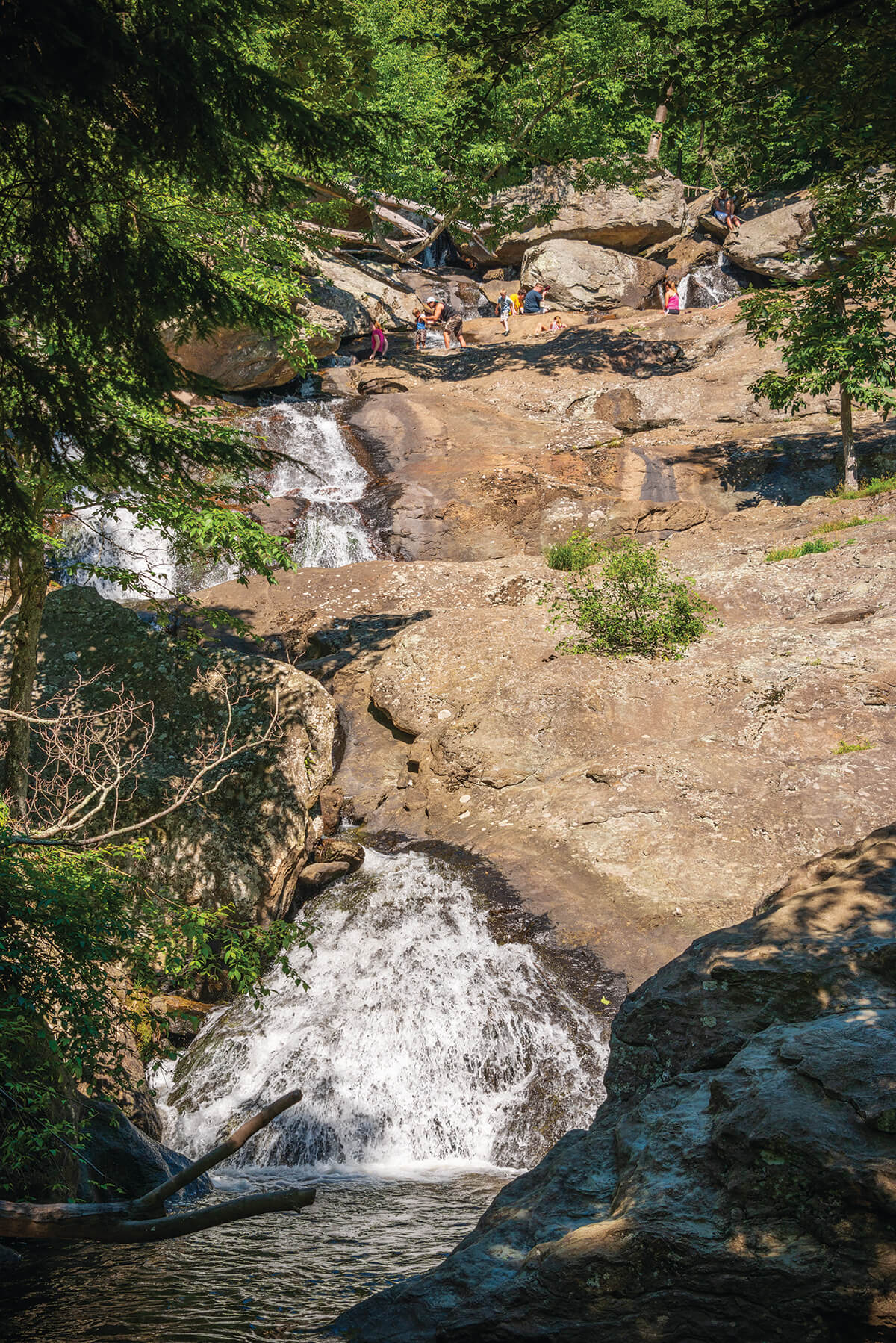
Closer to home, the title of tallest Maryland waterfall goes to Cunningham Falls, a 78-foot cascading cataract in Cunningham Falls State Park near Thurmont. On your way to or from Swallow Falls, the park is a brief detour off I-70. Fed by a creek and small streams in the Catoctin Mountains, the falls can dwindle considerably in drier months. If so, you can also visit the Maryland Department of Natural Resources’ Scales and Tales aviary here.
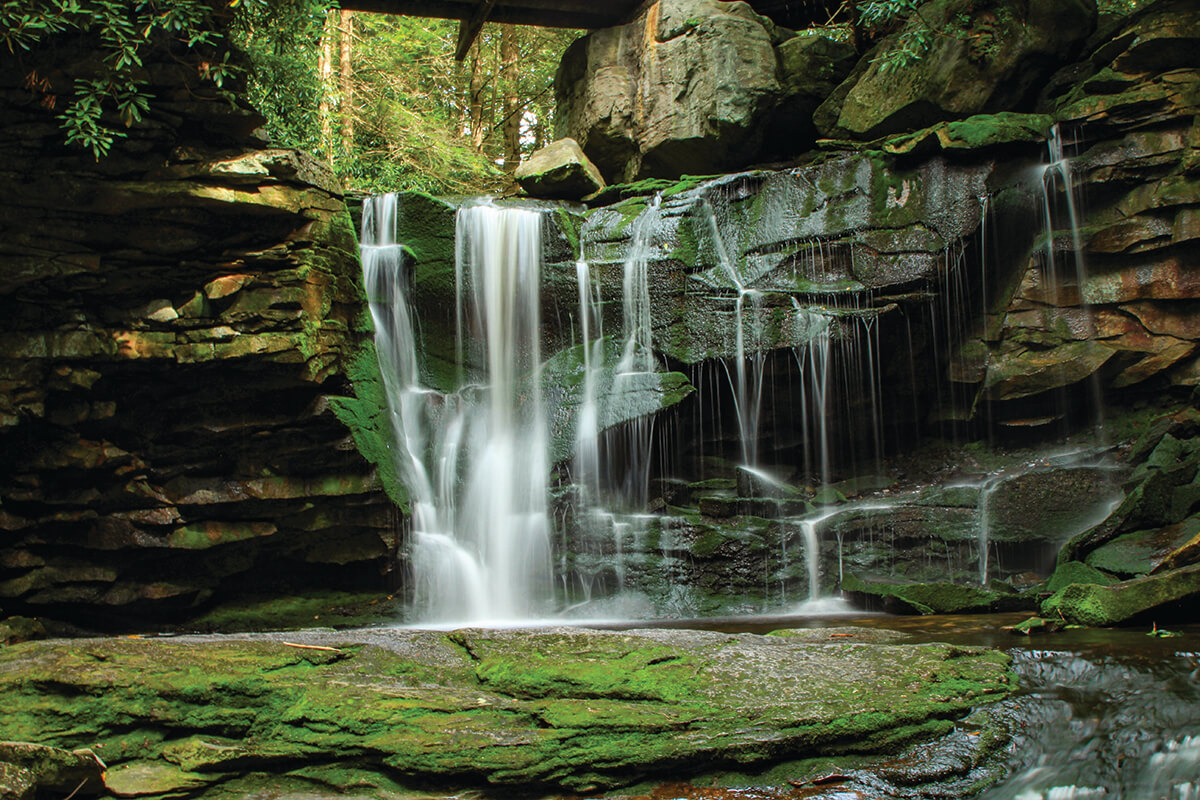
Elakala
Falls at Blackwater Falls
State Park.
Tolliver
Falls at Swallow Falls
State Park.
Catoctin
cataract at Cunningham
Falls State Park.
Swallow
Falls at Swallow Falls
State Park.
OAKLAND, MARYLAND & DAVIS, WEST VIRGINIA
Here to There: 3 HRS

ROAD SNACK
Pepperoni rolls, an Appalachian Trail hikers’ treat.

SAVOR
The outdoorsy Pawn Run Bar + Kitchen near Oakland serves small plates (crostini, street tacos, flatbreads) and craft beverages plus live music. Guests at the Purple Fiddle in Thomas, West Virginia, also get heaping helpings of foot-tapping acoustic music at this cafe-style bar four miles from Blackwater Falls.

STAY
In Maryland, the renovated Cove Creek Lodge (formerly the Inn at Deep Creek) has gone upscale with 29 remodeled rooms and suites, some dog-friendly. The lakeside hotel’s amenities include a guests-only cocktail lounge. The pooch-welcoming Lodge at Blackwater Falls offers 51 rooms (many with canyon views) and boasts a restaurant, and snack bar.

FLANKED BY MISTY MOUNTAIN RANGES, dotted with flourishing farms, orchards, vineyards, and historic towns, the Shenandoah Valley is plenty scenic. And trust us, its subterranean landscape is equally picturesque. Long ago, curious country boys stumbled upon astonishing limestone caverns here. Today, they’re a tourism mainstay.
A rare combination of seismic activity and underground rivers created Shenandoah Caverns in Quicksburg. Don’t miss the Grotto of the Gods, Diamond Cascade (a popular wedding venue), and a unique formation dubbed “cave bacon”—undulating, draped stalactites streaked with red and white. Up top, there’s elevator service and, oddly enough, a separate museum dedicated to parade floats.
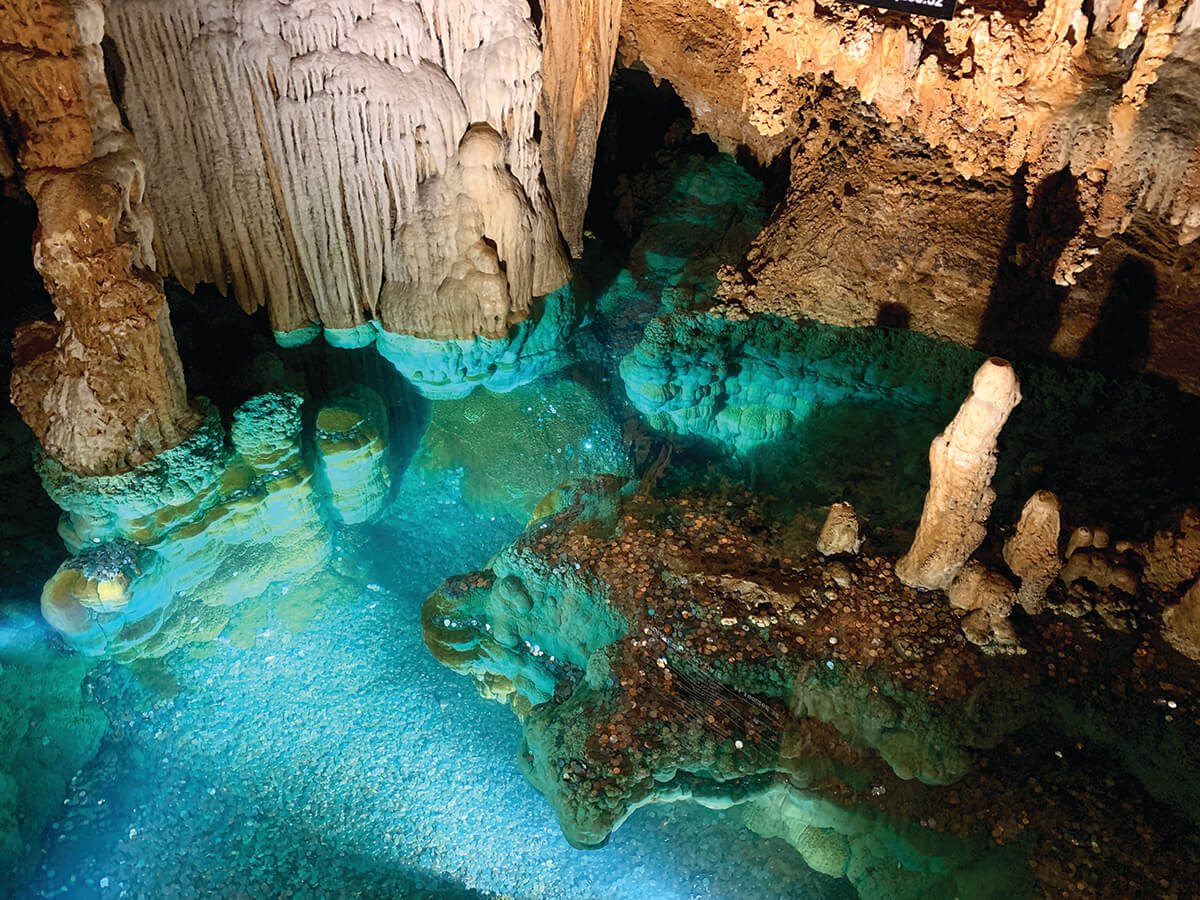
Luray
Caverns
wishing well.
The valley’s most visited showpiece, Luray Caverns—a National Natural Landmark—boasts rooms the size of old-world cathedrals, pools that mirror their intricate surroundings, and limestone columns as tall as flagpoles. Tunes from its 3.5-acre Great Stalacpipe Organ echo eerily throughout the void. For the cave-averse, don’t miss the add-on of a vintage car museum above ground.
Nearly 150 years ago, two boys chasing a rabbit discovered an underground labyrinth whose terminus has yet to be found. New Market’s Endless Caverns feature nearly six miles of twisting passageways opening onto rooms filled with stalactites and flowstone. We have yet to probe its farthest reaches. (Maybe the bunnies have.) The caverns also boast an RV resort and rental cottages.
Another National Natural Landmark, Grand Caverns in Grottoes is the nation’s oldest continually operating show cave. Since 1806, visitors have marveled at Cathedral Hall, which rises multiple stories high. Specialty guided trips include candle-lit history tours, geology tours, and spelunking treks where visitors get to crawl, climb, and squeeze through an undeveloped cave.
SHENANDOAH VALLEY, VIRGINIA
Here to There: 3 HRS
ROAD SNACK
Route 11 Potato Chips.

SAVOR
At Muse's river-adjacent vineyard near Woodstock, limestone soils and hillside terrain yield terrific terroir. Its delightful drive (through woods, over a narrow bridge) is as mood-mellowing as a glass of its award-winning Cabernet Franc. Also get to Fulks Run Grocery in tiny Fulks Run for the best fried-ham sandwich you’ll ever eat: sugar-cured, house-made, and piled high. This is Virginia, after all.

STAY
Cloister with nature at the Bally Brook Farm glamping retreat near Tom’s Brook. Its lone platform tent offers solitary luxe camping for one or two: queen-size bed, heated shower, farm-to-fireside meals, and stunning mountain views. You can even “ruff it” with your pooch.

THE NATION’S MOST DENSELY POPULATED STATE includes the largest open space on the eastern seaboard. Go figure. The Pine Barrens—aka the Pinelands National Reserve, part of the federal ecosystem protection program—comprise one million acres of precious South Jersey forest and marsh. Flora found nowhere else dwell here. As does, reportedly, the notorious “Jersey Devil,” a forest-dwelling creature of South Jersey folklore.
Batsto Village, the site of an 18th-century ironworks, makes a popular Pine Barrens entry point. The original ironworks are gone, but much of the village they spawned survived, including a mansion open for tours. Take a guided paddle here on the scenic Batsto River, which winds through the pinelands. The visitors center doubles as HQ for the surrounding 120,000-acre Wharton State Forest, home of the tiny, endangered Pine Barrens tree frog.
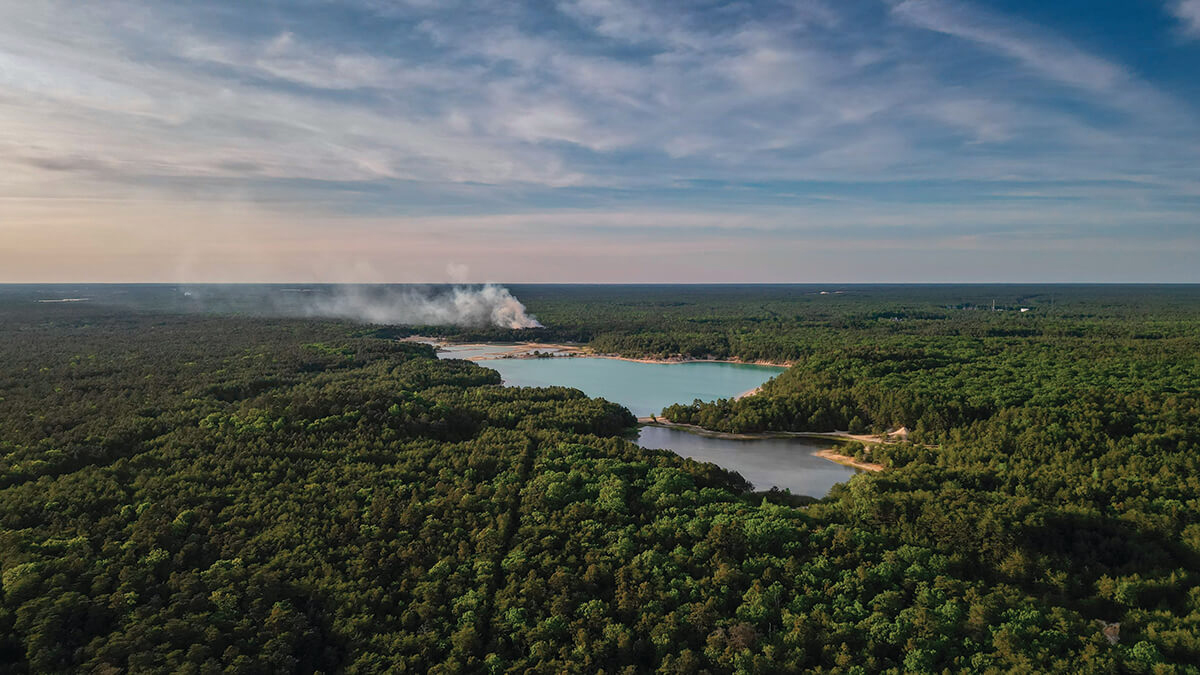
Aerial view of
the “Blue Hole” in the New
Jersey Pine Barrens.
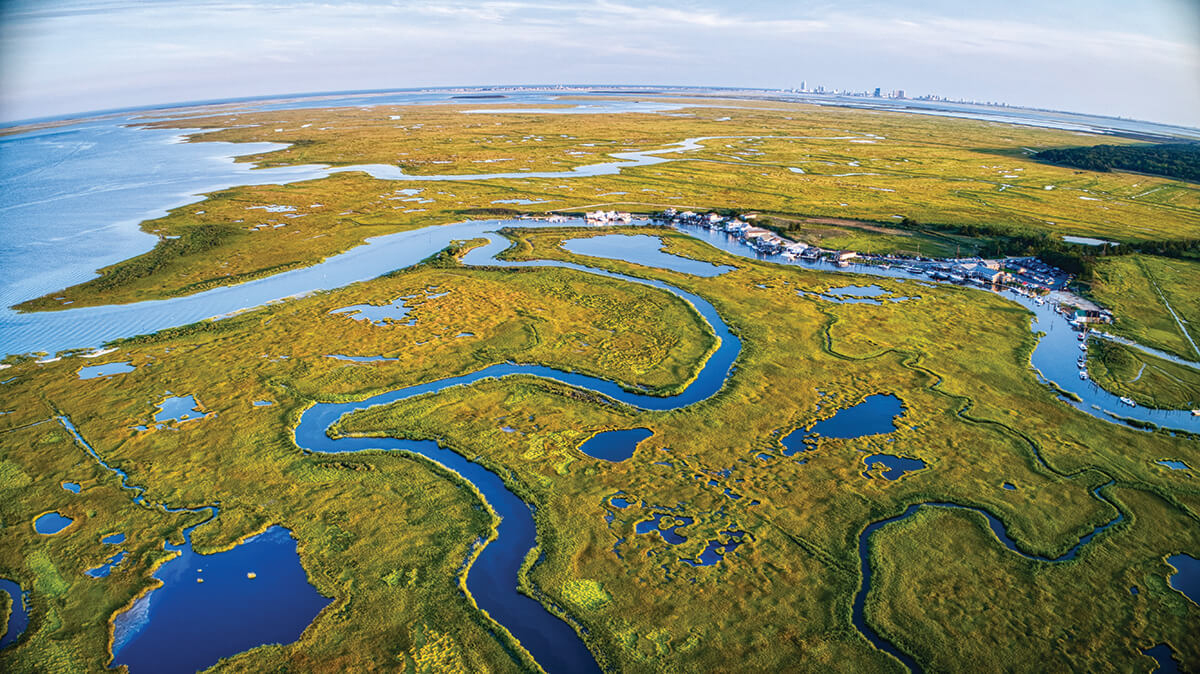
Mulica River
Delta marshland near the
Atlantic Ocean.
If it’s rare species you seek, visit Franklin Parker Preserve in Chatsworth, whose 20 miles of marked hiking and multi-use trails cross an old cranberry farm. The preserve’s habitats—including pitch pine forest and cedar swamp—shelter more than 50 rare, threatened, or endangered species such as barred owls, orchids, carnivorous plants, and Pine Barren Gentian, whose delicate blue flowers begin blooming in the fall.
The 50-plus-mile Batona Trail (short for “back to nature”) allows day hikers and backpackers to explore vast portions of the Pine Barrens. Traversing three state forests and Parker Preserve, it not only reveals the area’s natural beauty but speaks to the pinelands’ past, passing ghost towns where, centuries ago, workers made iron, glass, bricks, paper, and lumber in small-but-thriving villages.
As aforementioned, the pinelands’ most famous apparition is the New Jersey Devil, a horsefaced, cloven-hoofed, long-tailed, winged creature. If you dare, search near Leeds Point, where the devil is said to have been born to an exasperated mother delivering (and cursing) her 13th child.
THE PINE BARRENS, NEW JERSEY
Here to There: 2.5 HRS

ROAD SNACK
Atlantic City saltwater taffy.

SAVOR
Lucille's Luncheonette in Warren Grove serves all-day breakfast, sandwiches, and fresh-baked pies. The late chef Anthony Bourdain filmed an episode of Parts Unknown here, and the diner is now on Jersey’s Bourdain Food Trail. Locals love Riccardo's, a strip-mall Italian restaurant in Browns Mills that serves award-winning pizzas.

STAY
Jersey Devil Adventures, outfitters in Hammonton, partners with local businesses for camping, cabin, and bungalow rentals, including Riverview Lodges on the pinelands’ lovely Mullica River.

GRANTED, THE GREAT LAKES ARE BIG: five lakes; 10,000-plus miles of shoreline. But consider the Chesapeake Bay: five major river tributaries (and 45 or so lesser ones); more than 11,000 miles of shoreline. For every Great Lakes natural wonder—like Presque Isle’s forested headland, or laidback, carless Mackinac Island, or Sleeping Bear Dunes’ sandy shoreline—the Chesapeake can answer.
At the Bay’s tippy top, Elk Neck Peninsula thrusts like a bowsprit 100 feet above the headwaters of the nation’s largest estuary. Admire the breathtaking panorama from the lantern room of Turkey Point Lighthouse, one of the Chesapeake’s most historic beacons. Elk Neck State Park covers the peninsula’s mostly forested southern tip, a birding hotspot, particularly in the fall, when migrating raptors congregate.
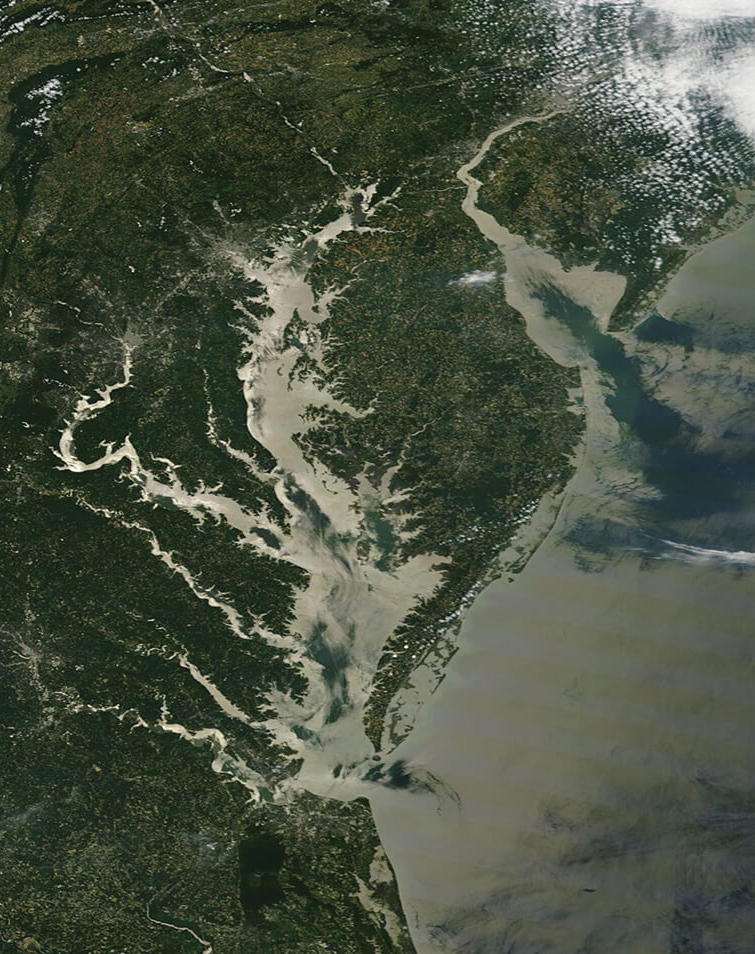
Satellite
view of the Chesapeake
Bay basin. —Wikimedia Commons/NASA
On Smith Island, Maryland’s only inhabited offshore island, life’s pace is decidedly slower—for visitors anyway. Watermen depart early from the docks, but golf carts and bicycles are the only other “traffic.” (Smith is almost entirely car-free.) It’s a wonderful place to unplug and savor the Land of Pleasant Living: fresh seafood, charming villages, marshes rife with wildlife—and, natch, that delectable, multi-story dessert, Smith Island Cake.
Shhhh. Not many people visit Savage Neck Dunes near Cape Charles on Virginia’s Eastern Shore. But at the bottom of the Delmarva Peninsula, this almost-300-acre nature preserve contains Chesapeake Bay’s tallest sand dunes—rising up to 50 feet. A nearly mile-long trail leads from the small parking lot through maritime forest to the wild beach, where the rare northeastern beach tiger beetle scampers. In fall, watch for migrating songbirds, too.
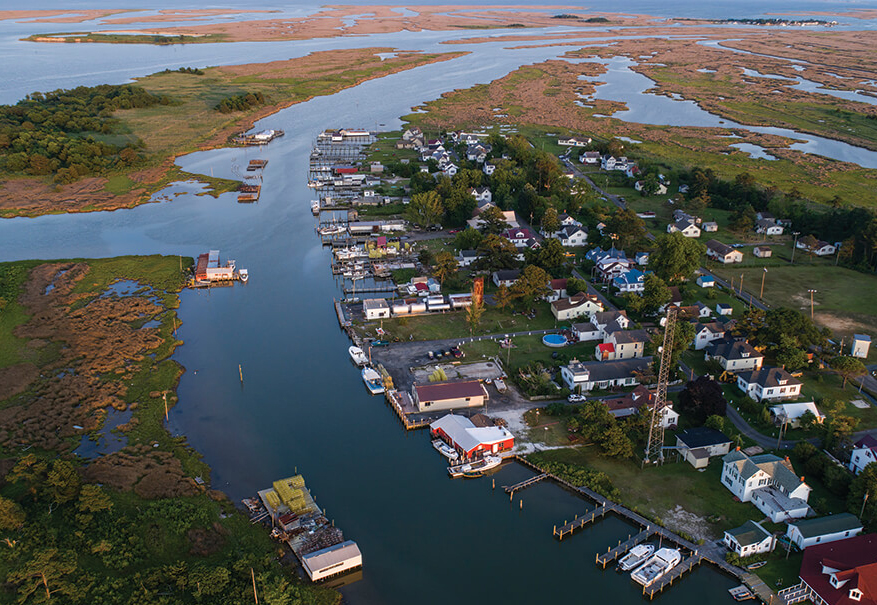
Aerial
view of Smith Island. —Photography by Jay Fleming
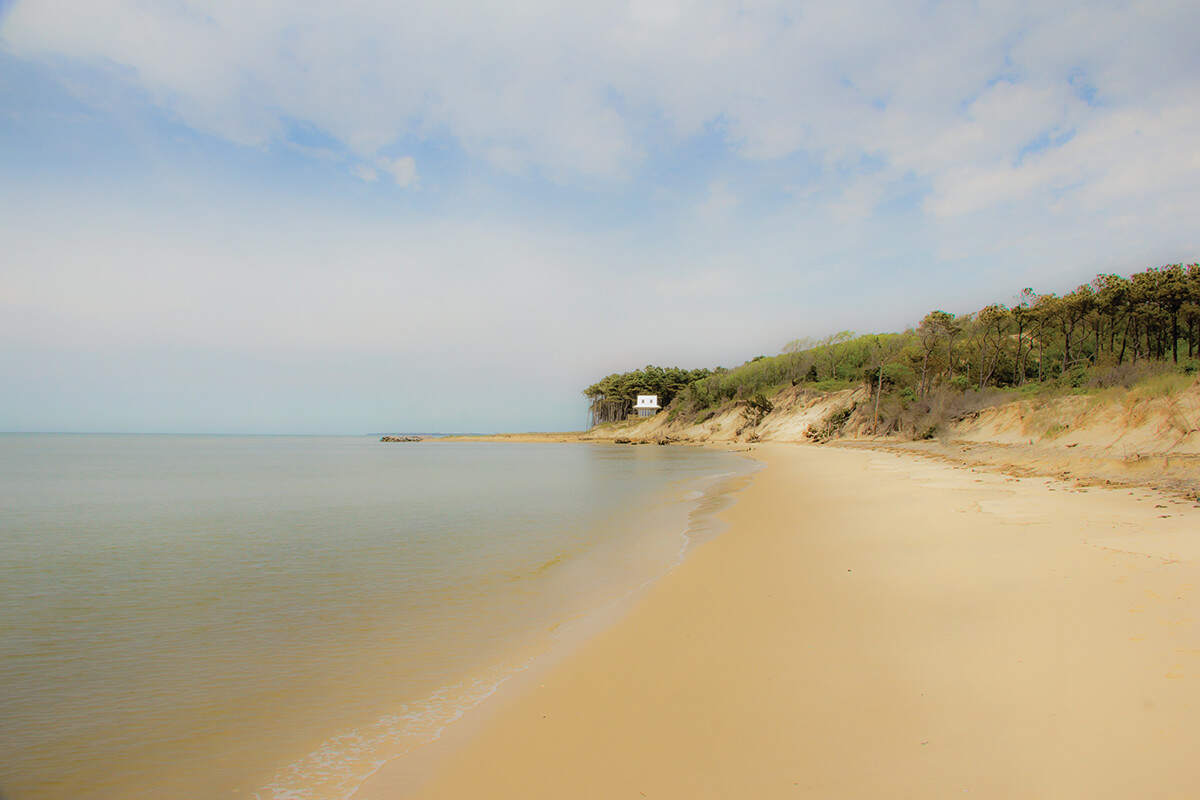
Savage Neck Dunes.
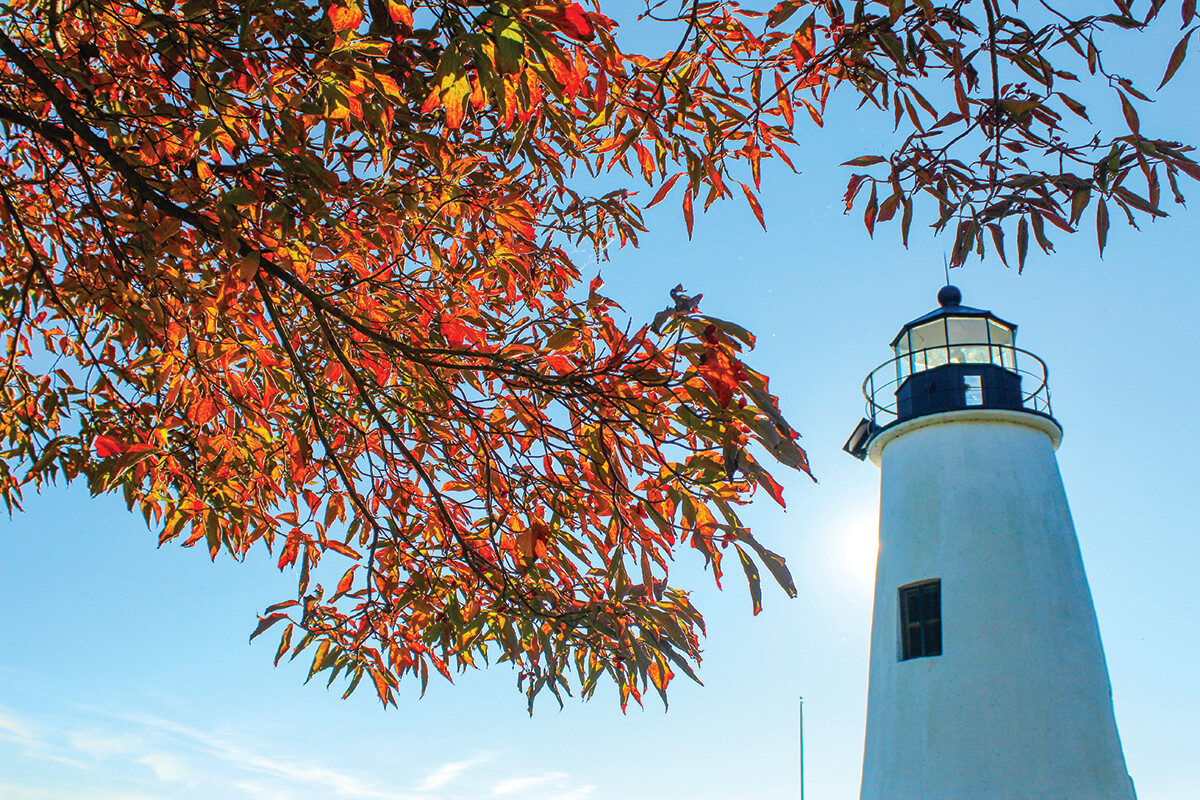
Turkey Point Lighthouse
in autumn.
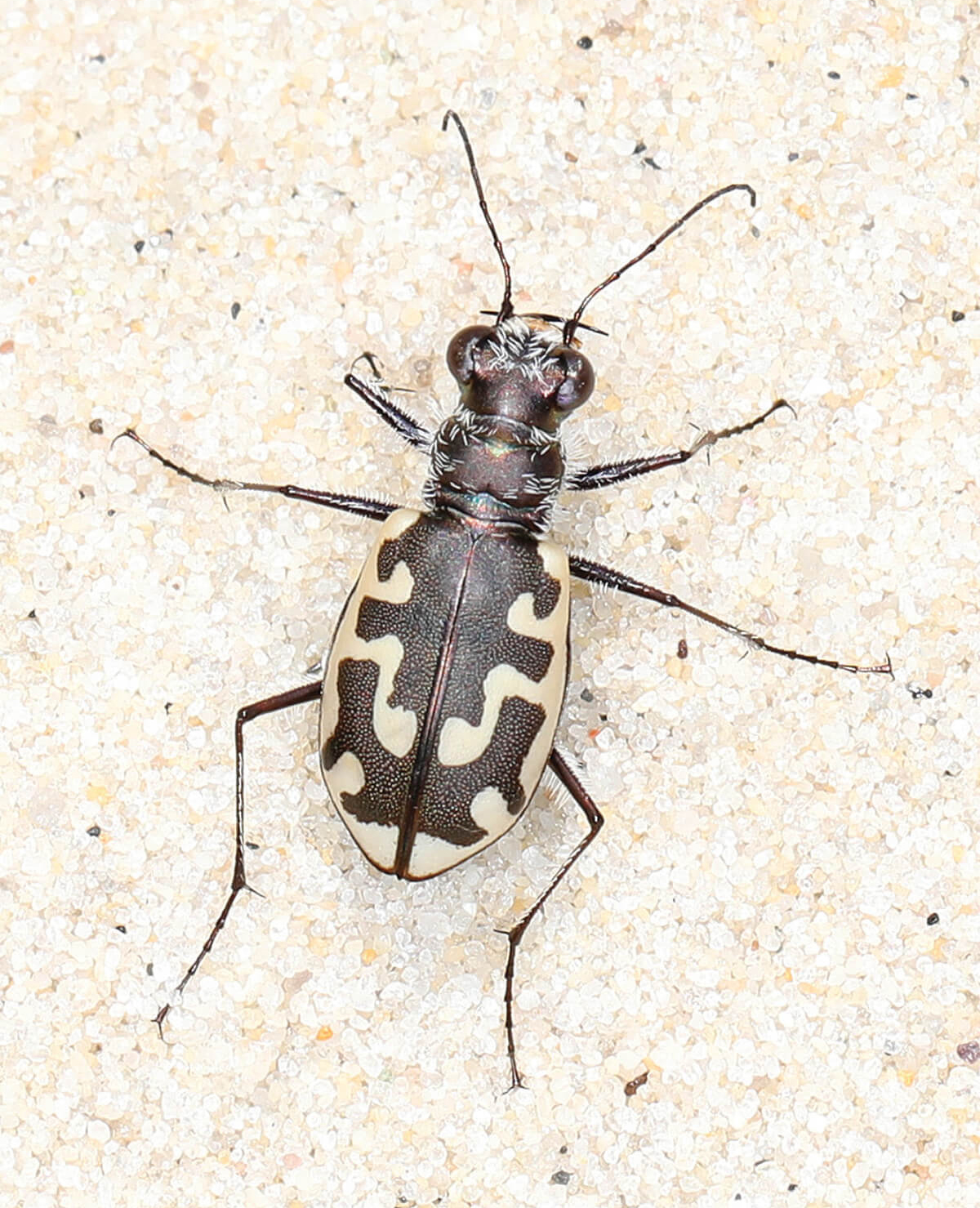
northeastern
beach tiger beetle.
CHESAPEAKE BAY
Here to There: 1.5-4 HRS

ROAD SNACK
Old Bay-spiced-whatever (nuts, chips, cheese curls, ice cream).

SAVOR
If you make both Baltimore's “Classic Crab Houses” list and Martha Stewart’s Twitter feed, you’re the real deal. Woody’s Crab House in North East made the former in 2024 and the latter in 2015, when Martha herself visited. While down south on Smith Island, head to cake central: Smith Island Bakery in Ewell, which creates more than a dozen varieties of Maryland’s state dessert.

STAY
Embed yourself (literally) in Smith Island culture by staying there. Smith Island Inn, a relaxing bed-and- breakfast in Ewell, rents three inn rooms plus individual cottages to island visitors.
MAKE IT A DAY TRIP: THE BARRENS, BALTIMORE COUNTY
Here to There: 40 MINS
LONG AGO, the “Great Maryland Barrens,” land underlain with shallow serpentine soils inhospitable to plant life, covered wide parts of the state. Today, Maryland’s remaining barrens are concentrated at Owings Mills’ Soldiers Delight Natural Environment Area. Explore this 1,900-acre prairie of stunted trees, rare flowers, and unusual invertebrates, one of the largest remaining serpentine ecosystems in the eastern United States.
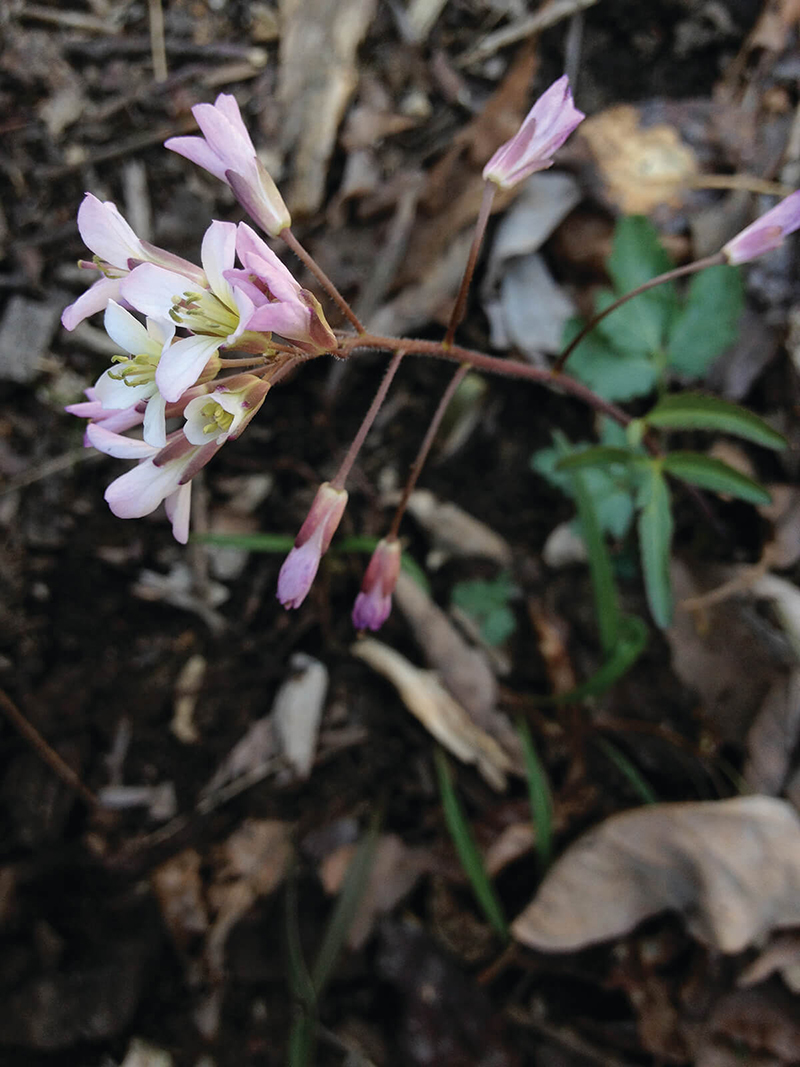
A native cardamine angustata flower.
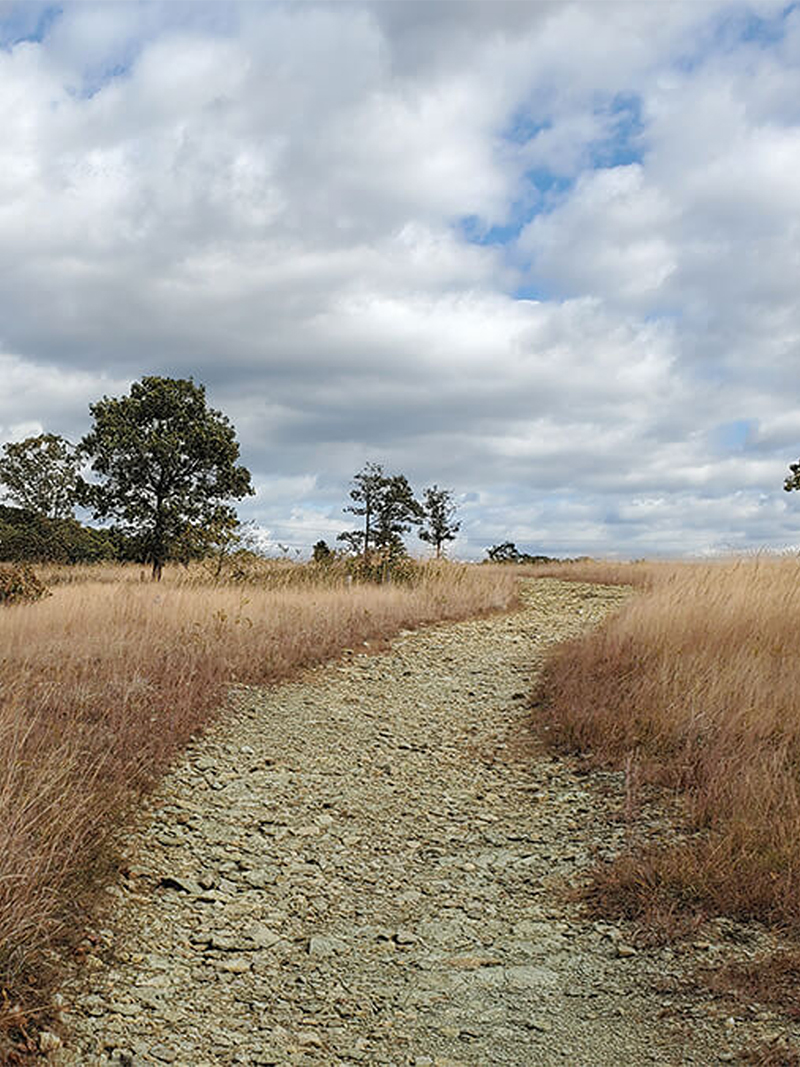
A Soldier's Delight path.