Arts & Culture
The Largest Jane Austen Collection in North America is, Surprisingly, Right in Our Backyard
In some ways, the collection is as much about its founder Alberta Hirshheimer Burke, the intrepid Goucher College alumna who pursued Austen with a nearly messianic fervor, as it is about Austen herself.
Jane Austen never visited Baltimore. Yet, true Janeites know her deep connection to the area. This month marks 250 years since the acclaimed English novelist and social commentator was born, but she remains as noteworthy and popular as ever.
Since her death in 1817 at 41, Austen’s novels have rarely been out of print and her most popular tomes—Pride and Prejudice, Sense and Sensibility, and Emma—are considered timeless classics that continue to be adapted for film, television, and theater. The 2025 French romantic comedy Jane Austen Wrecked My Life was shown at the Charles Theatre this past summer and an adaptation of Jane Austen’s Persuasion by Sarah Rose Kearns just closed at the Chesapeake Shakespeare Company.
But even with such an ardent fandom, it’s Goucher College that just might take home the prize for Biggest Jane Austen Devotee.
Goucher, the private, liberal arts college founded in 1885 and tucked into a quiet corner of Towson, is known for its innovative, interdisciplinary curriculum and small class sizes—but did you know it also houses the largest Jane Austen collection in North America?
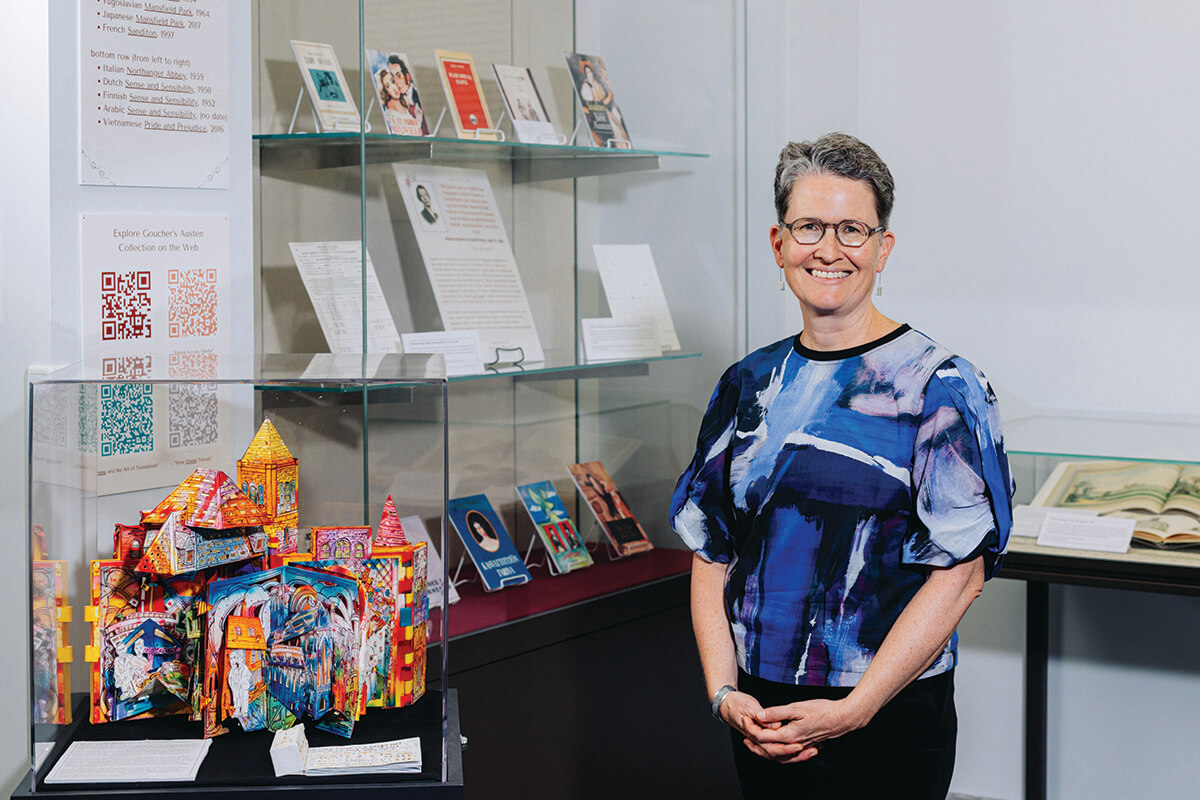
Due to their age and fragility, the Jane Austen materials at Goucher College Library are not on permanent display. The collection materials are in a climate-controlled, secure stack area within the library’s Special Collections and Archives. But the collection is available via appointment for research requests, classroom visits, and group outings.
“Truly the opportunity to share all of this with Baltimore people—that’s the piece that I hope we will grow in the future,” says Juliette Wells, professor of literary studies at Goucher and one of the country’s foremost experts on all things Austen.
She’s sitting in the Goucher library on a late September morning and looks exactly how you’d picture a Jane Austen scholar should—small oval glasses, a short pixie cut, artsy earrings, bright top, and an easy smile. The first Austen book she read was Emma, in a literature class her junior year at Thomas Jefferson High School for Science and Technology in Annandale, Virginia.
“I had a wonderful AP Lit teacher, and she offered us a choice of readings. And I don’t remember what the other choices were,” she laughs. “I read Emma. I admired it. I wouldn’t say I loved it. I definitely knew I wasn’t understanding everything about it, but I found it really intriguing.”
“THE OPPORTUNITY TO SHARE ALL OF THIS WITH BALTIMORE I HOPE WILL GROW.”
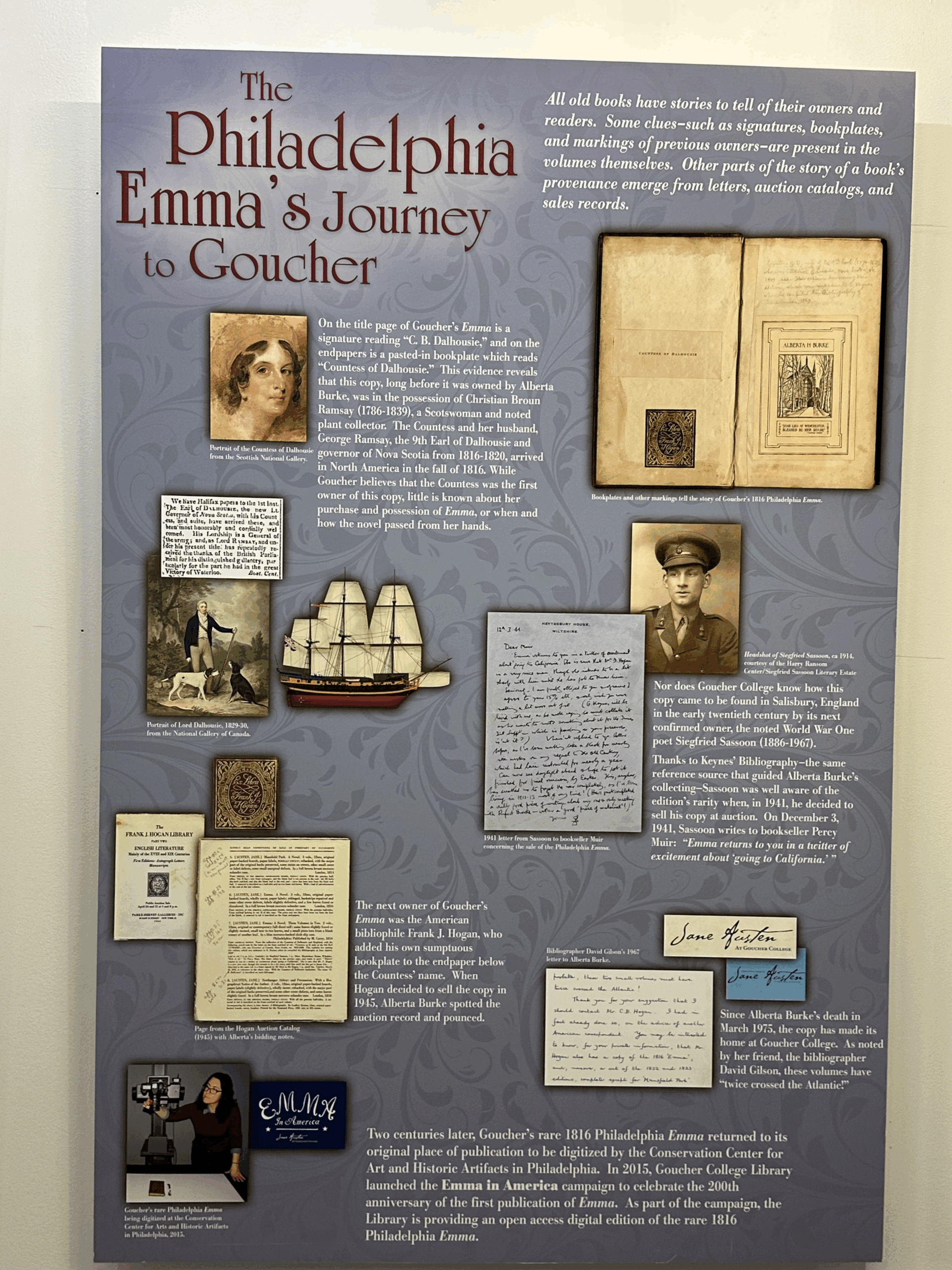
Now Wells teaches at a college that owns a rare copy of Emma, printed in 1816 in Philadelphia. It’s one of only six known copies in existence and the only Austen book published in America during her lifetime.
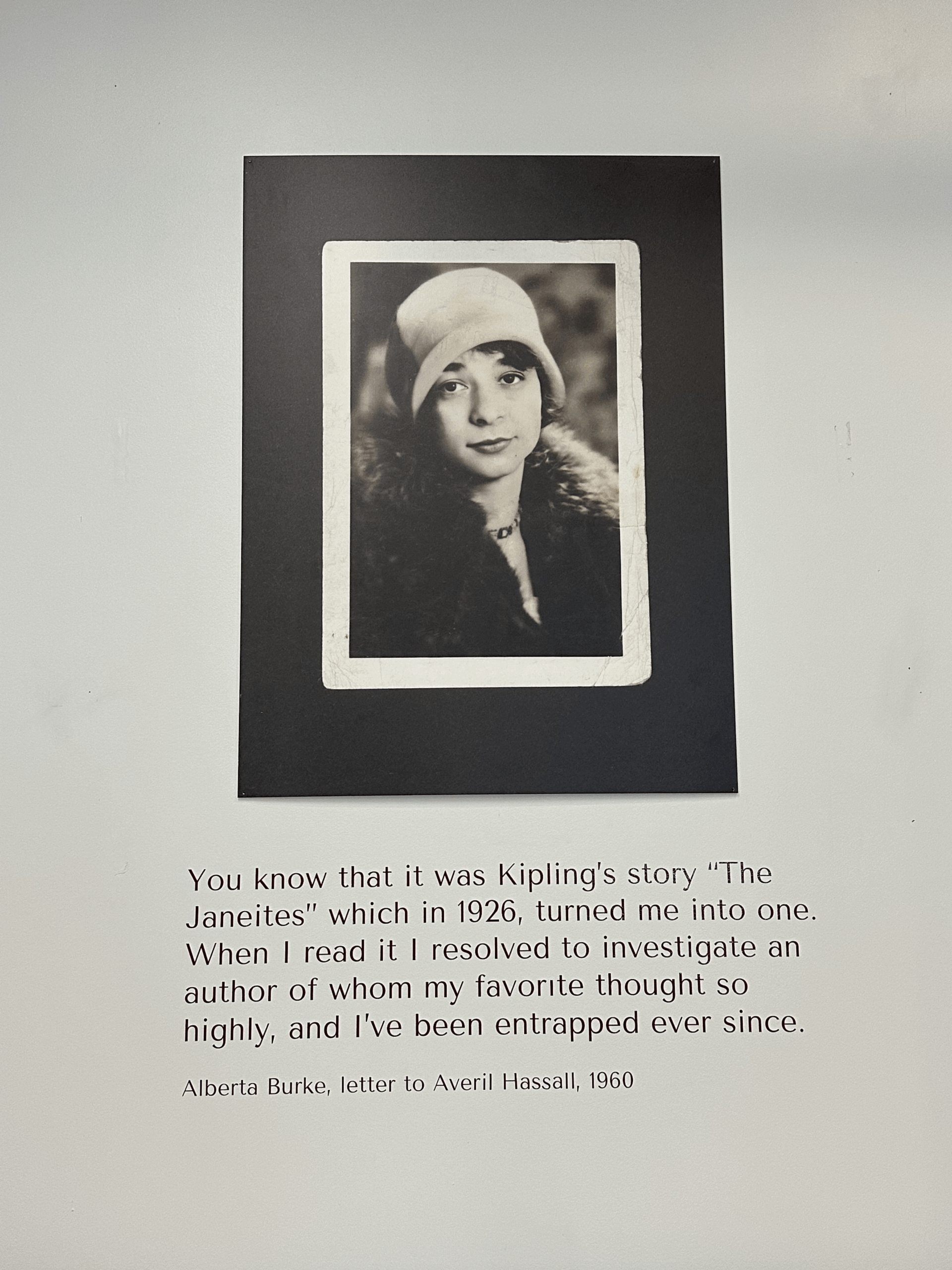
It’s just one piece of the incredible collection began at the bequest of Alberta Hirshheimer Burke, a 1928 graduate of the college who, according to administrative records, was initially denied entry because the school had reached its unofficial Jewish quota. While a student at Goucher, Burke had read Rudyard Kipling’s story “The Janeites,” about World War I soldiers who bond over their love of Jane Austen, and she was intrigued.
In 1930, after receiving her master’s in literature and marrying her husband, Henry, Burke began what would become her lifetime passion project, building what she called her “Austen archive.”
“In the mid 1930s she wrote to the president of Goucher to say, ‘I am building a Jane Austen collection, and it is important I already have these first editions, I already have these manuscripts, and I would like to have Goucher in mind for the eventual recipient,’” says Wells.
And while Wells doesn’t know precisely what the Goucher president wrote back, she imagines it went something like this: “How perfect—such an important woman author. Here we are a women’s college, yes, yes, yes, yes, yes!” (The school became co-ed in 1986.)
Although she wasn’t a native of Baltimore, Burke lived her entire adult life in the city, at one point living in the Broadview apartments on W. University Parkway. She and Henry combined two apartments—one for living and one to house their books.
Over time, Burke built a distinguished private collection of Austen books and manuscripts. Upon her death in 1975 (and in accordance with her will), her collection was divided between Goucher and the Pierpont Morgan Library in New York (now the Morgan Library & Museum). Goucher received more than a thousand books, including early editions, as well as records of Burke’s collecting: correspondences with book dealers and scholars, as well as invoices and receipts for her acquisitions.
In some ways, the collection is as much about Burke, the intrepid alumna who pursued Austen with a nearly messianic fervor, as it is about Austen herself.
A highlight of Goucher’s collection is a set of 10 of Burke’s notebooks that include “anything which is in any way related to Jane Austen,” as Burke herself described them in a 1940 letter. The black-and-white marbled composition books are all labeled “Pride and Prejudice and Other Material Relating to Jane Austen” and are arranged mostly chronologically. Each item pasted in the notebook is annotated with its origin, the date, and, frequently, a notation from Burke.
In honor of Austen’s 250th birthday and the 50th anniversary of Burke’s bequest to the college, Goucher’s library staff carefully scanned all 10 notebooks and made digital copies available on their website. It’s a rare look inside Burke’s sweet obsession. Other collection highlights include a 1938 original Penguin edition of Pride and Prejudice.
Before his death in 1989, Henry donated more Austen-related material to Goucher and, as word spread of the college’s growing collection, subsequent gifts and donations have come from a variety of Austen enthusiasts, including Barbara Winn Adams, who donated her copy of the first American edition of Persuasion, printed in 1832.
Goucher also has more than 300 translations of Austen’s novels in 27 languages, not just from Burke, but from the likes of Edith Lank, author and former Jane Austen Society of North America board member, who donated her collection of 80 translations to Goucher in 2020, just three years before she passed away. Lank, who was in touch with people all over the world to source her Austen translations, once exchanged a Dolly Parton greatest hits cassette tape with a woman in Iran for a copy of Sense and Sensibility in Farsi.
“SHE TELLS STORIES THAT JUST REALLY CONNECT TO PEOPLE. EVERYBODY KNOWS SOMEBODY THAT IS A LADY CATHERINE OR A MR. COLLINS. EVERYONE WANTS TO FIND THEIR DARCY.”
Wells delights in hearing stories like this. She first arrived in Baltimore as an undergrad at Johns Hopkins, where she considered doing her thesis on Austen, but instead focused on Barbara Pym, the 20th-century British novelist who’s often compared to Austen. Supported by an undergraduate research fellowship, she spent several weeks at Oxford studying Pym’s archives.
“I had no training in archival research. I didn’t even know the term archival research.”
She graduated in 1997 and went on to Yale, where she completed her doctorate in 2003. While teaching at a college in New York, she spent a week doing research at Goucher in 2010 as the Burke Jane Austen Scholar-in-Residence.
Hired as a faculty member in 2012, Wells doesn’t just teach about Austen—though she offers plenty of enviable classes with names like “Unexpected Austen” and “Pride and Prejudice, Here and Now” and even conducts a Jane Austen Archives Practicum where students learn how to curate exhibits—but also conducts groundbreaking research and a bit of good old-fashioned detective work to uncover some of the mystery surrounding Austen.
It was back in 2018 when Wells was invited by the Morgan to co-curate an exhibit tied to Austen’s big birthday that would not only mesh their two collections but include special loaned pieces, as well. Seven years later, “A Lively Mind: Jane Austen at 250” opened in Manhattan. The exhibit ran for three months and showcased artifacts, manuscripts, books, a reconstruction of Austen’s sumptuous silk pelisse (a long coat), a reproduction of her writing table, and artwork including Amy Sherald’s painting, “A Single Man in Possession of a Good Fortune.” (The painting is named for the first line from Pride and Prejudice.)
The exhibit attracted an unprecedented number of visitors—more than 119,000—says Wells, a hint of pride (and maybe some prejudice) in her voice. And Burke’s name, Goucher College, and Baltimore were all over the exhibit.
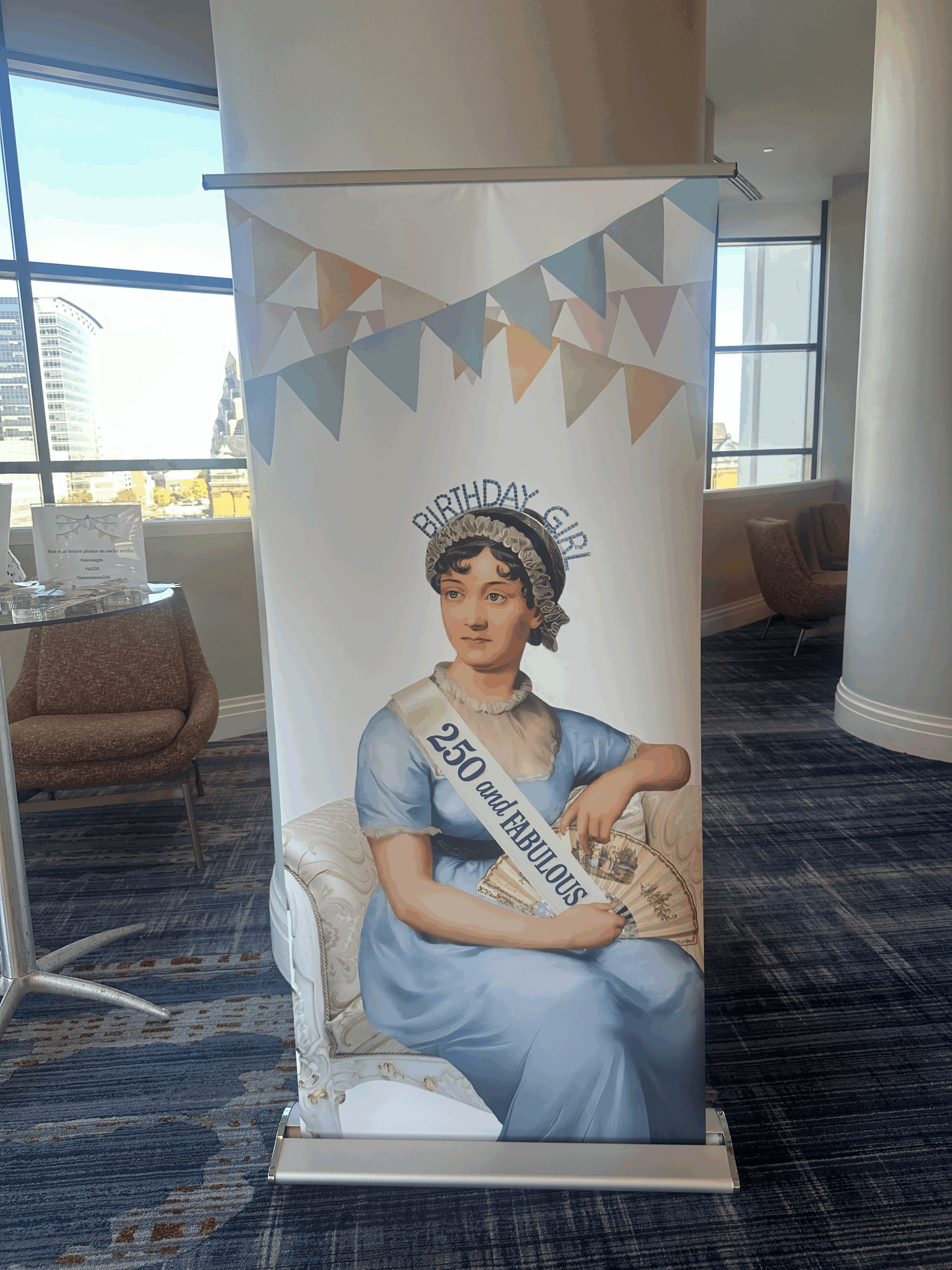
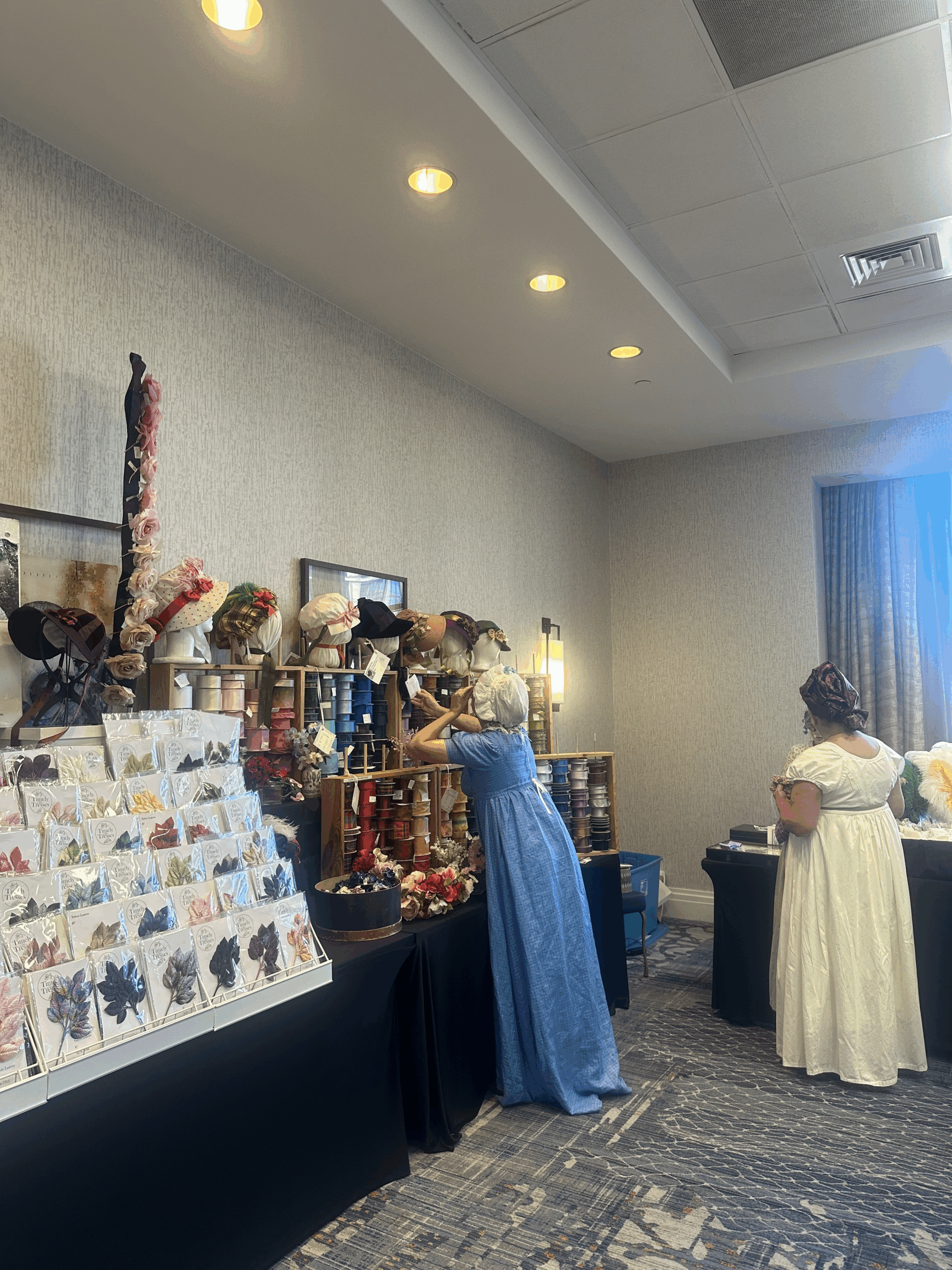
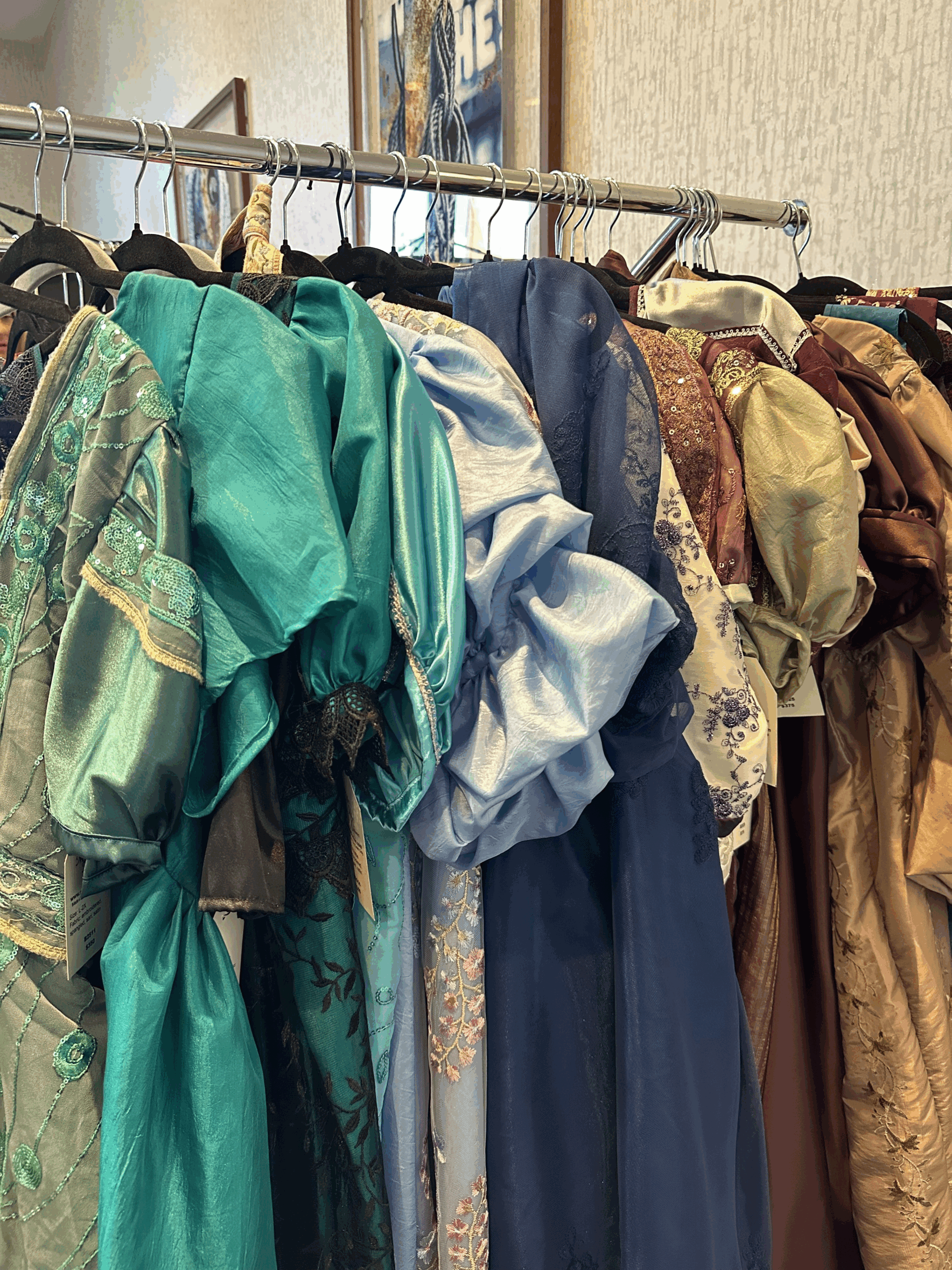
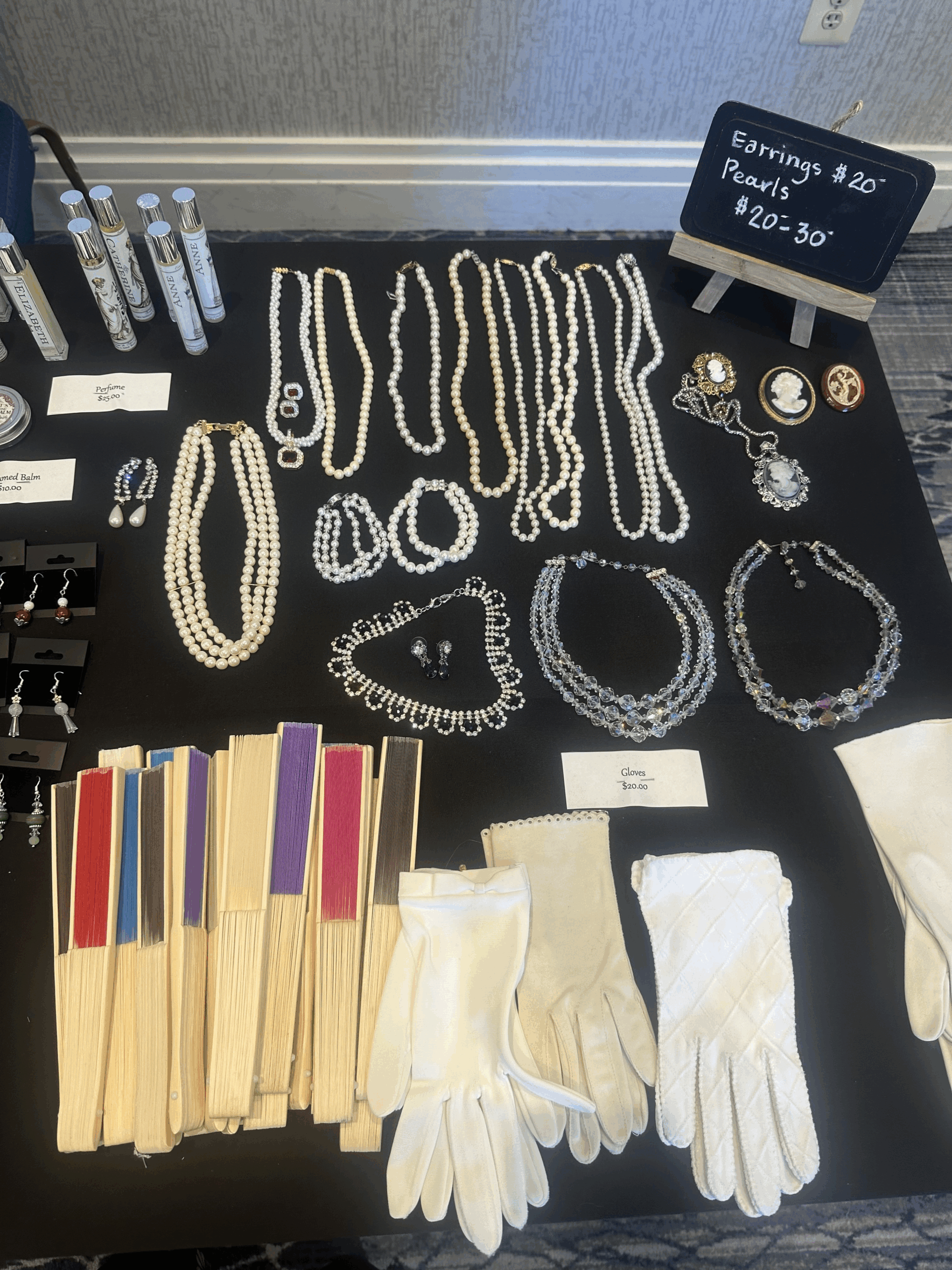
It’s a few days into the Jane Austen Society of North America’s (JASNA) annual general meeting and 950 Austen fans and scholars are milling about the Marriott Waterfront Hotel. (Baltimore hasn’t hosted since 1980.) There’s a pop-up museum including artifacts dug up from Steventon Rectory (the house where Austen was born), English country dance workshops, and an opportunity to visit the two emporiums—one full of books and the other Regency apparel. But first, Wells is holding the audience captivated inside the large ballroom as one of the plenary speakers. The applause is deafening at the end—they know she’s Austen royalty.
“We don’t care how you arrive at an appreciation for Jane,” says Mary Mintz, president of JASNA, in her sweet North Carolina drawl. She’s sitting in the pop-up museum taking a 10-minute break. “But once you get into the novels, you find out that even though she is the one who originated that romance novel, a story that’s told over and over again today, where you have this woman and she’s not getting along well with this very attractive man who seems to be defective. But it turns out they’re a perfect match, right? Every Harlequin romance, every romance novel is based on Jane Austen.”
But Mintz, associate librarian emerita at American University, says it’s deeper than that. “Once you get past [the romance] you realize that she’s so much more multi dimensional and complex. She’s dealing with philosophical ideas, and she is dealing with women’s issues that still in some ways resonate for us today.”
Having the annual general meeting back in Baltimore was super special, says the Bel Air-based Jenn Jones, who coordinated this year’s annual meeting and is a branch manager at a public library. “There was a lot of synergy to Baltimore,” she says—noting not just all the big anniversaries but the fact that Henry Burke (Alberta’s husband) helped found JASNA.
Jones, who has been with JASNA since 2012, looks around the convention with pride. At the moment, everyone is bombarding her with logistics questions, but she pauses to answer why Austen has endured.
“She tells stories that just really connect to people. Everybody knows somebody that is a Lady Catherine or a Mr. Collins. Everyone wants to find their Darcy,” she says. “The stories are just human nature. You know, she doesn’t describe places. She doesn’t go into all these descriptions that a lot of the writers were doing at that time period. Instead, she’s talking about the stories of the community. And I think that’s what resonates and why she’s so timeless and able to be translated, not just from that time, but continues to be relevant.”
Later that evening guests will attend a banquet—with most dressed in their Regency finest, including hats festooned with feathers and ribbons—and end the night dancing at the ball—thanks to a very patient instructor—until almost midnight.
It truly feels like being at the Netherfield Ball in Pride and Prejudice or Mansfield Park’s coming-out ball where Fanny is given the honor of leading the first dance.
On a rainy Monday morning, many JASNA members will bus the 14 miles from Harbor East to Goucher to see parts of the collection up close and personal with an attentive Kristen Welzenbach, curator of Goucher’s special collections and archives, answering questions for the dazzled groups. It’s like showing a 1914 Baltimore News Babe Ruth rookie card to a hardcore baseball fan. They get how special it is.
It’s been quite the year for Austen, Burke, and Wells.
“I made a decision for myself that I would say yes to everything for this whole year,” she says. That meant not just the exhibit, but teaching courses through different organizations, finishing her new edition of Austen’s Mansfield Park, and giving almost a talk a week—including a quick trip to Australia—while still working as a professor.
“I do actually have a day job, which I cherish,” says Wells. “I have a sabbatical next spring in which to think new thoughts and possibly catch up on my sleep.”
Even when this big year is over, Wells knows there is still a collection to celebrate.
“I’ve always felt that telling her story, sharing her contributions, making use of her collection, was doing what she wished would be done,” she says of Burke. “And I hope that if she is looking down from ecumenical heaven, I hope she approves.”