Business & Development
Greenmount Loan & Jewelry is a Neighborhood Engine in Waverly
Unlike loan sharks, pawnbrokers—at least the responsible, community-minded ones—can operate as a pivotal aspect of a stressed infrastructure.
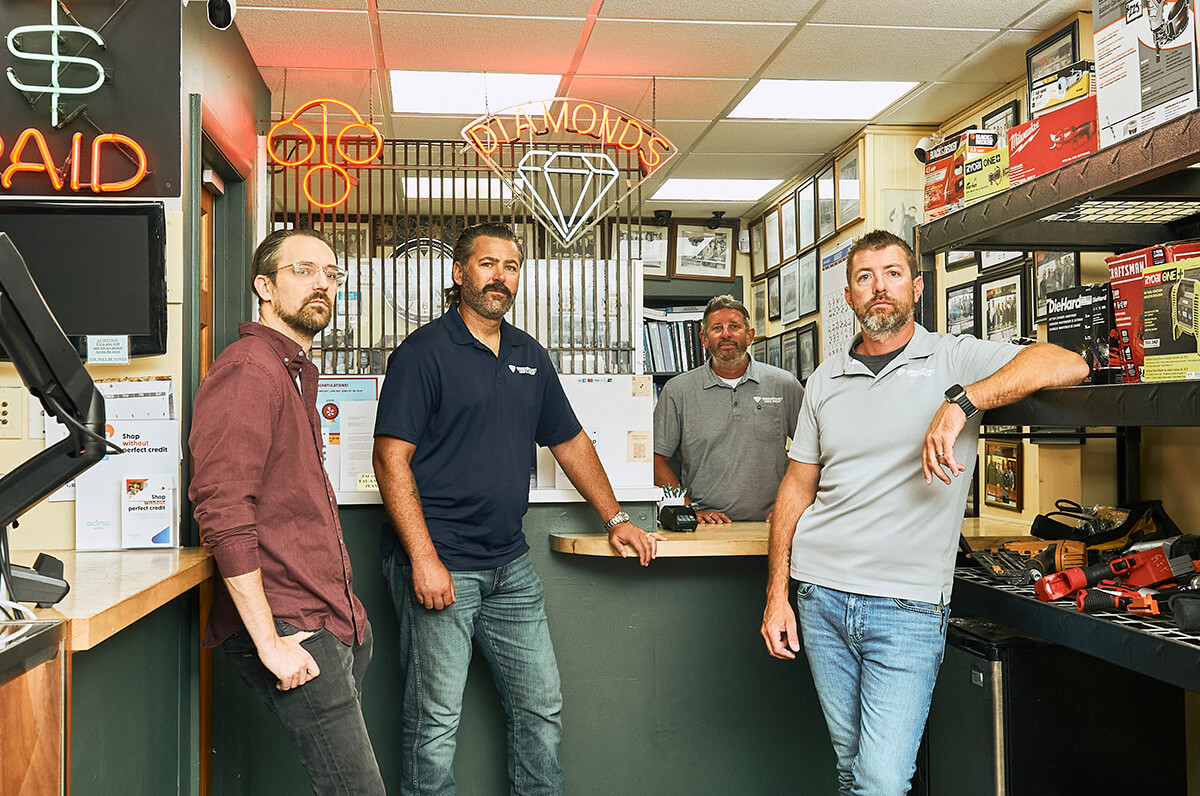
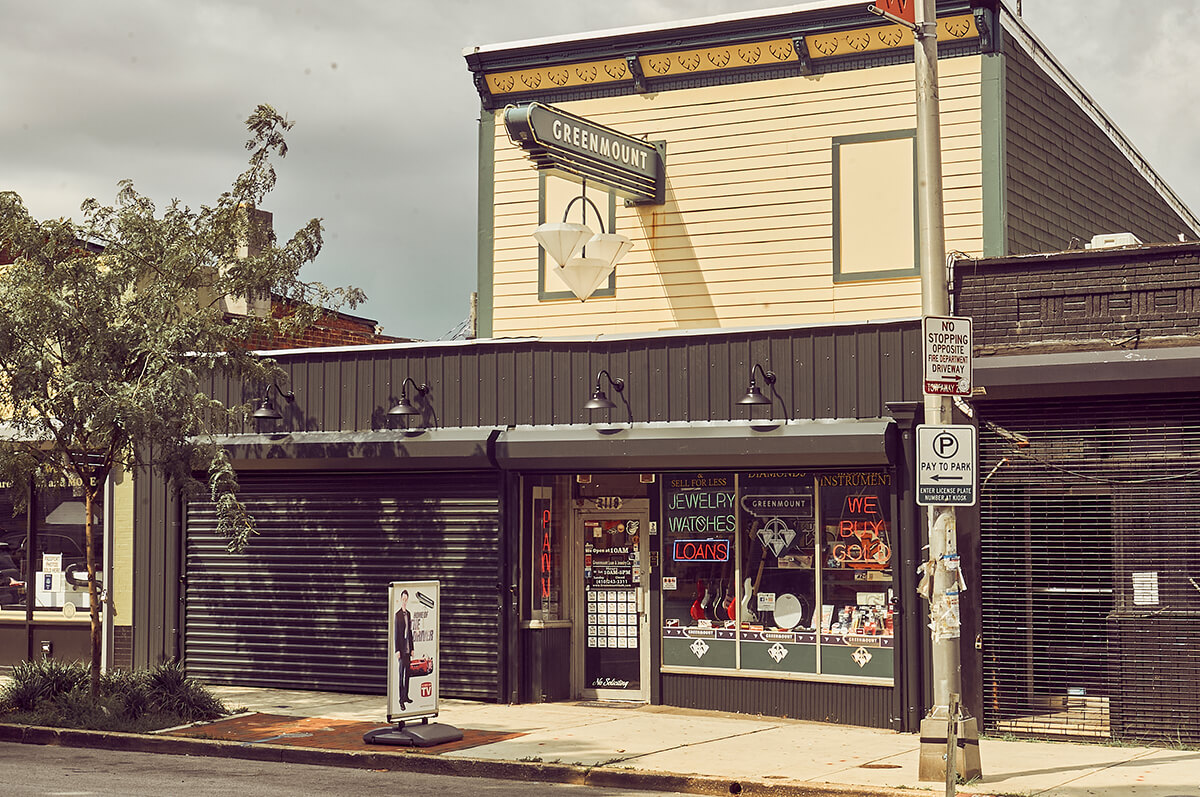
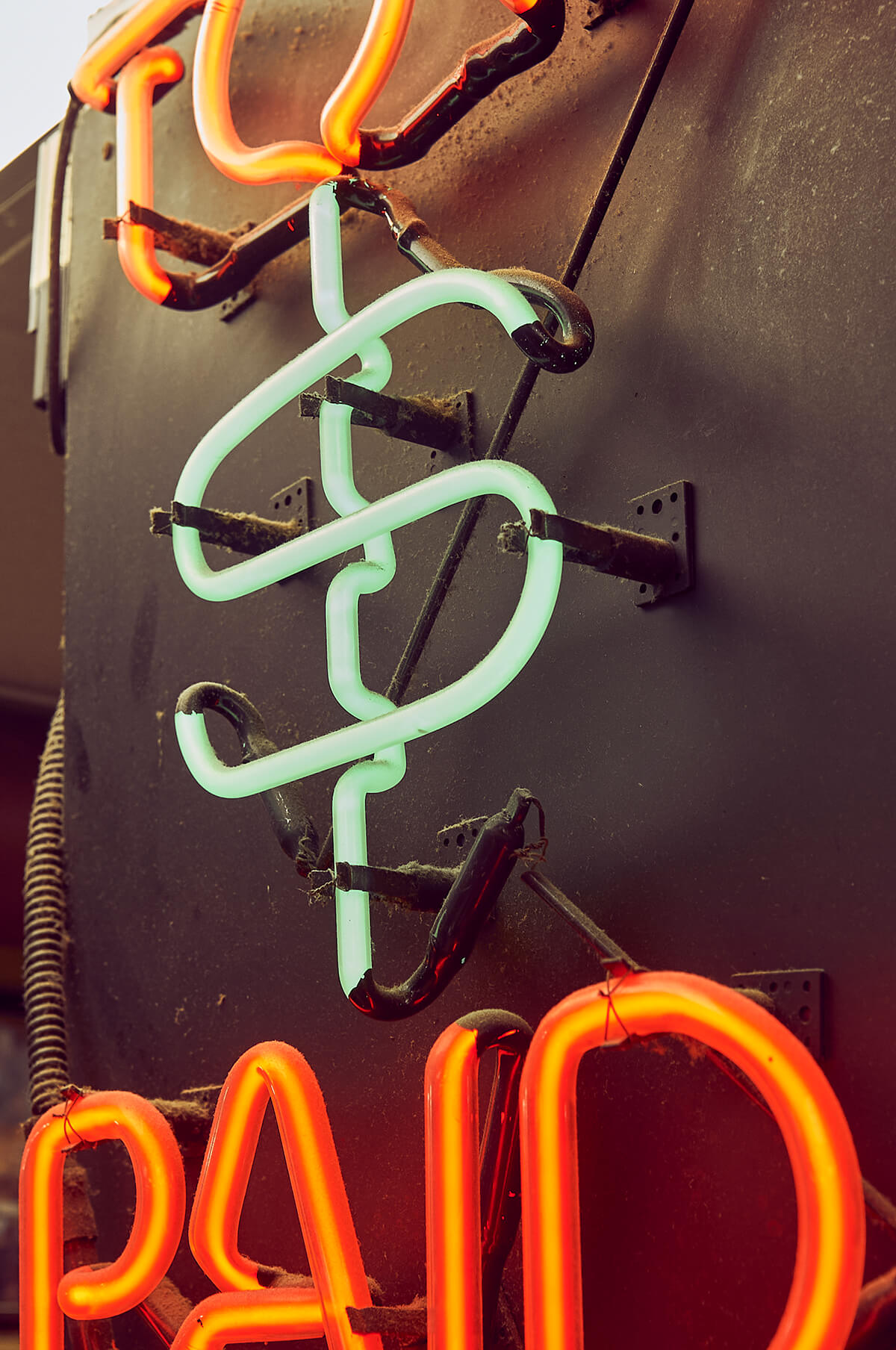
Past a buzz-in front door flanked by a neon “pawn” sign and display cases full of sparkly rings and watches, the interior of Greenmount Loan & Jewelry presents more like a high-end wish-list store than what you might think a pawn shop should be.
Here, you won’t find dusty shelves of junk mixed with random valuables and lost or maybe stolen heirlooms. Rather, Greenmount, on a block of Greenmount Avenue shared by Red Emma’s bookstore and coffeehouse and the beloved diner Pete’s Grill, is a brightly lit, immaculate showroom that has been a neighborhood anchor for decades.
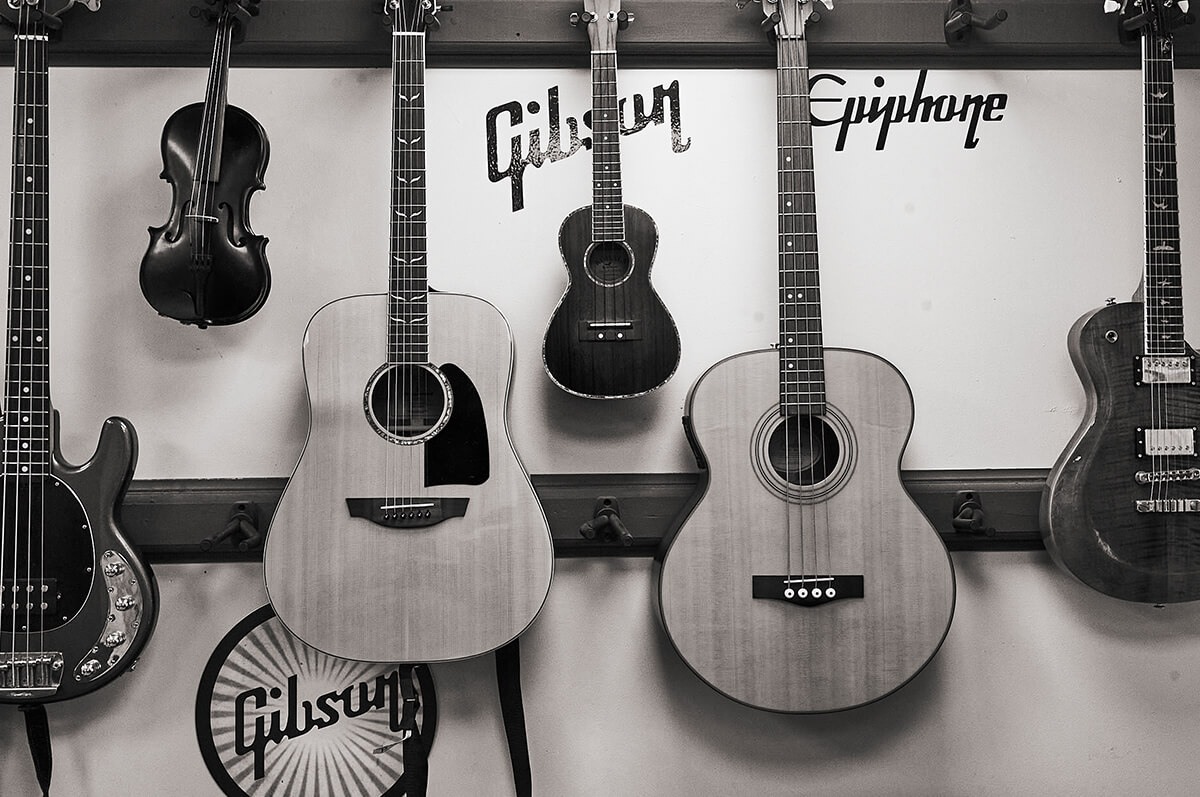
Right away you’ll see that the long cases of jewelry are the store’s focal point. Along the walls are cases of stylist Invicta watches, plus items that might be on that wish list: a Gibson guitar, Lumix cameras, a Wacom Cintiq drawing pad, a DeLonghi La Specialista espresso machine, a Dyson Ball Animal 3 extra vacuum machine, a Fender electric bass, a DeWalt miter saw stand, a harp. And all for considerably less than you’d find on eBay.
Opened in 1987 by Gordy Lifson, a jeweler with a degree from the Gemology Institute of America, Greenmount is now operated by Gordy’s son, Aaron, and Aaron’s brother-in-law, Patrick Ebling. That history is apparent on the office walls, lined with stories written about the business from The Baltimore Sun and of family snapshots of boating and fishing outings. There are also a few mounted deer heads and a well-stocked whiskey bar for good measure.
“My dad had always been in the jewelry business,” says Aaron Lifson, sitting at his office desk beneath those framed newspaper clippings one afternoon in August. “He put this together when he got sick of doing that. And my grandfather had a pawn shop that was burnt down during the original riots in Baltimore [in 1968].”
Lifson’s father had grown up working in his own father’s pawn shop, so the transition was a logical one. The younger Lifson tears up a bit when he talks about his dad, 73, who recently retired after being diagnosed with Parkinson’s and now lives in Florida. Lifson was only five years old when his father opened Greenmount at the former location of a music shop.
“I can picture everything when we walked in here. We scraped together every single dollar and got the doors open. We had old cases from the original jewelry store, Natural Jewels, which was at Six On The Square in Pikesville.”
He even remembers the names of the earliest customers. “Moses Buchanan was the very first, followed by someone by the name of George Washington. And [my dad] looked over at my mom and he said, ‘Ursula, we’re going to be okay. We have the maker of the United States of America, right? And Moses.’”
Many of the staff, who now number eight, have been at Greenmount for decades. Some have left, a few to open their own pawn shops, so much so that Greenmount can seem almost like an apprenticeship or incubator. They sponsor the Waverly Ravens, a Pop Warner football team, as well as local baseball and lacrosse teams. “I don’t say no when it comes to something like that, and especially supporting the community,” says Lifson.
“I never thought I’d see myself working at a pawn shop; it was never on my radar,” says Pat Ebling one Saturday morning. Ebling, who is married to Lifson’s sister, had a career in real estate before the 2008 recession. But during that economic downturn, the family refocused—as did the business—and Ebling came to work at Greenmount.
With no prior experience in pawn shops, Ebling started out on the floor, then did inventory, which meant “looking at pieces as they came in and deciding whether they should get melted, or whether they should just be polished and cleaned,” he says. “Sometimes they go to the jeweler if there’s a stone missing or there’s a crack in the shank or something.” He’s now, unsurprisingly, an expert.
There are two sides of a pawn shop. There is the pawn side, which involves lending money, and there is the sales side. “And usually, when one is up, the other is down,” says Ebling, which is why pawn shops are often called recession-proof businesses. “When people have a lot of money and they want to buy stuff, we sell stuff.
And when people need money and they need to borrow money, the pawns are up. No matter what the economy is doing, it adjusts.”
“Jewelry is one of those things where you really want to try it on or feel the weight, feel how big it is. You’re not looking for an air fryer at Walmart.”
Pawn shops have always been economic and societal barometers. People can bring in items, get them appraised, and get cash for them, called a collateral loan, without any regard for credit history. Thus, the shops work as both credit institutions and lifelines for people who need cash, either working-class people or those much higher up the economic chain.
Historically, the upper echelons of society relied on the pawn system as much as the lower classes. Explorers used that system to fund expensive expeditions and monarchs funded wars by pawning jewels and other valuables. Pawning has been around forever, in Chinese and Egyptian and Greek and Roman societies, as well as in medieval Europe. Consider the British Pawnbrokers Act of 1800, which regulated interest rates and tried to safeguard the interests of borrowers.
Modern pawnbrokers in the U.S. are now strictly regulated. Every item that gets buzzed in and accepted at Greenmount is cataloged and entered into their system, a process that includes a police report, which is the law in the state of Maryland. Greenmount has safes, of course, and a basement to store other less-valuable items. It also has a caring staff with decades of experience calibrating the wants and needs and extenuating circumstances of its clientele, including regulars who have been coming in for decades.
A. Jazz Finch of Overlea is one of those regulars, and she’s been shopping at Greenmount for more than a decade. “They’re very nice, welcoming people,” she says. “Now I just call them all my brothers.”
Finch loves the jewelry selection, particularly the rings. She says she stopped going to traditional jewelry stores years ago and instead buys all her jewelry at Greenmount, as well as the occasional watch, television, bike, or other electrical equipment she might need for herself, her kids—or her 19 grandchildren. She knew Lifson’s father, plus the other folks who have worked there over the years.
“Why would I go to another jewelry store?” asks Finch. She not only buys pieces, but gets them repaired, engraved, and appraised here, and has even had stones set. “I like the comfort when you go in there, and they’ll help you out. If you’re looking for something they don’t have in stock, they’ll let you know when they get it in; they’ll also hold certain rings for me. I’ll put a few dollars [on a ring] because they know I like odd jewelry. I don’t like something that everybody else has.”
Scroll through Greenmount’s website and you’ll see a lady’s diamond cluster three-diamond ring, a wedding band with 13 diamonds, a 14-karat gold bracelet, and a pair of ruby-diamond earrings. Because another thing Greenmount has, which most other pawn shops do not, is a full-time master jeweler. This allows for a level of on-site expertise that can come in super handy.
“You’d be surprised at the amount of people who come in here and are getting married in three hours,” says Ebling. “They’ve decided that they’re going to the courthouse that day and need wedding rings. We can usually deliver—people absolutely love that.”
This kind of service has garnered Greenmount a devoted word-of-mouth clientele, plus a loyal return business. It also allows their inventory to be updated and quickly entered onto their website.
“We have probably hundreds, if not thousands, of pieces of jewelry on our website,” continues Ebling. They don’t get a lot of online sales, he explains, but people will shop online and then come into the store with inventory numbers and try things on in real life.
“Jewelry is one of those things where you really want to try it on or feel the weight, feel how big it is,” says Ebling. “You’re not looking for an air fryer at Walmart.”
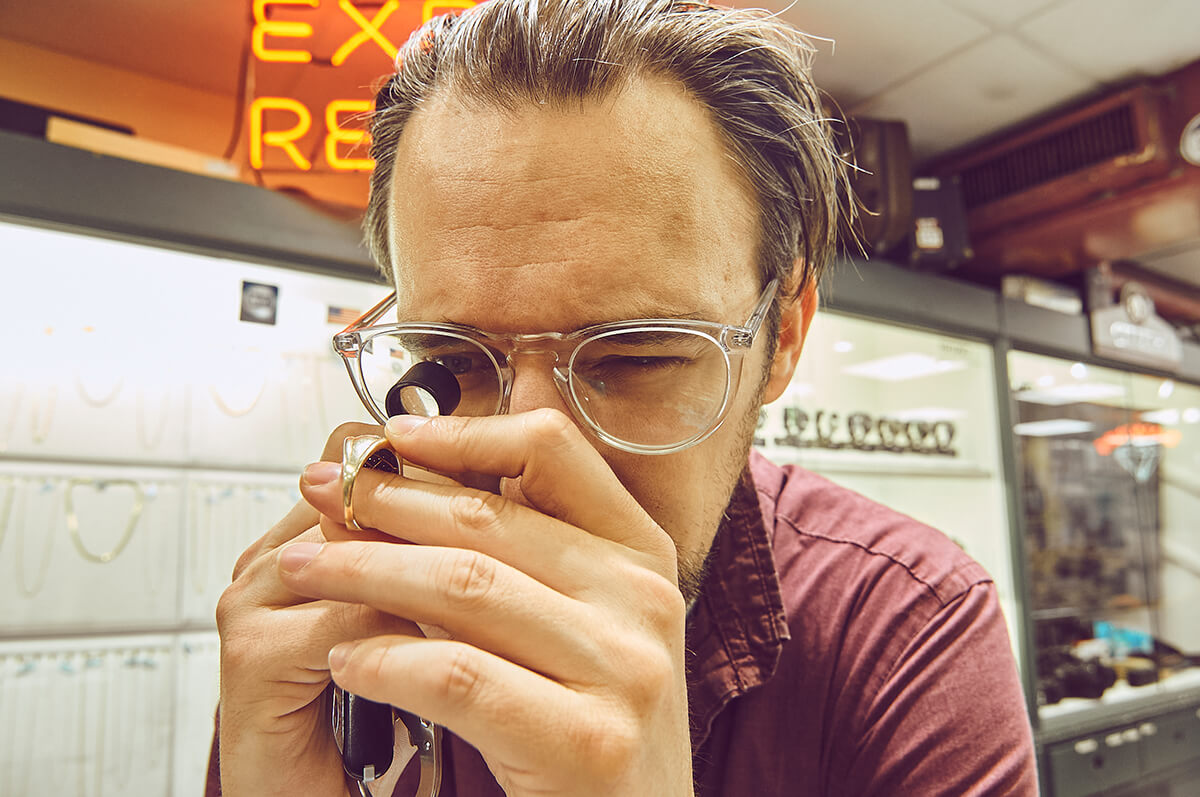
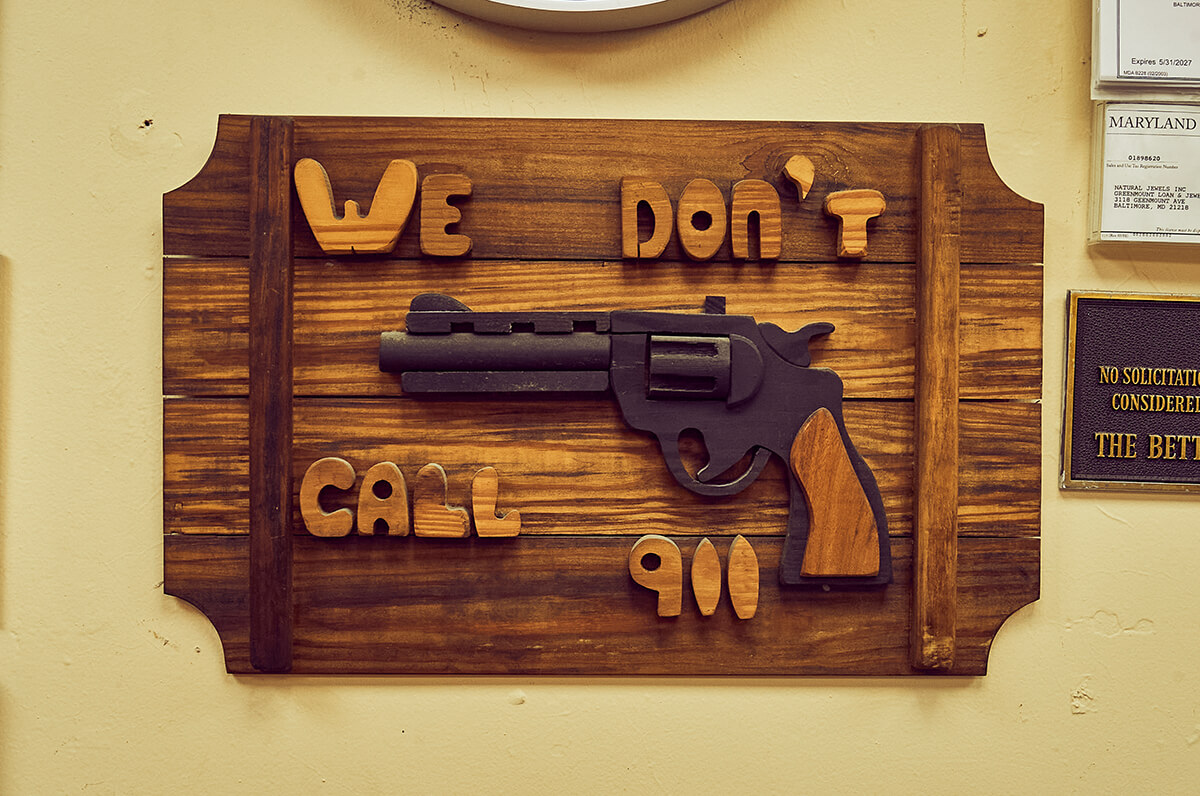
In addition to the expected stuff—mostly jewelry, watches, and small appliances—pawn shops tend to get people coming in with some idiosyncratic items. “This lady came in one day,” says Ebling, “and she said she had an antique rock. And we were like, ‘Aren’t all rocks antiques?’” The woman returned with the rock, embedded with flashy bits that she claimed were diamonds. “If you held it right, it did kind of shine. And she said she found it in a bag of potatoes.” The diamonds turned out to be quartz. “I think she had eaten the potatoes by that point,” he says.
“Pawn shops get a bad name,” says Brian Froh, who came to work at Greenmount three years ago and is a relative newcomer among the crew. An expert in the purchasing of gold, diamonds, and precious metals as well as jewelry and watch repair, Froh found both a natural fit and a surrogate family. “This isn’t a rewarding job normally: You’re buying heartbreak a lot of the time,” he says of the industry, especially when you’re doing cash for gold.
The stereotype of pawn shops has long been that they’re ripping you off, they’re pressuring you to sell, or they’re dealing with stolen goods. By contrast, everything that comes into Greenmount gets a police report, and the unofficial policy is not only to grant folks pawning items 30 days—the time dictated by law—but often weeks, months, even years longer to redeem their items. Froh recounts one occasion in which Gordy Lifson held onto a treasured item for more than six years.
“This isn’t a rewarding job normally: You’re buying heartbreak a lot of the time.”
Pawn shops can also operate kind of like Antiques Roadshow. “We get people who come in, they’re finding stuff on the ground or that’s been in a storage unit,” says Froh. “They don’t know what it is, so I always tell people, ‘Bring me everything you got.’ Because nine times out of 10, the thing you think is fake is going to be the biggest money-maker.”
So Froh will sift through the items. “It’s fun and it’ll take me all of five seconds to tell you if it’s a trip to Goodwill, you know, or if it’s a memory you want to hold on to, or if it’s $700.”
There’s also a community element. “I’d rather them donate something that could pay that BG&E bill, so they don’t have to come here with their engagement ring,” says Froh. Because unlike loan sharks, pawnbrokers, at least the responsible, community-minded ones, can operate as a pivotal aspect of a stressed infrastructure.
The price of gold is not only a key economic gauge but also a longtime component of the pawn business, as many customers come in with gold jewelry, broken chains, coins, or other items specifically to sell them for the metal.
“You know what your junk drawer’s worth right now? If you bought gold in the ’90s when it was $300 [per ounce], even at the jewelry store with their crazy markups, you’re probably breaking even today on all that scrap,” says Froh.
“When we opened, gold was at $300 an ounce,” says Lifson. As of late August, the price of was about $4,700 per ounce. “All the gold that we scrapped out over the last four years?” he says, considering the gold they melted down instead of re-selling it as jewelry. “If there was some sort of magic eight ball and we were able to not have scrapped it out, boy, we would be sipping mai tais on our own island right now.”
Not only has the price of gold changed over the years, but so have the kinds of items brought in. “Back in the day, we used to take in fur coats. My grandfather took in shoes. Shoes and suits, then VCRs, then CD players,” Lifson says. “So all the stuff that we take in has changed, but it’s the same need at the end of the day, right? Somebody needs a short-term loan. They come in with their item, pawn the item, get the cash that they need, and then they come back and get it out.”
If they don’t come back, the items are eventually sold or, in the case of gold, perhaps melted down. Greenmount’s longtime policy of extending time isn’t merely an act of friendship, it’s a way of establishing regulars.
“If I melt it down or sell it in the case, I get one transaction out of the deal,” says Lifson. “But when people come in and get their stuff out, they tend to buy more jewelry or see something that they need for the house, whether it’s a vacuum, stereo, television, whatever.”
And yes, folks can return to pawn the same item repeatedly.
The pawn shop as economic barometer was very much in evidence during the 2008 recession, when Greenmount had a big uptick in business. “During the crash, it was crazy,” says Lifson, with many people coming in who had never used a pawn shop before. It was the second busiest the shop had ever been. And the busiest? “Now.”
From behind his desk, Lifson swivels in the chair his father sat in and considers the photos of fish and boats on the wall.
“There’s more stuff in the pond now than there was then,” he says, referring to the inventory of rings and earrings, watches and laptops that Greenmount has on its shelves and in its cases now compared to the recession of 2008.
As for what that means, for Greenmount and for the rest of us, only time will tell.