
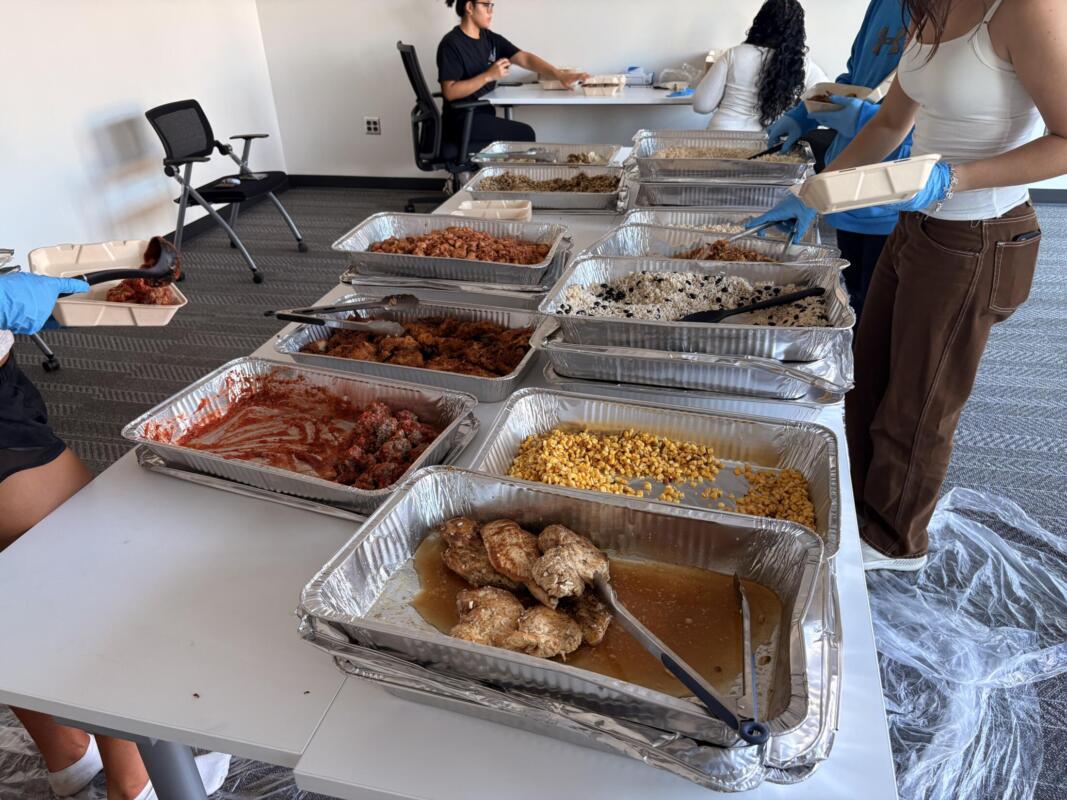
Mondays and Thursdays at Loyola University’s new York Road Community Center are all about giving back. In a sunlit room, around 10-15 student volunteers gather to package grilled chicken, salmon, rice, and beans in to-go boxes headed for the local community fridge. They chat and sing upbeat tunes as they work together with one goal—to end hunger in Baltimore’s families.
With Thanksgiving and the winter holidays coming up, community food access is top of mind. The Baltimore Office of Sustainability estimates that 22 percent of Baltimoreans are food insecure, which equates to 138,150 people citywide. Recent cuts to SNAP benefits have also negatively impacted those in need.
While there are many reasons people in the region go hungry, one is as simple as the uneaten food on your own plate. According to the Baltimore Office of Sustainability, roughly a quarter of what we throw away is food. Aiming to decrease that number, area organizations—especially large campuses like colleges that feed thousands per day—are looking to donate their surplus meals.
One such group is the Food Recovery Network (FRN), a national nonprofit with hundreds of chapters that originated at the University of Maryland, College Park in 2011. It started when a group of students realized just how much edible, extra food their campus dining halls were throwing away on a weekly basis. Now the largest student-led movement fighting hunger and food waste in the country, FRN tasks students on college campuses nationwide with gathering excess perishable food and distributing it to neighbors in need.
In Baltimore, there are five active FRN chapters, including Baltimore City Community College, Goucher College, Loyola University, Stevenson University, and Towson University. In particular, Loyola’s has recovered almost 5,000 pounds of food since its founding in September of 2025, donating excess dining hall fare to York Road neighborhoods via the new community center.
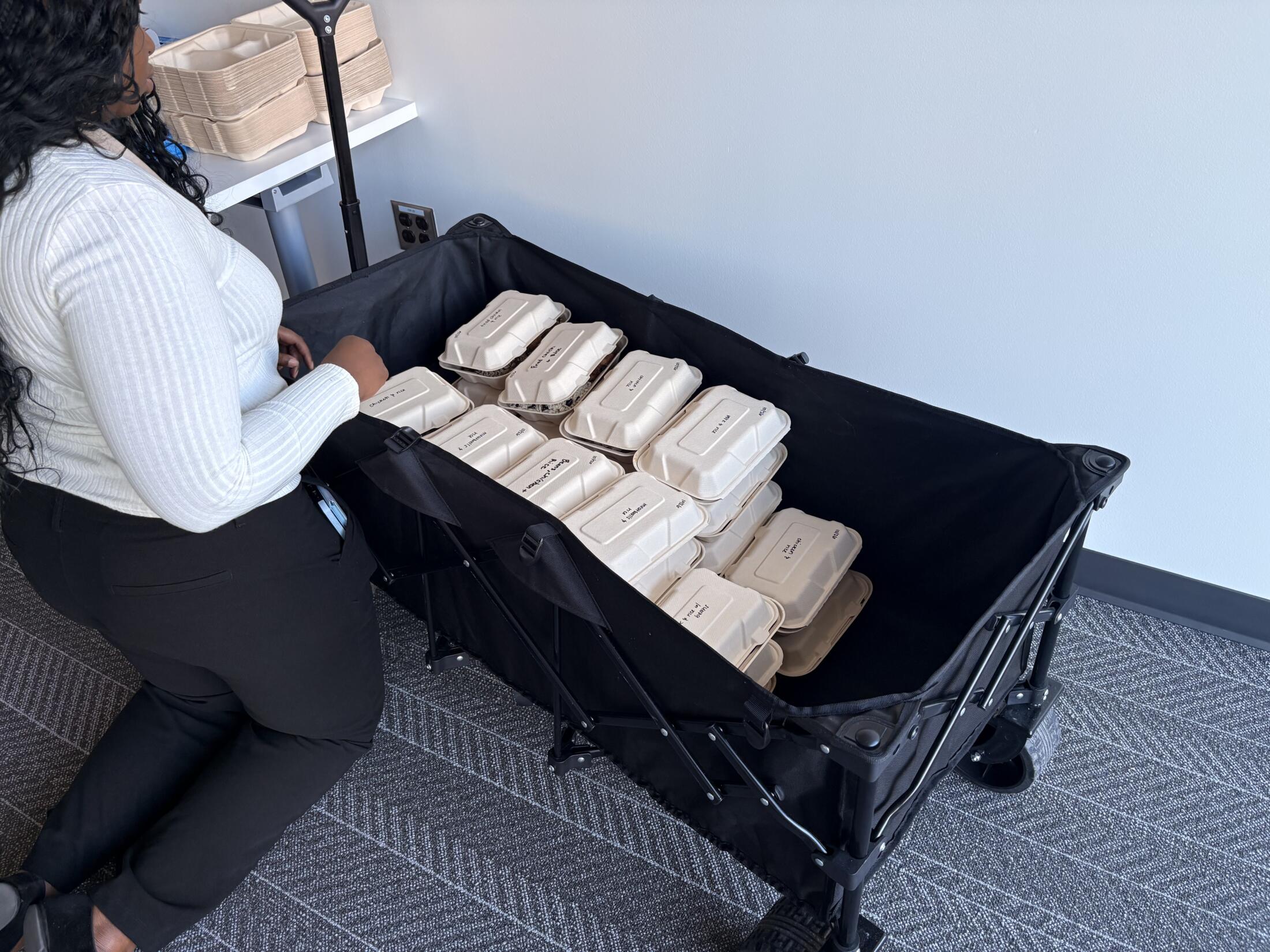
When student volunteers get together at the center twice per week, they repackage and repurpose approximately 150 pounds of food to create meals that go into the Bmore Community Fridge Network’s free grab-and-go refrigerator at 5104 York Road. (The Food Recovery Network became a part of the Bmore Community Fridge Network last year, allowing schools to donate to its 38 fridges across the city.)
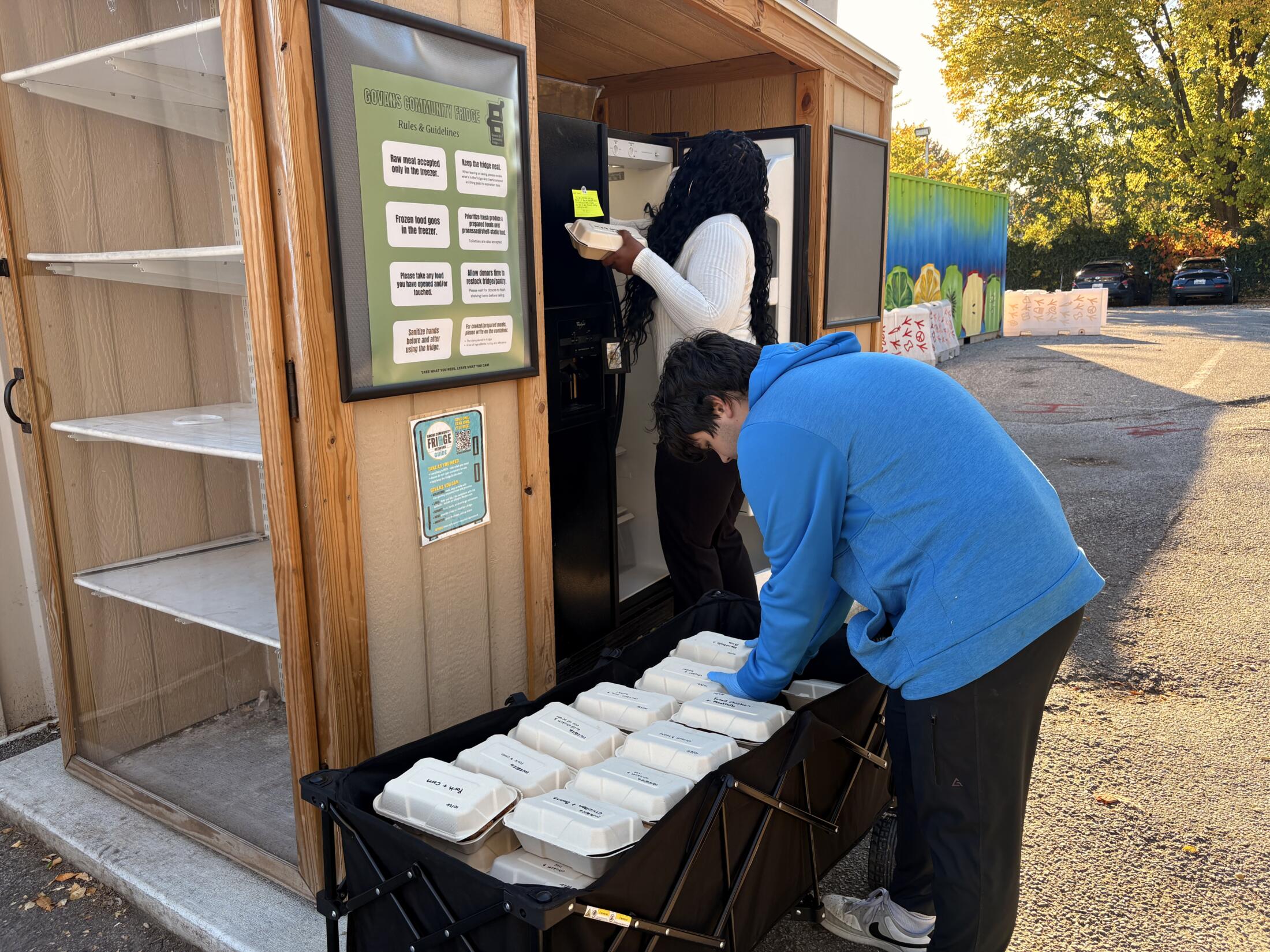
Traci James, moderator for Loyola’s FRN, notes that students don’t eat every meal on campus each week, which leaves anywhere from 10-42 trays from the school’s largest buffet-style dining hall (and more from others) left over. The good news is there’s plenty to fill the fridge, but James says that the food is typically almost completely gone within the hour—stark evidence of the greater issue at hand.
She points out that there are no grocery stores along the York Road corridor, making it difficult for residents to access healthy meals, a scenario often referred to as a “food desert.” But James says that the situation in Baltimore as a whole goes beyond that—referring to the larger citywide crisis as food apartheid.
“There has been such a disinvestment in a lot of communities in Baltimore, specifically using the policy of redlining,” says James, explaining how communities were labeled—in red—poor investments for mortgages. “There’s a lower economic achievement in these [communities] because they just don’t have access to the resources.”
A Protestant minister, James says part of her calling is to care for the environment by creating the reduction of food waste, while also assisting the community she calls home.
To that end, she’s always looking for helping hands, adding that the best way the community (students or not) can contribute is through donations or volunteering. Looking ahead, Loyola is also working on an app for students to see where they can gain access to leftover meals from on-campus events—as food insecurity on college campuses is an issue that persists, as well.
As James sums up, the FRN motto at Loyola is, “take what you need, share what you can.”
“Food is a basic human right,” James says. “It is not a want, it is a need. I feel like that’s part of my calling.”
How to Help
Looking to lend a hand this season? Here are a handful of local initiatives to check out.
- Baltimore City’s Food Matters Program collects food scraps every Sunday at the Baltimore Farmers Market beneath the JFX from 7 a.m. to 12 p.m.
- Baltimore’s Office of Sustainability has put together a list of local food scrap haulers that can collect or pick up your excess food for you.
- Baltimore-based nonprofit 4MyCity Inc. approaches food insecurity through the lens of environmental sustainability and food recovery, as well. According to founder Christopher Dipnarine, 4MyCity welcomes 300-350 families daily and distributed 44 million pounds of food in 2025 alone. Dipnarine says all of their food services are completely free and they are open to donations large or small, from individuals or businesses and grocery stores.
By the Numbers
By looking at area university FRN donations, we offer a peek at how much food can be recovered and put to good use.
Baltimore City Community College
Total Food Recovered: 1,563.58 lbs
Meals Provided: 1,303 meals since July 2026
Goucher College
Total Food Recovered: 19,320 lbs
Meals Provided: 16,101 meals since 2013
Loyola University Maryland
Total Food Recovered: 5,027.14 lbs
Meals Provided: 4,189 meals since 2025
Stevenson University
Total Food Recovered: 11,881 lbs.
Meals Provided: 9,901 meals since 2018
Towson University
Total Food Recovered: 64,295 lbs
Meals Provided: 53,580 meals since 2014
University of Maryland, College Park
Total Food Recovered: 383,973.91 lbs.
Meals Provided: 319,978 meals since 2011