
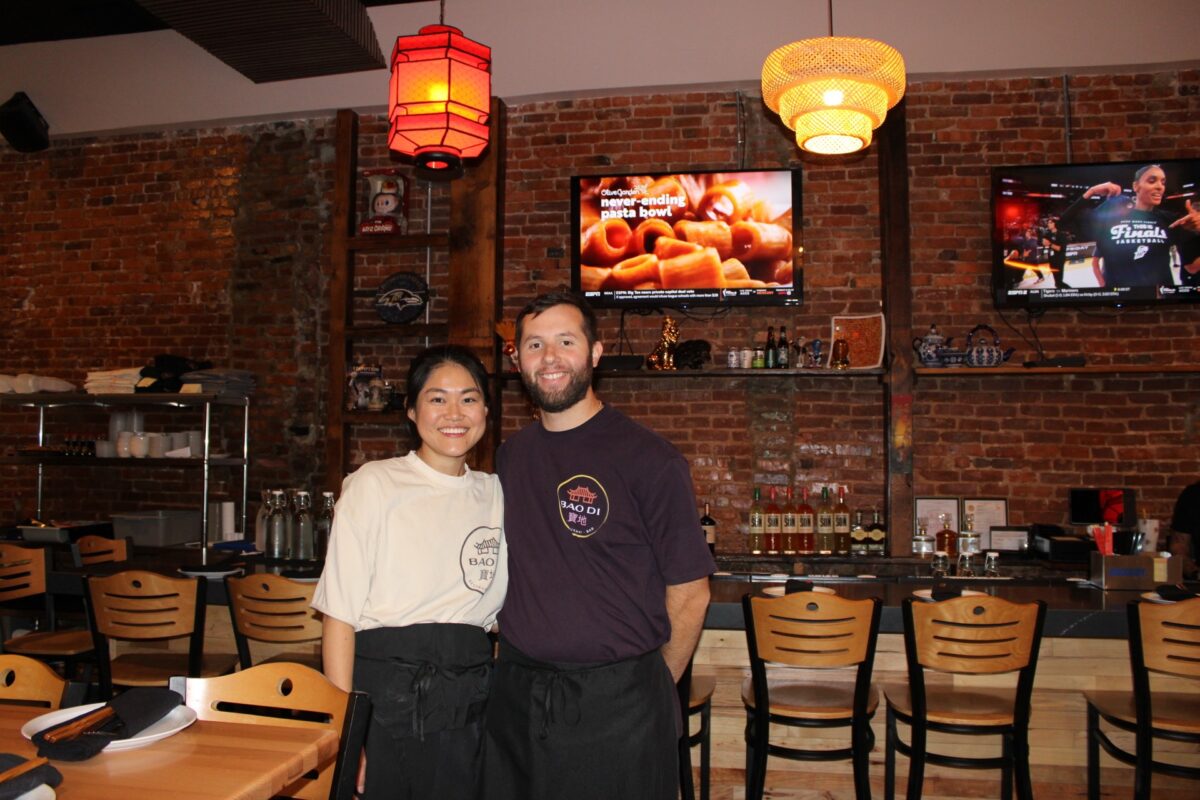
When Lucy Wang and her husband, Eric Repas, began dreaming about opening their own restaurant, they envisioned a space that reflected both their family’s roots—Wang’s family is from Shenyang, China, while Repas is a native Marylander—as well as their shared life in the U.S.
Now, it’s all come to fruition at Bao Di on Eastern Avenue in Highlandtown. After hosting a few soft openings earlier this month in preparation, the owners will officially debut their new Northern-focused Chinese restaurant this Wednesday, Oct. 15.
Bao Di is a welcome take on Chinese cuisine in the city. Much like other immigrant cuisines, there’s usually one style that reigns. Italian restaurants, for example, largely feature Southern dishes from Naples and Sicily. Similarly, Chinese food—particularly in Baltimore City—is often rooted in Sichuan cuisine.
In recent years, Sichuan food has been made ubiquitous here by James Beard Award-nominated chef Peter Chang, who is behind NiHao in Canton and his namesake spot near The Johns Hopkins Hospital campus. Dishes often feature mala, a combination of numbingly spicy Sichuan peppercorns and hot chili peppers.
“Our food isn’t heavy on peppercorn spice,” Wang explains of Bao Di’s approach. “It’s more comforting and savory, with dishes like braised pork belly, cabbage and tofu stew, and handmade dumplings.”
While focused on fusion (Chinese-American favorites like cheese wontons, chicken fried rice, Mongolian beef, and General Tso’s chicken will be on offer), Bao Di’s menu will highlight signature items like the Guo Bao Pork, a crispy pork dish with a tangy sweet-and-sour-like sauce.
“It’s traditional to our region [Shenyang is the largest city in the Liaoning Province], but something most people here haven’t seen,” Wang says.
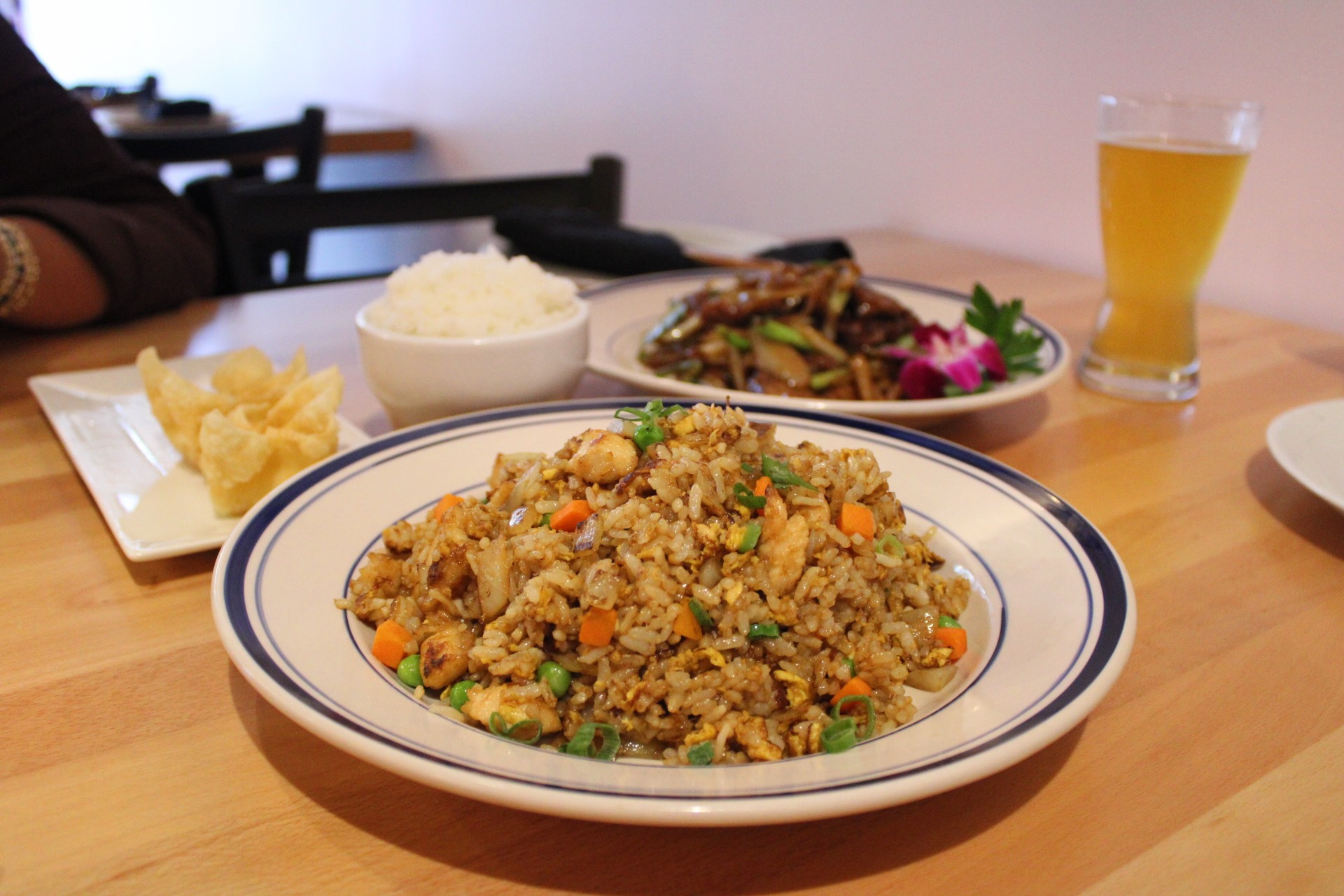
Bao Di’s chef is Wang’s father, who goes by Bob and brings his operational skills from when the family ran a restaurant in Kentucky. Among his specialties are hearty clay pot dishes (comforting, savory stews and rice served in the traditional pots) native to Shenyang.
The Northeastern city borders parts of Russia, and is therefore just as cold in the winters. As such, the restaurant will offer a strong nod to the region’s drinking traditions. At Bao Di, cocktails and beer will be as central to the experience as the dishes and dumplings.
“When you’re from Northern China, it’s cold, the people are drinkers,” Wang jokes. “You don’t just order a bottle of beer, you order a case of beer and see how many you can get through.”
Bao Di will also offer China’s most famous liquor, the baiju, which, despite its infancy in the U.S., is the world’s best-selling spirit.
“My dad has this special bottle of baijiu,” Wang says. “He puts ginseng [a natural energy booster beloved in China] in it, and we take shots with it every single year. Of course, we had to have it on the menu.”
True to the vision of making the restaurant their own, Repas will serve as head bartender, featuring drinks that are nostalgic for the couple. They met at a bar while both attending Indiana University, drinking the special of the night, a version of a Long Island Iced Tea.
“We share the recipes for the two drinks we were drinking the night we met,” Wang says. “One of them is the Baltimore Zoo. It’s basically a Long Island, but instead of tea, it’s got orange juice, and instead of tonic, it has beer in it.”
With support from a Project Restore grant—which helps business owners transform vacant spaces—the 1,500-square-foot restaurant will seat around 75 and is designed for both everyday meals and game-day gatherings, with TVs for college and pro sports. As an homage to Repas’ love for Baltimore (the couple relocated back to Repas’s home state from Boston in 2019), the space also boasts a dedicated wall for hometown sports memorabilia.
“Baltimore has become our home,” Wang says. “We wanted to create a place that feels like ours and hopefully becomes a place that feels like home for others, too.”
The full website URL for the restaurant is BaoDiMore, a play on the phonetics of “Baltimore.” In Chinese, the word “bao di” refers to a land full of treasure and prosperity—a place meant for growth, good fortune, and creativity.
“After living in Baltimore for years, it just felt right,” Wang states. “This is our Bao Di.”