Food & Drink
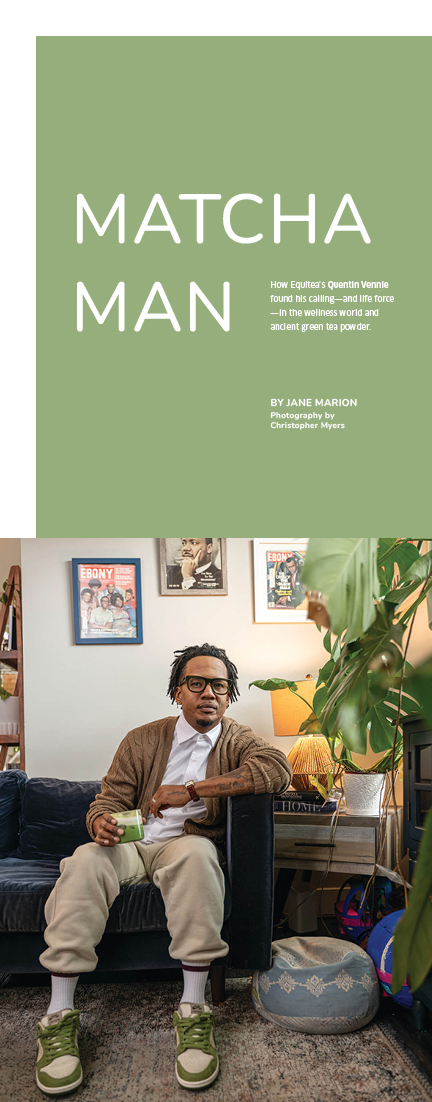

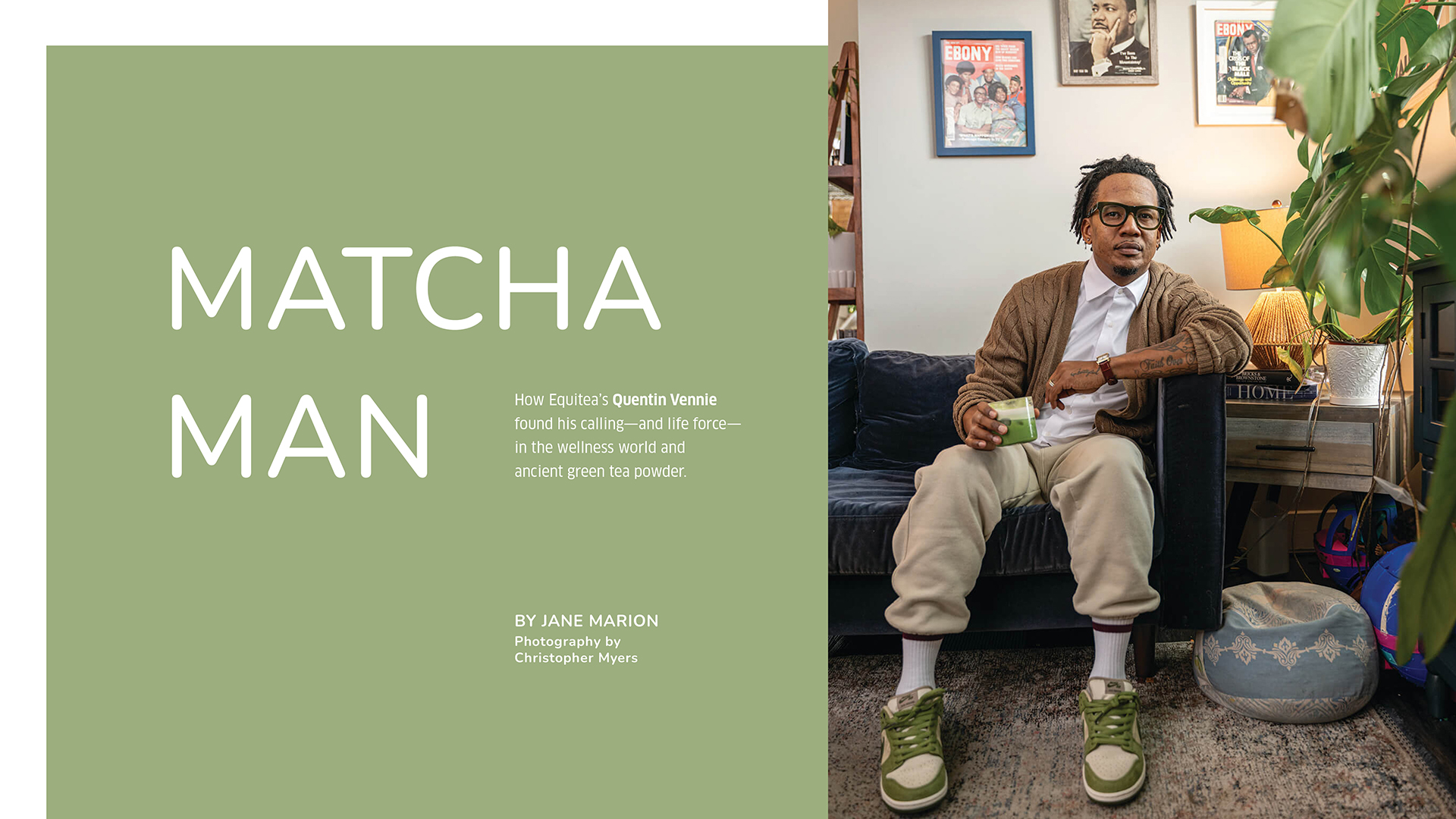
QUENTIN VENNIE’S plant-filled Baltimore apartment is a shrine to his heroes, a paean of his passions, and exuberant expression of what—and who—matters to him most. Flooded with lemon-colored light, the space features photographs of and books by those he calls his “ancestors.” Among them are Billie Holiday, Malcolm X, the Obamas, Toni Tipton-Martin, and Toni Morrison. Also on display are photographs and books by Gwyneth Paltrow, whom he counts as a close friend and chosen family. “She’s a special one,” he says of the Oscar-winning actress, “and I mean that in the most beautiful way.”
Above all, tea is a leitmotif in Vennie’s home—and life—which is not surprising for a man who has built his career on the leafy plant, with its thousands of varieties the world over and many methods of brewing. The kitchen includes a tetsubin (Japanese iron kettle), a gift from his mom, Ellen; a traditional chasen matcha whisk; and a tall baker’s rack crammed with Japanese, Chinese, and Taiwanese teas and rows of ready-to-drink cans of Equitea—the wellness-based tea company he and his wife, Erin, launched on Father’s Day of 2022. The fact that the launch also coincided with Juneteenth, the federal holiday commemorating the end of slavery, was no accident. These days, everything in Vennie’s life is imbued with intention.
After becoming interested in the health benefits of tea, Vennie and Erin first founded The Greenhouse Tea Co., an herbal loose-leaf tea company that Paltrow, then still a stranger, endorsed on social media through sheer once-in-a- lifetime luck (more on that later). A year later, at Paltrow’s suggestion, the couple got into the canned ready-to-drink beverage market and Equitea was born.
Paltrow, by then a friend, became Equitea’s first investor—and is now also a co-owner. The Paltrow connection catapulted the tea company into an overnight success story (so much so that production is temporarily on hold), landing it in every Sprouts supermarket, some 426 stores nationwide, plus Albertsons and other national markets. Along the way, TV personality Candace Nelson and internationally known yoga teacher Kathryn Budig, among other bold-faced names, also became investors.
But Equitea is only one of Vennie and Erin’s projects. They recently founded Baltimore’s first matcha cafe, the Equitea Studio on the first floor of Remington Row. Before the tea studio opened in late December, the couple built a loyal customer base all over town, serving cold brew lattes, iced matcha lattes with strawberry purée, and hojicha lattes with roasted green tea and oat milk at various pop-ups, Library Nineteen in Fells Point, and the former JBGB's space in Remington, where matcha fans willingly waited in line for close to an hour.
“I love my life,” says Vennie, 42, who, in his O’s gear and sporting a permanent gold bracelet from Paltrow’s lifestyle brand, Goop, looks more like the hip kid next door than proud dad to his beautiful blended family that includes three-year-old Alya (his daughter with Erin); Erin’s girls, Iris and Emma, both 15; Madeleine, 13; plus son Jayden from another relationship. (Tragically Vennie’s older son, Christian, died in 2023 from an accidental overdose of synthetic fentanyl.)
Things haven’t always come easy for Vennie and he’s fought hard to arrive at this moment of Zen. Sitting shoeless and centered on a navy velvet sofa sipping Japanese gyokuro green tea with matcha one day last fall, he’s the picture of physical and spiritual health.
“I’m a very spiritual person,” he says, “less religious, more spiritual. But I firmly believe that our lives and our experiences are not here to be hoarded and held. They are here to be shared—and that is our God-given responsibility to one another. I’m an open book. I’m a firm believer that a shared story can be a saved life.”
Ultimately, the life Vennie saved was his own.
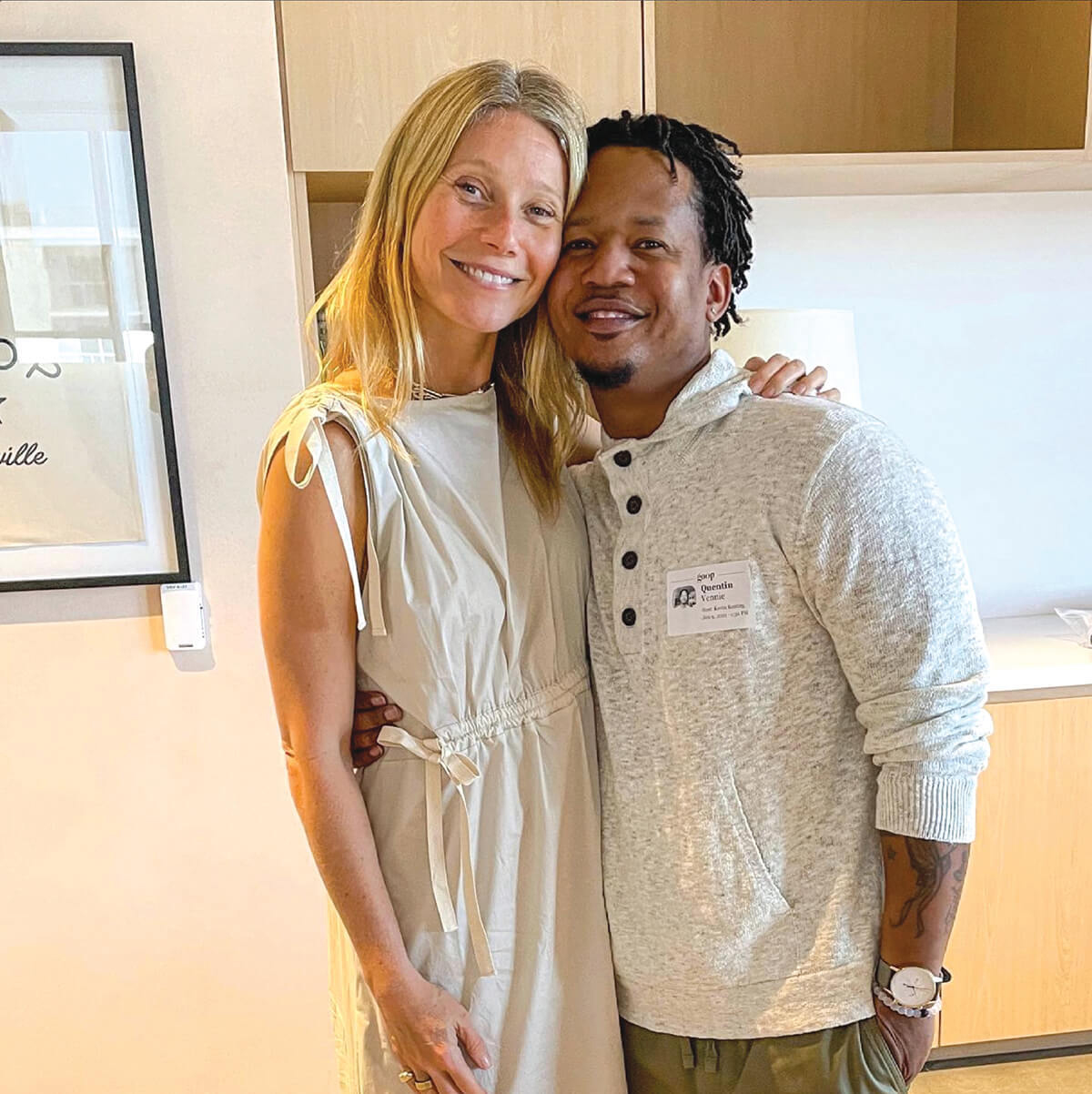
QUENTIN VENNIE
AT AN EVENT WITH FRIEND
AND EQUITEA BUSINESS
PARTNER GWYNETH
PALTROW.—Courtesy of Quentin Vennie
Born in West Baltimore, he was two when his parents split. He and his mom bounced between the homes of various relatives in Park Heights. “It was what my mother called from pillar to post,” he says. By the time he was six, he was making regular trips to Jessup Correctional Institution to visit a father who struggled with heroin addiction and was arrested for “possession of drugs with intention to distribute.” He says the prison scared him but he cared about his father enough to go. “Part of me visited for him,” says Vennie, “because I couldn’t imagine what he was experiencing there. He was only able to see us for one hour a week. He needed those visits—I think he needed them more than I did.”
As one of few Black students at Pikesville’s Sudbrook Magnet Middle School, Vennie felt like a fish out of water. “I was accepted but never accepted,” he says. He questioned everything from the teachers to the textbooks, where he didn’t feel represented.
Inevitably, Vennie’s outspokenness and refusal to fit into a mold landed him in remedial classes—and the principal’s office—where he was cast as a problem kid and a derelict. “They looked for kids who would be the quintessential, idealistic ‘good’ Black kid,” says Vennie. “And I sure wasn’t that.”
With his father behind bars, he searched for role models. He took a cue from his idols, including Black Panther founder Huey Newton (“the power that he stood in and the things he stood for and how he wanted to bring community together was beautiful to me”), revolutionary Malcolm X (“The Autobiography of Malcolm X helped me recognize the beauty in my blackness when everyone around me was telling me my blackness was a defect—that book saved the character of who I am”), and writer James Baldwin. (“I was a fan of how he spoke, how he used examples to essentially back a person into the corner making you come to the conclusion yourself.”)
High school at Milford Mill Academy in Windsor Mill was even more challenging, as Vennie started struggling with his mental health. “It was me in my bed alone hyperventilating and crying and I didn’t know why,” he says. “It just happened out of the blue. Sometimes it would wake me out of my sleep.”
A doctor diagnosed him with acute anxiety and depression and offered medication, but his mother bristled at the idea of a psychiatrist writing a prescription for her teenage son minutes after meeting him, so they left the office empty-handed.
By his 20s, as Vennie’s symptoms worsened, his struggles became hard to ignore, though he didn’t have the framework to understand what was happening. “Vulnerability was deemed to be weakness,” he says. “Trauma was normalized, and having things like anxiety and depression—in our community, those were white people problems. We didn’t have the luxury and the privilege to be depressed.”
Vennie worked various jobs, but most of them were short-lived. After losing his gig at a collection agency, he turned to selling heroin. “A buddy of mine was doing very well for himself,” he says. “I stayed away from it for so long because there was this weird juxtaposition—the guys who were selling drugs to my father would buy me Chinese food when I didn’t have money. And they were also the guys who were like, ‘I know this looks glamourous but this is not a glamorous world.’”
After several years of dealing, not wanting to perpetuate the cycle, he gave it up on the day of his son Christian’s birth.
He worked in car sales for a time and became a father to his second son, Jayden, in 2009. All the while, his mental health continued to deteriorate. In 2010, he experienced his first panic attack and landed in the hospital, where he was diagnosed with a medical textbook’s worth of ailments, including severe generalized anxiety disorder, panic disorder, and severe major depressive disorder. A doctor put him on several medications, setting off a two-year addiction to prescription drugs.
The years that followed were a haze of suffering and deepening despair. In 2011, he survived an accidental overdose. “Up until that point, I didn’t even know that I had a problem,” he says.
Within a year of surviving the overdose, he went on a drinking and drug binge and attempted suicide in earnest. “I had no fear of dying,” he recalls. “I thought if I died like that there would be no pain. I wanted to die to show everyone around me that they should have loved me more, cared about me. I wanted them to miss me and live with the fact that they’d never see me again—that was my fuck you to the world.”
While he’s suppressed certain memories, he recalls acutely what it felt like to survive suicide. “I went home and I had a soul cry,” he says. “They always say crying is a cleansing of the soul. It was a wringing out of relief—it was the closing of a chapter of who I had been. That was the day when I said to God, ‘I don’t know why I’m here, but I’m determined to figure out why.’ And that was it.”
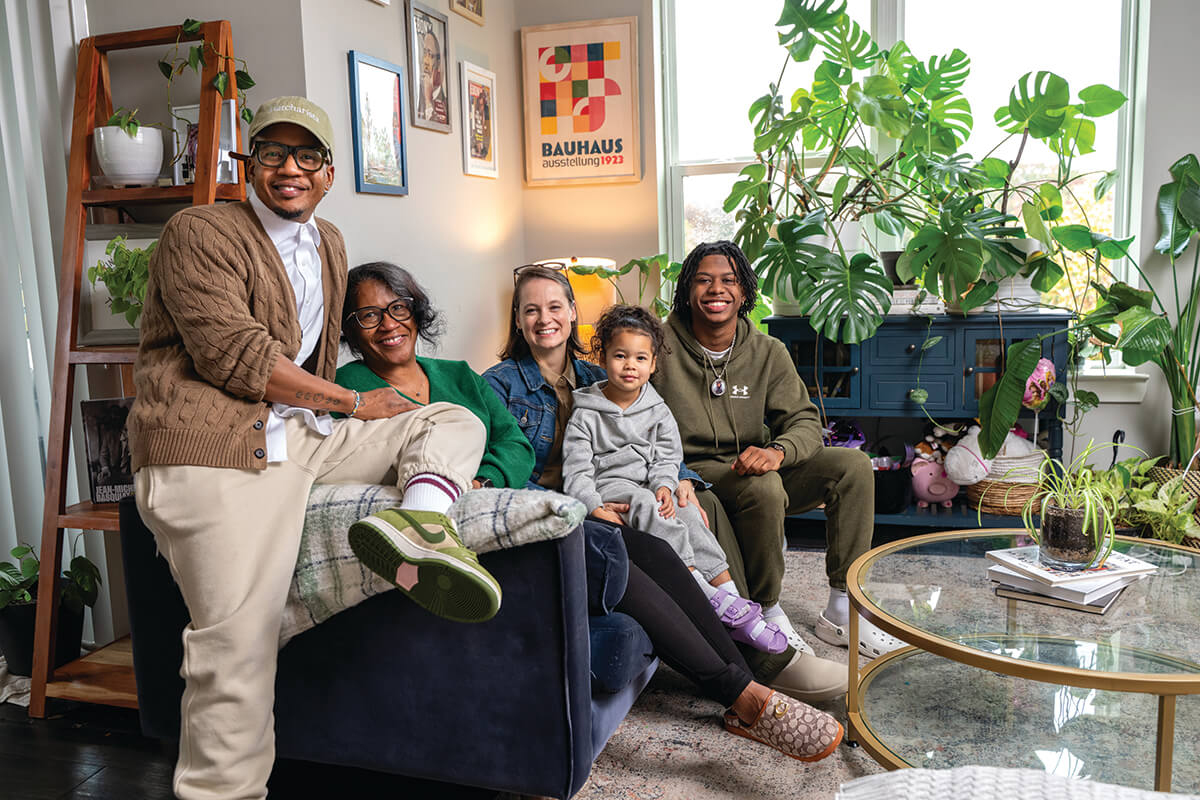
VENNIE RELAXES AT
HOME WITH HIS MOM,
ERIN, ALYA, AND JAYDEN.
It’s been said that surviving suicide can give the person who struggles a secret superpower. In Vennie’s case, surviving suicide gave him a newfound will to live and a kind of clarity that put him on a path to purpose and healing.
Eventually, he went to his doctor seeking help. “He said, ‘Are you still struggling with anxiety?’” he recalls. “I said, ‘No.’ He said then the pills are working...At that point, it dawned on me that my doctor was my dealer. I was an accidental addict.”
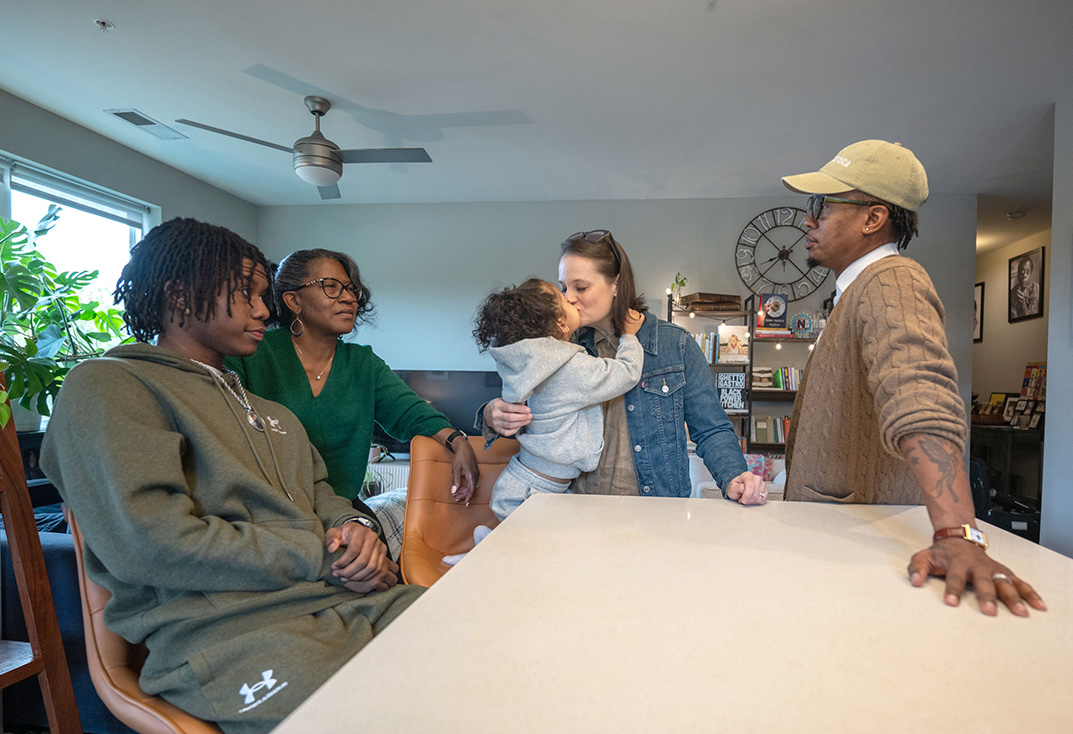
Vennie's family at home.
Thinking that medication was the problem, he started researching natural alternatives, binge-watching the first of several documentaries he stumbled across one night while channel-surfing—“I was inspired by Fat, Sick and Nearly Dead, about Joe Cross, an Australian guy who was juicing to heal himself from an autoimmune disease,” he says, “and Crazy Sexy Cancer about Kris Carr, who used a vegan diet, yoga, meditation, and juicing to help her through Stage IV cancer. I was like, ‘I’m totally doing this.’”
As improbable as it sounds, that night Vennie made a midnight run to the Walmart in Cockeysville, where he bought a Jack LaLanne juicer. “I grabbed every fresh fruit and vegetable I could find,” he says. At first they tasted terrible, but over time, he experimented with various concoctions to make them more palatable by adding ingredients like apples for sweetness, and ginger to impart a spicy kick. Juicing gave him a natural high with its vitamin boost but also a new place to focus his attention. “It’s a buzz because your body normally does not have access to this amount of richness and nutrient density,” he says. “Your body absorbs these vitamins and minerals almost instantaneously, so your body goes through this euphoria.”
As he slowly weaned himself off medication, the juice curbed his craving for pills and helped him kick his nicotine habit. “I’d drink the juice before I’d have a cigarette, and then I’d feel so great, I didn’t want to have the cigarette,” he says. “And then I wasn’t thinking about the pills, because I was thinking about the next juice recipe, so I was distracted from the addiction, while also allowing my body the opportunity to utilize nutrients in a way that it never had before.”
Juicing led him to other facets of the wellness world, including yoga and meditation. In time, he became a certified yoga instructor and served as vice president of The Yoga Alliance Foundation, the world’s largest nonprofit membership organization for yoga teachers and schools. It was there that he launched the Equity in Yoga initiative and met Erin, who calls him “the kindest, most genuine person I’ve ever met.”
Eventually, the wellness lifestyle led him to tea.
To combat insomnia, he’d drink herbal tea as part of his nightly ritual. And then, in 2018, when Jayden was grappling with ADHD and medications weren’t helping, Vennie turned to holistic solutions. “I went to Jayden’s neurologist and said, ‘What else can we do to help him?’” he recalls. “She said, ‘Have you tried giving him green tea?’ She said the L-theanine, which is naturally occurring, as well as the small amount of caffeine would help his brain and give him a calm focus—it would work much like Adderall but without the risk of side effects or any potential addictions.”
Vennie and Erin brought home green tea from area markets, but none of them appealed to Jayden’s palate. They decided to blend their own organic teas with high-quality ingredients such as peppermint, lavender, burdock root, and calendula flower and explored other ingredients known to have healing properties. “We incorporated cardamom in our black tea, which is supposed to help with depression,” he says. “We also have a spiced hibiscus. It contains cinnamon—even the smell of which can help to boost brain function. It also has elderberry, which is an antioxidant. We use ashwagandha to help mind and body recover from stress in all our teas.” Before long, the results were undeniable. “By the end of that school year, he went from struggling to being on the honor roll,” says Vennie.
At that point, now 2020, the couple decided to launch The Greenhouse Tea Co., their loose-leaf tea company.
Serendipitously, not long after, Paltrow found Vennie on social media around the time of the Black Lives Matter uprising. “Everyone had these black boxes on their Instagram but you’d look at the rest of their page from two years prior and they didn’t even mention a Black person,” he says. “As someone who has lived in this Black body for 40 years, it’s not a trend for me.”
So he decided to call out the yoga/wellness community and those who compare the struggles of (white) women’s rights to racial inequality, in particular. “Need I remind you that the struggles of white women will NEVER be comparable to those of Black women,” he wrote as part of a lengthy post. “Black people have been fighting for equal rights, education, resources, treatment, defense, employment and simply the right to be treated as humans for hundreds of years in this country and only NOW do we have your support? NOW you want to acknowledge your privilege? Why now?”
Paltrow saw the post and DMed Vennie. “She told me she really loved the message I was putting out there,” he says. “She started following me.”
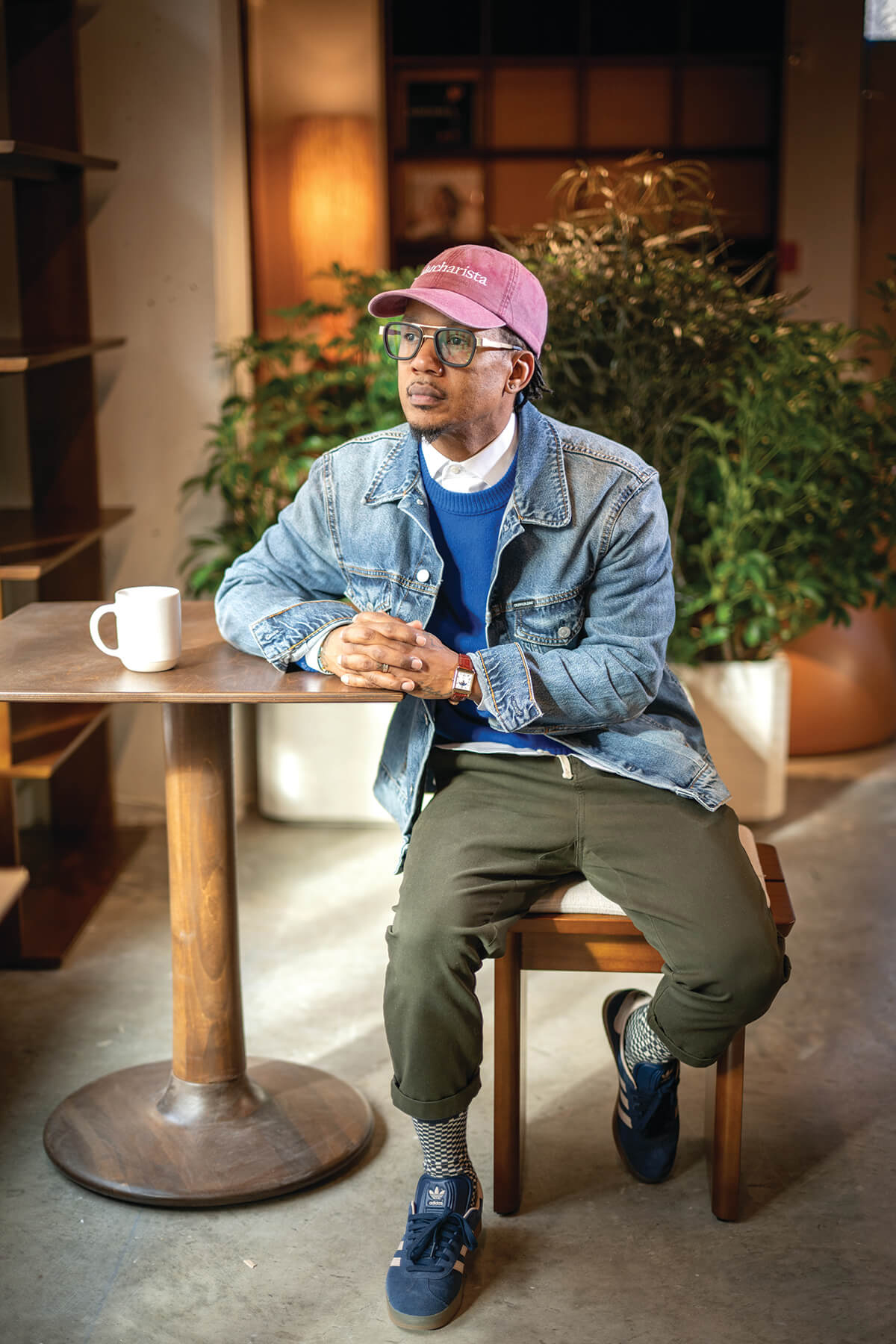
VENNIE SITS IN HIS
NEW MATCHA CAFE
IN REMINGTON.
Vennie had some inkling that Paltrow was famous—but he had no idea that she was that famous. “I knew she was an actress,” he says, “but I didn’t know that Gwyneth Paltrow was an Academy Award-winning actress. I’m from West Baltimore, I grew up watching Boyz n the Hood, Menace II Society, and Juice.”
On a lark, he sent the wellness mogul some tea. “She loved it,” says Vennie, “and she posted a video on Instagram about it.”
A few weeks later, Vennie was traveling to California and boldly asked Paltrow if they could connect. “She invited me to dinner at her house. We had dinner and we had tea afterward. We established and built a relationship from there.”
By 2022, Vennie and Erin had pivoted from loose-leaf tea to canned tea—with a new name reflecting Vennie’s view that, “we all deserve to be well,” he says. “Being well is a human right.” When Vennie was invited to speak about Equitea at BevNET, one of the largest beverage platforms in the country, Paltrow showed up on stage to support her new friend and business partner. After that, the growth was exponential. “We went from nobody knowing who we were to being on stage with Gwyneth at BevNET in California, to being on every shelf in Sprouts. I mean, every Sprouts store, in a matter of 90 days.”
In 2023, Vennie moved to LA from Baltimore to grow the business and grieve his son, Christian, far from home. About a year later, with the business taking off, he and his family moved back to Charm City. The tea, which Paltrow called her “favorite iced tea brand” in the 2023 Instagram video, has limited availability right now due to demand, but Vennie plans on ramping up production once he finds a local manufacturer.
Ever since meeting Paltrow, the woman he affectionately refers to as “G,” the duo have been thick as thieves. Last summer Vennie made matcha drinks at a celebrity-filled Goop event in The Hamptons (“From the hood to The Hamptons,” he proclaimed on Instagram). They have shared holidays with their families together, text constantly, and Paltrow is the godmother to their daughter, Alya.
Along the way, Vennie’s own star has continued to rise, not only because he’s gotten a bump from his celebrity friends but because he’s become a powerful force in his own right. “He’s someone people are drawn to,” says his close friend Thibault Manekin, whose Seawall Development owns Remington Row. Manekin was in touch with Vennie for the first time through Gov. Wes Moore, another friend, who thought the men should meet. “We connected on Zoom during COVID,” recalls Manekin. “As soon as we started talking, it was as if we’d known each other our whole lives. He’s overcome so much in his life and he brings all of that with him in such a beautiful way to try to make the future better for everyone who gets to be in his presence. He’s really special.”
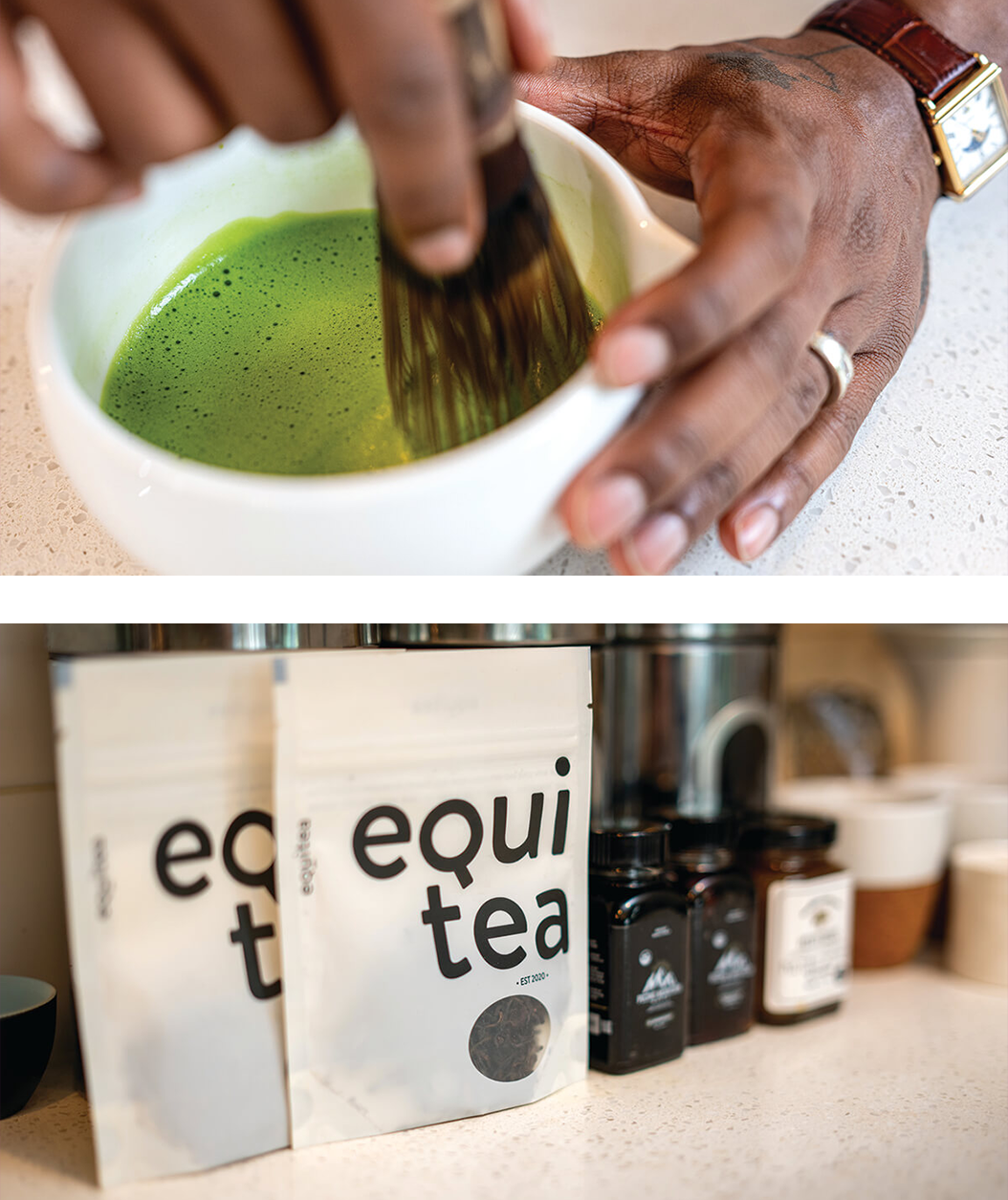
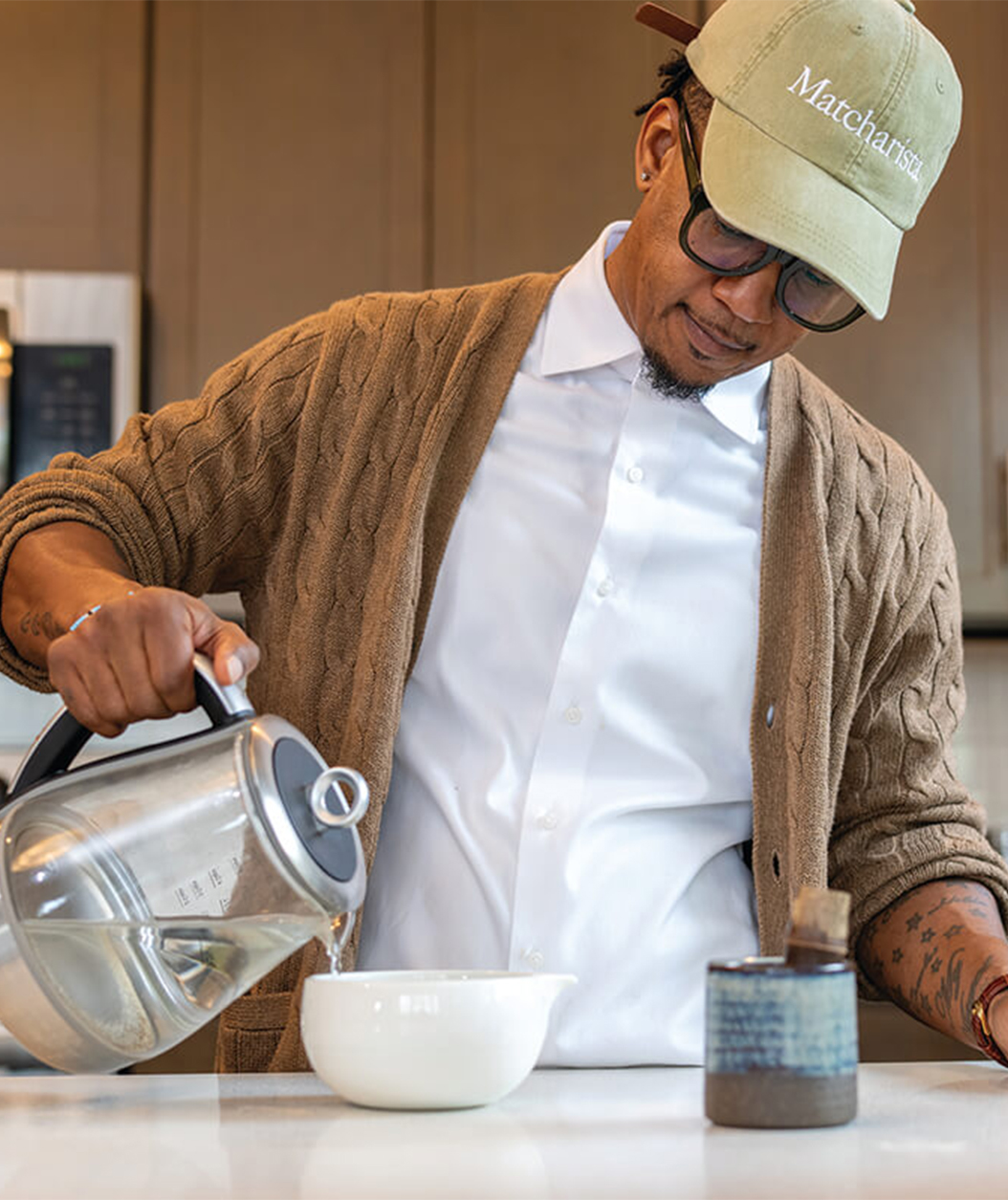
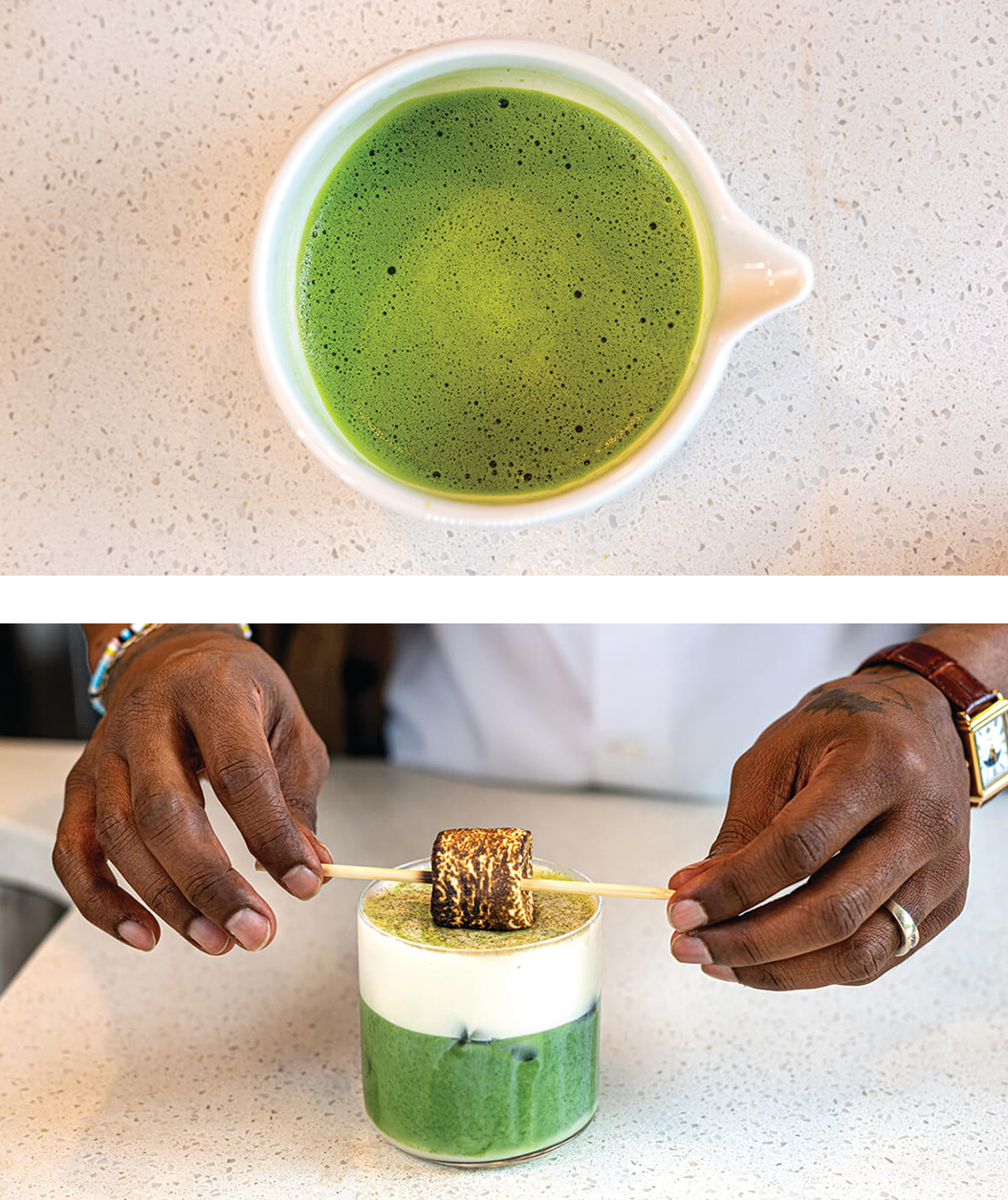
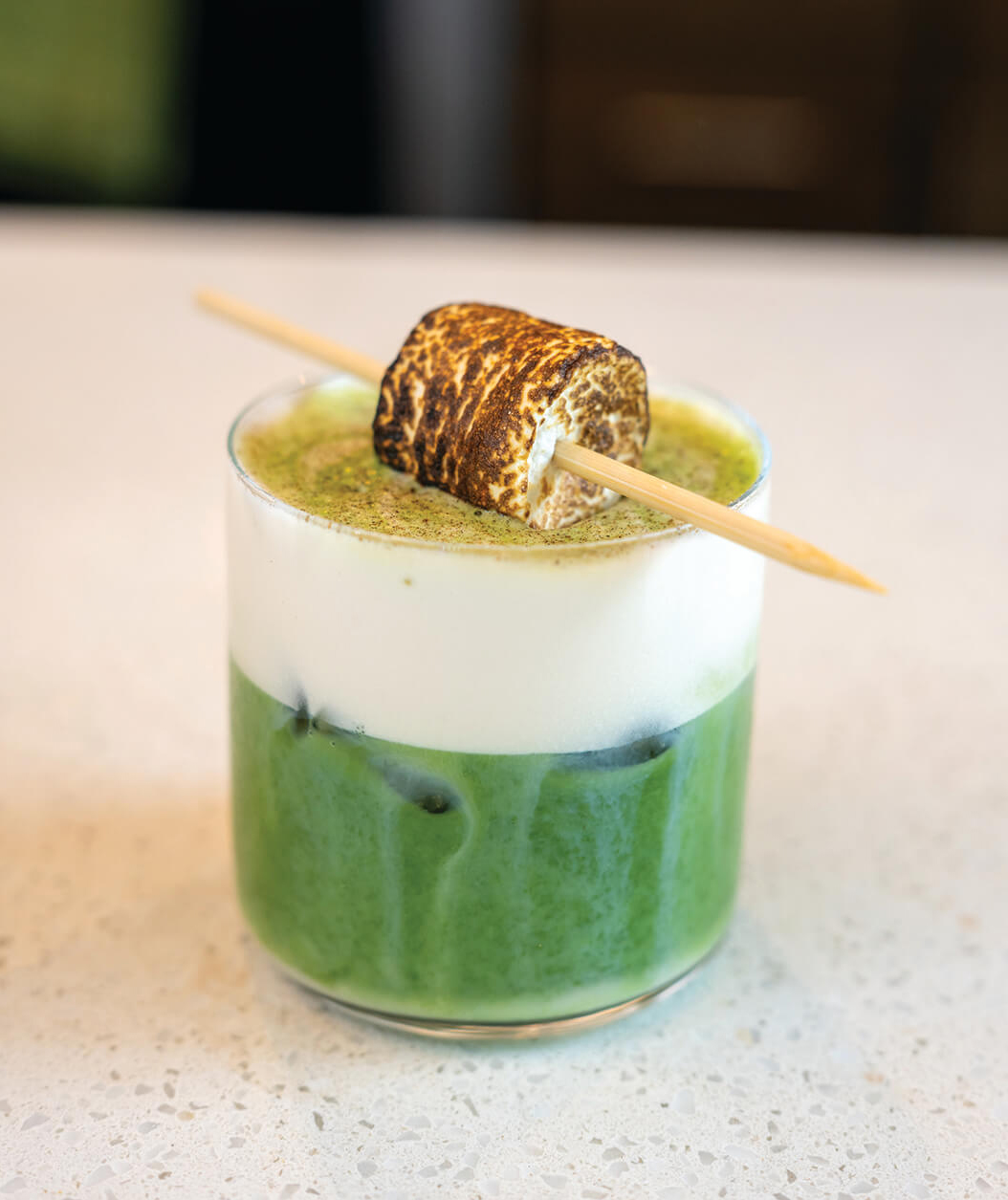
Clockwise from top: QUENTIN VENNIE
WHISKS THE MATCHA;
POURING HOT WATER; A
LATTE WITH TOASTED
VEGAN MARSHMALLOW;
THE FINISHED PRODUCT;
THE WHISKED MATCHA;
VENNIE’S BLEND OF
BRANDED TEA
To date, Vennie has 15,400 followers on Instagram alone (and another 25,300 on his Equitea account). He was named one of Black Enterprise magazine’s 100 Modern Men of Distinction, was featured on the cover of Yoga Journal for his work in making yoga more accessible to people of all colors and communities, and appeared as the wellness keynote speaker for Colin Kaepernick’s “I Know My Rights Camp,” where he led Kaepernick and Malcolm X’s daughter, Attallah Shabazz, in meditation.
In 2017, he wrote Strong in the Broken Places, a raw recounting of his addiction and wellness journey, in part inspired by Gov. Moore’s book The Other Wes Moore, about growing up in West Baltimore. In addition, he was recognized by the American Foundation for Suicide Prevention for his advocacy work in mental health and addiction recovery. And now he’s become a missionary for matcha, a vibrant green tea powder made from finely ground dried tea leaves and considered a superfood. “I am still an addict,” he says. “I’m just addicted to better things.”
For Vennie, the matcha, which he and Erin drink at least four times a day, represents a kind of communion and pause in the day—it’s a way of building structure, creating ritual, and what the Japanese call ikigai or sense of purpose. “We are firm believers that true wellness and well-being come from living intentionally, having the freedom and luxury to live intentionally,” says Vennie. “That means everything from where you spend your time and money to how you exercise and the things you consume.”
Back in Baltimore, Vennie and Erin saw an opportunity to open the city’s first brick-and-mortar matcha house. “Matcha is all over LA; there wasn’t anything in Baltimore. We’re the first people in the city to specialize in matcha,” says Vennie.
This isn’t just any matcha. Their ceremonial-grade matcha powder, sourced from small, sustainable farms in Kyoto, is whisked into a paste for some 20 to 30 seconds with water that’s exactly 175 Fahrenheit, before being made into artfully poured matcha creations that are unlike anything else you’ll find in the city. “It’s consumable art,” says Erin, who oversees operations.
While trendy matcha has largely been bastardized in the United States, green tea powdered drinks have been a part of Japanese culture since 1191, when a Zen Buddhist monk brought tea seeds back from China and introduced the practice of preparing powdered green tea. Matcha soon became a part of traditional Japanese tea ceremonies.
Most matcha drinks in the U.S. are dessert-oriented, but Vennie wanted to stay closer to the tea’s origins as a ceremonial drink with no added sugar or dairy and sweets served only on the side. “We are in the first wave of matcha culture in America,” he says. “I’m choosing to do something different.”

This spring, Vennie and Erin plan to expand their education by visiting the farms where they source their product to learn more about the painstaking process of picking, steaming, and grinding the leaves between granite millstones.
It will be another stop on Vennie’s improbable journey. “Matcha is considered one of the healthiest teas you can drink, because it’s one of the only teas where you actually consume the entire leaf,” he says. “With every other tea, you’re extracting nutrients and flavor. With matcha, you’re getting everything—you’re getting fiber, antioxidants, and all the nutrients.”

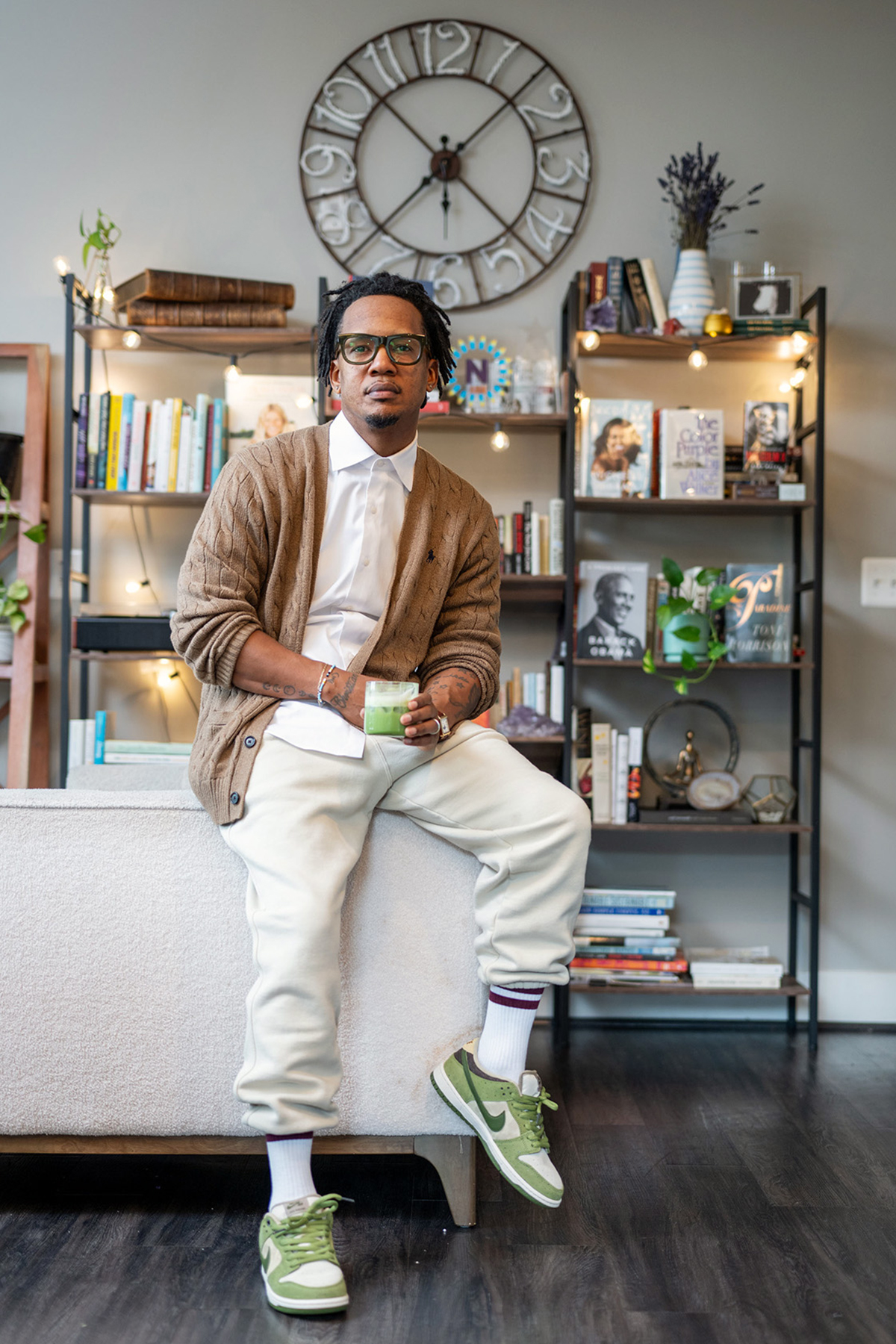
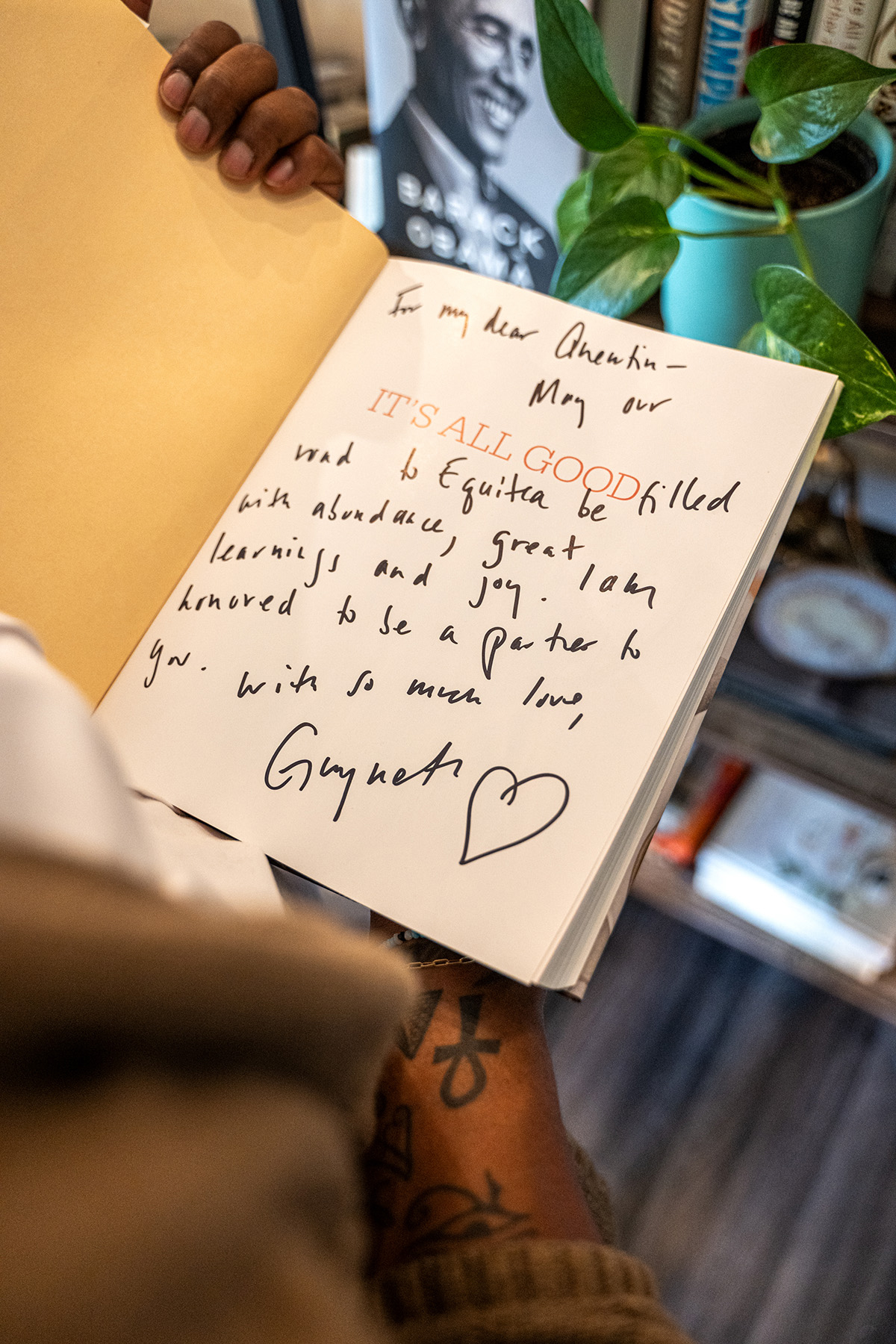
From top: Vennie's bookshelves and listening station; Vennie's inscribed copy of Paltrow's It's All Good ; Vennie sips a matcha at home.
The Equitea Studio, designed by local artist/author/plant guru Hilton Carter, has been envisioned as a hub for good vibes, a place where everyone is welcome, like an extension of Vennie’s own home. It will be a spot “to be transported,” says Hilton, “a place that is warm, calming, and inviting.” There’s a listening station with vinyl records, Carter’s signature greenery, and natural materials such as jute and salvaged wood, with many of the materials crafted by local artisans.
For Vennie, having a business in Baltimore represents a new beginning, a coming home. “Baltimore taught me so much, but it also traumatized me,” admits Vennie. “I always ran from what the city was, because I didn’t see what it could be. But to come back and to see what Baltimore’s growing into, and what it’s becoming has been exciting.”
The same could be said of Vennie’s own metamorphosis—and the opposing forces within. “My greatest fear now is something happening to me prematurely and me not being able to live the fullness of what I’m here to live,” he says. “I have a lot to live for—I know what it’s like to wake up every day and not want to be here. And I now know what it feels like to wake up every day and love being here. Every day above ground is a good one.”