Home & Living
Carvers Creek’s Sustainable Furniture Showcases the Natural Beauty of Wood
A look at how woodworker Ryan Rush makes his one-of-a-kind tables. (Hint: It starts with sustainably sourced wood from trees felled by local arborists.)
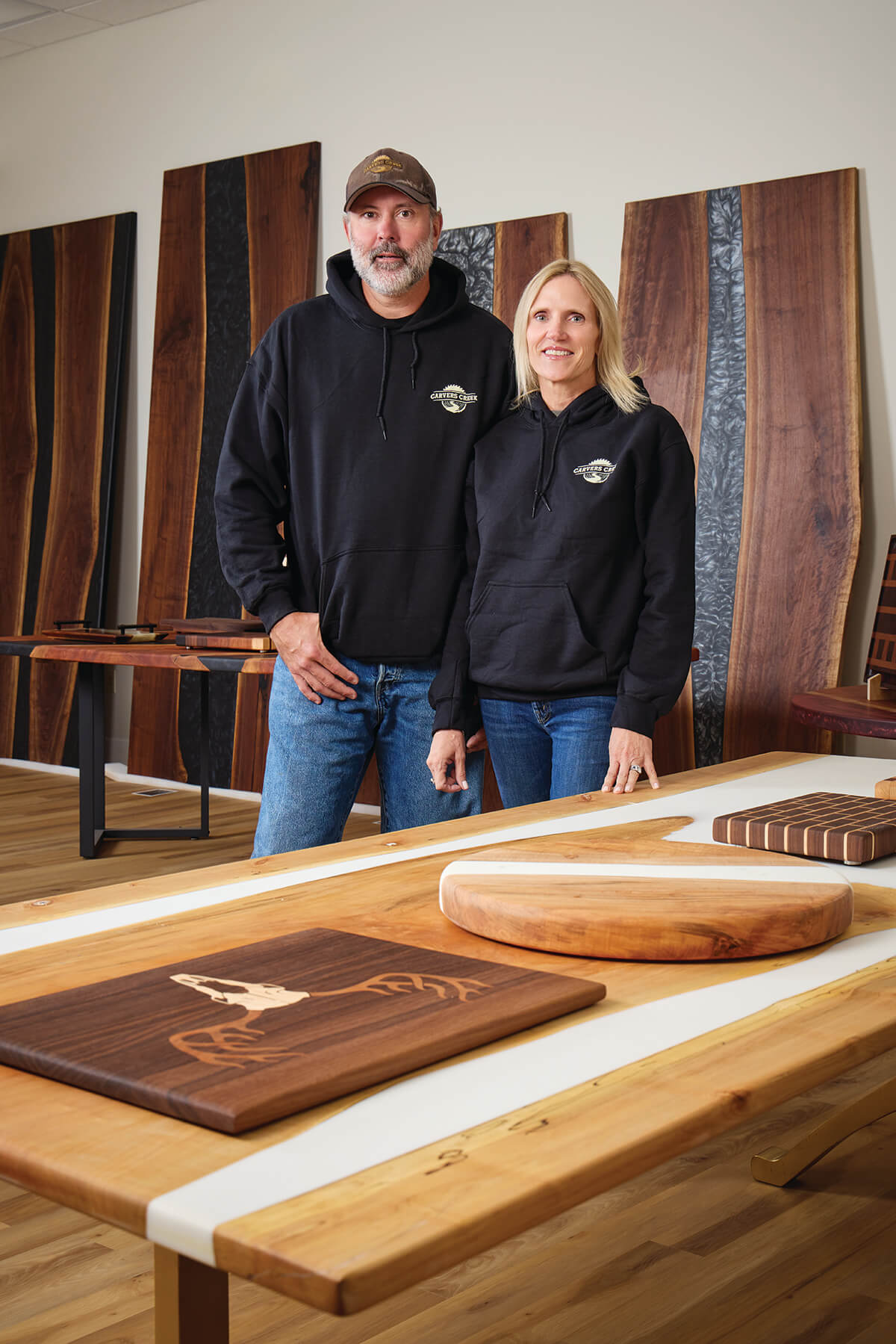
While many people were spending their COVID-19 lockdown making sourdough, Ryan Rush was making tables.
He’d always had an interest in woodworking and, with pandemic downtime, he finally opted to invest in some decent equipment—a planer, a joiner, band and table saws, a drill press—and set up shop in a barn in White Hall. Then he settled in to watch YouTube video tutorials.
“I’m 100 percent self-taught,” says Rush, who owns the Cockeysville-based packaging and foam companies Universal Packaging and Universal Foam Products. “I like being creative and working with my hands.”
Today, the 47-year-old Lutherville resident is sitting at a table of his own design in the Hunt Valley showroom of Carvers Creek, the business born out of that barn. The space is mostly pristine white, like a gallery, which is fitting, as each table propped against the wall is a work of art.
“Because of the grain of the wood, every table is unique,” he explains.
The wood is mostly black walnut, cherry, or maple, sustainably sourced from trees felled by local arborists. Once cut into slabs and dried, a pattern of burls, knots, and whorls emerges along with the beauty of the wood grain.
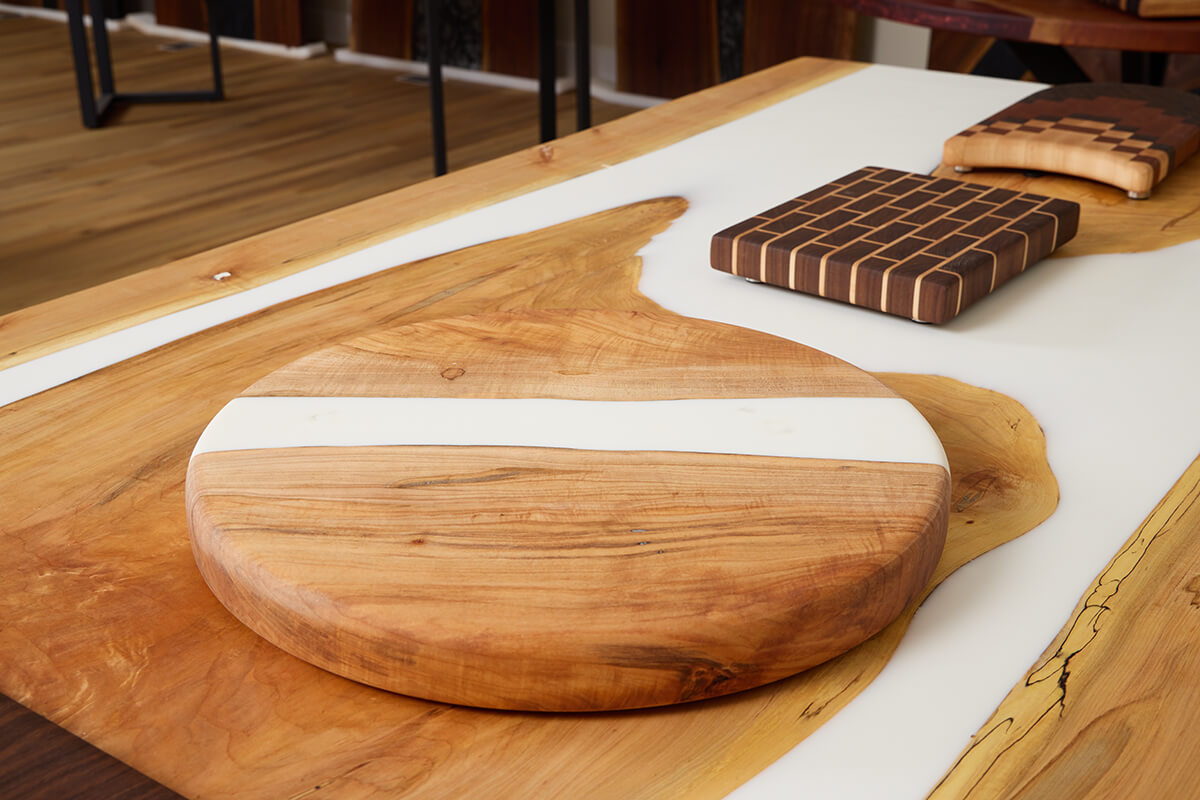
Tables can have a live edge (one that preserves the tree’s original curves) or a straight edge, and Rush uses a technique of poured resin to fill in around the natural contours of the wood, bringing out each piece’s natural beauty.
“The resin really allows the grain to pop, and I love the colors,” he says, adding that the resin is the consistency of Elmer’s glue and can be swirled and manipulated. “It makes for a more three-dimensional look.”
Rush is someone who likes to keep busy. Give him three balls to juggle and he’ll likely add a fourth. He laughs and blames his ADHD for the decision to turn his pandemic hobby into a business.
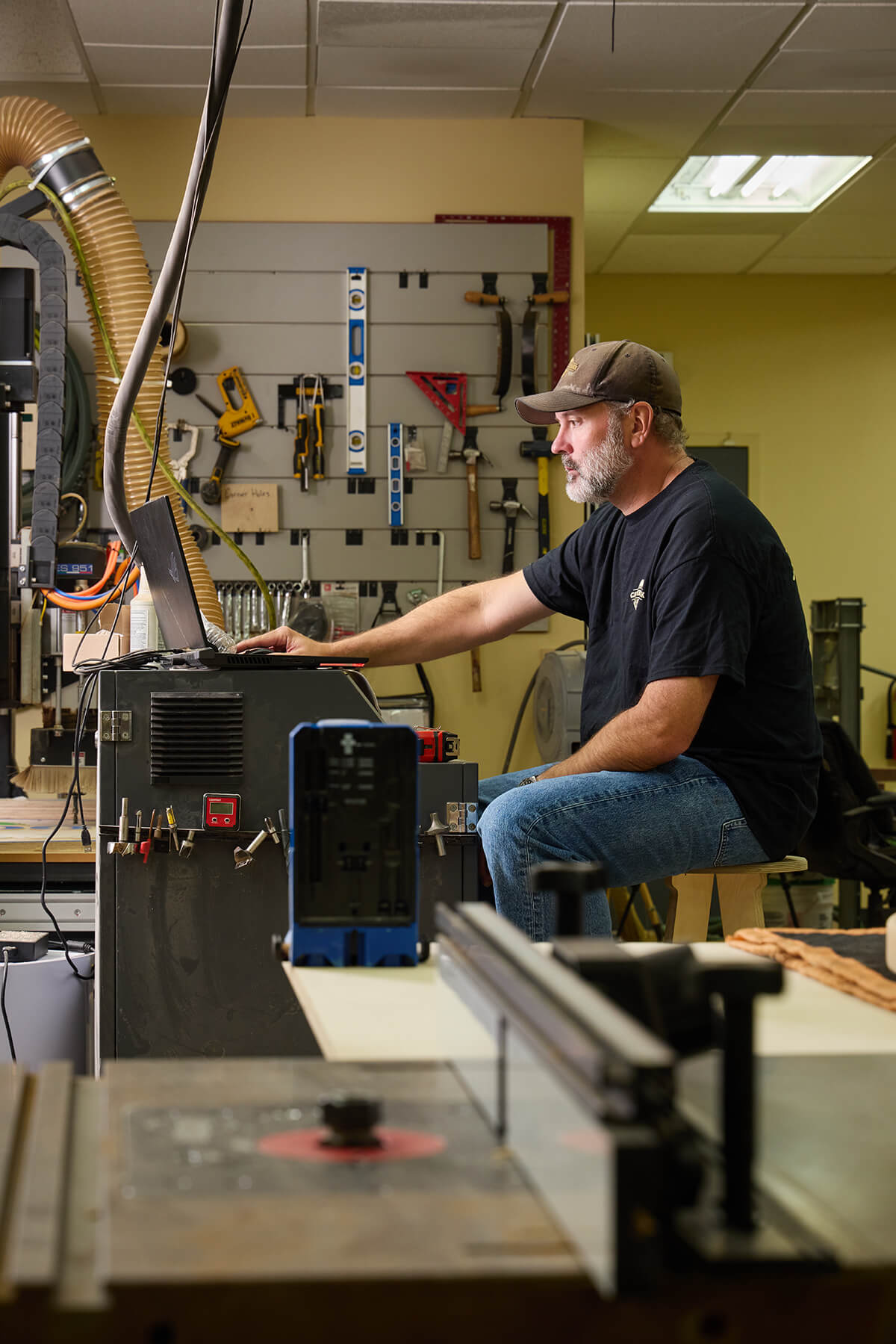
When he couldn’t keep his equipment in the barn (it was rusting with lack of climate control) he carved out a 4,200-square-foot workroom and showroom within the 70,000-square-foot industrial warehouse that houses his businesses. He was able to add a Laguna CNC, a high-tech, computerized router that allows him to mill large pieces and work with different materials.
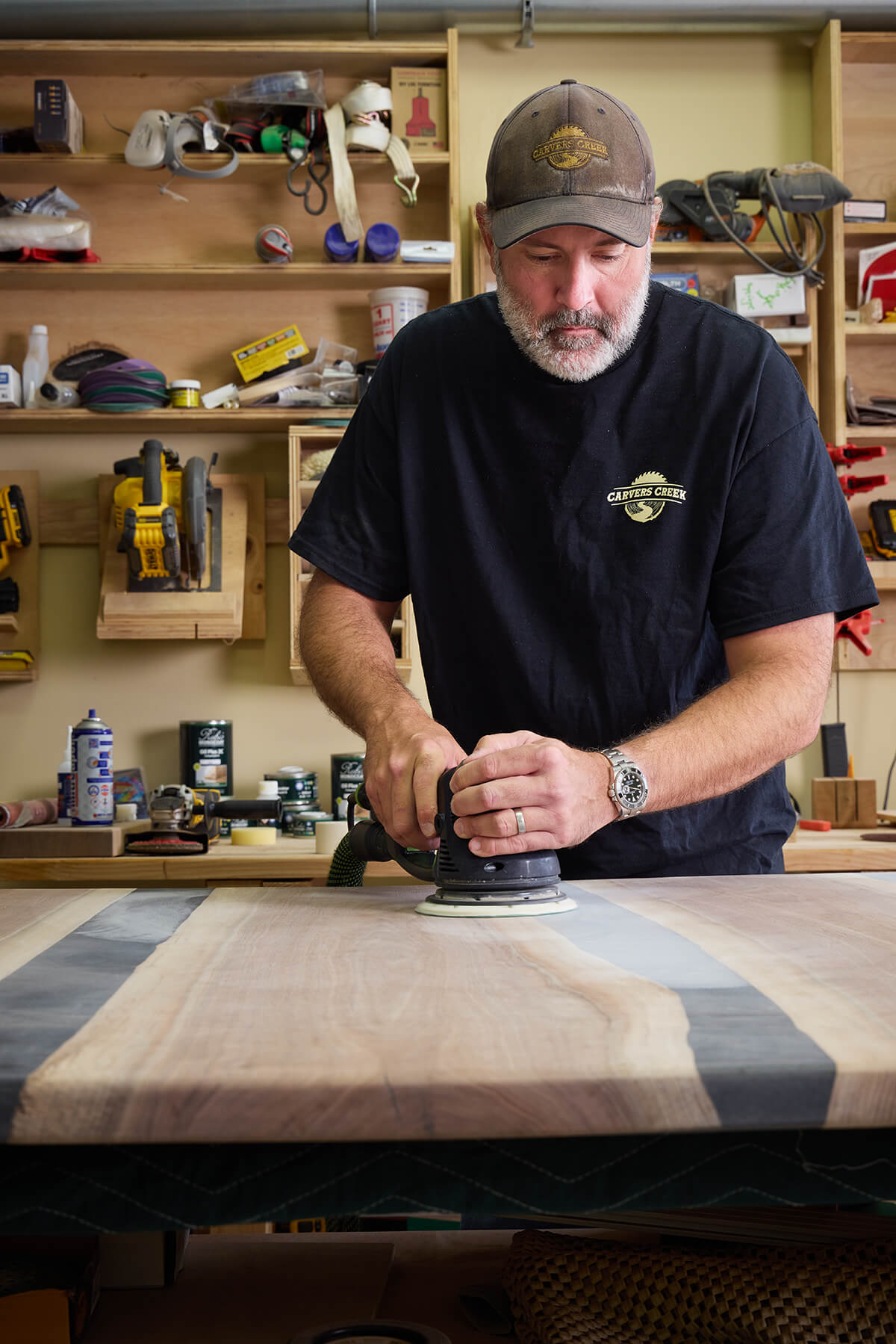
From the gallery, which is open by appointment, Rush can take customers into the shop and explain how each piece is crafted, poured with resin, flattened, sanded, and oiled. While Rush can make wooden legs, he prefers metal supports because “it sets off the uniqueness of each table.”
At the request of his wife, Katie Rush, he also makes end-grain cutting boards from leftover wood. Each features intricate geometric patterns or designs and, after being treated with food-grade mineral oil, becomes a practical piece of art.
Everything in the gallery is for sale, but Rush enjoys working on custom pieces. And, never one to stand still for long, he is already looking at new ways to hone his craft. One thing’s for sure; the man loves a challenge.