Home & Living
Keith Kitts of MD Architectural Rescue Salvages History—But Don’t Call Him a Hoarder
“I’m an anti-hoarder,” Kitts says of his collection of vintage décor, miscellaneous junk, interesting artifacts, and occasional curiosities, which is all for sale. “I’m an adoption agency.”
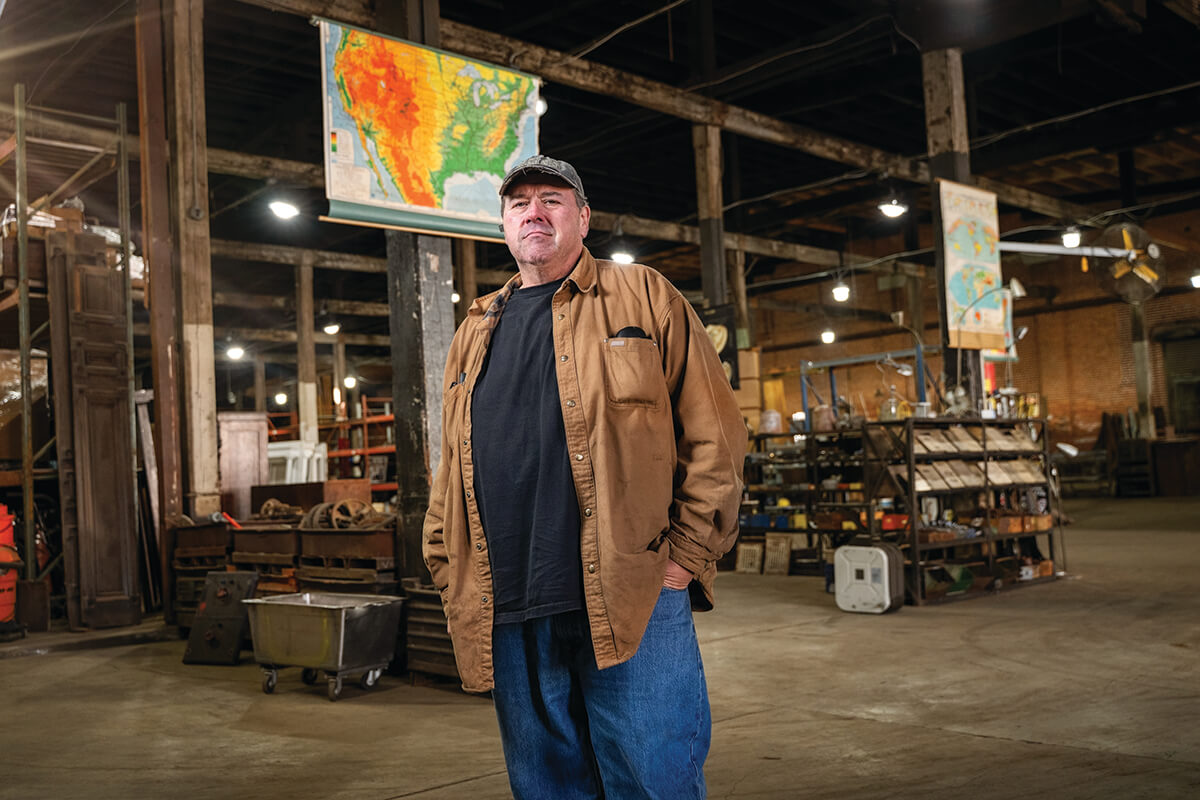
It’s hard to miss the mammoth Baltimore Traction Co. building on Druid Hill Avenue—it stretches an entire city block. But the real mystery is what’s inside the 30,000-square-foot space, constructed in 1891 to introduce cable car service to the city powered by underground cables.
Now it holds Keith Kitts’ treasures—the vintage décor, miscellaneous junk, interesting artifacts, and occasional curiosities he’s amassed over the last few decades.
His MD Architectural Rescue is centered on the idea of ephemera—that things exist, are used or enjoyed for only a short period of time, but still have an inherent value. He believes his mission is to be the steward of these wayward items—to make sure that they don’t end up lost, dumped in a landfill, or worse, forgotten.
Kitts, 57, who looks like a salvager out of central casting—flannel-lined shirt jacket, gruff but gentle voice, sturdy shoes—grew up on Kent Island and always fancied himself not only a collector, but a keeper of stories. “I just love old stuff,” he explains.
He came to Baltimore in the late ’90s, despite growing up “being scared of Baltimore.” He started hanging out with some friends who lived in the city and realized “that I actually liked it and everything I was told about Baltimore was a lie.”
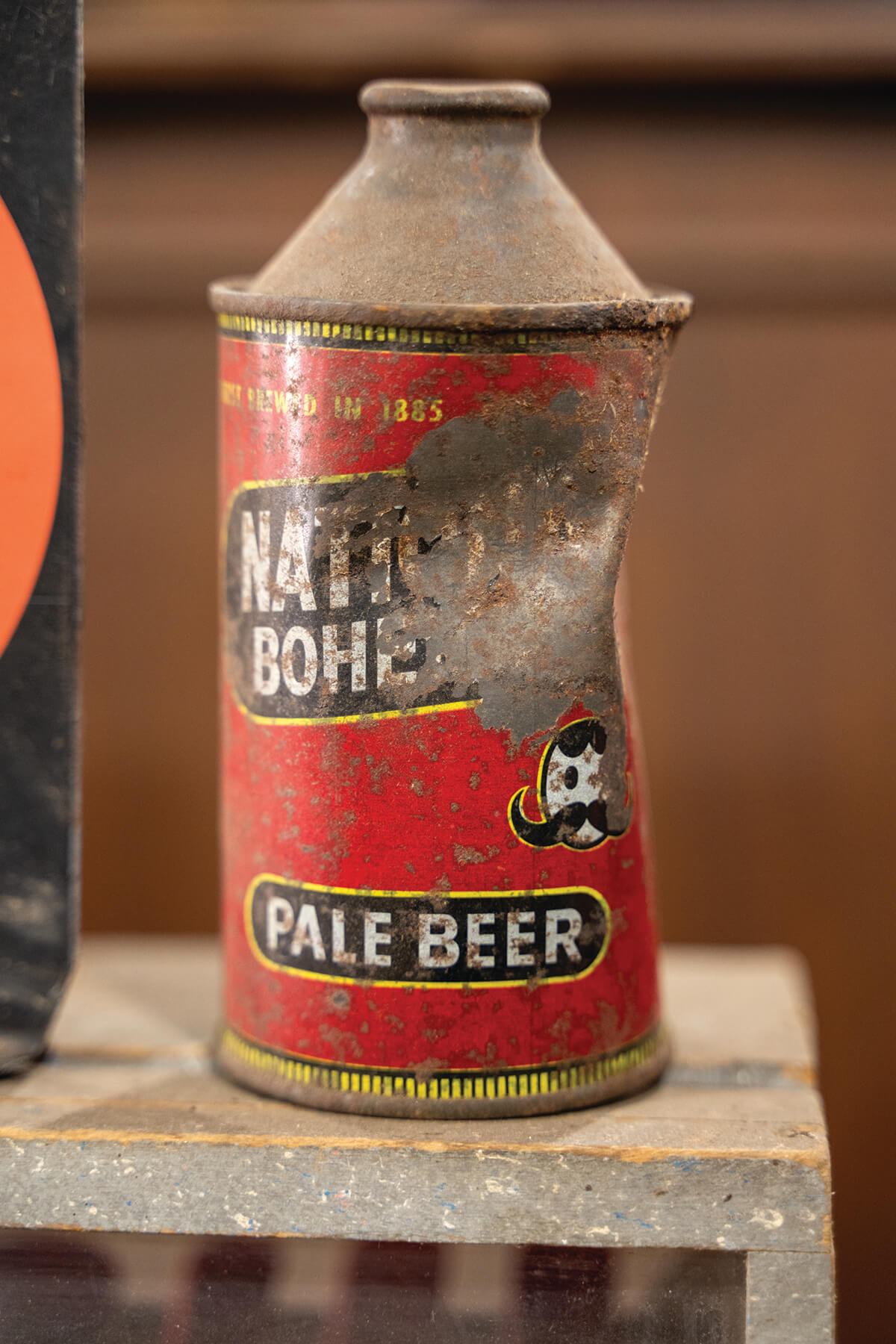
He was hired by a buddy to caretake the National Brewery Stock House, a nine-story brick building on Dillion Street, a major part of the National Brewing Company production facility, in what is now known as Brewers Hill. In exchange for a free rent, he was tasked with clearing out the warehouse. It was a great deal—from that vantage point he could see everything from Ft. McHenry all the way around the skyline.
“But my power bill was $1,600 a month just to heat that damn thing—it had 18-foot ceilings, and I was the only person there.”
Around that same time, Canton was being developed and Kitts would drive around as rowhomes were being demolished or remodeled and pick up fireplace mantels that were leaning against dumpsters. He’d drag them back to the warehouse and, little by little, he started accruing his own collection.
“I was a construction dumpster diver,” he laughs. He would go and talk to the construction team working on houses and convince them to let him inside before the places were gutted so he could strip the old lighting and entry locks.
“Everybody was working in that area, so it was easy to find people,” says Kitts. “I felt good about what I was doing. It’s all about salvaging the history. If I don’t take them, they’re lost.”
“I felt good about what I was doing. It’s all about salvaging the history. If I don’t take them, they’re lost.”
But don’t call Kitts a hoarder—everything is for sale. “I’m an anti-hoarder,” he says. “I’m an adoption agency.”
It’s a line he says often, because it’s not just about moving something out of his warehouse; it’s about making sure whoever takes the item appreciates it and knows its lineage, too.
After the great Canton salvage tour of the late ’90s, most of Kitts’ items now come from hustling, relationships he’s built, and patience. He’s cleaned out asylums, Bethlehem Steel, The Hershey Company warehouses, colleges, and the Howard Street Business District.
“I work with contractors and demolition companies and also property developers.” He likes when a stand-alone or complex of buildings have been forgotten. “It’s better when it’s been sitting for a long time and nobody knows what’s in there.”
And one of his favorite things is bringing the disregarded items back to relevance. “That’s where the juices get flowing,” he says. “It’s like the sugarplums start dancing.”
He says he often has a vision that other salvagers don’t. Case in point: Around 2013, when The Hershey Company began demolishing a significant portion of its iconic, aging chocolate factory complex on Chocolate Avenue in Pennsylvania, Kitts spoke to a buddy who was running the job site.
“He goes, ‘Man, it’s just a bunch of weird stuff. I don’t think there’s anything you want.’”
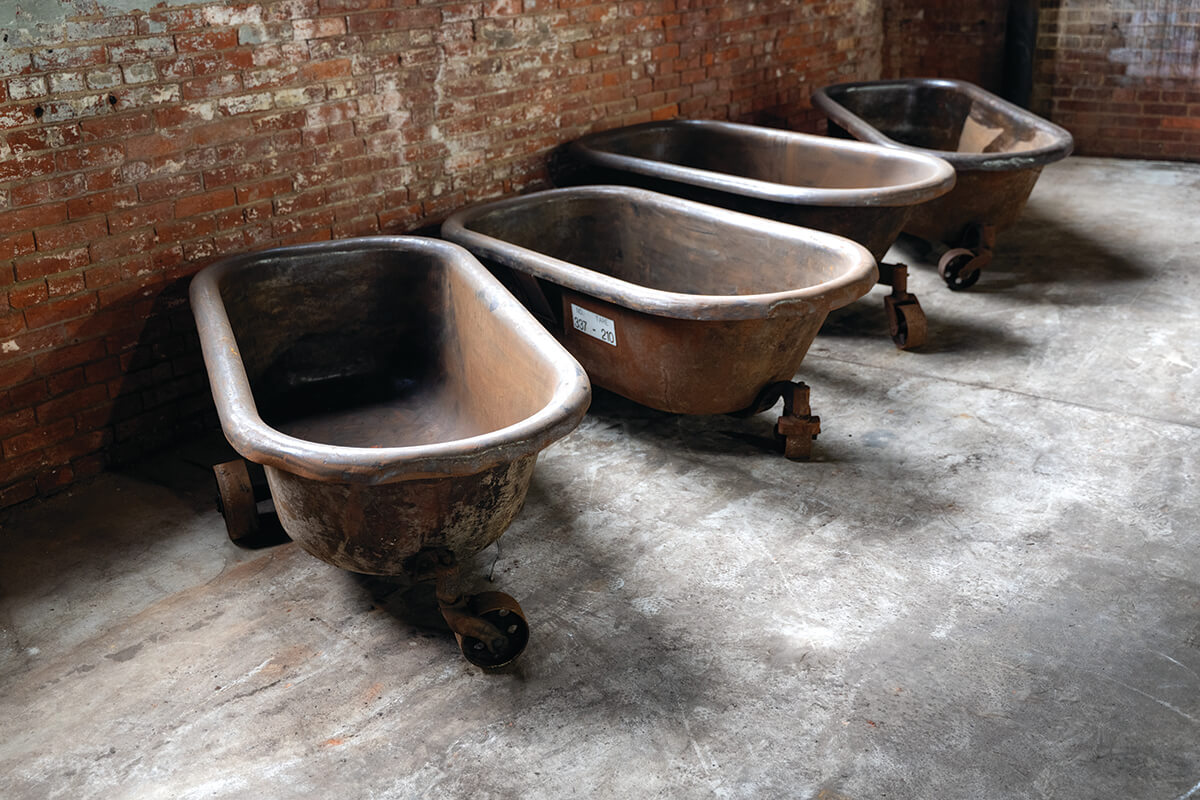
In fact, Kitts spent 18 months salvaging the place. That equated to 16 semis filled with items that Kitts felt could be sold, including vintage Hershey’s chocolate factory tubs, circa 1910 (picture a classic bathtub shape), made from a heavy stamped steel. There were 1,500 tubs in the factory. Kitts took 300 and is down to his last 21. (He sells them for $250 each.)
“Some of them were marked ‘cacao,’ some ‘cocoa butter recovery,’ some were marked ‘dark chocolate,’ some ‘milk,’ and some were just ‘cocoa,’” he reports. People have bought them to use as firepits, coolers, and planters.
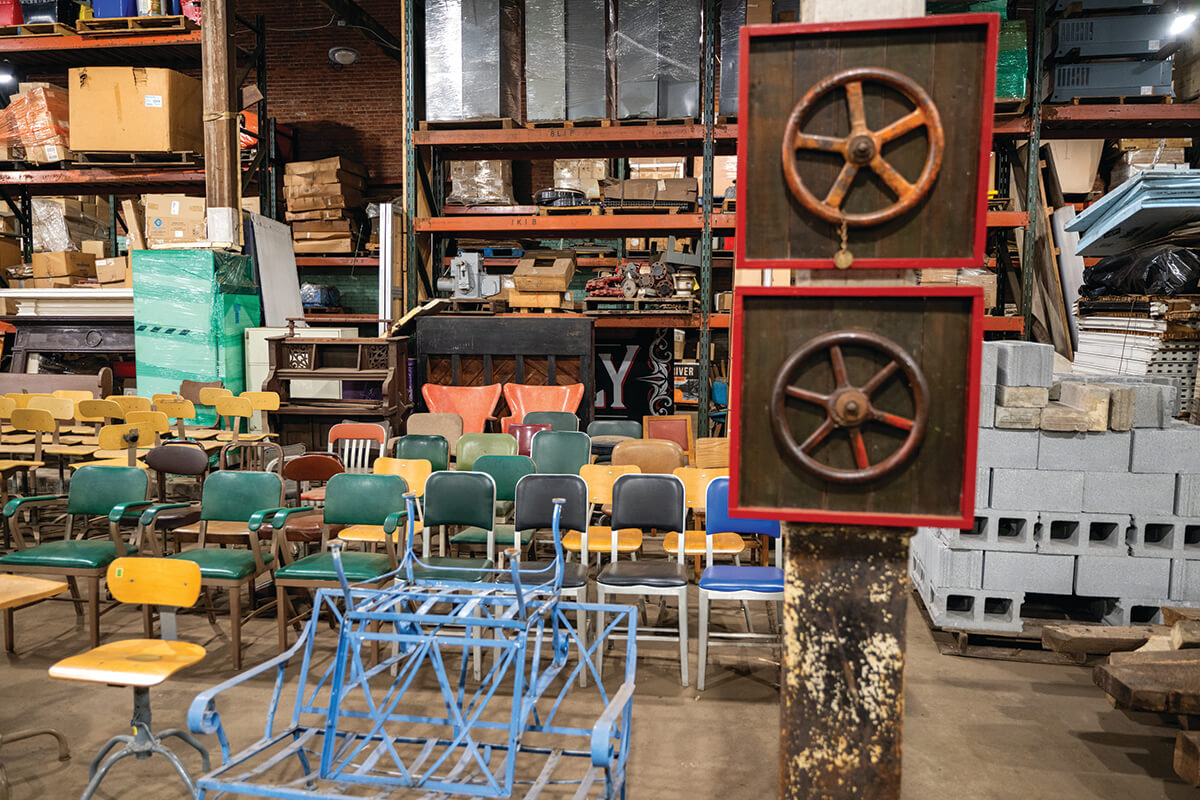
Sometimes selling items takes the patience of a saint. Memorial Stadium was one of Kitts’ first big jobs. Potts & Callahan, a Baltimore- based construction and demolition company, was the primary contractor for tearing down the stadium, and Kitts was able to get inside before demolition began in 2001. (Kitts still has a trophy case waiting for the right buyer.)
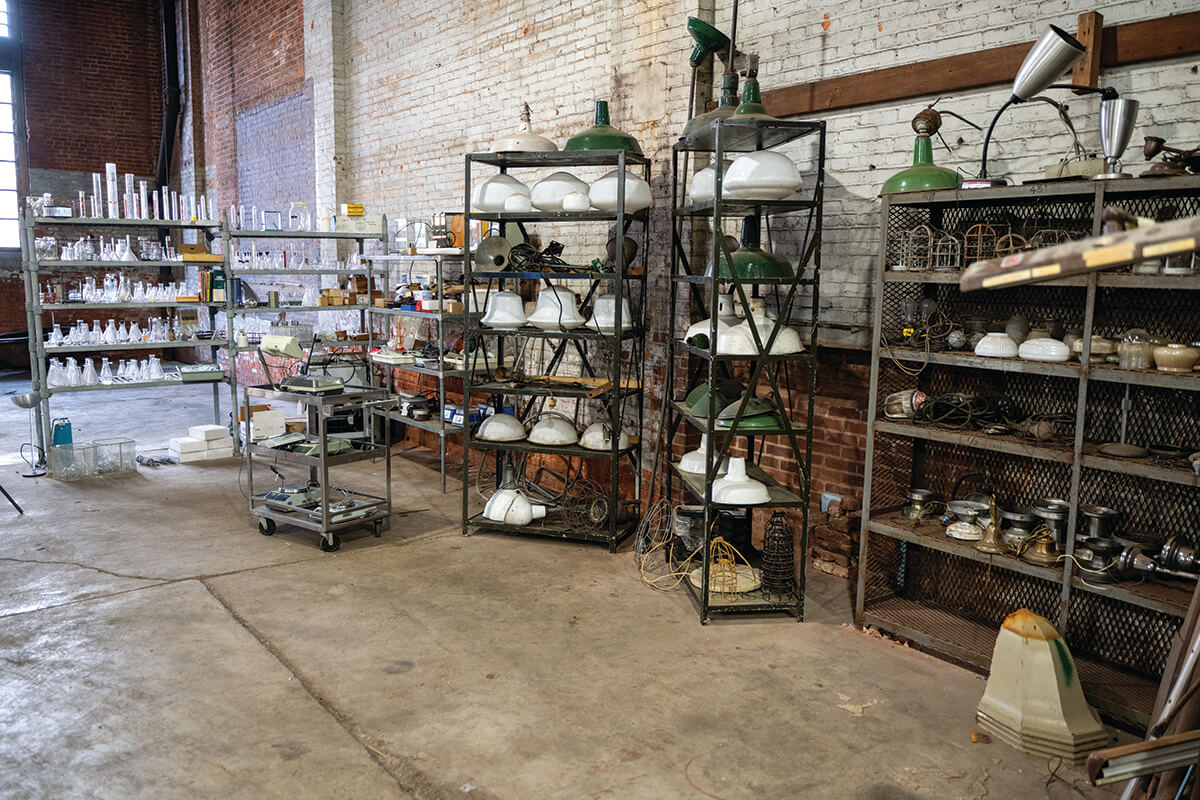
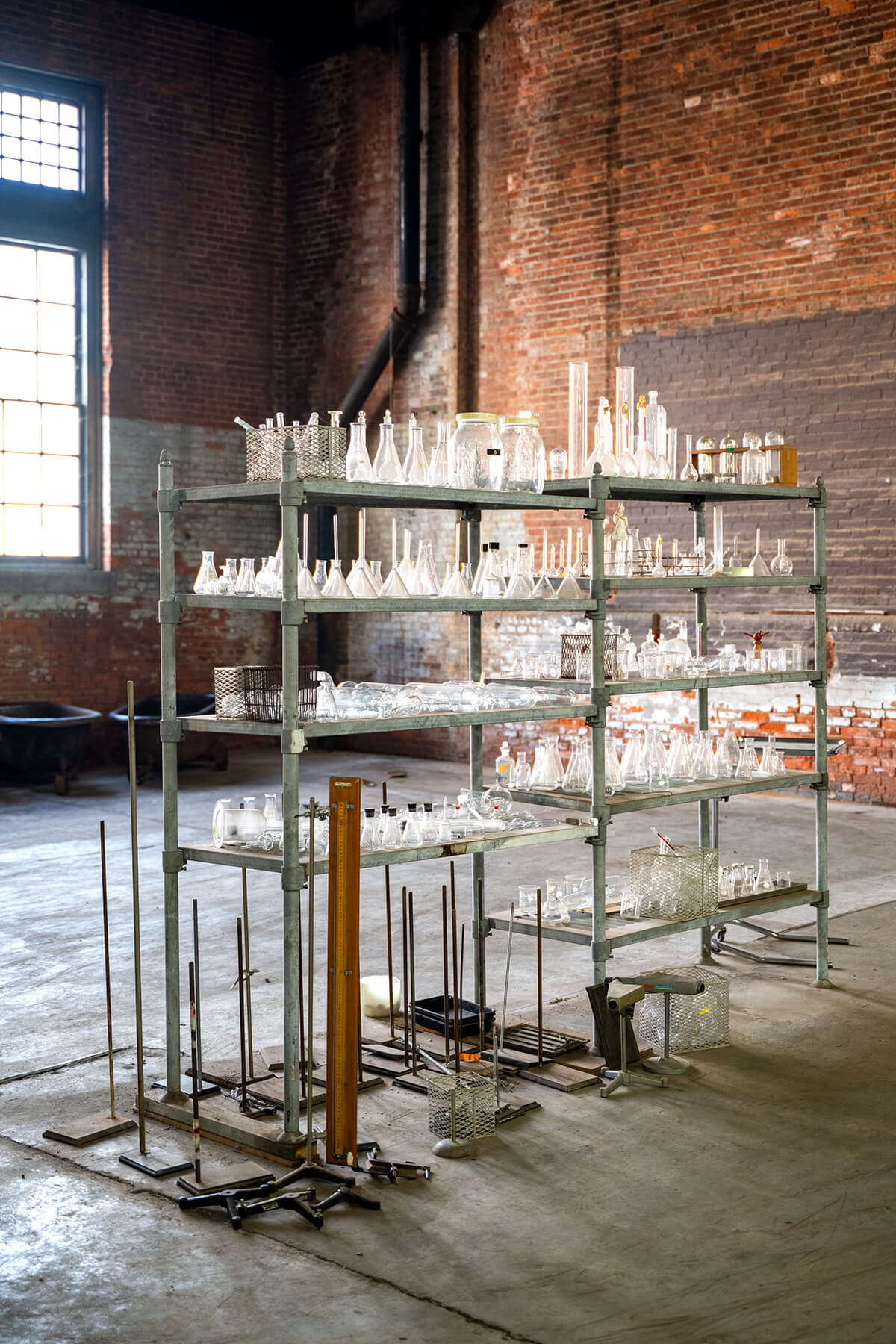
For a similar job at D.C.’s Capital One Arena, he ended up with the flooring that went between the basketball court and the ice for Caps games. And when Towson University’s Smith Hall did its renovations, he found unwanted laboratory equipment, like beakers, flasks, and test tubes.
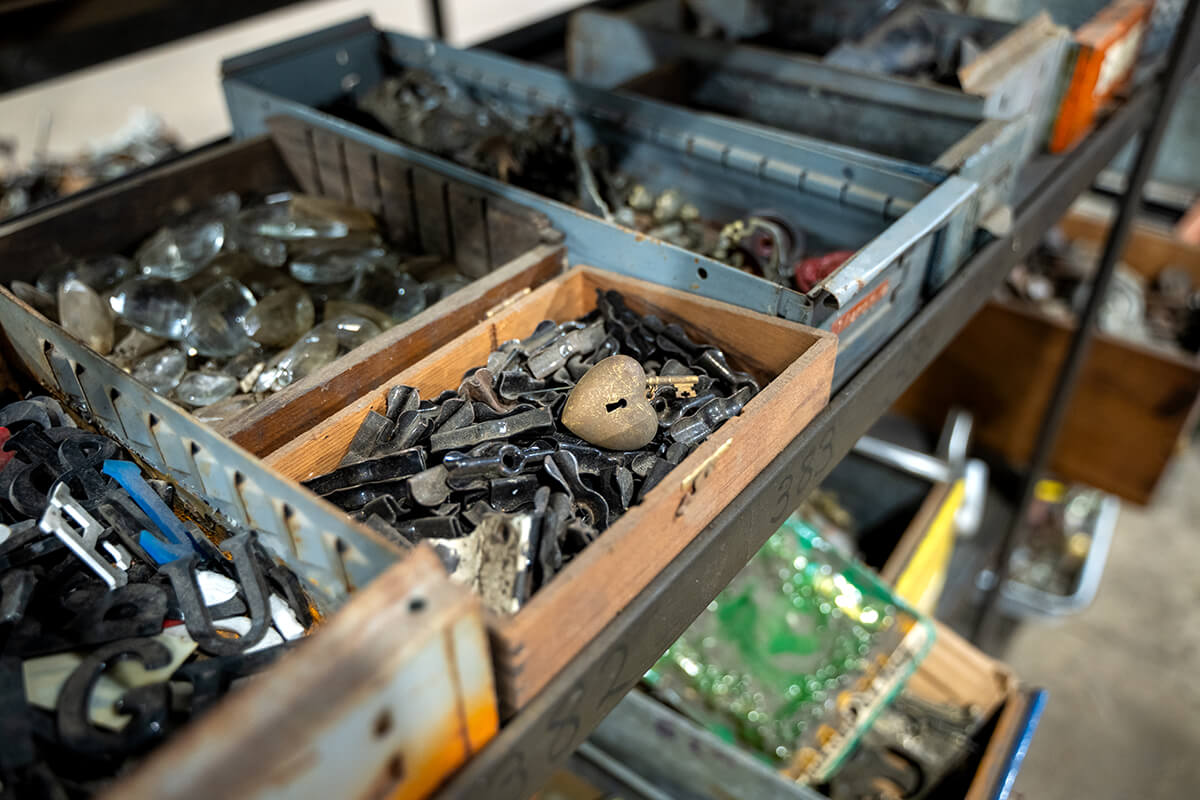
Kitts is walking around the warehouse showing off his goods like a proud papa. There are boxes filled with cogs, wheels, and spikes.
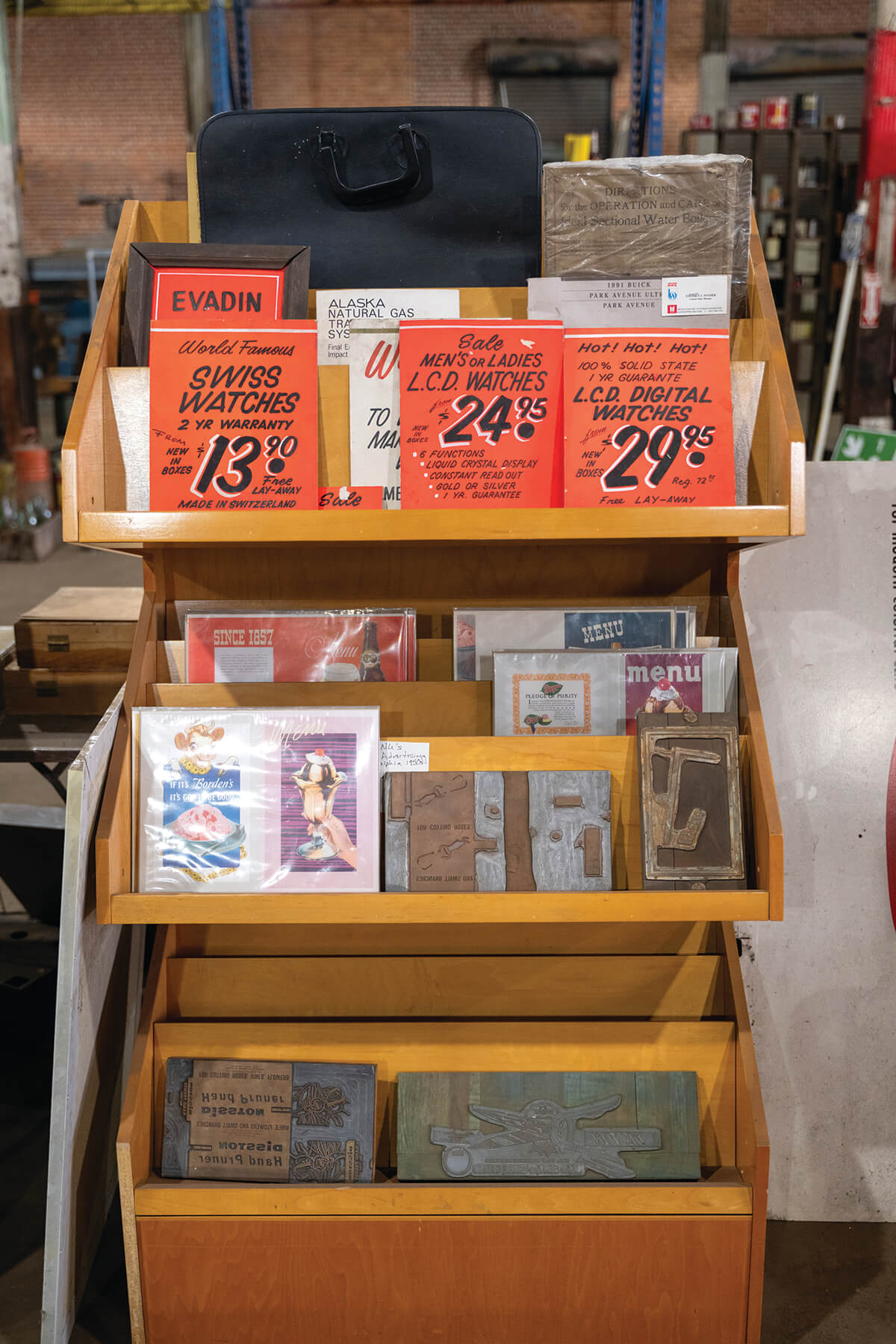
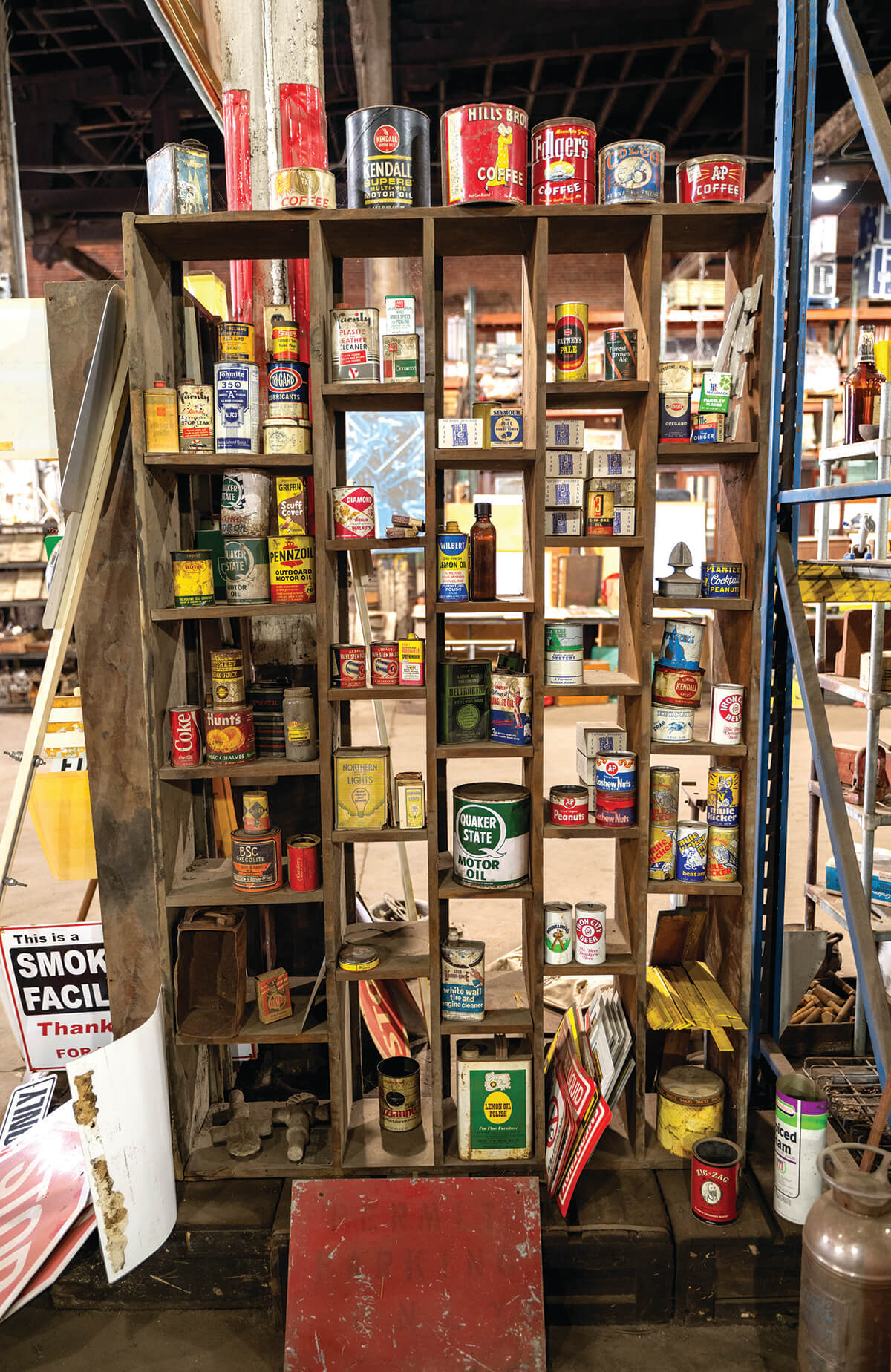
“Those letters were used to mark Bethlehem Steel telephone poles,” explains Kitts, pointing to a case with small metal letters. He has the brackets that held up the roof to Broadway Pier (a set sells for around $2,500). There are nails and pulls, lithography stones, and massive wrenches. There’s a whole section filled with chairs from classrooms and waiting rooms. And galvanized metal firehouse buckets with strange rounded bottoms.
“They’re probably 100 years old or more,” says Kitts. “They made the bottoms round so if you needed a damn bucket to put out the fire, somebody hadn’t already stolen it and used it for something else.”
If there’s anything to know about Kitts, it’s that he knows a lot about a lot. And he has lived a hundred lives—a true renaissance man. He has a vacation home in Negril, Jamaica. He lives in Annapolis on a 30-acre old mill site. He lived in Prague—“because I was selling lighting to a lady in Spokane, Washington, and she offered me a job to go over and make glass with her in Eastern Europe”—and also spent time in Romania, Latvia, Germany, the Czech Republic, and Eugene, Oregon.
Even his warehouse came about through trade from a job in Johnstown, Pennsylvania, at an old Catholic school. “When I got this, there were probably 50 cars in here, there were boats, there were a few airplanes. It took me a few years just to get rid of all the stuff.”
When he was quoted $300,000 to fix the roof, he decided to do it himself. He already owned one forklift. “I got another lift and [two workers]. Took me eight months, but I got it done for $80,000.” Okay, it took a while, he admits with a chuckle, but “I’m not a builder. I’m a salvage guy. I take stuff apart.”
And he’s still fixing up the building. For example, he’s putting together an official office space made almost entirely of salvaged material. And he says he likes tinkering on the warehouse, as it gives him a chance to really spend time with his inventory.
“Because you go into antique shops, they’ve got the fanciest and the prettiest and the most in-style. Well, you know what? I’ve got the land of misfits.”
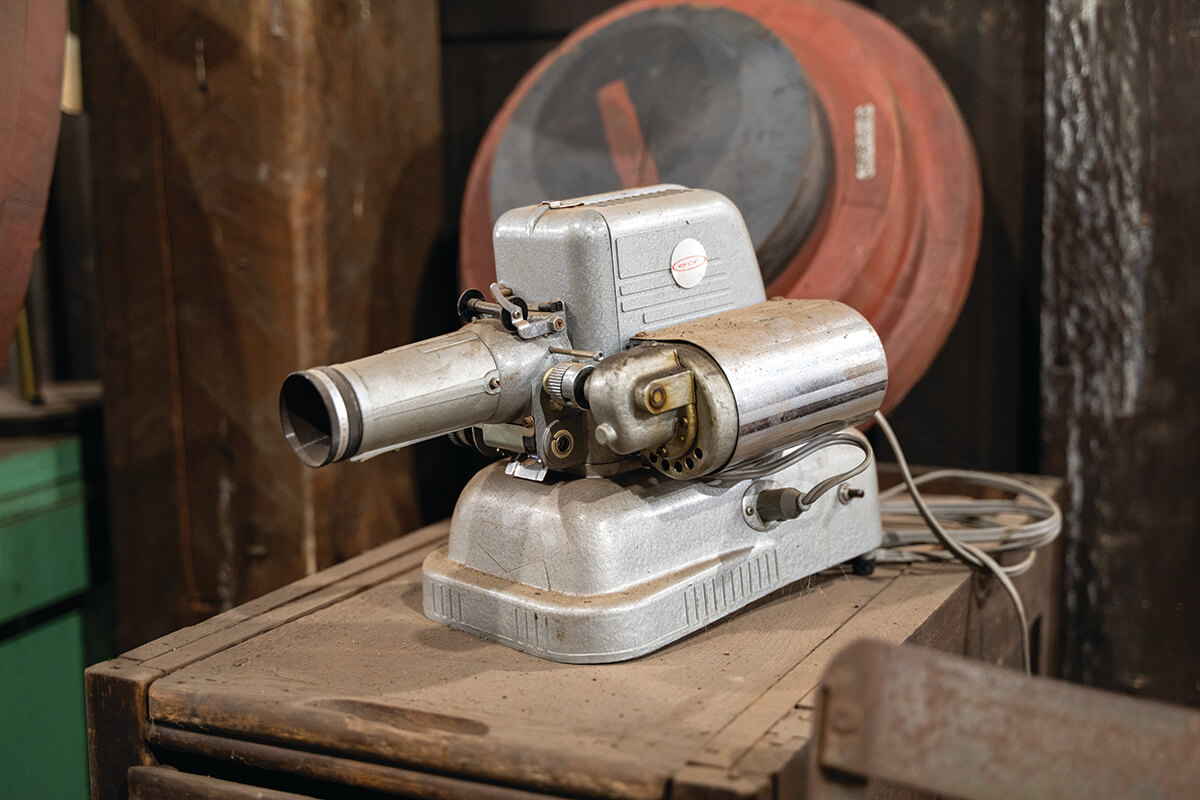
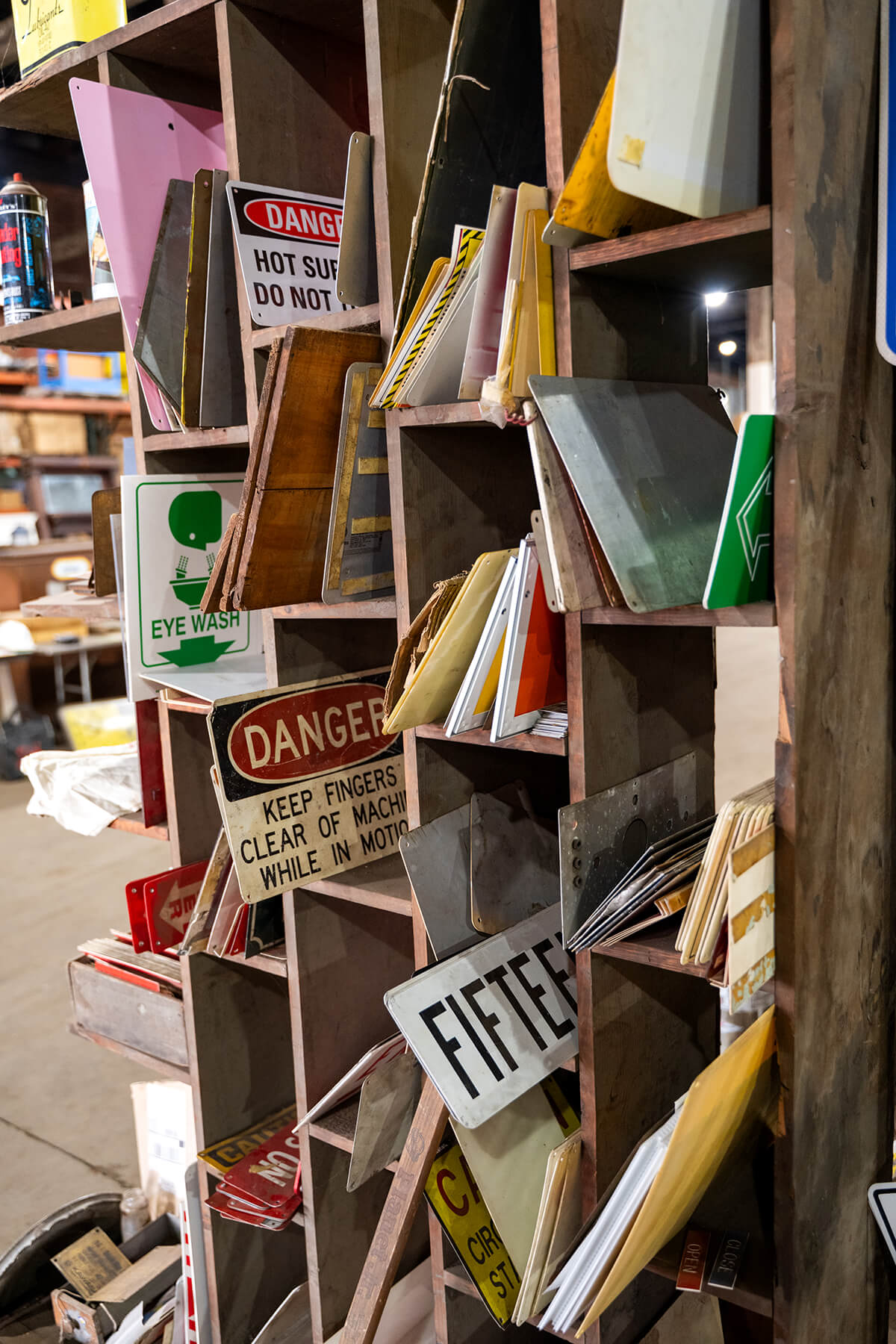
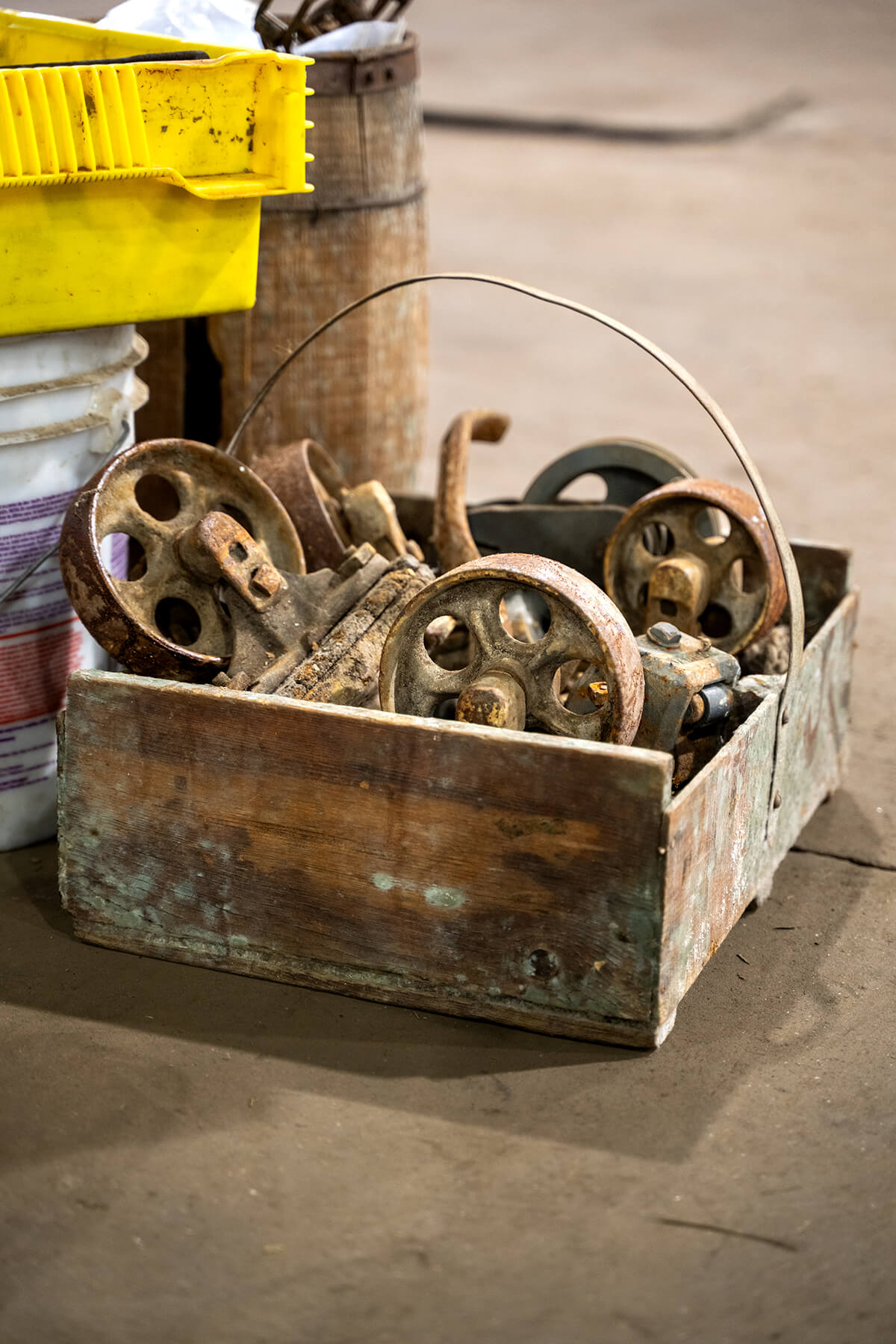
And despite the fact that he barely has any presence on social media or the web and that he doesn’t keep traditional business hours his stuff sells. (He hosts an open house on the second Saturday of every month and, in his one concession to e-commerce, puts items on Facebook Marketplace.)
He doesn’t have set prices for his goods, but he has a general idea. “I mean, nothing’s concrete, but it’s not going to be Jell-O either.” He pauses. “I haven’t put my rules up—but rule number one, this is not a damn flea market. This is like, I invited you in. I can invite you out.”
He’s joking—kind of. He’s a fascinating person and he wants other fascinating people in his orbit. “It’s the reason I do what I do: the people that come in here. I get some of the nicest people from all walks of life who identify with my stuff. I do not attract assholes, you know.”
There are still so many historic buildings he’d love to get his hands on. “I want people to know that someone like me exists, so that I can get access to places where things have sat for a long time and people don’t even realize that there’s an option to find homes for these things.”
He doesn’t want to cut in front of the museums or historical societies, but “they don’t have the ability to absorb everything that they see, and everything is not suitable for a museum.”
He stops walking. “They keep the cherries and then they throw out the pits. I’m the Pit King.”