
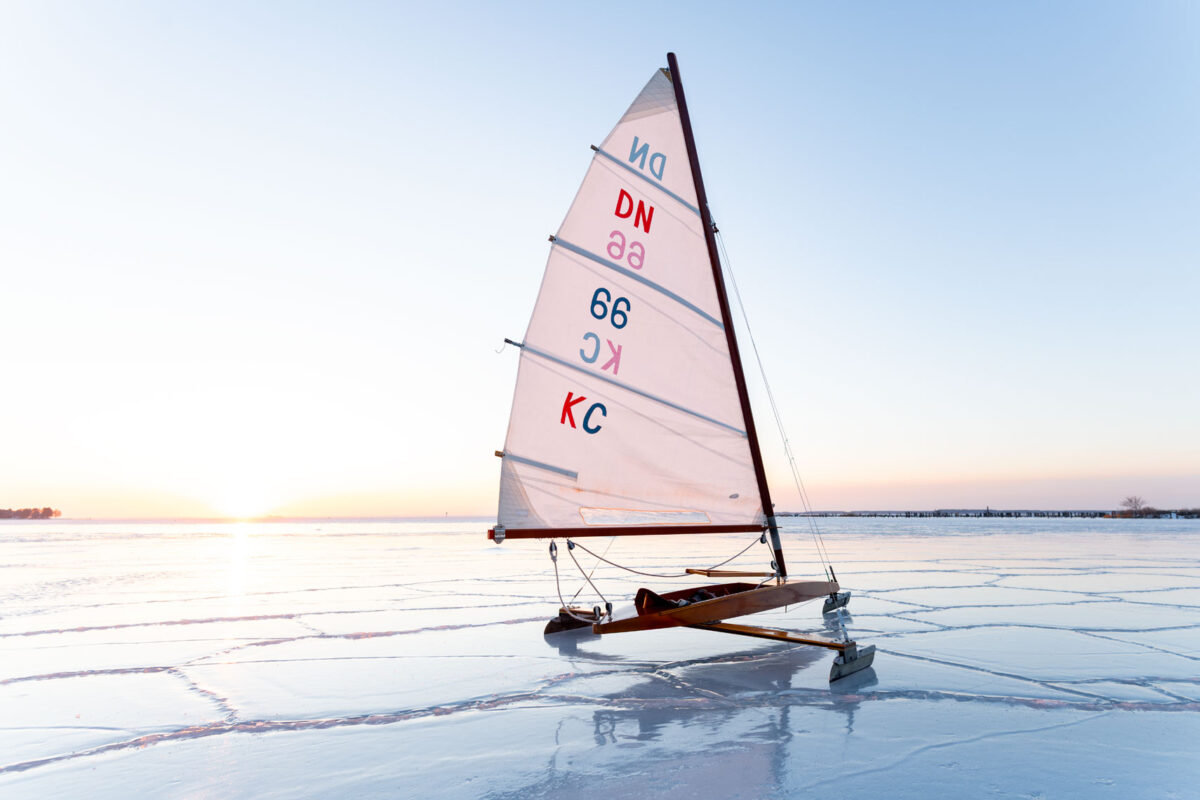
Most Marylanders woke up this past Monday with a deep sigh of relief. In late January, a winter storm had whisked into the region, bringing snow and sleet, then a serious cold spell, suspending residents in an unusual tundra for the better part of the past two weeks. Just now, the ice is beginning to melt, and as the mercury inches back into the 40s, the common sentiment—seemingly everywhere—is “finally!”
Not everyone is celebrating, though. On the Eastern Shore, it’s a bittersweet moment for a few hardcore locals who spent most waking hours of the past 14 days outside, taking advantage of a rare phenomenon: a frozen solid Chesapeake Bay.
“There’s going to be a grieving period,” says Talbot County native Michael Keene, sitting on a wide but waning patch of ice in Claiborne, where he’s been serving as a sort of unofficial mayor since the blizzard rolled in that first weekend.
In the days immediately after the storm, once the accumulation settled and the roads started being cleared, the 61-year-old looked at the weather again. From his experience—as a longtime sailor, career boatbuilder, and log-canoe racer—it takes five nights of frigid temperatures to freeze the local shorelines. And this particular storm, with its northwest winds and lingering cold front, would surely pack his go-to cove in fast and tight. To confirm that hunch, he went down there and dug some holes into the ice.
“At four and a half inches thick, it was game on,” says Keene, who the next morning loaded up his small wooden boat and set out to quite literally skate across what he and his group of fellow adventure-seeking sailors call “hard water.” From here on out, for as long as he could, he’d be at that cove in Claiborne, experiencing the sheer thrill of iceboating.
In this tiny hamlet 20 minutes outside of Easton, old thick piers emerge from the shallows, telling of its early 20th-century heyday. Claiborne was then a bustling hub, its wide harbor filled with steamboats ferrying passengers back and forth from the western shore. After the Bay Bridge was built and automobiles became king, the community fell into a sort of slumber—mostly known by locals for its boat landing and sandy beach.
Without a doubt, the past few weeks have been the busiest it’s been in ages. Each day, the crowd grew larger, its usually sparse waterfront parking lot at times spilling out onto the street. After all, winters like this don’t happen every year. And it’d been decades, the old-timers say, since the ice has been this good.
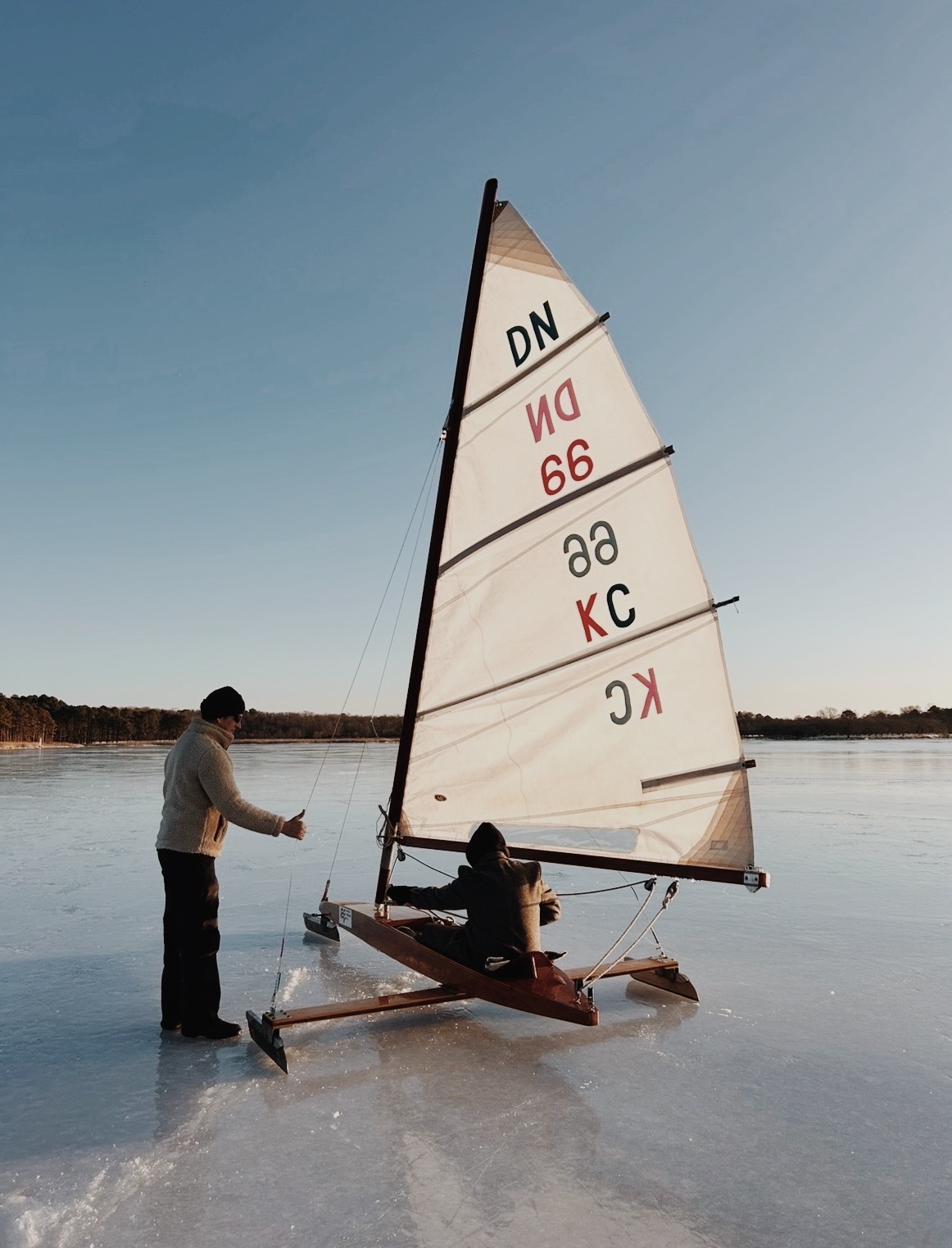
“It’s no big science,” says Keene, surveying the simple lines of his fragile-looking iceboat. At 12 feet long, these miniature vessels are essentially sleds, their lightweight hulls fit with a lone sail and three skating blades, the one in the front attached to a tiller for steering. Bundled up in ski gear—often practical, sometimes fashionable—sailors lay down inside, and with a quick push, the canvas catches the wind, sending them soaring off on the ice like swallows, swooping in around the landscape’s curves, shooting out toward the jagged edges near open water.
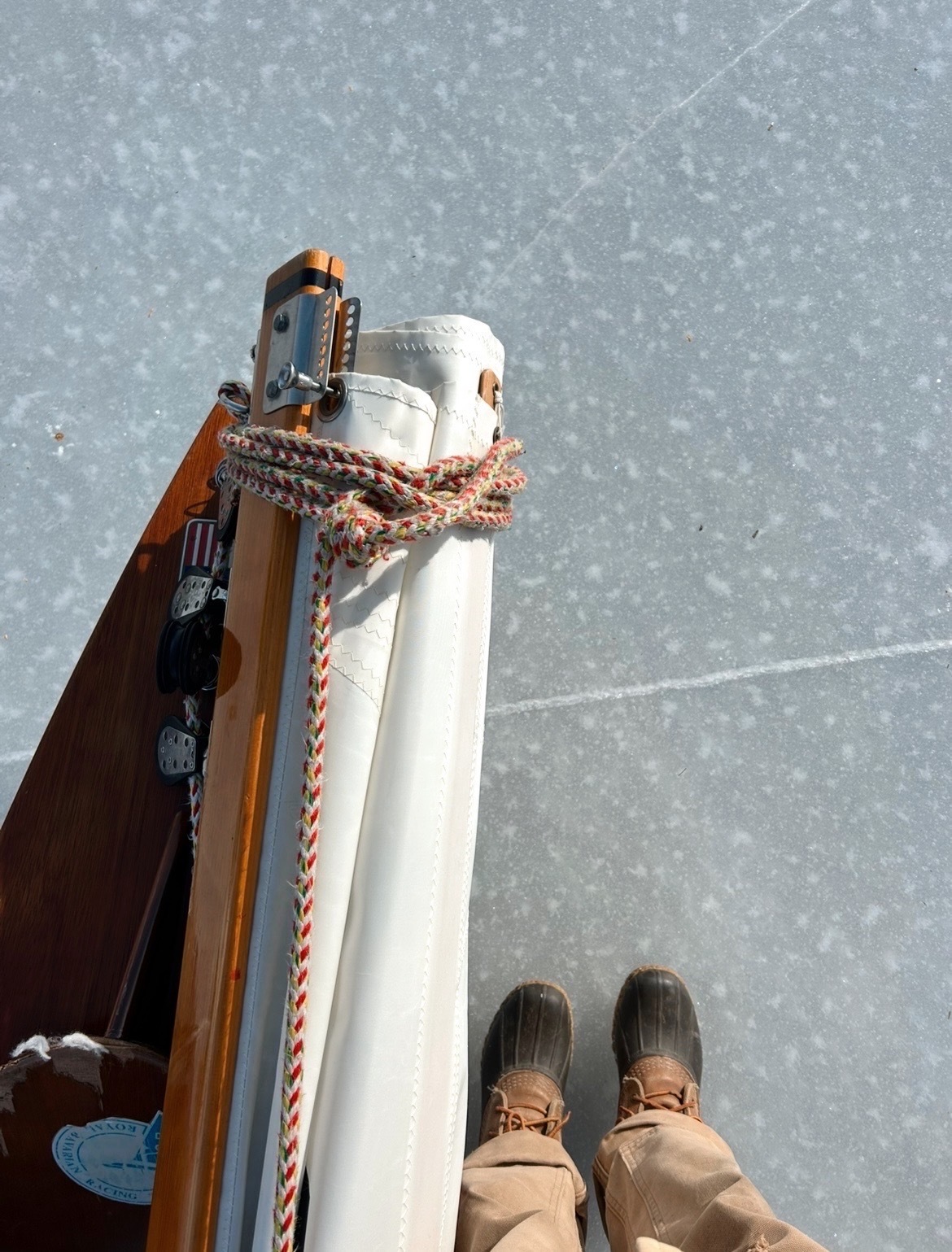
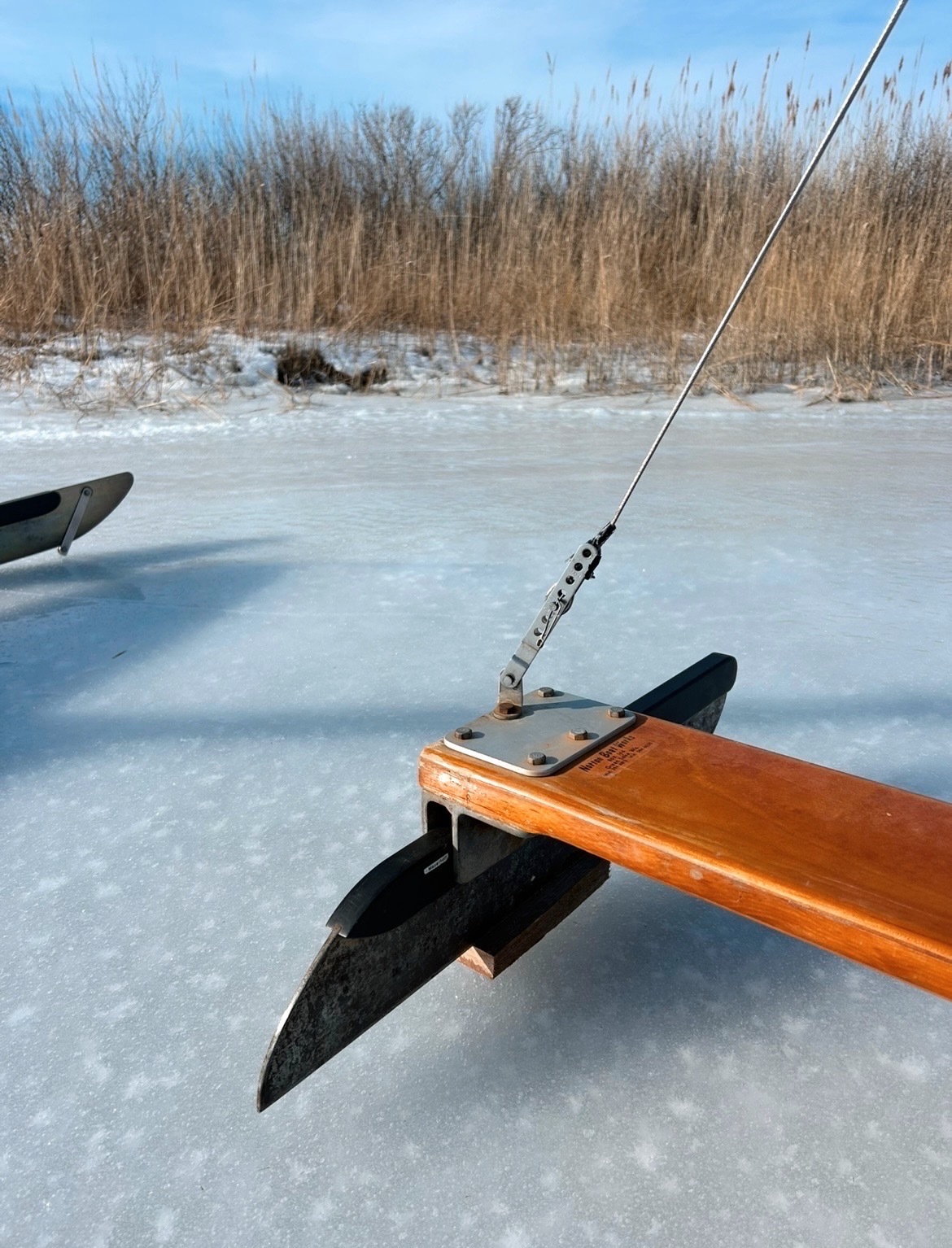
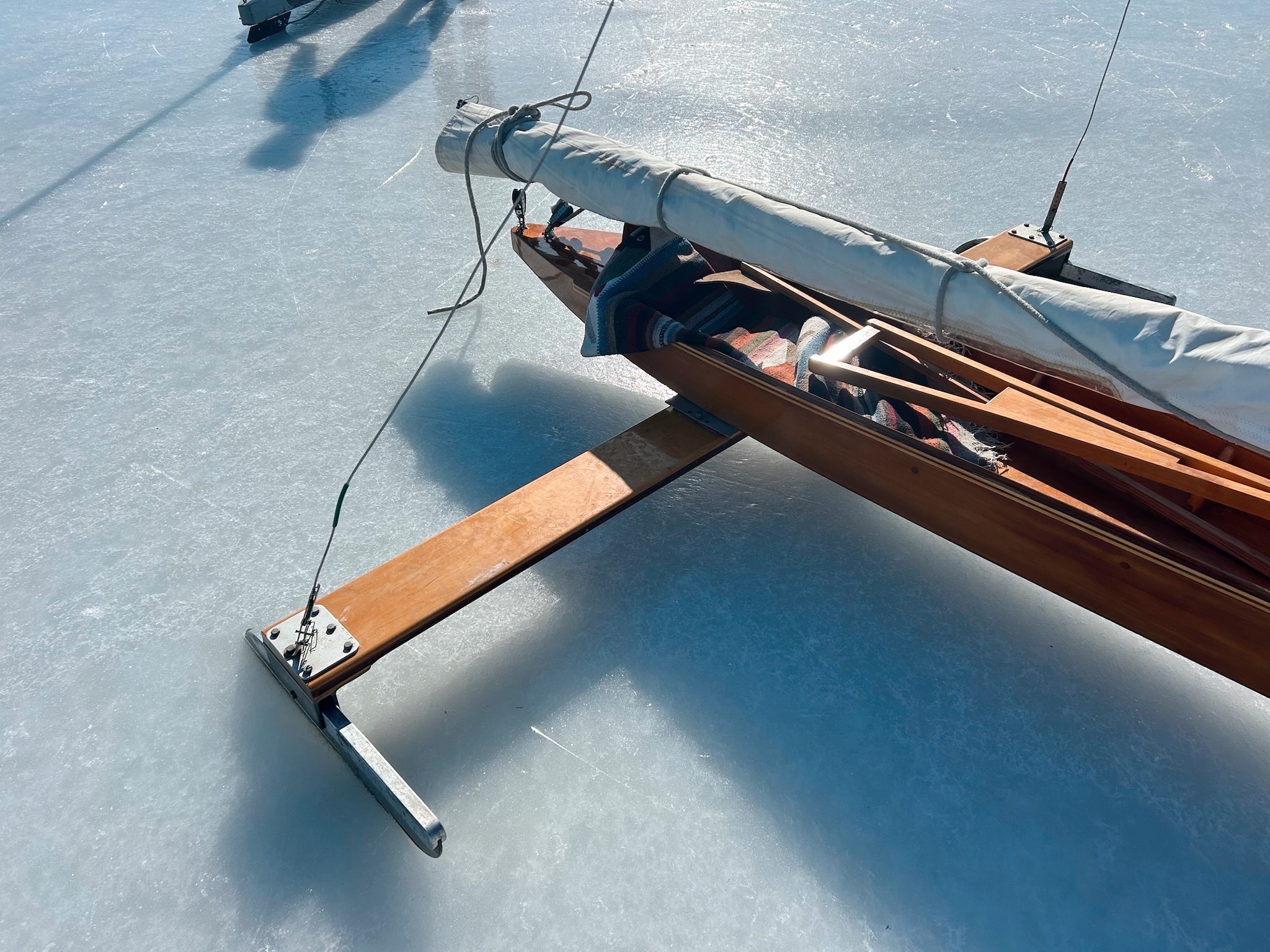
The smoother the ice, the faster the sailing, and this year, the frozen water had an especially well-polished texture. With little friction, the boats simply glide across the surface, only needing the slightest breeze for speed. They move three and a half times faster than the wind, easily reaching 30, 40, 50 miles per hour.
“You get these bursts of excitement,” says Pete Lesher, historian at the Chesapeake Bay Maritime Museum in nearby St. Michaels, who sailed several days this season, including a few runs with his son. “In part because you can’t be out here that long—it’s bitter cold and the wind chill goes right through you. You go out and back, you scream around a few times, and then you say, ‘Okay, who’s next? I’ve got to go warm up.’”
Popularized along the Hudson Valley and Great Lakes, iceboating is at least a century-old tradition on the shores of the Chesapeake. “I have never known such ice as there is now … and we are sailing everywhere,” wrote one Talbot County boatbuilder in 1917. Other accounts date back more than a decade before that, with the first vessels likely brought down from the north.
Early on, the boats were homebuilt, but over time, they were replaced with a standard “DN class” model, named for The Detroit News—sponsor of ice boating’s North American World Championships.
In the winter of ’77, snowfall in Michigan sent the competition’s organizers in search of a new location. In a twist of fate, they landed on the Miles River, just around the bend from the Claiborne cove. That February, Maryland was in the midst of a historic freeze, lasting some 58 nights in a row. This would the first and only time the contest would ever take place south of the Mason-Dixon.
“They called it a perfect day. The wind‐chill factor was minus 15 degrees. Small‐craft warnings were posted. … On downwind tacks the [iceboats] were reaching speeds of 80 miles an hour,” wrote The New York Times. “Hardwater sailors are a closely‐knit fraternity. They spend winter weekends in search of good ice.”
Indeed that year, more than 50 iceboaters from around the world descended upon the Chesapeake, inspiring locals like beloved Carpenter Street Saloon owners John and Diana Mautz to build or find their own boats to race. Theirs would eventually make its way into Keene’s possession. He points out the original mahogany trim and his later repairs, tethering him to the region’s long lineage of maritime craftsmanship.
“My niece recently asked me a good question, though—is it truly a boat?” says Keene with a smile, having learned the hard way that the answer is “sort of.” He’s fallen through the ice before. And luckily, the vessel did float, bobbing just enough to keep his upper body dry until he could be rescued from those hypothermic waters.
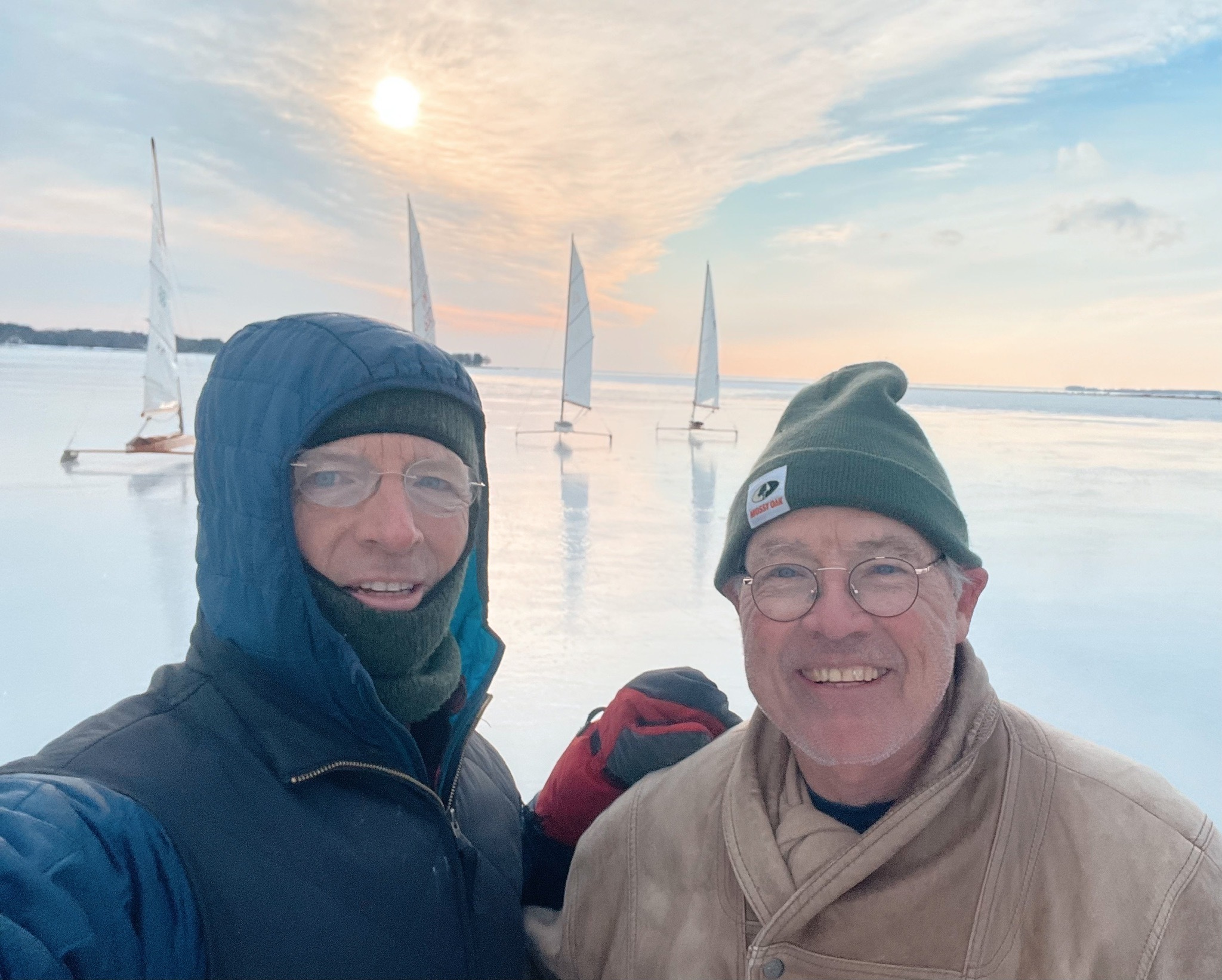
Unsurprisingly, this fast-flying sport does come with its fair share of dangers. First and foremost, there’s falling in, and over the years, there have been close calls in deeper waters. Sailors also watch out for heavy gusts that can topple the boats and try their hardest to avoid splintering collisions. Precautions are implemented, such as sailing in shallow depths, on stable ice shelves, and never going out there alone. Flags are also planted to show the course’s guardrails. Most practiced participants wear helmets.
Jim Richardson is a veteran iceboater who took up the pastime in the early ’80s, not long after he moved to Claiborne—his home above the town’s old general store now serving as the de facto headquarters for homecooked meals between races. This year, he ran aground about a week in, coming into the cove a little too hot on a blustery day, breaking some bones in the process.
“Sometimes you’re like a leaf,” says the 78-year-old from the warmth of his living room, his right foot now strapped into an orthopedic boot. “I like the speed, and being on the edge a bit. I’m not sure iceboating is for anyone who always wants to be in control. And of course, the other day, I found out exactly what it means to not be.”
“No harm was done to the boat, at least,” says Keene, whose skillset made him the fleet’s go-to mechanic, addressing all the wear and tear that accumulated over two weeks of daily sailing. “Although another sailor took it out and wrecked it yesterday.”
He and Richardson are old friends, and together, they became ringleaders of the recent rip-roaring activities. That first weekend, they threw a party on the frozen cove, transforming its rock-hard shelf into a communal living room, equipped with benches, blankets, a floral carpet, and a wood-burning fire in a 50-gallon drum while a half-dozen ice boats crisscrossed against a blazing sunset.
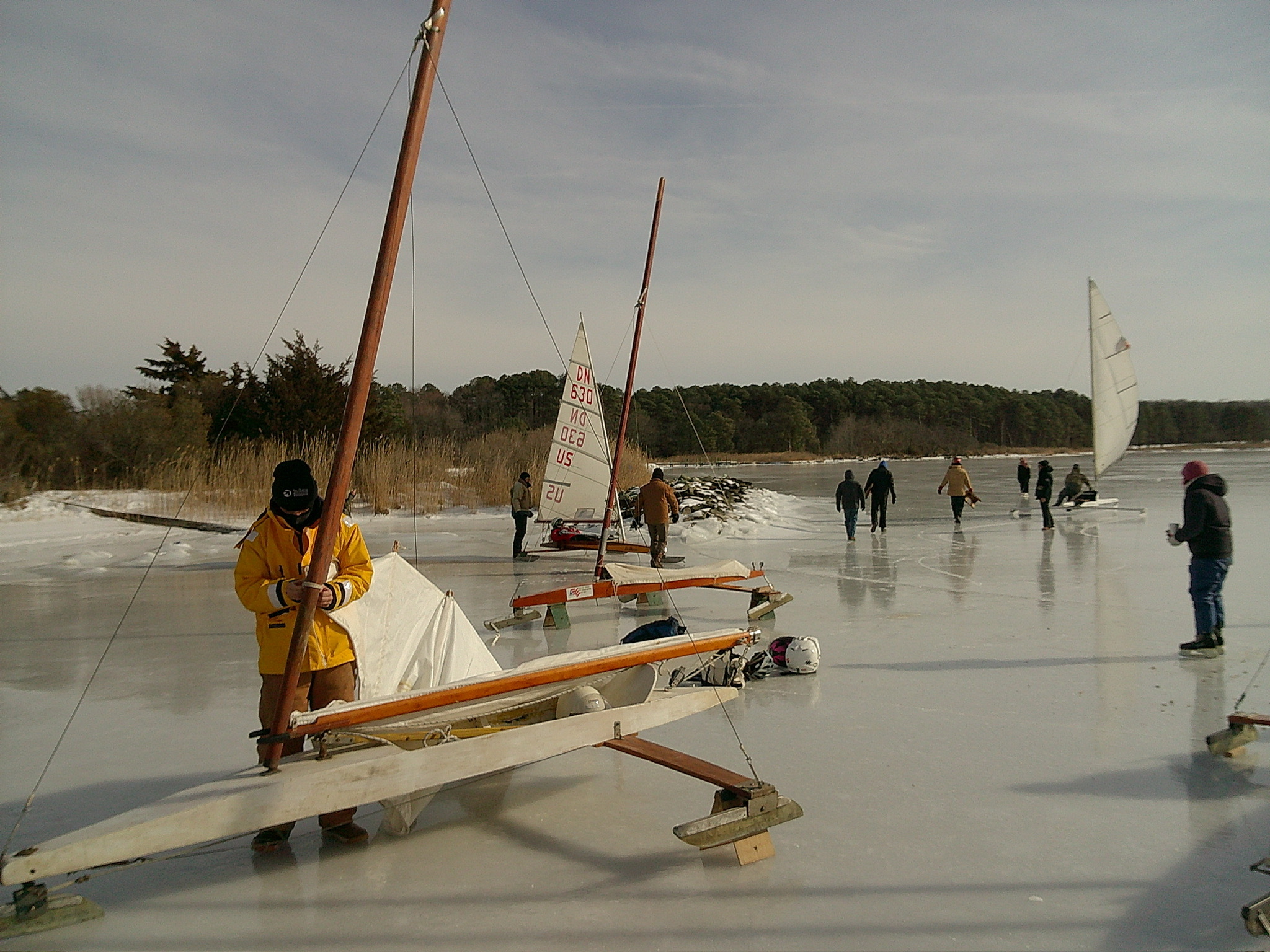
After that, it didn’t take long for word to get out. More and more cars started flocking to Claiborne—from Annapolis, from Baltimore, even as far as Deep Creek and Washington, D.C. And the cove filled in with not only iceboaters but ice-skaters, ice-hockey players, one rogue bicycle, and countless wide-eyed spectators, some days as many as 100 people, all convening to bear witness to this fleeting spectacle.
And here’s the thing about iceboating: once you see it, you want to do it, and share it, too. The two men took a flurry of first-timers out for inaugural rides, including reporters from the local and national news. They also lent their boats to experienced sailors brave enough to navigate the cove on their own. A few even got so hooked, they went home and bought used vessels on the internet, willing to wait however long it might be until the next deep freeze.
“This doesn’t happen very often—maybe next year, who knows, or maybe not for another 50,” says Richardson. “These weeks have been very special.”
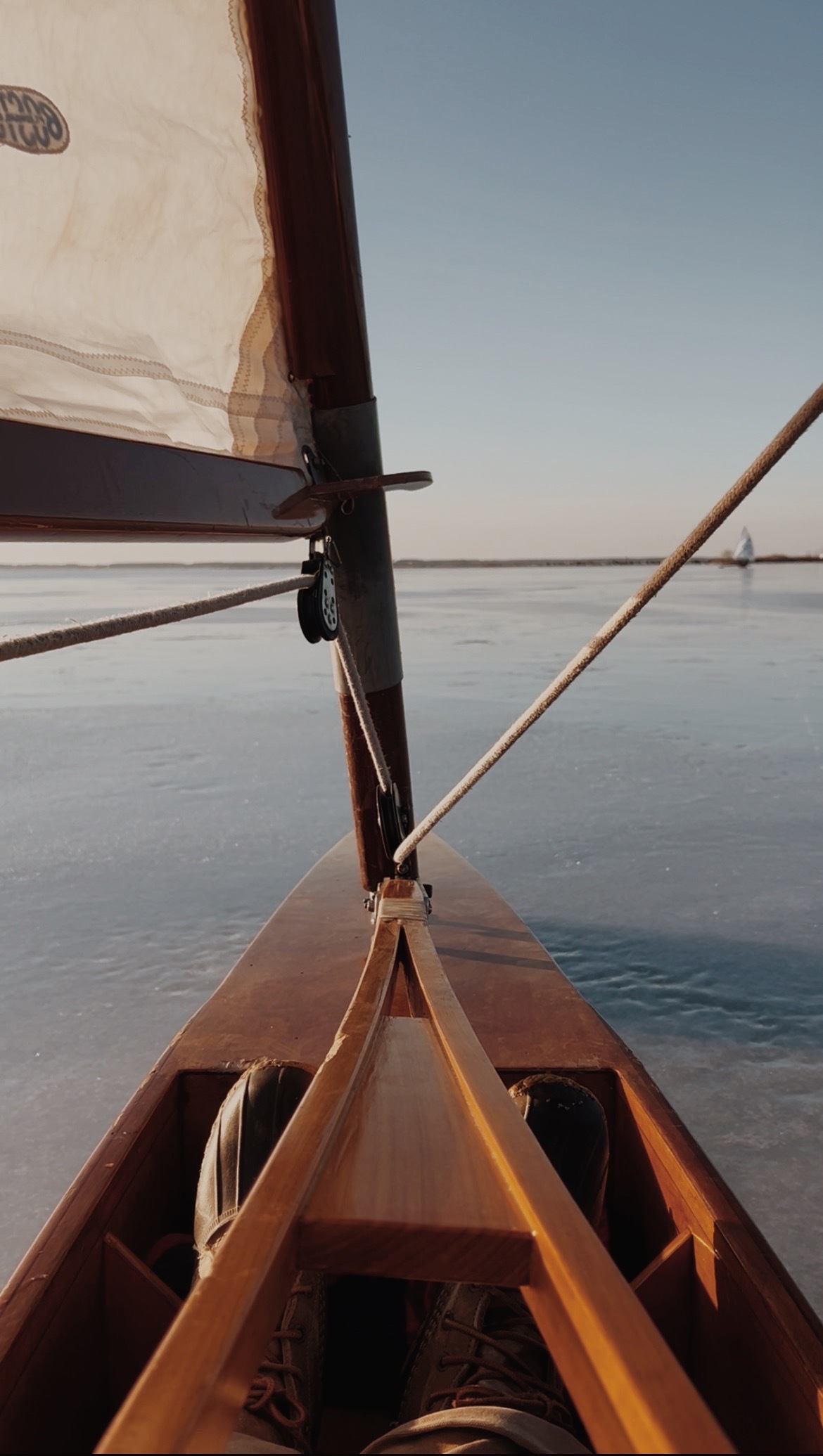
In truth, just standing on the frozen Chesapeake is a singular feeling. At first, for the uninitiated, there’s some fear, as if it all might melt beneath your feet in a moment’s notice. But before long, that trepidation shifts into a sense wonder, seeing the ice’s pluming patterns up close, its old cracks healing over, the new ripples forming from the slowly shifting tide.
This winter in Claiborne, even the most warm-blooded and risk-averse eventually stepped out onto that frozen water, with Keene and his welcoming crew encouraging a newfound appreciation for the cold.
“I’ve been thinking about what the ice does to us,” he says, recalling ice-skating with his family on Peachblossom Creek outside of Easton as one of his fondest childhood memories. “It’s this magical way to connect with nature. And to one another.”
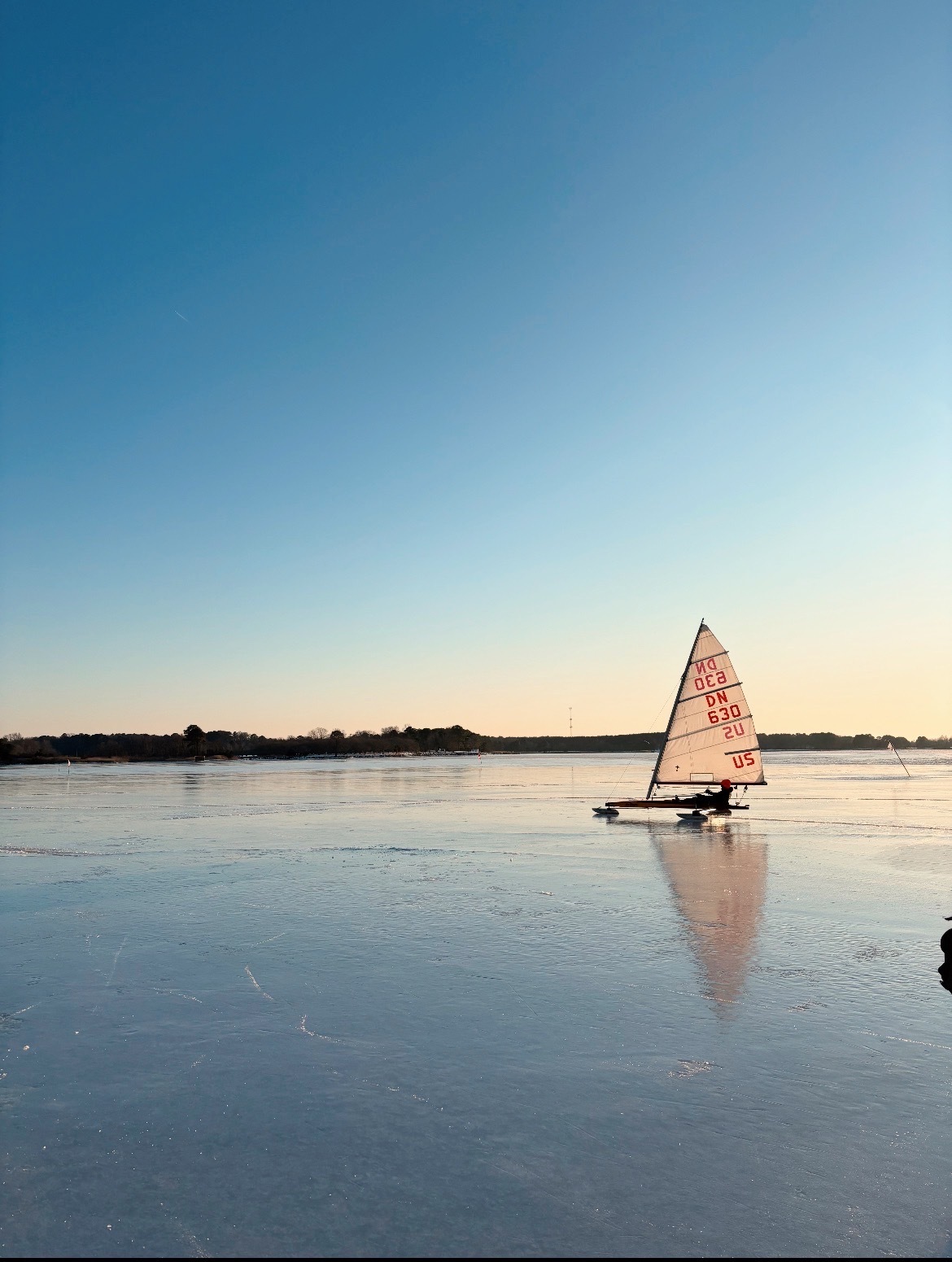
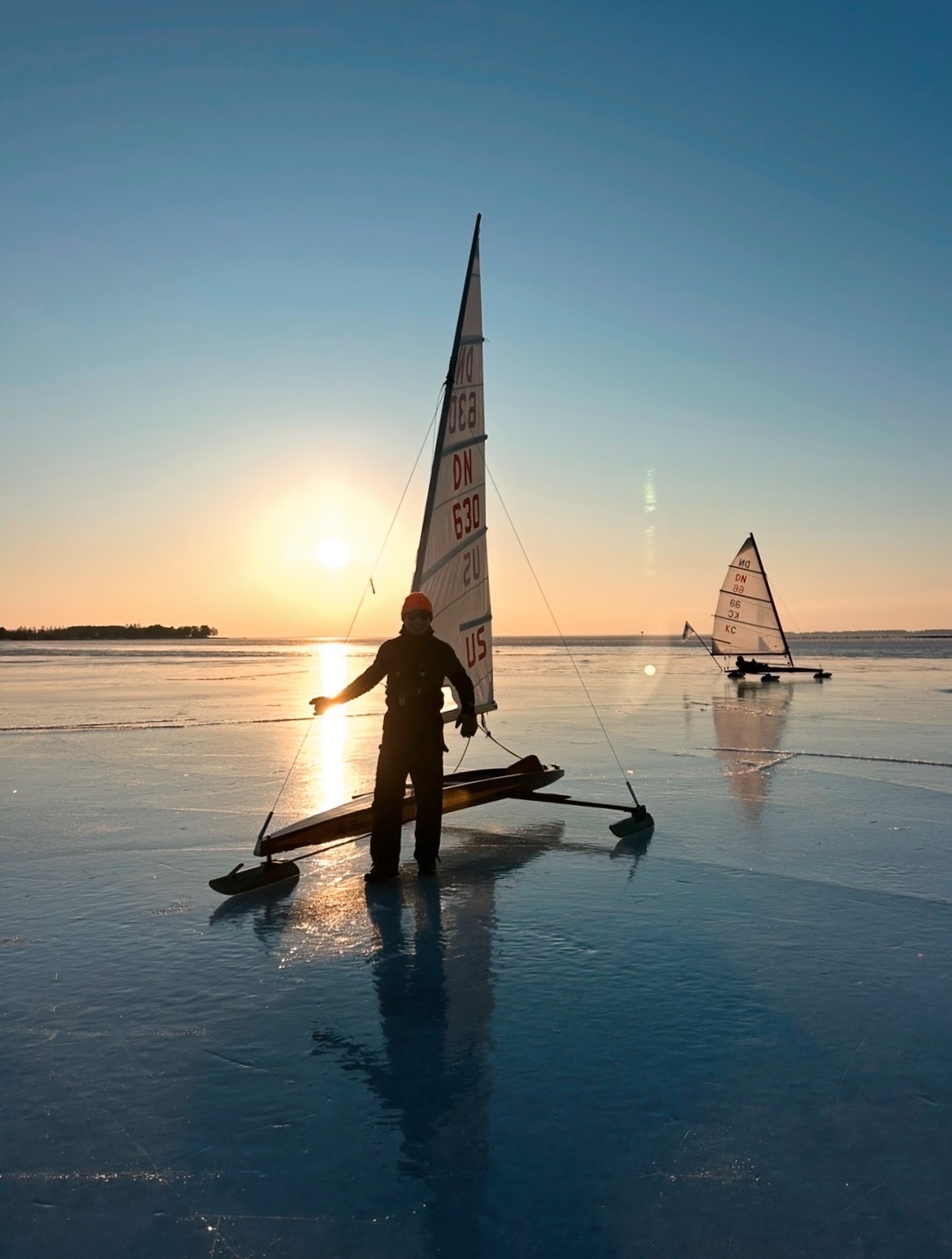
On Monday afternoon, his was the only boat left on the Claiborne ice, soon to be named Diana-mite after its previous owner—who was, by all measures, a pistol. Keene whipped around the cove a few more times that morning, but now, the wind had dissipated, with barely a cloud on the horizon. By tomorrow, the temperatures would be well above freezing again, bringing with it that inevitable thaw.
A little later, Lesher appeared on the shoreline in a suit and tie, hoping to get a final glimpse of the frozen cove on his lunch break.
“So this is it—it’s over?” he called out to Keene, carefully traversing the metal ladder laid down over slushy puddles to reach the dwindling ice sheet.
“We’re sitting here ’til the wind comes up again,” the fellow sailor yelled back, a glimmer of melancholy in his voice, knowing there’d be nothing but calm air and warm days ahead.
That night, Keene would stay out there until just before sunset, ultimately breaking down his boat, pulling up the flags, and heading home. He’ll be back to Claiborne in no time, teaching yoga classes at the local village hall and hunting for arrowheads with his partner along this cove. Before spring arrives, he’ll bring out his stand-up paddleboard, and come summer, he’ll swim in the open water, where not that long ago, he was nearly flying.
Still, he’ll miss all the rush and ruckus.
“I also like the solitude,” says Keene. “The other morning, I texted my friend, Jack, and just said, ‘8:30?’ The two of us got here. We had the ice to ourselves. Perfect conditions. Good wind. Then I came out Friday, laced up my skates, and soaked it up, all by myself.”