Arts & Culture
Eddy Crane Went Missing in 1987. His Daughter’s New Book Helped Her Heal.
'Whatever Happened to Eddy Crane?' is less a true crime story and more a heart-rending narrative of Kate Crane’s close relationship with her father, and her unfathomable loss.
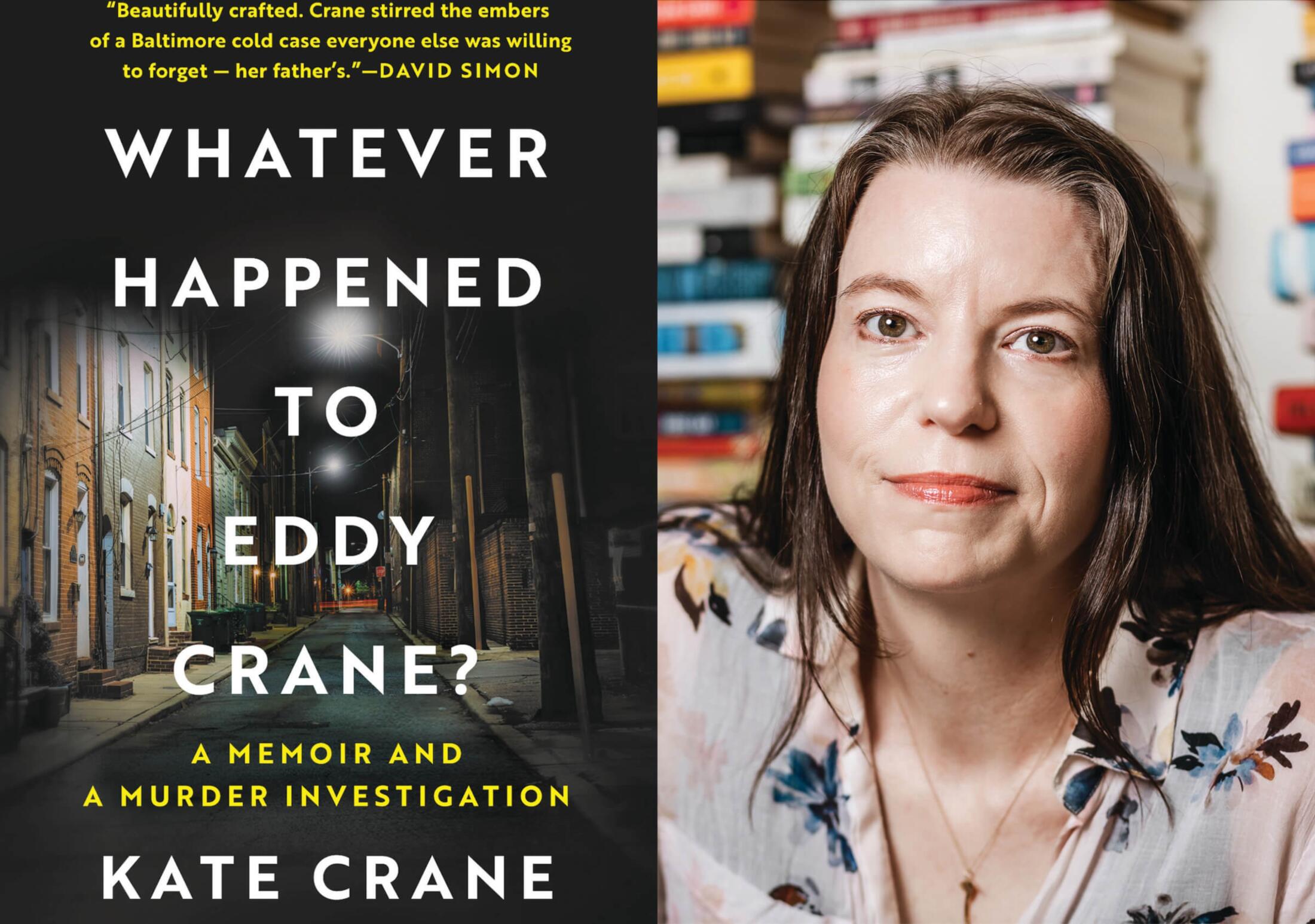
As he did every night, Eddy Crane had called his wife to let her know he was leaving the trucking company that he co-owned in Curtis Bay and would be home soon. But he never did come home that night—and he was never seen again.
Kate Crane had just started eighth grade when her father went missing in 1987. Whether it was intuition or fear, she immediately thought the worst—that her father was gone forever, dead.
In the ensuing years, her mother and family never talked about the police investigation, the unsolved mystery, or her father. Twenty years after his disappearance, and unable to cope with the unresolved trauma any longer, the former journalist went searching for answers and healing.
After nearly two decades of research and writing, Whatever Happened to Eddy Crane? is less a true crime story and more a heart-rending narrative of Crane’s journey into his disappearance, her close relationship with her father, and her unfathomable loss.
There are no easy answers in this elegantly crafted book. It is, however, a memoir that will speak to anyone who has suffered loss and wrestled with grief.
One surreal thing about your father’s disappearance is that it’s mentioned in Homicide: Life on the Street and The Wire. David Simon covered the story at The Sun. That he had not forgotten your father, ultimately, meant a lot.
I was so mad when that Homicide episode came out [fictionalizing my father’s story]. But as the years passed, living in New York, I felt very alone with what had happened, even though I knew it was not the most important thing that ever happened in the world. The timing behind The Wire was a totally different reaction. By then, I thought everyone had forgotten my father.
Your father’s name also became a shorthand for Baltimore detectives when they had a strong suspect but couldn’t bring a case because they didn’t have a body.
Yes, in that era…the timing of The Wire episode was in the same two-week period that I had my first conversation on the phone with [detective] Donald Worden. He said, “That’s not a murder [technically], that’s a missing persons case. I just had the folder out the other day.” Between those two things, the Earth shifted.
Setting out, was writing this book an obligation you felt to you father? Were you seeking justice? Or catharsis?
I didn’t know all the things this book would be at the beginning, all I knew was I can’t take this anymore. I had to do something. Well, what can I do? I’m a moderately legitimate writer at this point. I’ve got these Wall Street Journal experiences and with the alt-weekly New York Press. [The podcast] Serial had not come out, but I already had an aversion to the true crime thing. I didn’t want to pretend I’m a detective. I’ll just start down this path and, yes, to the word catharsis. I do think the project has a cathartic quality.
Eighteen years is a long time on one book.
As time passed, what I realized was the book and I were creating each other. It was the center of my life. I became deeply appreciative of the alchemy of it. I took this thing that was too painful to bear, and I turned it into art. The one thing I’d like people to come away with is the idea we all have some creative capacity. Whether it’s music, photography, painting, or writing, it’s a way to work with the things that we’re afraid of, a way to work with pain. From the time I was a teeny-tiny kid, I loved books more than anything.
Your father, we learn, was a complicated guy. He’d been arrested. He was in business with shady characters, but he was also a sensitive man who appreciated music and photography—and loved his family. It’s a difficult story at times, but always artfully told.
I realized if I didn’t have the skills to do it right, I’d have to walk away because there’s so much to this [to tell]. And my family did not want anything to do with it. At the very least, if I was going kick up pain for family members, I wanted it to be a very solid book.
Has your mother read the book?
As far as I know, she has not read it.