Home Grown
Mother Earth
EMMA JAGOZ
Moon Valley Farm
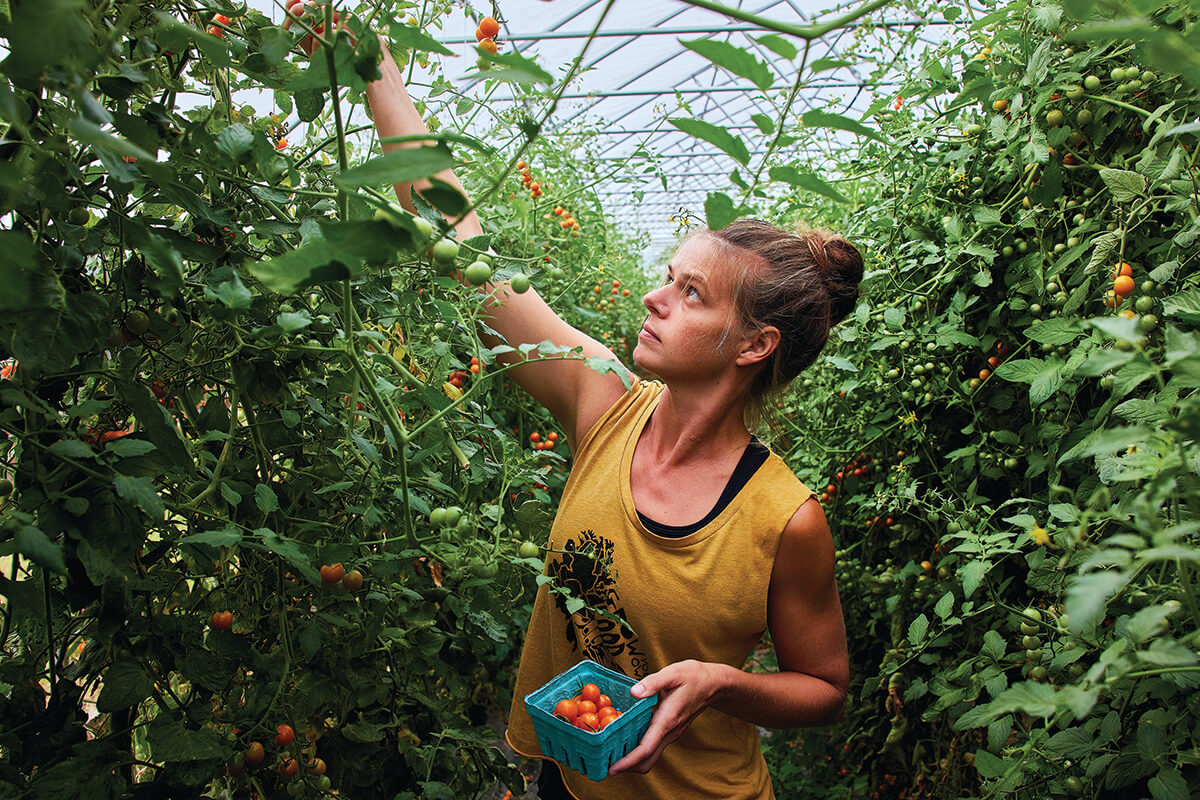
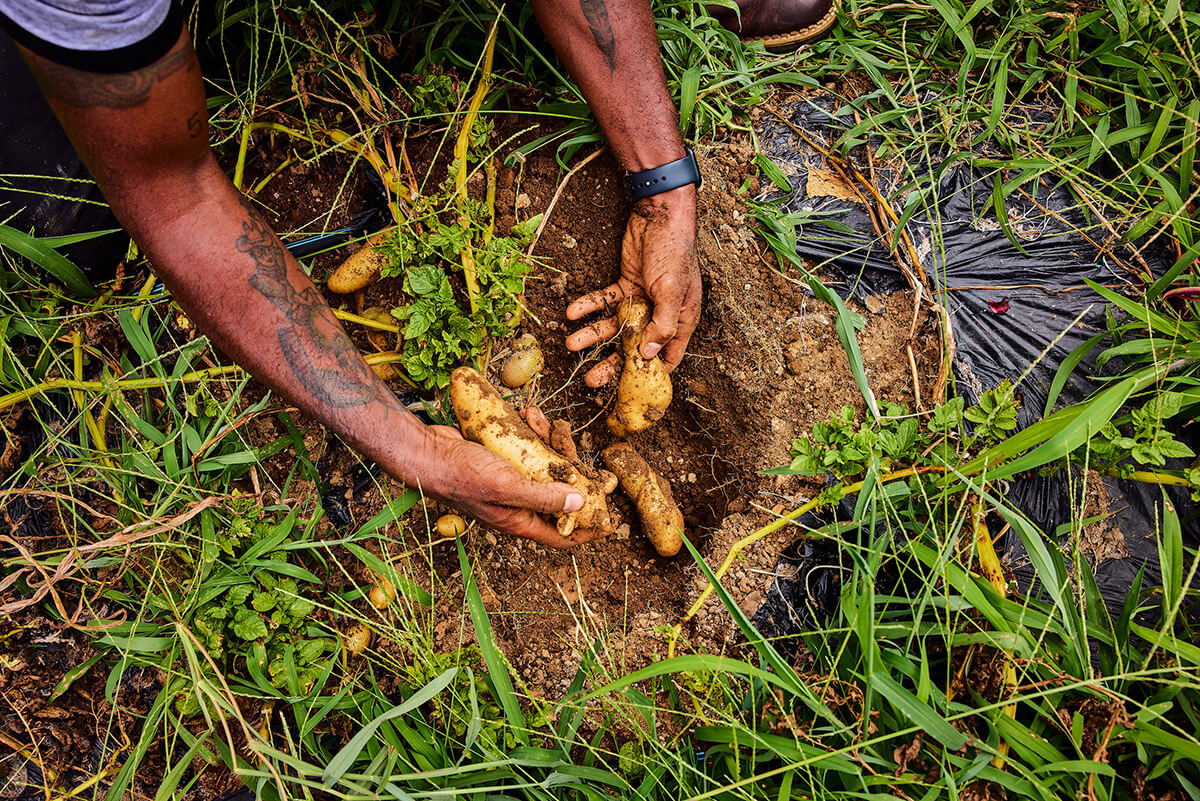
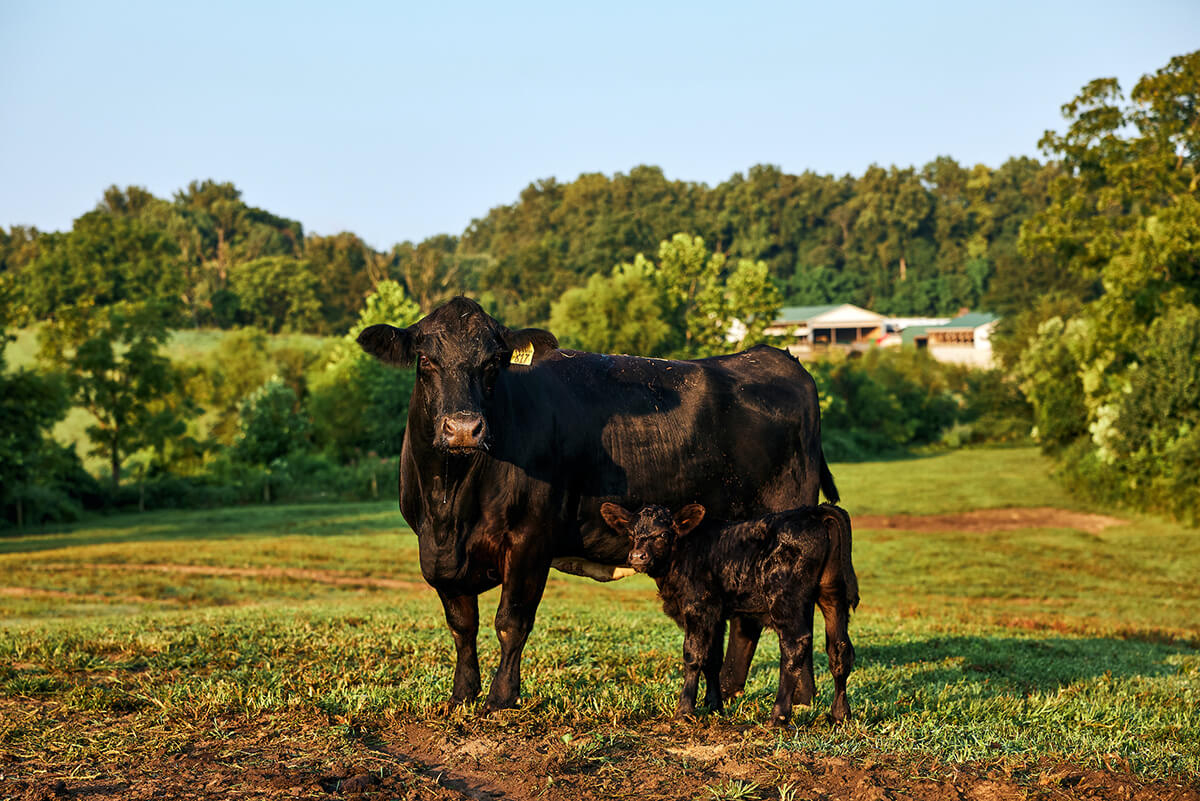
Just beyond the Tractor Crossing sign, down the aptly named Gravel Road, the bright green hills and meandering meadows of Moon Valley Farm stretch quite literally as far as the eye can see. It’s an idyllic scene—something straight out of a Grant Wood painting. But take a closer look and you’ll see that the 70-acre Woodsboro tract, tucked inside the Monocacy River watershed, is a hub of arduous activity.
On this day last July, workers are harvesting zucchini and peppers in the fields, while others are in the wash-and-pack building readying spinach and sweet corn for the CSA boxes that will be delivered to members who’ve bought shares that give them first dibs on the season’s just-picked produce.
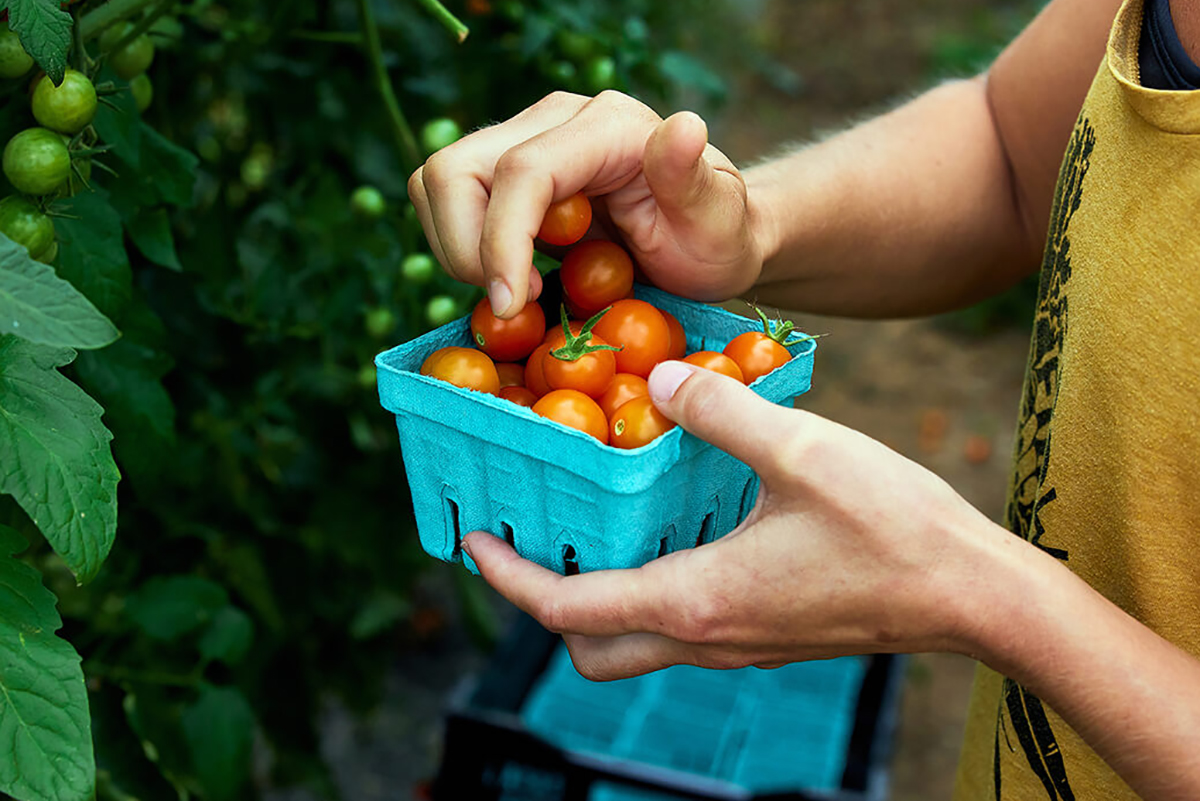
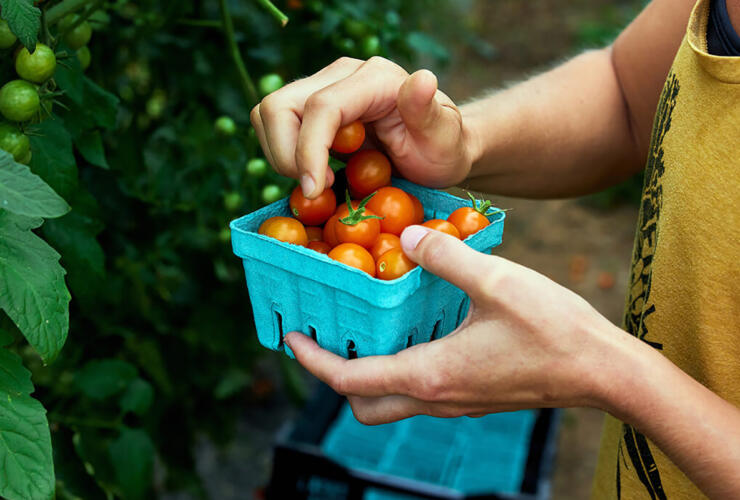
Nature is hard at work, too. In the greenhouses, herbs—dill, yarrow, lemon basil, and rosemary—burst through the soil and stretch toward the sun in the germination station. In the high tunnels, Sungold cherry tomato vines heave so heavy with fruit that many plummet to the floor. In the fields, under the strong summer sun, industrious pollinators flit between bronze fennel and lavender.
Against this bucolic backdrop, Moon Valley’s owner Emma Jagoz, pictured above, greets the morning.
“This is a really busy time, because it’s the one month where we touch all four seasons,” says Jagoz, gobbling fistfuls of those exquisitely ripe tomatoes. “We’re cleaning up spring crops and we’re at peak summer, which is relentless, in a good way. And we’re planning and planting for fall and winter—we have to plan now to capture the daylight.”
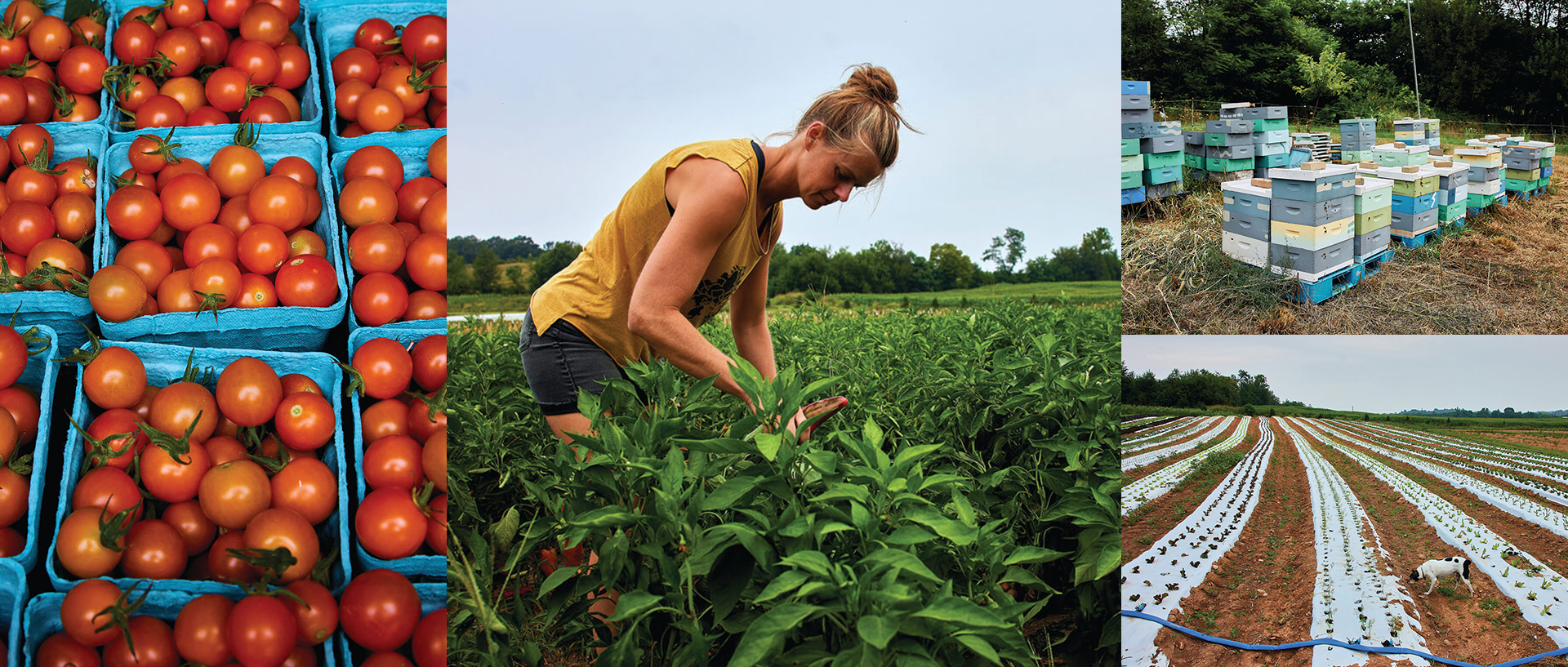
ABOVE: From left.
Sungold cherry
tomatoes; Emma
Jagoz in the field;
bee boxes; Minnie,
the rat terrier, checks
out the crops.
For Jagoz, this farm is both a happy accident and something of a self-fulfilling prophecy. When she was growing up in Cockeysville, her dad would tell stories about a fictional land called Moon Valley.
“Everyone who inhabited the land had a superpower,” says Jagoz, now 40, her blue eyes sparkling with delight at the memory. “He made up stories about the little adventures of the inhabitants and how they used their powers for the good of the community. Even though I was just three at the time, and there are no farmers in my family, my dad gave me the power to communicate with plants and animals. On Moon Valley, I had a barn, a greenhouse, and even a pig named Minerva,” a nod to the Roman goddess of wisdom.
There’s no pig on Jagoz’s farm, but there’s plenty of wildlife, including the snakes that slither through piles of brush and Purple Martin swallows that snap up insects, both an indicator of a healthy ecosystem.
But despite her childhood reveries, Jagoz never set out to be a farmer. In 2008, during the height of the financial crisis, the newly minted University of Maryland graduate initially pursued entry-level jobs in Washington, D.C. She also worked as a cook at the vegan Yabba Pot in Baltimore for a time, then got married and soon had a child on the way.
“I got so interested in how I could act for the health of myself through the whole pregnancy, birth, and postpartum process, as well as for the health of my child,” recalls Jagoz. “I was doing yoga, exercising, eating with intention, and reading everything I could.”
From her research, she learned that docosahexaenoic acid (DHA) is a fatty acid essential for brain development and cognitive function. It’s abundant in leafy greens, especially arugula. Jagoz bought so much of that nutrient-dense vegetable, she blew her grocery budget until a friend suggested she start a garden. “In the seed catalogues, I was blown away by how many varieties of vegetables there were,” she says. “And different variations, like peppers shaped like beaks.”
Before long, her interest in growing was in full bloom. “I got bit by the gardening bug and so I kept expanding and expanding.” By the summer of 2011, Jagoz began to plan a real-life Moon Valley—and by the following season, it was up and running. With two kids under two, and free tools thrifted on Craigslist, she started farming her parent’s half-acre yard in Cockeysville, then bartered with the neighbors to use their land, too. In her first year, making her own deliveries in the family minivan, she had 12 CSA members and grossed $12,000 in revenue. In no time, her business was viable.
By 2019, after years of farming in different locations, she purchased 25 acres in Woodsboro—and leased a whopping 45 next door, transforming what was once a conventional farm into a certified-organic operation. And though the work is challenging, farming responsibly has given her a satisfying sense of purpose and connection.
“I wanted to do something that felt like a solution to some of the problems faced by our society,” she says. “In college, I was studying social injustice and corporate greed and some of the ways our capitalist system keeps people disempowered. Starting an organic, community-supported farm felt like a tangible thing I could do to help reclaim the community and health here at home.”
She also found a calling that spoke to her on a deep, almost spiritual level. “There was a direct relationship and correlation to me raising plants and raising children,” she says. And part of that mothering extends to treating the land with care, nurturing it to its fullest potential.
For Jagoz, land ownership is a serious subject. Conventional agriculture relies heavily on manmade chemicals, including pesticides, herbicides, and fertilizers that have negative implications for both nature and humans, and often involves heavy tillage that disrupts the delicate structure of the soil, which is so vital for a crop’s health. Instead, she uses not only organic but regenerative practices. In a nutshell, this means, “building and putting back into the soil, instead of just extracting from it,” she says. And through her efforts—which include no-till cover crops and crop rotations to create a rich ecosystem that’s more resilient to pests, disease, and even climate change—she’s not only sustaining the land but improving it.
“I’m thinking about my kids’ lives and their kids’ lives. I wanted to not just let them deal with the results of our country’s poor land stewardship,” says Jagoz, referring to the historic degradation of topsoil caused by conventional agriculture. “I want to model responsible land stewardship, which to me includes organic practices, not poisoning our waterways, our bees, our pollinators. These are precious resources we can’t just filter out.”
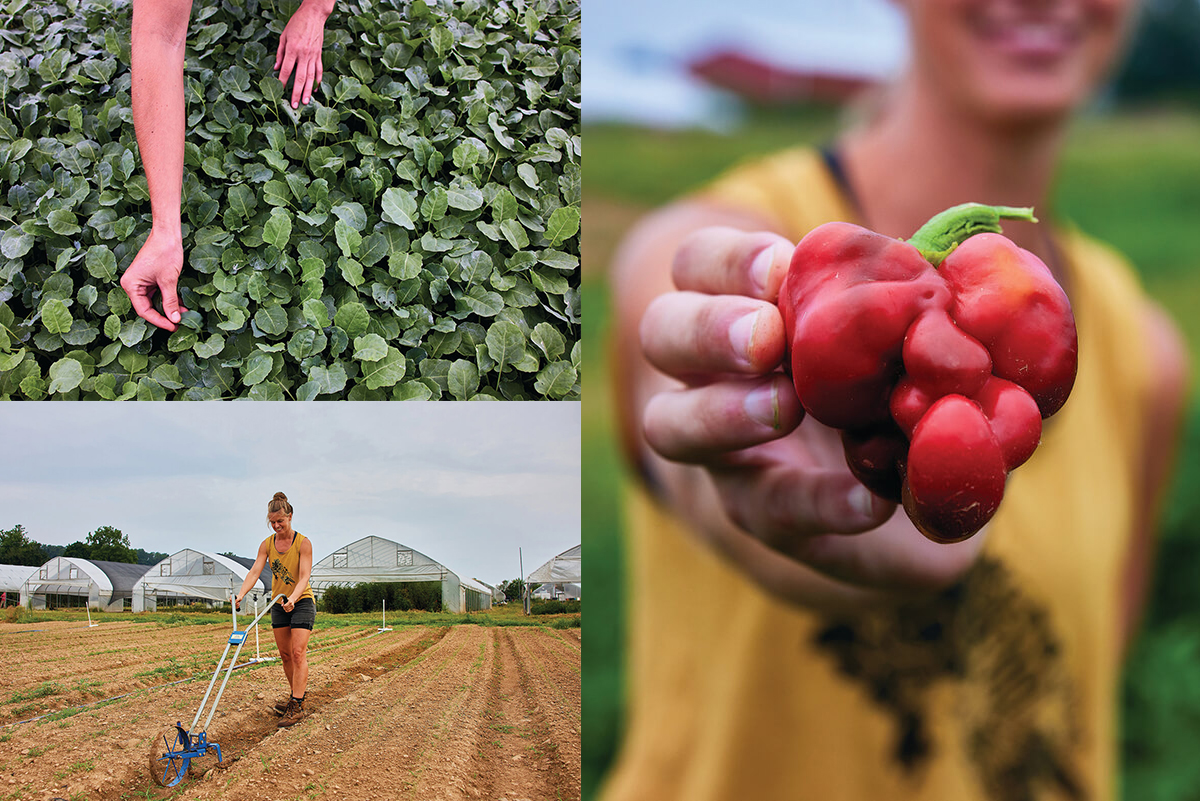
Above, clockwise
from top left. Inspecting the greens; summer
peppers; Jagoz works
the ground at Moon
Valley Farm.
Nearly 16 years in, Jagoz has become something of an ambassador for regenerative farming—often showing up in both the state and nation’s capitols to advocate on behalf of small farmers—and has made a name for herself as one of the most prolific certified-organic growers in the region. Hundreds of varieties of fruits and vegetables are grown all year long on the farm, which yields multiple tons of food.
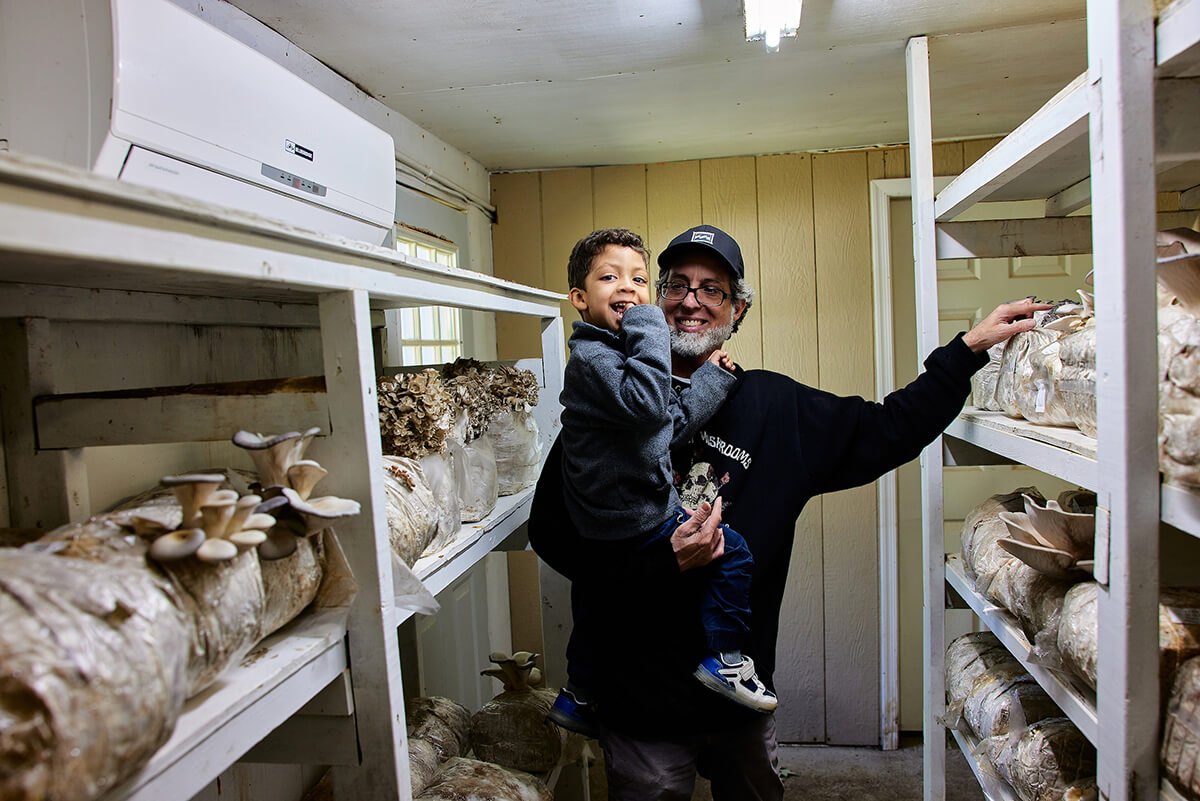
Last year alone, in part through a federal grant and Maryland State Department of Education funding, Moon Valley sold a half-million pounds of produce to schools in a dozen local counties. It also sells to hundreds of the regions most celebrated restaurants in the Mid-Atlantic—many James Beard-nominated and Michelin-starred—including True Chesapeake, The Corner Pantry, and Little’s Donna’s in Baltimore, plus some 1,500 year-round CSA boxes, including items, like mushrooms, apples, and pears, that are aggregated from other farms to diversify the offerings.
Additionally, Jagoz is participating in a study at the Johns Hopkins School of Medicine by providing produce for residents who are living at the edge of food insecurity. The goal is to help scientists better understand the health impacts of consuming freshly grown produce in a population at risk of developing chronic illness that could be mitigated and even prevented with a diet shift.
“It’s part of our vision, to have our food accessible to people with food insecurity in the region,” says Jagoz. “And this ties back to why I started eating arugula in the first place. I believe food is medicine.”
Moon Valley now grosses “multi-millions” a year, she says, most of which goes back into leasing costs, purchasing and maintaining state-of-the-art equipment including rainwater and harvesting systems, procuring high-quality, non-genetically-modified seeds necessary for her organic farming practice, and paying 30-some employees, including seasonal H-2A workers from other countries.
Jagoz takes pride in her farm’s success, especially as a sole female operator, which puts her in a rarified minority, and in the face of volatile climate change that leaves her at the mercy of Mother Nature. “Farming is a high-skilled career,” she says. “You have to be able to read the environment and make decisions.”
Selling local, however, may be the hardest job of all. Up against industrial farming’s lower-cost, lower-quality model, small farmers must excel not just in the field but in a crowded marketplace. “We have to be some of the best businesspeople on the planet, because we are selling a changing product that can be found cheaper elsewhere,” she says.
And, of course, not all Americans have an appetite for fresh produce.
“Our competition is grand,” says Jagoz. “And we’re competing with Doritos.”
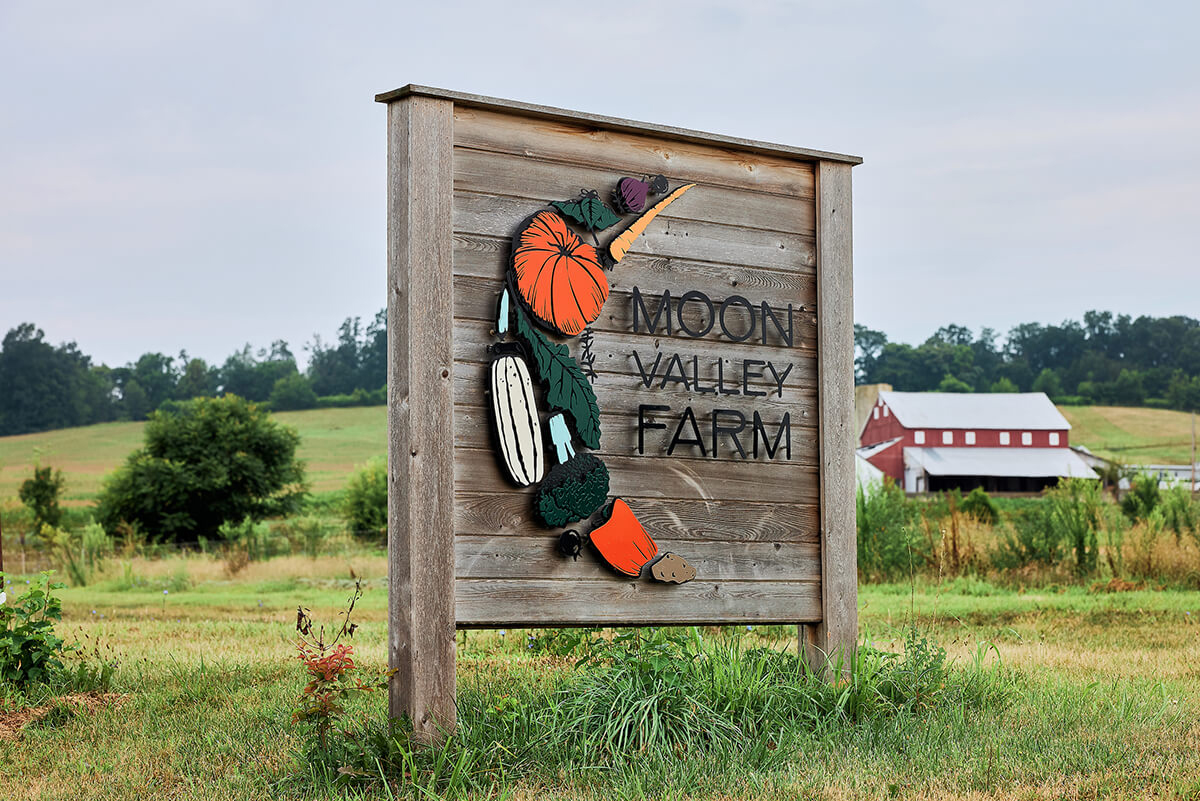
A sign welcoming you to Moon Valley Farm in Woodsboro.