Home Grown
True Grit
HEINZ THOMET
Next Step Produce
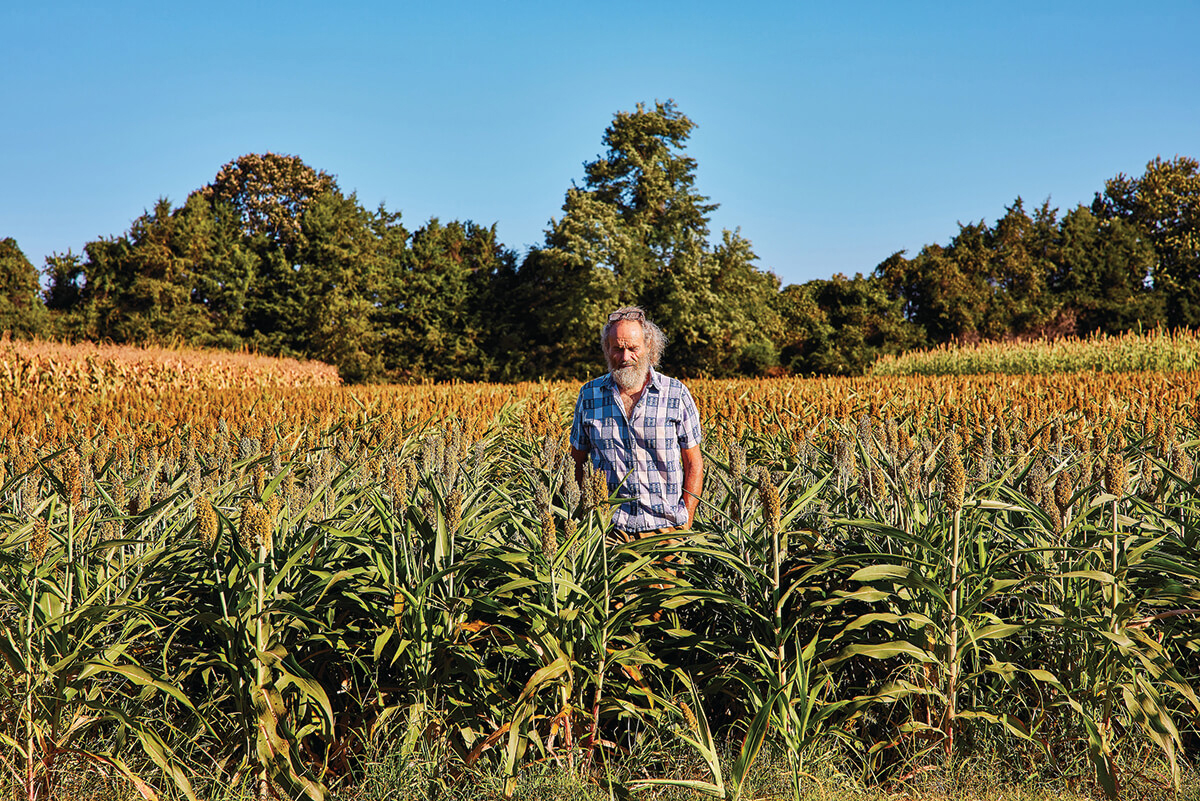
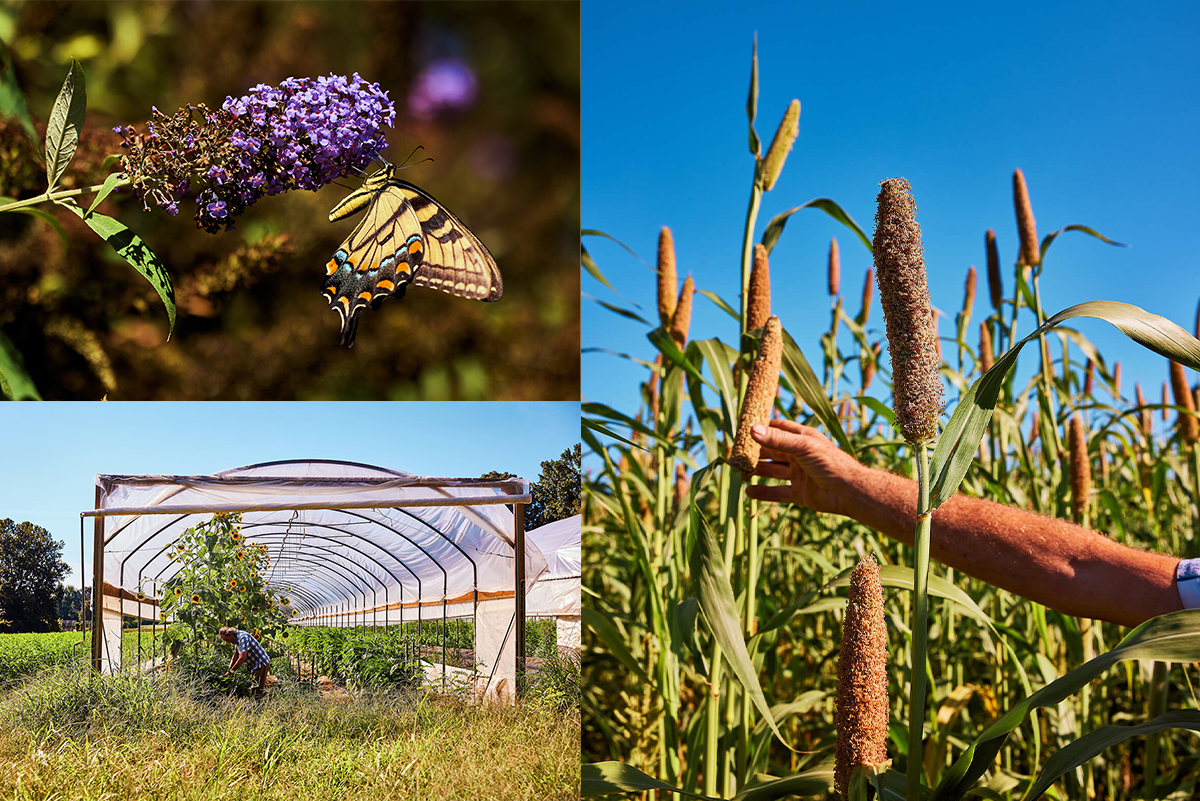
At Next Step Produce, the signs of spring are everywhere. In early April, the pawpaw trees are just beginning to bloom and patches of wild nettles ripple throughout the hillside. Inside a heated greenhouse, the air smells of fresh herbs, planted beside perky new lettuces. Down in the open fields, short blades of wheat and shoots of onions slowly poke through the soil. Altogether, it’s a hopeful sight—and just some of the many wonders that grow here, on this one-of-a-kind farm in Southern Maryland. Especially after a long cold winter and, for farmer Heinz Thomet, a particularly devastating fall.
Last October, a fire broke out in Next Step’s grain barn—the heartbeat of his operation. Slowly, then swiftly, it consumed the building, including hundreds of thousands of dollars’ worth of equipment, a decades-long storage of saved seeds, and almost the year’s entire harvest. With only a cement slab left, the total loss was estimated at more than $1 million, though the true cost of losing this pivotal infrastructure, and possibly this pioneering linchpin of the Mid-Atlantic’s local food movement, would be far harder to calculate. “I don’t know if it’s really hit home yet, what we’ve lost,” says Thomet.
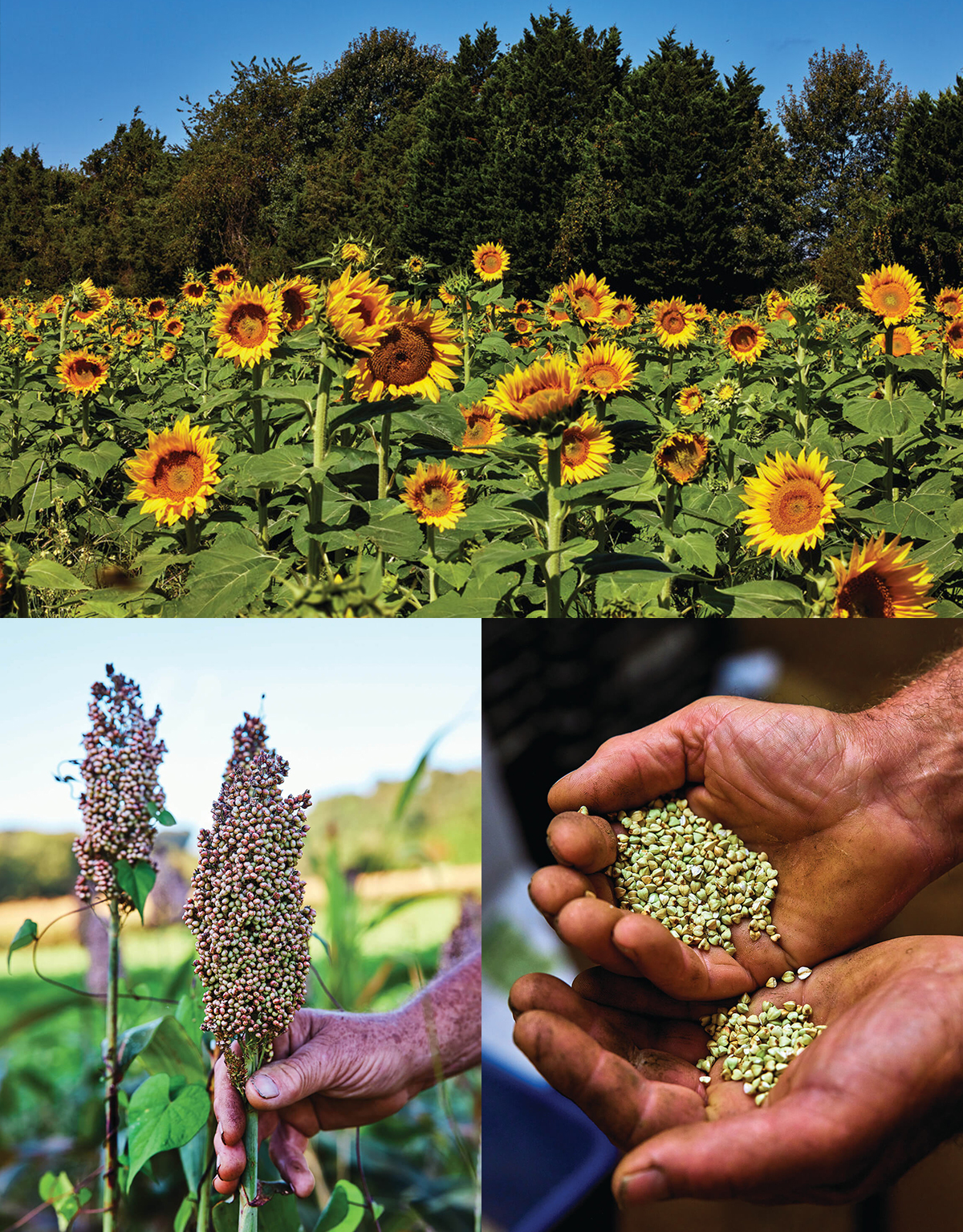
Sunflower fields and seeds on Thomet's farmland.
And yet, on this year-round farm, there’s no time to waste on wallowing. After all, the 67-year-old Swiss expat, known for his wild gray hair and unwavering conviction, has rallied and reinvented himself before.
It’s his 26th year farming on this 30-acre plot in Newburg, a former outpost of Virginia’s visionary Potomac Vegetable Farm. In 2000, he started growing seasonal produce to sell at the esteemed DuPont Circle farmers market in Washington, D.C., even back then not “a little romantic” garden but an agricultural workhorse founded on ideals and ingenuity.
From the get-go, Thomet was an innovator. Noticing gaps in the local offerings, he soon expanded his lineup in unexpected ways: citrus and kiwi, sunflower and sesame seeds, even Sichuan peppercorns— experimental ingredients found only on this farm that turned him into the go-to guru for locavore restaurants throughout the Chesapeake watershed. Still, there was further to go.
Over the last two decades of the local farm-to-table movement, even in a region once known as the breadbasket of the United States, “We’d addressed vegetables, animal protein, even alcohol, but nobody wanted to talk staples,” says Thomet.
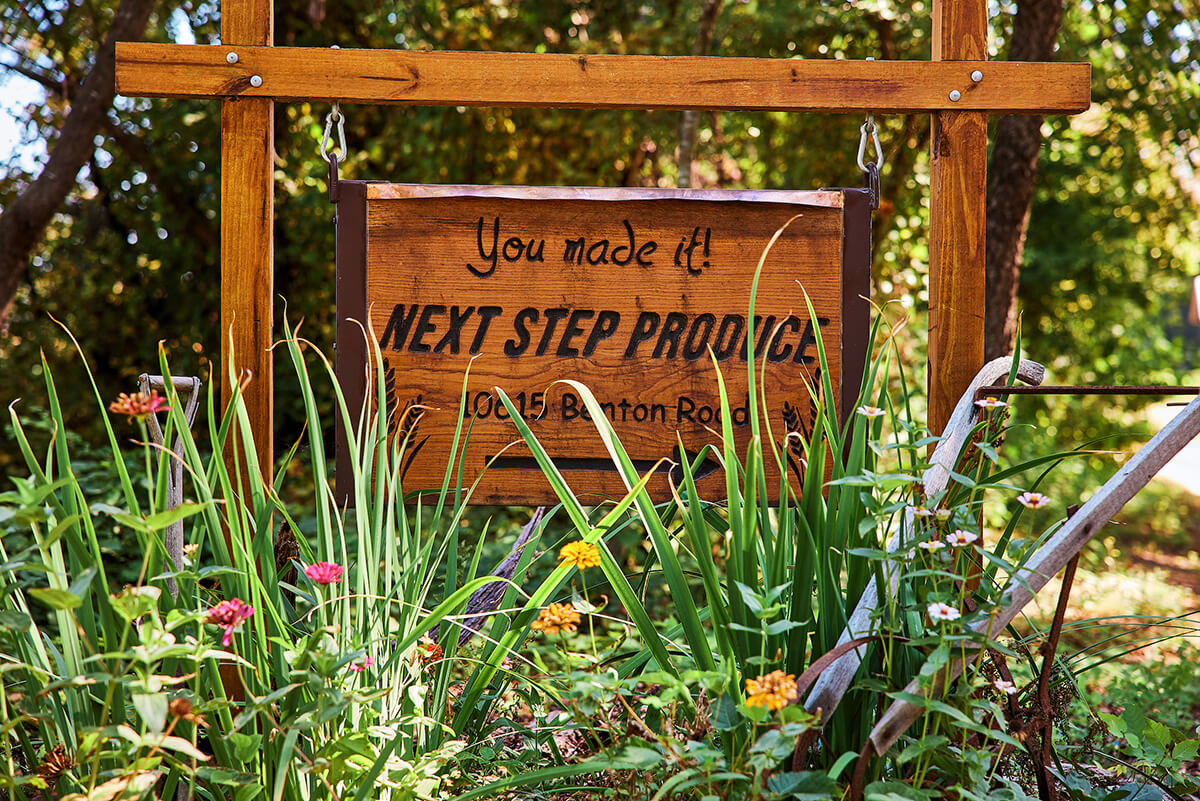
A sign welcoming visitors to the Southern Maryland farm.
And so, a decade in, he did. All those acres of corn and soybeans that cover rural Maryland? Forget your plate—they’re for livestock feed and biodiesel. Not at Next Step, though, where Thomet plants barley, buckwheat, millet, corn, oats, rice, rye, and a medley of wheats, many of which have not been commercially grown here for more than a century, with every kernel bound for home cooks and culinary heavyweights. His harvests have become the backbone of revered bakeries like Baltimore’s Motzi Bread and D.C.’s Seylou.
Sure, grains might not sound as sexy as a fat summer tomato or grass-fed steak. But they’re the last piece of an intricate puzzle when it comes to establishing a truly local food system, for which that lost barn played a huge role. Painstakingly mastered machines imported from around the world performed vital tasks, such as cleaning, sorting, drying, milling, and packaging these most essential crops. And these tools were shared with other growers like Purple Mountain Organics, bolstering a nascent regional grainway. For Thomet, the more the merrier when it comes to expanding access to good food. The way he sees it, that’s a basic human right. And he knows that farms like his yield more flavorful and nutritious ingredients, usually with less environmental destruction and exploitative labor than comes with industrial agriculture, which is largely driven by quantity.
Instead, Next Step strives for quality. They use certified organic practices, aka no synthetic fertilizers, pesticides, or genetically modified seeds. Even beyond that, they adhere to regenerative and biodynamic principles, from meticulously monitoring their soil’s health to improving it through the use of cover crops to making their own compost, putting them in even closer communion with their once tobacco-depleted but increasingly resilient, biodiverse, and dynamic land.
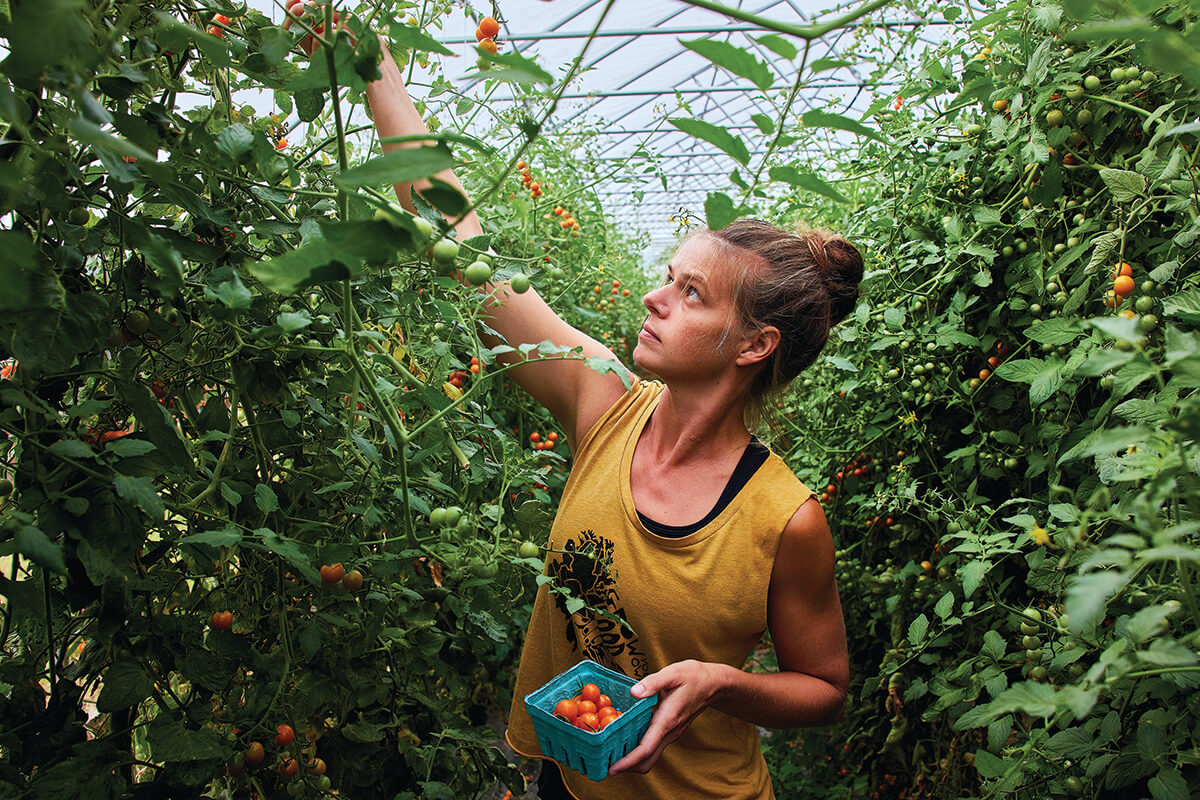
It’s all part of an uncompromising ethos that ripples into every inch of this enterprising farm, which Thomet runs with his wife, Gabrielle, who handles the vegetables, and his 22-year-old daughter, Raphaelle, who grows flowers.
“Change is needed,” says Thomet, calling out the consumerism, corruption, and corporate greed of modern society. “You either accept the status quo and give up, or you fight the system and find alternatives. But who’s going to do that? Are we going to wait for Uncle Sam? You start to think, well, why not me. We need to be empowered to do the right thing.”
That’s why Thomet is so determined to recover from that fire. There’s a sense of duty to keep sharing Next Step’s carefully tended bounty—which includes legumes like beans and lentils, fruits like persimmon, pomegranates, and quince, spices like ginger, turmeric, and mustard seed, and sugar alternatives like sorghum. Not to mention an earnest desire to share his hard-earned, often encyclopedic wisdom, which simply pours out of him.
His hope is that, over time, customers will connect the dots and care enough to ask the most elemental questions about the food we eat: What’s in season? Where did it come from? How was it grown? How does this impact the world?
“The consumer is also a citizen—you’re responsible to the Earth, and to society, and you can have an effect in how it all functions,” he says. “Every day, you make decisions about what future you want. And if you go to the farmers market, if you buy food from your local farmer, that’s the world you’re voting for.”
Thomet’s not a politician, but if he was, as proven last fall, he’d already have a sizable base. The fire could’ve easily ruined him—small farms like Next Step operate on razor-thin margins, not propped up by the economies of scale or federal subsidies awarded to “big ag,” making a loss like theirs nearly impossible to bounce back from. But in the weeks that followed the fire, more than $80,000 rolled in for their recovery via GoFundMe, the thought of which still leaves this ordinarily outspoken farmer grasping for words. Luckily, insurance covered some of the cost, too, though much remains to be replaced. By May, a brand-new barn will be under construction, meaning they’ll be back up and running at full speed again soon, just in time for summer harvest.
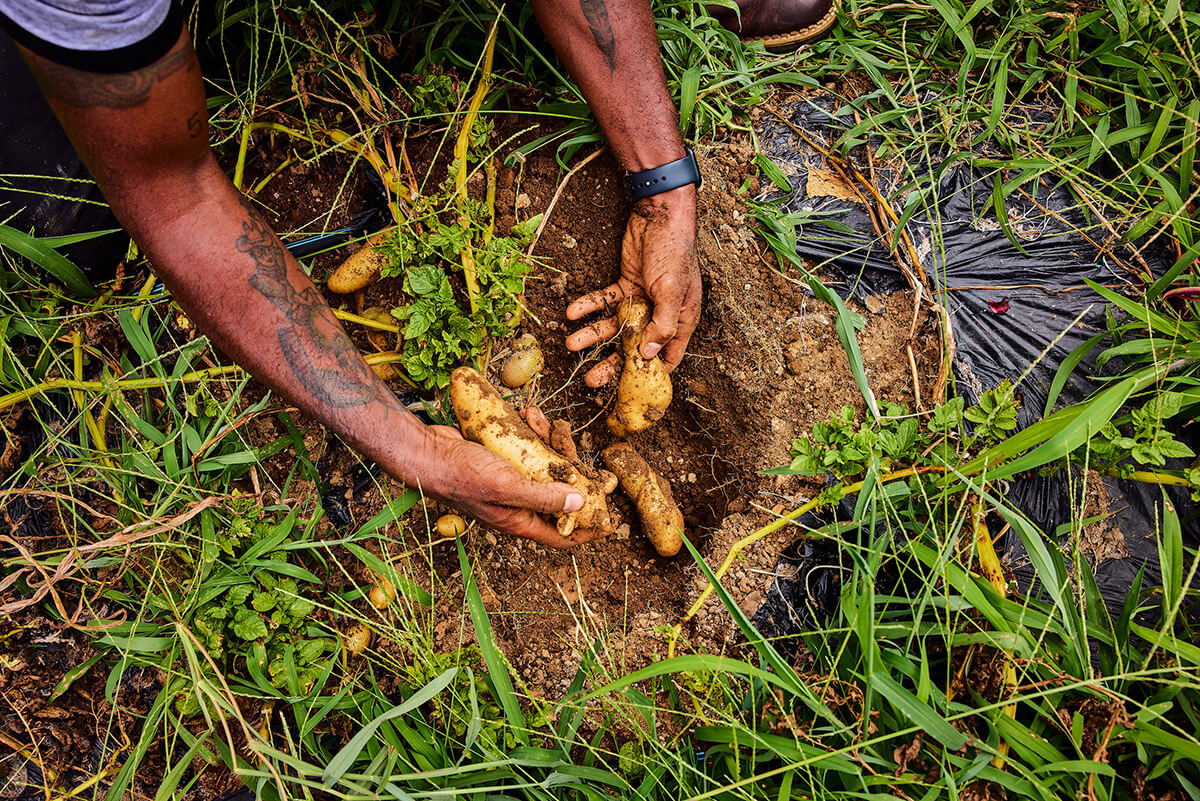
And thank goodness for that, because Thomet sure doesn’t seem like the retiring type. “I don’t, do I?” he says, walking back toward those pawpaws, where he’ll spend the afternoon prepping for tomorrow’s potato planting. Usually, he works six-and-a-half days a week, saving only enough time for a short nap on Sundays. “There’s just so much to be done.”