History & Politics
New Book Explores How the Civil Rights Era Shaped Political Resistance Today
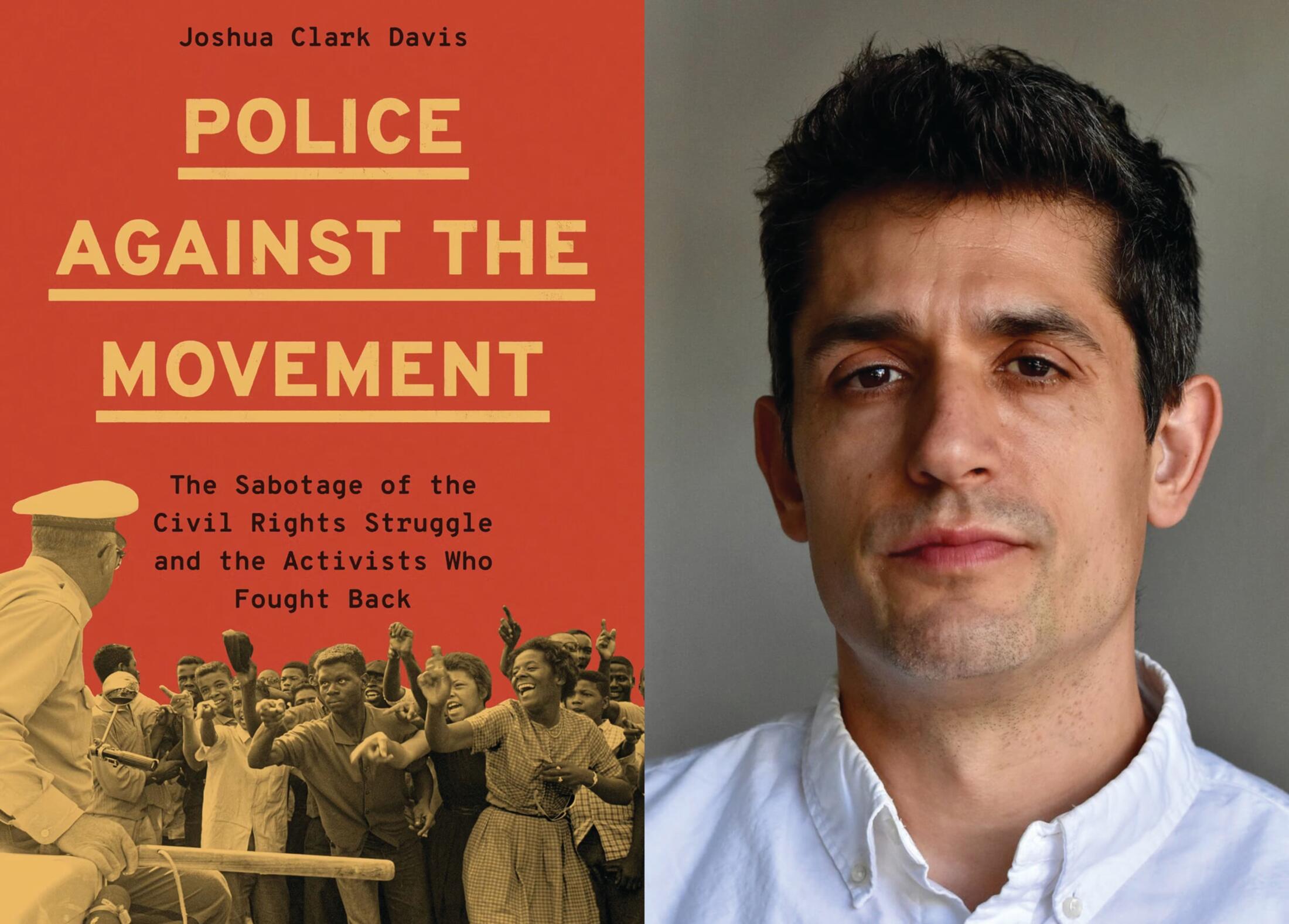
In 'Police Against the Movement', University of Baltimore history professor Joshua Clark Davis documents how the movement tackled police injustice head-on.
The story of the Civil Rights Movement has centered around the struggle to end legal segregation, voter suppression, and housing discrimination. For good reason, of course. That long fight culminated in landmark victories in the Supreme Court and legislation in Congress ended the system of laws, social practices, and economic restrictions that enforced an apartheid system in the United States.
The Civil Rights Movement’s battle against police abuse, however, has been largely overlooked. Often, we think of those in the Civil Rights Movement as victims of law enforcement misconduct and violence. But in Police Against the Movement, University of Baltimore history professor Joshua Clark Davis reframes that narrative, presenting evidence that the movement tackled police injustice head-on, offering insight into the power of political resistance in the face of government and law enforcement attacks on protest.
Police Against the Movement shows how early civil rights activists set the stage for the Black Lives Matter movement and adds important context to the intimidation, violence, and tragic recent events involving ICE’s ongoing treatment of U.S. residents and activists today.
What prompted you to revisit the Civil Rights era?
I started in 2017 when Black Lives Matter was on the rise. In my previous book, From Head Shops to Whole Foods, I had researched FBI surveillance of Black-owned bookstores. The other thing was, many journalists and commentators were describing BLM as something completely new. Or they’d say BLM [picks up] where the Civil Rights Movement ended or this is the Civil Rights Movement 2.0.
And in Police Against the Movement, you document how the Civil Rights Movement was also calling out and fighting police violence and injustice.
We’ve all seen the horrific footage from Selma, from Birmingham. Those [violent] images are some of the most prominent images of the Civil Rights Movement. The question to me was, “How did the Civil Rights Movement respond to police violence?” You can point back to the Black Panther Party [as far as standing up to police abuse], but what about before the Black Panthers? I learned there was this incredible record of protests and demonstrations at precinct stations, inside police headquarters, campaigns against surveillance, campaigns to monitor and observe the police even before the Black Panther Party had started doing that.
One incredible anecdote about Baltimore, is that police here trained the police attack dogs used in Birmingham.
Yes, and I also wrote a whole side piece for Slate on that a few years ago. Basically, Baltimore’s police department pioneered the canine unit and were evangelical in their zeal to spread the idea to other departments.
Can you explain what you mean by the term “slow violence?”
Slow violence describes non-physical forms of harm carried out by the state that are slow in their execution and their effect. When we think of violence against the movement, we think of billy clubs, beatings, and attack dogs. But we are missing a big piece of the picture because we haven’t adequately considered that local police all over the country, not just the FBI, were inflicting surveillance on civil rights activists, bringing fabricated charges, and specious, trumped-up felony indictments that not only put them in jail, but carried the threat of prison. They carried out forms of character assassination that got people fired from jobs. These things were geared toward political intimidation and chilling political speech. So, slow violence is this umbrella term that covers more sophisticated trickery.
One of the more interesting things you document is these police behaviors against political activists predates the FBI. It begins with local detective “Red Squads” surveilling Socialists, unionists, and Communists in the early 1900s.
Baltimore had one called the Inspectional Services Division. Part of why there isn’t more Baltimore in this book is that it appears the vast majority of records from Baltimore’s Red Squad don’t exist or have been lost or have been destroyed. The only copies I’ve seen show up in an FBI file. So, Baltimore was no exception to this. Every single city had a Red Squad. Some people thought of them as little FBIs. They were political intelligence units designed to ferret out political radicals, though they rarely admitted that out loud after the 1950s. They often said they were concerned with organized crime, but political radicals were their focus.
Part of why they are so important to the story is that they’re the main way police attack civil rights activists, especially outside of the Deep South. Most police departments in the United States realized by the mid-1960s that it was not really going to work to flagrantly, unapologetically brutalize civil rights protesters on camera. They thought, “We’re going have to come up with more sophisticated ways to undermine them and sabotage them.”