History & Politics
For 50 Years, Southeast Baltimore’s “I Am An American Day” Parade Welcomed New U.S. Citizens
At its height, the four-hour spectacle drew patriotic crowds of more than 250,000 to cheer on newly naturalized citizens, marching bands, and famous parade marshals.
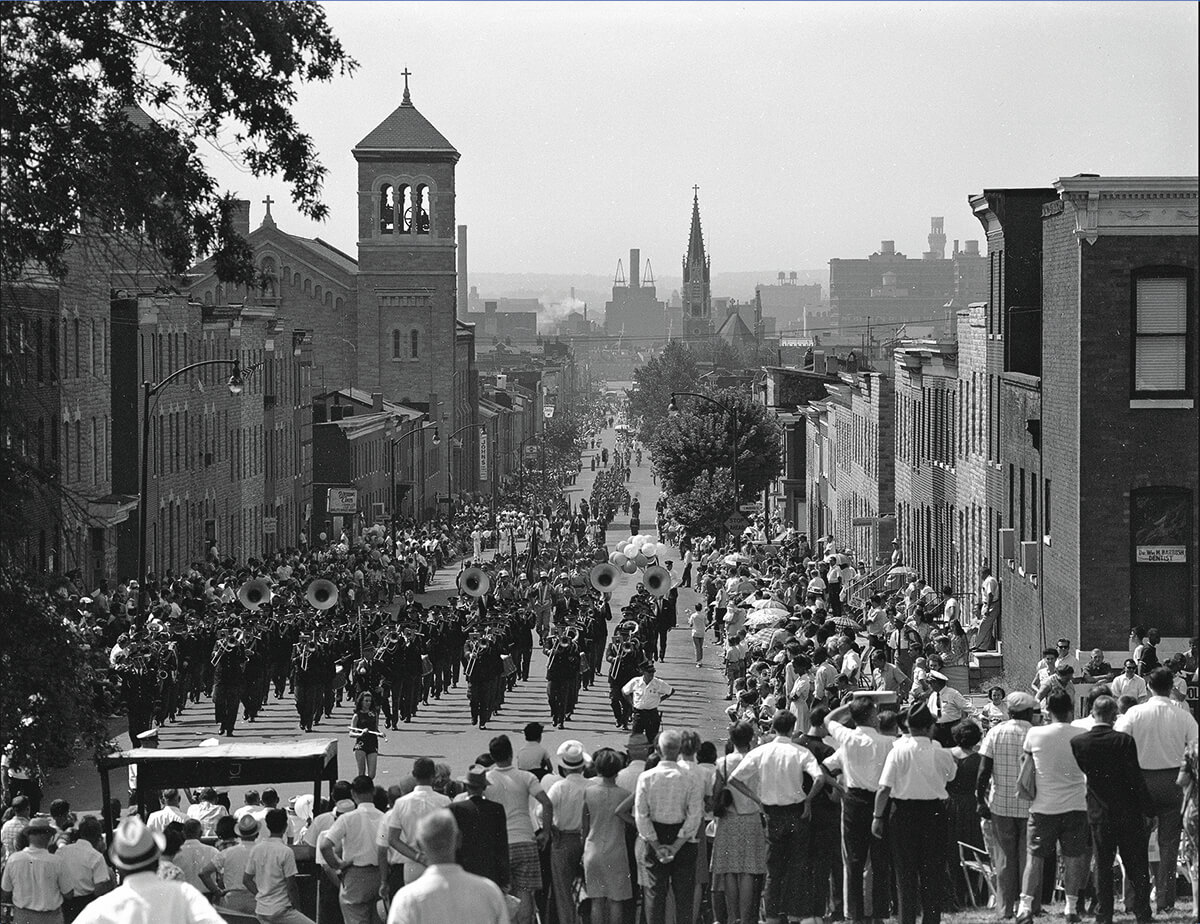
“Oh, as a kid, it was so exciting, with military units, cheerleaders and marching bands, rockets being pulled down the street,” says City archivist Rob Schoeberlein, recalling Baltimore’s long-running “I Am An American Day” parade. “Of course, at 4 or 5 years old, I’m attracted to the vendors and their carts that keep coming by, selling plastic swords, tiny flags, and these balloons that are five- or six-feet high in the air. You never saw so many people as you did at those parades.”
Begun in Baltimore in 1938 with Gen. Douglas MacArthur as the first grand marshall, the “I Am An American Day” parade became an annual celebration of naturalized citizens and the city’s biggest social and political event over the next 50 years. In 1945, a likeness of Hitler was hung in effigy and presented to Mayor Theodore McKeldin. In 1947, some 4,000 newly naturalized refugees, many from war-torn Europe, sat together in Patterson Park as the parade’s guests of honor.
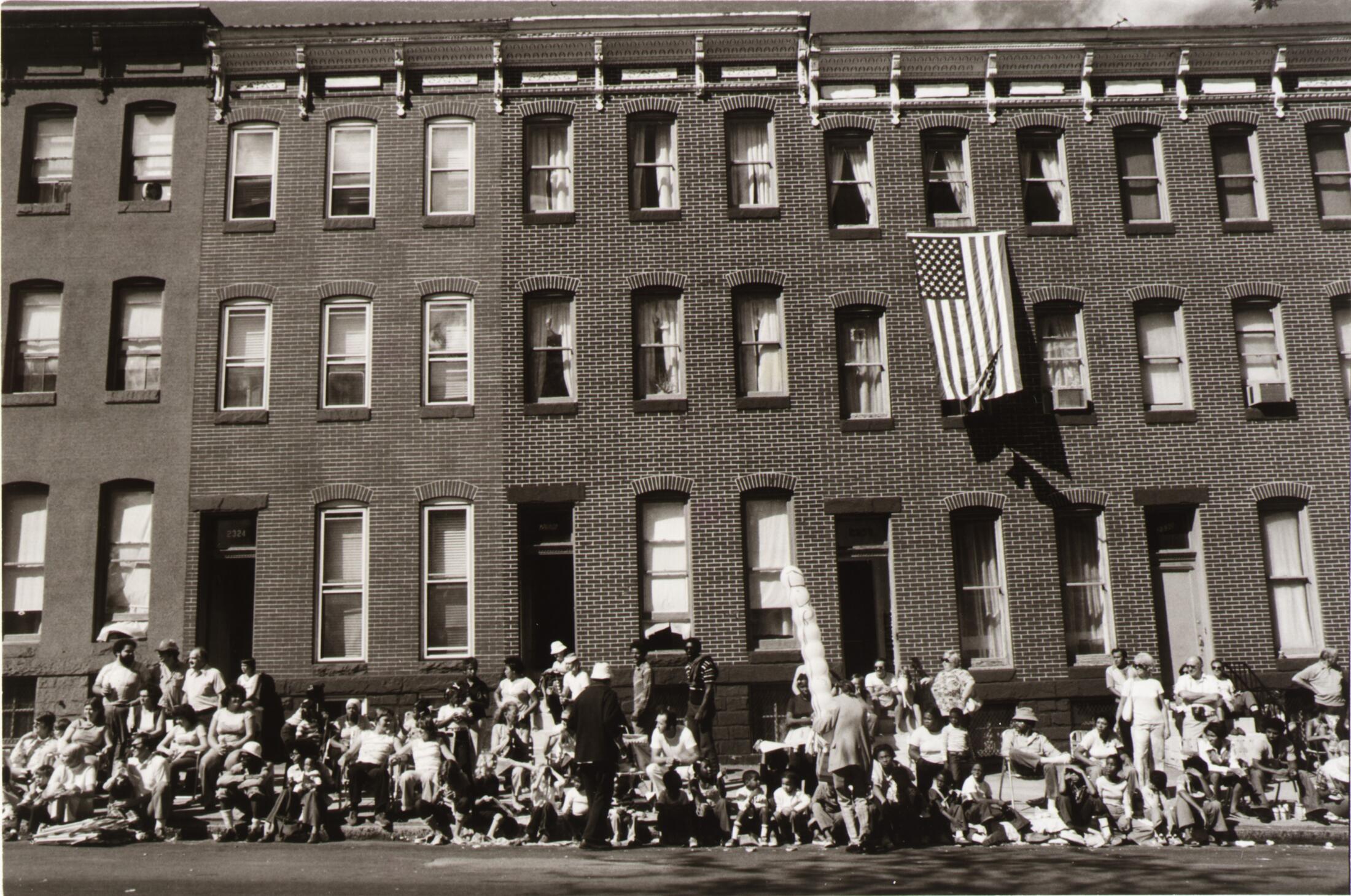
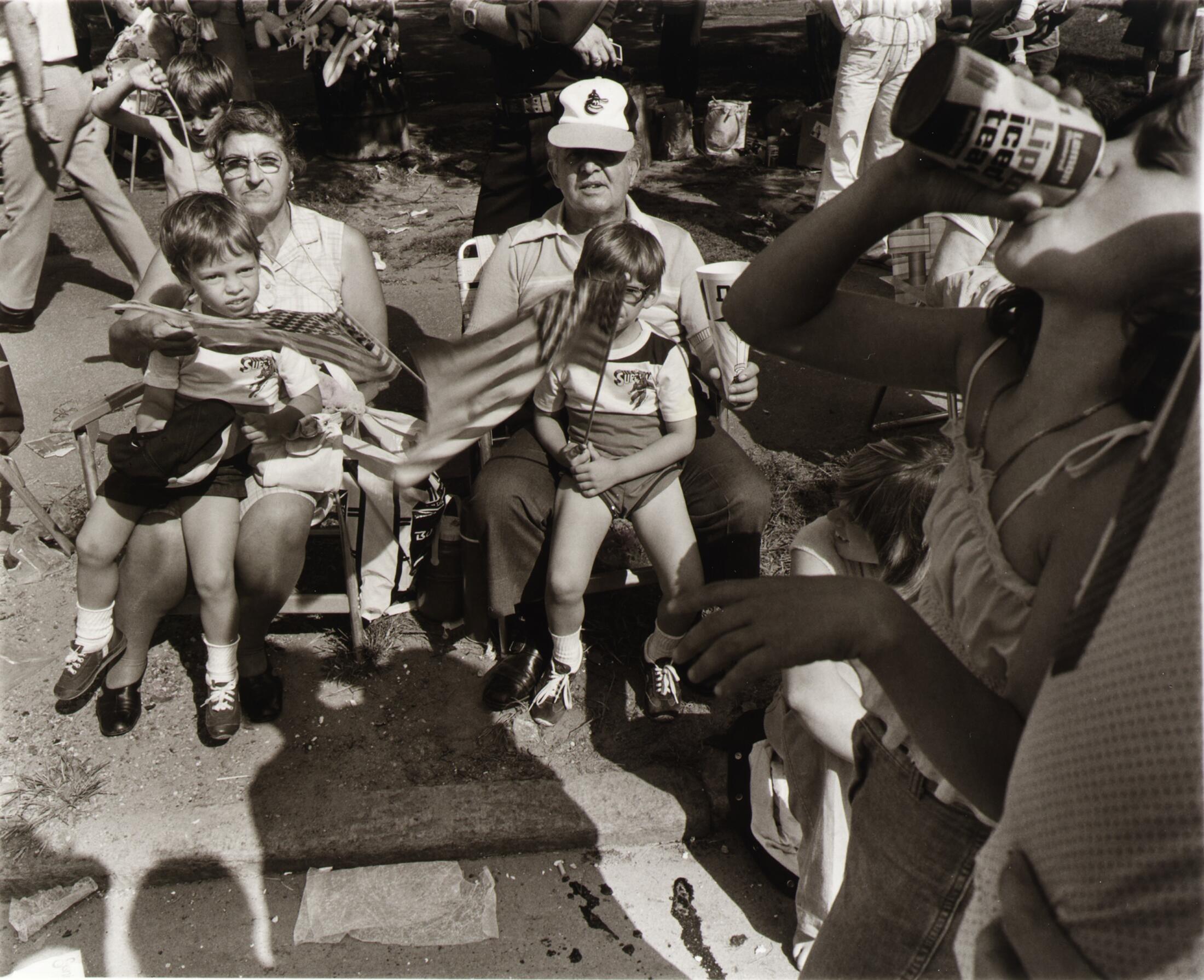
At its height, the four-hour spectacle included more than 25,000 participants and 125 marching bands and drew patriotic crowds estimated at 250,000 and more. Launching from St. Patrick’s Church on East Broadway, the traditional route proceeded down Bank Street to Patterson Park, culminating in a fireworks display and a U.S. citizenship Oath of Allegiance ceremony. In other words, picture lawn chairs, Formstone rowhouses, Old Glory hanging from the windows, and stoops and sidewalks packed six deep with children, parents, and grandparents waving miniature American flags.
Parade marshals read like a “Who’s Who” of 20th-century American pop culture. Milton Berle served as a grand marshal in 1963. Bob Hope, Dorothy Lamour, and Fess Parker in 1964. In 1977, Johnny Unitas led a parade that included Sugar Ray Leonard, Sesame Street’s Cookie Monster, Bozo the Clown, and Captain Chesapeake. Brooks Robinson headlined the following year, alongside the Philadelphia Mummers and an Elvis tribute float.
In 1940, at the behest of publishing mogul William Randolph Hearst, Congress had officially named the third Sunday in May “I Am An American Day” to honor immigrants who had received U.S. citizenship. Some 1,600 annual events took place around the country by 1945 but enthusiasm quickly subsided after World War II—except in Baltimore.
From the start, parade participants formed a wide swath of new and longtime residents, including Czech, Lithuanian, Russian, Polish, and Chinese immigrant groups, often in Old World costume, as well as Native American representatives and Black veterans.
Over the years, the parade also became a moving microcosm of personal and global politics. In 1986, a 5-year-old, hearing-impaired boy adopted from Korea and a 6-year-old adopted girl from Colombia became U.S. citizens, doing their best, respectively, to sign and repeat the Oath of Allegiance. Other naturalized citizens that year included immigrants from Pakistan, the Dominican Republic, and a Ukrainian Jewish family, who had fled the Soviet Union a dozen years earlier.
In 1991, the I Am An American Day naturalization ceremony included a 19-year-old Vietnam immigrant, a 22-year-old from El Salvador, and a 69-year-old Jamaican-born woman, among the 19 countries represented. A 21-year-old Palestinian woman, a refugee like her 60-year-old mother, said U.S. citizenship meant they could now “travel freely through the Middle East and cross into the occupied territories of Israel without being strip-searched.”
The same year, Kondi Poulimenakos, a 16-year-old Sparta native and Greektown resident, earned “Loyalty Day Queen” honors by answering 21 questions about the American flag. Three years later, however, city fees and a lack of funding pushed the parade to Dundalk before its ultimate demise.
“My busia lived on Bank Street, the same block as Holy Rosary Church,” says Schoeberlein (see above photo). To this day, Mass is said in Polish and Ostrowski of Bank Street still makes homemade Polish sausage in the neighborhood once known as Little Poland.
“My grandmother’s rowhouse even had a painted screen, the classic cottage and swans,” Schoeberlein says, adding that his maternal grandparents never actually naturalized, but nonetheless got along fine in their unofficially adopted country. “It needs to be refurbished, but I have the slatted wooden bench that sat beneath my grandmother’s window. I also have my grandmother’s knife from when she worked in a cannery. And I have the animal horn she used in her sausage-making process.
“We have home movies of the parade from ’63,” he continues. “It was drizzling that day, and you see a guy wearing a straw hat in a Model-T who looked like but wasn’t Buster Keaton, and ‘Pete the Pirate’ from the WBAL-TV show, which I loved as a kid, and then there’s my grandmother, and my father in a jacket and tie, probably because it was Sunday and he’d come from church, beneath an umbrella.”