Arts & Culture
UMD Historian’s New Book Reevaluates Our Understanding of The Revolutionary War
In 'The American Revolution and the Fate of the World,' Richard Bell offers a deeper look at the war—not only as the colonies’ battle for independence, but a full-throttle global conflict.
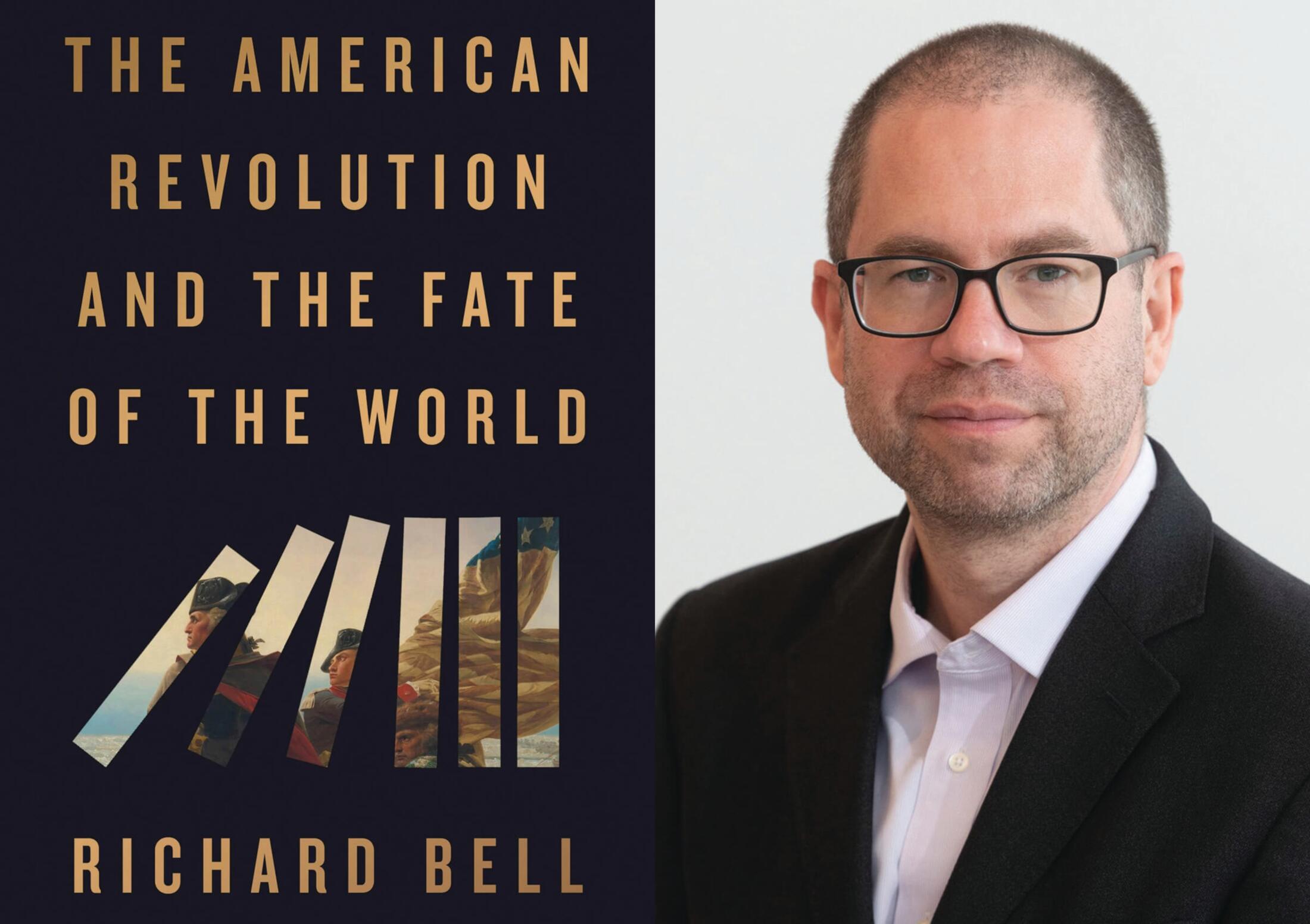
The Revolutionary War is remembered as a fight won by Americans who had the nerve to ignore the edicts of King George III, dump British tea into the Boston Harbor, and go toe-to-toe with the world’s greatest military power. But it was larger than just the 13 colonies’ battle for independence. The war was also a full-throttle global conflict, as other European empires, namely France, Spain, and the Dutch Republic, assisted the American cause and challenged British dominance across North America, the Caribbean, and India.
In fact, it is very unlikely the Americans would’ve prevailed without their allies. The French and Spanish, in particular, forced England to divert military resources away from America to defend their empire. They provided foreign financing and credit as well, bankrolling much of the eight-year campaign.
In The American Revolution and the Fate of the World, University of Maryland historian Richard Bell, British-born coincidentally, reevaluates our understanding of the Revolution. Not just the global nature of the conflict, but that here at home it was, in fact, a civil war, with African-Americans and Native Americans fighting on both sides. It’s a must read for those who want to expand and deepen their understanding of American history.
A good place to start is the framing of the Revolution as America’s first civil war. Not just because the Founding Fathers were British citizens, but because most Americans weren’t on board initially.
There wasn’t the polling we do today, but the best estimates are 40 percent of white residents [in America] would’ve been considered patriots, maybe 40 percent neutral—think of them as today’s swing voters—and 20 percent strongly loyal to England.
And there was a great propaganda battle. Today’s conspiracy theories are not exactly a novel political tactic.
There’s a fierce battle waged by patriot writers and loyalist writers to win the hearts and minds of those who are neutral at the start. Writers like Paul Revere and Samuel Adams try to persuade them to adopt George Washington’s side and maybe even pick up arms. Patriots try to convince their fellow colonists that British East India Company tea has been packed down into chests by Chinese warehouse men with filthy feet. . . . [Meanwhile] loyalists are weaponizing their fellow colonists’ fear of foreigners by spreading ugly, untrue rumors that the arriving French Catholic soldiers have orders to persecute American Protestants, steal their lands for King Louis of France, and even ban the speaking of English in America.
Everything considered, Harry Washington might have the most compelling personal saga in the book.
What I like about the remarkable life of Harry Washington, who, at one time, was enslaved to George Washington, is that both have their own way of pursuing ideas of liberty. For George Washington, that means liberty from the control of the British government, and it has to do with land, trade, and political power. For Harry, it’s freedom from slavery, most immediately, and then all that comes after that in terms of seeking self-determination, civil rights, and political power. It’s a journey that takes him from revolutionary America to British Canada, and then to Sierra Leone in West Africa.
We’re also reminded the Revolutionary War, like nearly every war, was not good for the American or British economy.
The war was an economic disaster for almost everyone involved, on every side. The British economy was ruined by the suspension of trade with its biggest customers in America. The economies of the 13 rebel colonies completely collapsed when trade was cut off with their biggest trading partner, the British Empire, including Canada and the Caribbean. It’s calamitous. Shipping is halted, which creates huge shortages, price hikes, and hyperinflation. People lose their jobs. Companies go out of business.
On both sides of the Atlantic, that puts enormous pressure on politicians to end the war. In Britain, those economic concerns drive numerous peace petitions sent to Parliament and to the king by ordinary hard-up British people, who want this economic hardship over as quickly as possible.
What does Thomas Paine mean in 1776 when he declares Americans “have it in our power to begin the world over again?”
He’s encouraging readers to take the leap, to embrace the cause of independence, to fight this war and win it, because as humans we all have extraordinary amounts of political power and agency. When we work together, we can do great things. He’s also noting that for a group of rebel colonies to break away from an empire in the 18th century would be unprecedented and send a signal around the world that the king’s control over his colonies is neither permanent nor invincible. That such an example could reshape the modern world, and it has, right? There have been loads of revolutions in the wake of the American Revolution.