History & Politics
The Women of the Pitch & Putt Golf Club Drive Home a Powerful Legacy
How the nearly 90-year-old club helped desegregate the city’s public courses and advance the civil rights movement.
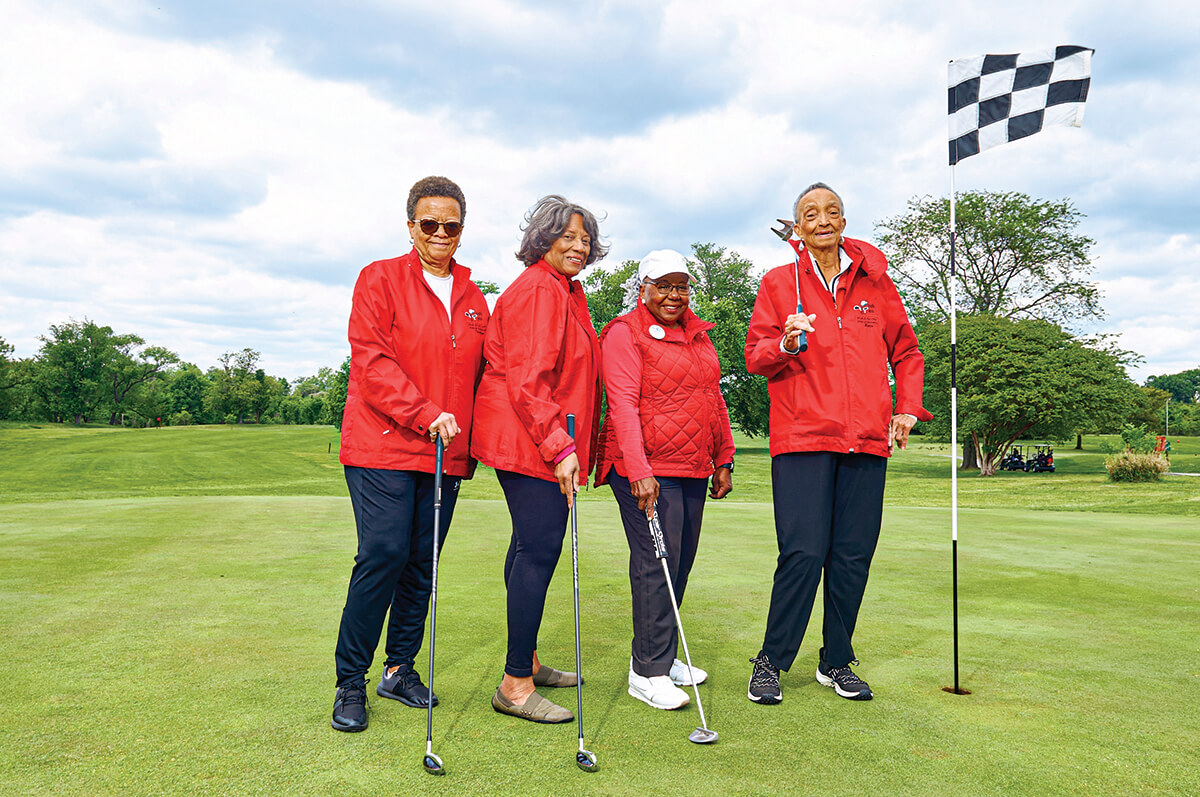
The drive down Washington Avenue amid the urban sprawl of southwest Baltimore provides zero indication that Carroll Park Golf Course is nearby. Finally, two weathered stone columns mark the entrance to the course’s crumbling macadam parking lot.
Splotches of patchy grass and sparse trees surround an octagon-shaped clubhouse that’s lined with pale-yellow clapboards and designed for function more than form. The traffic on I-95, a chip shot away from the course’s western border, adds a constant din to the gritty ambiance.
Carroll Park, a compact nine-hole course, is teeming with activity this spring morning. Two teenagers take practice swings in the tee box of a short par-3, waiting for a middle-aged Black man to putt out on the green. An elderly Asian woman walks up the ninth fairway, nearing the end of her round, while two white men in workwear approach the first tee to begin theirs.
The scene presents the egalitarian beauty of blue-collar municipal courses, where all are welcome to shoot par, the standard marker of success and the game’s great equalizer for every player, regardless of race, creed, color, or national origin. But that’s not how it used to be. Especially not here and especially not for golfers who were born with the wrong skin tone for the time.
The Pitch & Putt Golf Club of Baltimore was established on these grounds in 1938 when African-American women joined forces at the only course where they were allowed to play. But even that privilege had not come without a fight.
Brenda Goburn Smith, a current Pitch & Putt member who also served on the advisory committee for the Baltimore Municipal Golf Corporation, which manages the city’s courses, discovered details of that fight—and Carroll Park’s important role in the desegregation of golf—in a research paper published in the journal The Geographical Review.
“As I read through it and the story began to unfold, I kept thinking, this is fascinating,” she says. “Our club and the course share intertwined histories.”
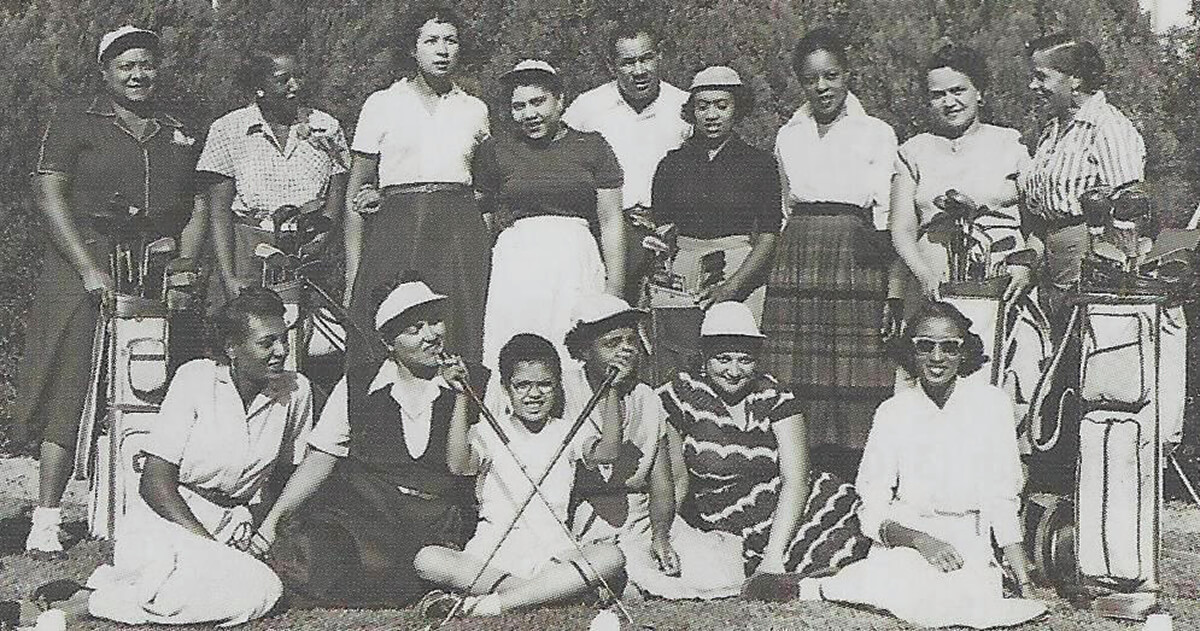
The shared past began in 1923, when Carroll Park Golf Course opened as a “whites only” club. Eleven years later, the Monumental Golf Club of Baltimore, an African-American organization, challenged that policy and scored an apparent legal victory when Baltimore’s Board of Public Park Commissioners (BPPC) essentially segregated the park.
White golfers were granted exclusive rights to play the course on Tuesdays, Thursdays, Saturdays, and the second and fourth Sundays of each month. African Americans were allowed to tee off on Mondays, Fridays, and Saturdays. But they were still banned from playing on the city’s three other public courses.
The plan initially gained traction because giving Black people access to Carroll Park aligned with the U.S. Supreme Court’s Plessy v. Ferguson decision of 1896, which ruled that racial segregation did not violate the 14th Amendment if separate facilities for both races were equal in quality.
Carroll Park was separate but decidedly not equal, however. The city’s other public courses featured the standard 18 holes, but Carroll Park’s 35 acres had room for only nine. Baltimore had spent more than $1 million on upkeep of the municipal golf courses since their openings, but only $21,665 had been earmarked for Carroll Park, where it was impossible to differentiate fairways from unkempt rough and patches of groomed sand were sorry excuses for greens. The sandy greens forced golfers to perfect their short games and inspired the name of the fledging Pitch & Putt club.
Pitch & Putt originally launched as a coed club until the men broke off to form the Colonial Golf Club in 1967. The male members grew to love the game while caddying at the city’s white courses and developed their own game by traveling to play other African-American golfers in Philadelphia and Washington, D.C. Some of the men’s wives who went along on the trips and started playing alongside their spouses would become the original female members of Pitch & Putt.
They were getting into golf just as local organizations were formed to grow the game’s emerging popularity among white women. The first Maryland Women’s Amateur Championship was held in 1921, and the Women’s Golf Association of Baltimore was founded in 1930. The women of Pitch & Putt were challenging gender stereotypes as much as they were pushing for racial equality.
Monumental Golf Club took the lead in the court rooms, but it was the original members of Pitch & Putt who stood their ground at Carrol Park and helped push for change by playing the game they loved when it wasn’t convenient or comfortable to keep teeing it up.
Carroll Park’s conditions remained second rate into the 1930s, cementing its reputation as the worst public course in Baltimore and causing desegregation supporters to spotlight the inequalities within the “separate but equal” mandate.
Years of legal wrangling and public debate followed, marked by cycles of small legal victories for desegregation supporters, opposition appeals, and court decisions that kept restrictive race policies in place. Finally, when Dallas Nicholas and the Monumental Golf Club once again threatened legal action in the early 1950s, BPPC voted to allow all residents full access to the city’s municipal golf courses. It also opened access to the city’s baseball diamonds, tennis courts, and other athletic facilities.
Then, in 1954, the U.S. Supreme Court voted to overturn school segregation enacted by Brown v. Board of Education, a decision that ended the “separate but equal” doctrine and firmly established equal access to Baltimore’s public facilities, Carroll Park among them.
As Pitch & Putt prepared to recognize 80 years of continuous existence in 2018, Goburn Smith realized the club needed to honor the legacy of its original members and link their efforts to Carroll Park. Monumental Golf Club took the lead in the court rooms, but it was the original members of Pitch & Putt who stood their ground at Carrol Park and helped push for change by playing the game they loved when it wasn’t convenient or comfortable to keep teeing it up.
“We weren’t in charge of the city, but we had a significant impact on developing legislation to open access to the city’s courses for everyone,” Goburn Smith says. “We needed to preserve our story and make sure it got told because no one else was telling it.”
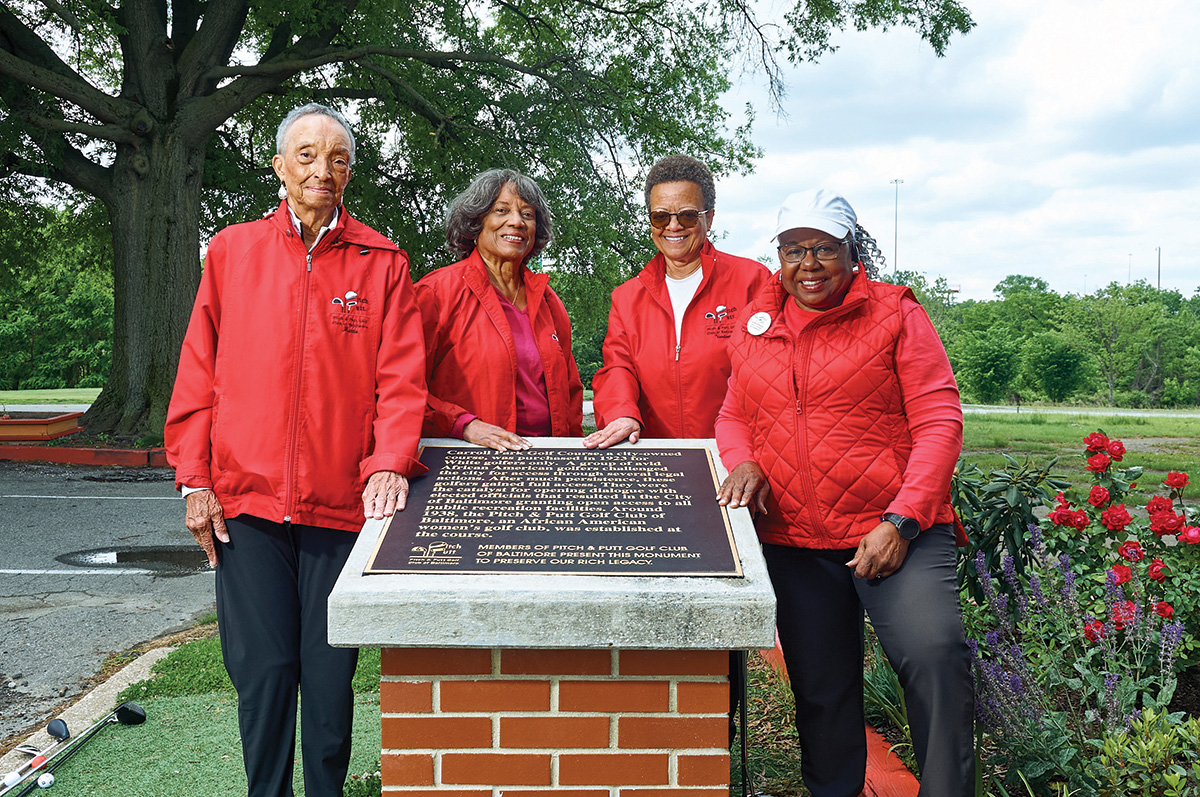
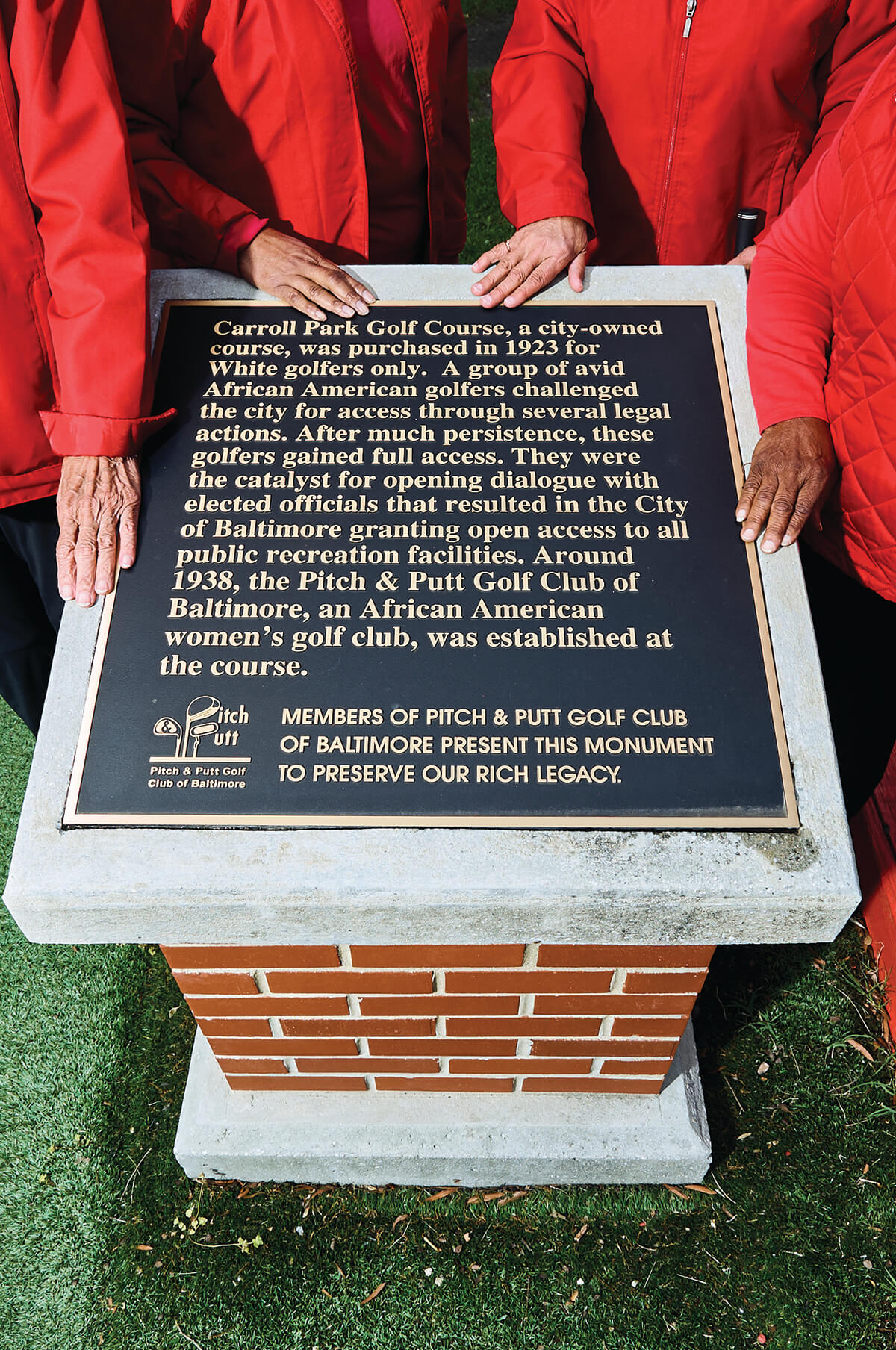
The group raised money through fundraising golf tournaments to commission, install, and dedicate a stone monument next to Carroll Park clubhouse’s main doors. The plaque that adorns it reads in part: “A group of avid African American Golfers challenged the city for access through several legal actions. They were the catalyst for opening dialogue with elected officials that resulted in the City of Baltimore granting open access to all public recreation facilities.”

Andrea Morgan, Pitch & Putt’s current president, represented the group in May 2025 when it was inducted into the African American Golfers Hall of Fame in Florida. “Moments like that really put things in perspective,” she says. “Being recognized as a legacy group made me realize it’s bigger than yourself, and it’s bigger than our generation.”
Today, young African-American golfers thankfully don’t think twice about deciding where to play. But that wasn’t always the case, and that history matters.
“What do we want the club’s influence to be 50 years from now?” asks Morgan. “How do we leave something behind for who comes next?”
Part of those efforts include sponsoring student scholarships at Morgan State University. In February, Andrea Morgan attended the school’s annual breakfast held to honor Martin Luther King Jr. and gave scholarships to three students who are studying to become a dental hygienist, social worker, and engineer.
“I’ve never been prouder of our women,” says Morgan. “The little bit of money that we’re able to give back shows we accomplish more as a group than we do individually.”
Today, Pitch & Putt has approximately 30 active members who remain committed to promoting and advancing interest in women’s golf, and teaching the skill, patience, and integrity needed to play the game competitively. The youngest members are in their 50s and the oldest—by a long drive—is 92-year-old Mattie Gaines, a tall, wiry woman who doesn’t look or act her age.
Gaines still plays golf each week, including this morning, after which she sat at a long table in Carroll Park’s clubhouse and enjoyed a post-round chat with fellow Pitch & Putt members Patricia Stokes and Verdeen Cornish.
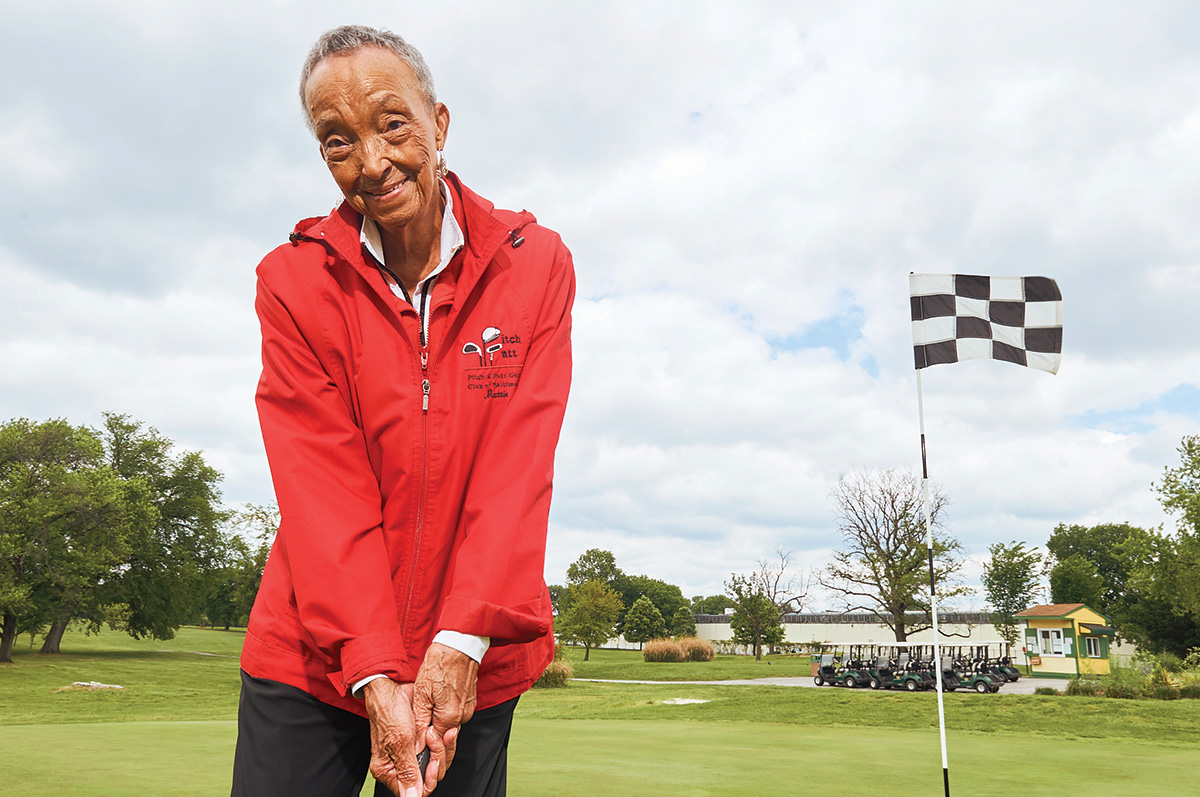

Gaines, an athletically gifted physical education teacher in her youth, was approached some 30 years ago by Fopeanna “Fobie” Johnson, her neighbor and one of Pitch & Putt’s most effective recruiters, with the suggestion to take up golf. Gaines balked at the merits of chasing a little white ball around a field, but eventually gave it a try.
It didn’t go well. She quit in the middle of her second round in tears when she quickly realized golf’s cruel truth: The game is exceedingly difficult and maddingly frustrating. Gaines, who gives off the distinct impression of someone who doesn’t give up easily, took a few lessons and discovered something else about the game.
Just one pure shot during a round—when the mind stops overthinking mechanics, freeing the body to flow through the perfect swing—is intoxicating as hell and fuels the pursuit of impossible perfection. She’s been chasing the feeling ever since.
Besides, back when Gaines took up golf, she had to improve her game if she wanted to join some of her friends who were already members of Pitch & Putt. The members were downright competitive back then and didn’t want hackers to slow down rounds or embarrass them when they traveled to compete against other women’s clubs in Philadelphia and Washington, D.C.
“Oh, you needed to be good,” says Cornish, who picked up the game while working at Domino Sugar. Her male colleagues often talked business on the golf course and Cornish, who aspired to climb the corporate ladder, was determined to fit in. Unfortunately, her initial experience on the course wasn’t much better than what Gaines endured.
She nearly quit, but a female friend convinced her to play a couple rounds with members of Pitch & Putt. Cornish was more comfortable with the women but still felt compelled to work on her game for more than a year before officially becoming a member.
Pitch & Putt has since softened its score-card standards, but the women remain sticklers for following the rules of golf and understanding its unique etiquette. You play the ball where it lies and maintain pace of play. You don’t walk on anyone’s putting line and you most certainly finish short putts. The women of PPGC don’t hand out gimmes.
“When you’re in our group, you play the game the right way,” says Stokes, who runs Bogey Free, a Baltimore-area program that introduces beginners to the game with lessons based on Pitch & Putt tenets. “It’s not just about knowing how to swing a club. It’s about understanding how to behave on the course. Good habits impact how comfortable and confident you feel when playing.”
“We needed to preserve our story and make sure it got told.”
Golf is clearly important to the Pitch & Putt members, but so is the sisterhood.
When Morgan joined in 1994, she was 31 years old, the youngest member at the time. Five years later, she had her first child, a daughter the Pitch & Putt women doted on like proud aunts. It had been 20 years since a newborn graced the group and they threw a club-mandated baby shower for the ages. Yes, such festivities are noted in the bylaws.
Morgan had moved to Baltimore from Michigan to attend the University of Maryland School of Dentistry, and the Pitch & Putt women became her extended family. In between studies, she’d pack up her daughter’s things, grab her clubs, and head for the course.
“I wouldn’t know who would end up holding her while I played, but someone always did,” says Morgan, who cherishes pictures of her young daughter tottering down fairways and sitting on golf carts.
“She grew up with the group. Those were great times.”
The Pitch & Putt women also come together at times of great loss. When the club’s beloved president Stephanie Williams died unexpectedly in January 2023, the members held a memorial golf tournament that attracted more than 100 golfers and raised $12,000, which added to the Morgan State scholarship fund.
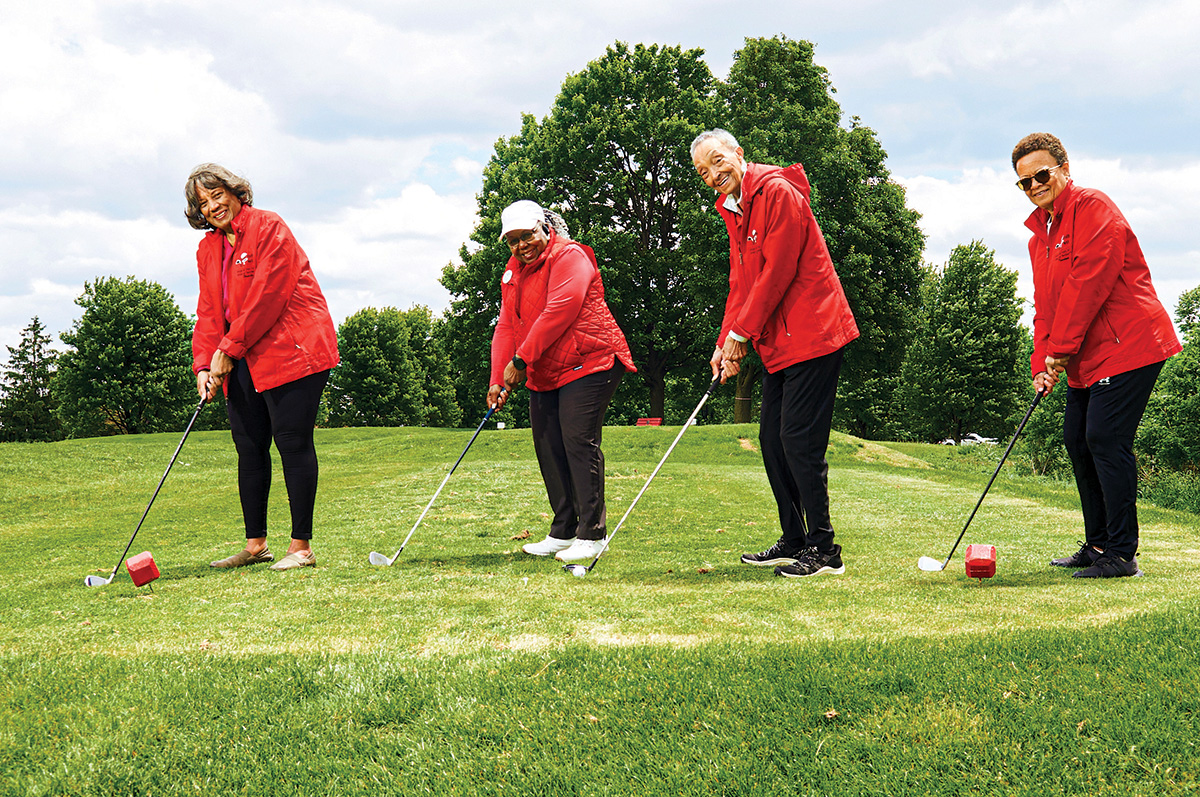

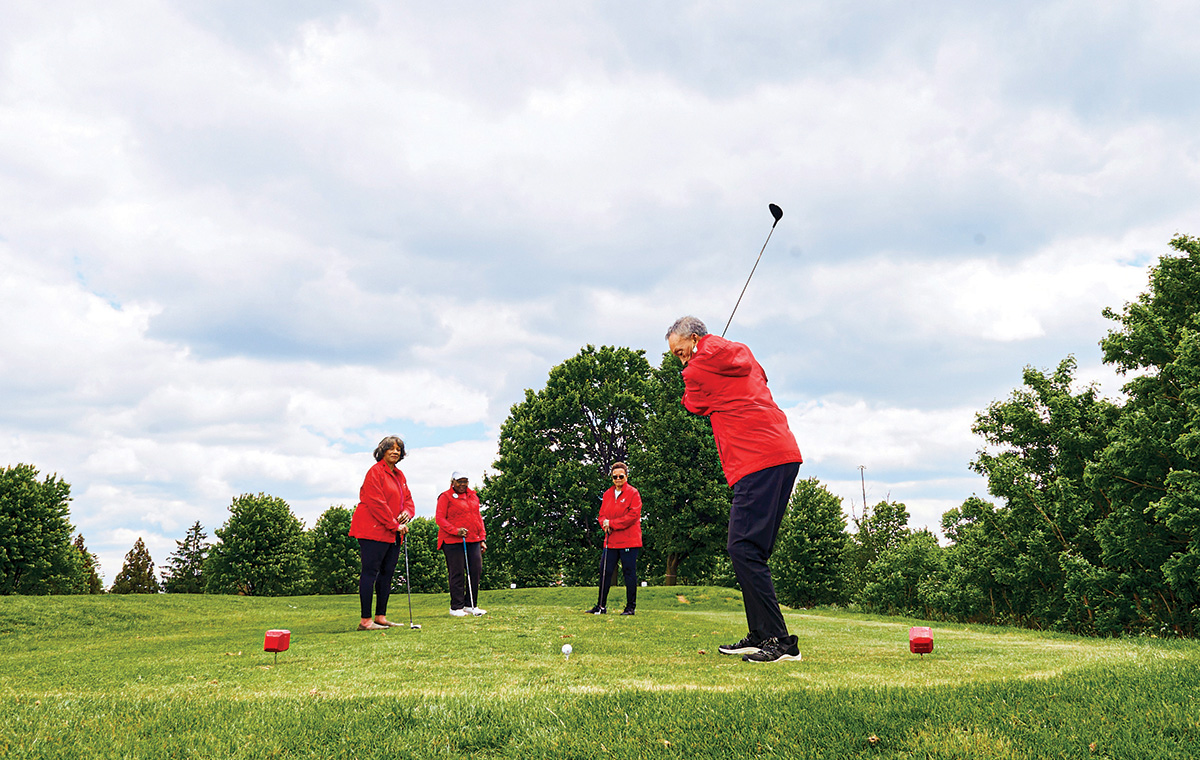
Forest Park Golf Course in Baltimore serves as Pitch & Putt’s unofficial home course, but the women consider themselves a traveling group. They carpool to courses in Maryland, Delaware, and Pennsylvania on the second and fourth Sundays of each month, from April to October. Several members also get together for weekly rounds at courses throughout the city, including a standing tee time on Thursday mornings at Carroll Park.
“We make sure that people who don’t have transportation can get to courses to play,” says Cornish. “We’ve been together so long and love each other so much. Our friendships are, you know…”
Her voice trails off.
“Sacred,” Gaines says, finishing the thought, as only a dear friend can do.
It’s a beautiful way to describe the deep bond that exists among Pitch & Putt members. They’re forever united because of a shared love of golf and a passion for memorializing the women who came before them.
Gaines is asked about the Carroll Park monument and why the group worked so hard to have it placed. Her countenance changes, portraying proud confidence, and she speaks in a measured tone, pausing slightly between each word to emphasize what only the club’s women truly understand.
“Because we are important.”