Home Grown
The Urban Cowboy
DENZEL MITCHELL JR.
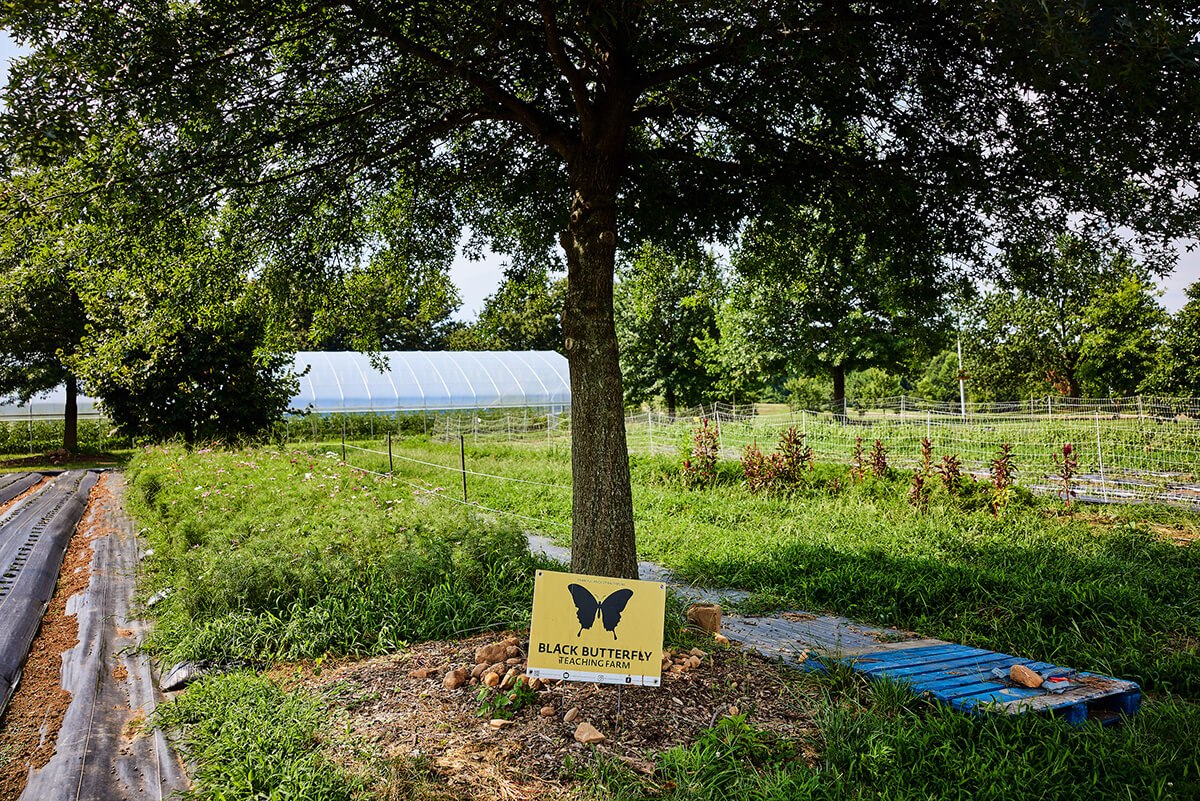
Black Butterfly Teaching Farm
Home Grown
The Urban Cowboy
DENZEL MITCHELL JR.
Black Butterfly Teaching Farm
BY AMY SCATTERGOOD
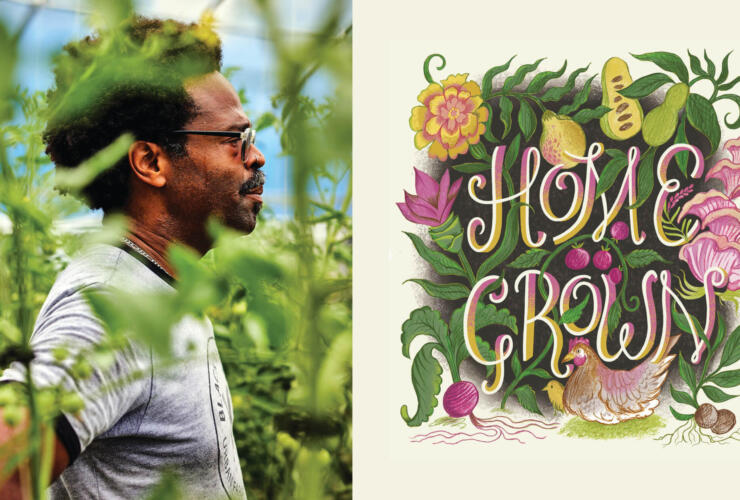
On a bright April morning, Denzel Mitchell Jr. parks his pickup truck—the back loaded with crates of just-picked lettuces and other leafy greens—and surveys the nearly 10 acres of the Farm Alliance of Baltimore’s Black Butterfly Teaching Farm. For the past five years, as executive director, he’s been literally cultivating the Curtis Bay neighborhood urban farm into existence. At almost 50, Mitchell has long been a key figure in Baltimore’s farm and restaurant community. He has a legendary and lengthy partnersnip with restaurateur Spike Gjerde, for whom he’s been growing Baltimore fish peppers and providing produce for years, and with Damian Mosley of Blacksauce Kitchen, where Mitchell cooked for more than a decade, in addition to supplying produce.
For those outside the local agriculture community, Mitchell is likely best known as the man wearing overalls on the green tractor in Amy Sherald’s “A God Blessed Land (Empire of Dirt),” on exhibit in her recent sold-out American Sublime retrospective at the Baltimore Museum of Art. Sitting for that painting was, Mitchell now says with some nostalgia, the last time he was on a tractor. (Sherald, a MICA grad, was once a server at Gjerde’s Woodberry Kitchen, hence the connection.)
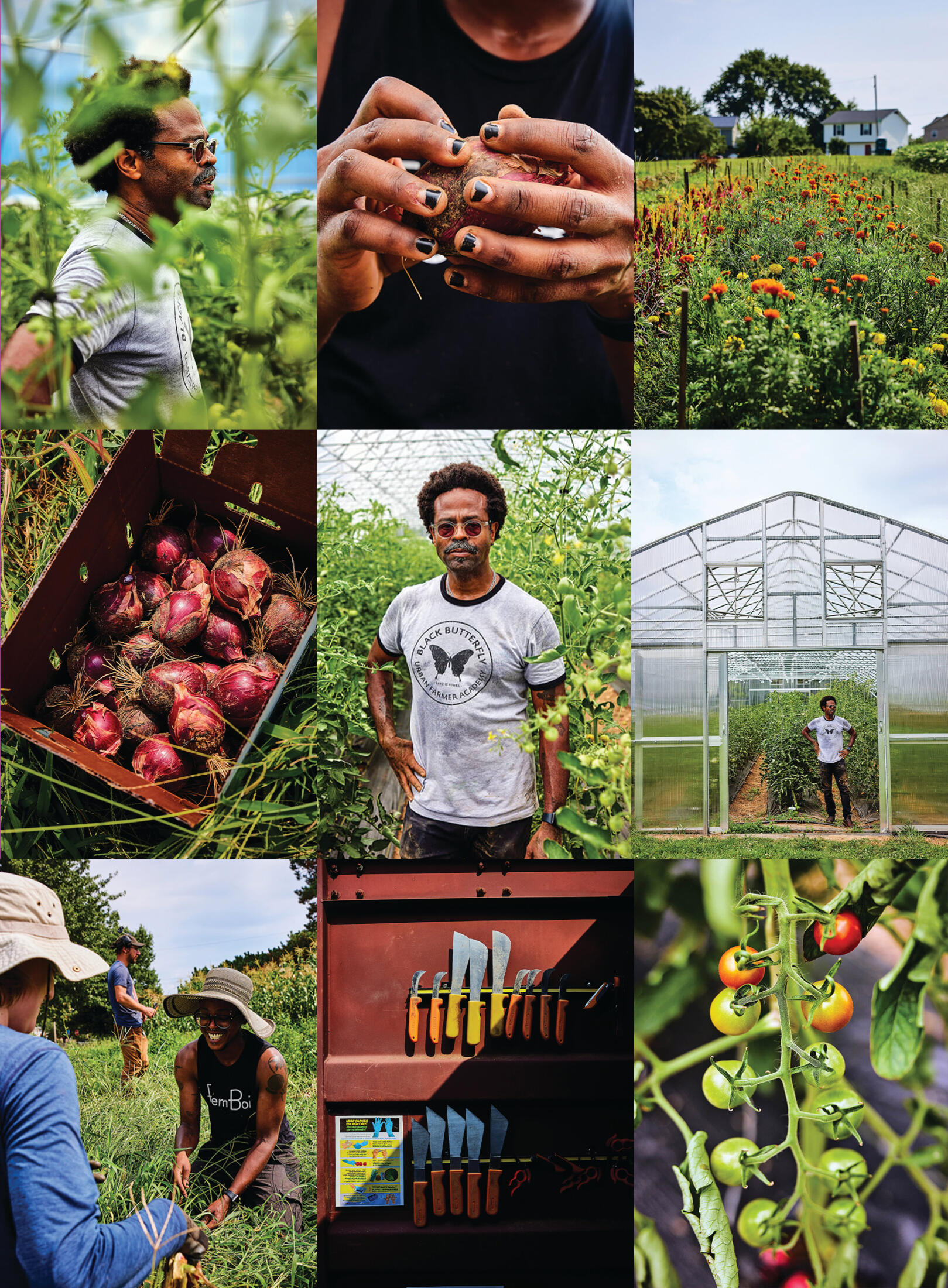
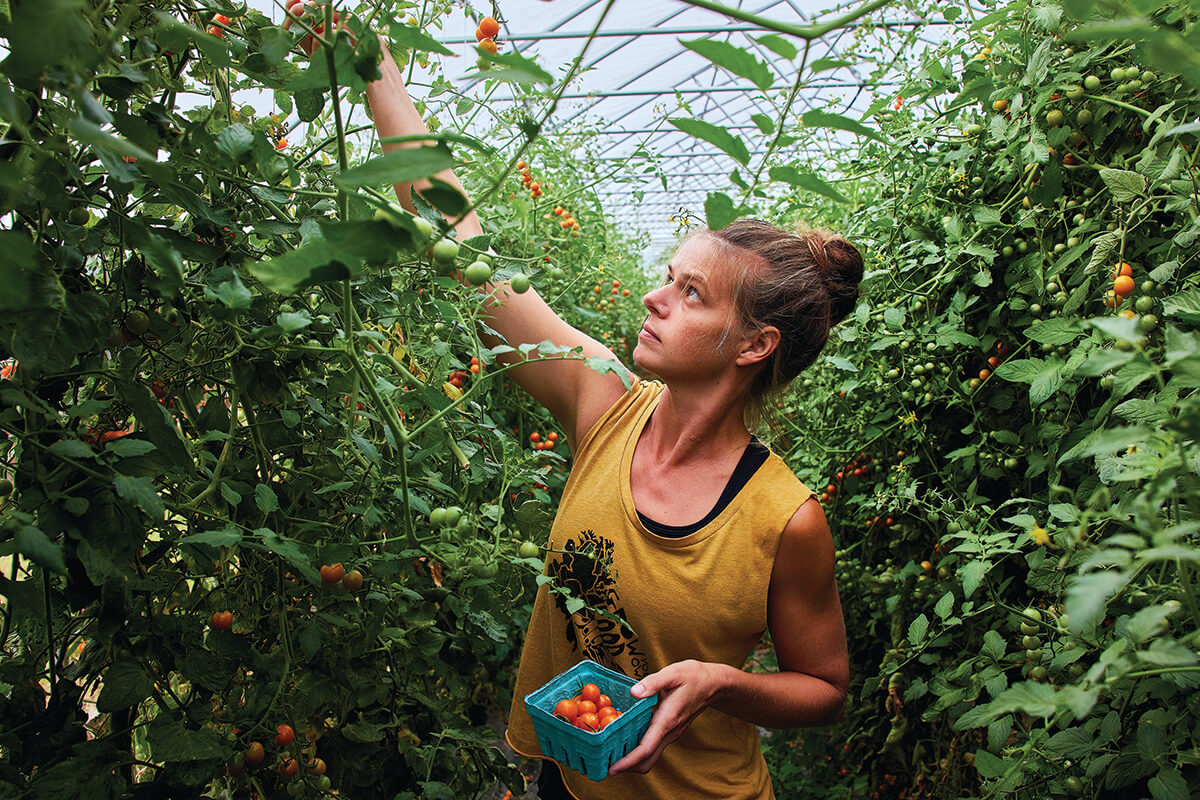
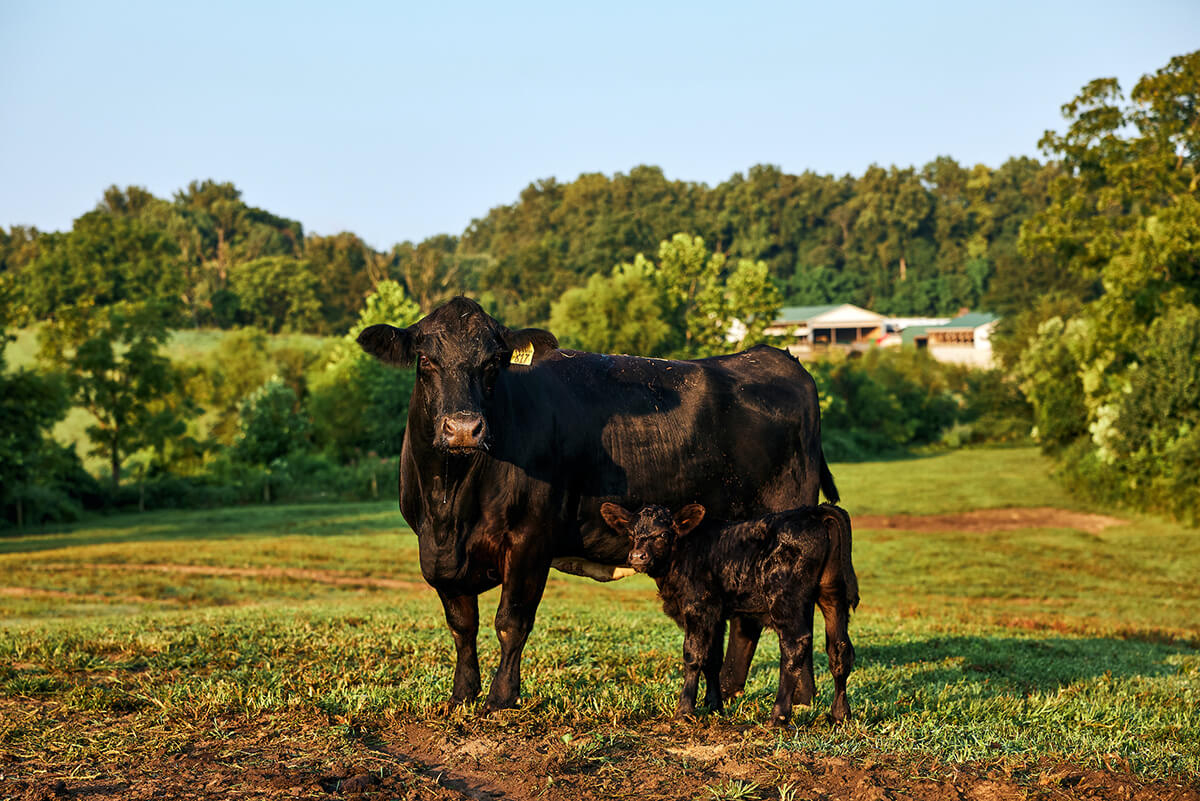
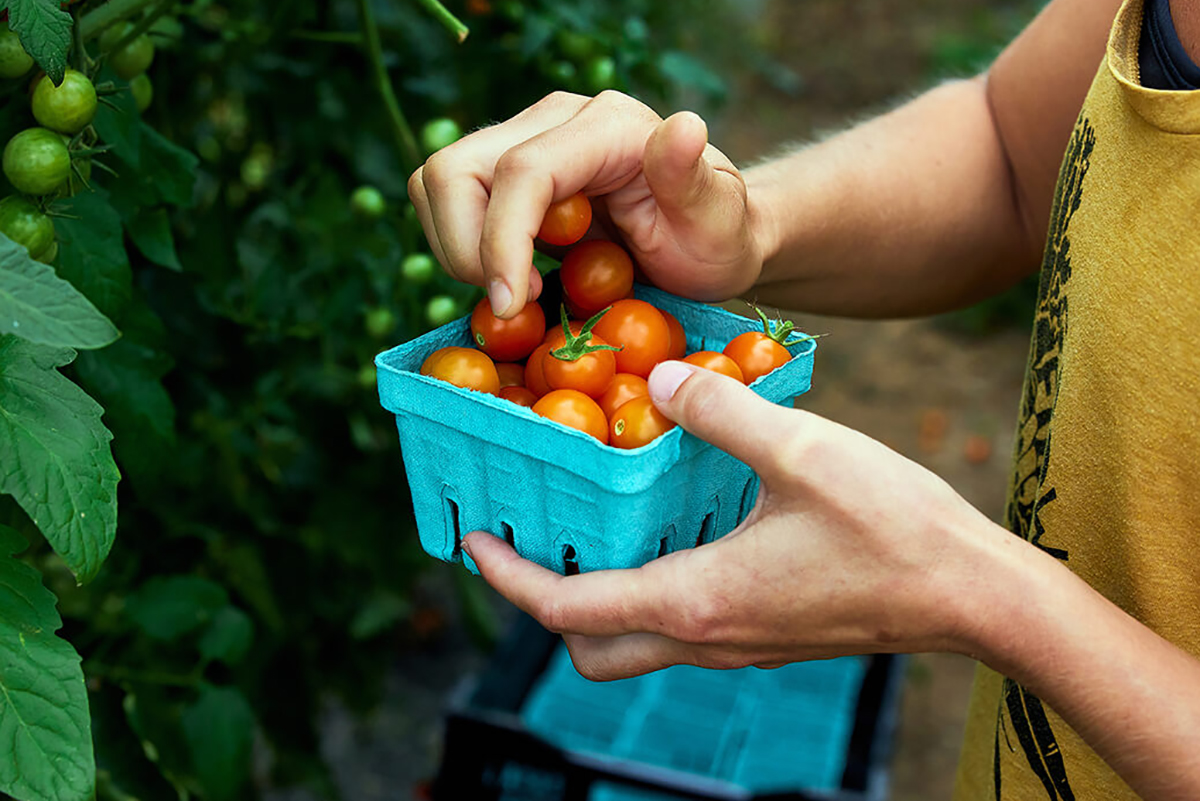
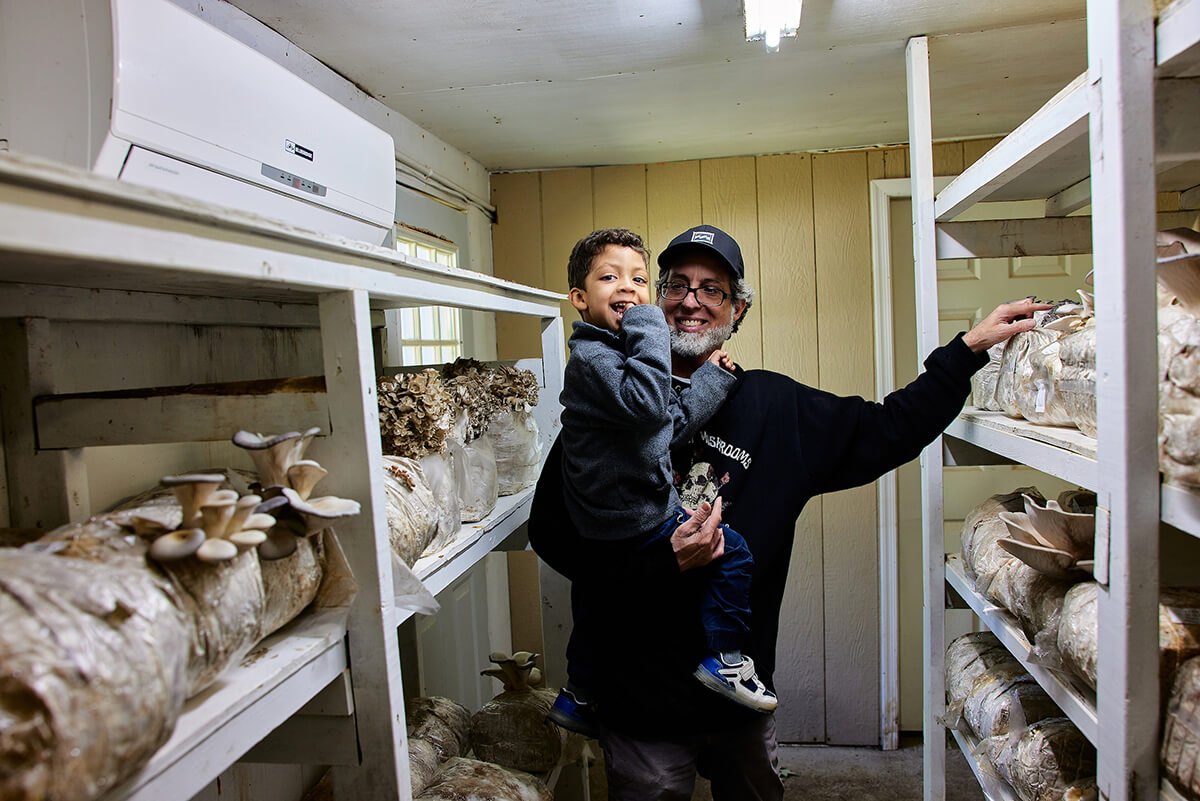
ABOVE: Scenes of Mitchell and his team on the Farm Alliance of Baltimore’s Black Butterfly Teaching Farm in Curtis Bay.
Mitchell grew up not in Maryland but Oklahoma, “a country boy with cowboy roots,” as his Farm Alliance bio describes him. Growing up in the heartland sparked his interest in farming, which translated into urban farming once he moved to Baltimore, where he and his family founded Five Seeds Farm in Sparks during that time.
Farm Alliance, “a social change organization,” was founded over a dozen years ago. And so it was unsurprising that when the City of Baltimore became interested in establishing an urban teaching farm in the summer of 2021, they approached Mitchell.
“We were in the middle of running a pilot of a training program—the Black Butterfly Urban Farm Academy—and we needed a farm to host the program,” he says. “So in those ways, this all aligned.”
The farm, now in its fourth season, has two acres in cultivation, growing a medley of vegetables, cut flowers, small grains, indigo, and all those fish peppers. They’ve recently built two greenhouses intended to grow crops beyond their typical outdoor season.
“The idea was to operate the farm as an educational space, and to answer the ‘urban ag’ question,” says Mitchell. “Is urban agriculture economically viable? Can it operate as a business? We’re attempting to answer that on the production side and, at the same time, demonstrate practices and techniques of small-scale, diversified, sustainable, regenerative agriculture as a teaching tool.”
To that end, the farm hosts tours, workshops, and classes, and, with other Farm Alliance members, operates a Saturday stall at the 32nd Street Farmers Market in Waverly. A roadside pay-what-you-can stand at the front of the farm is also finally coming to fruition.
The importance of urban agriculture has myriad layers, Mitchell says, starting with it being “a purposeful, beautiful, productive, integration and utilization of green space in a city where there is a decreased access to nature, the outdoors, fresh air.” Establishing this has not been easy, he admits, scanning the fields that will soon be planted with fruit trees, which is also the point: Farming is a challenging vocation, and bringing an awareness of and appreciation for that fact is also part of his mission.
This land is owned by the city, under the jurisdiction of Baltimore’s Recreation and Parks division, and so these days, Mitchell spends more time at a desk doing civic paperwork than in the fields. And then there have been recent funding cuts, which means the partnership the farm had with food pantries such as the Maryland Food Bank—a $100,000 annual revenue stream—ended last year. But Mitchell and his crew have persevered, continuing to sell to local restaurants and community marketplaces, as well as donate to community fridges.
“We give a lot away to community members; we host community days on the farm, and folks come and pick up produce,” he says.
That’s because the rows of strawberries, fennel, amaranth, and marigolds are much more than just food and flowers.
“We teach people who want to be farmers,” says Mitchell as he waves to staff kneeling in the spring dirt to plant rows of seedlings. “This organization was founded to support urban agricultural growers who wanted to build farms in their city and figure out how to support that sustainably, monetize it, and manage land that our government has essentially neglected if not completely ignored. We know what the potential is. I saw it. And I believe that type of excitement and resiliency is still available to us. But folks need to see what’s possible.”
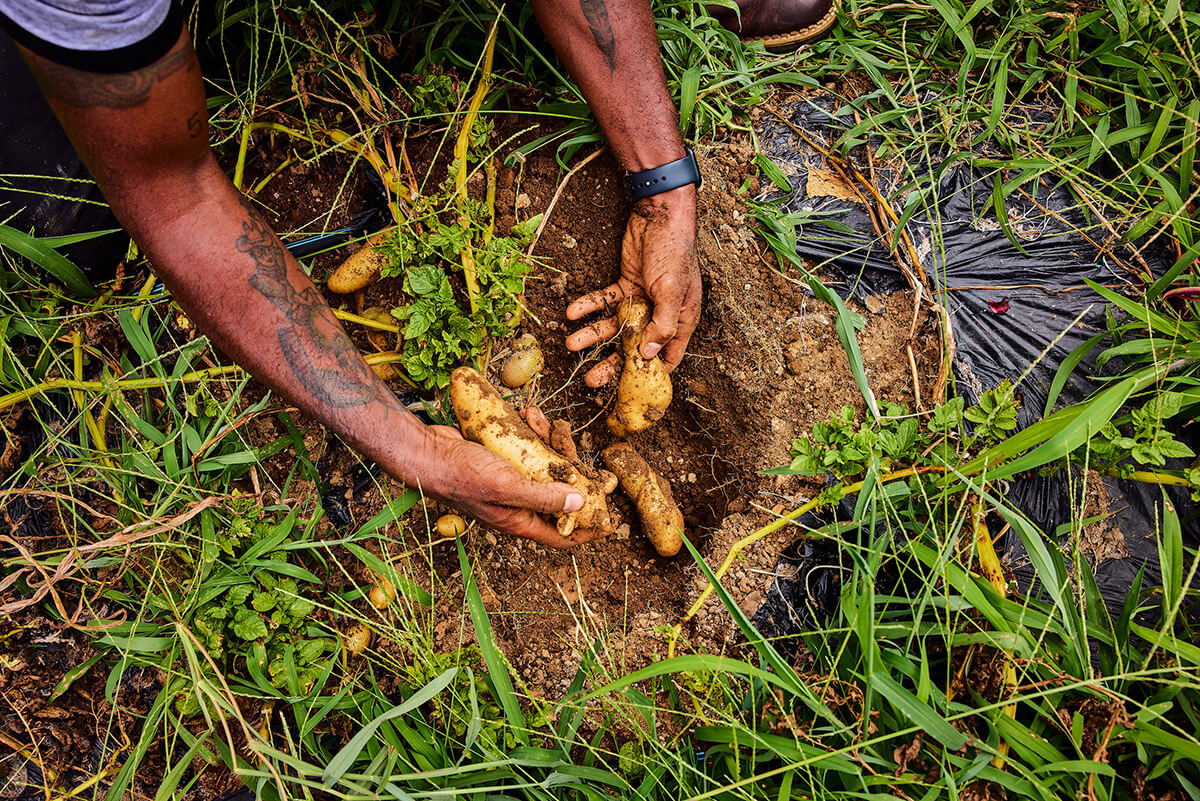
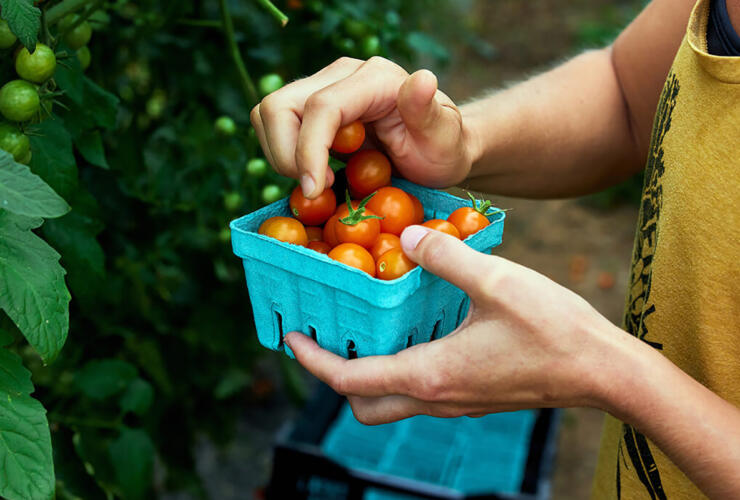
A root vegetable harvest.