Food & Drink
Restaurant Regulars Find a Sense of Belonging at Their Favorite Hangouts
In a city that’s fiercely dedicated to its sports teams, quirky traditions, and all things crab, Baltimore’s loyalty extends just as ardently to its coffeehouses, cafes, bars, and other eating and drinking establishments.
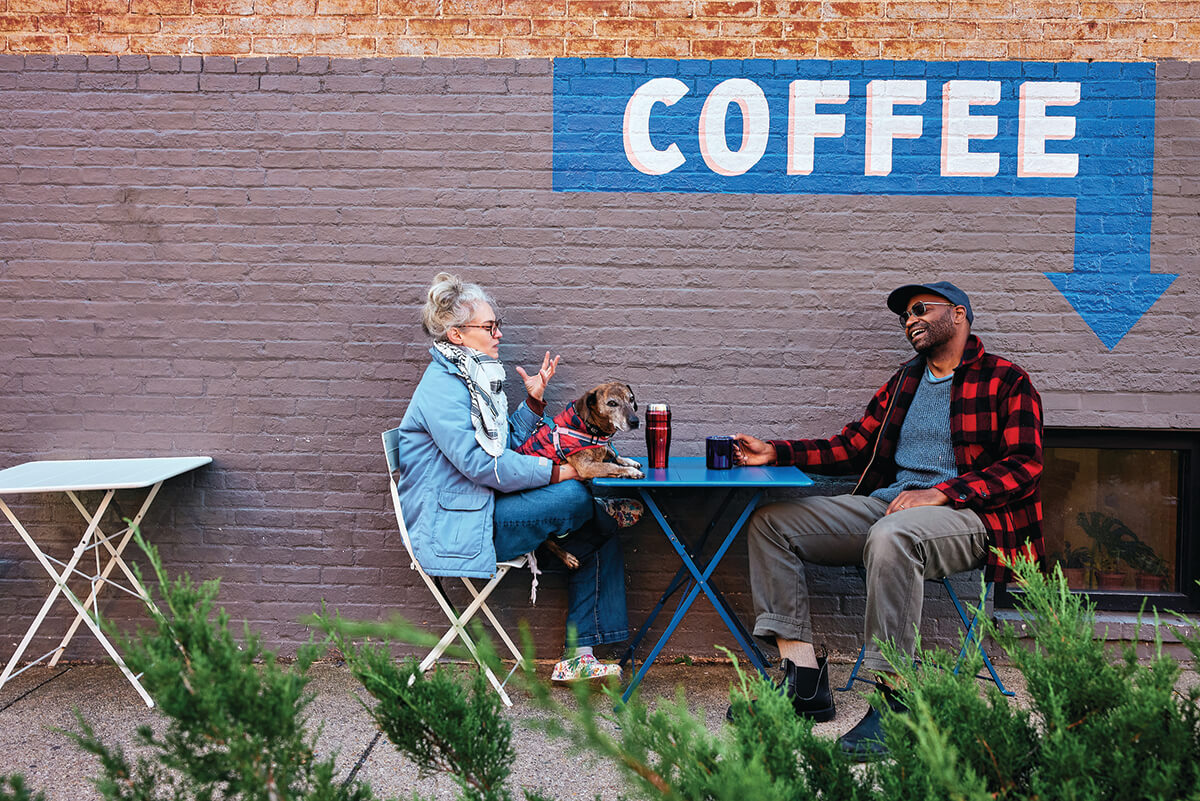
As part of her morning routine, Old Goucher resident Rebekah Horowitz starts most days with an eight-block walk to Sophomore Coffee.
“It’s such a nice community place to be,” she says. “The coffee is great and I love that [owner] Kris [Fulton] roasts his own coffee, but part of the reason I go is that my dog, Jacques, walks me there. He is also a very big fan of Sophomore.” (This may have something to do with the Milk-Bones they keep in a jar on the counter.) “If they’re closed for some reason, I have to fight him not to walk me there,” she says.
While Sophomore gets plenty of traffic, Horowitz—and her pit bull/dachshund mix—hold the honor of being the cafe’s top customers (this is a measurable metric thanks to a dining app that tracks customer frequency). Horowitz, who works remotely for a public health organization in D.C., sees Sophomore as not only part of her regular ritual but an extension of her wider world.
“The people who work there are lovely and a lot of them live in the neighborhood or close by, so you see people not just at the coffee shop, but at the pool or walking on the street,” she says. “One of the people who used to work there is even my dog sitter now.”
While Jacques always gets a dog treat, Horowitz has small seasonal fluctuations in her order: drip coffee with a splash of milk in the colder months, iced coffee in the warmer ones, and an ice cube in her hot coffee during transitional periods. Sometimes she gets her drinks to go, other times she sits and stays. Her canine GPS leads her there before 8 a.m. most weekdays and a bit later on weekends.
“They know what I’m going to order, and it’s ready for me right away,” say Horowitz. “And the staff knows about my work, they know when I’m out of town for a few days. If I go on vacation, they ask me how it was. Going to Sophomore just feels like I’m not only going and buying something but having a quick little catch-up with my friends—it’s a touchstone.”
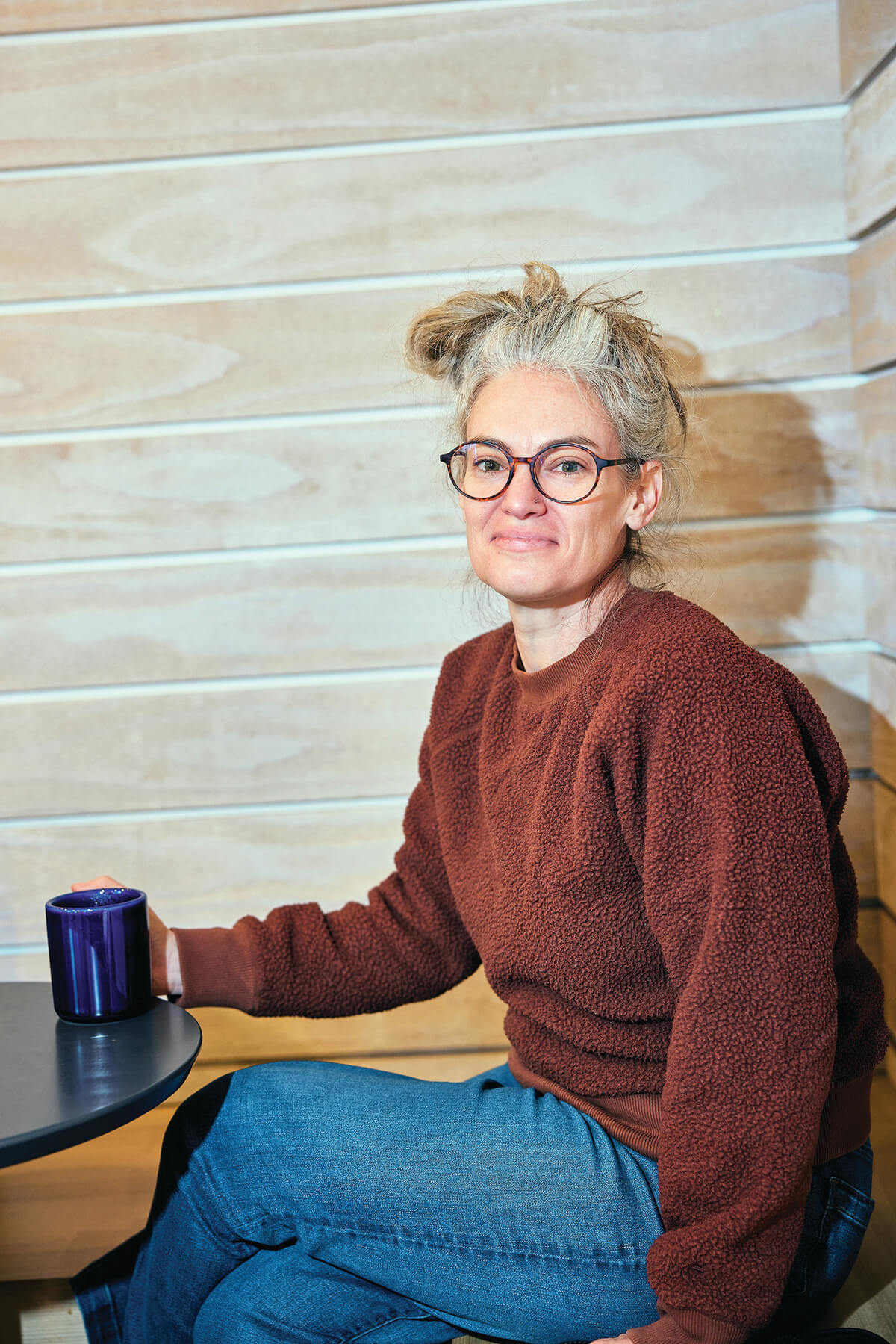
In a city that’s fiercely dedicated to its sports teams, quirky traditions, and all things crab, Baltimore’s loyalty extends just as ardently to its coffeehouses, cafes, bars, and other eating and drinking establishments. And at a time when life feels increasingly isolated and automated, being a regular somewhere can offer something essential: a sense of belonging.
With repeated visits, a restaurant staff gets to know patrons’ predilections, drink orders, names of their children and grandchildren, anniversaries and birthdays, and details about their personal and professional lives.
Sophomore owner Kris Fulton first fell in love with hospitality because he liked the relational aspect of the business. In his first hospitality job at 19, he worked at the now-closed City Dock Coffee in Annapolis. The staff there was encouraged to adopt what they called “the Cheers mentality,” where, as the lyrics to the hit TV ’80s sitcom theme song say, “Everybody knows your name, and they’re always glad you came.”
“The idea was that you should know 70 percent of your customers by name or drink order when they walked in,” says Fulton. “Sometimes you’d see people walking down the street coming toward you and present them with their drink before they even got to the register—it made their day.”
Being a regular also offers the opportunity for patrons to connect not only with staff but with one another.
“The fact that we are a small space works in our favor,” says Fulton. “When people take the time to sit and have a coffee here, they’re right next to each other. And if they start a conversation with me behind the counter, they’re basically having a conversation with the room. It’s exciting to see some of those connections happen.”
“GOING TO SOPHOMORE JUST FEELS LIKE I’M HAVING A QUICK LITTLE CATCH-UP WITH MY FRIENDS—IT’S A TOUCHSTONE.”
Coffeehouses as gathering spots is nothing new—the concept dates back as far back as the Ottoman Empire, where people of different social classes could gather for intellectual and often political debate. Taverns as meeting spots dates to ancient Greece and Rome, white-tablecloth restaurants first became hot spots in Paris in the 1700s, dive bars became hangouts in the late 1800s, and diners turned into social hubs after World War II.
Pretty much anywhere food or drink are served have long been places to gather. But wherever people flock, the reason is much the same: Being a regular gives patrons a sense of camaraderie, community, and connection.
Local coffee shop owner Dave Sherman, of Catalog Coffee in Hampden, has witnessed the bonds that form over freddo cappuccinos and sage lattes.
“We have a ton of people that use us as that third space,” he says, explaining how the coffee shop fills the need to congregate outside home or work (in this remote landscape, it sometimes is the office). “And they’re great customers. They come in and they’ll work on their laptop on our two-tops, and then as soon as we start to get busy, they’ll migrate over to our community table, often networking and just building more community. I’ve definitely seen some friendships form between staff and guests and then between the guests themselves—we’ve seen a couple of romantic connections happening, too.”
Gino Cardinale, co-owner of Tark’s Grill & Bar in Lutherville, says that creating connections is part and parcel of owning an eating establishment.
“Restaurants are not just a place to feed yourself and spend money,” he says. “When they’re working, they’re about connecting with people.”
As much as regulars love their roles in restaurants, restaurants need them, too. Regulars are, if you will, the bread and butter of every restaurant—the patrons who a place can reliably count on to fill seats (or barstools). Through thick and thin (to wit: the pandemic), regulars stay loyal to the brand.
“When you open a restaurant, you have to think past the sizzle of a grand opening and [attention] that you’re bound to get in the beginning,” says Cardinale. “If a restaurant doesn’t find a way to connect with its core community in the location that it’s in, they’re not going to make it long term—the flip side of that is that if you do, you can thrive for decades.”
WHEREVER PEOPLE FLOCK, THE REASON IS THE SAME: BEING A REGULAR GIVES PATRONS A SENSE OF CAMARADERIE, COMMUNITY, AND CONNECTION.
If there’s a formula for how to keep them coming, Cardinale seems to have figured it out.
“Running a restaurant is not always about reaching people who’ve never heard of you before, it’s really about connecting with those who already have,” he says. “There’s no better indicator that you’re doing something right in the restaurant business than when people come back time and again. At Tark’s, we have people who come for lunch, and then hours later, they come for dinner all on the same day—and that’s several days a week.”
For dedicated regulars like that, their favorite haunt isn’t just a place where everybody knows their name—it’s a place that feels like home.
About six months or so per year, some two to three nights a week whenever Hampden/Woodberry residents Melanie and Shawn McMahon are in town, they can be found standing—yes, standing—near the window at the zinc bar at Petit Louis Bistro.
The fact that the bar doesn’t have any seating doesn’t stop them from ordering food and drinks. Given that the McMahons both have desk jobs, they prefer to stand while they eat.
“We used to eat at a table but sometime after the pandemic, we planted ourselves in the corner of the bar and never left,” says Melanie with a laugh. “Now, we’re wearing a hole in that corner.”
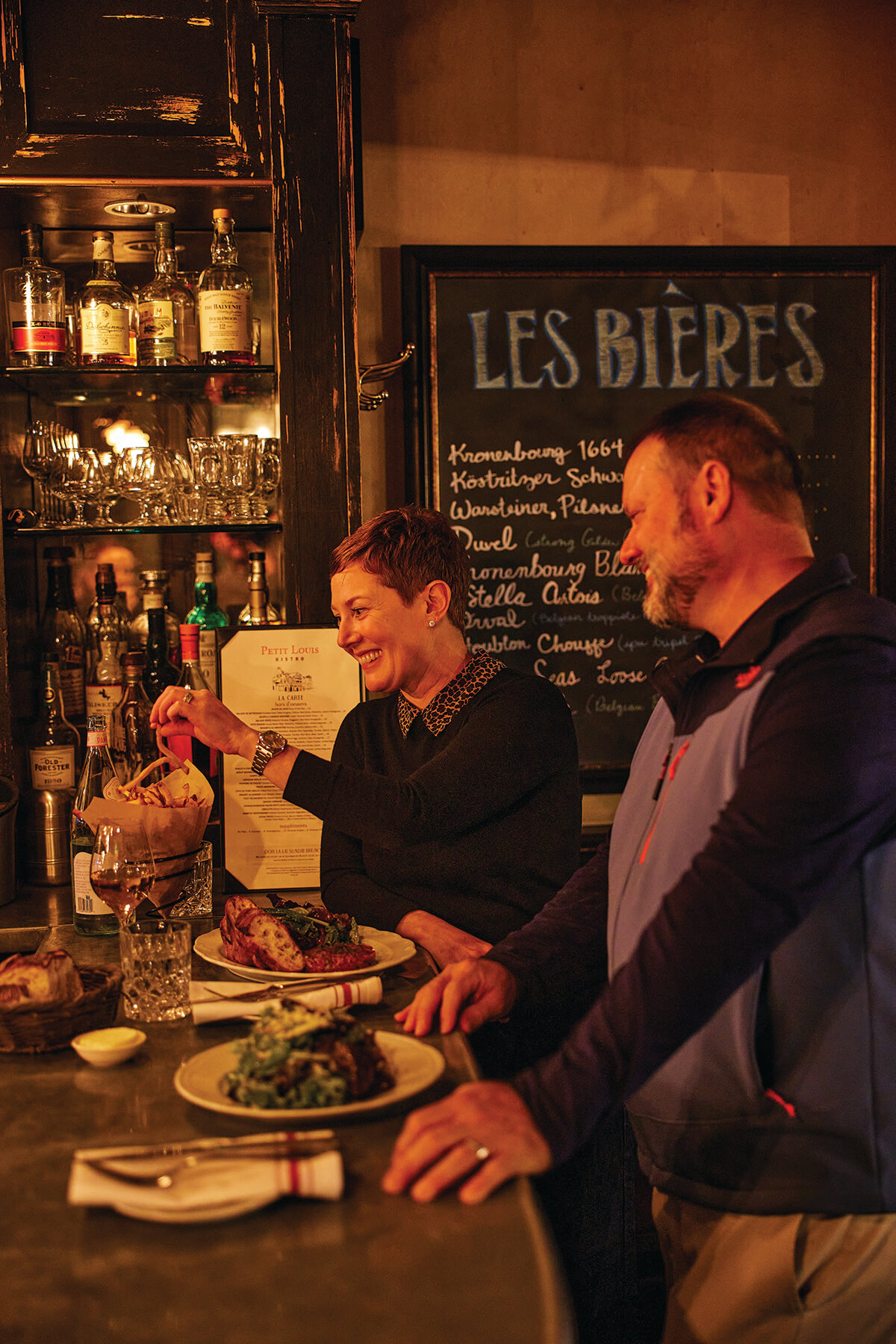
The McMahons are diehard supporters of the Roland Park restaurant. They dine at Louis so frequently, they know the menu by heart, have befriended (and socialize with) certain staffers, and can cite chapter and verse of every aspect of the place, including the daily specials and the names of nearly every person on staff.
“We’ve really developed relationships with the staff,” says Shawn. “The staff is the first thing that draws us here—everyone has been lovely to us from the first time we walked in the door and eating here always feels like coming home.”
In fact, when Shawn and Melanie are away for any extended time, or driving back from a long road trip, it’s often their first stop.
“The biggest testament to the place is that we don’t even drive home first when we’ve been away,” says Shawn. “We drive straight to Louis—that’s our welcome back.”
Even when they’re away, in fact, Louis is never far from their thoughts. “When we were in Paris, [maître d’hôtel] Patrick Del Valle arranged for us to have a meal at Chez l’ Ami Louis,” says Melanie. “That’s the restaurant that Petit Louis was based on.”
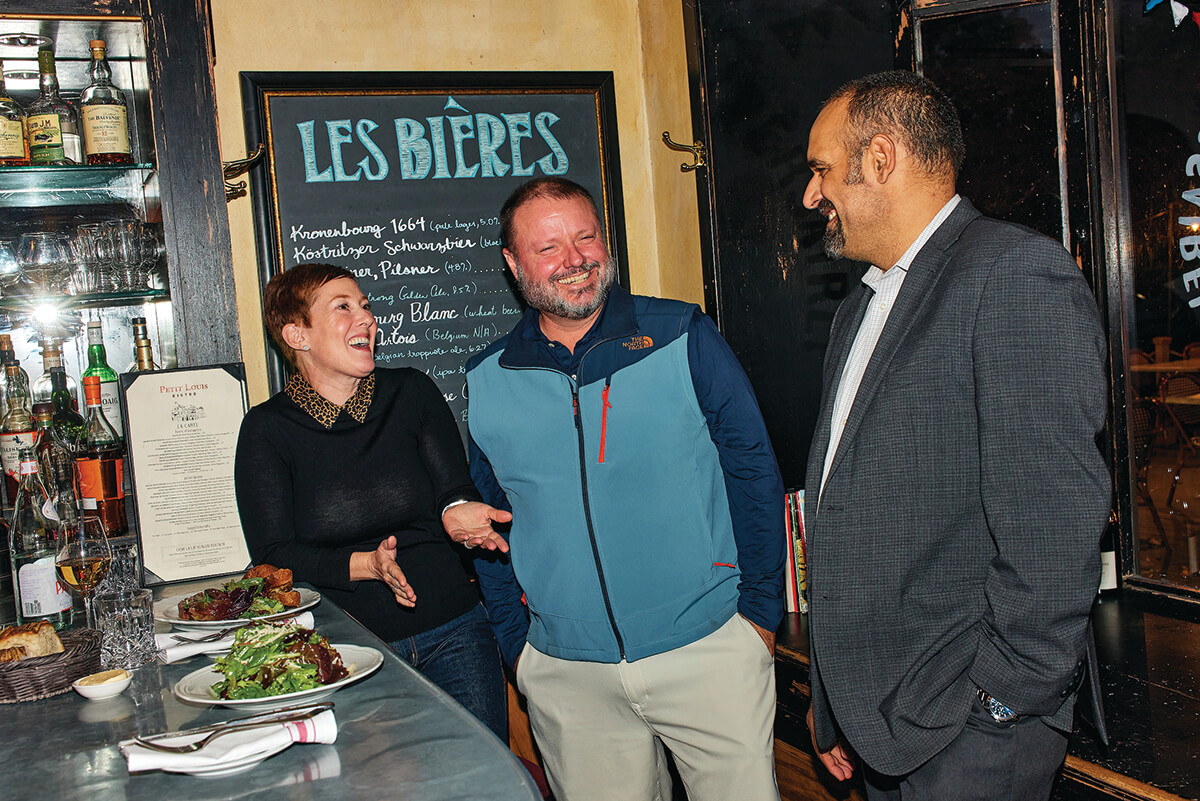
Fourteen years ago, when the McMahons started patronizing Louis, they first were lured by the wide-ranging French bistro fare.
“It started because we both work full-time and going out to dinner is often an easy solution after a long day of work,” says Melanie. “We have very different taste in food, so we agreed that whenever we couldn’t agree on what to have at home, we’d go to Petit Louis.”
In the early years that meant having dinner there once a week. These days, the legal marketing partner says it’s closer to three times a week and she and Shawn each have their favorite orders.
Shawn likes the salad verte and the Saturday night beef short rib special; Melanie gravitates to the steak tartare, a Monday night special, and the gravlax appetizer. He drinks Tito’s with muddled lime, followed by a glass of Beaujolais or Côtes du Rhône; she gets a glass of Champagne or Pinot Noir. If friends join them, they’ll make an exception, grab a table, and order the whole roasted chicken.
“We’ve been eating there for so long, and know the menu so well, that Patrick has joked he’s going to give me the test he gives to new servers to see if I could pass,” says Melanie.
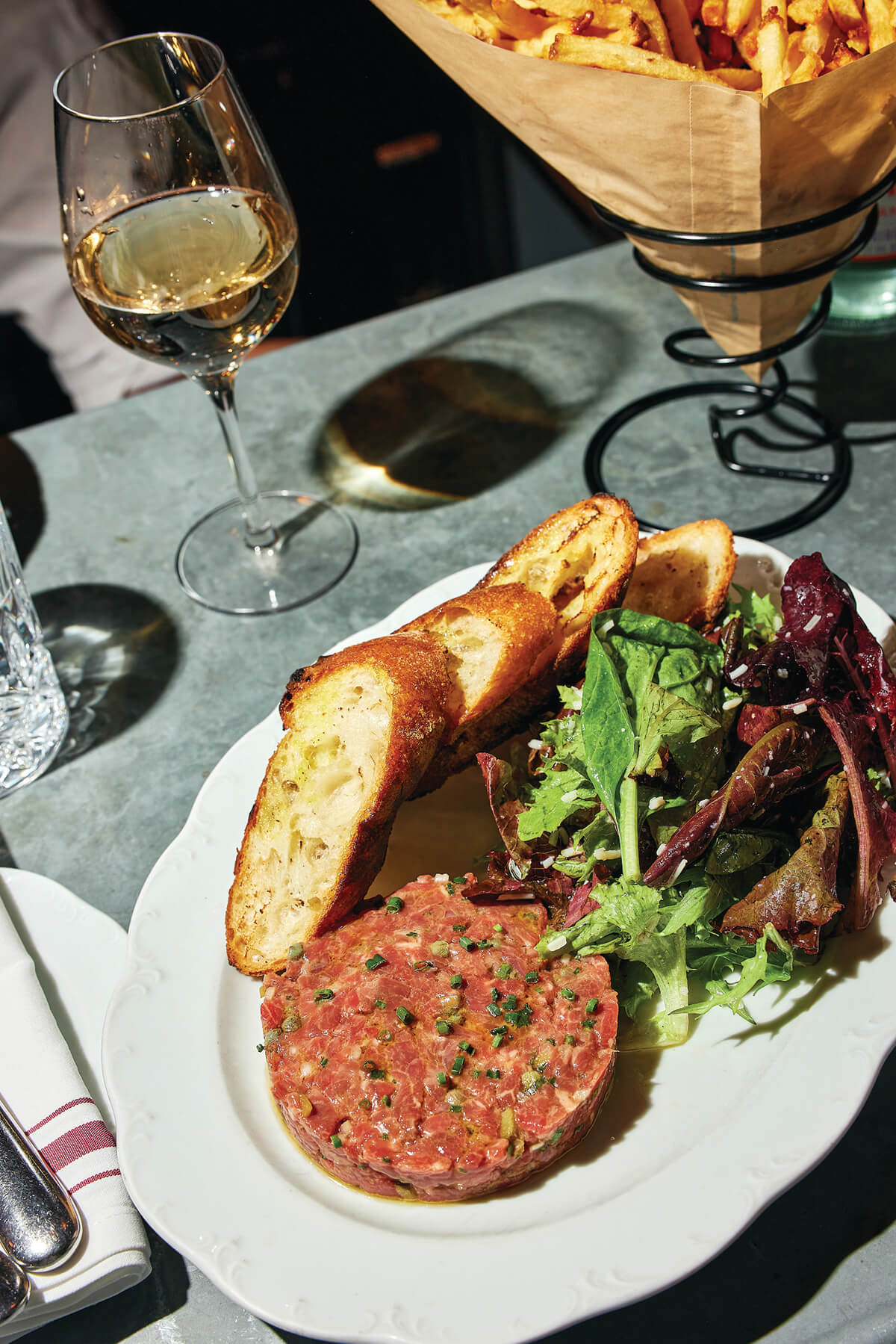
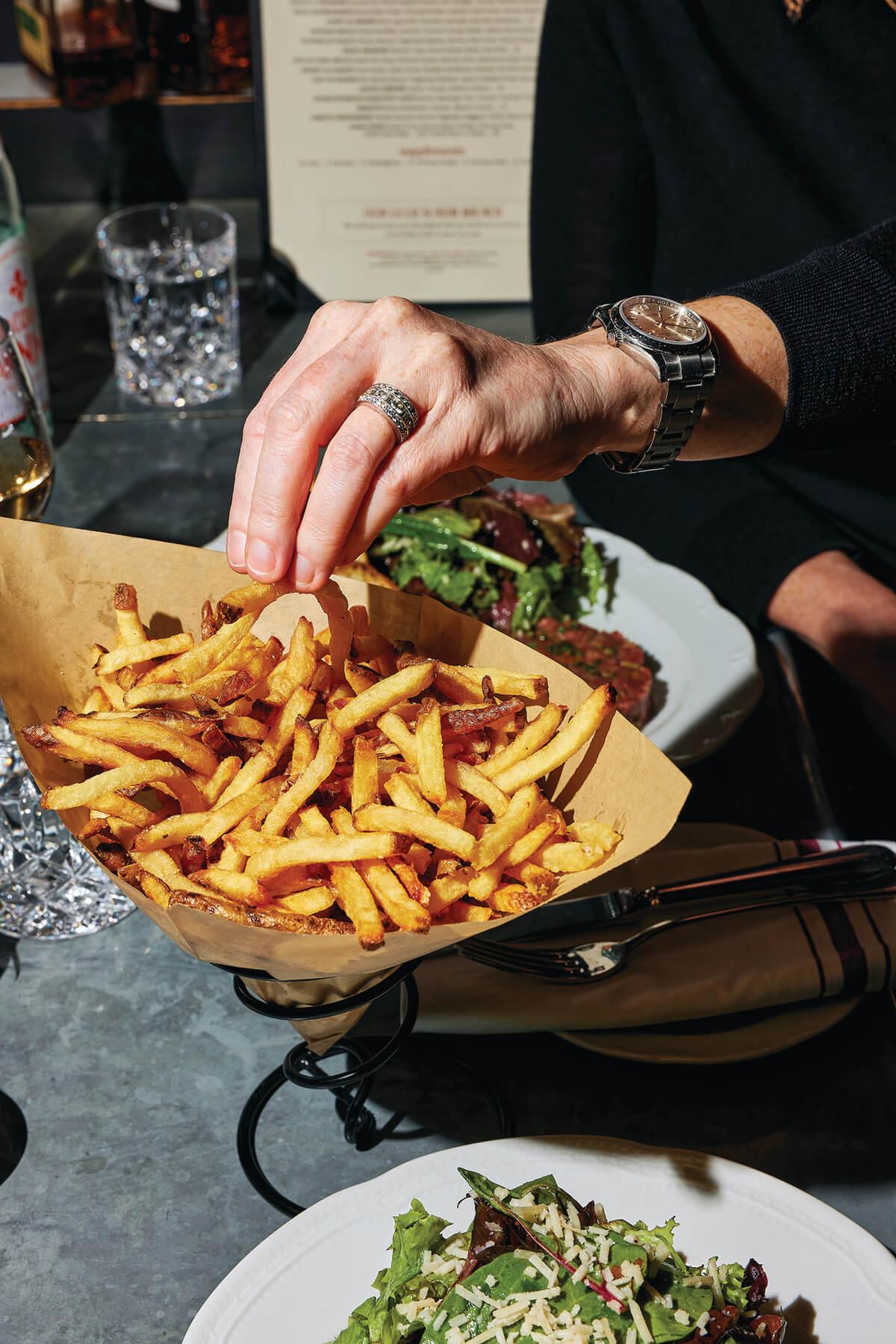
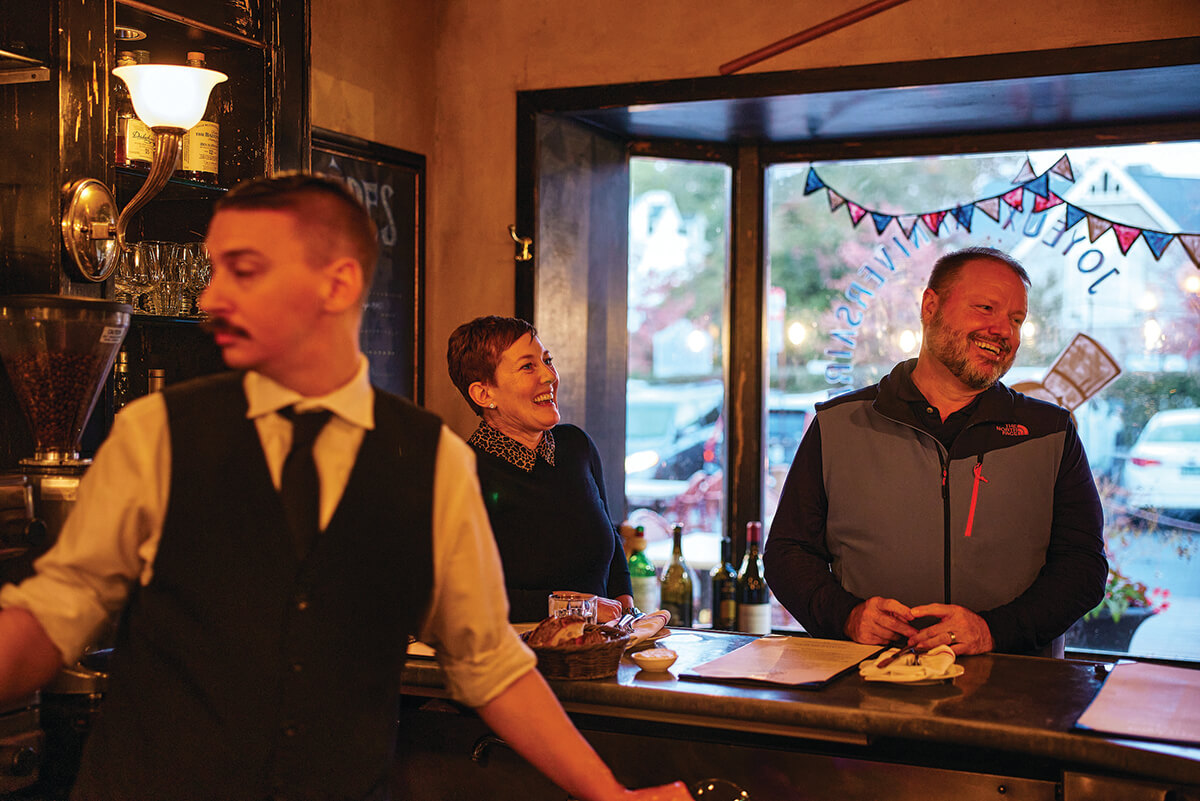
What motivates them to go there now has become something deeper. “For us, Petit Louis is not a just a place eat dinner,” says Melanie. “We’ve really developed relationships with the staff. Going there feels more like visiting family.”
Like the McMahons, John Groopman and his wife, Hilary, have formed deep friendships as dining devotees of La Cuchara in Hampden-Woodberry.*
“We have a standing Sunday night reservation there,” says Groopman, a researcher at the Johns Hopkins Bloomberg School of Public Health. “We can’t think of a better way to start the week.”
The married couple has been eating at the Basque-inspired restaurant ever since it opened in a historic mill in 2015.
“We’ve known [co-owners] Jake, Ben, and Amy for quite a while,” says Groopman. “We were there in the first or second week after they opened. In the early years, we’d sit at the bar and have pinxtos and we’d go not because we knew a lot about Basque Country cooking but because it was just a wonderful setting and we got to know a lot of people who work there—and we still do.”
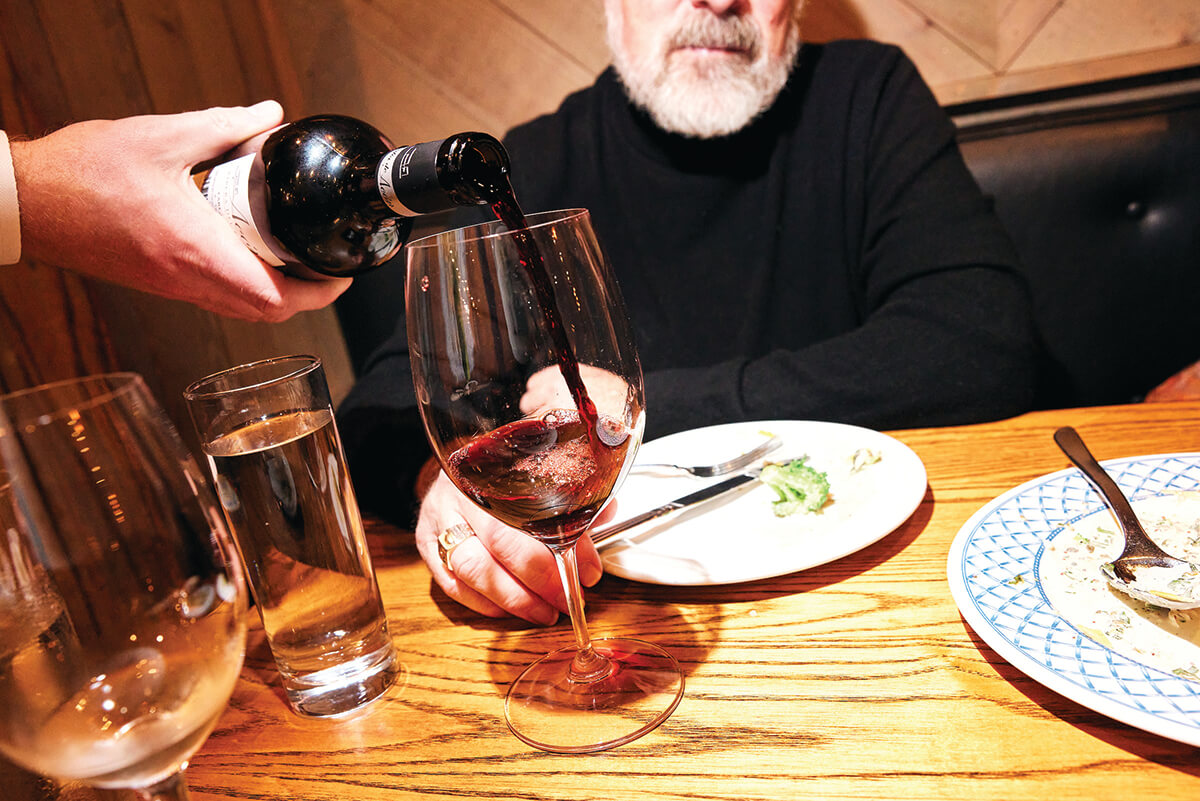
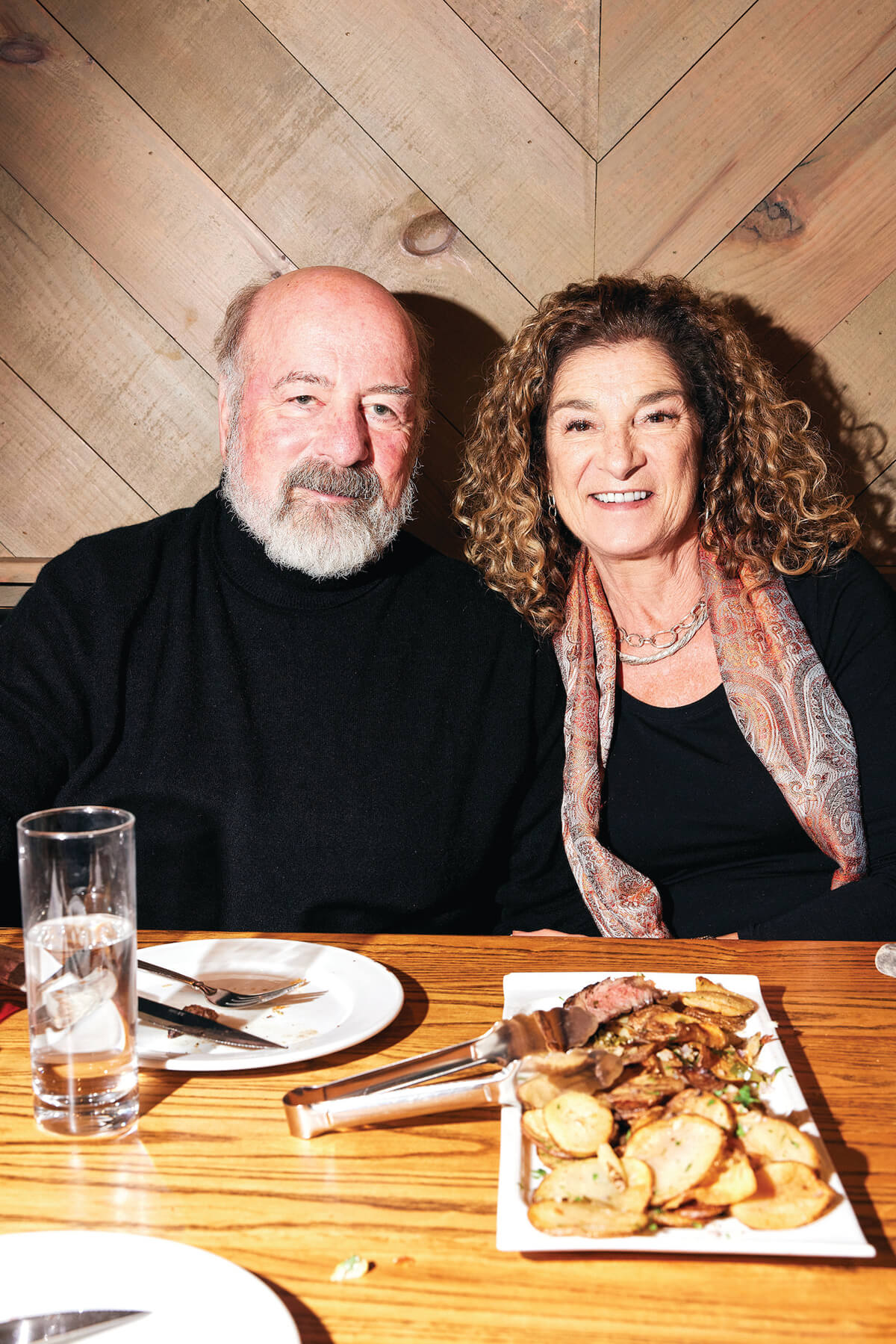
Sunday also happens to be half-price wine night—never a bad thing—and they always sit at table 40 toward the back of the restaurant, near the heart of the flaming asador that’s loaded with grilled meat and seafood. The restaurant has also been woven into the fabric of their post-Thanksgiving tradition—they now dine with their whole extended family there.
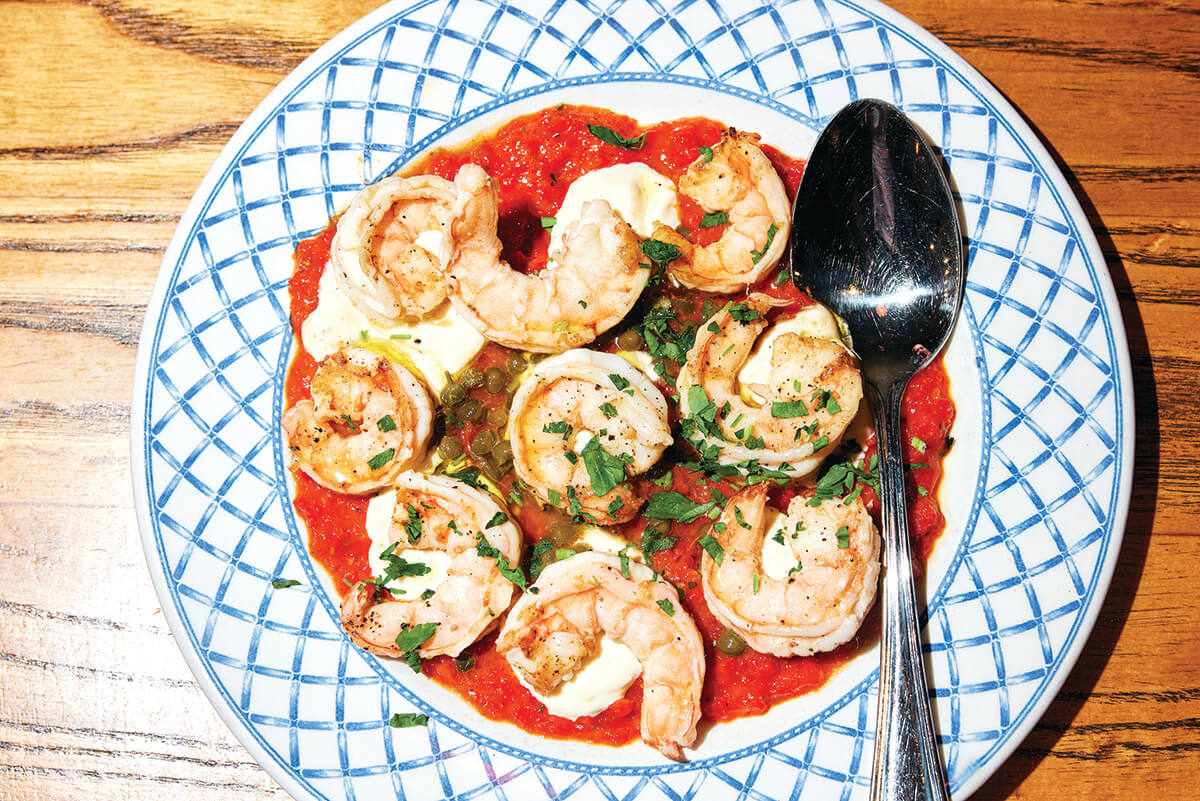
Though they’ve eaten their way through most of the menu, John and Hilary have their favorite dishes, of course. “If Ben is making tuna-stuffed piquillo peppers, that’s an essential, the shrimp a la planxta and the mussels are always a winner, and the dayboat scallops are pretty good,” he says. “And we always order the chorizo Manchego pintxos.”
Being an insider has its advantages, too. “When the kitchen is experimenting, we get to taste stuff, too,” he says. “And going to La Cuchara inspired us to visit San Sebastian and learn much about enjoying the wines of Spain.”
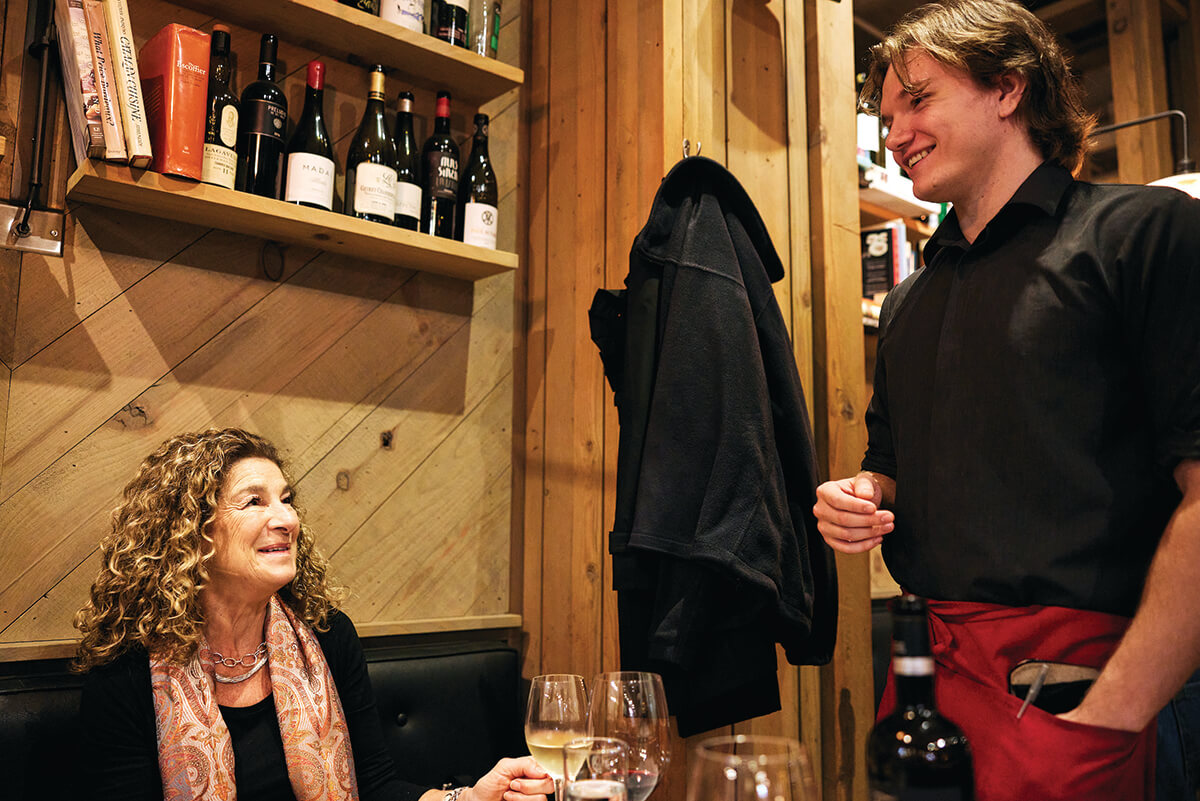
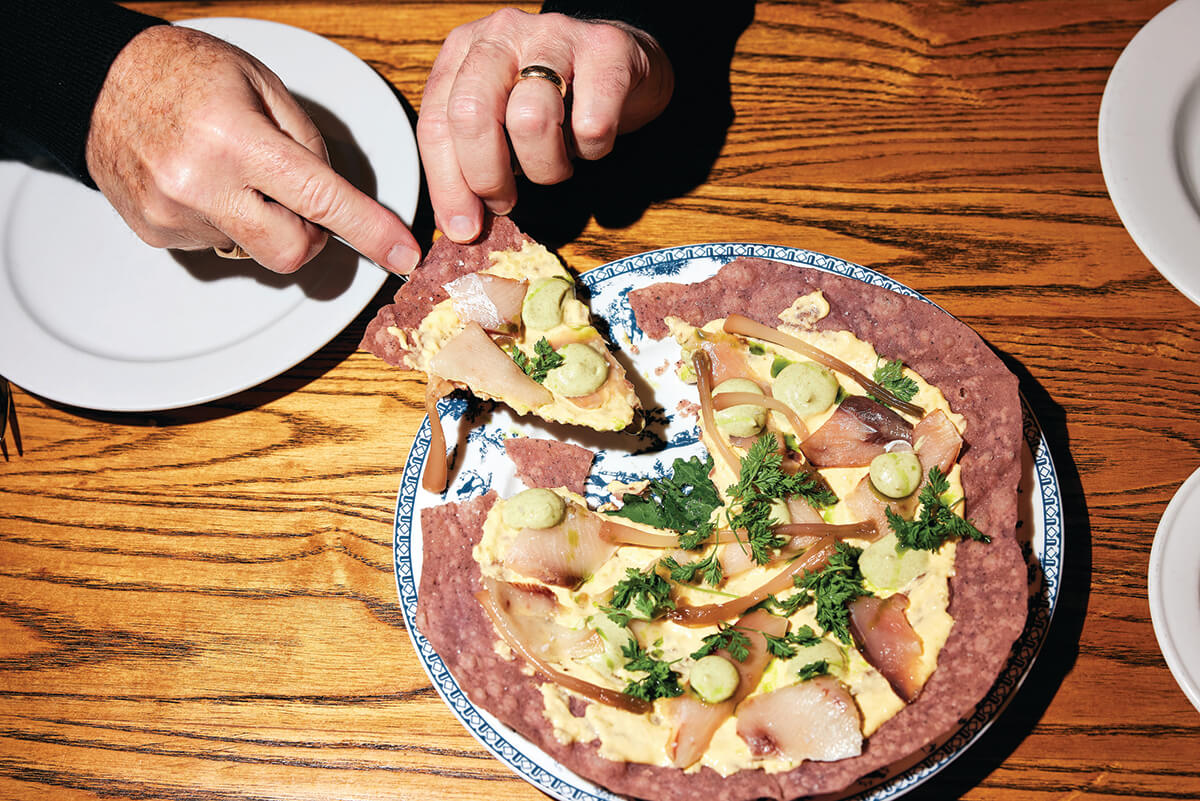
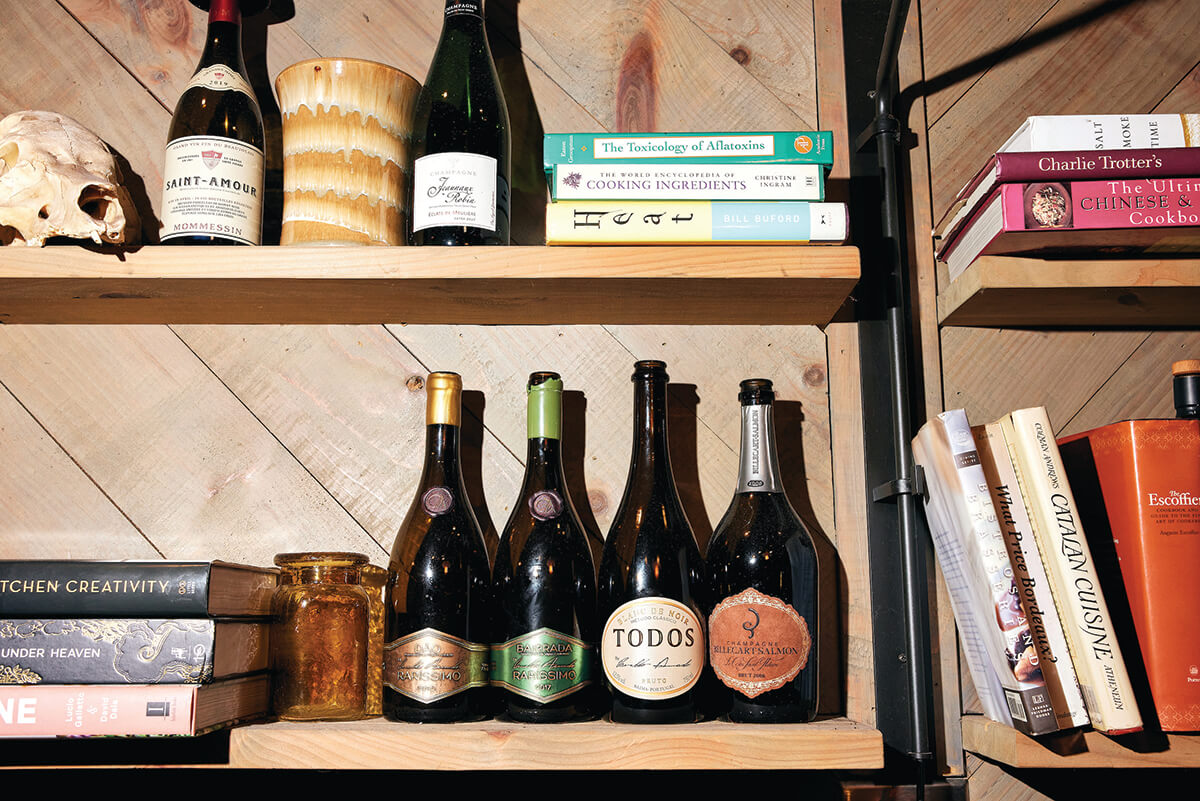
The Groopmans have gotten so close with the owners, they’ve even invited them to dinner in their own home, where they were the ones doing the cooking.
Like the Groopmans, Horowitz has found a sense of kindship thanks to her routine rounds.
“Kris and I do a lot of chatting inside and outside Sophomore,” she says. “We run in a lot of the same spaces and same circles.”
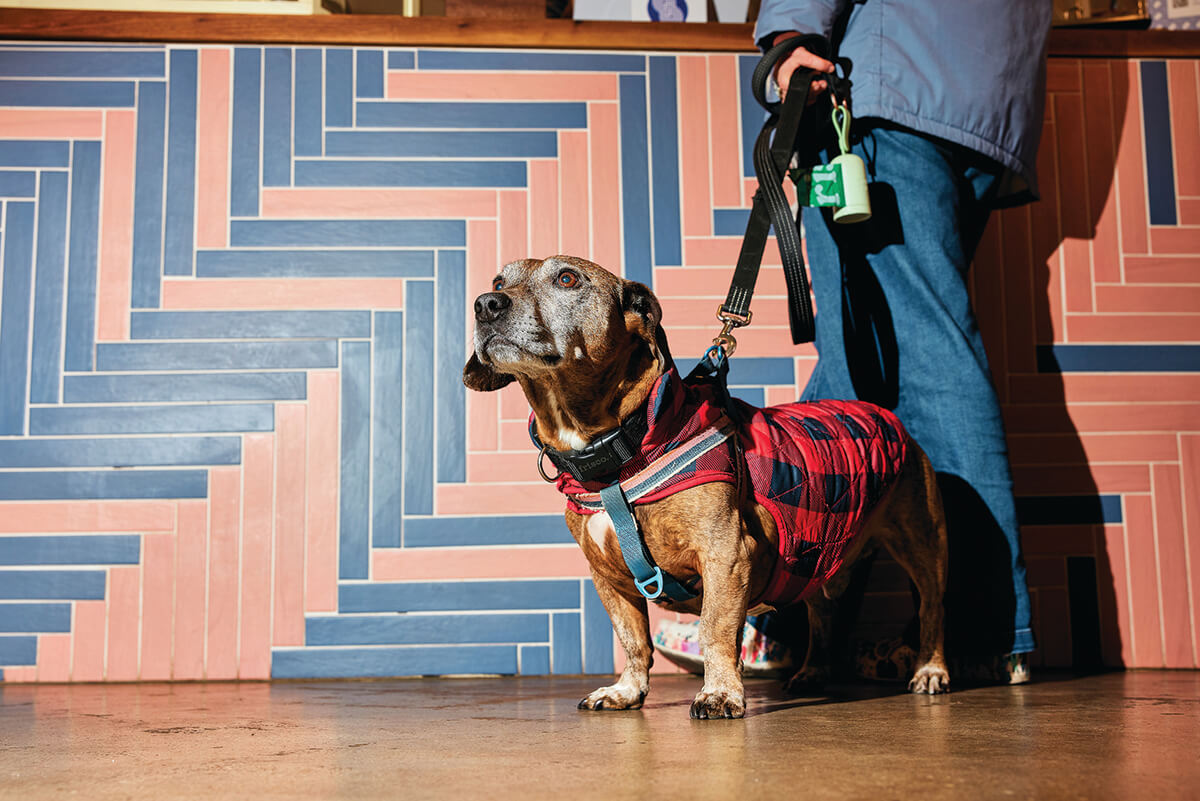
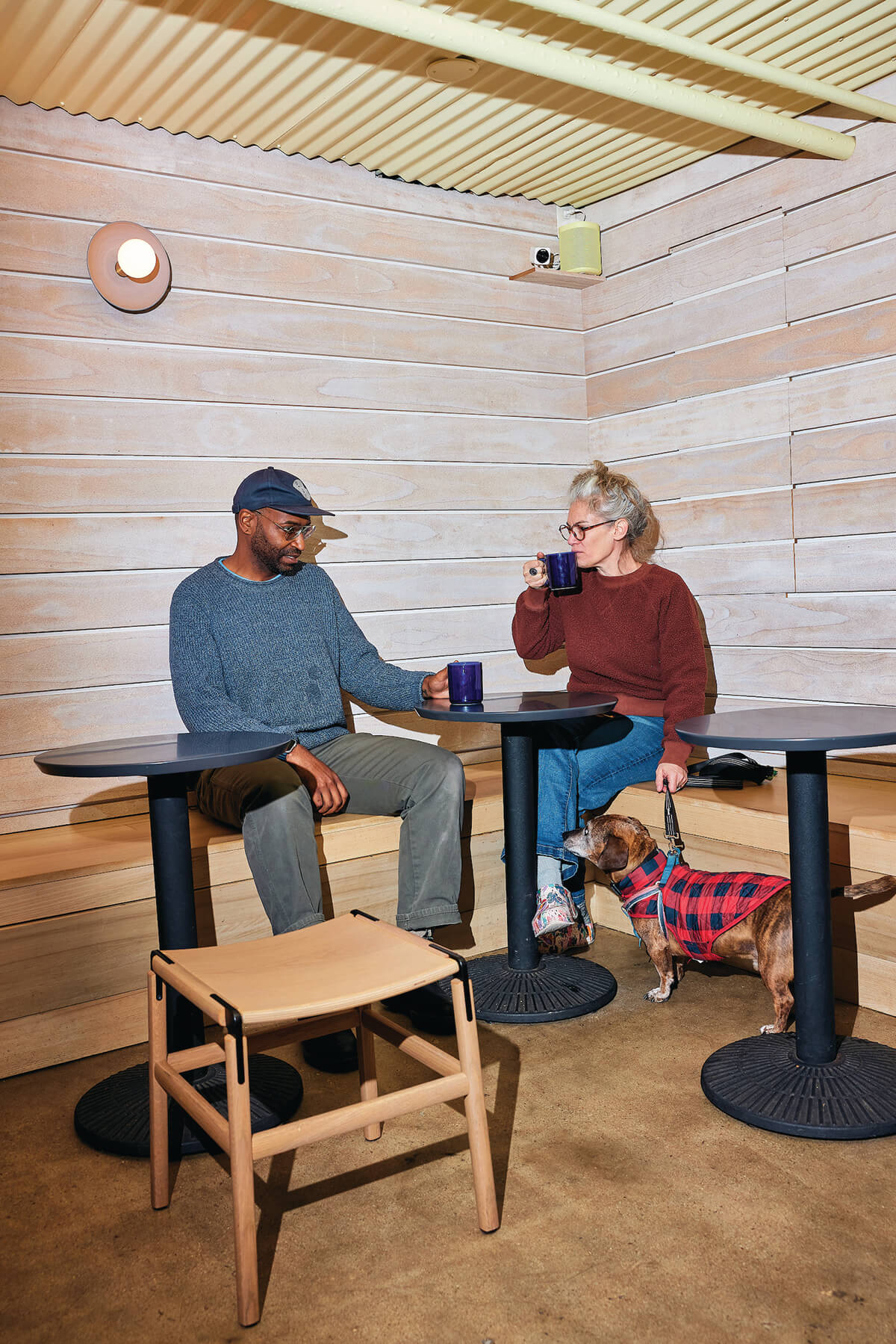
In November, Fulton was invited to celebrate Jacques’ “barkmitzvah.” Because Jacques is such a fixture, for a long time, he was even the Wi-Fi password for the cafe.
“People would stop me on the street and say hi to him because they recognized him from his picture on the sign with the coffee shop’s password,” says Horowitz, laughing.
Horowitz considers being a regular a vital part—and perk—of urban living.
“Having that routine is a special part of living in the city,” she says. “People talk a lot about how a city is anonymous, because so many people live there places like Sophomore remind us how much of a community we are living in. Baltimore’s a very livable city, so it’s a real opportunity to be in the big city, but not at all be anonymous.”
*Editor’s Note: As of online publication in early January, La Cuchara was closed indefinitely in the wake of a fire that originated in the building’s ventilation system. Thankfully, no one was hurt.