Travel & Outdoors
Thirteen Famous (and Nearly Famous) Waypoints on the Road to America’s Founding
In honor of America’s original 13 colonies, we’ve collected a baker’s dozen regional destinations—all relatively close to Baltimore—worth visiting during this celebratory season.
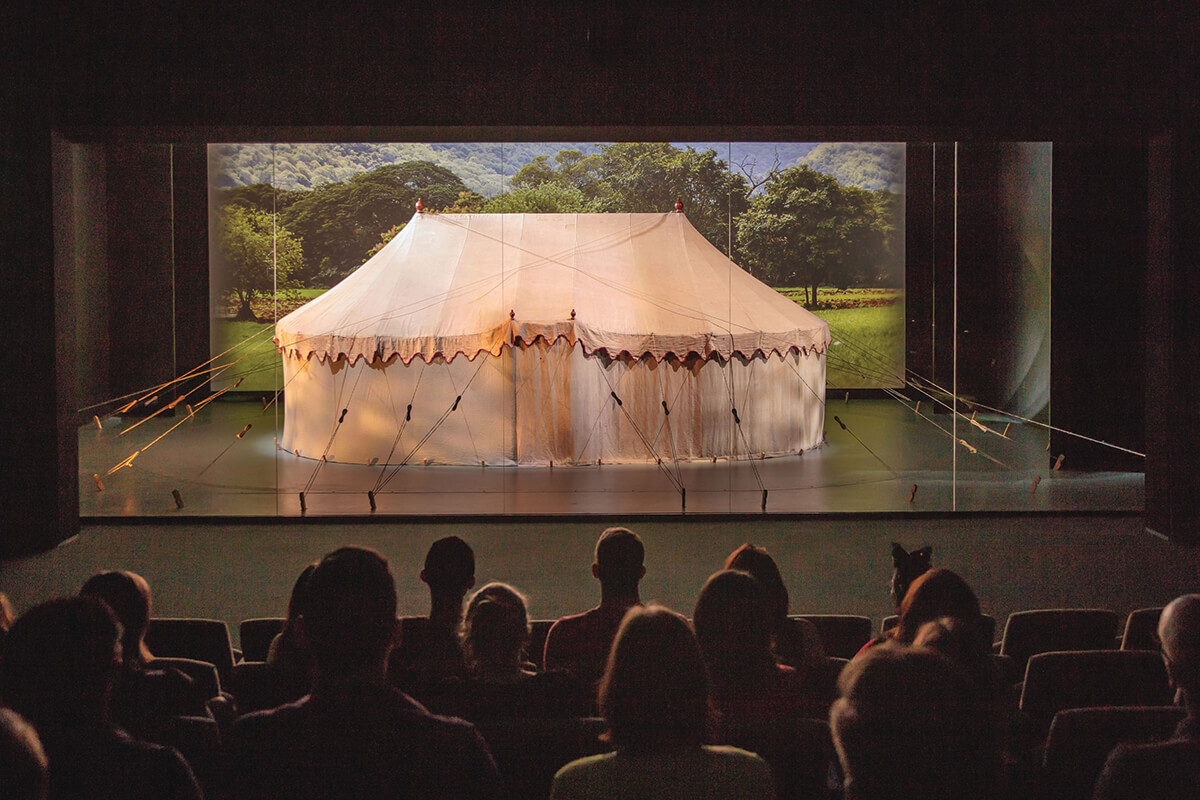
As the United States throws itself a bang-up 250th birthday party, the Mid-Atlantic will be front and center. Ground zero could be Philadelphia, home to the Liberty Bell and Independence Hall. Or perhaps Washington, D.C., with the nation’s capital boasting copies of its original founding documents.
If you’re traveling this summer, don’t miss smaller commemorations, either. The Eastern Shore’s tribute to a pair of homegrown heroes. Allegany County’s trail of pedigreed trees. Or George Washington’s favorite soaking spot in West Virginia.
In honor of America’s original 13 colonies, we’ve collected a baker’s dozen regional destinations—all relatively close to Baltimore—worth visiting during this celebratory season.
PENNSYLVANIA
When the Founding Fathers formally bade Great Britain adieu in Philadelphia on July 4, 1776, Pennsylvania became the birthplace of a revolution that quickly enmeshed even its peaceable Quaker settlers.
York (52 miles)
Who knew this modestly sized colonial town—an hour’s drive north of Baltimore today—once served as the U.S. capital? It’s true. The Second Continental Congress fled Philadelphia for nine months beginning in September 1777 when the Brits occupied the city. At the York County History Center, learn how John Adams, John Hancock, and other delegates from the 13 original colonies convened at the county courthouse to adopt the Articles of Confederation, the Constitution’s precursor.
Here, leave enough time to explore the campus. Don’t miss the acclaimed, hands-on History Center Museum, opened in 2024, where touchscreens literally put the past at your fingertips and guided tours include a reconstructed courthouse where the Continental Congress met.
Valley Forge (100 miles)
Ninety miles east of York, in suburban Philadelphia’s King of Prussia, lies one of the Revolution’s most hallowed grounds, Valley Forge. Now a 3,500-acre National Historical Park, it marks the riverside encampment where Gen. George Washington and his Continental Army endured disease, starvation, and brutal weather in the winter of 1777 and ’78.
Drive, hike, or bike a scenic 10-mile loop to see the soldiers’ recreated log barracks, tour the stone house that served as Washington’s headquarters, and take in stirring monuments, including the National Memorial Arch, honoring the soldiers’ “incomparable patience and fidelity.”
Philadelphia (99 miles, or 1-hour train trip)
Next up, Philadelphia, where you can’t swing a cheesesteak this year without hitting some reminder of the city’s bragging rights. Weekly neighborhood “Saturday Firstivals” mark Philly’s many other national feats—first bank, zoo, flower show, hot-air-balloon flight, World’s Fair, and even…Slinky.
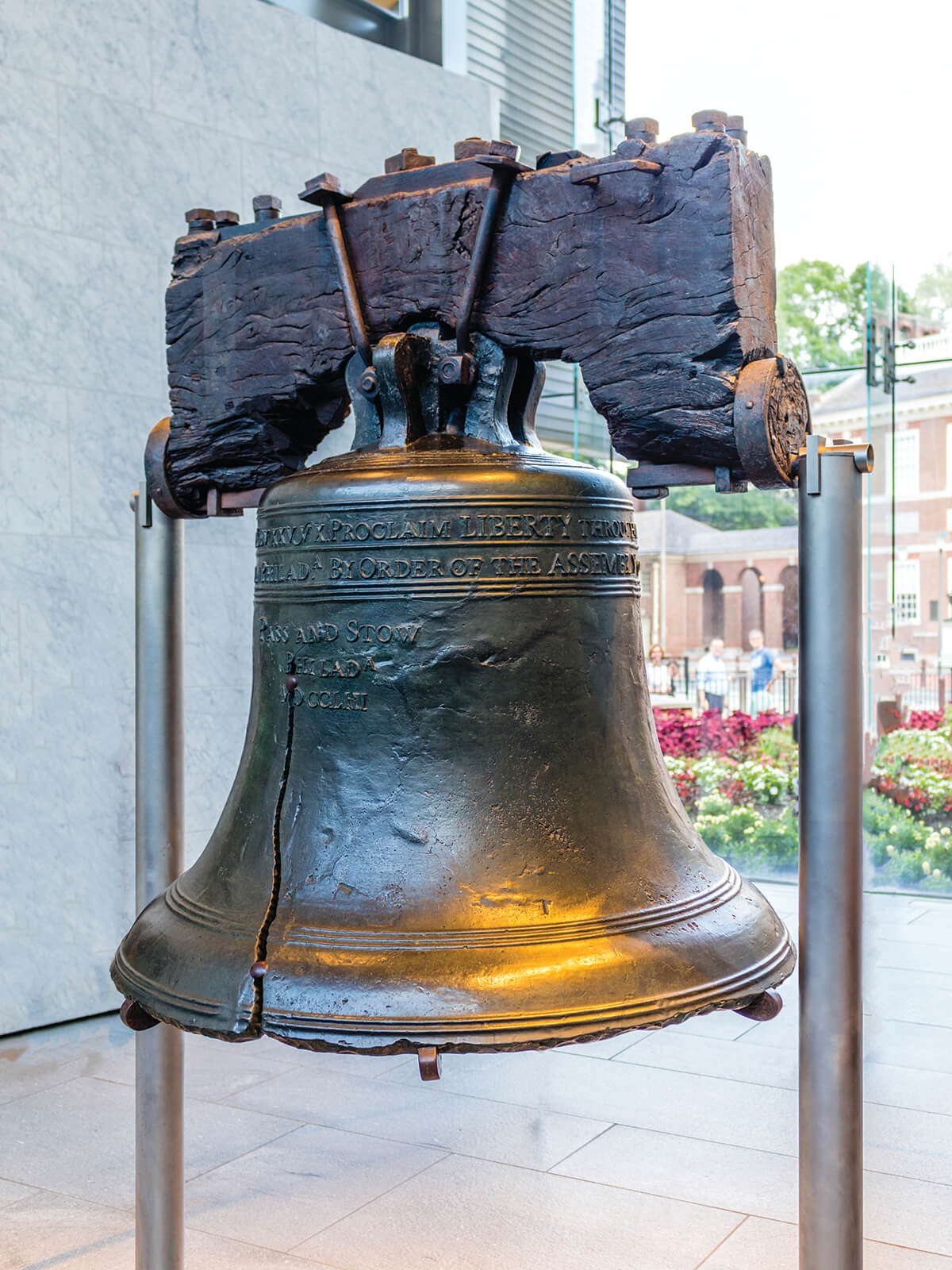
For the core historic celebration, head to the Old City District, home of Independence Hall, the Liberty Bell, and the Benjamin Franklin Museum.
While taking in those must-see attractions, leave ample time for the nearby Museum of the American Revolution and the National Constitution Center. The former hosts a truly inspiring exhibit, “The Declaration’s Journey,” tracing the history and impact of the document from 1776 through struggles for civil and women’s rights, to freedom movements around the world. The latter brings the story of that founding document to life—almost literally in Signers’ Hall, where you stroll among 42 life-size bronzes of the framers (including three Marylanders).
Brandywine (78 miles)
Forty-five minutes west via I-95 lies Chadds Ford and the Brandywine Battlefield Park, honoring the largest single-day land battle of the Revolution. On September 11, 1777, British forces led by Gen. William Howe clashed with Washington’s Continental Army. Some 30,000 soldiers fought on multiple fronts near the Brandywine River. Howe’s troops eventually won, forcing the fledgling American government to flee Philadelphia for York, but the patriots’ battlefield tenacity boosted troop morale.
At the Visitors Center, watch an orientation film and see military artifacts. Take guided tours of the houses of two Quaker farmers caught up in the conflict, including one that was used as Washington’s headquarters.
MARYLAND’S EASTERN SHORE
Although no major Revolutionary War battles occurred on its soil, Maryland supplied some of the war’s most stalwart patriots, and the Eastern Shore’s fertile fields became the “Breadbasket of the Revolution.” For some, independence took longer to arrive.
Easton (69 miles)
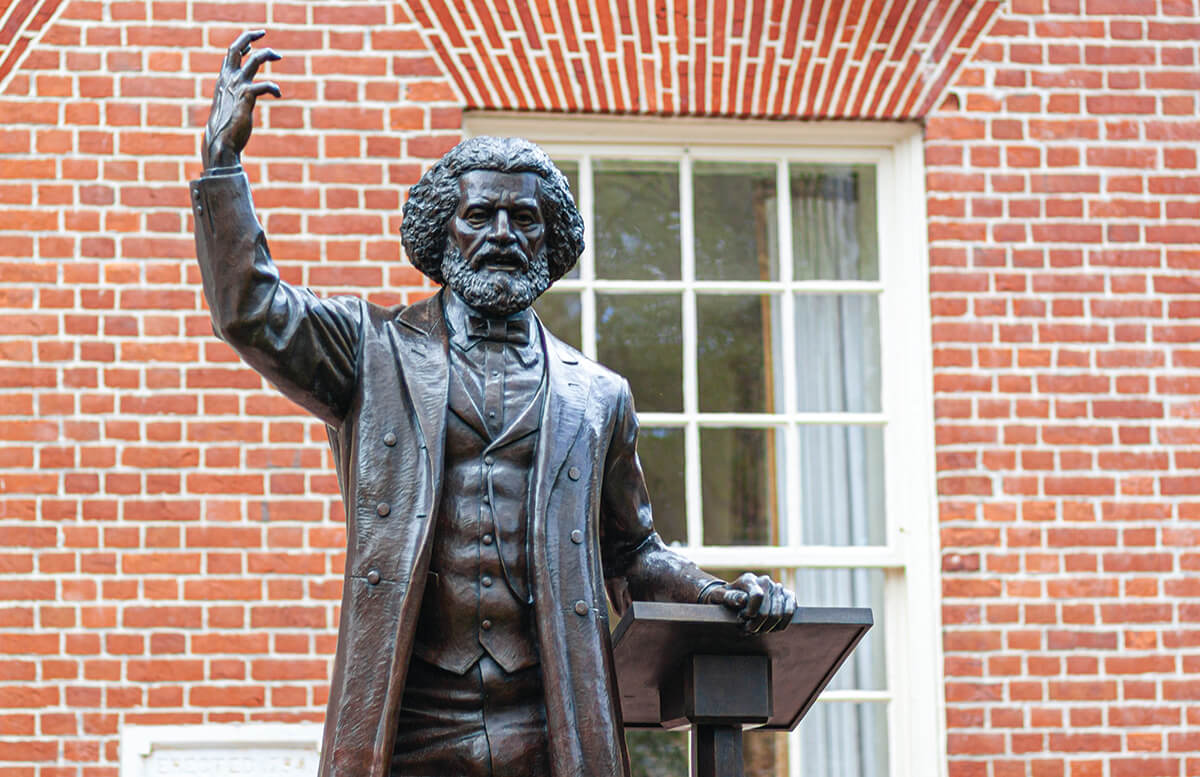
Massachusetts has Paul Revere’s midnight dash; Maryland has Tench Tilghman’s 200-mile marathon. Gen. Washington’s trusted aide-de-camp, Tilghman carried news of Britain’s surrender from Yorktown to Philadelphia, an arduous journey thought to have shortened his life. On the Eastern Shore, Tilghman’s native Talbot County hasn’t forgotten him, or its more famous son, abolitionist Frederick Douglass.
About an hour from Baltimore, stop first at Old Wye Mill, a restored gristmill that, twice monthly, grinds grain as it has since 1682. During the Revolution, its flour sustained Washington’s troops. Today, its artisanal flours are still for sale. Talbot’s county seat, Easton was the Eastern Shore’s colonial capital. A historical marker denotes Tilghman’s long-vanished birthplace, “Fausley,” but you’ll learn more about him—and Douglass—at “We the People of Talbot County,” a new exhibit at the Talbot Historical Society’s Larry Denton Museum.
Also visit “Bear Me Into Freedom,” a unique exhibit at the Chesapeake Bay Maritime Museum in nearby St. Michaels where you can “ask” questions of a Douglass hologram and receive AI generated replies. Better yet, go stand in front of his bronze statue at the nearby courthouse and take some time to ponder his legacy yourself.
Oxford (79 miles)
On to Oxford via the Oxford-Bellevue Ferry, which has been plying the Tred Avon River since 1683. Once a bustling colonial port, Oxford endures as a quiet village reflecting its seafaring past. The now-shuttered Robert Morris Inn was the home and place of business of wealthy merchant Robert Morris Sr., whose son, Robert Morris Jr., personally financed the patriots’ war effort before a central bank could be established.
The old inn, closed since last fall, is awaiting its own savior to restore the property to its former glory. Here, visit the small Oxford Museum, where you can learn more about the Morris family. Look for Tench Tilghman’s gravesite in the Oxford Cemetery.
Chestertown (75 miles)
Heading home, make a detour to Chestertown, up north in Kent County. Known for its reenactment of a 1774 patriots’ protest each summer, the town boasts plenty of colonial cred. Stroll the historic district and admire the buildings—Widehall, River House, and the circa-1746 Custom House—that define this former British port of entry.
Chestertown’s Washington College, founded in 1782 and named for George himself, was the first college chartered in the nation. Originally the residence of a prominent colonial slave trader, the Custom House is now home to the college’s Starr Center for the Study of the American Experience, a wellspring for powerful projects like Chesapeake Heartland, in which students and scholars preserve local African-American history.
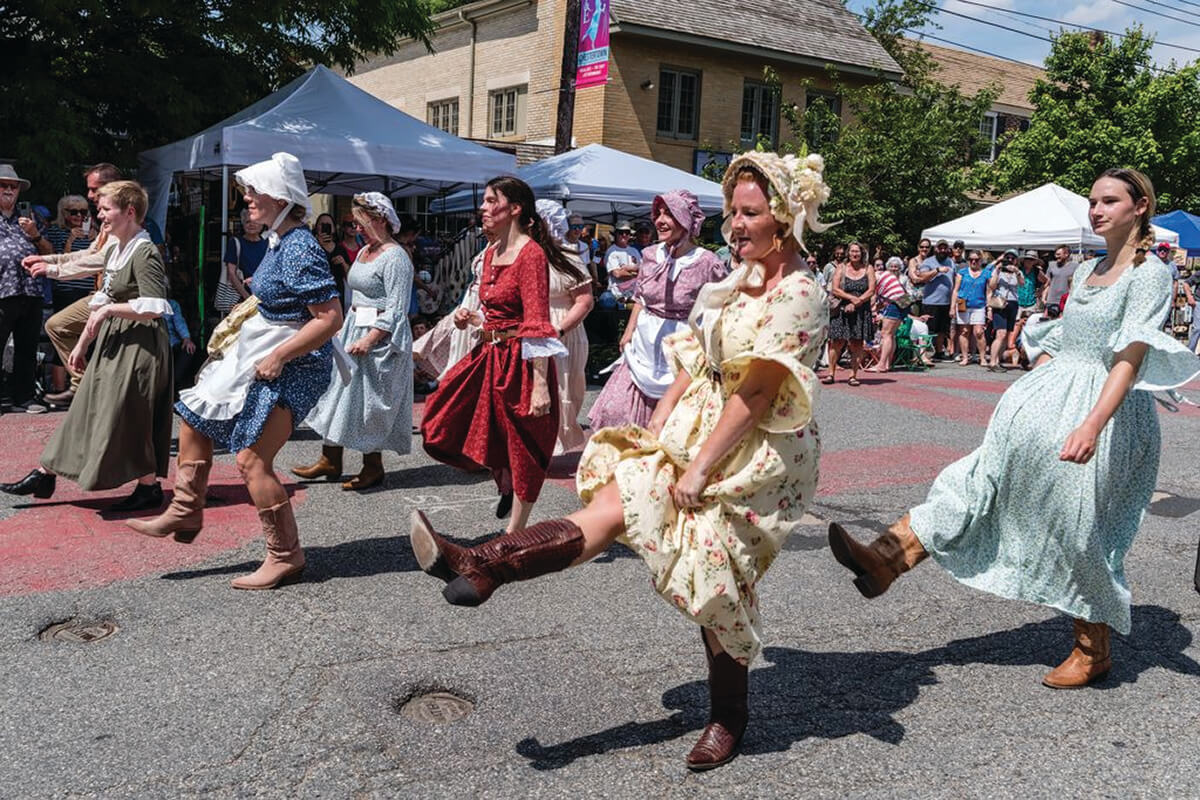
Every Memorial Day weekend, residents and reenactors don tricorns to celebrate the Chestertown Tea Party Festival, commemorating the day when tax-weary townspeople teatotaled a cargo of the British beverage into the harbor. The original event has yet to be historically verified, but the legend merrily lives on.
THE NATION’S CAPITAL
The nation’s current capital literally was a swamp in the 1770s—marsh surrounded by woods and plantations. Back then, prominent politicians and thinkers of the day lived across the Potomac River in Virginia.
Washington, D.C. (40 miles, or 45-minute train trip)
D.C.’s waterlogged landscape has changed, to say the least, and now includes a wealth of free, federally run museums. Don’t miss the National Archives, where the nation’s founding documents—the Declaration of Independence, Constitution, and Bill of Rights—are preserved for viewing. To avoid long waits, make timed reservations online.
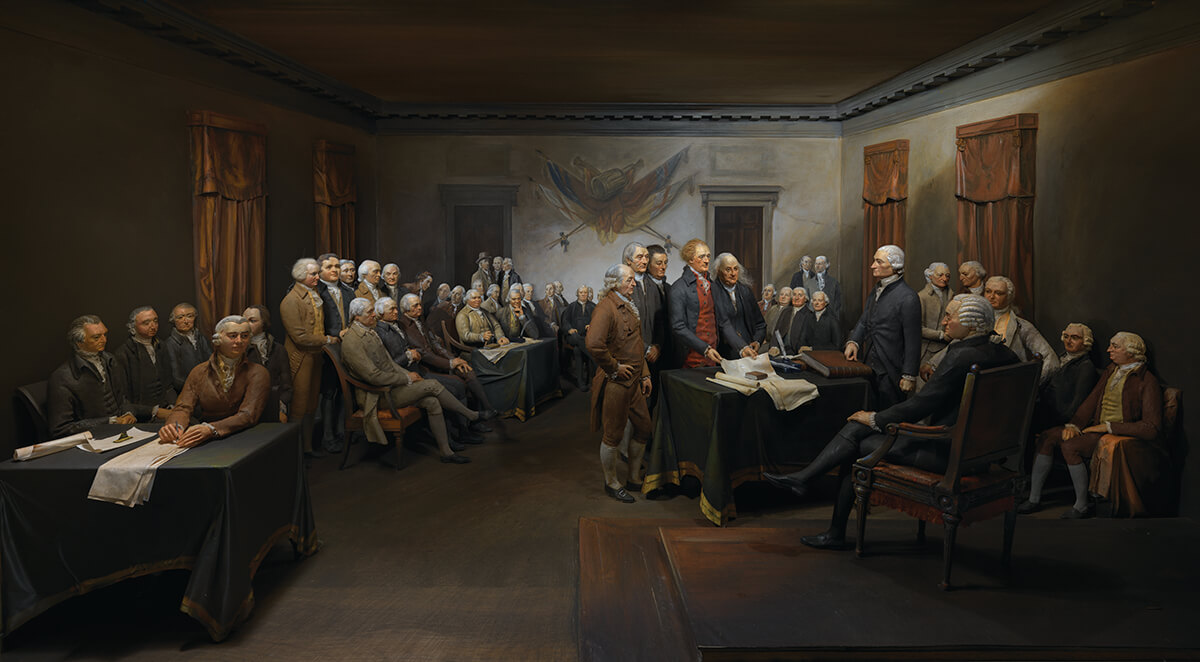
The Smithsonian Institution’s museums are collectively celebrating “Our Shared Future: 250.” See Abraham Lincoln’s top hat and 249 other priceless historical objects at the National Museum of American History. Meanwhile, the National Portrait Gallery will showcase an impressive wax diorama last on view 50 years ago. In intricate detail, the restored work depicts members of the Second Continental Congress at the signing of the Declaration.
Alexandria (60 miles)
Old Town Alexandria exudes colonial American history. Tour Gadsby’s Tavern Museum, two 18th-century hostelries whose patrons included the Washingtons and other prominent Virginians. A new exhibit highlights colonial women, specifically Hannah Griffith, an enterprising businesswoman and tavern operator. The city will honor its 277th birthday plus America’s 250th on July 11, culminating with a grand fireworks display.
Potomac River (70+ miles)
Here, less than an hour’s drive from Alexandria, you can tour two stately Potomac River estates, George Washington’s Mount Vernon and George Mason’s Gunston Hall. If you haven’t visited Mount Vernon recently, you’re in for a treat. A new exhibit immerses visitors in Washington’s “Revolutionary Life.” Eavesdrop on vital political conversations he held in Philadelphia. Interactively face decisions he made as general. And meet historical interpreters at a mock Continental Army encampment.
Long before libertarianism existed, there was George Mason, a planter-politician fiercely protective of individual liberties (except, notably, those of his slaves) and wary of government tyranny. He helped write Virginia’s Declaration of Rights. Learn more about him at Gunston Hall, his 1759 estate, whose grounds include a Georgian-style mansion, formal gardens, and a visitors’ center.
MOUNTAIN TOWNS
By the time the first shots of the American Revolution were fired in Lexington and Concord, Massachusetts, the Western frontier had breached the Appalachian Mountains, where a certain future president made his mark as a young surveyor and a promising officer.
Big Pool (100 miles)
Ninety miles west of Baltimore, in Big Pool, Maryland, sits Fort Frederick, built by English colonists for protection during the French and Indian War and repurposed to imprison His Majesty’s troops during the Revolutionary War. The fort’s 18-foot-tall stone wall and two barracks have been restored so visitors to this state park can, for example, inspect the spartan quarters in which the POWs lived in overcrowded conditions.
Berkeley Springs (108 miles)
To the west of this citadel of armaments and suffering, Berkeley Springs remains a recuperative retreat in West Virginia. Its healing, thermal waters have beckoned spa-goers since 1776, when founders named the town Bath. George Washington not only slumbered here, but he also bathed in its springs.
Today, Berkeley Springs State Park has recreated his bathtub, a stone-lined trench touted as “the country’s only outdoor monument to presidential bathing.” Dip your toes where George soaked his saddle-sore tush, then book a full spa treatment, including massages and saunas, at the park’s bathhouses. A natural 74.3 degrees year-round, the springs running through the park are free to serenity-seeking soakers.
Cumberland (140 miles)
Further still into the western panhandle of Maryland, mountainous Cumberland guarded the colonial frontier and forged the military career of our first commander-in-chief. As a young officer during the French and Indian War in decades prior, Washington served at Fort Cumberland. The fort itself is gone but one original structure survives: a 1750s log cabin that served as Washington’s headquarters and now sits in lovely Riverside Park.
Although you can’t enter, a peep into its window displays offers a glimpse of 18th-century military life. Washington first visited Cumberland as a surveyor and last visited in 1794 as the first U.S. president. Learn about his local connections at the Allegany Museum’s “Crossroads of America” exhibit. Don’t miss its detailed model of Fort Cumberland and an AI-aged bust of Washington as he looked in the 1750s.
Follow Allegany County’s Liberty Tree Trail to find 15 genetic descendants of Maryland’s original Liberty Tree, a tulip poplar beneath which the colonial Sons of Liberty met. Local forester Champ Zumbrun has become the Johnny Appleseed of Liberty Tree conservation, propagating and sharing seedlings from this living symbol of American independence.